Barcodes and QR codes both store data for quick machine reading, but they differ in structure, capacity, scanning method, and business use cases in ways that matter for retailers, manufacturers, marketers, and everyday smartphone users. A barcode usually means a one-dimensional symbol made of vertical lines and spaces that encodes a short string, often a product identifier. A QR code, short for Quick Response code, is a two-dimensional matrix of black squares that can hold far more information and can be scanned from almost any angle. Understanding the difference between a barcode and a QR code is essential because these symbols power inventory control, point-of-sale systems, packaging, digital payments, event check-ins, and mobile experiences across nearly every industry.
In practice, I have seen teams treat them as interchangeable and create avoidable problems. A warehouse may try to place a dense QR code where a long-range laser scanner expects a linear barcode. A marketing team may print a UPC on a poster when the real goal is to send people to a landing page. The right choice depends on what data needs to be stored, how it will be scanned, what standard the industry requires, and whether the code must connect physical objects with digital actions. For anyone learning QR code basics, this article serves as the main guide: it explains what QR codes are, how they compare with traditional barcodes, where each format fits, and what to consider before implementation.
What Are Barcodes and QR Codes?
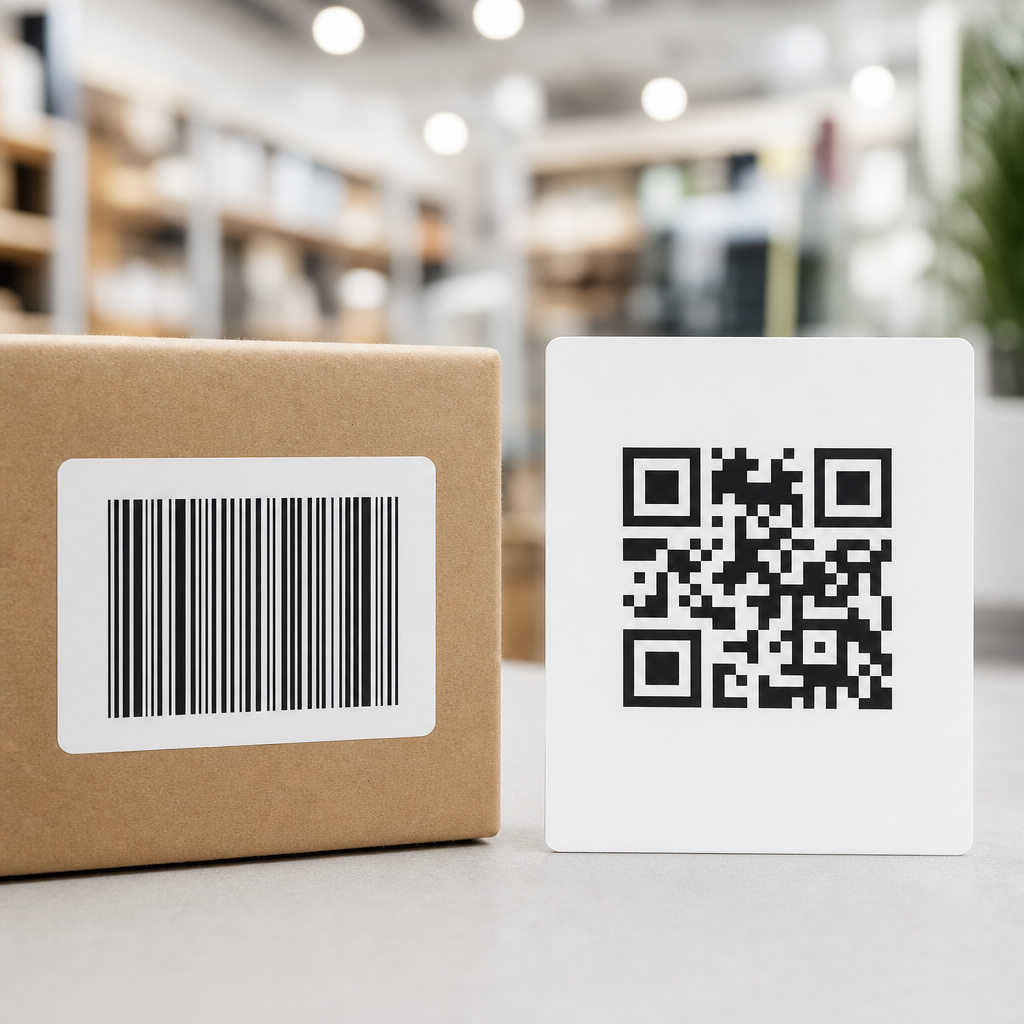
A barcode is an optical, machine-readable representation of data arranged in a linear format. The most familiar retail barcode is the UPC, developed for product identification at checkout. Other common linear barcode standards include EAN, Code 128, and Code 39. These symbols encode data horizontally, so a scanner reads across the width of the code. Because the data lives on one axis, the amount of information a barcode can hold is limited. In many systems, the barcode does not store full product details; it stores a key that points to a record in a database.
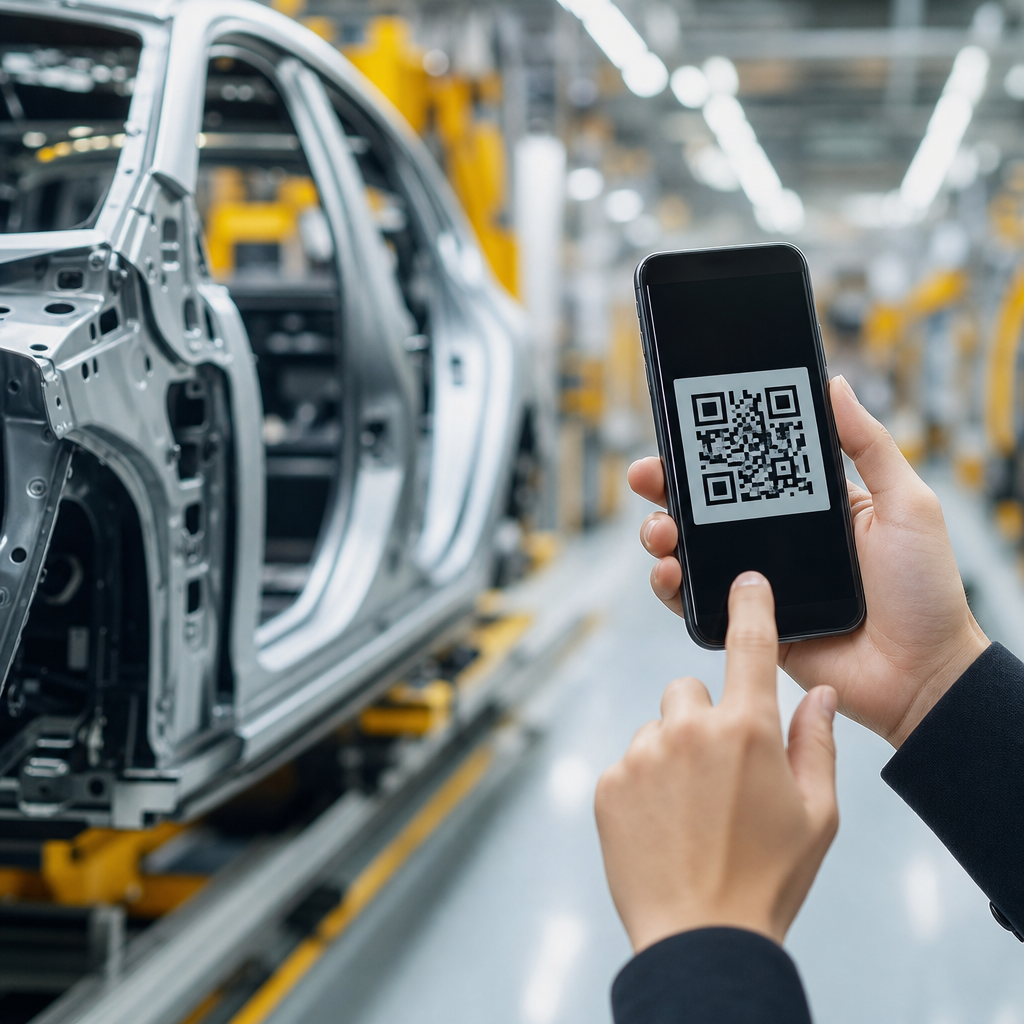
A QR code is a type of two-dimensional barcode invented in 1994 by Denso Wave for tracking automotive components. Instead of lines, it uses square modules arranged in a grid. Finder patterns in three corners help imaging devices detect orientation instantly, which is why a QR code can be scanned quickly even when tilted. A QR code can store website URLs, plain text, serial numbers, contact details, Wi-Fi credentials, payment payloads, and other structured data. It also includes error correction based on Reed-Solomon coding, allowing partial damage without complete failure. That resilience is one reason QR codes work well on packaging, signage, and labels exposed to real-world wear.
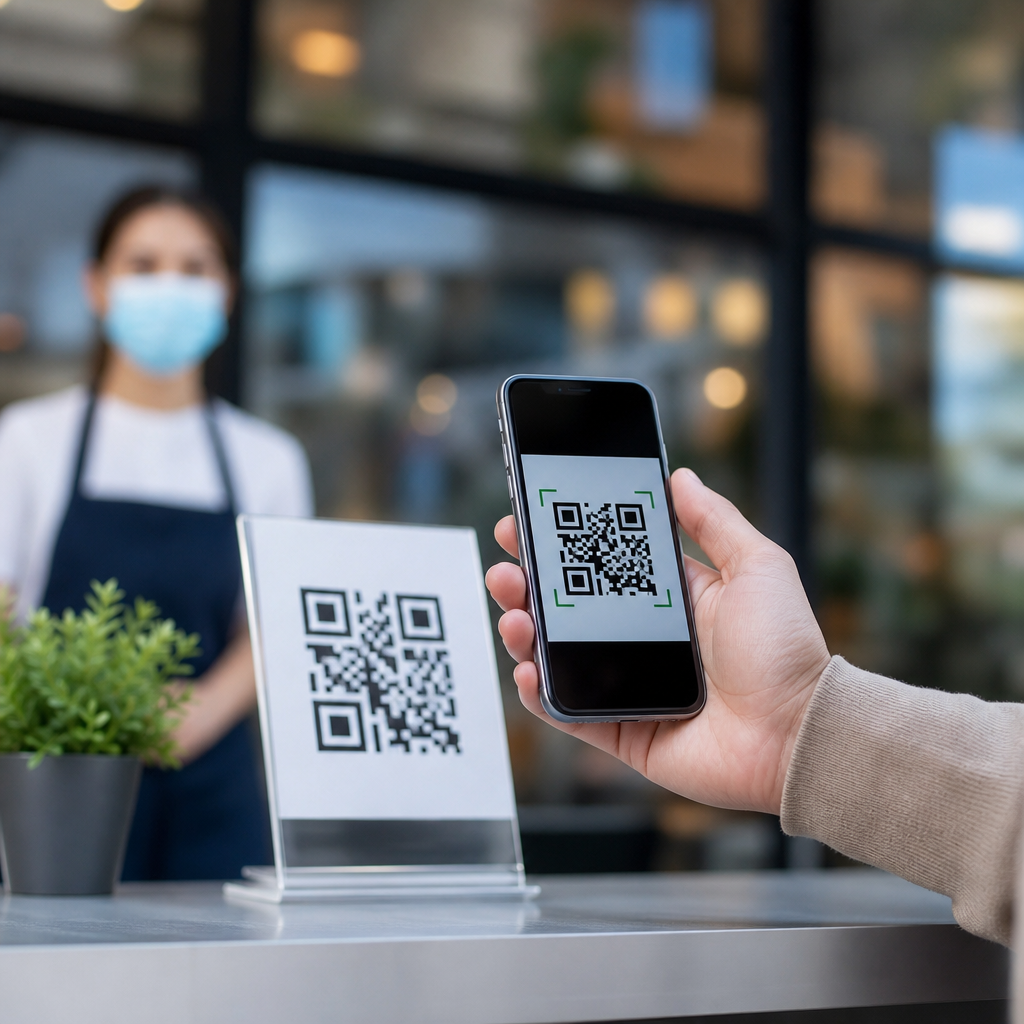
If the basic question is, what are QR codes, the clearest answer is this: QR codes are high-capacity, two-dimensional data carriers designed for fast scanning and flexible digital interaction. They are not limited to retail checkout. A single QR code can open an app store page, launch a restaurant menu, authenticate a ticket, register a manufacturing part, or trigger a payment. Modern phones can scan them using native camera apps, which removed the adoption barrier that existed when dedicated scanner apps were required. That shift turned QR codes from an industrial tool into a mainstream consumer interface.
Key Differences Between a Barcode and a QR Code
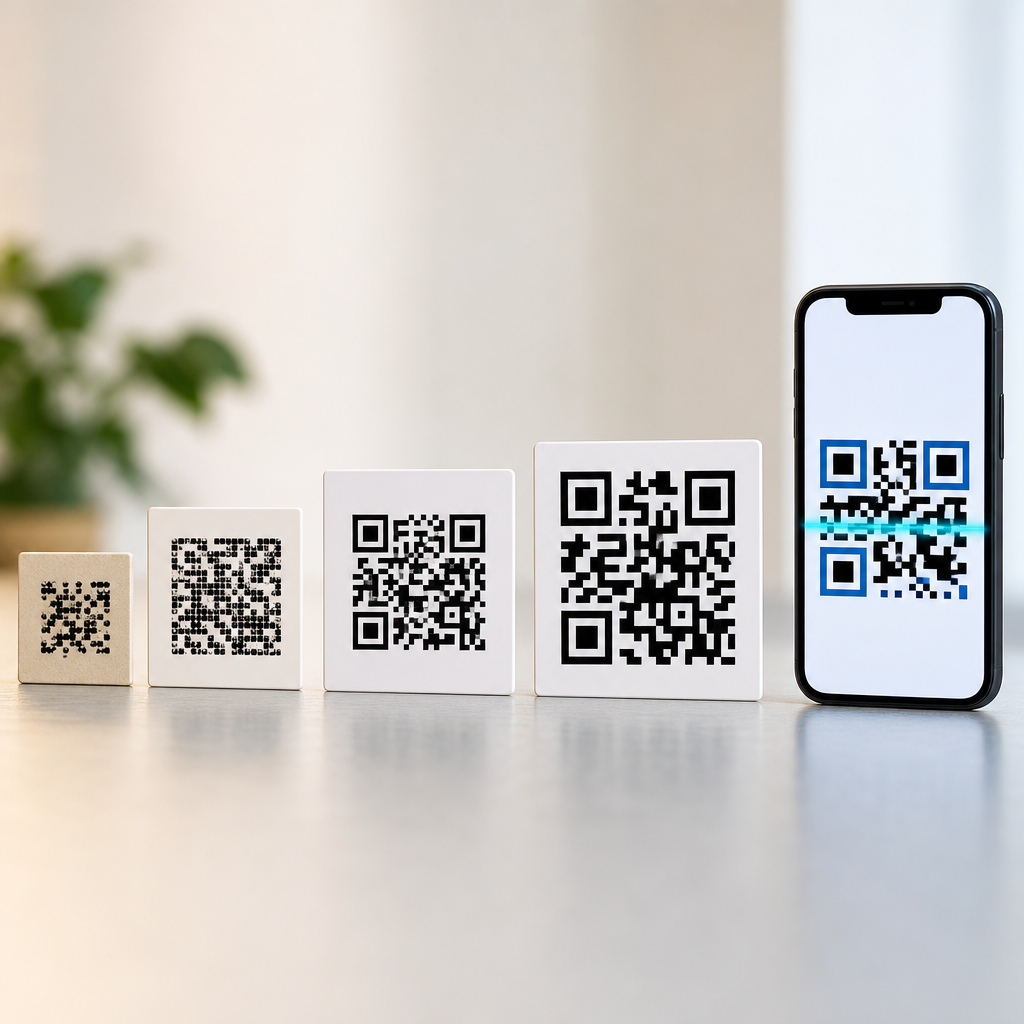
The difference between a barcode and a QR code starts with data structure. A standard linear barcode stores information in one direction, while a QR code stores information in both horizontal and vertical directions. That design gives QR codes dramatically higher capacity. A UPC code typically carries 12 numeric digits. By contrast, a QR code can encode thousands of numeric characters or several thousand alphanumeric characters, depending on version and error correction level. In plain terms, a barcode usually identifies an item; a QR code can identify it and carry instructions, context, or a destination.
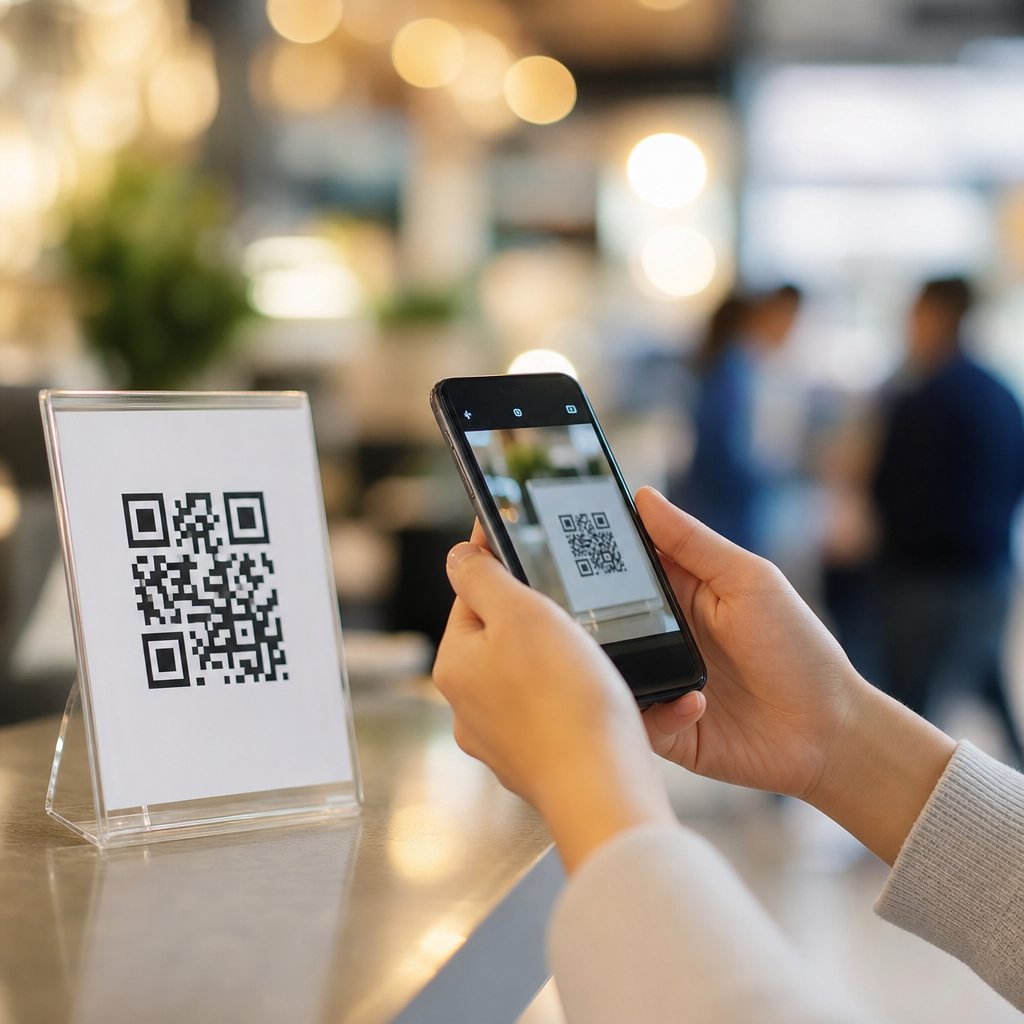
Scanning technology is another major distinction. Traditional laser scanners read reflected light across the linear bars, which works extremely well in checkout lanes and conveyor environments. QR codes are usually read by image sensors, including smartphone cameras and area imagers. Because the scanner captures the entire symbol as an image, orientation matters less. This is why a customer can point a phone casually at a QR code on a table tent and still reach the intended content in seconds.
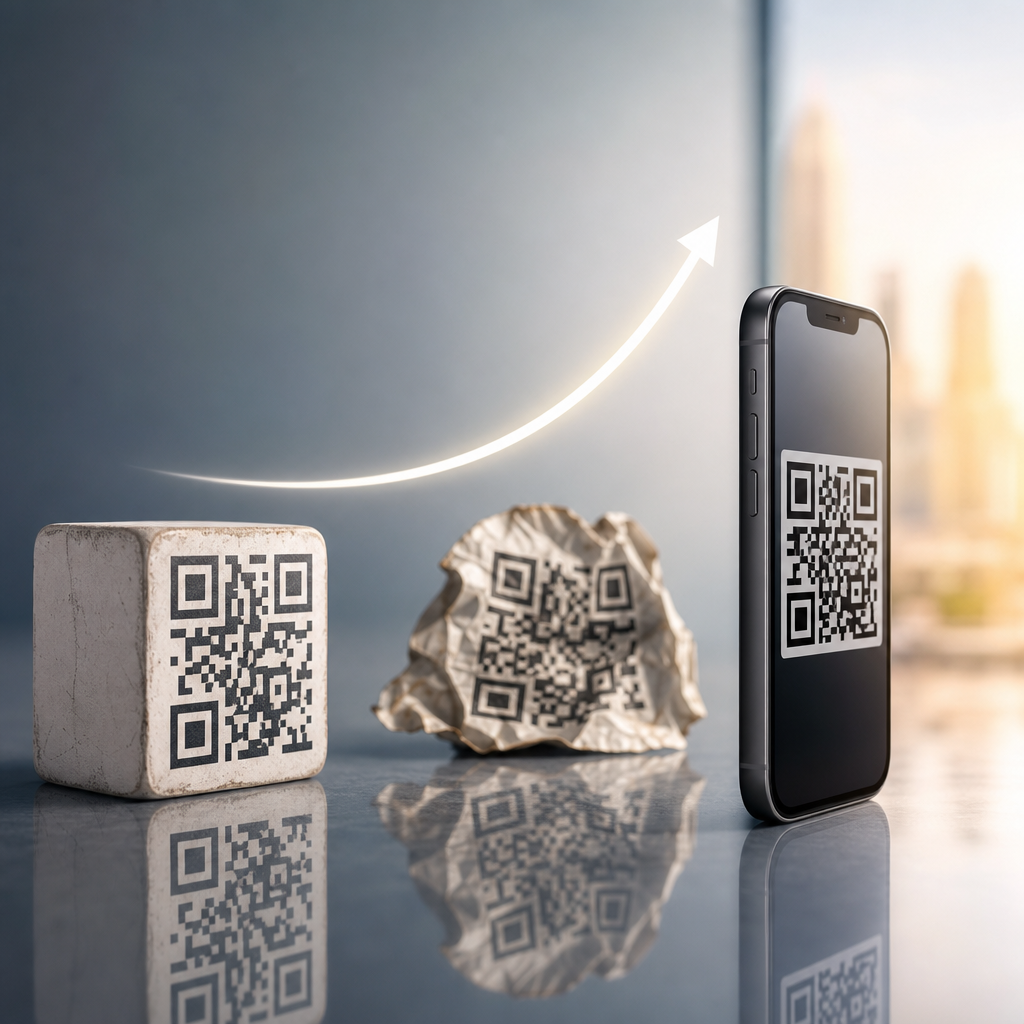
Physical durability also differs. Linear barcodes can fail if a key section is scratched or wrinkled across the scan path. QR codes tolerate more damage because of built-in error correction. Depending on the chosen level, a QR code can remain readable even when a portion is obscured. That does not make them indestructible, but it gives designers more flexibility for logos, curved packaging, and high-contact surfaces.
| Feature | Barcode | QR Code |
|---|---|---|
| Format | One-dimensional lines and spaces | Two-dimensional square matrix |
| Typical data capacity | Low; often an identifier only | High; can store URLs, text, IDs, and more |
| Scanning method | Laser or linear imager | Camera or area imager |
| Orientation sensitivity | Higher | Low |
| Error correction | Minimal | Built in, with selectable levels |
| Common use | Retail POS and inventory | Mobile engagement, payments, tracking, authentication |
Cost is not usually the deciding factor because both symbols are inexpensive to print, but system compatibility is. Grocery stores rely on GS1 standards and scanner infrastructure built around UPC and EAN codes. Replacing those with QR codes is not a simple design decision; it affects databases, POS software, trading partner requirements, and hardware fleets. On the other hand, if the goal is to bridge print and digital, QR codes almost always outperform barcodes because consumers can scan them directly with phones.
How QR Codes Work and Why They Became So Common
QR codes work by converting data into a grid of binary modules that an imaging device interprets through pattern detection, alignment, timing patterns, and error correction rules. When I set up QR campaigns, the practical workflow is straightforward: choose the content, generate the symbol, test it across devices, print or publish it, and monitor scan behavior if the code is dynamic. Static QR codes contain the final data directly. Dynamic QR codes point to a short redirect URL that can be changed later without reprinting the code. That distinction matters for marketing, packaging, and operations teams that expect content to evolve.
The rise of QR codes accelerated because smartphone cameras, mobile operating systems, and payment ecosystems matured at the same time. Apple integrated QR scanning into the native Camera app in iOS 11. Android vendors broadly followed with native support. During the pandemic, restaurants, venues, and healthcare providers needed touch-light interactions for menus, forms, and check-ins. Consumers learned the behavior quickly because the scan action was simple and immediate. Once habits formed, QR codes remained useful beyond that moment because they solved a persistent problem: turning an offline surface into a digital entry point without requiring a typed URL.
Another reason QR codes spread is versatility. In manufacturing, they support traceability for parts and work orders. In logistics, they can encode shipment information and internal routing details. In healthcare, they appear on wristbands, specimen labels, and medication workflows, subject to regulatory and privacy controls. In consumer marketing, they connect packaging to recipes, loyalty programs, support pages, warranty registration, and app downloads. A barcode can support identification in many of these contexts, but a QR code can carry richer payloads and support direct user action with no special scanner.
When to Use a Barcode Instead of a QR Code
A barcode is still the better choice when a process depends on established retail or industrial standards, fast repetitive scanning, and a short identifier tied to a backend system. At a supermarket checkout, UPC and EAN remain the default because they are universally recognized, optimized for point-of-sale speed, and integrated into supplier data workflows. In a warehouse using handheld laser scanners from Zebra or Honeywell, Code 128 may be ideal for bin locations or carton labels because the environment is built for linear scanning and the data requirement is modest.
Barcodes also work well when print space is narrow and the scan path is controlled. On a small product tube, a compact linear code may fit better than a QR code that needs enough module size and quiet zone to scan reliably. In legacy environments, the decision can come down to hardware constraints. If a facility has hundreds of fixed laser scanners on conveyor lines, switching to a two-dimensional symbol may require capital investment that is hard to justify without a clear operational return.
There is also a governance argument for barcodes. In regulated supply chains, product identification standards are not optional. GS1 barcodes underpin global trade, and consistency matters more than novelty. If the code’s only job is to identify a stock keeping unit for sale, replenishment, and invoicing, a linear barcode may be the cleanest and most compliant solution.
When to Use a QR Code Instead of a Barcode
Use a QR code when you need more than identification. If the code must open a webpage, prefill a message, store serial data, authenticate an asset, or support consumer interaction, QR is usually the right format. I recommend QR codes for posters, menus, direct mail, product packaging, instruction sheets, trade show booths, service tags, and any environment where people will scan with phones. They are especially effective when the next step should happen immediately, such as viewing a video tutorial, claiming a discount, or downloading setup instructions.
QR codes are also valuable when traceability requires item-level detail. A manufacturer can place a unique QR code on each unit, linking serial number, batch, inspection history, and service documentation. A field technician scans once and sees the record instantly. That reduces lookup errors and shortens repair time. In payments, QR codes enable account-to-account flows and wallet-based checkout, widely used in markets where mobile payment infrastructure leapfrogged card terminals.
Dynamic QR codes add operational advantages. A business can change the destination URL, pause campaigns, segment by location, and track scans over time while keeping the printed symbol unchanged. This makes them useful for evergreen packaging and long-lived signage. The tradeoff is platform dependence: if the redirect service fails or expires, the experience breaks. Good governance means owning the domain, documenting redirect rules, and planning for longevity.
Best Practices for Creating Effective QR Codes
A good QR code is not just generated; it is engineered for the scanning context. Start with the right payload type and keep it as lean as possible. Shorter encoded data generally produces a cleaner symbol. If you need flexibility, use a dynamic QR code managed through a reputable platform. Maintain strong contrast, ideally black on white, and protect the quiet zone around the code. Avoid glossy placements that cause glare, and size the code according to viewing distance. A common field rule is that the code should measure about one inch for every ten inches of scanning distance, then be validated in the actual environment.
Testing matters more than most teams expect. Scan on older phones, midrange Android devices, and current iPhones. Test in bright light, low light, and from the expected user angle. If you add a logo, verify that error correction still covers the loss of data area without pushing module density too high. For print, use vector artwork when possible and confirm that the final production process does not blur edges or distort the grid. For campaigns, route users to mobile-optimized pages with fast load times, clear calls to action, and analytics configured correctly.
Security and trust deserve equal attention. Users are more willing to scan when the context is clear. Label the destination near the code, such as “Scan to view installation guide” or “Scan to pay invoice.” Avoid placing codes where tampering is easy unless you have anti-fraud controls. In high-risk settings, pair QR codes with visual verification, short URLs on owned domains, or cryptographic validation methods for authentication workflows.
The Bottom Line on Barcode vs QR Code
The difference between a barcode and a QR code is not cosmetic. A barcode is optimized for simple identification inside structured scanning systems, while a QR code is optimized for richer data, flexible orientation, and direct interaction through cameras and smartphones. Both are valuable, and neither replaces the other in every scenario. The right choice depends on data capacity, scanner type, user behavior, industry standards, durability needs, and whether the symbol must connect the physical and digital worlds.
For readers exploring QR code basics, the key takeaway is that QR codes are far more than square links on posters. They are a mature data technology with strong error correction, broad smartphone support, and practical uses in operations, marketing, payments, and traceability. Barcodes remain essential in retail and many industrial workflows because standards and speed still matter. Smart organizations choose based on workflow, not trend.
If you are planning labels, packaging, signage, or mobile engagement, map the user journey first, then match the code type to the job. Use barcodes for standardized product identification, use QR codes for information-rich and customer-facing interactions, and test before deployment. That disciplined approach will save rework, improve scan success, and make every printed code more useful.
Frequently Asked Questions
What is the main difference between a barcode and a QR code?
The main difference is how the information is arranged and how much data each format can store. A traditional barcode is usually a one-dimensional, or 1D, symbol made of vertical black lines and white spaces. It stores data horizontally, which means it typically carries a short, limited string of characters such as a product number or stock-keeping identifier. A QR code, by contrast, is a two-dimensional, or 2D, code made of small square modules arranged in a grid. Because it stores data both horizontally and vertically, it can hold much more information in a much smaller space.
In practical terms, that means barcodes are ideal for simple identification tasks, especially in retail and inventory systems where a scanner reads a number and then looks up the product details in a database. QR codes are more flexible because they can directly store things like website URLs, contact information, app links, menu files, authentication tokens, and other types of digital content. So while both are machine-readable tools designed for speed and accuracy, barcodes are generally best for basic tracking and point-of-sale use, while QR codes are built for richer, more interactive data-sharing applications.
Why can a QR code hold more information than a barcode?
A QR code can hold more information because it uses a two-dimensional structure instead of a one-dimensional one. A barcode stores data only along a single axis, from left to right, which limits how many characters can fit before the symbol becomes too wide to scan efficiently. That is why standard barcodes usually contain a relatively short numeric or alphanumeric value. They are intentionally compact in meaning, with the real information often stored elsewhere in a connected database.
QR codes take a different approach. They encode data in both directions using a matrix of tiny squares, allowing them to pack substantially more data into the same amount of physical space. They also support different encoding modes, including numeric, alphanumeric, binary, and even some character sets for broader text storage. Another advantage is built-in error correction, which allows a QR code to remain readable even if part of it is damaged, obscured, or printed imperfectly. That combination of dense data storage and resilient design is a major reason QR codes are used for everything from mobile payments and event tickets to product packaging and marketing campaigns.
Do barcodes and QR codes require different scanners?
They often do, although the gap has narrowed as scanning technology has improved. Traditional 1D barcodes were originally designed to be read by laser scanners or linear imaging devices that sweep across the code and interpret the pattern of lines and spaces. These scanners are common in grocery stores, warehouses, shipping operations, and manufacturing environments because they are fast, reliable, and optimized for standard barcode formats such as UPC, EAN, and Code 128.
QR codes generally require an imaging-based scanner or a camera, since the reader needs to capture the full square pattern rather than a single horizontal line. This is one reason QR codes became so popular with consumers: most smartphones can scan them using a built-in camera app without any specialized hardware. Many modern commercial scanners are now capable of reading both 1D barcodes and 2D codes, which gives businesses more flexibility. Even so, the intended scanning environment still matters. If a business needs ultra-fast checkout of standardized retail items, barcodes remain highly practical. If the goal is to let customers instantly open a webpage, download an app, or access a digital coupon, QR codes are usually the better fit because they are easier to scan with everyday mobile devices.
When should a business use a barcode instead of a QR code?
A business should use a barcode when it needs a simple, standardized, and highly efficient way to identify products or assets within established operational systems. Barcodes are especially effective in retail, warehousing, logistics, manufacturing, and inventory control because they are widely supported by point-of-sale systems, scanners, label printers, and supply chain software. If the code only needs to represent a product ID, serial number, or batch reference that links to information stored in a database, a barcode is often the most practical and cost-effective choice.
Barcodes also perform well in environments where speed, consistency, and industry compliance matter more than storing large amounts of data on the symbol itself. For example, a grocery store checkout lane benefits from standardized UPC or EAN barcodes because they are universally recognized and optimized for rapid scanning. A warehouse may rely on barcode labels to track pallets, bins, or parts with minimal visual complexity. In short, businesses should favor barcodes when the use case is operational, internal, and based on quick identification rather than direct consumer interaction. QR codes become more useful when the business wants to share richer information, support smartphone scanning, or connect physical items to digital experiences.
Are QR codes replacing barcodes?
QR codes are not universally replacing barcodes, but they are expanding into areas where traditional barcodes were never designed to do enough. In many industries, especially retail and logistics, barcodes remain deeply embedded in global standards and daily operations. They are simple, cheap to print, easy to process, and highly effective for product identification. For that reason, barcodes are still essential for checkout systems, inventory tracking, shipping labels, and manufacturing workflows.
What is happening instead is a broader shift toward using the right code for the right purpose. QR codes have become increasingly important because they support mobile engagement, larger data capacity, and more dynamic customer experiences. Businesses use them for digital menus, product information pages, promotions, loyalty programs, payments, and authentication. Some sectors are also moving toward next-generation 2D code standards that can carry more data than traditional barcodes while still serving supply chain functions. So rather than thinking of QR codes as a full replacement, it is more accurate to see them as an evolution in machine-readable labeling. In many real-world settings, barcodes and QR codes coexist, each serving distinct roles based on what needs to be stored, how the code will be scanned, and who will be using it.