QR codes have evolved from a niche industrial marking system into one of the most widely recognized tools for linking physical objects to digital content. The history of QR codes starts in Japanese manufacturing, but its real significance lies in how the technology solved a practical problem that barcodes could not: storing more information in less space while remaining fast to scan. For anyone studying QR code basics, understanding how QR codes evolved over time explains why they became essential in retail, logistics, payments, marketing, ticketing, healthcare, and everyday consumer interactions.
A QR code, short for Quick Response code, is a two-dimensional matrix code made of black and white modules arranged in a square grid. Unlike the traditional one-dimensional UPC barcode, which stores data in horizontal lines, a QR code stores information both horizontally and vertically. That design dramatically increases capacity. A standard QR code can hold thousands of numeric or alphanumeric characters, depending on the encoding mode and error correction level. It can also be scanned quickly from multiple angles because of its three position detection patterns in the corners.
I have worked with QR implementations in print campaigns, product packaging, event access, and mobile payment flows, and the same lesson appears every time: the code succeeds because it is simple for users but technically resilient behind the scenes. Its evolution was not accidental. It reflects specific engineering decisions, changing smartphone capabilities, open licensing policies, and shifting user behavior. What began as a factory-floor innovation became a bridge between offline and online experiences because it addressed speed, reliability, and flexibility better than earlier machine-readable formats.
This topic matters because QR codes now sit at the center of customer journeys and operational workflows. A shopper scans a package for ingredients, a diner opens a menu, a traveler boards a train, and a patient checks into a clinic using essentially the same symbol. To understand that mainstream adoption, it helps to trace the full history of QR codes: why they were invented, how standards shaped them, what technological milestones accelerated use, and why their future still depends on trust, usability, and interoperability.
The Origin of QR Codes in Japanese Manufacturing
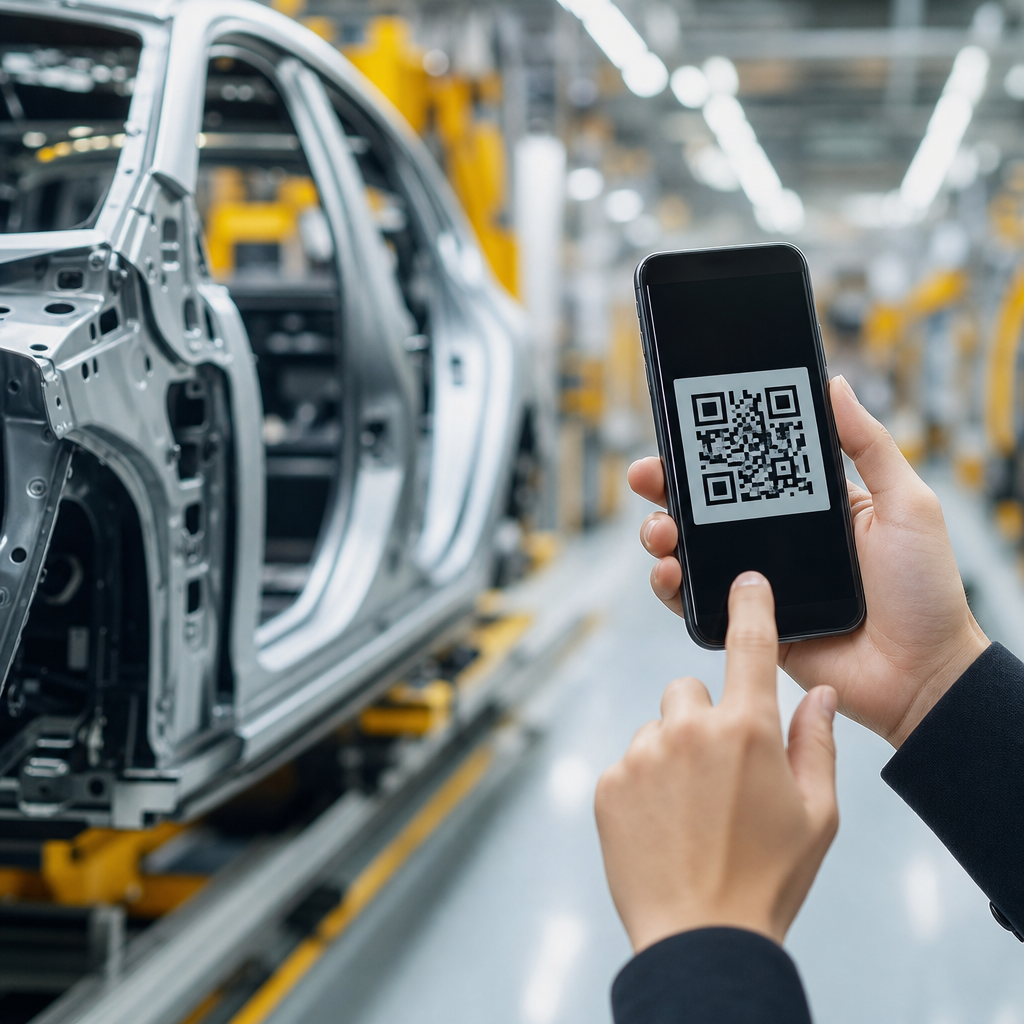
The QR code was invented in 1994 by Masahiro Hara and his team at Denso Wave, a subsidiary of the Toyota Group in Japan. The original use case was highly practical. Automotive manufacturing required tracking many parts and assemblies through production and distribution. Traditional barcodes, especially one-dimensional formats, could not store enough information for the growing complexity of just-in-time manufacturing. Workers also needed a code that could be scanned rapidly without careful alignment.
Denso Wave designed the QR code to answer those constraints. The team developed a matrix symbol that could encode significantly more data than a standard barcode while maintaining high read speed. The distinctive square finder patterns in three corners allowed scanners to detect orientation instantly, which reduced scanning friction on busy production lines. The code was called “Quick Response” because fast readability was a design goal from the beginning, not a later marketing phrase.
This first stage in the history of QR codes is important because it was driven by operations, not advertising. The code had to work in demanding real-world conditions: variable print quality, movement, and dense data requirements. That industrial DNA still explains why modern QR codes are robust. Their popularity in consumer settings came later, but the underlying technology was built to survive practical stress from day one.
Technical Breakthroughs That Made QR Codes Better Than Barcodes
QR codes evolved because they solved several technical limitations of older barcode systems at once. The first major advantage was data density. A UPC barcode is useful for identifying a product number, but it does not carry rich data. A QR code can store URLs, serial numbers, text, batch details, authentication tokens, or contact information. In practical terms, that allowed one symbol to replace multiple labels or database lookups in some workflows.
The second breakthrough was error correction. QR codes use Reed-Solomon error correction, which means they can still be read even if part of the symbol is dirty, damaged, or partially obscured. Depending on the level selected—L, M, Q, or H—a code can tolerate increasing amounts of data loss. In field use, this matters enormously. On packaging, posters, warehouse bins, and tickets, perfect print conditions are rare. Error correction is one reason QR codes remained reliable where simpler codes failed.
The third advantage was omnidirectional scanning. Because scanners can identify the code orientation from the finder patterns, users do not need to line up a scan in the same precise way required by many linear codes. This saved time in industrial applications and later made mobile scanning feel natural. When smartphone cameras became common, that design advantage turned into a mass-adoption benefit.
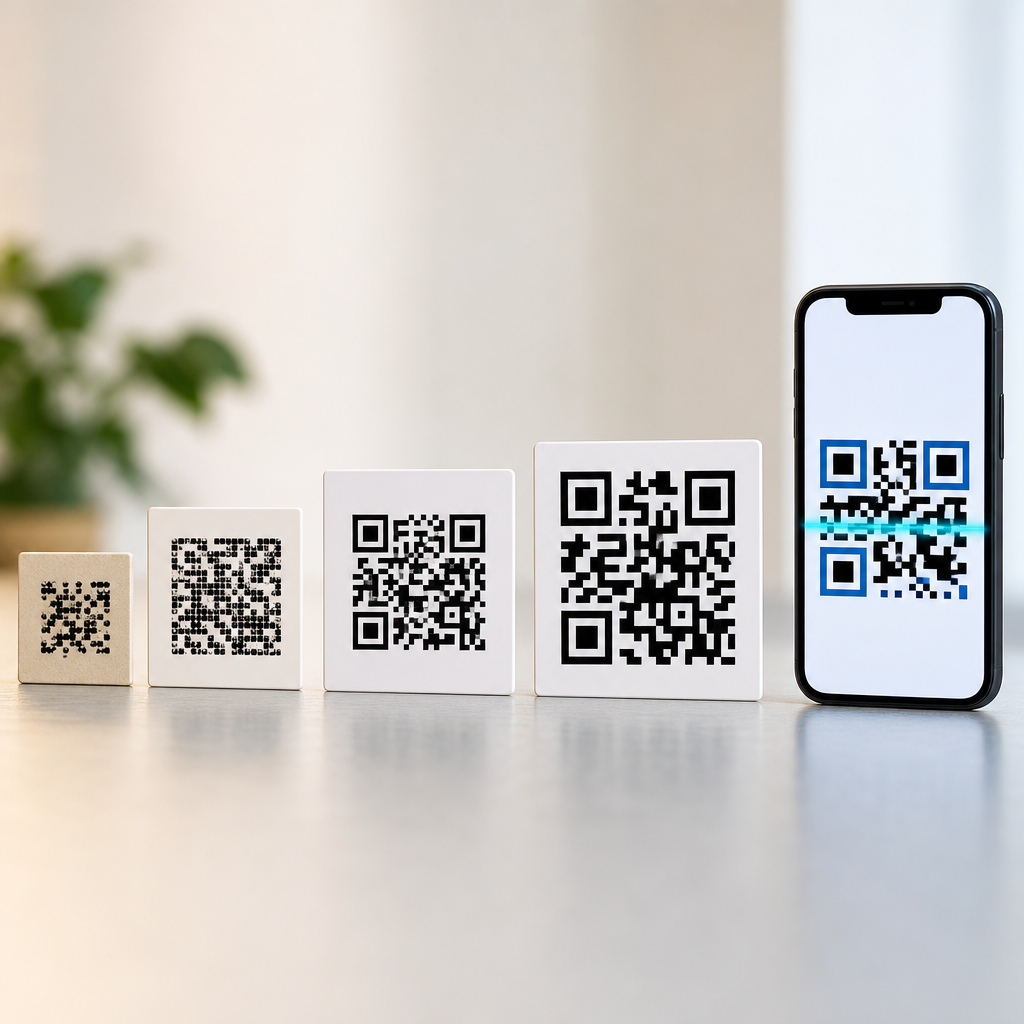
There were tradeoffs. More error correction reduces data capacity. Very dense codes can become difficult to scan on small screens or low-quality prints. Good QR design still requires balancing payload length, module size, contrast, quiet zone spacing, and destination usability. The technology is powerful, but it works best when applied with clear constraints in mind.
Standardization and Open Use Expanded Adoption
A major reason QR codes spread beyond manufacturing was that Denso Wave chose not to exercise its patent rights in a restrictive way. The company held patents related to the technology, but it made clear that broad use would be permitted. That decision reduced barriers for software developers, hardware makers, and standards bodies. Many technologies remain limited because licensing is complicated. QR codes benefited from the opposite approach.
Formal standardization also mattered. QR code specifications were recognized through industrial and international frameworks, including JIS and ISO/IEC standards. Standardization ensured that scanners, printers, software encoders, and enterprise systems could work against a common technical baseline. In practice, this meant a code created in one environment could be read in another without proprietary lock-in, which is a major reason the format proved durable across sectors.
During the late 1990s and early 2000s, adoption spread gradually into logistics, warehousing, and inventory management. Businesses used QR codes for traceability, internal asset control, and document identification. These were not glamorous applications, but they were foundational. They demonstrated that the code format was dependable at scale and established a base of enterprise familiarity before consumers ever started scanning restaurant menus or posters.
From Industrial Tool to Mobile Consumer Technology
The next major phase in the history of QR codes came with mobile phones. Japan led early consumer adoption because camera phones, mobile internet services, and handset software matured there sooner than in many Western markets. By the early 2000s, QR codes appeared in advertisements, magazines, transit systems, and product packaging. Consumers could scan a code and open a webpage, download a coupon, or save contact details without typing a long URL on a numeric keypad. At that time, this was a meaningful usability improvement.
Outside Japan, growth was slower. In many markets, users needed to download a dedicated QR reader app, and the scanning experience was inconsistent. Marketers often placed codes on billboards, flyers, and business cards without optimizing the landing page for mobile devices, which weakened trust and performance. I saw this repeatedly in early campaigns: teams were excited by the novelty of the code but neglected the post-scan experience. A QR code is only as effective as the action it unlocks.
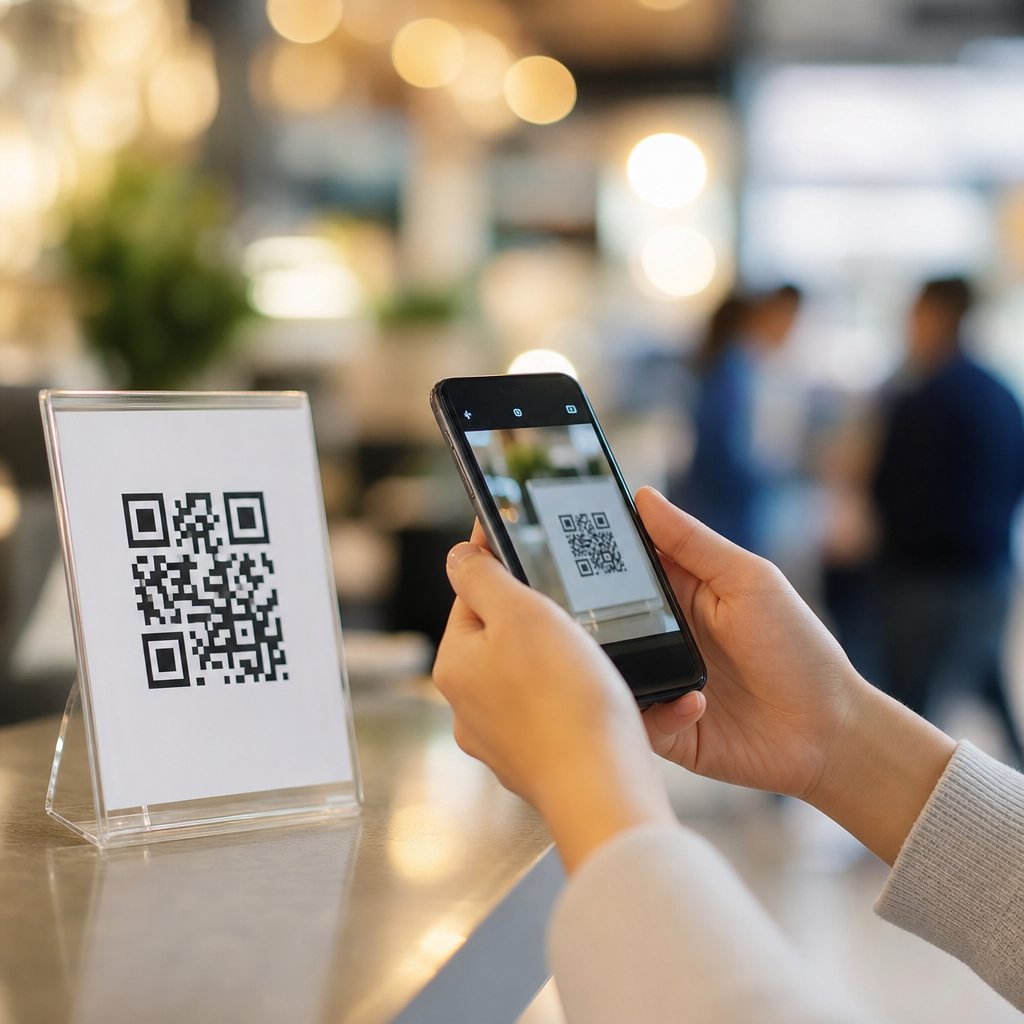
Consumer adoption accelerated when native camera support improved. Apple added built-in QR recognition in iOS 11 in 2017, and Android camera support became increasingly common across manufacturers. That single shift removed the biggest friction point. Once users no longer needed a separate app, scanning became instinctive. The technology had existed for decades, but convenience finally matched its potential.
| Period | Main milestone | Why it mattered |
|---|---|---|
| 1994 | Denso Wave invents the QR code | Created a high-capacity, fast-scanning alternative to linear barcodes for manufacturing |
| Late 1990s to 2000s | Standards and enterprise use expand | Made the format interoperable and credible across logistics, warehousing, and traceability systems |
| Early 2000s | Japanese mobile adoption begins | Showed that QR codes could connect physical media to mobile content for consumers |
| 2017 onward | Native smartphone camera scanning spreads | Removed app-download friction and drove mainstream global usage |
| 2020 onward | Pandemic-era contactless adoption | Normalized QR menus, payments, forms, and check-ins at massive scale |
How Payments, Marketing, and Operations Reshaped QR Code Usage
As smartphones spread, QR codes moved into three dominant categories: payments, marketing, and operational workflows. In payments, QR codes became especially important in Asia. China offers the clearest example. Services such as Alipay and WeChat Pay helped normalize merchant-presented and customer-presented QR payment flows, enabling low-cost digital transactions even for very small vendors. India later expanded QR payment acceptance at national scale through UPI, with interoperable standards that made the code a practical rail for everyday commerce.
In marketing, dynamic QR codes changed the value proposition. A static QR code points to a fixed destination. A dynamic QR code points to a short redirect URL that can be updated, tracked, and managed after printing. This allowed brands to measure scans by time, location, and device, run A/B tests, and change destinations without replacing printed materials. On product packaging, for example, the same printed code could first support a launch campaign, then redirect to support resources, then later to a loyalty experience.
In operations, QR codes proved useful because they are cheap to generate and easy to deploy. Small businesses use them for inventory labels. Hospitals use them for patient identification and specimen tracking, though usually within strict workflow controls rather than as a standalone safety mechanism. Event organizers use QR tickets because they can validate entries quickly and reduce counterfeiting when combined with encrypted or tokenized back-end logic. Restaurants adopted QR menus not because the code itself was new, but because digital menu management solved pricing, language, and update problems that print could not handle efficiently.
The Pandemic Era and the Global Normalization of QR Codes
No discussion of how QR codes evolved over time is complete without the COVID-19 period. During 2020 and 2021, QR codes became a standard tool for contactless interaction. Restaurants replaced printed menus, venues introduced touchless check-in, public health agencies used codes for information access and exposure logging in some regions, and businesses added scan-based forms almost overnight. The key point is that the pandemic did not invent QR code utility; it compressed years of behavior change into months.
This period also exposed weaknesses. Poorly printed codes, broken links, inaccessible forms, and security concerns became more visible because so many people were scanning for the first time. Some users associated QR codes with inconvenience when they were forced to scan for basic tasks that could have been handled more simply. The lesson from this era is nuanced: mass adoption increases awareness, but it also raises the standard for execution. Convenience must be real, not assumed.
Still, the long-term effect was decisive. QR literacy became mainstream across age groups and markets. Before the pandemic, many users asked what a QR code was. After it, most users understood the basic interaction model immediately. That familiarity now supports continued growth in product authentication, digital onboarding, support access, and omnichannel retail.
Security, Trust, and the Next Phase of QR Code Development
As QR codes matured, security became a central issue. A QR code is not inherently dangerous, but it can hide a destination URL from plain view, which creates phishing risk. Attackers can place malicious sticker overlays on public posters or parking meters, redirecting scans to fake login pages or fraudulent payment screens. In enterprise environments, secure QR implementations often include signed payloads, short-lived tokens, domain control, and validation logic on the server side. The code should be treated as a transport mechanism, not as proof of trust on its own.
There is also growing interest in advanced formats and standards-based use cases. In packaging, brands use serialized QR codes for traceability, anti-counterfeiting, and post-purchase engagement. In regulated industries, codes can support chain-of-custody records and recall management when tied to reliable databases. GS1 Digital Link is particularly significant because it connects product identifiers to web-based resources in a standardized way, potentially extending the role of QR codes well beyond simple marketing links.
The future of QR codes will be shaped less by the symbol itself than by the systems around it. Better destination design, stronger governance, interoperable standards, accessibility support, analytics, and trust signals will define successful deployments. The code has already proven its staying power. What evolves now is the sophistication of the experience behind the scan.
The history of QR codes shows a clear pattern: practical engineering created the foundation, open standards enabled expansion, mobile technology unlocked consumer use, and global behavioral shifts made scanning routine. What started in Japanese auto manufacturing in 1994 became a universal interface because it solved real problems better than alternatives. QR codes store more data than linear barcodes, scan quickly from different angles, tolerate damage through error correction, and work across industries with relatively low implementation cost.
For readers exploring QR code basics and education, this hub matters because every modern use case builds on that history. Payments rely on accessibility and interoperability. Packaging depends on traceability and dynamic content control. Tickets, menus, support journeys, and authentication flows all reflect the same evolution from static identification toward interactive digital connection. If you understand why QR codes were invented and how adoption unfolded, you can evaluate current best practices more intelligently and avoid repeating early mistakes.
The main benefit of learning the history of QR codes is practical clarity. You see which features are fundamental, which trends were temporary, and which developments are shaping the next wave of adoption. Use this page as your starting point for the broader history of QR codes, then explore related topics such as barcode vs QR code differences, static vs dynamic QR codes, QR code security, mobile scanning behavior, and packaging standards to build a complete foundation.
Frequently Asked Questions
1. Where did QR codes originally come from, and why were they invented?
QR codes were first developed in Japan in the 1990s for use in the automotive manufacturing industry. They were created by Denso Wave, a company that needed a better way to track parts and components during production. At the time, traditional one-dimensional barcodes were useful, but they had clear limitations. They could only store a small amount of data, and scanning them efficiently often required a very specific angle and positioning. In fast-paced industrial environments, those limits created delays and inefficiencies.
The invention of the QR code addressed those problems directly. Instead of storing information in a single horizontal line like a standard barcode, QR codes store data in two dimensions, both horizontally and vertically. That design allowed much more information to fit into a relatively small space while still being scanned quickly. This was a major leap forward because it improved speed, accuracy, and flexibility all at once. What began as a practical manufacturing solution eventually became one of the most important bridges between physical products and digital information.
2. How are QR codes different from traditional barcodes?
The biggest difference is data capacity. Traditional barcodes are linear, meaning they store information in a single line of varying widths and spaces. Because of that format, they can only hold a limited amount of information, usually just enough to identify a product number that links to a database. QR codes, by contrast, are two-dimensional matrix codes. They use patterns of small squares arranged in a grid, which lets them hold significantly more data in a compact format.
Another important difference is scanning performance. Standard barcodes generally need to be aligned properly with a scanner, while QR codes can be read from multiple angles thanks to the position markers in their corners. This makes scanning faster and more reliable in real-world use. QR codes also support features like error correction, which allows them to remain readable even if part of the code is damaged, dirty, or partially obscured. These advantages explain why QR codes became so valuable beyond industry, especially in marketing, payments, ticketing, packaging, and mobile experiences.
3. Why did QR codes become so popular outside of manufacturing?
QR codes spread beyond manufacturing because they solved a broader communication problem: how to connect offline objects to online content quickly and easily. Once smartphones became common and mobile cameras improved, QR codes suddenly had mass-market utility. A printed code on a poster, product package, menu, or sign could instantly open a website, display contact information, launch an app, start a payment, or provide directions. That level of convenience made QR codes useful to businesses, organizations, and consumers alike.
Their popularity also grew because they are inexpensive to create, easy to print, and highly versatile. A single QR code can support many types of digital interaction without requiring users to manually type a URL or search for information. Over time, this turned QR codes into practical tools for retail, healthcare, education, logistics, events, restaurants, and public services. Their rise was not just about technology; it was about usability. They became popular because they reduced friction between the physical world and digital action.
4. What role did smartphones play in the evolution of QR codes?
Smartphones were the turning point that transformed QR codes from a specialized tool into a mainstream technology. In their early years, QR codes were highly effective in industrial settings, but broad consumer adoption was limited because most people did not carry devices capable of scanning them easily. As smartphones became more widespread, that changed dramatically. Built-in cameras, better image recognition, and native scanning support in operating systems removed the need for dedicated hardware and made QR code interaction simple for everyday users.
This shift changed how businesses thought about customer engagement. Suddenly, any physical surface could become an entry point to digital content. Brands could place QR codes on packaging, ads, storefronts, receipts, and printed materials, knowing that users could scan them with a device already in their pocket. Smartphone adoption effectively turned QR codes into a universal access tool. Their evolution is closely tied to mobile technology because the smartphone made scanning immediate, convenient, and scalable for millions of people around the world.
5. Why is understanding the evolution of QR codes important today?
Understanding how QR codes evolved over time helps explain why they remain so relevant today. Their history shows that they were not created as a trend or gimmick. They were designed to solve a specific and important problem: how to store more information in less space while keeping scans fast and dependable. That original purpose still matters, but the applications have expanded far beyond manufacturing. Today, QR codes support everything from contactless payments and digital menus to authentication, product information, and customer journeys.
Knowing their evolution also provides useful context for anyone learning QR code basics. It highlights the reasons QR codes succeeded where older barcode systems fell short, and it shows how technological adoption often depends on practical usefulness rather than novelty alone. QR codes became essential because they adapted to changing needs, especially as mobile devices and digital services became central to daily life. Their development is a strong example of how a tool built for industrial efficiency can grow into a widely recognized technology with lasting value across industries and consumer experiences.