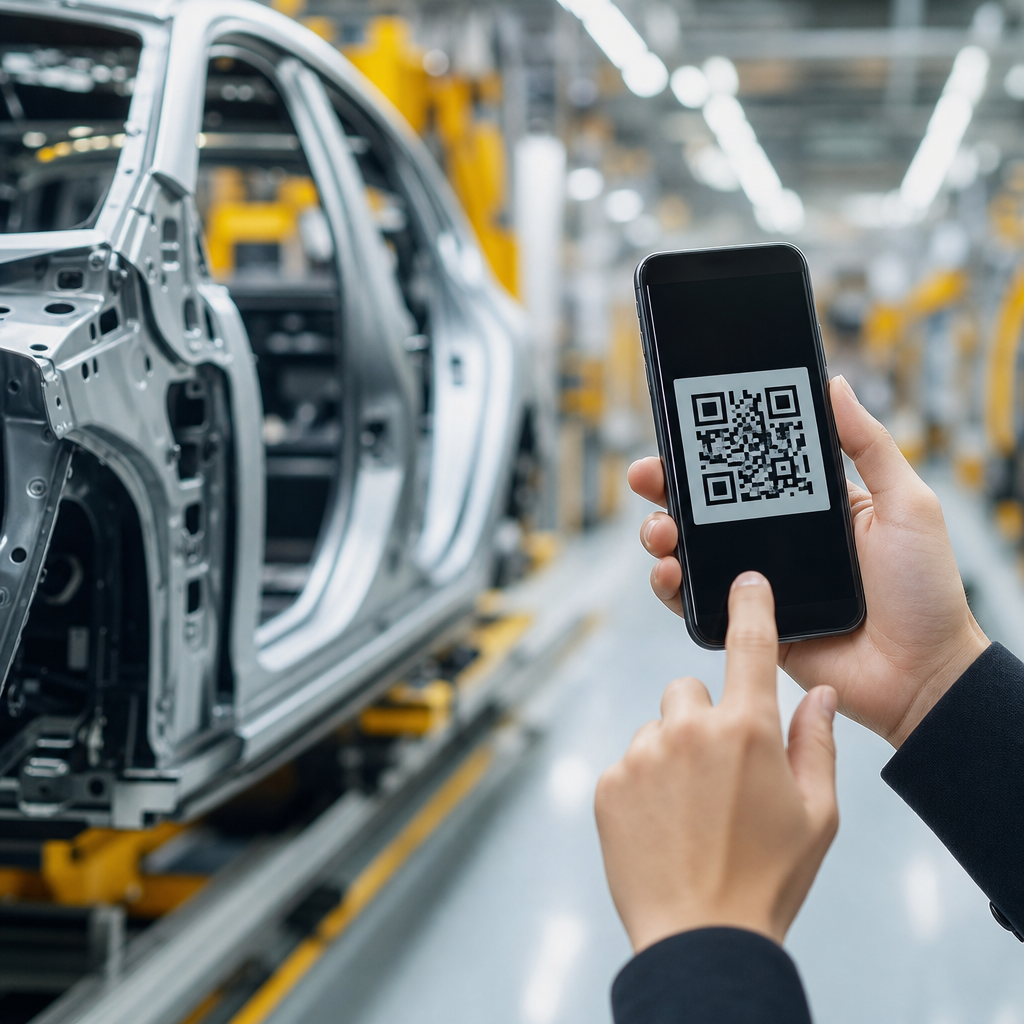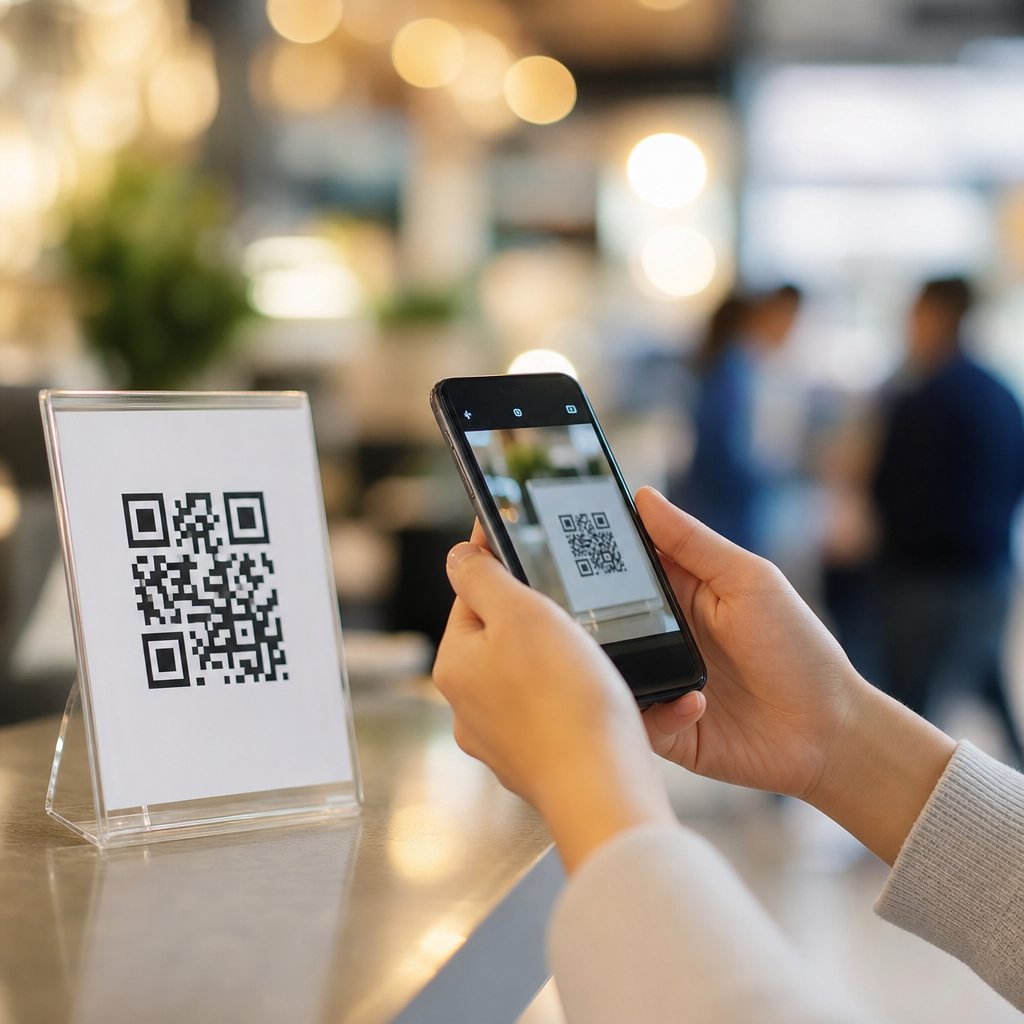
QR codes moved from factory floors to restaurant tables, from marketing gimmick to everyday utility, and their history explains why they matter so much today. A QR code, short for Quick Response code, is a two-dimensional matrix barcode that stores data in a grid of black and white modules rather than in the single line pattern used by traditional barcodes. That simple design change allowed much higher data capacity, faster scanning, and built-in error correction, making QR codes practical in places where conventional barcodes struggled. Understanding the history of QR codes is useful for businesses, marketers, product teams, and educators because the technology’s rise, fall, and comeback shows how adoption depends as much on timing and user behavior as on technical capability.
I have worked with QR code campaigns in retail, events, packaging, and payments, and the pattern is consistent: the same symbol can perform brilliantly or fail completely depending on context. Early on, many teams treated QR codes as a novelty, placing them on billboards that linked to broken mobile pages or burying them in print ads without a clear call to action. Later, when smartphone cameras began scanning codes natively and contactless interactions became normal, those same codes turned into low-friction bridges between physical and digital experiences. The history of QR codes is therefore not just a timeline of inventions. It is a lesson in product design, human behavior, standards, and infrastructure.
The key terms in this topic are worth defining clearly. A barcode is a machine-readable representation of data. A QR code is a specific barcode format invented in Japan in 1994 by Denso Wave, a Toyota group company, for tracking automotive components. Static QR codes contain fixed information that cannot be edited after creation. Dynamic QR codes point to a short redirect URL, allowing destination changes, analytics, and campaign management after printing. Error correction refers to the Reed-Solomon method used in QR codes to recover data even when part of the symbol is damaged. Those technical features explain why QR codes survived periods of skepticism and were able to return so strongly.
As a hub article on the history of QR codes, this page covers the full arc: why the technology was created, how it spread beyond manufacturing, why public enthusiasm cooled in the early smartphone era, and what drove its dramatic comeback in payments, menus, tickets, packaging, logistics, and authentication. It also explains the standards, milestones, and practical turning points that shaped adoption. If you want to understand where QR codes came from, why they failed in some markets, and why they are now a durable part of digital infrastructure, the historical record provides direct answers.
How QR Codes Were Invented and Why the Technology Was Different
The origin of QR codes begins with an industrial problem. In the early 1990s, manufacturers needed a way to track more information than standard one-dimensional barcodes could hold. Denso Wave engineer Masahiro Hara and his team developed the QR code in 1994 to solve that problem in Toyota’s supply chain. Automotive production requires rapid identification of many parts, and line workers needed a code that could be scanned quickly from different angles and carry more data than a UPC or Code 39 symbol. The answer was a two-dimensional matrix code with position detection patterns in three corners, enabling high-speed reading regardless of orientation.
This design delivered several practical advantages. First, QR codes can store significantly more data than linear barcodes, including numeric, alphanumeric, byte, and kanji characters. Second, they scan quickly because readers can detect orientation immediately. Third, their error correction lets them remain readable even when partially damaged, dirty, or printed on curved surfaces. In factory settings, those features translated into faster throughput and fewer scanning failures. Denso Wave also made a historically important choice by not aggressively enforcing patent rights for widespread use, which lowered adoption barriers and encouraged ecosystem growth. That decision matters because many useful technologies stall when licensing is restrictive.
Standardization reinforced early momentum. QR code specifications were formalized under JIS and later ISO/IEC 18004, giving hardware makers and software developers a reliable technical reference. Once a code format becomes standardized, it becomes easier for scanner manufacturers, label printers, logistics providers, and enterprise software vendors to build compatible products. I have seen this effect firsthand in operations projects: adoption accelerates when procurement teams know a format is stable, documented, and globally recognized. QR codes earned that confidence early in industrial contexts long before the general public noticed them.
From Industrial Tool to Consumer Curiosity
QR codes left the factory floor gradually. In Japan, mobile internet culture and camera phones created favorable conditions for consumer use well before many Western markets caught up. By the early 2000s, QR codes appeared on posters, packaging, business cards, magazines, and transit materials. Japanese users became accustomed to scanning a code to open a website, save contact information, or access product details. This behavior was supported by handset makers and carriers that integrated QR reading into devices and services. When the scanning tool is already in the user’s hand, behavior changes faster.
Outside Japan, the spread was slower and more uneven. Marketers in North America and Europe noticed the format’s visual distinctiveness and began placing QR codes in advertising, often without building the surrounding user experience correctly. A code on a cereal box or subway poster can work, but only if the landing page is mobile-friendly, the connection loads quickly, and the user gets immediate value. Too many campaigns linked to desktop pages, generic homepages, app download prompts, or expired promotions. The public did not reject the symbol itself. People rejected poor implementation.
Consumer curiosity still produced moments of growth. During the late 2000s and early 2010s, QR codes appeared in retail displays, event badges, real estate signage, tourism materials, and product packaging. Brands treated them as a bridge from print to digital at a time when mobile browsing was accelerating. Some sectors used them well. Museums linked to audio guides. Airlines and rail operators used matrix codes in boarding and ticketing workflows. Logistics companies improved package tracking. But in mass-market advertising, many use cases were thin. A code without a compelling reason to scan is just visual noise.
| Period | Main Use of QR Codes | What Drove Adoption | What Limited Growth |
|---|---|---|---|
| 1994–2002 | Automotive and industrial tracking | High data capacity, fast scanning, error correction | Mostly specialized enterprise use |
| 2002–2012 | Mobile links, packaging, print media | Camera phones, early mobile web, Japanese market leadership | Weak mobile sites, separate scanner apps, unclear value |
| 2012–2019 | Payments, ticketing, authentication, selective marketing | Platform maturity, app ecosystems, Asian super apps | Consumer skepticism in some Western markets |
| 2020–present | Menus, payments, onboarding, omnichannel commerce | Native camera scanning, contactless demand, better UX | Security concerns, overuse, poor governance in some campaigns |
Why QR Codes Fell Out of Favor in Many Markets
The decline in enthusiasm was not caused by a flaw in the QR code standard. It came from friction. For years, many smartphones required a separate scanning app, which added steps to a task that was supposed to feel instant. Mobile connections were slower, mobile pages were often badly designed, and users had little assurance that the scan would lead somewhere useful. In practical terms, marketers asked people to interrupt what they were doing, open an app, align a code, wait for a page, and hope the result justified the effort. Usually it did not.
I remember reviewing campaigns where the code was technically correct but strategically pointless. A retail poster sent users to a homepage instead of a product page. A restaurant flyer linked to a PDF impossible to read on a phone. A billboard used a code in a place where no pedestrian could safely stop and scan. These failures taught a damaging lesson: many people began to associate QR codes with bad experiences. By the mid-2010s, jokes about QR codes being dead were common in marketing circles, especially in the United States.
There was also a design and trust problem. Some brands distorted codes excessively with logos and colors, reducing readability. Others printed them too small or with insufficient quiet zone spacing. More importantly, consumers could not easily preview where a code would take them. That uncertainty created hesitation, especially as phishing and malicious redirects became more visible online. In sectors where trust is critical, such as finance or healthcare, a code must be paired with clear branding, context, and secure destinations. Without that, adoption stalls.
The Quiet Growth Years: Payments, Ticketing, and Asia-Led Expansion
While some Western marketers declared QR codes over, the format was quietly becoming foundational elsewhere. The most important developments happened in payments and platform ecosystems, especially in China and later across parts of Southeast Asia and India. WeChat Pay and Alipay normalized the use of QR codes for person-to-person transfers, merchant payments, bill settlement, and account linking. In these systems, the code was not an isolated marketing object. It was embedded in daily utility. Consumers scanned to complete an action they already cared about: paying quickly.
This distinction changed everything. Utility beats novelty. Once users learned that scanning a QR code could replace cash, cards, or tedious form entry, the behavior became routine. India’s Unified Payments Interface also accelerated QR payment acceptance, with interoperable merchant codes helping small businesses adopt digital payments at low cost. Street vendors, taxis, market stalls, and neighborhood shops could accept electronic payments without expensive point-of-sale hardware. In operational terms, QR codes reduced setup costs and widened access.
Other sectors advanced in parallel. Airlines, cinema chains, rail operators, and event organizers used QR codes in boarding passes and e-tickets because they simplified verification. Warehousing and fulfillment teams adopted matrix codes to support higher-density labeling. Authentication and login flows used QR codes to pair devices or sign into web sessions from trusted mobile apps. These uses mattered historically because they kept the technology relevant, improved scanner reliability, and familiarized consumers with legitimate, high-value interactions. The comeback did not begin in 2020 from nothing. It had been building for years in less visible but more practical contexts.
The Comeback: Smartphones, Contactless Behavior, and Better User Experience
The modern comeback of QR codes happened when three conditions aligned. First, smartphone operating systems integrated native scanning into the camera app, eliminating the need for separate readers. Apple added broader QR support in iOS 11 in 2017, and Android device makers increasingly did the same through native camera experiences and Google Lens. Second, mobile websites and app deep linking improved substantially, so scans were more likely to produce fast, usable destinations. Third, contactless interactions became socially and operationally important, especially during the COVID-19 pandemic.
Restaurants replaced printed menus with QR code menus. Healthcare providers used codes for check-in, forms, and vaccine records. Retailers linked shelf displays to stock details, reviews, and delivery options. Venues used them for timed entry and touchless ticket validation. In my own client work during 2020 and 2021, the change was immediate: organizations that had ignored QR codes for years suddenly needed them across signage, packaging, onboarding flows, and customer support. The technology had not changed fundamentally. The environment had.
What made this comeback durable was not only necessity but better execution. Strong implementations gave users a clear reason to scan, a trusted context, and a destination optimized for mobile. Dynamic QR code platforms added analytics, expiration rules, redirect management, and campaign-level governance. Teams could update destinations without reprinting assets, measure scan rates by location, and run A/B tests on landing pages. Tools from major QR code generators, marketing suites, and analytics platforms turned QR usage from a one-off tactic into a managed channel. Once results became measurable, leadership took the format more seriously.
What the History of QR Codes Teaches Businesses Today
The history of QR codes offers several hard lessons. First, adoption depends on reducing friction at every step. If the camera recognizes the code instantly, the destination loads quickly, and the value is obvious, people scan. If any of those conditions fail, response drops sharply. Second, context matters more than novelty. A QR code works best when it completes a task: pay, verify, learn, register, redeem, navigate, or download something immediately relevant. Third, technical correctness is nonnegotiable. Size, contrast, error correction level, quiet zone, and destination quality all affect performance.
The historical record also shows that QR codes are strongest when treated as infrastructure rather than decoration. In packaging, they can support traceability, ingredient transparency, warranty registration, or anti-counterfeit verification. In B2B operations, they can connect physical assets to manuals, maintenance logs, or parts databases. In education, they can bridge textbooks, exhibits, and classroom resources. In omnichannel retail, they can link shelves, catalogs, and direct mail to inventory-aware product pages. The code is only the visible layer. The real value comes from the system behind it.
There are limits and tradeoffs. QR codes are not ideal for every surface or audience. Poor lighting, low print quality, reflective materials, and inaccessible placement reduce usability. Security needs active management through branded domains, HTTPS, redirect controls, and user education. Accessibility also matters; a printed code should not be the only path to essential information. Still, the broader conclusion is clear: QR codes endured because they solve a recurring problem efficiently. They connect the physical and digital worlds with minimal hardware, low distribution cost, and global familiarity.
For anyone building within QR Code Basics and Education, the core takeaway is simple. The rise of QR codes came from real technical advantages, the fall came from bad user experiences and premature hype, and the comeback came from better infrastructure, stronger mobile behavior, and urgent real-world use cases. That makes the history of QR codes more than a retrospective. It is a practical guide for using them well today. If you manage packaging, payments, events, marketing, or operations, study this history before launching your next QR code project, and build for utility, trust, and speed from the start.
Frequently Asked Questions
What exactly is a QR code, and how is it different from a traditional barcode?
A QR code, or Quick Response code, is a two-dimensional barcode made up of small black and white squares arranged in a grid. Unlike a traditional one-dimensional barcode, which stores information across a single horizontal line and usually contains only a limited amount of numeric data, a QR code can store information both horizontally and vertically. That structural difference gives it much greater data capacity and flexibility.
In practical terms, this means a QR code can hold website URLs, contact information, product details, authentication data, payment instructions, and much more in a compact format. It is also designed for fast scanning from multiple angles, which is part of why it was so useful in industrial environments and later became effective for everyday consumer use. Another major advantage is error correction. Even if part of a QR code is smudged, scratched, or partially obscured, it can often still be scanned successfully. That combination of speed, durability, and data density is what made QR codes such an important step forward from older barcode systems.
Why were QR codes invented in the first place?
QR codes were originally developed to solve a very specific industrial problem. In manufacturing and logistics, especially in automotive production, companies needed a way to track parts and information more efficiently than standard barcodes allowed. Traditional barcodes were useful, but they had clear limitations: they stored relatively little data, required more careful alignment for scanning, and were not ideal for handling complex inventory systems with large amounts of information attached to each item.
The QR code was created to address those limitations by making data capture faster and more robust. Because it could store more information and be scanned quickly, it helped improve workflow on factory floors and in supply chains. That origin is important because it shows QR codes were never just a marketing novelty. They were built as a practical tool for speed, accuracy, and reliability. Their later adoption in retail, advertising, hospitality, ticketing, and payments was possible precisely because the underlying technology had already proven itself in demanding real-world environments.
Why did QR codes seem to fade for a while before becoming popular again?
QR codes had an uneven path to mainstream adoption because the technology often arrived before the broader consumer experience was ready for it. In the early years, many marketers saw QR codes as an exciting bridge between print and digital media, but average smartphone users often had to download a separate scanning app just to use them. That extra step created friction, and in many cases the code led to a poor mobile webpage, generic homepage, or underwhelming promotion. As a result, many people viewed QR codes as awkward or gimmicky rather than genuinely useful.
The comeback happened when several conditions finally aligned. Smartphone cameras began supporting QR scanning natively, mobile internet became faster and more reliable, and businesses started using QR codes for practical, everyday tasks instead of novelty campaigns. Menus, payments, event check-ins, product information, delivery tracking, and secure logins all gave people clear reasons to scan. During the pandemic, contactless interaction accelerated that shift even further. QR codes were no longer a curiosity on a poster; they became a convenient tool for real-world access. Their revival was less about a sudden rediscovery and more about the surrounding technology and user habits finally catching up to their original strengths.
What made QR codes so important in everyday life today?
QR codes matter today because they create an immediate bridge between physical objects and digital actions. A label, sign, receipt, table card, package, or screen can instantly become a link to something interactive without requiring the user to type a URL, search manually, or install special hardware. That simplicity is incredibly powerful. It reduces friction for both businesses and consumers, which is why QR codes now appear in restaurants, transit systems, healthcare settings, marketing campaigns, product packaging, education, and mobile payments.
Their importance also comes from their versatility. One QR code can send a customer to a menu, verify a ticket, start a payment, open a support page, download an app, connect to Wi-Fi, or confirm identity in a login flow. Because smartphone adoption is widespread and camera-based scanning is built into most devices, QR codes have become one of the easiest universal interfaces available. They are inexpensive to create, easy to distribute, and scalable across industries. In other words, QR codes matter so much today not because they are flashy technology, but because they quietly solve a basic modern problem: how to move people quickly from the physical world into the right digital experience.
Are QR codes still evolving, or have they already reached their peak?
QR codes are still evolving, even though the basic visual format is now familiar worldwide. The core technology remains highly relevant because it continues to fit new use cases as digital services expand. Businesses are using dynamic QR codes that can be updated without changing the printed image, allowing them to edit destinations, track engagement, and personalize experiences over time. QR codes are also becoming more deeply integrated into payments, authentication systems, loyalty programs, inventory management, and secure access workflows.
At the same time, their future depends on better implementation and smarter user trust. As QR codes become more common, organizations need to make sure the destination is clear, safe, and genuinely useful. Security awareness is especially important because any technology that simplifies access can also be misused if users scan untrusted links. Even so, the long-term outlook is strong. QR codes have already demonstrated an unusual ability to adapt across decades, moving from factories to consumer life and from niche tool to mainstream infrastructure. Rather than peaking and fading, they are increasingly becoming part of the background fabric of how people interact with information, services, and transactions.