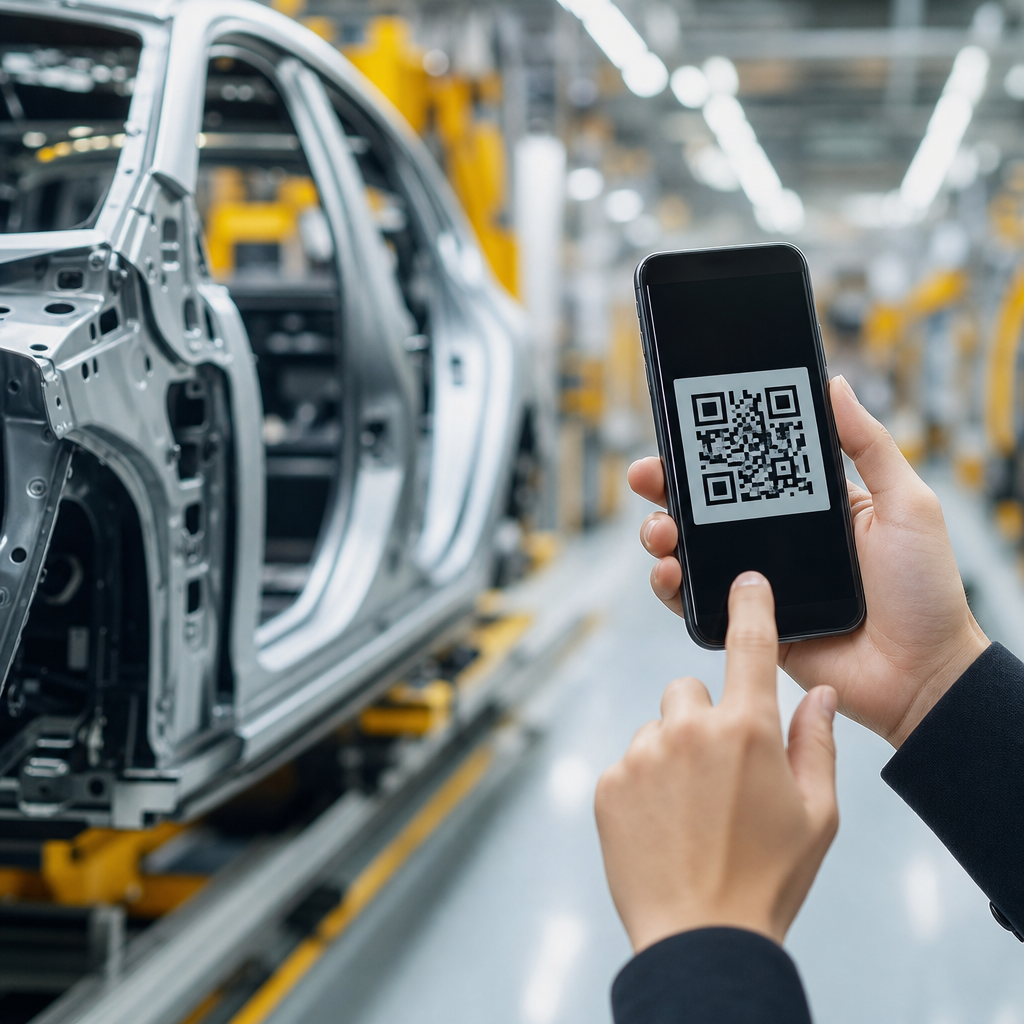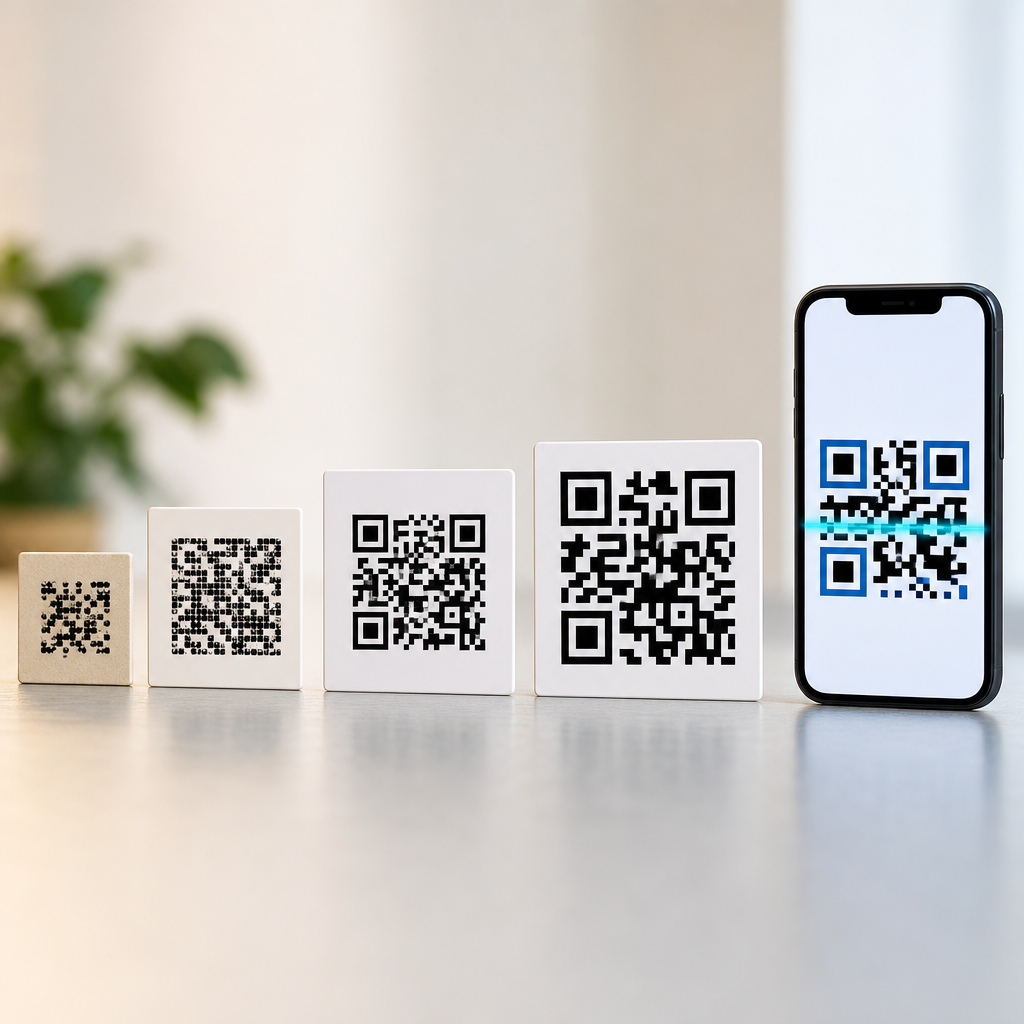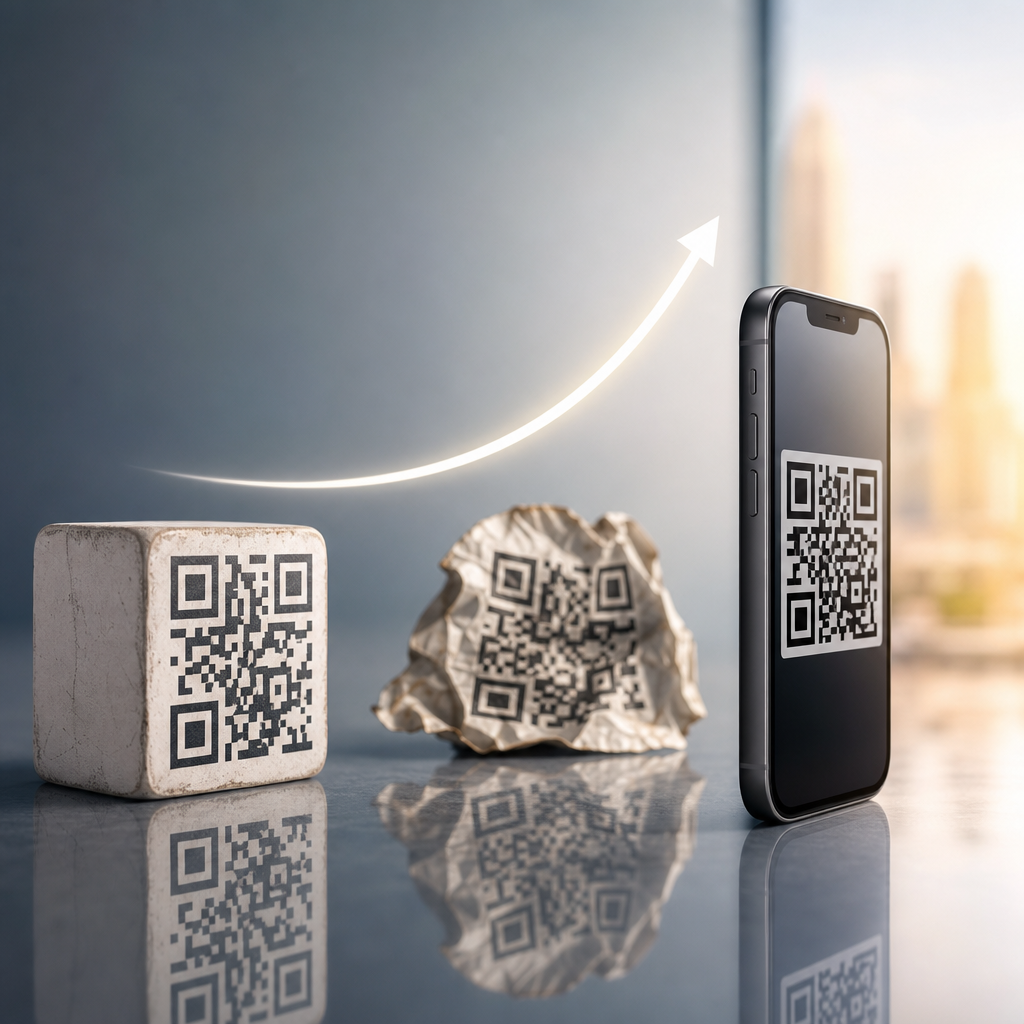

QR codes are so common on menus, payment screens, shipping labels, museum placards, and product packaging that many people assume they appeared with smartphones. In fact, the history of QR codes begins decades earlier in Japanese manufacturing, where a practical tracking problem demanded a faster and more capable symbol than the standard barcode. If you want a clear answer to who invented QR codes and why, the short version is this: Masahiro Hara and his team at Denso Wave created the QR code in 1994 to improve high-speed scanning and expand data capacity for parts management in automotive production.
That answer matters because the origin of QR codes explains their design. “QR” stands for “Quick Response,” a name chosen to reflect the code’s ability to be read rapidly from any direction. Unlike a one-dimensional barcode, which stores data along a single horizontal axis, a QR code is two-dimensional. It stores information both horizontally and vertically, allowing far more characters in a smaller space. That extra capacity, combined with error correction and orientation markers, made QR codes useful long before consumers began scanning them with phones.
I have worked with QR campaigns, packaging workflows, and print production teams, and the same confusion comes up repeatedly: people think QR codes were invented for advertising. They were not. Their first job was industrial traceability. Understanding that industrial origin helps explain why they remain reliable under tough conditions, including partial damage, uneven printing, and fast-moving production lines. It also explains why the technology spread so effectively into retail, logistics, healthcare, ticketing, and payments.
This article serves as a hub for the history of QR codes. It covers the inventor, the problem the code was built to solve, the technical breakthroughs that made adoption possible, how QR codes moved from factories to everyday life, and why they became a global standard. By the end, you will understand not just who invented QR codes, but why the invention succeeded where many other machine-readable systems stayed niche.
The inventor of QR codes: Masahiro Hara at Denso Wave
The inventor most directly associated with the QR code is Masahiro Hara, an engineer at Denso Wave, a subsidiary of Denso and part of the Toyota supplier network in Japan. In 1994, Hara led the development team that created the QR code to solve data capture problems on the factory floor. Denso Wave was deeply involved in automatic identification systems, so the company understood both the strengths and the limitations of existing barcode technology. The invention was not a lab curiosity. It emerged from a defined operational need inside advanced manufacturing.
Hara’s team has described how traditional barcodes were becoming inadequate for tracking the growing volume of information associated with components and assemblies. Automotive production depends on precise identification of many parts moving quickly through multiple processes. A conventional barcode could only store a small amount of data, which often forced operators to rely on linked database records rather than encoding enough information directly in the symbol. That increased process friction. The new code needed to hold more data and be scanned at speed, from different angles, in real environments.
Denso Wave’s role is important historically because the company did more than invent the symbol. It also supported practical implementation. That combination of engineering and deployment discipline is one reason QR codes spread. In the history of automatic identification, plenty of code formats were technically clever but operationally awkward. QR codes succeeded because they solved a real workflow problem in a way that equipment makers, printers, and software systems could actually use.
Why QR codes were invented: the manufacturing problem behind the design
The core reason QR codes were invented was simple: barcodes did not carry enough information and were too slow to read in demanding production environments. A standard linear barcode, such as UPC or Code 39, is scanned as a sequence of bars and spaces across one dimension. That works well for retail checkout, where a short product identifier is enough. It works less well in manufacturing, where operators may need batch data, part numbers, destination information, or process identifiers attached to a single item.
Japanese automotive manufacturing in the late twentieth century emphasized efficiency, traceability, and just-in-time logistics. That meant every second in scanning and verification mattered. If workers had to orient each label carefully or if the code linked to too little information, throughput suffered. Hara’s team set out to create a symbol that could be scanned quickly, even if the label angle varied, and that could encode significantly more data than a typical barcode.
The resulting design addressed those constraints directly. Three large square position detection patterns placed in the corners made orientation recognition fast. The two-dimensional grid structure increased capacity dramatically. Built-in error correction meant the symbol could still be read even if part of it was dirty or damaged. In practical terms, those features meant a code on a factory component could survive rough handling better than a linear barcode while still delivering fast machine readability. That is the “why” behind QR codes: they were engineered for efficiency, resilience, and data density under industrial conditions.
How QR codes work and what made them different
A QR code is a matrix barcode made of black and white modules arranged in a square grid. Readers identify the three position markers, determine the symbol’s orientation, and then decode the encoded data according to QR standards. This structure gave QR codes a substantial capacity advantage over linear barcodes. Depending on the version and encoding mode, a QR code can store numeric, alphanumeric, byte, or kanji data. That flexibility made it useful in Japan, where character support mattered in ways many Western barcode systems did not handle elegantly.
Another key difference is error correction, based on Reed-Solomon coding. In plain terms, QR codes contain redundant data that lets a scanner reconstruct missing or damaged portions. That is why a slightly scratched code on packaging can still work. Error correction comes in levels, typically labeled L, M, Q, and H, with higher levels allowing more damage recovery at the cost of some capacity. In production settings, that tradeoff is valuable. On a greasy part label or outdoor sign, reliability often matters more than maximizing every character slot.
The following comparison shows why QR codes represented such a meaningful step forward in the history of machine-readable symbols.
| Feature | Traditional linear barcode | QR code |
|---|---|---|
| Data structure | One-dimensional | Two-dimensional matrix |
| Scan orientation | Usually requires alignment | Readable from multiple angles |
| Data capacity | Low | High relative to barcode size |
| Error correction | Limited or format-dependent | Built-in robust error correction |
| Typical early use | Retail product identification | Industrial parts tracking |
That technical architecture is why the code’s original name matters. “Quick Response” was not marketing fluff. It described a functional achievement: fast recognition and decoding. In my experience, teams evaluating code formats still come back to the same benefits Hara’s group prioritized—scan speed, tolerance for damage, and enough embedded data to reduce dependence on manual lookup steps.
From factory floors to global standard
QR codes might have remained a specialized industrial tool if Denso Wave had tightly controlled licensing. Instead, one of the most consequential decisions in QR code history was the company’s approach to patents. Denso Wave held the patent rights but chose not to exercise them broadly in a restrictive way, which helped the technology spread. That openness reduced barriers for scanner manufacturers, software developers, printer vendors, and standards bodies. It encouraged ecosystem growth rather than locking the format into a single proprietary channel.
Standardization reinforced that momentum. QR codes were incorporated into international standards, including ISO/IEC 18004, which defined the symbology and helped ensure interoperability across devices and markets. This is a turning point in the history of QR codes. A code format does not become globally useful merely because it is clever. It becomes useful when a label printed by one company can be reliably read by equipment and software from many others. Standards made QR codes dependable across supply chains and national borders.
By the late 1990s and early 2000s, QR codes expanded beyond automotive manufacturing into logistics, warehousing, document management, and marketing experiments. In Japan especially, mobile adoption accelerated earlier than many international observers realized. Feature phones with camera capabilities and QR-reading software made consumer use more feasible. Long before many Western markets normalized scanning restaurant menus or payment prompts, Japanese users were already interacting with QR codes on posters, magazines, and transit materials.
That progression from industrial traceability to mainstream utility is not accidental. A robust industrial tool often adapts well to consumer applications because it has already been tested under stricter conditions. If a symbol can survive a factory, it can certainly survive a flyer, carton, or storefront window.
The smartphone era and the explosive rise of everyday QR code use
The biggest acceleration in public awareness came with smartphones. Early consumer use of QR codes often required a separate scanning app, which added friction. Adoption improved once mobile operating systems and camera apps began integrating QR recognition natively. Apple added native QR scanning support in the Camera app with iOS 11 in 2017, and Android ecosystems increasingly incorporated similar functionality. That seemingly small interface change mattered enormously. When scanning became default behavior rather than an extra task, the code moved from occasional curiosity to normal digital infrastructure.
Several use cases drove mass adoption. Payments are one of the most important. In China, platforms such as WeChat Pay and Alipay turned QR codes into a common transaction layer for merchants large and small. A printed code could enable digital payment without expensive card terminals. In restaurants, QR menus and ordering systems reduced printing cycles and allowed instant updates. In ticketing, event access became faster and easier to verify. In logistics and delivery, QR codes provided direct links to package, route, and authentication data.
The COVID-19 pandemic pushed usage even further. Contactless interactions suddenly became operational priorities across hospitality, healthcare, retail, and public venues. Many organizations deployed QR codes quickly for menus, check-ins, test registration, vaccination workflows, and digital forms. Some implementations were clumsy, but the broader effect was clear: billions of people learned how to scan codes as part of ordinary life. Once that behavior was established, the barrier to future QR-based experiences dropped permanently.
Still, growth came with tradeoffs. Badly designed landing pages, tiny print sizes, poor contrast, and overuse damaged some campaigns. Security concerns also grew because malicious actors could place deceptive codes over legitimate ones. The history of QR codes is therefore not just a success story. It is also a lesson in implementation quality. The symbol is powerful, but results depend on context, usability, and trust.
Why QR codes endured when other code formats stayed specialized
QR codes lasted because they solved multiple problems at once without demanding unrealistic behavior from users or businesses. First, they are flexible. A QR code can hold a URL, plain text, contact information, Wi-Fi credentials, app deep links, payment payloads, and more. Second, they are economical. Printing a QR code is cheap, and scanning one usually requires only a camera and software. Third, they bridge physical and digital environments cleanly. A package, sign, card, label, or screen can become an entry point to richer information.
There are, however, important nuances. QR codes are not automatically the best option in every environment. In ultra-fast retail checkout, linear barcodes still dominate because global product identification systems are built around them. For short-range tap interactions, NFC can be smoother because it removes the need to open a camera and align a code. For some industrial applications, Data Matrix codes are preferred due to size efficiency on very small components. Good practitioners choose the code type that matches the use case rather than forcing QR codes everywhere.
Even with those caveats, QR codes became the best-known two-dimensional code because they balanced capacity, readability, durability, and deployment simplicity exceptionally well. From a historical perspective, that balance is the real invention. Hara’s team did not merely create a new visual pattern. They created a practical information carrier that fit existing industrial processes and then proved adaptable to consumer technology waves that arrived years later.
The history of QR codes starts with a concrete answer: Masahiro Hara and his team at Denso Wave invented the QR code in 1994 to solve manufacturing traceability problems that ordinary barcodes could not handle efficiently. They needed a symbol that stored more information, scanned quickly from different angles, and remained readable even when partially damaged. Those requirements shaped every major feature that still defines QR codes today.
From there, the story becomes one of design meeting timing. Strong technical decisions, broad interoperability, and a relatively open adoption path allowed QR codes to move from automotive production lines to logistics, marketing, payments, healthcare, and daily mobile interactions. Smartphones and contactless habits expanded public use, but the foundation was laid years earlier by industrial engineering discipline. That is why QR codes proved durable rather than trendy.
If you are exploring QR Code Basics & Education, use this history as your starting point. Understanding who invented QR codes and why makes every later topic clearer, from static versus dynamic codes to security, standards, design, and practical implementation. Continue through the rest of this history cluster to see how a factory-floor solution became one of the most recognizable digital tools in the world.
Frequently Asked Questions
Who invented QR codes?
QR codes were invented by Masahiro Hara and a development team at Denso Wave, a subsidiary of the Japanese company Denso. The work began in the early 1990s, when the team was trying to solve a major limitation of traditional one-dimensional barcodes. Standard barcodes could only store a small amount of information and had to be scanned from a particular direction, which slowed down industrial workflows. Hara and his colleagues designed a new two-dimensional code that could hold much more data and be read quickly from multiple angles. That invention became the QR code, short for “Quick Response,” reflecting its speed and efficiency in scanning. Although QR codes are now associated with smartphones, advertising, and digital payments, their origin was firmly rooted in manufacturing and logistics.
Why were QR codes invented in the first place?
QR codes were invented to solve a practical tracking and efficiency problem in Japanese manufacturing. In automotive production, especially in supply chains handling large numbers of components, workers needed a faster and more information-rich way to label and trace parts. Traditional barcodes were no longer enough because they stored limited data and often required multiple labels to communicate what a single process needed. Masahiro Hara’s team set out to create a symbol that could encode significantly more information while still being scanned rapidly and accurately on the factory floor. The result was a code that could be read at high speed, even if it was positioned at different angles, and could continue functioning even when partially damaged. In short, QR codes were invented not as a consumer technology, but as an industrial solution designed to improve speed, reliability, and traceability.
When were QR codes created, and how did they spread beyond factories?
QR codes were created in 1994 by Denso Wave. At first, they were primarily used in manufacturing environments, especially for tracking automotive components and improving inventory control. Their spread beyond factories happened gradually as businesses recognized how useful they were for storing more information than a standard barcode. A major reason for their wider adoption was Denso Wave’s decision not to aggressively enforce the patent in the way many companies might have. That helped encourage open commercial use and allowed the technology to gain traction across different industries. Over time, QR codes began appearing in retail packaging, transportation, publishing, ticketing, and marketing. The smartphone era then accelerated their public visibility because phone cameras made scanning easy for everyday users. What started as a specialized industrial tool evolved into a global standard for linking physical objects with digital information.
What made QR codes better than traditional barcodes?
The biggest advantage of QR codes over traditional barcodes was their ability to store far more information in a compact space. A conventional barcode is one-dimensional, which means it typically holds a relatively small string of numbers or characters. A QR code is two-dimensional, using both horizontal and vertical patterns, so it can encode much larger amounts of data. That made it especially useful in manufacturing, where one symbol could carry information that would otherwise require several barcodes. QR codes also offered much faster scanning because they were designed to be read from multiple directions, reducing the need for careful alignment. Another important improvement was error correction, which allows a QR code to remain readable even if part of it is dirty, scratched, or obscured. These features made QR codes more durable, efficient, and flexible than older barcode systems, which is why they eventually became so widespread.
Did smartphones invent or popularize QR codes?
Smartphones did not invent QR codes, but they absolutely helped popularize them with the general public. The technology had already existed for years before smartphones became common, and it was originally developed for industrial scanning in manufacturing. What smartphones changed was accessibility. Once mobile phones included cameras and QR-reading apps, people no longer needed specialized scanning equipment to use QR codes. That shift opened the door for consumer-facing uses such as restaurant menus, contactless payments, app downloads, event tickets, product information, and museum guides. In other words, smartphones transformed QR codes from a behind-the-scenes business tool into an everyday interface between the physical and digital worlds. So if someone assumes QR codes were created during the smartphone era, the historical record shows otherwise: smartphones expanded their reach, but Masahiro Hara and Denso Wave invented them decades earlier for a very different purpose.