Quick Response codes began as a practical factory innovation, yet they evolved into one of the most recognizable bridges between physical objects and digital content. The history of QR codes matters because it explains why the technology spread so widely, why it outperformed older barcodes in many settings, and why businesses now use it for everything from inventory control to restaurant menus and product packaging. A QR code is a two-dimensional matrix barcode that stores information both horizontally and vertically, allowing it to hold far more data than the traditional one-dimensional UPC barcode. It can encode URLs, text, contact details, payment instructions, authentication tokens, and operational data. What started inside the Japanese automotive supply chain became a global standard for fast mobile interaction.
I have worked with QR campaigns in retail, events, and packaging, and the pattern is always the same: the best results come from understanding the code’s industrial roots. QR codes were designed for speed, reliability, and error correction under real-world conditions. Those characteristics, not novelty, explain their endurance. Their development also reflects broader shifts in manufacturing, mobile computing, camera technology, and consumer behavior. To understand the history of QR codes is to understand how a shop-floor tracking tool became a mainstream marketing tool. This article serves as a central guide to that evolution, covering invention, standardization, global adoption, pandemic acceleration, and the strategic reasons QR codes remain relevant today.
The Origin of QR Codes in Japanese Manufacturing
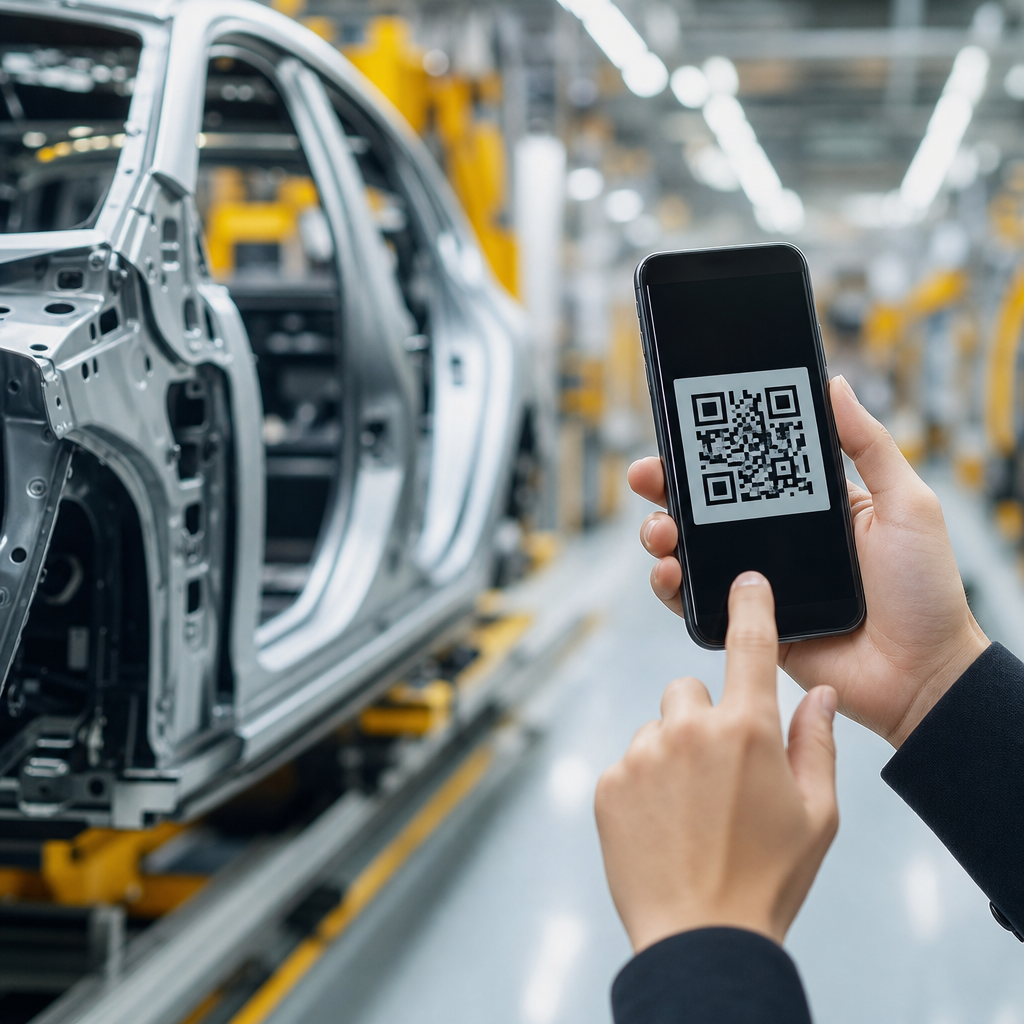
The QR code was invented in 1994 by Masahiro Hara and his team at Denso Wave, a subsidiary of the Toyota Group. The immediate problem was industrial: one-dimensional barcodes could not store enough information for fast, accurate tracking of automotive components. On a manufacturing line, workers needed to identify parts quickly and scan them from multiple angles without slowing production. Existing barcodes had limited capacity and required precise alignment. Denso Wave’s engineers needed a symbol that could hold more data and be read at high speed in demanding environments.
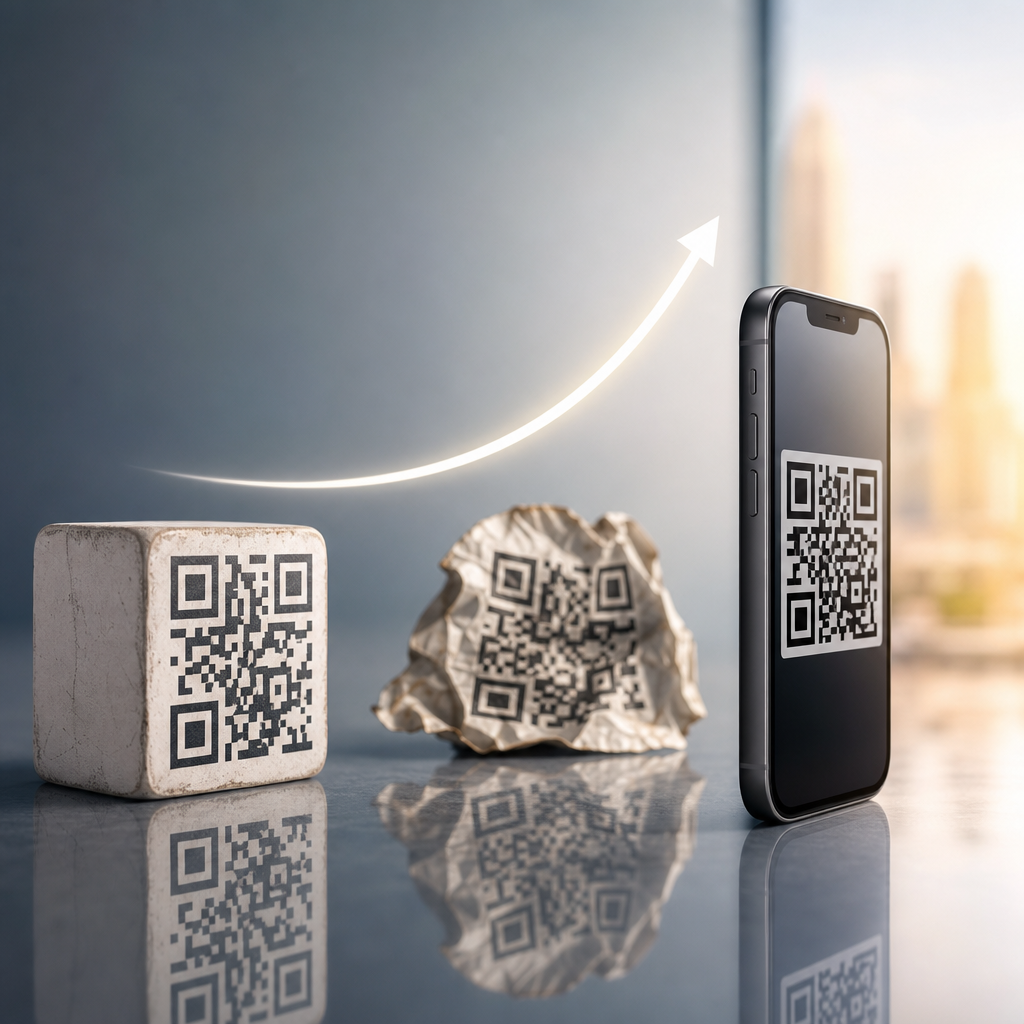
The result was the Quick Response code, named for its rapid readability. Hara’s team reportedly drew inspiration from patterns on a Go board and developed the distinctive square format with position detection markers in three corners. Those large corner squares are not decorative; they allow scanners to detect orientation immediately, which is why a QR code can be scanned from different angles. This solved a major operational issue in factories, where labels are not always perfectly placed or perfectly clean. The code’s built-in Reed-Solomon error correction also meant that even partially damaged symbols could still be read accurately, an essential advantage on parts moving through industrial processes.
Denso Wave made a crucial strategic choice: it did not aggressively restrict use of the technology through patent enforcement. The company held patents but allowed broad adoption, which removed friction at the exact moment global supply chains were becoming more data dependent. That decision helped QR codes move beyond the automotive industry faster than many proprietary identification systems.
Why QR Codes Improved on Traditional Barcodes
A traditional barcode stores data in a single direction, usually as vertical lines of varying widths and spacing. That format works well for a basic product identifier such as a UPC, but it is constrained by low data capacity. A QR code stores data in two dimensions, which increases capacity dramatically. Depending on the encoding mode, a QR code can hold thousands of numeric characters, alphanumeric strings, or binary data. In plain terms, a barcode points to a record, while a QR code can contain a much richer payload.
In practice, three advantages drove early adoption. First, QR codes scan faster because orientation detection is built into the symbol design. Second, they tolerate damage through four error correction levels, commonly labeled L, M, Q, and H, allowing recovery of roughly 7 percent, 15 percent, 25 percent, or 30 percent of damaged codewords. Third, they work on smaller physical labels while carrying more information. In logistics and manufacturing, that means fewer rescans, fewer mislabeled items, and faster throughput. In customer-facing applications, it means one printed square can connect a person directly to a webpage, app download, payment flow, or verification service.
These benefits explain why QR codes did not replace all barcodes but instead occupied a different role. Retail checkout remained tied to linear barcode standards for years because scanners, packaging workflows, and point-of-sale systems were already optimized for UPC and EAN. Meanwhile, QR codes expanded where richer data and flexible scanning mattered more.
Standardization and Early Expansion Beyond Auto Parts
For any coding system to spread internationally, technical standardization is essential. QR codes moved from company invention to recognized global specification through standards bodies including JIS and ISO/IEC. The core QR Code symbology is documented in ISO/IEC 18004, which helped software developers, scanner makers, mobile manufacturers, and printers implement the format consistently. Standardization matters because it reduces uncertainty. A packaging company in Germany, a handset maker in South Korea, and a ticketing provider in the United States can all trust that the same symbol architecture will be readable across systems.
By the late 1990s and early 2000s, QR codes had spread into warehousing, transportation, ticketing, and document management. Japan led early consumer-facing adoption, especially because mobile phones there gained camera functions and carrier support for reading encoded links before many Western markets caught up. Marketers in Japan used QR codes on posters, magazines, and packaging to send users to mobile websites long before smartphones became standard globally. That early phase is important historically: QR codes were not born as a marketing gimmick. They entered marketing only after proving their reliability in operational settings and after mobile devices became good enough to scan them conveniently.
The Smartphone Era Turned QR Codes Into a Consumer Tool
The biggest shift in the history of QR codes came from the smartphone, not from the code itself. Early mobile scanning often required a separate app, which created friction. Adoption remained inconsistent in markets where users were unfamiliar with the behavior or unwilling to install a dedicated reader. Once smartphone cameras and native operating systems integrated QR recognition, the experience changed completely. Apple added native QR code recognition in the iPhone camera app with iOS 11 in 2017. Google’s ecosystem also improved built-in scanning through Google Lens and camera integrations across Android devices. At that point, scanning no longer felt technical. It felt automatic.
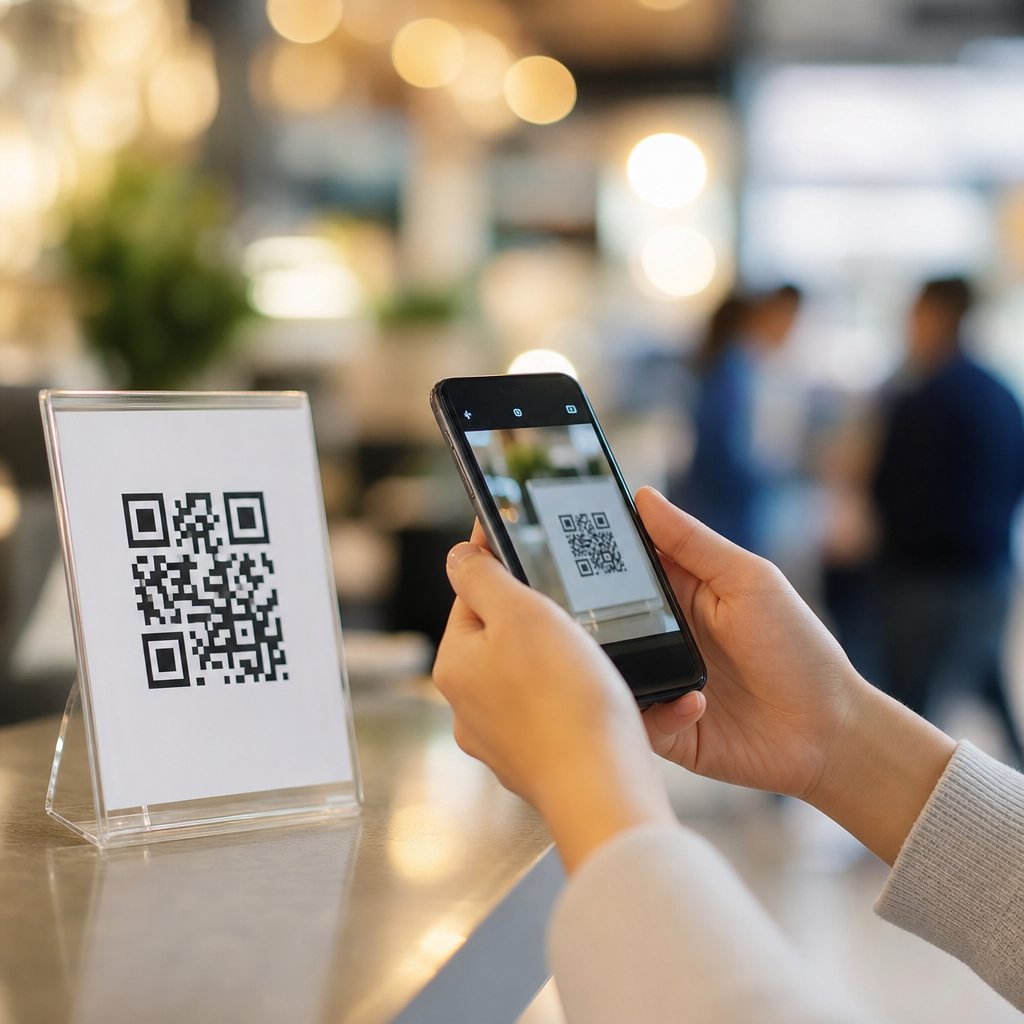
That usability improvement unlocked mass consumer applications. Retailers placed QR codes on shelf talkers and packaging for product information. Event organizers used them for digital tickets. Real estate agents put them on signs linking to listings. Restaurants used them for menus and ordering. Financial services and payment platforms, especially in Asia, expanded QR-based transactions at enormous scale. In China, ecosystems built around Alipay and WeChat Pay normalized QR code payments for street vendors, taxis, and national chains alike. India later accelerated digital payments through UPI QR infrastructure. These examples show the same principle repeatedly: when scanning becomes frictionless, QR codes turn physical spaces into interactive interfaces.
Key Milestones in the History of QR Codes
The timeline below captures the major points that changed QR codes from industrial labels into a mainstream marketing and transaction tool.
| Period | Milestone | Why It Mattered |
|---|---|---|
| 1994 | Denso Wave develops the QR code | Created a high-capacity, fast-scanning code for automotive manufacturing |
| Late 1990s | Use expands in Japanese industry | Proved reliability in logistics, warehousing, and traceability |
| 2000s | Standardization through ISO/IEC | Enabled global interoperability across devices and software |
| 2000s | Japanese mobile marketing adoption | Connected print media and posters to mobile web experiences |
| 2010s | Smartphone cameras improve | Reduced scanning friction and expanded consumer familiarity |
| 2017 onward | Native camera scanning becomes common | Removed the need for separate apps in many markets |
| 2020 onward | Pandemic-era contactless adoption | Made QR codes standard for menus, payments, check-ins, and forms |
How QR Codes Became a Serious Marketing Tool
QR codes became a marketing tool when businesses realized they could eliminate the gap between attention and action. A poster can inspire interest, but a QR code lets that interest convert immediately into a site visit, coupon claim, signup, app install, or video view. In direct mail, adding a code allows measurable offline-to-online attribution. On packaging, it extends the shelf experience with tutorials, recipes, warranty registration, sustainability information, or loyalty enrollment. In out-of-home advertising, it turns static media into interactive media.
I have seen the strongest campaigns treat QR codes as a routing mechanism rather than decoration. A cosmetics brand can place dynamic QR codes on display units that point to localized landing pages by store region. A museum can use them beside exhibits to deliver multilingual audio guides without printing separate materials. A B2B manufacturer can add them to equipment labels so technicians pull exact maintenance manuals and part numbers on site. In each case, the code works because it solves a practical user need in the moment.
Marketing success also depends on execution. The destination must load fast, match the user’s context, and justify the scan. A code on a bus shelter should not lead to a generic homepage. It should open a mobile-optimized page with a clear offer, geolocation, or campaign-specific message. Dynamic QR platforms such as Bitly, QR Code Generator, Flowcode, and Beaconstac became useful because they allowed URL changes, analytics, UTM tagging, and scan tracking without reprinting the code. That made QR codes viable for iterative campaigns and measurable performance reporting.
The Pandemic Accelerated Familiarity and Normalized Behavior
COVID-19 did not invent QR codes, but it compressed years of adoption into a much shorter period. Businesses needed contactless interactions quickly. Restaurants replaced printed menus with table codes. Offices used QR-based visitor registration. Health systems used them for check-in flows, test registration, vaccine documentation, and information access. Venues adopted code-based ticketing and health forms. Consumers who had ignored QR codes for years suddenly used them repeatedly in ordinary settings.
This period changed more than usage volume; it changed habit formation. Before 2020, many campaigns failed because people did not instinctively reach for their camera when they saw a code. After repeated pandemic-era exposure, that behavior became normal across age groups and sectors. The code itself did not become technically better overnight. Society simply crossed a familiarity threshold. Once people learned that scanning usually leads to a menu, form, payment page, or confirmation screen, the mental barrier dropped. That is one reason QR codes remain common even after emergency conditions passed.
There were tradeoffs. Some users found forced QR interactions frustrating when mobile connectivity was poor or accessibility had not been considered. Those limitations still matter. A good implementation keeps alternative access methods available, especially in hospitality, healthcare, and public services.
Security, Trust, and the Future of QR Code Use
As QR codes moved into mainstream use, security concerns grew. A QR code can hide the destination URL from casual view, making phishing and redirection possible if users scan blindly. Bad actors have placed malicious stickers over legitimate codes in parking meters, public signage, and payment terminals. The right response is not avoiding QR codes entirely; it is managing them responsibly. Brands should use recognizable domains, HTTPS, clear labeling, and monitored physical placements. Users should preview links when possible and avoid scanning tampered codes.
Looking ahead, the history of QR codes suggests continued expansion into authentication, product traceability, and connected packaging. GS1, the standards body behind global barcode systems, is promoting two-dimensional codes in retail through initiatives often described as the move toward next-generation barcodes. That matters because it could unify point-of-sale scanning with richer consumer and supply-chain data. A single code on packaging can support checkout, batch traceability, recalls, expiry management, and consumer engagement. In pharmaceuticals, food, electronics, and luxury goods, that combination is especially valuable.
Other emerging uses include digital business cards, passkeys and login handoffs, device pairing, and augmented product experiences. Yet the core lesson remains unchanged from 1994: QR codes succeed when they reduce friction in a real process. They fail when used as a novelty without a clear payoff.
The history of QR codes shows a rare technology path: invented for industrial efficiency, adopted through open accessibility, and transformed by mobile computing into a universal link between physical and digital environments. Their key strengths—high data capacity, fast omnidirectional scanning, and robust error correction—made them valuable first on factory floors, then in logistics, and eventually in consumer interactions. Standardization gave them interoperability. Smartphones gave them convenience. The pandemic gave them mass behavioral acceptance. Marketing gave them visibility, but operational usefulness is what gave them staying power.
For businesses, the main benefit is simple. QR codes make offline touchpoints measurable, interactive, and easier to update without changing the physical asset. For users, they provide speed: one scan can replace typing, searching, waiting, or handling paper. If you are building a stronger understanding of QR Code Basics & Education, use this history as the foundation for related topics such as QR code types, static versus dynamic QR codes, QR code best practices, tracking and analytics, and QR code security. The better you understand where QR codes came from, the better you can use them well today. Start by reviewing your current customer or operational journey and identify one point where a QR code can remove friction immediately.
Frequently Asked Questions
What is the origin of QR codes, and why were they created in the first place?
QR codes were created in Japan in the mid-1990s by Denso Wave, a subsidiary of the Toyota Group. Their original purpose was not advertising, mobile payments, or restaurant menus. Instead, they were developed to solve a practical manufacturing problem inside the automotive industry. Traditional one-dimensional barcodes could only hold a limited amount of information and had to be scanned from a specific angle, which slowed down production and tracking in fast-moving factory environments. Denso Wave needed a code that could store more data, be read quickly, and remain reliable even when labels were partially damaged or dirty.
That need led to the development of the Quick Response code, or QR code. The name itself reflects one of its biggest advantages: speed. Because it is a two-dimensional matrix barcode, it stores information both horizontally and vertically, allowing it to hold much more data than older barcode formats. This made it ideal for tracking vehicle parts and streamlining logistics. In other words, QR codes began as an efficiency tool designed for industrial use, not as a consumer-facing technology. Understanding that origin helps explain why QR codes were built to be robust, versatile, and scalable from the very beginning.
How are QR codes different from traditional barcodes?
The biggest difference is how information is stored and read. Traditional barcodes, such as the familiar UPC code found on retail products, are one-dimensional. They store data in a single direction using a sequence of vertical lines and spaces. That design works well for simple identification numbers, but it limits how much information can be encoded. QR codes, by contrast, are two-dimensional matrix barcodes. They store data across both rows and columns, which allows them to contain far more information in a relatively small space.
That extra capacity gives QR codes several practical advantages. They can encode URLs, product details, contact information, payment links, serial numbers, and other data types that would be difficult or impossible to fit into a traditional barcode. They are also faster to scan in many situations because they do not need to be aligned perfectly in one direction. Their three large position markers in the corners help scanners and smartphone cameras detect orientation almost instantly. Another major advantage is error correction. QR codes can often still be read even if part of the code is smudged, scratched, or covered. This durability made them especially useful in industrial settings and later helped them succeed in everyday consumer environments where labels and packaging are exposed to wear.
Why did QR codes spread beyond factories and become a mainstream marketing tool?
QR codes expanded beyond manufacturing because they solved a communication problem that many businesses eventually faced: how to connect physical objects to digital content quickly and with minimal friction. In industrial use, their value came from speed, data capacity, and reliability. Those same strengths turned out to be useful in retail, packaging, transportation, hospitality, and advertising. Once smartphones with built-in cameras became widespread, QR codes gained a new role. They no longer required specialized industrial scanners to be useful. Ordinary consumers could scan them with devices they already carried every day.
This shift made QR codes extremely attractive to marketers. A product package could lead directly to instructions, promotions, warranty registration, or brand storytelling. A restaurant table could link diners to a digital menu. A poster could send someone to an event page, app download, or video campaign in seconds. Businesses liked QR codes because they were inexpensive to create, easy to print on almost any surface, and adaptable to countless use cases. Consumers liked them because they removed the need to type long web addresses or search manually for information. Over time, QR codes became a practical bridge between offline and online experiences, which is why they evolved from a factory innovation into a standard marketing and customer-engagement tool.
What made QR codes more successful than many earlier scanning technologies?
QR codes succeeded because they combined several important advantages at once rather than excelling in only one area. First, they offered much greater data capacity than standard barcodes. Second, they could be scanned quickly from different angles, which improved usability in both industrial and consumer settings. Third, their built-in error correction made them more dependable when printed on packaging, labels, signs, or surfaces exposed to damage. These technical strengths meant QR codes were not just a novelty; they were genuinely more flexible and practical than many alternatives.
Another major factor was timing. Earlier machine-readable formats often depended on specialized hardware, limited software support, or specific environments. QR codes arrived before the smartphone era, but they truly took off once mobile devices became powerful enough to scan them easily. As camera quality improved and scanning features became integrated directly into phone operating systems, the barrier to adoption dropped dramatically. Businesses no longer had to educate consumers about special devices or complicated steps. The scan action became almost effortless. In addition, QR codes are low-cost, easy to generate, and simple to deploy at scale, which made them appealing to organizations of all sizes. Their success came from the combination of strong technical design, real-world convenience, and the perfect alignment with mobile internet behavior.
Why does the history of QR codes matter for businesses and marketers today?
The history of QR codes matters because it shows that their staying power comes from real functionality, not just trend-driven popularity. QR codes were created to solve efficiency and information-access challenges in demanding industrial conditions. That foundation is important because it explains why the technology has remained relevant across decades and industries. Businesses using QR codes today are relying on a tool that was built for speed, resilience, and adaptability. This is one reason QR codes continue to perform well in applications such as inventory management, product packaging, ticketing, digital payments, customer support, and promotional campaigns.
For marketers in particular, the history offers a useful lesson in technology adoption. QR codes did not become successful simply because they looked modern. They became successful because they reduced friction between intent and action. A customer sees a product, advertisement, menu, or sign and can move immediately to relevant digital content. That direct path is extremely valuable in marketing, where convenience often determines whether a user engages or drops off. Understanding the evolution of QR codes also helps businesses use them more strategically. Rather than treating them as decorative add-ons, smart brands see them as conversion tools, data gateways, and user-experience shortcuts. Their journey from automotive manufacturing to everyday marketing proves that the most durable technologies are often the ones that begin by solving real operational problems and then adapt naturally to wider human behavior.