QR codes moved from a niche industrial tool to a mainstream digital bridge during the COVID-19 pandemic, and that shift permanently changed how businesses, governments, and consumers exchange information. A QR code, or Quick Response code, is a two-dimensional barcode invented in 1994 by Denso Wave, a Toyota subsidiary, to store more data than traditional one-dimensional barcodes and to allow fast scanning from any orientation. Before 2020, the history of QR codes was largely a story of gradual adoption: manufacturing used them for parts tracking, marketers experimented with print campaigns, and mobile payments gained traction in Asia long before many Western consumers cared. COVID-19 compressed years of adoption into months because societies suddenly needed touchless menus, contact tracing, digital payments, mobile ticketing, vaccination records, and fast access to changing public-health information. That urgency matters because it turned QR codes from “optional tech” into familiar infrastructure. I watched this change happen across restaurants, retail stores, healthcare settings, and events, where codes that once felt promotional became operationally essential. Understanding how COVID-19 accelerated QR code adoption requires looking at both the earlier history of QR technology and the specific pandemic conditions that made it useful at scale. For anyone researching QR Code Basics & Education, this history is the foundation: it explains why QR codes were created, why they stalled in some markets, why they exploded during the pandemic, and why they remain central to customer experience, logistics, and digital access today.
The History of QR Codes Before COVID-19
The history of QR codes begins in Japan in 1994, when Denso Wave developed the format to improve tracking efficiency in automotive manufacturing. Traditional barcodes could hold limited information and required a specific scanning angle, which slowed high-volume production lines. QR codes solved both problems by storing significantly more data in a square matrix and using finder patterns that let scanners detect orientation instantly. Denso Wave did not aggressively enforce patent rights for standard use, a practical decision that helped the format spread. In the early years, adoption centered on industrial applications such as inventory control, component traceability, warehouse operations, and shipping documentation. These were not glamorous use cases, but they proved the technology was reliable, inexpensive, and scalable.
Consumer adoption came later and unevenly. In Japan, QR codes gained momentum in the 2000s because camera phones integrated scanners earlier and mobile internet behavior matured faster. Brands used codes on packaging, transit posters, magazines, and product labels to send users to mobile websites, coupons, or downloads. In China, QR codes later became deeply tied to mobile payments through platforms like WeChat Pay and Alipay, creating daily scanning habits at extraordinary scale. In contrast, the United States and much of Europe saw inconsistent uptake before 2020. I remember advising businesses that wanted to place QR codes on flyers or storefronts, only to discover that many customers did not have a scanner app installed or did not trust the experience. The technology worked; the surrounding behavior and software ecosystem lagged.
A major turning point arrived when smartphone operating systems made QR scanning native. Apple added built-in camera recognition in iOS 11 in 2017, and Android devices increasingly supported QR detection without separate apps. That removed a critical friction point. Even so, many organizations still treated QR codes as tactical add-ons rather than core infrastructure. Restaurants printed them for promotions, museums used them for exhibit extras, and event organizers embedded them in digital tickets, but there was no broad social pressure to scan. QR codes had utility, yet not urgency. The pandemic changed exactly that by creating universal demand for low-contact, rapidly updateable digital connections.
Why COVID-19 Triggered Mass Adoption
COVID-19 accelerated QR code adoption because it aligned three conditions at once: a public-health need to reduce shared touchpoints, near-universal smartphone availability, and mature cloud tools that let organizations change digital destinations instantly. During lockdowns and phased reopenings, businesses needed ways to replace paper menus, laminated signs, physical brochures, shared kiosks, and cash handling. A printed QR code linked to a live webpage solved this efficiently. Instead of reprinting materials whenever regulations changed, operators could update the destination online. That flexibility was invaluable when opening hours, safety protocols, occupancy rules, and service options shifted weekly.
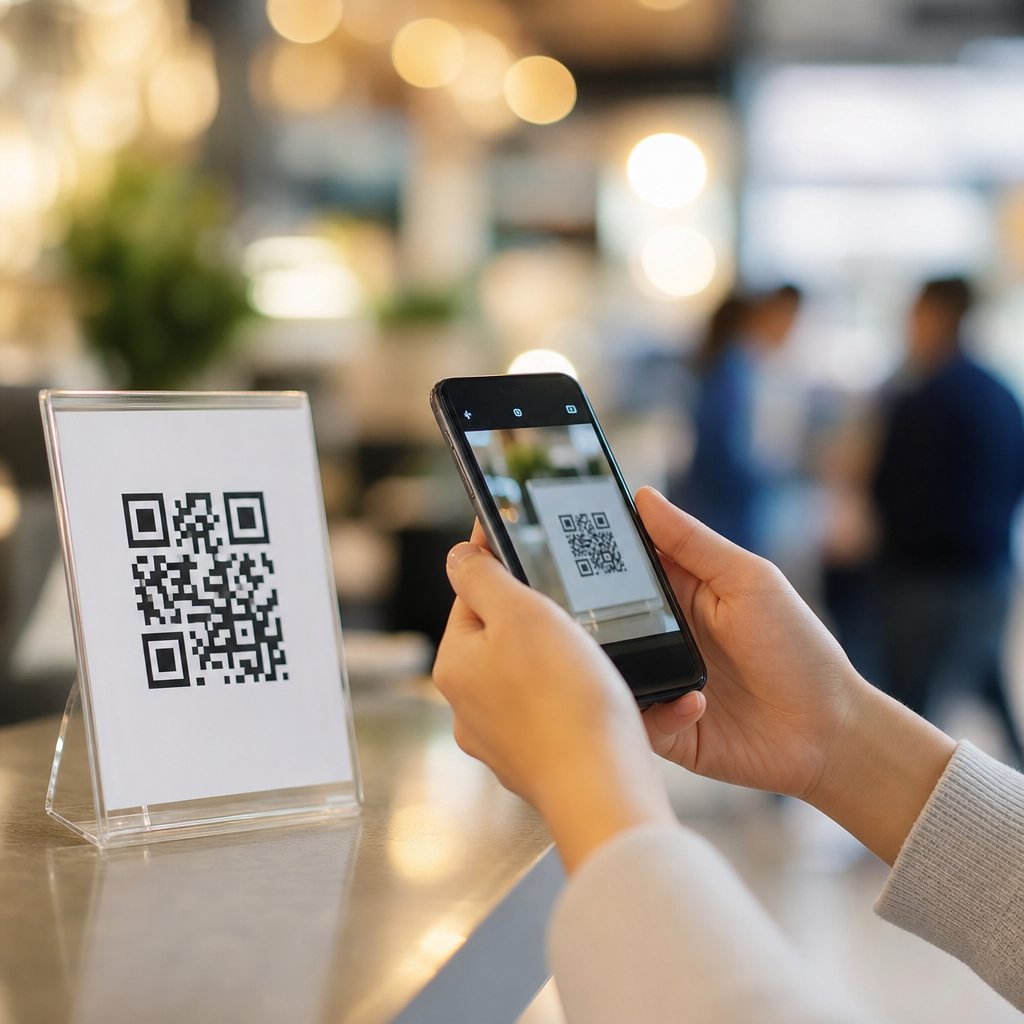
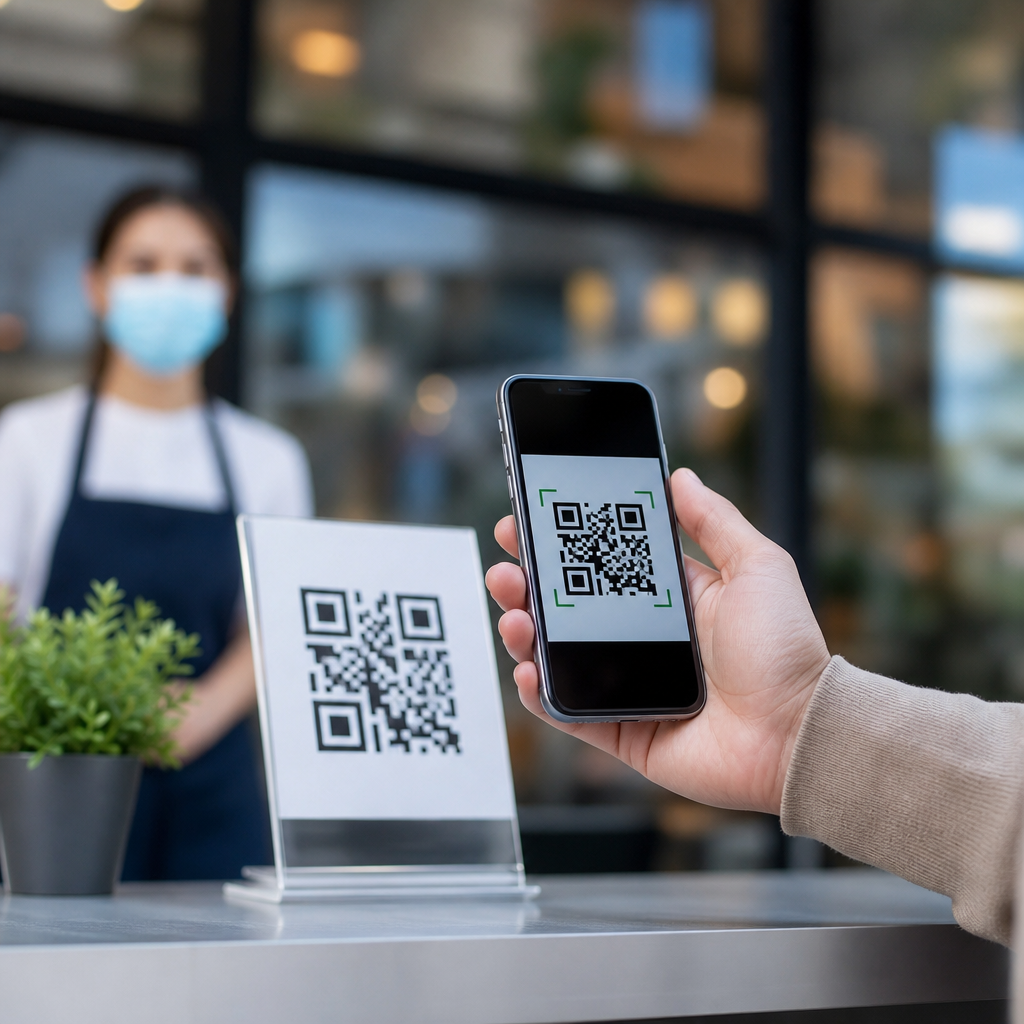
Restaurants provide the clearest example. Before COVID-19, digital menus existed but were far from standard. During the pandemic, table tents and window decals with QR codes became common because they reduced contact and lowered reprint costs. A restaurant could link one code to a menu page, update item availability in real time, and add ordering or payment functionality. Hospitality groups extended the same model to hotel check-ins, spa bookings, room service, and guest information. Retailers used codes for curbside pickup instructions and product details. Healthcare providers used them to connect patients to symptom screening forms, test registration pages, visitor policies, and vaccination documentation. Public agencies placed QR codes on posters so residents could access local guidelines in multiple languages.
Another force was behavioral normalization. During the pandemic, people who had never scanned a code learned to do it repeatedly in daily life. Once users scanned menus, payment prompts, boarding forms, and vaccine certificates, the act became ordinary. This habit formation is one of the most important parts of the story. Technology adoption rarely depends on invention alone; it depends on repeatable behavior under clear incentives. COVID-19 supplied that incentive at global scale. By 2021, scanning a QR code no longer signaled novelty. It signaled convenience, safety, and immediate access.
Pandemic Use Cases That Reshaped Expectations
The most lasting impact of COVID-19 was not simply that more QR codes appeared, but that people began to expect QR-enabled interactions. In food service, codes replaced physical menus and often expanded into ordering and payment. In events and travel, they streamlined digital ticketing, health declarations, and entry management. Airlines and airports leaned on mobile boarding passes and health-verification workflows that trained travelers to keep documentation on their phones. In healthcare, providers used QR-linked intake forms to reduce clipboard sharing and improve front-desk throughput. Pharmacies and clinics used them for appointment booking and post-visit instructions. Employers used codes at office entrances for screening questionnaires or visitor logs.
Education and public services also adapted quickly. Schools posted QR codes for attendance, lunch selection, parent updates, and health notifications. Museums and attractions, reopening under restrictions, replaced shared audio devices and printed maps with QR-linked guides. Municipal governments linked codes to testing sites, emergency assistance, rental relief applications, and vaccine eligibility tools. In my own work with local businesses, the strongest pattern was speed: teams with no prior digital infrastructure could launch a QR-based process in a day by pairing a code generator with a hosted landing page or form builder. The code was simple, but the value came from connecting physical spaces to continuously updated digital information.
| Use Case | Pre-COVID Status | Pandemic Driver | Lasting Outcome |
|---|---|---|---|
| Restaurant menus | Occasional, mostly promotional | Reduce shared surfaces and reprinting | Digital menus and mobile ordering became standard |
| Mobile payments | Strong in Asia, mixed elsewhere | Touchless transactions | Broader acceptance across retail and hospitality |
| Healthcare forms | Limited, office by office | Minimize front-desk contact | Digital intake and patient self-service expanded |
| Public information | Static posters and websites | Rapidly changing guidance | QR-linked notices became a routine communication tool |
| Tickets and credentials | Growing but uneven | Faster verification and health checks | Mobile access control became mainstream |
These examples show why the pandemic mattered historically. It did not invent QR use cases; it mainstreamed and standardized them. The result was a shift in customer expectations. People now assume a code may provide a menu, payment option, instructions, authentication token, or deeper product information. That assumption is the real legacy of the COVID era.
The Technology Behind the Surge
QR codes scaled during COVID-19 because the surrounding technology stack was finally ready. Native smartphone scanning removed friction. Cloud content management systems, no-code website builders, payment platforms, and digital form tools let nontechnical teams launch quickly. Dynamic QR codes became particularly important because they allow the destination URL to change without altering the printed code. That meant a single code on a storefront could point customers to current hours, a reservation page, an online store, or a health notice depending on the moment. Static QR codes still worked for permanent destinations, but dynamic codes offered resilience during fast-changing conditions.
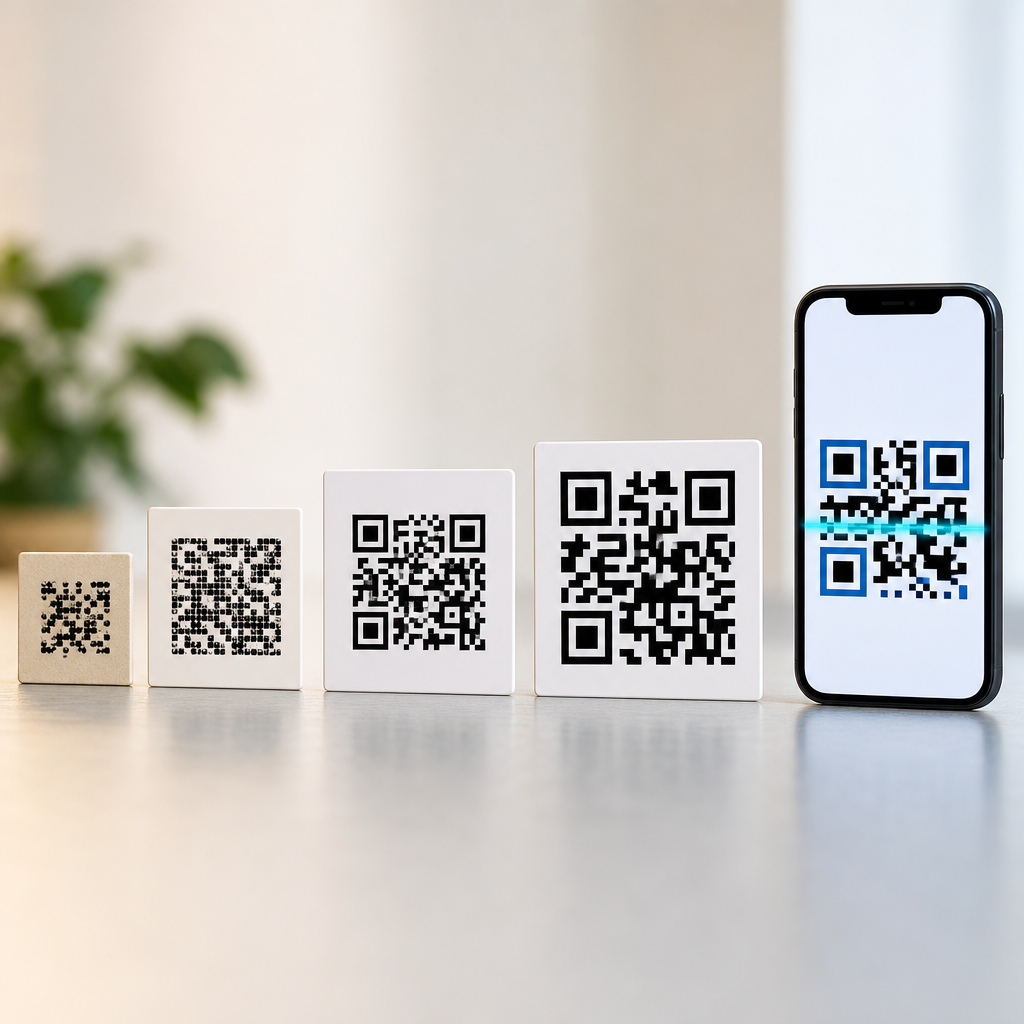
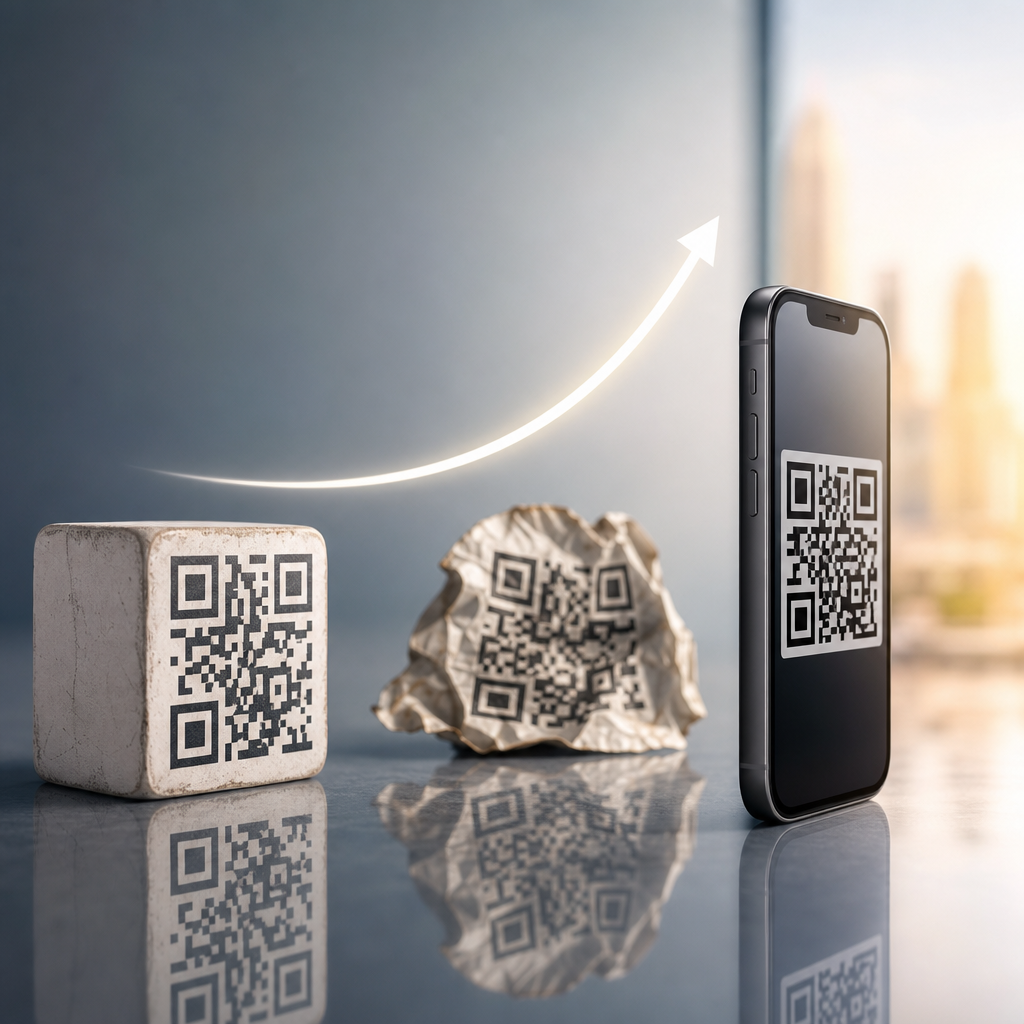
Error correction also played a practical role. QR codes can remain scannable even when partially damaged, thanks to Reed-Solomon error correction. In busy public environments, where signs were taped to windows, exposed to weather, or printed on low-cost materials, that reliability mattered. Businesses also learned simple implementation rules: maintain contrast, leave quiet zones around the code, test from realistic distances, and place a clear call to action nearby. A QR code without context underperforms. A code labeled “Scan to view menu and pay” or “Scan for today’s visitor policy” converts because users know exactly what they will get.
Analytics strengthened the business case. Marketers and operators could track scans by location, time, device, or campaign, then compare performance across placements. A restaurant chain could test table stickers versus entry signage. A hospital could see whether pre-visit forms were completed before arrival. This measurable link between physical touchpoints and digital behavior made QR codes more than a workaround; it made them a management tool. Once organizations saw that codes could reduce printing costs, shorten queues, and generate actionable data, many kept them long after the strictest pandemic restrictions ended.
Limits, Risks, and the Post-Pandemic Future
QR codes are not perfect, and the pandemic exposed important limitations. Accessibility remains a real concern for users without smartphones, with limited data access, or with vision impairments. Good implementation always includes alternatives such as printed menus, staffed assistance, short URLs, or NFC options. Security is another issue. Because a QR code hides its destination until scanned, malicious actors can place fraudulent stickers over legitimate codes to redirect users to phishing pages or fake payment portals. Organizations should use branded domains, inspect physical signage regularly, and educate users to verify links before entering credentials.
There is also a design tradeoff between convenience and overuse. During the height of COVID-19, some businesses used QR codes for everything, even when a simple sign or direct verbal instruction would have been easier. I saw menus buried in PDFs, forms that were not mobile friendly, and codes posted in places with poor lighting or weak connectivity. Effective QR strategy starts with user intent, not the code itself. The best implementations reduce friction, load fast, and deliver exactly one obvious next step.
Looking ahead, the post-pandemic future of QR codes is strong because adoption is now behaviorally embedded and commercially validated. GS1, the global standards organization behind barcode systems, is supporting a transition toward next-generation 2D barcodes in retail, often called Sunrise 2027, which signals broader industry movement toward QR-style data carriers on packaging. That matters because it connects consumer engagement with supply-chain traceability, authentication, recalls, sustainability information, and product-level data. In other words, COVID-19 accelerated acceptance, but the deeper future of QR codes extends well beyond health measures. They are becoming a standard interface between physical objects and digital systems.
COVID-19 accelerated QR code adoption by turning a mature but underused technology into everyday infrastructure, and the history behind that shift explains why it lasted. QR codes began in 1994 as a manufacturing solution, spread through logistics and early mobile marketing, gained major traction in Asia through payments, and then reached global mainstream use when the pandemic created urgent demand for touchless, updateable digital access. Restaurants, healthcare providers, retailers, schools, event organizers, and public agencies all used QR codes because they were cheap to deploy, easy to scan, and flexible enough to support changing information. Just as important, consumers built a lasting scanning habit. The biggest lesson is simple: QR codes succeeded during COVID-19 not because they were new, but because they solved real operational problems at exactly the right moment. Their long-term value now reaches far beyond safety signage into payments, packaging, authentication, service delivery, and customer experience. If you are building out your understanding of QR Code Basics & Education, start with this history, then explore related topics such as dynamic vs. static QR codes, QR code security, mobile payments, and packaging applications to see how this once-specialized format became a permanent part of digital life.
Frequently Asked Questions
Why did COVID-19 cause QR codes to become so widely used?
COVID-19 created an immediate global need for low-contact, fast, and flexible ways to share information, and QR codes fit that need almost perfectly. Before the pandemic, QR codes were available but often underused outside specific industries such as manufacturing, logistics, and occasional marketing campaigns. Once health concerns made physical touchpoints like paper menus, brochures, payment terminals, and sign-in sheets seem risky, businesses and public institutions needed a simple digital bridge between the physical world and online content. QR codes provided exactly that. A restaurant could replace printed menus overnight, a retailer could direct customers to product details without handing out flyers, and a public venue could share health guidance, schedules, or registration forms with a single scan.
Another major reason for their rapid adoption was that the infrastructure was already in place by 2020. Most consumers were carrying smartphones with built-in cameras and operating systems that could recognize QR codes without requiring a separate app. That removed one of the biggest barriers that had slowed adoption in earlier years. During the pandemic, people also became more willing to scan codes because the value was obvious and immediate: safer ordering, touchless payments, digital check-ins, vaccination records, and easy access to rapidly changing information. In that sense, COVID-19 did not invent the usefulness of QR codes, but it dramatically accelerated public familiarity, trust, and routine usage, turning them from a niche convenience into a mainstream digital habit.
How were QR codes used during the pandemic in everyday settings?
During the pandemic, QR codes became part of daily life in ways that many people had never experienced before. Restaurants were among the most visible examples. Instead of handing every guest a laminated menu touched by dozens of people, many venues placed QR codes on tables, windows, receipts, or takeout packaging so customers could view menus on their phones. This same approach extended to bars, cafes, hotels, and food courts, where QR codes often linked not just to menus but also to online ordering systems, allergen information, loyalty programs, and payment platforms.
Healthcare and public health settings also relied heavily on QR codes. They were used for patient registration, appointment check-ins, symptom screening forms, testing access, vaccination confirmations, and digital health records in some regions. Governments and transportation systems used them for contact tracing programs, travel declarations, venue entry management, and public information campaigns. Retailers used QR codes to reduce person-to-person contact by enabling touchless payments, self-service product information, curbside pickup instructions, and digital receipts. Offices, schools, gyms, and event venues adopted them for attendance logging, visitor registration, cleaning updates, and access to safety protocols. What made QR codes especially effective was their versatility. The same small square image could instantly connect people to live, updateable information without the delays and costs of reprinting physical materials every time public guidance changed.
Were QR codes already around before COVID-19, and what changed during the pandemic?
Yes, QR codes existed long before COVID-19. They were invented in 1994 by Denso Wave, a subsidiary of Toyota, to improve data storage and scanning efficiency in industrial environments. Unlike traditional one-dimensional barcodes, QR codes could hold much more information and be scanned quickly from multiple angles. For years, their strongest use cases were in manufacturing, supply chains, warehousing, and inventory management. Over time, marketers, advertisers, and some tech-forward businesses experimented with them for promotions, packaging, and mobile experiences, but broad consumer adoption remained inconsistent in many markets.
What changed during the pandemic was not the technology itself, but the urgency, scale, and context of its use. Before 2020, many consumers saw QR codes as optional, novelty-driven, or easy to ignore. During COVID-19, they became practical tools tied to immediate real-world needs. At the same time, smartphone technology had matured enough that scanning was easier than ever. Native camera support on major mobile devices removed the friction of downloading dedicated QR scanning apps, which had previously discouraged use. The pandemic also normalized digital-first behavior across society. People became more comfortable with mobile ordering, digital forms, remote services, and contactless interactions. As a result, QR codes moved from being a sometimes-useful feature to an everyday access point for commerce, communication, and public services. The pandemic essentially acted as a tipping point that transformed slow, uneven adoption into widespread mainstream acceptance.
Did the pandemic-driven rise of QR codes permanently change business and consumer behavior?
In many ways, yes. The pandemic did more than trigger a temporary spike in QR code usage; it changed expectations around convenience, speed, and touchless interaction. Consumers who became accustomed to scanning a code for a menu, payment option, check-in form, or product page often continued doing so even after restrictions eased. Businesses also discovered that QR codes were not just a health-safety workaround but a practical operational tool. They reduced printing costs, allowed instant updates to content, supported faster service, and created new opportunities to guide customers into digital channels such as apps, loyalty platforms, feedback surveys, and e-commerce pages.
This shift has had long-term implications across industries. Restaurants still use QR menus and ordering systems. Retail stores continue to connect shoppers to reviews, inventory details, and promotions. Events use QR codes for ticketing and entry. Healthcare providers use them for intake workflows and patient communication. Even product packaging increasingly includes QR codes that link to instructions, authentication tools, sustainability information, or brand storytelling. The pandemic accelerated a broader digital transformation, and QR codes became one of the most visible and low-cost tools enabling it. While not every emergency-era use case remained equally common, the overall behavioral shift endured because both businesses and consumers learned that QR codes can make interactions more efficient, measurable, and adaptable. In that sense, COVID-19 did not just increase usage; it permanently expanded what people expect a simple scan can do.
Are there any downsides or security concerns related to the increased use of QR codes?
Yes, the rapid growth of QR code usage also brought greater attention to security, trust, and user awareness. Because a QR code can send someone directly to a website, payment page, download link, or digital form, it can also be used maliciously if bad actors replace legitimate codes with fraudulent ones or distribute deceptive codes in public places, emails, or printed materials. During and after the pandemic, as people grew more comfortable scanning QR codes in restaurants, stores, healthcare facilities, and transit systems, cybercriminals recognized an opportunity to exploit that trust. Fake QR codes can lead users to phishing pages, collect sensitive information, trigger unauthorized payments, or install harmful software.
That said, the issue is usually not with the QR code technology itself but with how and where it is deployed. Businesses can reduce risk by using secure destinations, monitoring physical signage, clearly branding their materials, and relying on reputable QR code management platforms. Consumers can protect themselves by previewing links when possible, checking for tampered stickers, avoiding scans from suspicious sources, and being cautious when asked to enter passwords or payment information. There are also broader usability concerns. Not every user is equally comfortable with smartphones, and some customers still prefer printed materials or non-digital alternatives. For that reason, the most effective QR code strategies balance convenience with accessibility and security. The pandemic proved how useful QR codes can be at scale, but their long-term success depends on thoughtful implementation, clear communication, and maintaining user trust.