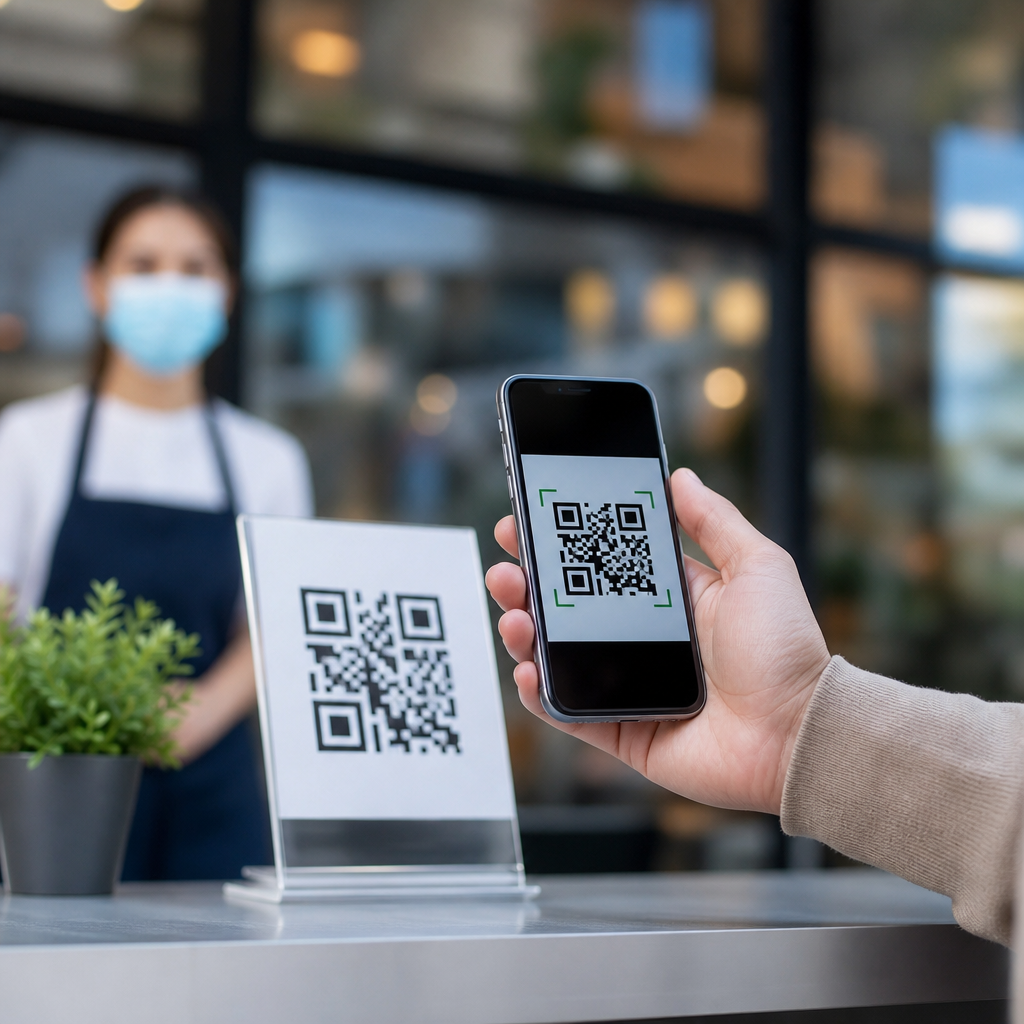
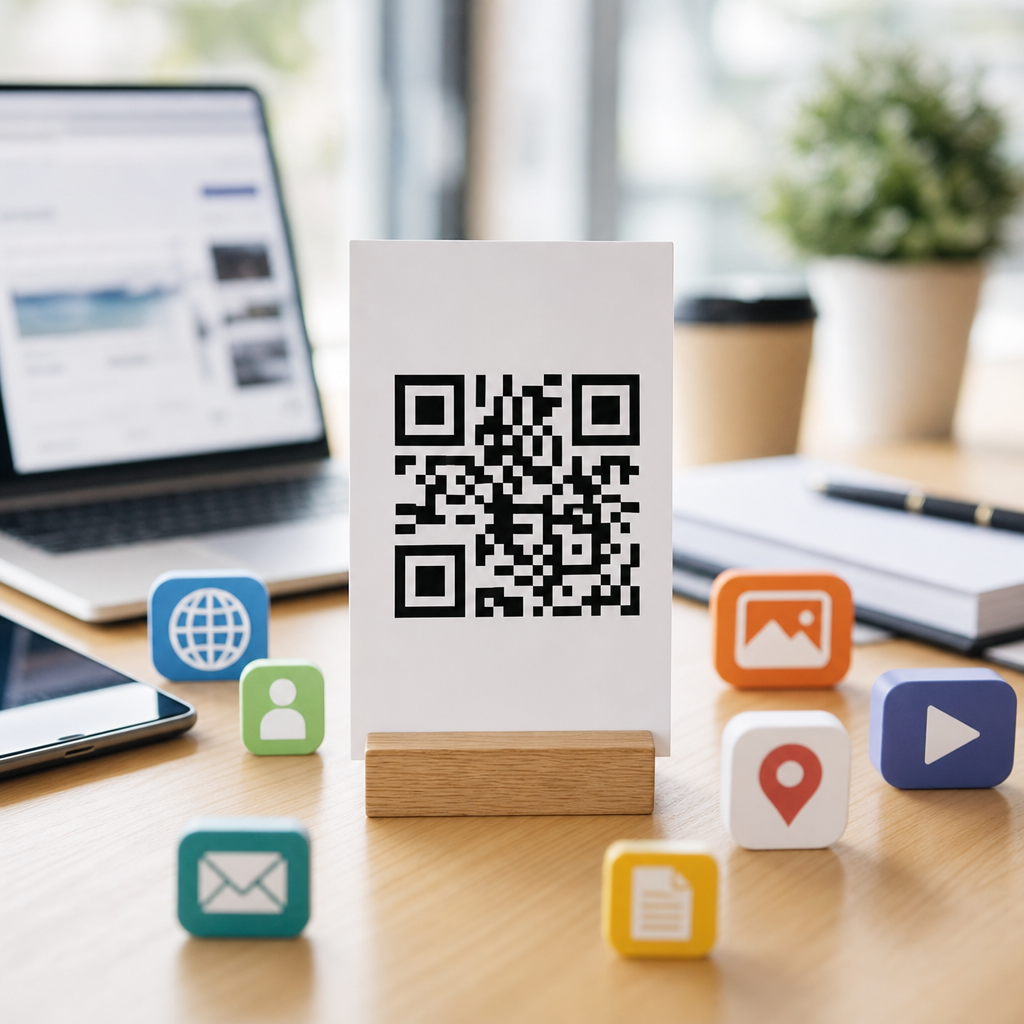
QR codes store machine-readable data in a two-dimensional pattern of black and white modules, but the practical answer is broader: they can hold text, web addresses, contact details, payment instructions, authentication tokens, app links, and other compact data formats that software can decode instantly. If you are building a learning hub around QR Code Basics and Education, this is the foundational question because it leads directly to the next ones people ask: what a QR code is, how it works, how much data it can hold, what kind of QR code to choose, and where its limits begin.
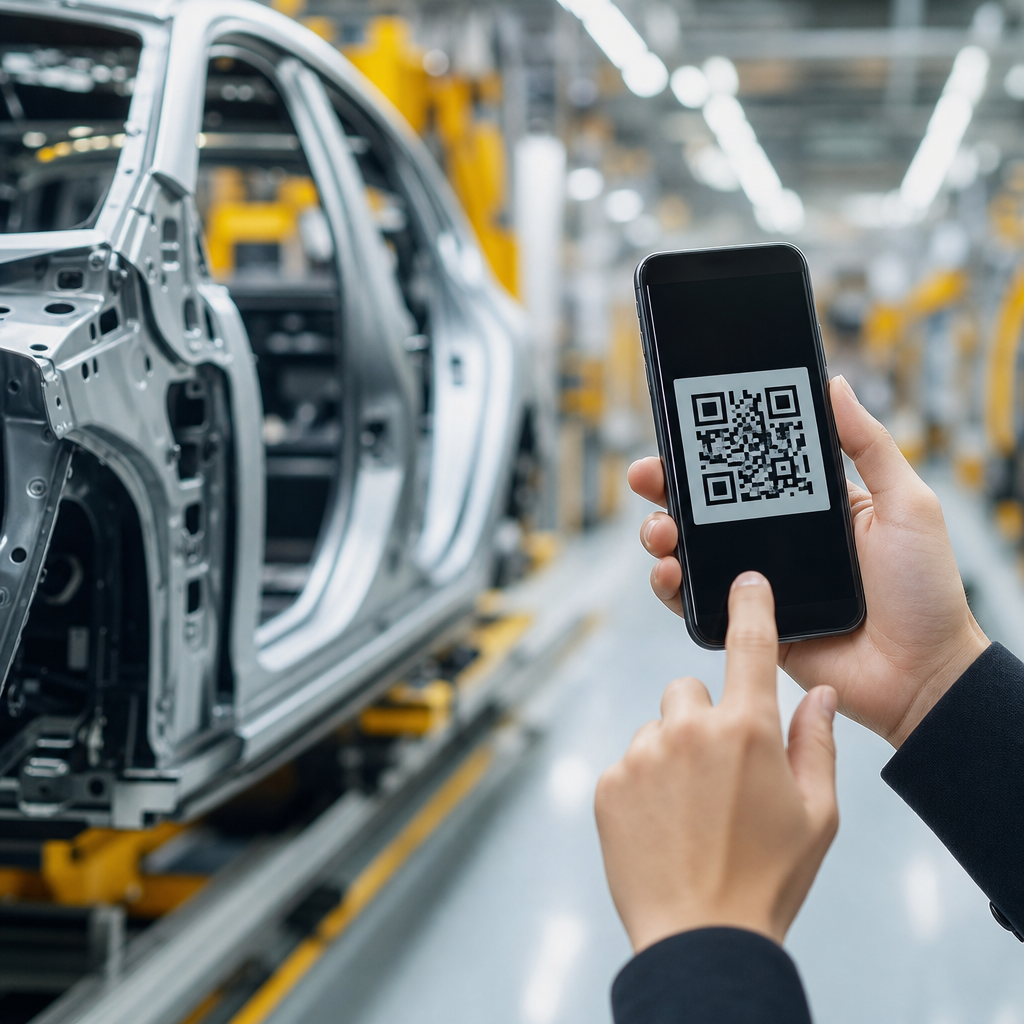
A QR code, short for Quick Response code, is a matrix barcode created by Denso Wave in 1994 for tracking automotive components. Unlike a traditional one-dimensional barcode that stores data across horizontal lines, a QR code stores data both horizontally and vertically. That design lets it hold more information in less space and remain readable even when partially damaged. In practical use, the code is an image that encodes characters according to standardized rules defined in ISO/IEC 18004. A smartphone camera or dedicated scanner reads the finder patterns, aligns the symbol, applies error correction, and converts the visual pattern back into usable data.
From years of implementing QR campaigns, product labels, event check-ins, and digital menus, I have found that most confusion comes from mixing up the image with the destination. The QR code itself usually stores a compact data string. In many cases, that string is just a URL, and the web page behind it does the heavy lifting. That distinction matters because it affects design, analytics, editability, privacy, and scan reliability. It also explains why some QR codes seem to “change” after printing while others are fixed forever.
This article serves as the hub for understanding what QR codes are and what information a QR code can store. It covers the common data types, the capacity limits, the difference between static and dynamic QR codes, and the real-world tradeoffs that determine which format works best. If you want a clear answer before choosing a generator, printing a label, or linking customers to content, start here.
What a QR code stores at the data level
A QR code stores encoded data, not visual content, and the scanner interprets that data based on its format. The simplest example is plain text. A code can contain a sentence, a serial number, operating instructions, a promo code, or internal asset information. Plain text works offline because the code itself carries the message. That makes it useful for inventory tags, equipment labels, Wi-Fi setup cards, and emergency instructions where network access may be limited.
The most common use case is a URL. When a QR code stores a website address, scanning it opens a browser and takes the user to a landing page, product page, video, menu, form, PDF, or app store listing. Marketers prefer URLs because they allow the destination content to be richer than anything that would fit directly inside the symbol. A restaurant menu QR code, for example, does not store every dish and price; it stores a web link to a hosted menu that can be updated without reprinting tableside signage if the code is dynamic.
QR codes can also store structured data types recognized by mobile operating systems. A vCard or MeCard payload can create a contact with name, phone number, email, organization, title, and address. A mailto payload can open an email draft with a prefilled recipient and subject line. An SMS payload can open the phone’s messaging app with a number and message body. A telephone payload can prompt a call. A geographic payload can open map coordinates. A Wi-Fi payload can include SSID, encryption type, and password so users join a network with one scan instead of typing credentials manually.
For payments, QR codes may store merchant account details, payment addresses, or standardized payloads used by specific banking and wallet systems. The exact structure varies by region and network. In some implementations, the code contains all payment instructions. In others, it contains a reference that a payment app resolves online. Authentication systems also use QR codes to carry one-time login tokens, device pairing requests, or passkey enrollment links. In manufacturing and logistics, QR symbols often store part identifiers, lot numbers, timestamps, and traceability data tied to backend systems.
How much information can a QR code hold
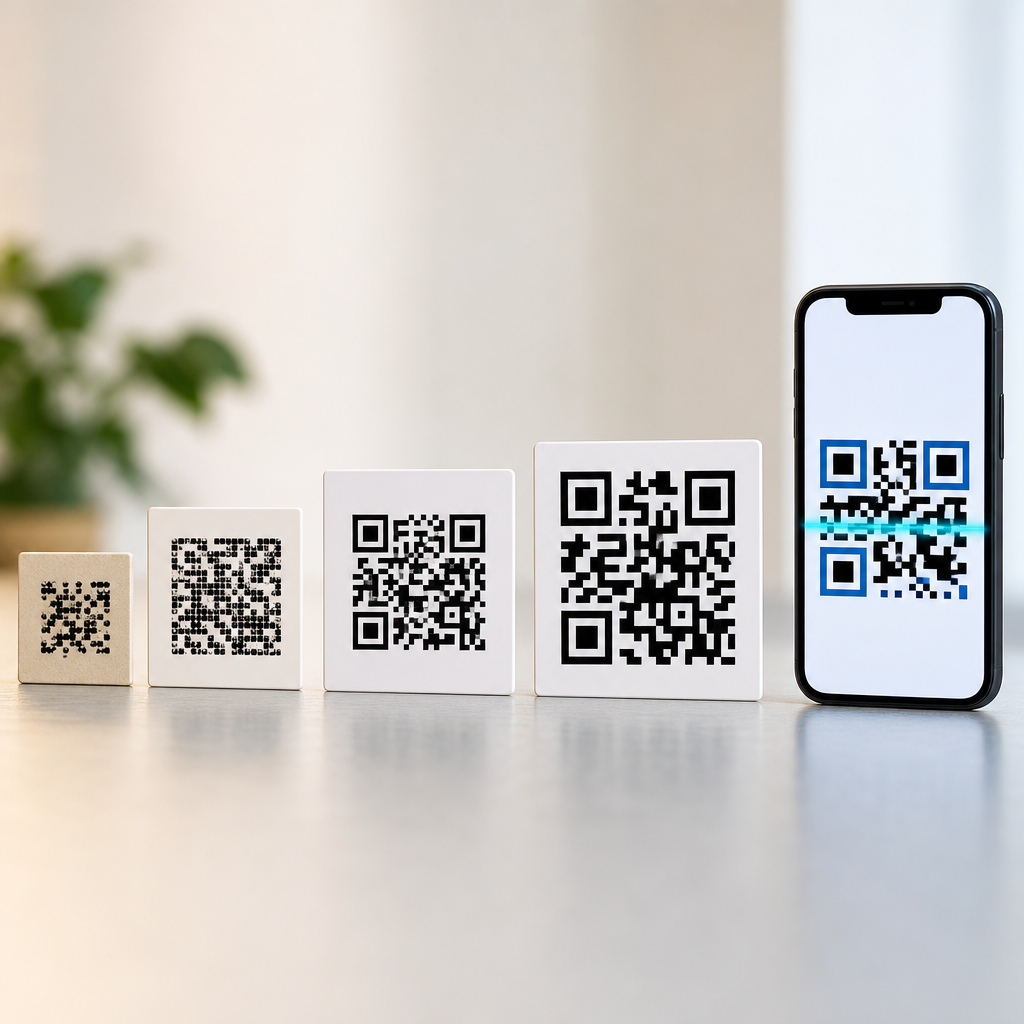
The amount of information a QR code can store depends on the version, encoding mode, character set, and error correction level. Standard QR codes range from Version 1, which is 21 by 21 modules, to Version 40, which is 177 by 177 modules. As the version increases, the symbol holds more data, but it also becomes denser and harder to scan at small print sizes or on curved surfaces.
Capacity is usually quoted under ideal conditions. Numeric mode can store up to 7,089 digits. Alphanumeric mode can hold up to 4,296 characters using a limited character set. Byte mode, which is common for URLs and general text, stores up to 2,953 bytes. Kanji mode can hold up to 1,817 characters. In real projects, usable capacity is lower because higher error correction consumes space and because long URLs, tracking parameters, or non-Latin characters increase payload size quickly.
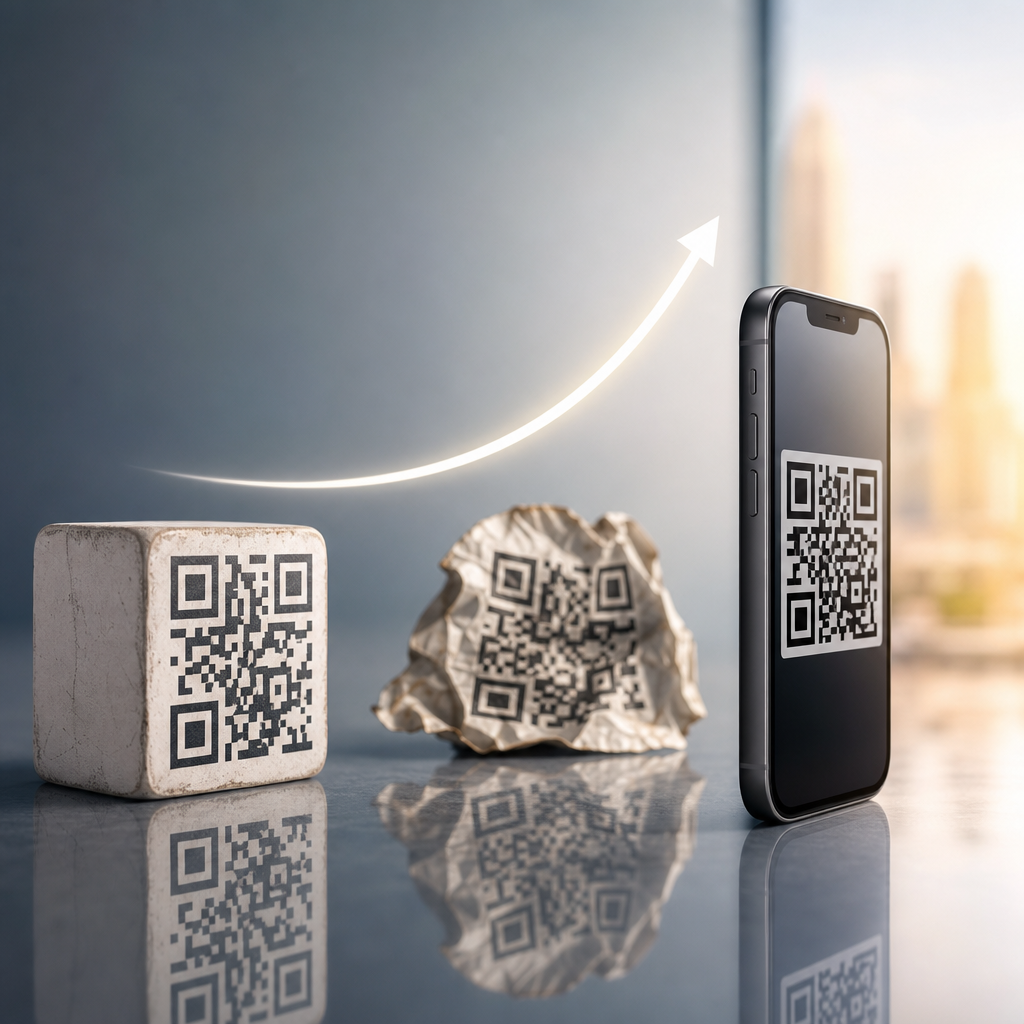
Error correction is one of the most important concepts in understanding QR code storage. QR codes use Reed-Solomon error correction and offer four levels: L, M, Q, and H. Level L restores about 7 percent of damaged codewords, M about 15 percent, Q about 25 percent, and H about 30 percent. More correction improves resilience when the code may be scratched, printed on packaging, or partially obscured by a logo. The tradeoff is reduced data capacity. In practice, I recommend storing the shortest possible payload and letting the destination system provide depth, especially for public-facing scans.
Micro QR, rMQR, and other variants exist for constrained use cases, but standard QR Code Model 2 remains the default choice for most education, retail, packaging, and marketing implementations. Capacity is not just a technical specification; it drives user experience. A code crammed with raw text may be technically valid yet perform poorly because the symbol becomes too dense for the intended print size and scanning distance.
Common QR code data types and best uses
The right payload depends on the job the code needs to do. In field deployments, I group QR code content into a few practical categories: direct information, action triggers, connection settings, identity data, and system references. That framing helps teams choose formats that are easy to scan, easy to manage, and appropriate for privacy and lifecycle requirements.
| Data type | What the QR code stores | Best use case | Main limitation |
|---|---|---|---|
| Plain text | Words, codes, instructions, IDs | Offline labels, equipment tags, simple notes | Limited space; no analytics |
| URL | Website or file link | Menus, product pages, forms, videos, support pages | Needs internet access |
| Contact card | Name, phone, email, company, address | Business cards, trade shows, sales teams | Data becomes outdated if static |
| Wi-Fi | Network name, security type, password | Guest networks, offices, events, hotels | Password exposure if shared publicly |
| Phone or SMS | Number and optional message | Support hotlines, appointment reminders, lead capture | Behavior varies by device |
| Payment payload | Merchant or transaction details | Retail checkout, donations, peer payments | Format differs by provider and country |
URLs are the most flexible option because the destination page can answer broad questions users have after scanning. That is why they dominate consumer-facing use. A museum exhibit QR code can open an accessible page with audio, translations, citations, and archival images. A product package can open setup instructions, warranty registration, and safety notices. A healthcare clinic can route patients to intake forms and directions instead of trying to encode all information directly.
Static contact and Wi-Fi codes are highly convenient in controlled environments. I have used Wi-Fi QR cards at conferences and retail counters because they reduce typing errors and speed up access. For business cards, a contact payload works well, but a landing page URL often ages better because job title, phone number, and brand assets change. The same logic applies to menus, brochures, and property signage: if content may change, a direct web destination is usually the safer choice.
Static versus dynamic QR codes
A static QR code stores the final data directly in the symbol. If it contains a URL, that exact URL is embedded permanently. If the destination changes, the printed code must be replaced. Static codes are simple, inexpensive, and suitable for information that will not change, such as a canonical homepage, a fixed phone number, or a permanent instruction sheet.
A dynamic QR code usually stores a short redirect URL controlled by a QR platform. When someone scans it, the platform forwards the visitor to the current destination. That architecture allows edits after printing, scan analytics, device-based routing, A/B testing, and campaign management. For example, a product box can keep the same printed code while the underlying destination shifts from launch video to user guide to seasonal promotion. Restaurants use dynamic codes to update menus. Events use them to switch from registration to live agenda to post-event survey.
The tradeoff is dependence on the redirect service. If the provider shuts down, the domain expires, or account billing lapses, the QR code may fail even though the printed image remains readable. That risk is often overlooked. When selecting a platform, review export options, custom domain support, uptime history, and governance controls. For long-lived assets such as packaging, manuals, real estate signs, or public infrastructure, operational continuity matters as much as scan design.
Dynamic codes also introduce privacy and compliance considerations because analytics may capture timestamp, approximate location, device type, and referral data. That can be useful for measuring campaign performance, but organizations should disclose tracking where appropriate and avoid collecting more than needed. In regulated sectors, link ownership, access controls, and retention policies should be reviewed before deployment.
How QR codes work, what affects scanning, and where limits appear
A QR code works because scanners can identify three large finder patterns in the corners, determine orientation, read timing patterns, sample the module grid, then decode the payload using the selected mode and error correction. Good performance depends on contrast, quiet zone, print quality, size, and destination design. The quiet zone is the blank margin around the symbol, typically four modules wide, and without it many scanners struggle to isolate the code from the background.
Size should match context. A tiny QR code on a business card can scan well at close range, while a poster across a room needs a much larger symbol. As a rule of thumb, scanning distance is roughly ten times the code’s width, though camera quality and lighting change results. Curved bottles, reflective laminates, low contrast color choices, and dense payloads increase failure rates. This is why shortening the stored data is not just elegant engineering; it improves real-world usability.
Design customization is possible, but it has limits. You can add brand colors, rounded modules, and center logos if contrast remains strong and error correction is set appropriately. I routinely test customized codes on older phones, not only current flagship devices, because public audiences use a wide range of cameras and scanning apps. The safest path is dark modules on a light background, sufficient quiet zone, and a short URL or redirect-based payload.
Security is another limit worth addressing directly. A QR code can store a malicious URL just as easily as a legitimate one. Users cannot visually inspect the destination before scanning unless their app previews it. That makes phishing, fake parking payment stickers, and fraudulent login prompts a genuine risk. Organizations should use clear branding, trusted domains, tamper-resistant placement, and destination pages served over HTTPS. Users should be trained to look for domain previews and avoid entering credentials after scanning unknown codes.
For most businesses and educators, the main takeaway is simple. QR codes do not magically store unlimited content; they store compact, structured data extremely efficiently. The smartest implementations put only the essential data inside the symbol and let a reliable destination experience deliver the rest.
Understanding what information a QR code can store is the starting point for understanding what QR codes are and how to use them well. A QR code can hold plain text, URLs, contact details, Wi-Fi credentials, phone actions, payment instructions, coordinates, and system identifiers. The exact amount depends on symbol version, encoding mode, and error correction, with practical capacity shaped by scan conditions more than by theoretical maximums.
In real-world use, URLs dominate because they connect the code to richer, updateable content. Static codes are best for fixed information and low operational overhead. Dynamic codes are best when destinations change, analytics matter, or campaigns need control after printing. Good QR implementation also depends on basics that are easy to miss: short payloads, strong contrast, quiet zone, adequate size, tested destinations, and secure, trustworthy links.
As the hub for QR Code Basics and Education, this page should guide every beginner decision that follows. If you are choosing your first QR code, start by defining the exact information users need after the scan, then match that need to the simplest reliable data type. From there, build the next step in your learning path: how QR codes work, how to create one, how to test one, and how to avoid common QR code mistakes.
Frequently Asked Questions
What kinds of information can a QR code store?
A QR code can store many types of compact, machine-readable information, not just a website link. At the most basic level, it can contain plain text such as a message, code, ID number, or short instruction. It can also store URLs that open webpages, videos, forms, product pages, event registrations, or downloadable files. Beyond that, QR codes are commonly used for contact details through vCard or MeCard formats, allowing someone to save a name, phone number, email address, company, and address directly into their phone.
They can also hold email templates, SMS prompts, Wi-Fi login credentials, calendar event details, payment information, app store links, map locations, coupon codes, digital tickets, and authentication data. In business and education settings, QR codes often point to lesson materials, digital worksheets, classroom resources, portfolios, instructional videos, and learning management systems. The key idea is that a QR code stores data in a structured format that software can decode instantly, making it a flexible bridge between physical and digital information.
Can a QR code store more than just a web address?
Yes, absolutely. Although many people associate QR codes with website links, that is only one of their most common uses. A QR code is really just a visual way of encoding data, so the contents can be much broader than a URL. For example, a QR code can open a phone dialer with a prefilled number, create a draft email with a subject line, connect a device to a Wi-Fi network, or add contact information directly to an address book. It can also launch a payment flow, verify identity in a secure system, or carry login and authentication tokens used by apps and digital platforms.
This broader capability is why QR codes appear in so many industries. In retail, they may link to product specifications, warranty information, or mobile checkout. In healthcare, they can encode patient identifiers, prescription references, or access links to records, depending on the system. In education, they may connect printed materials to online assignments, tutorials, or attendance forms. So while web addresses are common, they represent just one practical category of information a QR code can store and deliver.
How much information can a QR code actually hold?
The amount of information a QR code can hold depends on several technical factors, including the QR code version, the type of data being stored, and the level of error correction used. In general, QR codes can store numeric data, alphanumeric characters, binary data, and certain encoded character sets. Larger QR codes with more modules can store more information, but there is a tradeoff: as more data is packed into the code, the pattern becomes denser and can be harder to scan if it is printed too small or displayed poorly.
In practical use, most QR codes do not store long blocks of information directly. Instead, they often store a short, efficient data string, such as a URL, a short identifier, or a formatted command that sends the user to a destination where larger amounts of information are hosted online. This is why a QR code on a poster, textbook, flyer, product label, or classroom handout usually feels simple and fast to scan. Technically, a QR code can store a meaningful amount of data, but from a usability standpoint, concise content works best because it improves reliability, readability, and scan performance across different devices and conditions.
Does the information live inside the QR code itself or does it link somewhere else?
It can work either way, depending on how the QR code was created. Some QR codes contain the actual information directly inside the code. For example, a QR code for Wi-Fi access can include the network name and password, and a QR code for contact sharing can include a person’s details directly in the encoded data. In these cases, the scanner reads the information from the code itself and uses it immediately without needing to fetch it from a website.
Other QR codes contain a link or reference that points to content stored elsewhere, most often online. This is the most common setup for webpages, videos, forms, menus, educational resources, support documents, and downloads. When scanned, the phone or app reads the encoded link and opens the online destination. This distinction matters because it affects flexibility. If the information is embedded directly, changing it usually means generating a new QR code. If the QR code points to a managed link, especially through a dynamic QR code system, the destination can often be updated without changing the printed code. That makes linked QR codes especially useful for marketing, education, operations, and any situation where content may need to change over time.
What is the best type of information to put in a QR code?
The best type of information to put in a QR code is information that needs to be accessed quickly, accurately, and with minimal typing. QR codes are most effective when they remove friction for the user. That makes them ideal for web links, sign-up forms, contact cards, payment requests, event details, classroom resources, app downloads, and directions. If scanning the code saves time, reduces errors, or creates a smoother user experience, it is usually a strong use case.
It is also important to think about context. In education, a QR code might work best for linking printed lessons to videos, quizzes, or reference materials. In business, it may be best used for product pages, customer support, digital menus, or onboarding steps. In secure environments, it may carry authentication tokens or verification prompts, but those uses require careful handling and trusted systems. The most effective QR code content is concise, purposeful, and easy for the scanner to act on immediately. Rather than trying to cram in too much data, it is usually better to encode a clean, useful destination or a compact data format that supports a clear next step for the user.