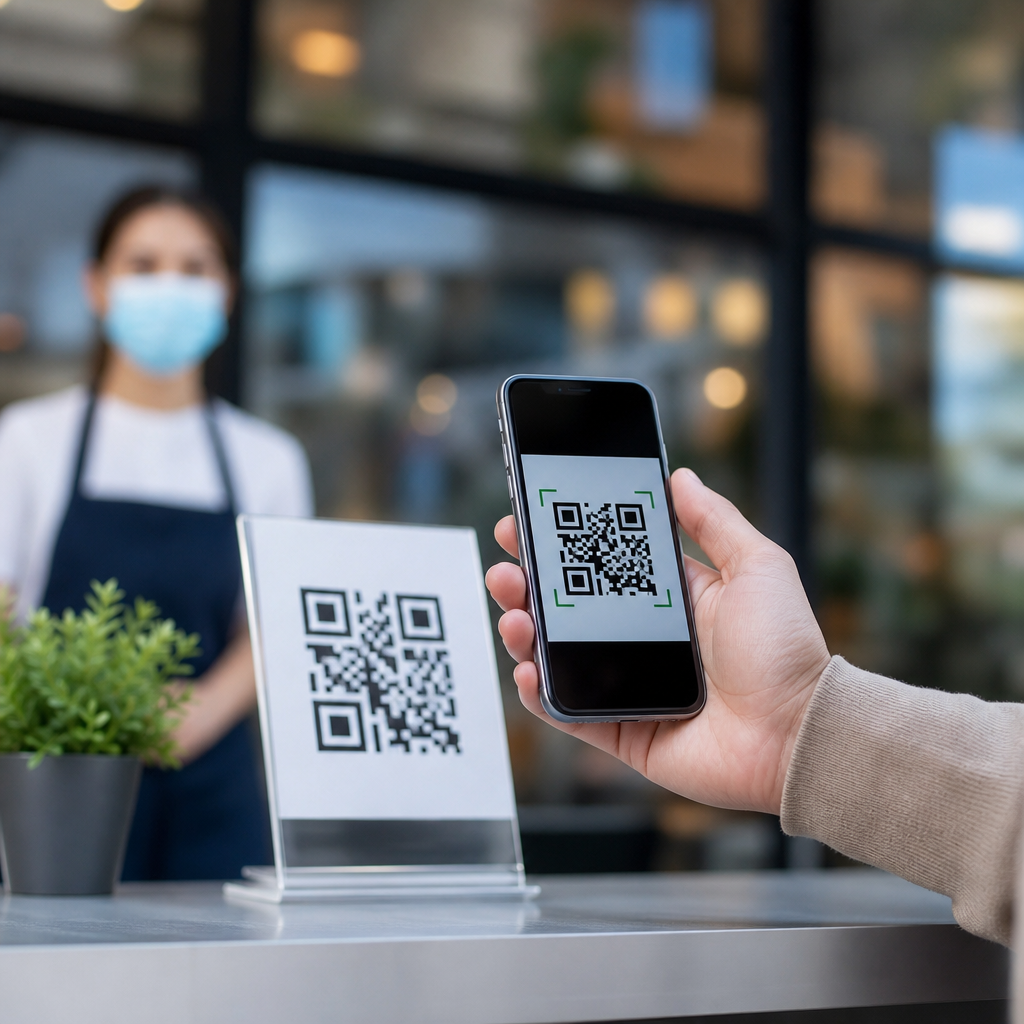
Scanning a QR code feels instantaneous, but several technical steps occur between pointing a phone camera and landing on a webpage, payment screen, app action, or stored file. A QR code, short for Quick Response code, is a two-dimensional matrix barcode that stores data in a grid of black and white modules. Unlike a traditional one-dimensional barcode, which typically holds a short numeric string, a QR code can encode URLs, contact details, Wi-Fi credentials, geographic coordinates, event information, and command-like actions. Understanding what happens when you scan a QR code matters because these symbols now sit at the center of retail checkout, restaurant menus, logistics tracking, mobile payments, device onboarding, and authentication flows. I have implemented QR code campaigns, tested scan reliability across devices, and debugged broken destination links, and the pattern is consistent: the code itself is only the visible layer. The real process combines optics, image processing, error correction, decoding rules, operating system handling, and destination security. Once you know how QR codes work, it becomes easier to create better codes, troubleshoot failed scans, choose between static and dynamic formats, and avoid common security mistakes.
The scan begins with the camera and image detection
When you scan a QR code, the first thing that happens is not decoding but detection. The camera captures a live image stream, and the scanning software searches each frame for the visual signatures that identify a QR code. The most important markers are the three large finder patterns positioned in three corners. These square targets let the software determine that the object in view is a QR code rather than random contrast in the environment. The scanner then estimates orientation, perspective, and size. This is why a code can still scan when tilted on a poster, printed on a curved label, or viewed from an angle on packaging.
Modern phones rely on computer vision libraries integrated into the operating system, such as Apple’s AVFoundation and Google’s ML Kit, while industrial scanners often use dedicated decoding engines from vendors like Zebra or Datalogic. In practice, scan performance depends on lighting, motion blur, focus distance, module contrast, and the quiet zone, which is the blank margin around the code. In field tests, poor quiet zones are one of the most common reasons codes fail. If a designer places text or graphics too close to the edge, the software may not isolate the code correctly. Detection also includes correcting distortion, sharpening edges, and converting the image into a binary map so the black and white modules can be read accurately.
How the QR code structure tells software what to read
Once the code is detected, the scanner interprets its structure. QR codes are not random squares. They follow the ISO/IEC 18004 standard, which defines how modules are arranged and how information is encoded. Beyond the finder patterns, the code contains timing patterns that help the scanner count module positions, alignment patterns that improve reading on larger versions or distorted surfaces, format information that specifies error correction level and mask pattern, and version information on higher-capacity symbols. The remaining modules store the actual data and error correction codewords.
The black and white pattern has been deliberately masked during generation. Masking is a rule-based transformation that prevents problematic visual clusters, such as large blank areas or repeating patterns, which can make scanning harder. During decoding, the scanner identifies the selected mask and reverses it to recover the original bitstream. That bitstream is then parsed according to encoding mode. Common modes include numeric, alphanumeric, byte, and Kanji. A numeric payload is compact because it stores digits efficiently, while a byte-mode payload can handle broader character sets, which is why website addresses and vCard data often use it.
This structured design explains why a QR code can withstand moderate damage. If a corner is scuffed or a few modules are obscured, the decoder can still reconstruct the message because the code was built with layout rules and redundancy, not as a literal pixel image.
Error correction is why damaged codes often still work
One of the most important parts of how QR codes work is error correction. QR codes use Reed-Solomon error correction, a mathematical method also used in CDs, satellite communications, and data storage. When a QR code is generated, extra codewords are added so that missing or corrupted data can be reconstructed during scanning. There are four standard levels: L, M, Q, and H. Level L restores roughly 7 percent of damaged data, M about 15 percent, Q about 25 percent, and H about 30 percent. Higher error correction improves resilience but reduces data capacity because more space is devoted to recovery information.
In practical use, this tradeoff matters. A shipping label exposed to abrasion may need stronger error correction than a QR code shown full-screen in a mobile app. A branded code with a logo placed in the center usually relies on level Q or H because the logo intentionally covers modules. However, stronger error correction does not rescue bad design. If contrast is weak, the code is too small, or the quiet zone is missing, scan rates still drop. In campaign audits I have run, marketers often assume that adding a logo is harmless because “QR codes have error correction,” but success depends on controlling several variables at once: symbol size, print resolution, dark-on-light contrast, and adequate margin.
| Error correction level | Approximate recovery capacity | Best use case | Main tradeoff |
|---|---|---|---|
| L | 7% | Clean digital displays, simple URLs | Lowest damage tolerance |
| M | 15% | General print and web use | Moderate capacity loss |
| Q | 25% | Branded codes, labels, light wear | Less room for payload data |
| H | 30% | Harsh environments, center logos | Smallest usable payload |
What data is actually inside the code
A common misconception is that every QR code contains a website address. Many do, but the symbol can hold several data types. If the encoded content is a URL, the scanner usually opens a browser or in-app web view. If it is plain text, the phone displays the text directly. If it is a mailto link, the device can open an email composer. If it contains a phone number using the tel scheme, the phone can offer to dial it. Contact cards are often encoded in vCard or MeCard format, allowing the operating system to create a new contact. Wi-Fi onboarding codes usually include network name, encryption type, and password so a device can connect without manual entry.
Payment QR codes add another layer. Depending on the country and scheme, the payload may follow standards such as EMVCo merchant-presented QR specifications, UPI in India, or Alipay and WeChat Pay formats in China. These payloads can include merchant identifiers, transaction references, currency, and amount. In logistics, the data may simply be an asset ID that maps to a record in a warehouse management system. In manufacturing, a QR code might trigger a machine-readable instruction or link to an internal document repository.
The key point is that the code stores either the data itself or a pointer to data elsewhere. Short URLs and dynamic QR systems usually store a redirect link rather than the final destination, allowing the creator to change the landing page later without reprinting the symbol.
What your phone or scanner does after decoding
After the payload is decoded, the operating system or scanning app decides how to handle it. This step is often invisible to users, but it strongly shapes the experience. A native camera app typically recognizes common action types and presents a prompt. For a URL, that may be a banner offering to open the site. For Wi-Fi credentials, it may show a join network dialog. For calendar data, it may offer to create an event. Dedicated scanning apps may parse more formats, keep a scan history, or apply security checks before launching the action.
If the payload is a URL, additional network events follow. The browser performs DNS lookup, opens a secure connection using TLS if the link is HTTPS, requests the page, follows redirects if present, and renders the destination. Dynamic QR codes often use one or more redirects for analytics, campaign routing, deep linking, or geo-based destination rules. A restaurant chain might use one printed code nationwide but route users to location-specific menus based on the store parameter or device location. A software company might route iPhone users to the App Store and Android users to Google Play from the same code.
This is also where friction appears. If the destination page is slow, not mobile optimized, or blocked by a captive network policy, the QR code experience feels broken even when the code scanned perfectly. In every deployment review I have done, the landing page quality mattered as much as symbol quality.
Static vs dynamic QR codes and why the difference matters
To understand what happens when you scan a QR code, you need to distinguish between static and dynamic QR codes. A static QR code contains the final destination directly in the symbol. Once printed, it cannot be changed. If the URL breaks, the code is obsolete. Static codes are useful for permanent information such as plain contact details, a canonical homepage, or Wi-Fi credentials in a controlled environment.
A dynamic QR code usually contains a short URL managed by a QR platform. When scanned, the request goes first to the platform, which records analytics and then redirects the user to the current destination. This design supports editable links, campaign tracking, A/B routing, expiration rules, password protection, and scan metrics such as timestamp, device type, and approximate location. Platforms like Bitly, QR Code Generator Pro, Beaconstac, and Flowcode have popularized this model for marketing and operations.
The tradeoff is dependency. If the service provider has downtime, changes plan limits, or the domain expires, the QR code may stop working. That is why enterprise teams often use branded short domains and documented redirect ownership rather than relying solely on a third-party default domain. For long-life assets such as equipment labels, museum signage, and printed manuals, governance matters more than design flair.
Security, privacy, and scan safety
QR codes are convenient, but they can hide risky destinations because humans cannot read the payload by sight. Malicious actors use QR phishing, often called quishing, to direct users to fake login pages, spoof payment flows, or app download traps. Public posters, parking meters, and restaurant tables are frequent targets because attackers can place fraudulent stickers over legitimate codes. The scan itself does not infect a phone; the risk comes from what users do next, such as entering credentials, approving a payment, or installing software.
Good security practice is straightforward. Preview the destination before opening it. Prefer HTTPS websites. Be cautious if the domain looks misspelled, uses strange subdomains, or asks for urgent action. Businesses should monitor physical placements, use tamper-evident labels where practical, and route scans through domains they control. For internal operations, mobile device management policies can restrict which apps open QR payloads and whether unknown links launch automatically.
Privacy is another consideration. A static code by itself does not track a person. A dynamic code can log metadata such as time, rough location, device type, and referral context, subject to platform settings and legal obligations. If a campaign uses personalized QR codes tied to customers, that data handling falls under privacy compliance requirements such as GDPR or CCPA depending on jurisdiction. Clear disclosure and minimal data collection are better practice than silent overreach.
What affects scan reliability in the real world
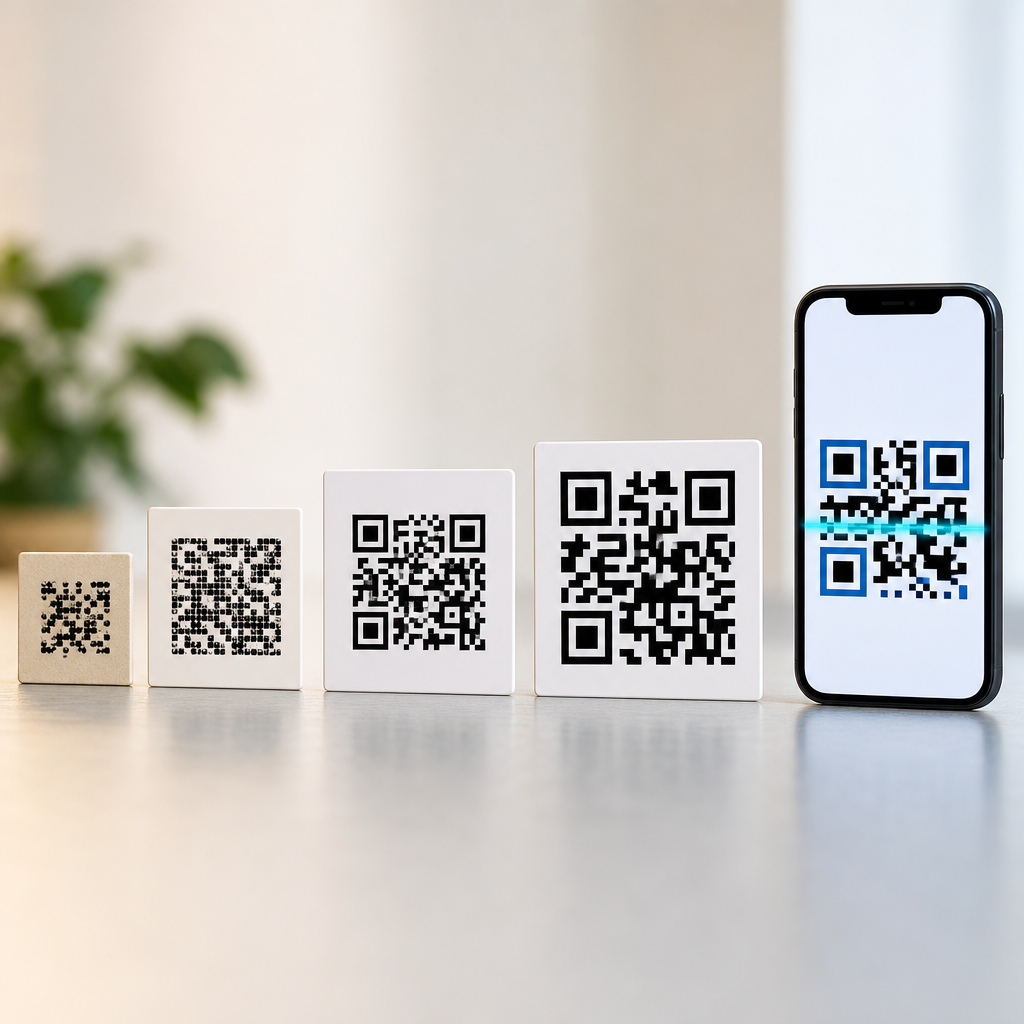
Reliable scanning depends on design, placement, and context. The code must be large enough for the expected scan distance. A common rule is a 10:1 ratio, meaning a code intended to be scanned from one meter away should be about ten centimeters wide, though device camera quality can shift the threshold. Contrast should be strong, ideally dark modules on a light background. Inverted codes can work, but they are less consistently supported. Glossy materials create glare, curved bottles distort modules, and low-resolution printing softens edges. Even a perfect file can fail after poor production.
Placement matters too. Codes near floor level are harder to frame. Codes behind glass may reflect overhead lights. Outdoor signage must account for sun washout and weathering. On screens, refresh rate interactions and brightness can influence old scanners, though modern phones handle displays well. Before launch, test on multiple devices, including older Android models, current iPhones, and any dedicated scanners used in operations. I also recommend testing with weak connectivity because many users scan in stores, transit stations, or warehouses where signal quality is inconsistent. A lightweight landing page often improves overall completion rates more than any graphic tweak.
Scanning a QR code sets off a chain of events: visual detection, structural analysis, error correction, payload decoding, system handling, and destination loading. That sequence is why QR codes feel simple to users yet require careful planning by anyone creating them. The code must be readable, the data format must match the intended action, the destination must load cleanly on mobile devices, and the security model must assume that users cannot inspect the contents visually. When those pieces align, QR codes are one of the fastest bridges between physical and digital experiences.
The practical takeaway is clear. If you are building with QR codes, treat the symbol, the redirect logic, and the landing experience as one system. Choose static codes for permanent, low-risk uses. Choose dynamic codes when you need analytics, flexibility, or routing control. Use sufficient contrast, quiet zone, and error correction. Test in the exact environment where people will scan. Monitor links over time, especially on long-lived printed materials. And when you scan unfamiliar codes yourself, preview the destination before acting.
Use this hub as your starting point for deeper QR code basics and education topics, from QR code sizes and error correction to dynamic redirects, scan tracking, and security best practices. The better you understand how QR codes work, the easier it is to make every scan faster, safer, and more useful.
Frequently Asked Questions
What actually happens when you scan a QR code?
When you scan a QR code, your phone’s camera first captures the image and identifies the square pattern as a machine-readable code rather than an ordinary photo. The scanning software then locates the code’s position, corrects for tilt or perspective if the code is being viewed at an angle, and analyzes the grid of black and white modules. From there, it decodes the stored data, which may be a website URL, contact card, Wi-Fi login, payment request, map location, text string, or another supported data type. If the code includes built-in error correction, the scanner can still recover the information even if part of the code is smudged, scratched, or partially blocked.
Once the data is decoded, your device decides what action makes sense for that content. If the QR code contains a web address, your phone may show a prompt to open it in a browser. If it contains Wi-Fi credentials, your device may offer to join the network. If it contains payment information, it may launch a payment app or display a confirmation screen. This is why scanning feels immediate: the camera, image processing, decoding, and action-matching all happen in rapid succession, usually in less than a second under good lighting and focus conditions.
What kind of information can a QR code store?
A QR code can store many types of structured and unstructured data, which is one reason it is so widely used. The most common use is to store a URL that sends someone to a webpage, landing page, menu, download link, or online form. However, QR codes can also encode plain text, phone numbers, email addresses, SMS templates, calendar event details, contact information in vCard format, GPS coordinates, and Wi-Fi network credentials such as the network name, security type, and password. In business and retail settings, they are also used for authentication, product tracking, ticketing, digital payments, and app-specific actions.
Compared with a standard one-dimensional barcode, a QR code can hold far more information because it uses a two-dimensional grid rather than a single row of bars. That increased capacity allows it to support more complex interactions beyond simply looking up a product number in a database. It is important to note, though, that the QR code itself usually stores the data or instruction directly; in many cases it does not “contain a website” so much as it contains the web address that tells your phone where to go next. The final action depends on both the encoded content and the software on the device that reads it.
How does a phone know what to do after reading the QR code?
After decoding the QR code, the phone examines the format of the retrieved data and matches it to a recognized action. For example, if the content starts with a web protocol such as http or https, the device interprets it as a link and offers to open it in a browser. If the data follows a contact-card format, the phone may present an option to save a new contact. If it includes Wi-Fi connection details, the operating system may display a prompt to join the network. In other words, the code does not force the phone to behave randomly; the device uses built-in rules and app associations to determine the most appropriate response.
Different devices and apps may handle the same QR code a little differently, especially when the code triggers a specialized workflow such as a payment, app deep link, login token, or event check-in. A banking app may recognize a payment payload that a generic camera app does not fully process on its own. Some scanners open content automatically, while others first show a preview so the user can confirm the action. This layer of interpretation is important because it acts as the bridge between raw encoded data and the user-facing result, whether that result is opening a webpage, launching an app, or storing information on the device.
Can a QR code be dangerous or used maliciously?
Yes, a QR code can be used maliciously, not because the black-and-white pattern is inherently harmful, but because it can conceal the destination or instruction until it is scanned. A printed QR code might send a user to a phishing website that imitates a bank login page, initiate an unwanted app action, or direct the device to a deceptive download page. In public places, attackers sometimes place fraudulent QR stickers over legitimate ones to redirect payments or capture personal information. Since users cannot easily inspect the encoded destination with the naked eye, QR codes can create a false sense of trust if people assume every code is safe.
The good news is that safe scanning habits reduce the risk significantly. Use a scanner or camera app that previews the URL before opening it, and take a moment to inspect the domain name carefully. Be cautious with codes posted in public, especially on parking meters, restaurant tables, flyers, or payment terminals. Avoid entering passwords or payment details on a page you reached from an unexpected scan unless you have verified the site is authentic. QR codes themselves are simply a data container, but as with links in email or text messages, the destination matters. Treat unfamiliar QR codes with the same caution you would give to any unknown digital shortcut.
Why does scanning sometimes fail or take longer than expected?
QR scanning can fail for several practical and technical reasons. Poor lighting, glare, motion blur, low camera resolution, or an out-of-focus image can make it harder for the scanner to distinguish the code’s individual modules. If the QR code is too small, printed with low contrast, damaged, curved around a bottle or package, or partially blocked, the decoding software may need extra time to interpret it or may fail altogether. Although QR codes include error correction that helps recover missing or damaged sections, there are limits to how much distortion can be repaired.
Performance also depends on the device and the content behind the code. An older phone may take longer to focus or process the image. If the code resolves to a webpage, a slow internet connection can make it seem like the scan itself is lagging when the real delay is in loading the destination. Some app-specific QR codes require a compatible app or updated operating system to complete the action. In most cases, better lighting, a steadier hand, a cleaner camera lens, and a slight adjustment in distance are enough to improve results. The scan may feel simple from a user perspective, but it relies on image capture, pattern recognition, data decoding, and in many cases network access all working smoothly together.