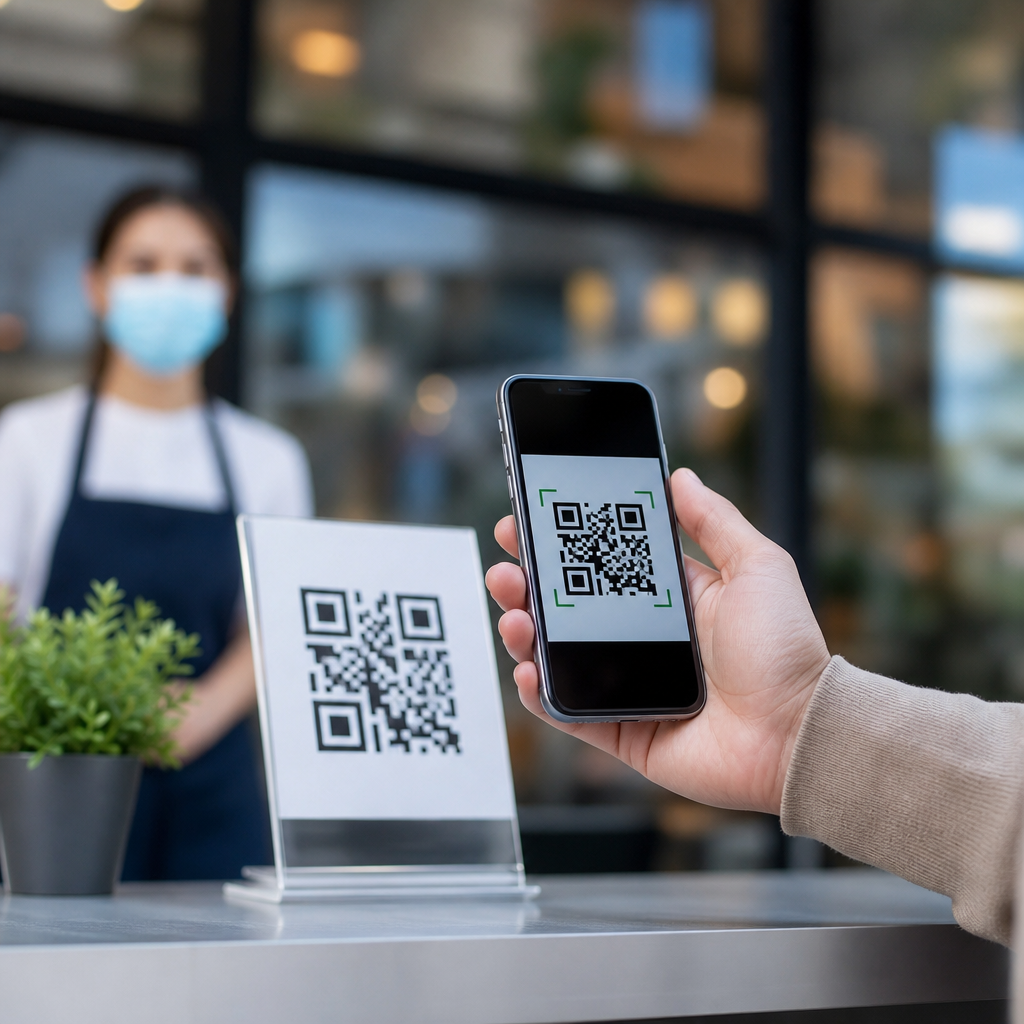
QR codes are square, machine-readable symbols that store information in a pattern of black modules and white spaces, allowing a smartphone or scanner to open a web page, save contact details, connect to Wi-Fi, launch an app, or trigger many other digital actions in seconds. The term QR stands for Quick Response, a name earned because the format was designed for fast decoding even when the code is partially damaged or viewed at an angle. As someone who has created, tested, and troubleshot QR campaigns for retail stores, trade show booths, restaurant menus, packaging, and printed mailers, I have seen how a simple square can remove friction between physical spaces and digital experiences. For beginners, the easiest way to think about a QR code is as a smarter, more flexible barcode that can hold significantly more data and can be scanned by ordinary phone cameras. Understanding what QR codes are matters because they now sit at the center of payments, product information, ticketing, authentication, marketing, and customer support. If you use a restaurant menu, a parking meter, a product box, or an event badge, you have probably already interacted with one. Knowing how they work, what types exist, where they are used, and what makes a code reliable helps people use them safely and helps businesses deploy them effectively.
How QR codes work and what makes them different from barcodes
A traditional barcode stores data horizontally in a series of lines, which limits how much information it can carry and usually requires a dedicated scanner. A QR code stores data both horizontally and vertically, which dramatically increases capacity while making it easier for phone cameras and imaging scanners to decode. The three large squares in the corners are called finder patterns. They help a scanner detect the code’s orientation instantly. Smaller alignment patterns help correct distortion, while timing patterns guide the grid structure. Format information tells the scanner what error correction level is used, and the data area contains the encoded content. In practice, this structure is why a QR code still works on curved packaging, posters photographed at an angle, or labels with minor smudging.
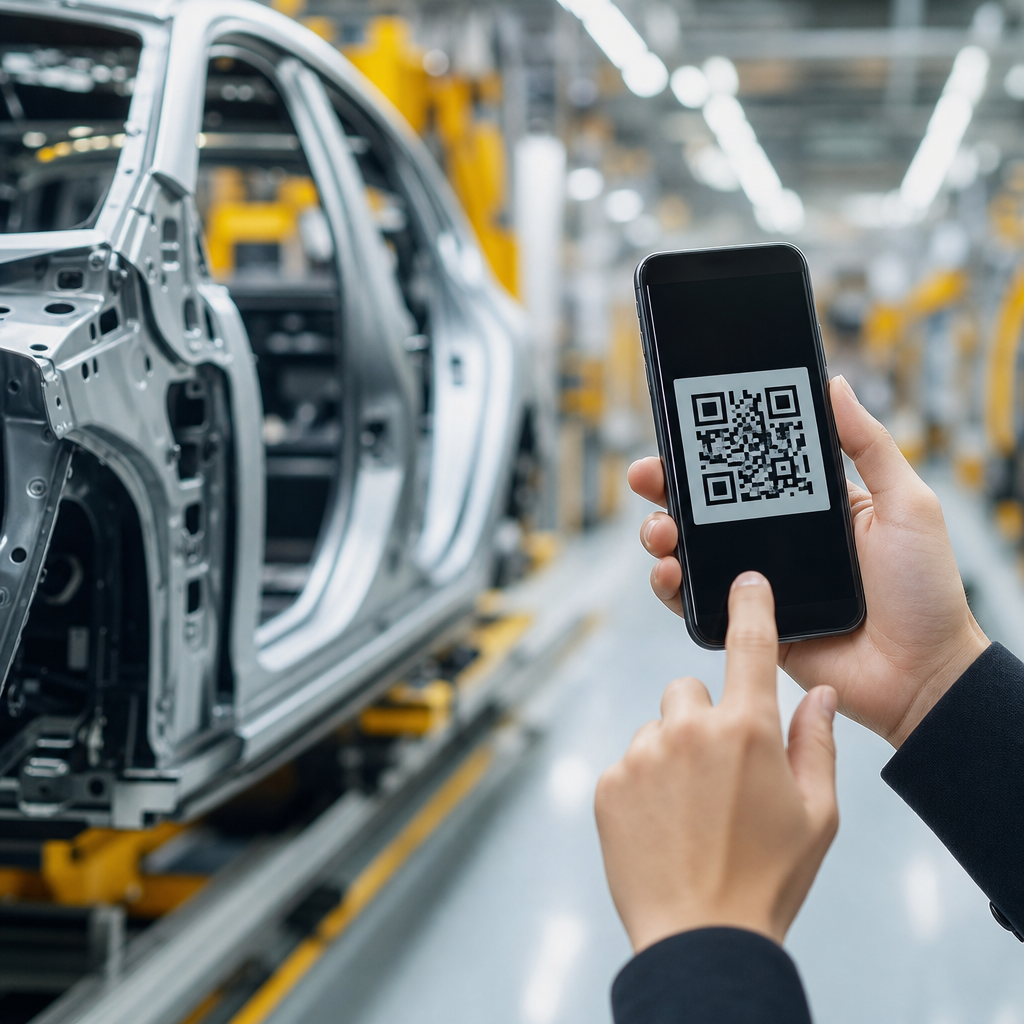
The format was invented in 1994 by Denso Wave, a Japanese company that needed a faster way to track automotive components than standard barcodes allowed. Denso Wave kept the patent open for broad use, which accelerated adoption worldwide. Modern smartphones made QR codes mainstream because users no longer needed special hardware. On both iPhone and Android devices, the camera app can usually recognize a code automatically and present the linked action. This ease of use is the core reason QR codes spread from factories into consumer life. They solve a simple problem: replacing typing, searching, and manual data entry with a scan.
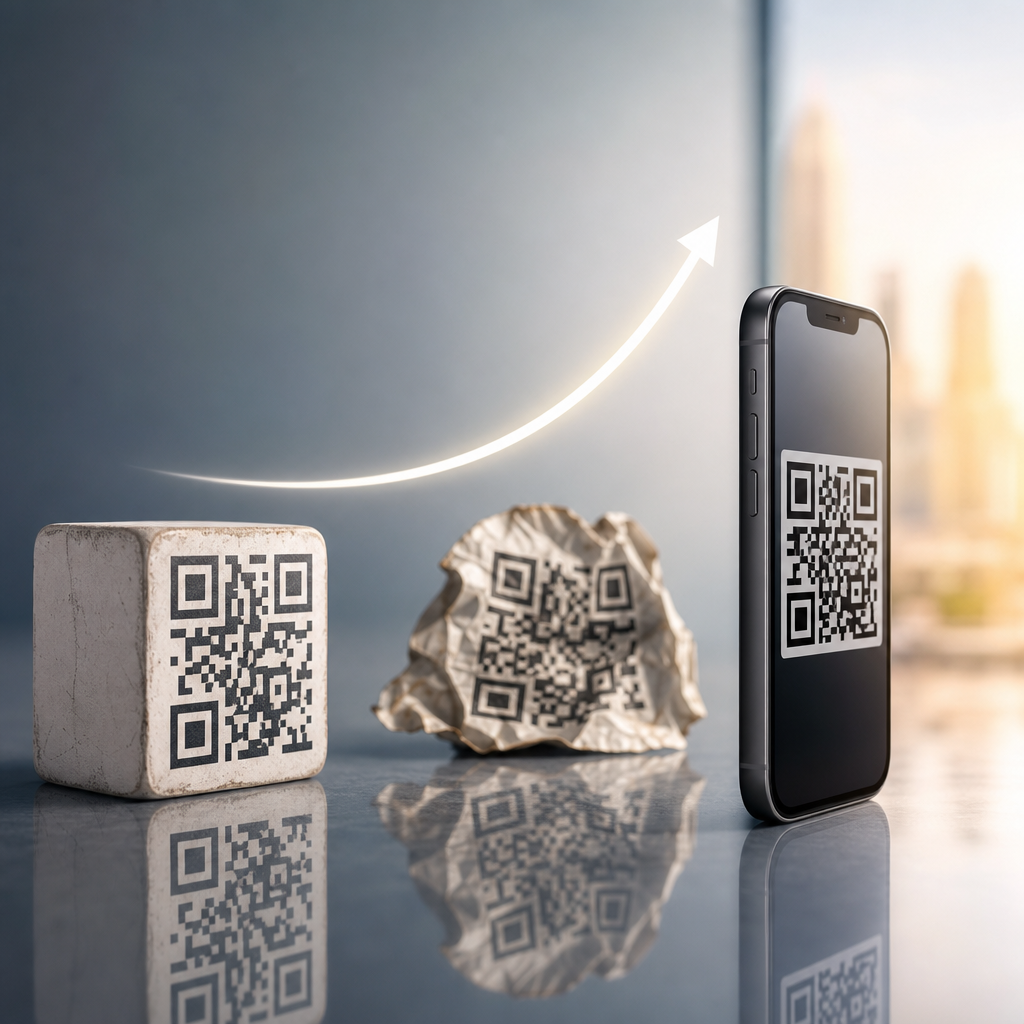
Error correction is one of the most important technical features for beginners to understand. QR codes can often remain scannable even if part of the symbol is dirty, scratched, or covered by a logo. This resilience comes from Reed-Solomon error correction, with four standard levels: L, M, Q, and H. Higher levels allow more recovery from damage but reduce available data capacity and can require a denser code. When I prepare print files, I usually choose the correction level based on use case. Shipping labels exposed to wear need more resilience than a clean indoor poster. That decision affects scan reliability more than many people realize.
What information a QR code can store
A QR code can store many types of information, but the most common use is a URL that opens a web page. That page might be a product manual, campaign landing page, menu, payment screen, feedback form, or app download destination. Beyond web links, QR codes can encode plain text, phone numbers, SMS prompts, email drafts, vCard contact details, geographic coordinates, calendar events, and Wi-Fi credentials. In operations settings, they can also represent inventory IDs, serial numbers, work instructions, patient identifiers, or authentication tokens, depending on system design.
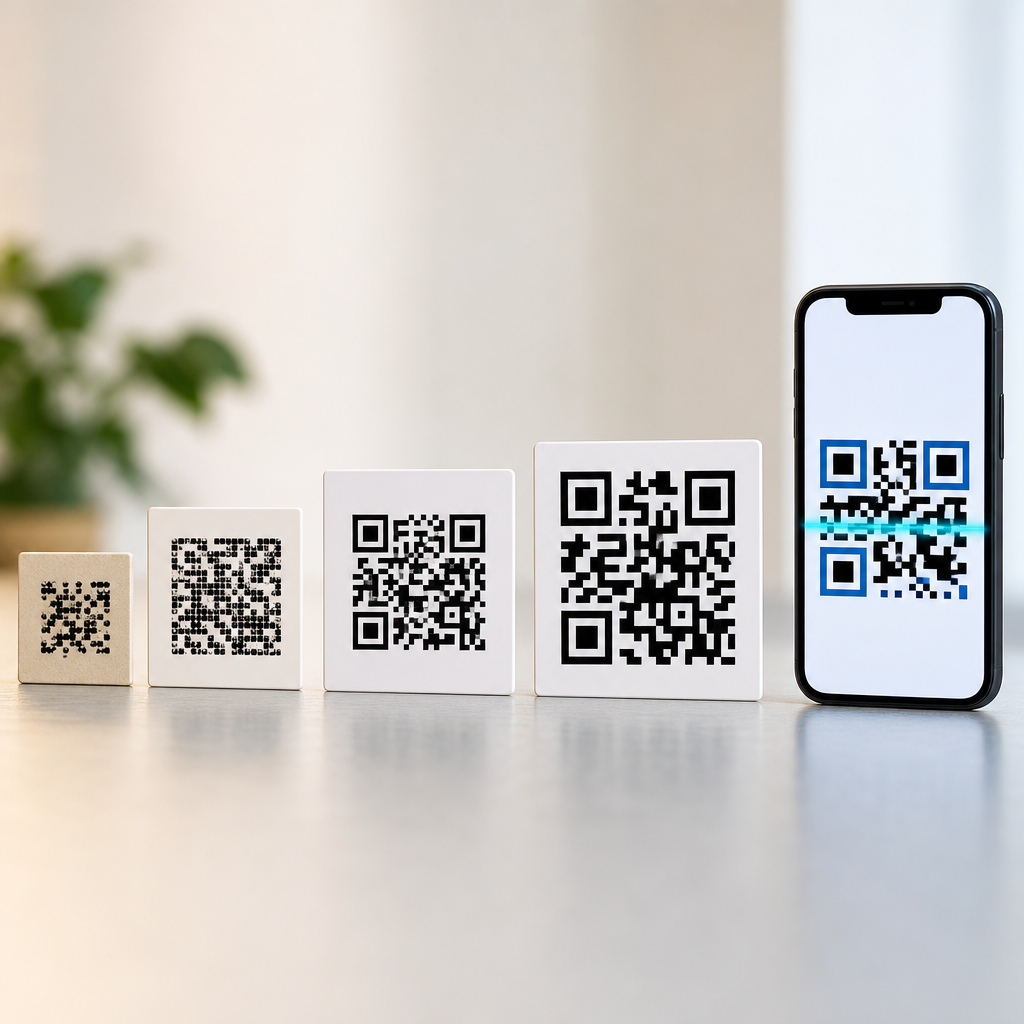
Capacity depends on the data type and the QR version, which ranges from Version 1 to Version 40. Numeric data is the most efficient, alphanumeric is next, and binary data requires more space. As data volume grows, the code becomes denser, and dense codes are harder to scan at small print sizes or low contrast. This is why a short URL typically performs better than a long, parameter-heavy link embedded directly in the symbol. In client work, I often replace long destination addresses with a short redirect URL, not for aesthetics alone but because smaller, cleaner codes scan faster in real conditions.
Beginners often ask whether a QR code “contains the website.” Usually it does not. In most marketing uses, the code stores the destination URL, and the website loads from the internet after the scan. That distinction matters because changing the linked content later depends on the type of code you created. If the exact final URL is encoded permanently, the code cannot be edited after printing. If the code points to a short redirect managed by a QR platform, the destination can be updated without replacing the printed code. That leads directly to the difference between static and dynamic QR codes.
Static vs dynamic QR codes
Static QR codes contain fixed information. Once generated and printed, the encoded destination cannot be changed. They are useful for permanent data such as contact cards, Wi-Fi logins, serial references, or stable URLs that will not move. They are often free to generate and do not require a subscription or management platform. Their limitation is obvious: if the destination changes, the printed code breaks. I have seen businesses place static codes on packaging, then redesign their website structure months later and lose scans because nobody planned redirects.
Dynamic QR codes do not encode the final destination directly. Instead, they point to a short URL controlled through a platform, which then redirects the user to the live destination. That setup allows edits after printing, campaign tracking, and sometimes advanced features such as device-based routing, A/B testing, expiry dates, password protection, and scan analytics. Dynamic codes are the standard choice for marketing, events, digital menus, product packaging, and any campaign that may need updates. The tradeoff is dependence on the service provider. If the platform account expires or the provider fails, the code may stop working unless you control the redirect infrastructure.
| Type | Best for | Main advantage | Main limitation |
|---|---|---|---|
| Static QR code | Permanent information, simple one-off uses | No ongoing platform dependency | Destination cannot be changed after creation |
| Dynamic QR code | Marketing, campaigns, menus, packaging, analytics | Editable destination and measurable scans | Usually depends on a provider or redirect system |
If you are choosing between static and dynamic, the practical rule is simple. Use static when the information is unlikely to change and reliability depends on independence from third-party tools. Use dynamic when flexibility, tracking, governance, and update control matter more. For a hub article on QR code basics, this distinction is foundational because nearly every advanced topic, from analytics to campaign optimization, builds on it.
Where QR codes are used in everyday life and business
QR codes appear across consumer, commercial, and industrial environments because they connect offline moments to digital systems with very little friction. In restaurants, they open menus, allergen information, and ordering systems. In retail, they link to product specs, warranty registration, assembly instructions, and loyalty programs. On event tickets and boarding passes, they validate entry and speed processing. In payments, especially across Asia and increasingly elsewhere, QR codes support merchant-presented and customer-presented transactions through banking and wallet apps. On packaging, they can direct buyers to ingredients, recycling instructions, authenticity checks, or support resources.
In healthcare and manufacturing, QR codes support asset tracking, medication workflows, sample labeling, maintenance logs, and training access. Warehouses use them to identify bins, trigger picking actions, or confirm process completion. Schools use them for attendance, resource sharing, and campus wayfinding. Real estate signs use them for property details and virtual tours. Museums place them near exhibits for multilingual interpretation. I have also deployed them in field service environments where technicians scan a label on equipment to open the exact service history and parts list, cutting lookup time significantly.
The reason QR codes fit so many settings is not novelty but efficiency. They shorten the path from intent to action. Instead of asking users to type a long URL, search for a page, or download a document later, the code moves them directly into the relevant workflow. That said, the best uses are contextual. A QR code should answer the question a user has in that moment. On a product box, that may be setup help. On a poster, it may be event registration. On a machine label, it may be safety documentation. Relevance drives scans more than design alone.
How to scan QR codes safely and successfully
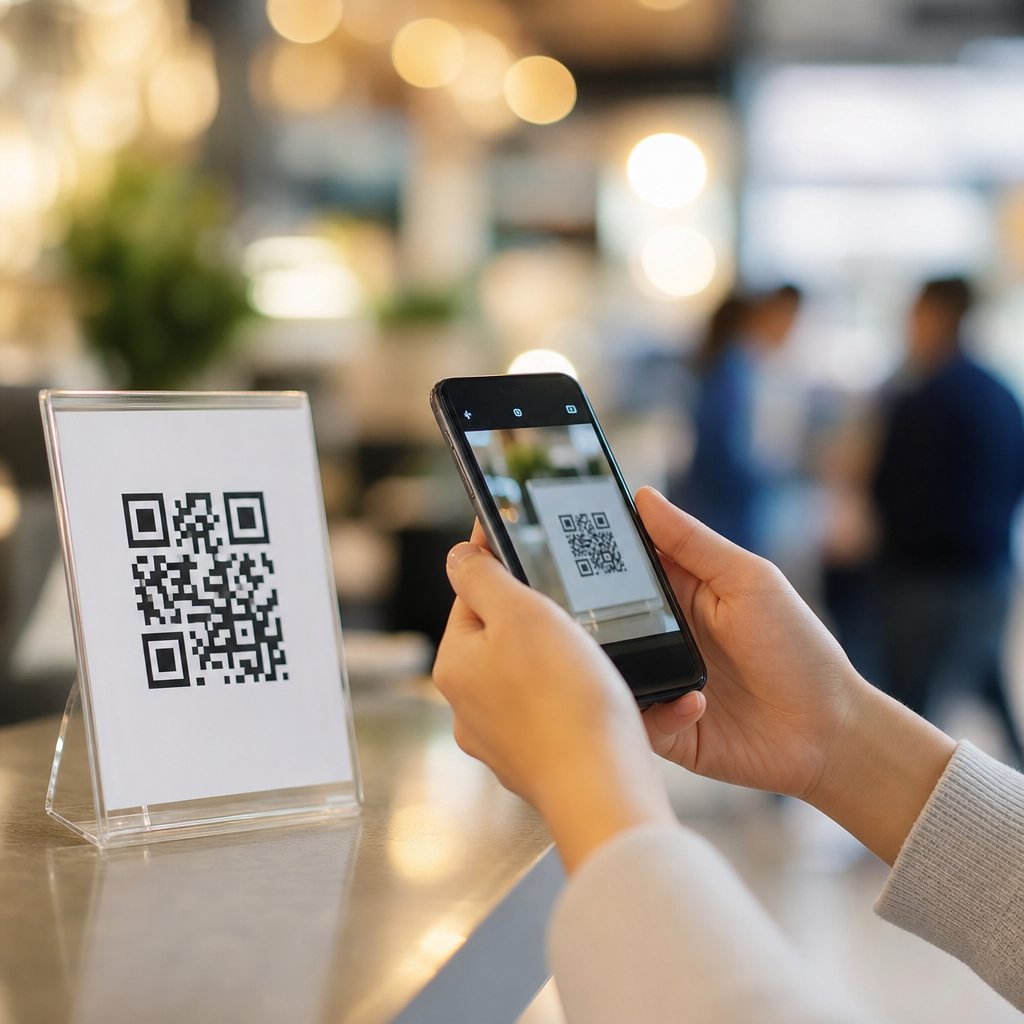
Scanning a QR code is usually straightforward. Open the phone camera, point it steadily at the code, and tap the notification banner when it appears. If the native camera does not detect the symbol, a built-in image recognition tool or a dedicated scanner app can help. Good lighting, a clear line of sight, and a properly sized code improve results. As a rule of thumb, the farther away the expected scan distance, the larger the printed code should be. Tiny codes on glossy surfaces often fail because glare and low detail interfere with decoding.
Safety matters because a QR code hides its destination until the scan occurs. Malicious actors can place stickers over legitimate codes or distribute codes that lead to phishing pages, fake login screens, or malware prompts. Before opening a link, check whether the preview shows a recognizable domain. Be cautious if the destination asks for payment, passwords, or sensitive personal data unexpectedly. In public spaces, look for signs of tampering, such as a code label pasted over another. Businesses should reduce risk by using branded domains, secure HTTPS pages, and clear on-page identity signals so users know they reached the right destination.
Accessibility also deserves attention. A QR code alone is not accessible to every user or every situation. Printed materials should include a short fallback URL or alternative instruction. In venues with weak mobile data, offering on-site Wi-Fi can determine whether a campaign succeeds. If the linked page is not mobile optimized, the scan experience breaks immediately. In testing, I always scan with multiple phone models, different lighting, and both strong and weak network conditions. The code itself is only half the experience; the landing page completes the interaction.
What makes a QR code effective: design, testing, and common mistakes
An effective QR code is easy to scan, visually trustworthy, and tied to a useful destination. Contrast is critical: dark modules on a light background are the safest choice. Reversing that relationship can work, but it increases risk. Quiet zone, the blank margin around the code, must remain clear so scanners can separate the symbol from surrounding graphics. Over-customization is a frequent mistake. Adding brand colors, logos, or artistic shapes can help recognition, but every design change should be tested across devices and sizes. If design reduces scan speed, it has failed its purpose.
Print size should match context. A code on product packaging may work at around 1.5 to 2 centimeters if the data load is light and print quality is high, but codes scanned from posters, shop windows, or billboards need much larger dimensions. Material matters too. Curved bottles, reflective laminates, textured labels, and low-resolution printing all degrade readability. For digital screens, animation, glare, and compression can also interfere. I routinely test with native camera apps, not just generator previews, because real-world scanning reveals problems software mockups miss.
Another common mistake is sending users to a generic homepage instead of a dedicated landing page that matches the context of the scan. If someone scans a code on furniture assembly instructions, they should land on the exact manual or video, not on a broad catalog page. Clear calls to action near the code improve performance because users need to know what they will get. “Scan for setup video” outperforms “Scan me” because it sets expectation and reward. Strong QR strategy is simple: relevant destination, reliable code, fast mobile experience, and measurable outcomes.
QR codes are no longer a niche technology. They are a practical bridge between physical touchpoints and digital actions, used everywhere from packaging and payments to support, logistics, and events. For beginners, the essentials are clear. A QR code is a two-dimensional symbol that stores information in a scannable pattern. It works because smartphones can decode that pattern quickly, even when the code is slightly damaged. The most important concepts to understand are data type, scan context, error correction, and the difference between static and dynamic QR codes.
If you remember one principle, make it this: a QR code is only as useful as the experience it unlocks. Good codes are easy to scan, point to relevant mobile-friendly content, and are tested in the exact conditions where people will use them. Safe use also matters. Users should verify destinations, and businesses should present trustworthy links and fallback options. When chosen and deployed well, QR codes save time, reduce friction, and create smoother customer journeys than manual entry ever could.
As the central guide within QR Code Basics & Education, this article gives you the foundation to understand every related topic that follows, from creation methods and design rules to tracking, security, and industry-specific use cases. If you are planning to use QR codes for personal projects or business operations, start by defining the action you want the scan to trigger, then choose the code type and testing process that fit that goal. A thoughtful first implementation will teach you more than any template ever can.
Frequently Asked Questions
What exactly is a QR code, and how does it work?
A QR code is a two-dimensional barcode made up of small black squares and white spaces arranged in a square grid. Unlike a traditional barcode that stores data in a single line, a QR code stores information both horizontally and vertically, which lets it hold much more data in a compact space. The name QR stands for Quick Response because the format was built for fast scanning and decoding. In practical terms, that means a phone camera or scanner can recognize the code almost instantly and convert the pattern into useful information, such as a website link, contact card, Wi-Fi login, app download, payment prompt, or text message.
What makes QR codes especially useful is their built-in error correction. Even if part of the code is scratched, smudged, printed imperfectly, or viewed at a slight angle, scanners can often still read it accurately. Those three large squares in the corners help a device detect the code’s position and orientation, while the rest of the pattern contains the actual encoded data. Once scanned, the software interprets the pattern and performs the intended action in seconds. That combination of speed, reliability, and flexibility is why QR codes are now used everywhere from restaurant menus and product packaging to event tickets, business cards, and marketing campaigns.
What can a QR code be used for?
QR codes are incredibly versatile because they act like a shortcut between the physical world and digital content. The most common use is opening a webpage, but that is only the beginning. A QR code can also save contact details directly to a phone, send an email, dial a phone number, start a text message, connect a device to Wi-Fi without manually typing a password, launch a mobile app, show a PDF, play a video, open a map location, begin a payment process, or display product and support information. In business settings, they are often used on packaging, flyers, storefronts, menus, invoices, badges, manuals, and signs to make information instantly accessible.
They are also useful because they reduce friction. Instead of asking someone to type a long URL, search for a page, or manually enter details, a QR code lets them take action with a quick scan. That simplicity can improve customer experience, speed up workflows, and increase engagement. For example, a restaurant can use a QR code for digital menus, a real estate agent can place one on a sign to open a property listing, and a small business can add one to printed materials to guide customers straight to booking, reviews, or promotions. When used thoughtfully, QR codes are not just a tech novelty; they are a practical tool for connecting people to the next step quickly and conveniently.
Do QR codes need the internet to work?
Not always. Whether a QR code needs internet access depends entirely on what information is stored in it and what action it is meant to trigger. If the QR code contains a web address, then yes, the user will need an internet connection to open that page. The same is true for online videos, cloud documents, app store links, digital payment pages, and most web-based experiences. In these cases, the QR code simply delivers the link quickly, but the phone still needs connectivity to load the destination.
However, many QR codes can work without an internet connection. For example, a code that contains plain text, contact information, calendar event details, or Wi-Fi credentials can often be read and used offline because that data is stored directly inside the code itself. A scanner can decode the content locally without needing to fetch anything from the web. This distinction is important when planning how to use QR codes in places with weak reception, such as trade shows, warehouses, transit systems, or outdoor environments. If offline access matters, it is often better to encode information directly rather than relying only on a website link.
Are QR codes safe to scan?
QR codes are generally safe, but like any tool that points people to digital content, they should be used with common sense. The code itself is just a storage format, so it is not automatically dangerous. The real issue is where it leads. A QR code can direct someone to a legitimate website, a secure payment page, a contact card, or a trusted download. But it can also be used maliciously to send users to fake websites, phishing pages, scam forms, or harmful downloads. Because the destination is hidden inside the pattern, users do not always know where they are going until after they scan.
The safest approach is to scan QR codes from sources you trust and pay attention to any link preview your phone shows before opening it. If the destination URL looks suspicious, misspelled, unrelated to the brand, or overly complicated, it is best not to continue. Businesses should also print QR codes clearly, place them in secure locations, and avoid having them covered by stickers or tampered with in public settings. For organizations using QR codes in customer-facing materials, testing and monitoring matter a lot. A trustworthy QR experience should lead to a clear, relevant destination that matches the context, such as a menu on a restaurant table or support information on a product package.
Why might a QR code fail to scan, and how can you make one easier to use?
When a QR code does not scan, the cause is usually something practical rather than mysterious. Common problems include poor print quality, low contrast, code size that is too small, glare from glossy surfaces, warped placement on curved packaging, insufficient lighting, excessive design customization, or linking to a destination that no longer works. Sometimes the issue is simply that the phone camera is struggling to focus or the scanning app is outdated. Even though QR codes are designed with error correction and can tolerate some damage, they still need to be clear enough for a device to recognize the pattern accurately.
To make a QR code easier to use, start with the basics: keep strong contrast between the foreground and background, leave enough white space around the code, and size it appropriately for the expected scanning distance. If it will be scanned from a poster across a room, it needs to be much larger than one printed on a business card. Avoid placing it behind reflective plastic, on folds, or across seams. If you customize the design with colors or logos, test it thoroughly on multiple phones before publishing it widely. It is also smart to include a short fallback URL near the code in case scanning fails. From a user experience perspective, the best QR codes are simple, well-tested, and placed where people can scan them comfortably in just a few seconds.