QR code funnel optimization turns a basic scan into a measurable conversion path, linking offline attention to digital action with the same discipline marketers apply to landing pages, paid media, and ecommerce checkout flows. In practice, it means improving every step after the scan: the code placement, the incentive, the page speed, the form design, the attribution setup, and the follow-up sequence. I have seen campaigns fail not because the creative was weak, but because the mobile destination loaded slowly, asked for too much information, or offered no clear next step. When teams fix those points, scan volume often stays flat while conversions rise sharply. That is why conversion rate optimization sits at the center of QR code analytics, tracking, and optimization. A QR campaign is not successful when people merely scan; it succeeds when targeted users complete the intended action, whether that is a purchase, lead submission, app download, booking, or store visit confirmation. This hub explains the techniques that consistently improve QR code conversion rates, the metrics that matter, and the operational decisions that separate casual experimentation from repeatable performance.
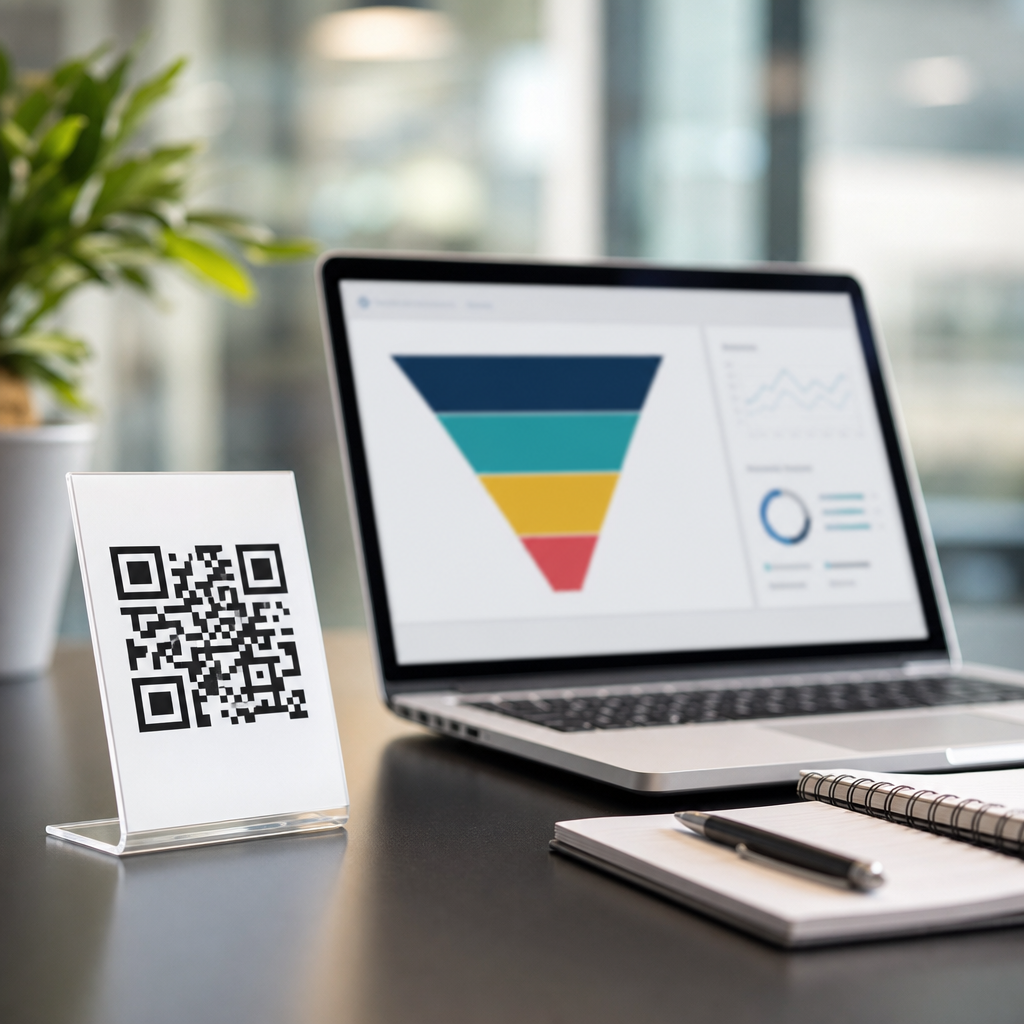
Before optimizing, define the funnel with precision. A QR code funnel usually includes impression, scan, landing page view, engagement, micro-conversion, and primary conversion. Impression is estimated exposure: package views, poster traffic, table tent reach, direct mail circulation, or event attendance. A scan is the measurable bridge from physical media to digital experience. Engagement includes actions such as scroll depth, button clicks, video starts, store locator use, or coupon reveals. A micro-conversion is an intermediate success signal that predicts value, such as adding to cart, starting a quote, or saving an offer to a wallet pass. The primary conversion is the business outcome. This hierarchy matters because QR code traffic behaves differently from desktop traffic. Users are mobile, often distracted, and usually in a real-world environment with time pressure, glare, weak signal, or competing stimuli. Effective QR code conversion rate optimization accounts for those constraints instead of copying a standard web funnel. The goal is not more complexity; the goal is less friction, tighter message match, cleaner measurement, and better post-scan intent capture.
Map the QR code funnel before changing creative or media
The first optimization technique is structural: document the entire funnel and assign owners, metrics, and benchmarks to each stage. When I audit QR programs, the most common issue is that teams track scans but not scan-to-session quality, and they celebrate traffic while losing visibility into the actual bottleneck. Start with exposure assumptions, then measure scan rate, landing page load time, bounce rate, click-through rate, form start rate, form completion rate, purchase rate, and assisted conversion value. For physical placements, separate environments because a code on product packaging behaves differently from a code on an in-store sign or conference badge. Packaging often drives delayed scans at home. Signage captures immediate interest but competes with environment noise. Event scans are often high intent yet short-lived. Each context deserves its own baseline.
Use tagged URLs and dynamic QR codes so you can change destinations without reprinting assets and preserve attribution by source, location, campaign, audience, and creative variant. UTM parameters remain practical for analytics platforms, while server-side redirects can capture timestamp, device type, operating system, and rough geography before forwarding visitors to the final page. A reliable data model should distinguish unique scanners from total scans, first-time versus repeat scans, and known versus anonymous users where consent and privacy rules allow. Without that model, optimization becomes guesswork. With it, you can isolate whether poor performance comes from weak visibility, low message relevance, slow mobile pages, or ineffective conversion design.
Improve scan intent with placement, context, and value proposition
Many QR campaigns underperform before the user ever reaches the website. Scan intent depends on visibility, trust, and perceived reward. The code should be large enough to scan comfortably from the expected distance, placed on a flat surface when possible, and supported by clear instructional copy. “Scan to learn more” is too generic. “Scan for 15% off today,” “Scan to see installation steps,” or “Scan to book in under 60 seconds” gives the user a reason. In retail, I have consistently seen higher conversion rates when the call to action names the benefit and time expectation together, because shoppers instantly know whether the effort is worth it.
Context matters just as much as design. A restaurant table tent can promote menu browsing, allergy information, or loyalty signup, but those are different jobs. One code should not try to do all three. On packaging, QR codes perform best when tied to a natural next step such as registration, refill ordering, tutorials, or warranty activation. In direct mail, the printed offer and the mobile page must match exactly in wording and incentive. Any disconnect creates hesitation. Trust signals also raise scan likelihood: brand name near the code, a short explanation of what opens, and reassurance that no app is required. If the placement is public, test the code under real lighting conditions and lower-end cameras. A technically valid code can still be operationally weak if people struggle to scan it quickly.
Design mobile landing pages for immediate completion
After the scan, the landing page becomes the conversion engine. For QR traffic, the best pages are fast, narrow in scope, and built for thumb-driven behavior. Every extra second of load time reduces momentum, especially on cellular connections. Compress images, minimize scripts, lazy-load nonessential assets, and use a content delivery network. Core Web Vitals are not abstract engineering metrics here; they directly influence conversion because QR visitors arrive with task-oriented intent and little patience. A page that feels instant preserves the emotional carryover from the physical touchpoint.
Message match is the next priority. The headline should repeat the promise from the QR code placement, not introduce a new campaign idea. If the sign says “Scan for a free sample,” the page should lead with the sample offer, eligibility, and redemption steps above the fold. Strong pages also reduce navigation choices. Remove unnecessary menus, simplify layouts, and keep the primary call to action visible without scrolling when possible. For lead generation, ask only for fields needed at this stage. On mobile, autofill support, larger tap targets, and inline validation consistently improve completion. For commerce, offer guest checkout, digital wallet payments, and local pickup options when relevant. The page should feel like a continuation of the scan experience, not a generic website entry point.
Use testing and segmentation to raise conversion rates
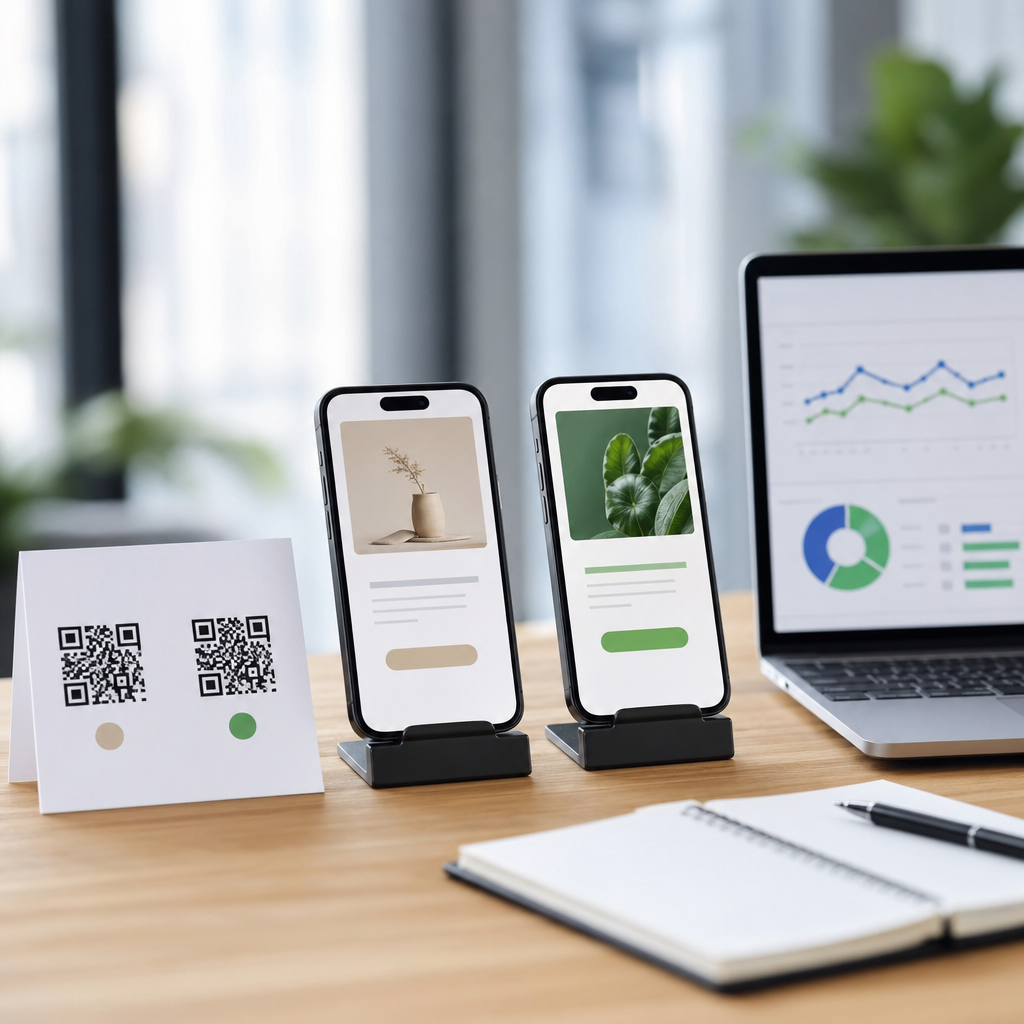
QR code conversion optimization improves fastest when teams test one variable at a time and segment results by context. A/B testing works well for destination pages, but QR campaigns also need real-world variant testing on the physical side. Compare calls to action, incentives, code placement heights, surrounding imagery, and destination page formats. A museum might test “Scan for the audio guide” against “Scan to hear the curator explain this piece.” A property manager might compare a code on a window sign versus one on a brochure box. The winning option is the one that improves completed outcomes, not just scans.
Segmentation reveals patterns that top-line metrics hide. Break performance out by location, time of day, returning versus new scanners, operating system, campaign source, and product category. If one store has strong scan rates but weak lead completion, the issue may be staff explanation or local connectivity. If iOS converts better than Android, review page rendering and wallet flows. If repeat scanners convert far more often, build remarketing or SMS capture to close that delay intentionally. Cohort analysis is especially useful for packaging and direct mail because many users scan once for information and convert later through another channel. That does not make the QR code ineffective; it means your attribution model must include assisted conversions and view the code as part of a broader path.
| Optimization area | What to test | Primary metric | Common finding |
|---|---|---|---|
| Printed CTA | Benefit-led copy versus generic copy | Scan rate | Specific rewards increase scans from qualified users |
| Landing page | Short form versus multi-step form | Completion rate | Short forms win for low-consideration offers |
| Offer design | Percentage discount versus fixed-value incentive | Revenue per scan | Fixed-value offers often perform better for lower-priced items |
| Timing | Immediate redemption versus save-for-later | Conversion lag | Save options help when purchase cannot happen on site |
Measure conversions with clean attribution and privacy-safe analytics
Good optimization depends on trustworthy measurement. For QR code funnels, analytics should capture both direct and assisted outcomes. Direct conversions happen in the same session as the scan. Assisted conversions occur when the scan introduces the user, but the final action happens later through email, paid search, organic return visits, or in-store purchase. To track this well, connect QR landing pages to your analytics platform, CRM, and marketing automation system. Event naming should be standardized so “qr_scan,” “qr_lp_view,” “offer_claim,” and “purchase” mean the same thing across campaigns. In GA4, custom events and conversion flags can map these actions clearly, while CRM fields can preserve source detail for lead quality analysis.
Attribution should be realistic about offline-to-online behavior. Last-click reporting often undervalues QR because users may scan, browse, and return later by typing the brand name. Promo codes, wallet pass saves, SMS opt-ins, and email capture help bridge that gap by creating durable identifiers. For in-store redemption, point-of-sale integration or cashier-entered offer codes can tie outcomes back to the original scan source. At the same time, privacy compliance is nonnegotiable. Provide consent where required, avoid collecting unnecessary personal data, and document retention policies. Optimization is stronger when users trust the brand. Short-term data gains are not worth long-term compliance risk or reputational damage.
Build post-scan journeys that recover lost intent
Not every valuable QR interaction ends in an immediate conversion, so the funnel should include recovery mechanisms. This is where many campaigns leave revenue on the table. If a user scans a product box in a store but is not ready to buy, offer a simple way to save the product, receive a reminder, join a back-in-stock list, or get a comparison guide by email or text. If someone scans a real estate sign, let them schedule a tour, save the listing, or request similar properties. These options convert deferred intent into trackable leads instead of bounce traffic.
Follow-up sequences should reflect the original context. Someone who scanned a restaurant poster for a lunch offer should not receive a generic brand newsletter first. They should get the offer details, expiration reminder, and perhaps nearby location information. Someone who scanned a B2B trade show code for a demo should enter a shorter sales-assisted path with calendar booking, case studies, and a rep assignment. Marketing automation platforms such as HubSpot, Klaviyo, Salesforce Account Engagement, or Braze can route these journeys based on QR campaign parameters. The principle is simple: preserve the reason the user scanned, and continue that conversation with minimal delay.
Common mistakes that suppress QR code conversion performance
Several avoidable errors repeatedly hurt QR code conversion rates. The first is sending all scans to a homepage. Homepages force users to rediscover the offer, creating friction and dilution. The second is overloading the landing page with choices, especially on mobile. The third is ignoring physical context; a code placed where signal is weak or dwell time is low needs a faster, simpler experience than one used at home. Another frequent mistake is optimizing only for scans. High scan volume can hide weak conversion quality if curiosity is strong but intent match is poor.
Teams also underestimate operational issues. Broken redirects, expired offers, mismatched inventory, and untrained staff can kill performance even when analytics and design are sound. I have seen retail campaigns with excellent creative fail because store associates did not know how to redeem the QR-linked discount. Finally, many brands stop testing after one early win. Conversion rate optimization is never finished because user behavior, device mix, creative fatigue, and channel economics change. The strongest QR programs treat every campaign as an experiment with documented hypotheses, clean reporting, and regular iteration.
QR code funnel optimization works when brands treat the scan as the beginning of a conversion journey, not the finish line. The core methods are straightforward: define the funnel, improve scan intent, build fast mobile pages, test systematically, measure direct and assisted outcomes, and create post-scan paths for users who need more time. When these pieces align, QR code marketing becomes accountable and scalable, connecting physical touchpoints to measurable business results with far less waste. For teams building a broader QR code analytics, tracking, and optimization program, conversion rate optimization is the hub because every metric and every creative choice eventually points back to completed action. Audit one live QR campaign this week, identify the biggest friction point after the scan, and optimize that step first. Small gains at the bottleneck usually produce the fastest revenue lift, and they create the evidence needed to improve the rest of the funnel with confidence and discipline across future campaigns.
Frequently Asked Questions
What does QR code funnel optimization actually involve?
QR code funnel optimization is the process of improving every stage that happens after a person scans a code so that more scans become meaningful actions, such as signups, purchases, bookings, downloads, or store visits. Many teams focus heavily on the design of the QR code itself, but the real performance gains usually come from what surrounds it and what follows it. That includes where the code is placed, how clearly the value proposition is communicated, what incentive is offered, how quickly the mobile page loads, whether the destination matches user intent, how short and usable the form is, and how well the conversion event is tracked.
In practical terms, optimization starts by mapping the full journey from offline exposure to online conversion. A customer might see a QR code on packaging, direct mail, signage, a receipt, an event display, or a product insert. Each context creates different expectations. Someone scanning from retail packaging may want product details or a discount, while someone scanning at a trade show may expect a demo, brochure, or appointment scheduler. If the landing experience does not match that intent, conversion rates suffer immediately.
Strong QR code funnel optimization also means treating the mobile destination with the same rigor used for paid traffic landing pages. That means reducing page friction, aligning headline copy with the call to scan, keeping the interface mobile-first, minimizing unnecessary taps, and measuring every micro-conversion. It also includes attribution discipline, such as assigning campaign parameters, distinguishing scan source by placement or creative variation, and connecting scan behavior to downstream actions in analytics and CRM systems. In short, it is not about generating more scans alone; it is about building a reliable, measurable path from offline attention to digital conversion.
Why do QR code campaigns often get scans but fail to convert?
One of the most common reasons QR code campaigns underperform is that the campaign team optimizes for scan rate rather than conversion rate. A code may attract curiosity, but curiosity alone does not produce business outcomes. Once users arrive on the destination page, small points of friction add up quickly. Slow load times, confusing messaging, poor mobile formatting, long forms, weak trust signals, or a mismatch between the offline promise and the online experience can cause drop-off almost immediately.
Another major issue is intent mismatch. If the physical placement of the QR code suggests one outcome and the landing page delivers another, users lose confidence. For example, if a sign says “Scan for 15% off today” but the user lands on a generic homepage and has to search for the offer, the funnel is already broken. The same happens when codes send people to desktop-oriented pages, app download pages that are not relevant to their device, or pages cluttered with navigation that distracts from the primary action.
Technical and measurement problems also play a large role. Some campaigns fail because the QR code resolves too slowly, redirects multiple times, or points to pages that are not optimized for mobile networks. Others fail because teams cannot tell which placements or creative variations are producing quality traffic, so they continue investing in ineffective assets. Without clean attribution, marketers may misdiagnose the problem as weak creative when the real issue is destination experience or follow-up. A successful QR campaign requires continuity from the physical touchpoint to the digital action. If any step feels delayed, irrelevant, or inconvenient, conversion rates can collapse even when scan volume looks healthy.
How can I improve the landing page experience after someone scans a QR code?
The landing page should be built specifically for the context of the scan, not reused as a generic website entry point. The most effective QR landing pages have a single clear goal and remove anything that does not support that goal. Start with a headline that confirms the user is in the right place and reflects the exact promise that triggered the scan. If the QR code invited users to claim a discount, view a menu, register for an event, or access instructions, the landing page should state that immediately above the fold. This continuity reassures the user and reduces bounce.
Speed is critical. QR traffic is mobile by nature, often coming from variable network conditions and environments where attention is limited. Compress images, eliminate unnecessary scripts, reduce redirects, and prioritize fast rendering on smartphones. A delay of even a few seconds can materially reduce completions, especially for transactional actions. The page should also be easy to use with one hand, with large tap targets, minimal scrolling, and concise copy that communicates value quickly.
Form design is another high-impact area. Ask only for the information required at that stage of the funnel. If the goal is lead capture, a short form usually outperforms a long one unless the user is already highly motivated. If more qualification is needed, consider progressive profiling later in the sequence. Add trust elements such as privacy reassurance, recognizable payment or security indicators when relevant, social proof, and concise explanations of what happens next. Finally, design the page around a single primary call to action. QR visitors are rarely looking to browse. They scanned because they wanted one specific outcome, and the page should make that outcome immediate and easy.
What are the best ways to measure QR code funnel performance and attribution?
Effective measurement begins with recognizing that a QR code is not the campaign endpoint; it is the entry point into a conversion path. That means performance should be evaluated across several stages, including impressions where possible, scans, landing page sessions, engagement, form starts, form completions, purchases, booked meetings, redemptions, and any downstream revenue or retention outcomes. Looking only at scan totals can create a misleading picture, because a campaign with fewer scans but stronger post-scan conversion can be far more profitable than one with high scan volume and poor completion.
To improve attribution, use distinct QR destinations or parameterized URLs for each placement, audience segment, creative version, or distribution channel. This allows you to compare results across packaging, in-store displays, direct mail, print ads, event booths, and product inserts. Dynamic QR codes are especially useful because they let you update destinations without changing the printed asset and often support scan analytics at the code level. Pair this with analytics platforms, CRM integrations, and conversion tracking so you can tie scans to actual business outcomes rather than top-of-funnel activity alone.
It is also important to define metrics for funnel quality, not just quantity. Track bounce rate, time to first action, scroll depth where relevant, click-through to the next step, completion rate by device, and abandonment points within forms or checkout flows. If follow-up sequences are involved, measure email opens, SMS engagement, reactivation clicks, and assisted conversions. Ideally, reporting should answer practical questions such as which physical placement drives the highest-value traffic, which incentive creates the best conversion efficiency, and where users drop out most often. When measurement is set up correctly, QR code optimization becomes systematic rather than guesswork.
What are the most effective techniques for increasing conversions in a QR code funnel?
The most effective conversion improvements usually come from tightening the connection between context, incentive, and destination. Start by making the reason to scan unmistakably clear. People are far more likely to act when the benefit is specific and immediate, such as “Scan to get today’s coupon,” “Scan to see installation steps,” or “Scan to book your demo in 30 seconds.” Vague calls to action like “Learn more” often underperform because they do not justify the effort or answer the user’s implicit question: what do I get if I scan this right now?
Placement and visibility matter as much as copy. A QR code should be easy to notice, easy to physically scan, and located where the user has enough time and motivation to act. Testing different sizes, surrounding whitespace, contrast, environmental placement, and supporting text can have a major impact on scan initiation. After the scan, reducing friction is the priority. Use fast-loading pages, concise forms, autofill where possible, mobile wallets or one-click payment options for purchases, and clear progress indicators for multi-step experiences. Every extra field, delay, or distraction lowers the odds of completion.
Follow-up systems are another overlooked lever. Not every visitor will convert on the first session, especially in higher-consideration purchases. If you capture contact information, use a timely follow-up sequence that reinforces the original offer, answers common objections, and creates a logical next step. Retargeting can also help if privacy and consent practices are properly handled. Most importantly, treat optimization as an ongoing testing process. A/B test incentives, headlines, page layouts, form lengths, CTA language, and post-scan sequences. Over time, the best-performing QR funnels are built through disciplined experimentation, not a single design decision.