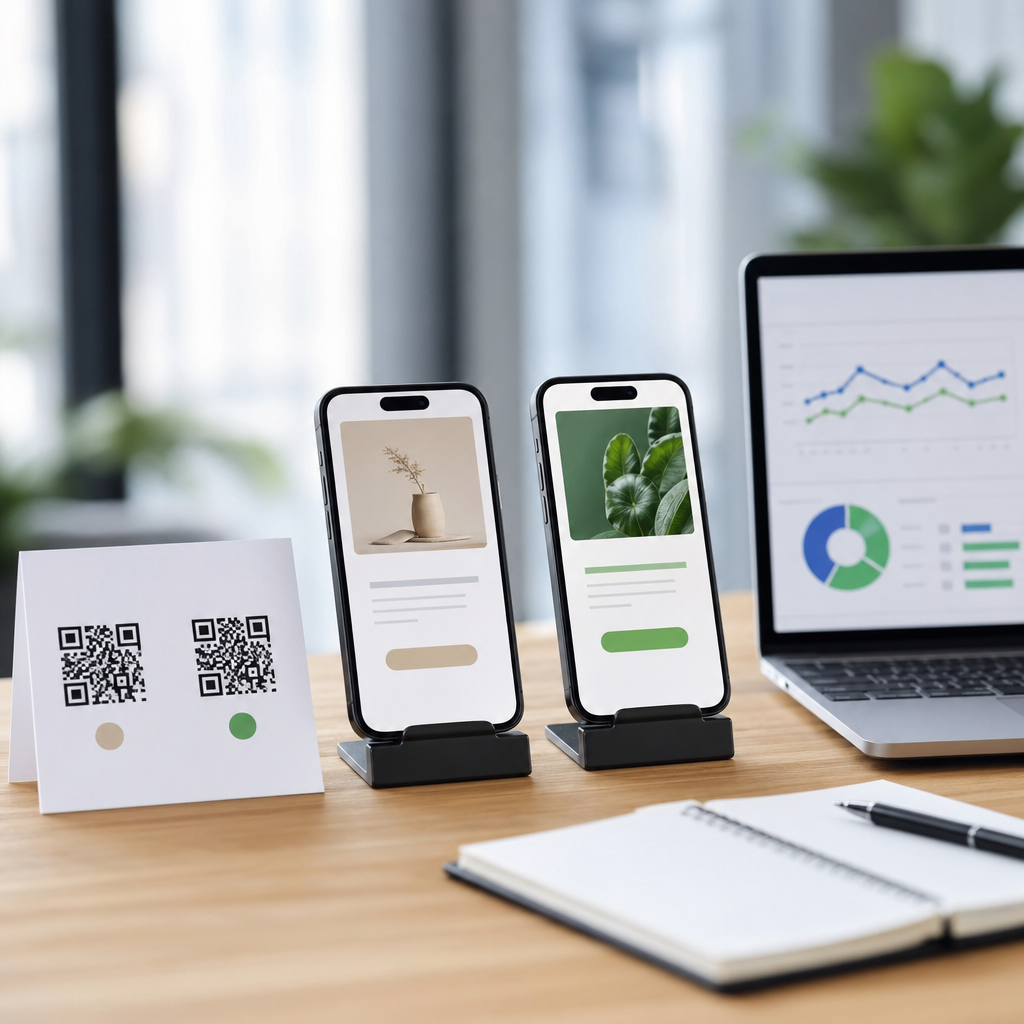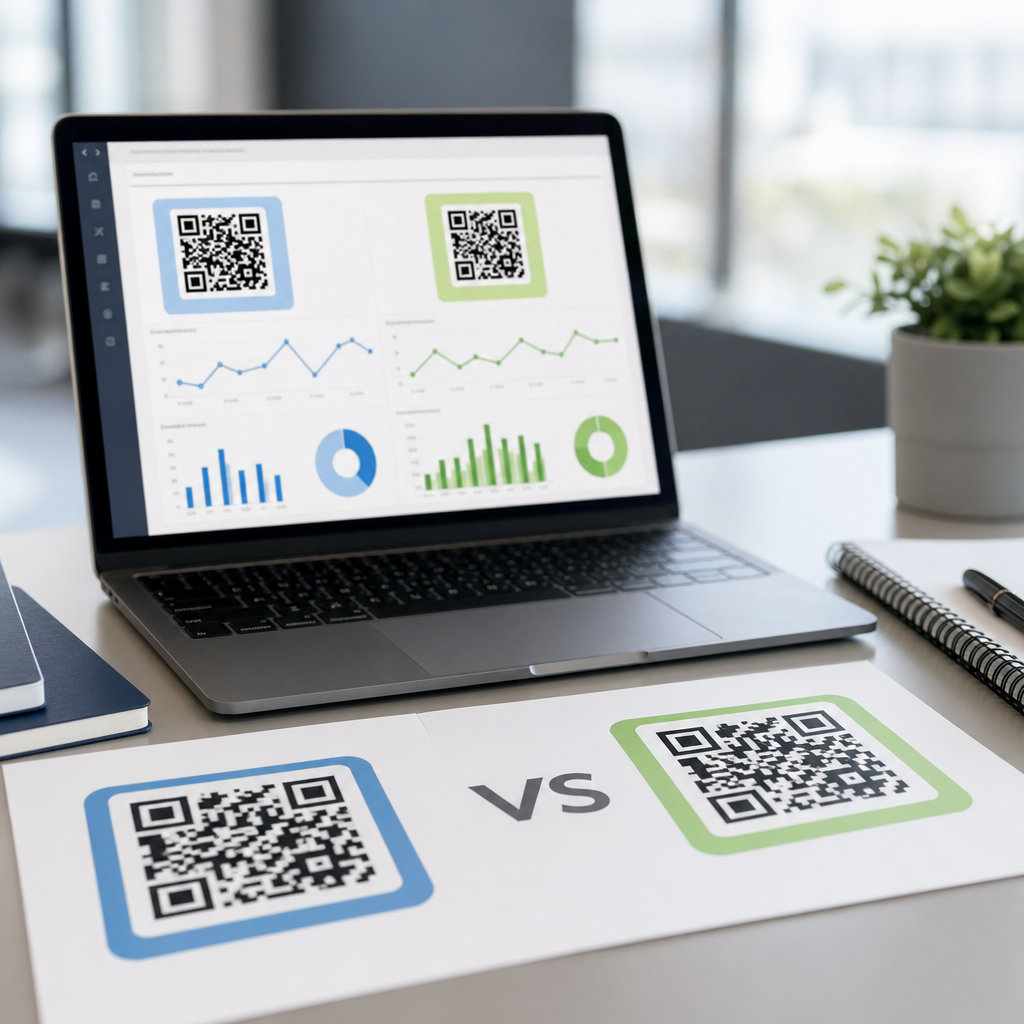

QR codes look simple, but performance varies dramatically based on small design and placement choices, which is why A/B testing QR codes is essential for any team that cares about scan rate, conversion rate, and measurable return on print and offline media. In practice, A/B testing means showing two controlled versions of a QR code experience to comparable audiences, then measuring which version produces a better outcome such as more scans, more completed forms, more app installs, or higher revenue. The test can involve the code itself, the destination, the surrounding creative, or the physical environment where people encounter it. I have run QR campaigns on packaging, direct mail, in-store signage, event booths, and restaurant tables, and the pattern is consistent: assumptions are often wrong, while disciplined testing reliably uncovers what actually moves behavior.
For this topic, a “scan rate” is the percentage of viewers who scan, while “conversion rate” is the percentage of scanners who complete the intended action after landing. A useful QR testing program separates those two metrics because a code can attract scans but send weak traffic, or earn fewer scans yet produce better leads. Dynamic QR codes are usually the right foundation because they let teams change destinations, append UTM parameters, segment traffic, and compare variants without reprinting the same underlying asset every time. This matters because QR codes increasingly connect offline impressions to digital analytics, helping marketers bridge packaging, out-of-home, print, and point-of-sale activity with platforms such as Google Analytics 4, Adobe Analytics, CRM systems, and marketing automation tools.
Done well, QR code optimization improves more than clicks. It reduces wasted media spend, clarifies customer intent, and exposes friction at the exact handoff between physical and digital experiences. The core question is not merely “Which QR code gets scanned?” but “Which combination of design, message, context, destination, and follow-up produces the best business outcome?” That is the hub question this article answers. Below are the main elements worth testing, how to prioritize them, and what teams should measure so each experiment produces usable evidence rather than noise.
Start with the right testing framework and success metric
The first element to test is often not visual at all; it is the definition of success. Before changing code colors or adding a logo, decide whether the primary objective is scan volume, qualified traffic, purchases, coupon redemptions, registrations, or another downstream action. I recommend one primary metric and two secondary metrics. For a retail shelf talker, the primary metric may be scans per 1,000 impressions, with secondary metrics of product-page engagement and add-to-cart rate. For a trade show badge handout, the primary metric may be form completion rate, with secondary metrics of scan rate and meeting bookings. This hierarchy prevents teams from declaring a winner based on vanity numbers.
Method matters. Use controlled variants, keep distribution conditions as similar as possible, and test one major variable at a time unless traffic is high enough for multivariate testing. Split by location, time block, or print batch, and preserve a clean naming convention in analytics. A practical structure is campaign-medium-placement-variant, such as springmailer-postcard-frontcta-a. Dynamic QR platforms like Bitly Codes, QR Code Generator PRO, Beaconstac, and Flowcode can route and track variants, while GA4 can compare sessions, engagement, and conversions when UTM tagging is consistent. Also confirm scan readability across iOS and Android camera apps before launch. A “better-looking” version that reduces decoding reliability is not a real improvement.
Test the call to action around the QR code
The call to action is one of the highest-impact variables in A/B testing QR codes because many people still need a reason to scan. A bare code asks the viewer to do interpretive work; a clear prompt removes uncertainty. Test direct language such as “Scan to see the menu” against benefit-led language such as “Scan for today’s lunch specials.” In packaging, “Scan for setup instructions” often outperforms generic “Learn more” because it promises immediate utility. In direct mail, “Scan to claim your 15% offer” usually beats “Visit our website” because the payoff is specific and immediate.
Placement and proximity of the CTA also matter. A prompt above the code may frame the action more clearly than text below it, especially on posters where users glance quickly. At events, I have seen scan rates rise when brands paired the code with microcopy answering the obvious question: “Takes 10 seconds” or “No app required.” Those lines reduce perceived effort and technical hesitation. You can also test urgency. “Scan before Friday for early access” can outperform neutral language when the audience already has purchase intent, but urgency may underperform in informational contexts such as manuals or museum signage. The principle is simple: test the promise attached to the scan, not just the code image.
Test QR code design without compromising scannability
Design changes affect trust, visibility, and decoding accuracy, so they deserve disciplined testing. Elements commonly tested include color contrast, quiet zone size, logo inclusion, frame shape, module style, and overall size. The nonnegotiable rule is readability first. ISO/IEC 18004 defines QR code specifications, and camera software still relies on strong contrast and intact finder patterns. In practical terms, dark code on a light background remains safest. Reversing to light-on-dark can work, but error rates rise more quickly under glare, distance, and low light. Rounded modules and brand colors can lift visual appeal, yet they must be validated on multiple devices and at real-world distances.
Logo insertion is especially worth testing because it can either build trust or damage performance. A centered logo often increases brand recognition on packaging and in-store signage, but if it covers too much of the data area, scan success falls unless the error correction level is high enough. Size is equally important. A common field guideline is at least a 10:1 ratio between scanning distance and code size; for example, a code viewed from 50 inches away should be about 5 inches wide. Below is a practical comparison of common visual variables and what they usually influence most.
| Element to Test | Variant Examples | Primary Impact | Main Risk |
|---|---|---|---|
| Color contrast | Black on white vs brand color on cream | Visibility and trust | Lower scan accuracy in poor lighting |
| Logo in center | No logo vs branded logo | Brand recognition | Blocked modules reduce readability |
| Code size | 0.8 inch vs 1.25 inch on mailer | Scan rate at distance | Too small to decode quickly |
| Frame and caption | Plain code vs “Scan Me” frame | Action clarity | Visual clutter around code |
| Quiet zone | Minimum margin vs expanded margin | Decoding reliability | Print layout constraints |
Test size, placement, and physical context
Many underperforming QR campaigns are not design failures at all; they are context failures. A perfectly valid code placed too low on a shelf sign, too close to a fold on packaging, or too far from foot traffic will lose scans. This is why A/B testing QR codes should include environmental factors such as height, angle, surrounding clutter, and expected dwell time. On a restaurant table tent, the winning placement may be the side facing incoming guests rather than the side facing seated diners. On product packaging, a code on the back panel may beat one on the underside simply because users can access it without rotating the box under store lighting.
Distance and motion are central variables. For transit ads, test a shorter URL fallback and larger code size because many viewers have only seconds to react. For point-of-sale displays, test eye-level placement against lower placement near pricing information. In one retail rollout I worked on, moving the code from the bottom-right corner of a sign to directly beside the promotional headline lifted scans because shoppers saw the benefit and the action in one visual sequence. Also test whether the code should appear once or be repeated across touchpoints. Repetition on packaging, inserts, and receipts can improve total scans, but it complicates attribution unless each placement has a distinct dynamic link and tracking parameter.
Test destination experience, not just the QR itself
A QR code is only the doorway, and many teams stop testing too early by focusing on scans alone. The destination page frequently determines whether QR traffic creates revenue or disappears. Test deep links versus generic homepages, mobile landing pages versus standard web pages, and instant-value destinations versus multi-step funnels. If the code appears on appliance packaging, a landing page with device-specific setup instructions, video guidance, and warranty registration will usually outperform a generic support homepage. If the code appears on a poster for an event, a one-screen registration form with autofill enabled will usually beat a page that asks users to navigate through several menus.
Speed and message match are critical. Google’s Core Web Vitals are not just technical metrics; they influence abandonment on mobile connections in stores, stadiums, and outdoor environments where bandwidth varies. Test compressed pages, simplified forms, and wallet-pass or app-store deep links when appropriate. Also test personalized destinations by context. A QR code on a cereal box could route first-time buyers to recipes, while the same product in a loyalty email insert could route existing customers to subscription offers. Dynamic routing based on device type, geography, or time can materially improve outcomes, but only if privacy disclosures are clear and the user experience remains coherent. The best QR campaigns feel like a seamless continuation of the physical interaction.
Test offer structure, incentive, and audience segmentation
If your QR code campaign includes an offer, the offer itself may explain performance more than any visual adjustment. Test percentage discounts against fixed-value discounts, informational content against gated content, and instant rewards against delayed rewards. For example, “Scan for 20% off today” may outperform “Scan to join our newsletter” in a store, while “Scan for the sizing guide” can outperform both when shoppers are uncertain about fit and not yet ready for a promotion. In B2B contexts, “Scan to book a demo” often loses to “Scan for the benchmark report” at top-of-funnel events because the latter matches lower-commitment intent.
Segmentation is what turns isolated tests into a scalable program. Compare new versus returning customers, urban versus suburban stores, or morning commuters versus weekend shoppers. The winning variant for one segment may fail elsewhere. Restaurants often find that dine-in guests respond to menu and loyalty prompts, while takeaway customers respond better to reorder links. Consumer packaged goods brands may see stronger scans from premium product lines where customers expect richer digital content. This is where CRM and analytics integration pays off: by connecting QR traffic to customer records, marketers can evaluate not just scan volume but lead quality, repeat purchase, and lifetime value. Optimization becomes strategic when it moves beyond the first click.
How to run reliable QR code experiments and scale what works
Reliable testing requires enough volume, disciplined execution, and a willingness to reject weak evidence. Start by estimating the baseline scan or conversion rate, then calculate the sample size needed for a meaningful result. If volume is limited, extend the test duration instead of making a decision too early. Keep print quality, lighting conditions, and staff behavior consistent where possible. For in-store pilots, train associates not to direct customers differently across variants. For direct mail, randomize version assignment by geography or household segment to reduce hidden bias. Document every variable, including paper stock, finish, and placement dimensions, because physical production details can affect scan behavior.
Once a winner emerges, scale carefully. Roll it out to similar contexts first, then retest in different environments rather than assuming universal performance. Maintain an experimentation backlog that includes code design, CTA wording, destination page, incentive, and placement. Build internal links from your broader analytics and optimization content to specialized guides on QR code scan rate benchmarks, dynamic QR code tracking, UTM conventions, landing page optimization, and offline attribution modeling so readers and teams can go deeper on each operational topic. The payoff of A/B testing QR codes is not cosmetic improvement. It is a repeatable system for turning physical attention into measurable digital action. Start with one high-traffic use case, define the primary metric, test the most influential variable first, and let real scan and conversion data guide every next move.
Frequently Asked Questions
What specific elements of a QR code should you A/B test first?
The best place to start is with the variables most likely to affect scan behavior and downstream conversion. In most campaigns, that means testing the call to action near the code, the size of the code, its placement on the asset, the destination experience, and the visual styling of the QR code itself. For example, one version might say “Scan to Get 20% Off” while another says “Scan to See Pricing.” That single messaging change can dramatically alter scan intent and lead quality. Likewise, a QR code placed on the front of a mailer may perform differently than the same code on the back, and a code printed at a larger size may be easier to scan in real-world conditions such as low light or awkward viewing angles.
You should also test what happens after the scan, because QR performance is not just about scan rate. A version that gets more scans but sends users to a slow, confusing landing page may lose to a version with fewer scans but stronger conversion. That is why many teams compare not just code design, but also landing page layout, form length, app store routing, discount presentation, and even the use of mobile wallets or SMS opt-ins. If you are early in the process, prioritize high-impact variables first: offer, CTA, placement, and destination page. Once you find a winning structure, move on to secondary elements such as color, branding, frame design, and surrounding copy.
Does changing the design of a QR code really affect performance?
Yes, design changes can absolutely affect performance, although not always in the way people expect. A QR code is functional first, but visual presentation still influences whether people notice it, trust it, and successfully scan it. Color contrast is one of the most important design variables to test. A code with strong contrast against its background is usually easier for cameras to read, while low-contrast or overly stylized designs may look attractive but reduce scan reliability. Adding a branded frame, logo, or custom pattern can increase attention and brand recognition, but if those changes interfere with the quiet zone, module clarity, or overall scannability, performance can drop.
Design also affects perceived legitimacy and urgency. A plain black-and-white code may scan perfectly, but a well-branded version paired with clear supporting text can make users more confident about what will happen when they scan. In an A/B test, one design may generate better scan rates simply because it feels more professional or offers stronger visual hierarchy on the page. The key is to balance aesthetics with technical readability. Every design test should be validated across multiple devices, lighting conditions, print sizes, and distances. In other words, never assume a more creative QR code is a better QR code. Test it under realistic conditions, and judge it by business outcomes, not just appearance.
Should you A/B test the QR code itself, the landing page, or both?
You should test both, but not all at once. The strongest QR code programs treat the full scan journey as a connected experience: someone notices the code, decides to scan, waits for the destination to load, and then either converts or drops off. If you only test the QR code design, you may improve scan rate without improving actual results. If you only test the landing page, you may miss opportunities to increase the number of people entering the funnel in the first place. The smartest approach is to isolate variables in stages so you can clearly identify what is creating lift.
For example, begin by testing top-of-funnel elements that affect scans, such as CTA language, placement, size, and surrounding visuals. Once you have a reliable winner there, test post-scan elements such as page speed, headline, form fields, checkout flow, app install prompt, or offer presentation. This sequential approach produces cleaner data and helps you avoid mixed signals. It also aligns better with how people actually interact with QR campaigns across print, packaging, signage, direct mail, and out-of-home placements. Ultimately, what matters is not just whether someone scans, but whether they complete the action you care about. A successful A/B testing strategy measures the entire funnel, from first visual impression to final conversion.
How do you run a reliable A/B test for QR codes without skewing the results?
A reliable QR code A/B test starts with control. You need two versions that are as similar as possible except for the single element you want to evaluate. If you change the CTA, keep the offer, audience, timing, and destination consistent. If you change the landing page, keep the printed asset and QR code placement the same. This is critical because offline and print environments introduce many variables that can distort results, including location, lighting, audience demographics, device types, and even the amount of time people have to notice the code. The cleaner your test setup, the more confidence you can have in the outcome.
Measurement is equally important. Use unique tracking URLs, dynamic QR codes, campaign parameters, or platform-level analytics so each variant can be measured separately. Define success before the test begins. That may be scan rate, conversion rate, cost per acquisition, completed purchases, app installs, or revenue per impression. Also make sure you collect enough volume to reach a meaningful conclusion. A tiny difference in a small sample can be misleading, especially in offline campaigns where traffic may fluctuate by day, store, or region. If possible, split audiences by comparable environments rather than convenience. For example, distribute version A and version B across matched store locations, mail segments, or poster placements. The goal is not just to find a winner, but to find a winner you can trust enough to scale.
What metrics matter most when evaluating A/B tests for QR codes?
The right metrics depend on the goal of the campaign, but scan rate alone is rarely enough. Scan rate tells you how effective the QR code is at generating initial engagement, which is useful, but it does not reveal whether that engagement creates business value. A high-scan version might attract curiosity without intent, while a lower-scan version might drive more qualified users who actually convert. That is why the strongest QR code testing programs look at multiple layers of performance, including scans, landing page visits, bounce rate, form completion rate, app installs, purchases, lead quality, and total revenue generated.
In practical terms, think of your metrics in stages. At the awareness stage, track impressions and scan rate. At the engagement stage, track page load completion, time on page, clicks, or scroll depth. At the conversion stage, track submissions, purchases, bookings, downloads, or other primary business actions. Then evaluate efficiency metrics such as cost per scan, cost per conversion, and return on ad spend or return on print. This fuller view is what separates vanity testing from meaningful optimization. The best A/B test is not the one that produces the most activity; it is the one that improves the metric closest to business impact. For most teams, that means choosing winners based on conversion quality and revenue contribution, not just the number of times a camera opened and scanned a code.