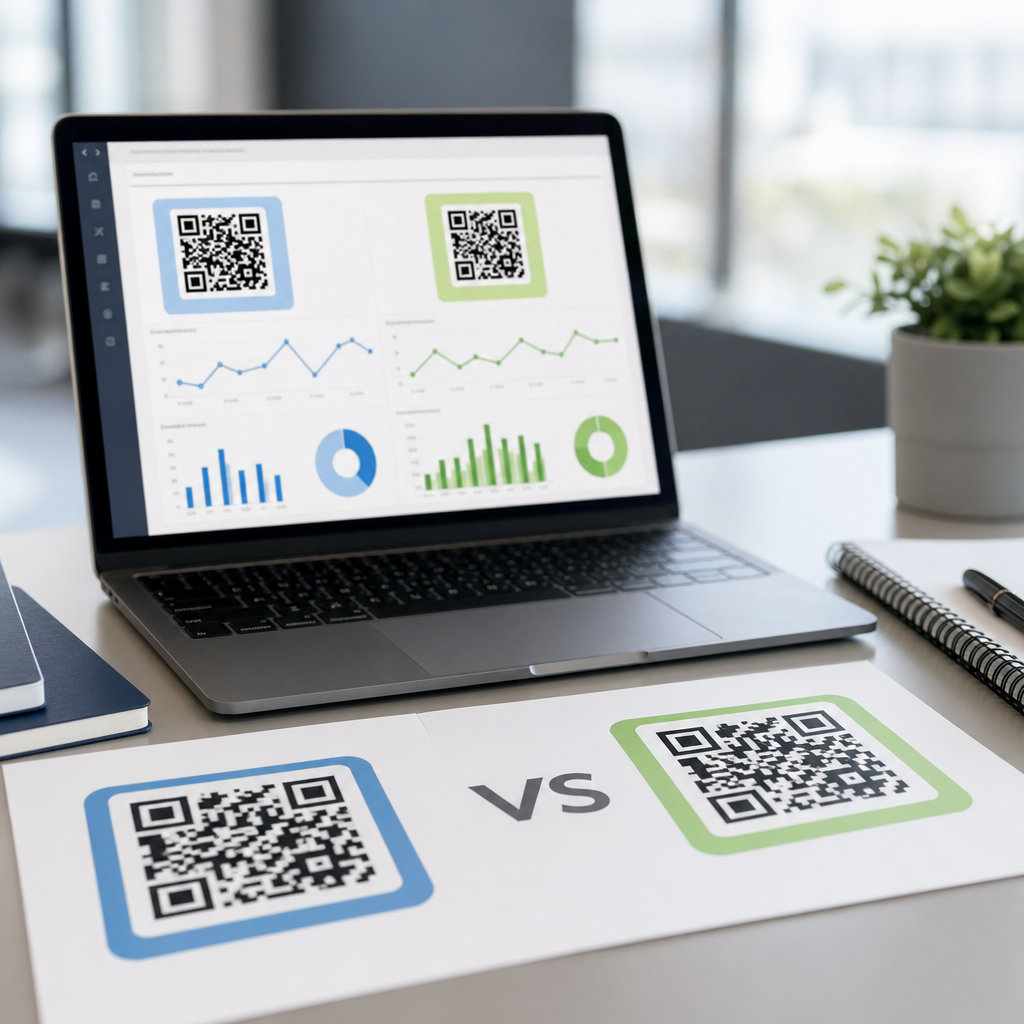

Split testing QR code campaigns is the fastest reliable way to improve scan rates, landing page conversions, and offline-to-online attribution without guessing what drove performance. In practical terms, a split test, often called an A/B test, compares two controlled versions of a QR code experience to see which one produces better results against a defined metric. For QR code marketing, those versions might differ in the code design, call to action, placement, incentive, destination page, or the audience segment that sees them. Because QR campaigns often bridge print, packaging, signage, direct mail, events, and digital follow-up, testing matters more here than in many purely online channels: once materials are printed or deployed at scale, weak creative or poor placement can lock in waste.
When I plan QR code optimization programs, I start by defining the full scan journey. A person notices the code, decides whether the promise is worth the effort, opens a camera app or scanner, lands on a page that must load quickly, and then takes an action such as buying, signing up, downloading, or redeeming. Every stage can be tested. That is why A/B testing QR codes should not be limited to changing colors on the symbol itself. Strong tests examine the entire path, from message clarity and visual prominence to mobile page speed and form completion rate.
This topic matters because QR adoption is now normal consumer behavior, not a novelty. Restaurants, retailers, healthcare providers, logistics teams, and B2B marketers all use QR codes for access, tracking, and conversion. Yet many campaigns still launch with no test design, no control version, and no meaningful tagging. The result is ambiguous reporting: scans increase, but no one knows whether the win came from poster placement, incentive wording, or a better destination page. A disciplined split-testing framework solves that problem by isolating variables, measuring lift, and turning each campaign into a repeatable learning system.
To run useful QR code experiments, you need clear hypotheses, dynamic QR code management, analytics tags such as UTM parameters, and a method for assigning traffic fairly between variants. You also need patience. Small scan volumes can create misleading swings, and offline environments introduce confounding factors like weather, foot traffic, and staff behavior. The goal is not to prove one version “won” after a handful of scans. The goal is to generate evidence strong enough to guide the next print run, store rollout, or packaging update with confidence.
What to Test in A/B Testing QR Codes
The most effective QR code split tests focus on variables that materially affect user behavior. In my experience, the highest-impact areas are the call to action near the code, the destination page, the offer, the physical placement, and the visual treatment of the code container rather than the QR pattern itself. For example, “Scan to see today’s menu” and “Scan for 15% off your first order” may produce dramatically different scan intent even if the exact same destination URL is used. The surrounding copy often drives more lift than decorative changes to the code.
Placement tests are especially valuable in retail, trade shows, direct mail, and out-of-home environments. A QR code at eye level near a checkout line usually performs differently from the same code placed low on shelving or crowded into a poster footer. Packaging presents another common opportunity: a code on the front panel may increase awareness, while a code on the side panel may attract fewer but more intentional scanners. Testing both can reveal whether your objective is reach or qualified action.
Destination experience tests also matter because a high scan rate with poor downstream conversion is not a successful campaign. Landing pages can be tested for speed, headline clarity, form length, social proof, or whether they open product detail, video content, app download, or a lead form. Google Analytics 4, Adobe Analytics, Matomo, and campaign dashboards from QR platforms can all help track these outcomes when the links are tagged correctly. For printed campaigns, dynamic QR codes are usually essential because they allow redirection, event logging, and updates without reprinting the code.
Design tests should be approached carefully. Branded QR codes with custom colors, rounded modules, and embedded logos can improve visibility, but aggressive styling can reduce scannability, especially in poor lighting or on low-quality print. I have seen brands over-customize a code and lose scans because quiet zones were too tight or contrast dropped below practical levels. Use ISO/IEC 18004 principles, preserve error correction sensibly, and test readability across common phone cameras before rolling out a visual variant.
How to Design a Valid QR Code Split Test
A valid test begins with one primary question and one primary metric. If the question is, “Will a benefit-led call to action increase scans?” then the metric should be scan-through rate relative to impressions or footfall estimates, not total sales alone. If the question is, “Will a shorter mobile form increase lead submissions from QR traffic?” then conversion rate after the scan is the right measure. Mixing multiple changes at once makes interpretation weak. If version B has a new incentive, a different color treatment, and a new landing page, you cannot know which variable caused the lift.
Control the environment as much as possible. In stores, rotate variants across similar locations instead of placing one version only in a flagship and the other only in a low-traffic branch. In direct mail, randomize recipients so households are evenly distributed across variants. At events, avoid assigning one version to the morning and one to the afternoon if footfall patterns differ. The closer the exposure conditions are, the more trustworthy the comparison becomes.
Sample size is where many QR code campaigns fail. Ten scans versus fourteen scans may feel like a winning result, but it is often noise. Aim for enough observations to detect meaningful differences, and define the minimum lift that would justify action. If reprinting signage costs thousands of dollars, a two percent improvement may not matter; if a packaging change will reach millions of units, even a small lift may be worth implementing. Statistical significance calculators can help, but business significance should drive the final decision.
Tag every variant cleanly. Use distinct URLs or parameters for each version, maintain naming conventions, and document them in a test brief. A structured setup avoids the classic reporting problem where “qr_campaign_spring” appears in six inconsistent formats. I recommend mapping each variant to campaign, source, medium, placement, creative, and audience fields so analysts can tie scans to downstream behavior in a CRM or commerce platform.
| Test Element | Variant A | Variant B | Primary Metric | Common Tooling |
|---|---|---|---|---|
| Call to action | Scan to learn more | Scan for 20% off | Scan rate | Dynamic QR dashboard, GA4 |
| Placement | Checkout counter | Store entrance | Scans per 1,000 visitors | Footfall counter, POS data |
| Landing page | Long product page | Short offer page | Conversion rate | GA4, heatmaps, form analytics |
| Incentive | Free guide | Prize draw entry | Lead completions | CRM, marketing automation |
Tracking Setup, Metrics, and Attribution
Good QR code analytics depend on capturing both top-of-funnel and bottom-of-funnel data. Top-of-funnel metrics include scans, unique scans, scan location, device type, operating system, time of day, and repeat scans. Bottom-of-funnel metrics include bounce rate, engaged sessions, add-to-cart actions, purchases, form submissions, coupon redemptions, booked appointments, or any custom conversion event that matters to the campaign. Looking at scans alone can bias decisions toward curiosity instead of revenue.
Dynamic QR platforms such as Bitly, Beaconstac, Flowcode, QR Code Generator Pro, and Uniqode can provide redirect control and scan reporting. Those tools become more valuable when connected to GA4, a CRM like HubSpot or Salesforce, and if relevant, point-of-sale or coupon systems. For example, a restaurant can compare two table tent variants not just by scans, but by digital menu views, order starts, average order value, and repeat visit coupon redemption. That kind of closed-loop view turns a superficial test into a genuine optimization program.
Attribution for offline scans requires realism. A QR code might influence a later purchase that happens on another device or in store. You will not capture every assisted conversion. However, you can improve attribution by using first-party forms, coupon codes unique to each variant, post-scan survey questions, and CRM fields that preserve the initial source. For B2B campaigns, passing variant IDs into hidden form fields is particularly helpful because it lets sales teams see which physical asset generated the lead.
Also account for operational factors. Page load speed on mobile networks can swing results heavily, especially at events or in transit locations with inconsistent signal quality. Consent banners, intrusive pop-ups, and app interstitials can depress conversion independently of the QR code itself. Before declaring a variant the winner, check whether technical friction affected one experience more than the other.
Real-World Test Ideas for Different QR Code Campaigns
In retail, test shelf talkers against end-cap signage, or compare a price-led message with a benefit-led message. A beauty brand might test “Scan for shade matching” versus “Scan for 10% off today” and discover that educational intent generates more qualified product page visits, while discount language drives more scans but lower average order value. That insight can shape where each message is used in the store journey.
For direct mail, compare envelope teaser copy, QR code size, and personalized landing pages. A regional bank could send two postcard versions: one with a generic “Learn about home loans” CTA and another with “Check today’s local mortgage rates.” Even if both point to the same product family, the second often creates clearer intent and better application starts because it answers the immediate question the recipient already has.
At events, badge scans and booth QR codes can support tests around content depth. One version may lead to a one-minute explainer video, another to a meeting booking page. I have seen shorter experiences outperform detailed brochures during busy expo hours, while deeper technical content works better when sent later by follow-up email. Testing helps match context to intent instead of assuming one destination fits every attendee.
On product packaging, test recipes, tutorials, warranty registration, loyalty enrollment, or traceability information. Food brands often see strong engagement when the QR code promise is specific, such as “Scan for a 5-minute recipe using this sauce,” rather than vague wording like “Discover more.” In regulated industries, test whether placing compliance information behind the code improves package clarity without reducing trust. The right answer depends on customer expectations and legal requirements, so measured evidence is essential.
Common Mistakes and How to Avoid Them
The most common mistake is changing too many variables at once. The second is ending the test too early because early numbers look promising. The third is treating all scans as equal. A repeat scanner who bounces immediately should not carry the same analytical weight as a first-time scanner who completes a purchase. Segment results by unique users, placement, location type, and downstream behavior so the findings are actionable.
Another mistake is ignoring scanability during creative review. If the code is too small, placed on reflective material, printed with poor contrast, or distorted on curved packaging, your test is compromised before it begins. Always perform device testing on current iPhone and Android models, under realistic lighting, at realistic distances. Include damaged-print scenarios when the asset will appear on shipped packaging or outdoor signage.
Teams also misread outcomes when they optimize for the wrong goal. A giveaway may boost scans, but if your objective is qualified demos or profitable orders, a lower-scan variant could still be superior. Define success in business terms, not vanity metrics. Finally, document learnings after every test. A QR optimization hub becomes valuable when each result feeds the next hypothesis, building institutional knowledge rather than isolated campaign reports.
Building a Repeatable Optimization Program
The best QR code campaigns are not one-off experiments; they are governed programs with standard operating procedures, test calendars, naming rules, and post-test reviews. Create a backlog of hypotheses ranked by expected impact and implementation effort. Start with changes that are easy to deploy and likely to matter, such as CTA wording, page speed fixes, or placement improvements. Move to more complex tests, such as personalized destinations or multi-location holdout designs, once tracking is stable.
Bring creative, analytics, web, and field teams into the same workflow. QR performance is shaped by all of them. When operations staff know why consistency matters, they are less likely to place signage incorrectly. When designers understand scanning constraints, they avoid decorative choices that hurt readability. When analysts receive clean naming and documentation, they can answer questions quickly and confidently.
Run quarterly reviews across campaigns to identify patterns. You may find that instructional CTAs outperform promotional ones in healthcare, while promotional CTAs win in quick-service retail. You may learn that shorter landing pages work better in transit environments and richer pages perform better on packaging at home. Those cross-campaign insights are where split testing starts paying compounding returns.
To improve QR code campaign performance, start with one clear hypothesis, track every variant rigorously, and judge winners by meaningful outcomes, not just scans. Effective A/B testing QR codes combines controlled experimentation, sound attribution, and mobile-friendly execution across the full user journey. The reward is practical: better customer experiences, stronger conversion rates, and more confident decisions about print, placement, and spend. If you manage QR code analytics, tracking, and optimization as an ongoing discipline, each campaign becomes smarter than the last. Build your next test plan, launch a clean control and challenger, and let measured behavior—not opinion—decide what scales.
Frequently Asked Questions
What is a split test for a QR code campaign, and why does it matter?
A split test, or A/B test, for a QR code campaign is a structured way to compare two versions of a QR-driven experience to find out which one performs better against a specific goal. Instead of guessing whether a different call to action, code placement, incentive, or landing page will improve results, you show controlled variations to similar audiences and measure the outcome. In QR code marketing, this matters because performance depends on several connected steps: someone has to notice the code, decide to scan it, successfully access the destination, and then complete the action you care about, such as making a purchase, filling out a form, downloading an app, or redeeming an offer.
Split testing helps remove assumptions from that process. For example, one version might use a bold “Scan to Get 20% Off” prompt while another uses “Scan to Learn More.” Even if both codes are technically scannable, user intent and response can be very different. The same applies to factors like print size, contrast, signage position, package placement, event booth displays, or the experience on the mobile landing page after the scan. A proper test isolates one meaningful difference at a time so you can identify what actually changed behavior.
It also matters for attribution. QR campaigns often sit at the intersection of offline and online marketing, which can make performance hard to interpret if everything points to the same destination and no controlled comparison is in place. With split testing, you can assign unique tracking parameters or dynamic QR destinations to each version and tie scans, sessions, conversions, and downstream revenue back to specific creative or placement decisions. That gives you a much clearer view of what is driving results and where to invest next.
What elements of a QR code campaign should I test first?
The best elements to test first are the ones most likely to influence scan intent and conversion without introducing too many variables at once. In most campaigns, that usually means starting with the call to action, the offer or incentive, the destination page, or the physical placement of the QR code. These factors tend to have a larger impact than purely cosmetic changes because they directly affect why someone scans and what happens after they do.
A strong first test might compare two calls to action, such as “Scan for a Free Sample” versus “Scan to Unlock Today’s Offer.” Another good option is testing the landing page experience: one version could send people to a product page, while another sends them to a short-form lead capture page or a customized mobile experience. If you already know the offer is compelling, placement can be a high-value variable to test as well. A code placed at eye level near a checkout counter may outperform the same code placed lower on a display where fewer people notice it.
Design can also be tested, but it should be approached carefully. You can compare branded versus standard QR code styles, the use of a frame around the code, contrasting background treatments, or supporting text near the code. However, preserving reliable scanability is essential. A more visually attractive code is not better if it reduces scanning success. That is why many marketers prioritize messaging and user journey tests before moving into aggressive design experimentation.
As a practical rule, begin with one variable that is clearly tied to your business objective. If your goal is more scans, test visibility-related elements such as CTA wording or placement. If your goal is more conversions after the scan, test the landing page, form length, page speed, or offer structure. Starting with the highest-impact variable gives you faster, more useful learning.
How do I set up a reliable QR code split test without skewing the results?
A reliable QR code split test starts with a clear hypothesis, one primary success metric, and tightly controlled variations. First, define what you are trying to improve. That might be scan rate, click-through rate from the landing page, form completions, purchases, coupon redemptions, or another measurable action. Then choose one main variable to test. If you change the code design, the CTA, the offer, and the landing page all at once, you will not know which factor caused the result.
Next, create two versions that are as similar as possible except for the variable being tested. If you are comparing two placements in a retail setting, keep the code size, offer, and destination consistent. If you are comparing two destination pages, keep the printed material, signage, and audience exposure as equal as possible. Each version should use its own trackable QR code or unique destination URL with campaign parameters so you can separate performance cleanly in analytics.
Audience distribution is another major factor. The two versions need comparable exposure conditions. That may mean splitting print runs evenly, rotating in-store signage by location, assigning test versions to similar venues, or serving different mailer variants to randomized audience segments. Timing matters too. If one version runs during a weekend promotion and the other runs on a quiet weekday, the comparison may be misleading. Try to run variants simultaneously or under closely matched conditions whenever possible.
Finally, make sure the sample size is large enough to support a decision. A handful of scans is rarely enough to draw a confident conclusion. Let the test run until each version has meaningful exposure and enough conversion data to reflect real behavior. Before launching, validate scan functionality across devices, operating systems, lighting conditions, and network environments. Good testing discipline is what turns QR campaign data into trustworthy optimization insight instead of noisy, misleading results.
What metrics should I track when evaluating a QR code A/B test?
The right metrics depend on your campaign goal, but the most effective approach is to measure performance across the full scan-to-conversion journey. Start with scan volume and scan rate, which tell you how often people are engaging with the QR code relative to its exposure. If you know how many people saw the placement, such as foot traffic, direct mail quantity, packaging units, or event attendance, you can evaluate whether one version was more successful at prompting the initial scan.
After the scan, track landing page visits, bounce rate, time on page, engagement actions, and conversion rate. These metrics show whether the experience after the scan aligned with user expectations. A version may generate more scans but fewer completed actions if the promise on the printed material does not match the landing page or if the page is slow, confusing, or difficult to use on mobile. That is why scan count alone should not determine the winner.
You should also track business outcome metrics whenever possible. These include purchases, average order value, revenue per scan, coupon redemptions, lead quality, bookings, app installs, or repeat visits. In many cases, the best-performing version is not the one with the most top-of-funnel activity, but the one that produces more qualified outcomes. If you are using QR codes for offline-to-online attribution, include campaign parameters, first-party analytics, CRM tagging, or conversion event mapping so you can follow the user journey beyond the initial interaction.
Contextual metrics can be valuable as well. Device type, time of day, location, operating system, and returning versus new visitors may reveal patterns that help explain results. For example, one variant may perform better in high-traffic environments while another performs better in longer-dwell settings like waiting rooms or trade show booths. The strongest analysis looks beyond a single number and examines where performance improved, where friction appeared, and how the test influenced the end goal of the campaign.
What are the most common mistakes to avoid when running split tests for QR code campaigns?
One of the biggest mistakes is testing too many changes at once. If version A uses a different QR code design, different offer language, different placement, and a different landing page than version B, the outcome may tell you that one version won, but not why. That limits your ability to scale what worked. Another common mistake is ending the test too early. Early performance swings are normal, especially with lower traffic volumes. Declaring a winner before enough data has accumulated can lead to false confidence and poor follow-up decisions.
Another frequent issue is ignoring environmental consistency. QR code campaigns often operate in physical spaces where factors such as lighting, distance, audience intent, dwell time, and staff behavior can dramatically affect results. If one variant is displayed in a busy entrance and another is placed in a low-traffic corner, the test is not really comparing creative or messaging alone. Similarly, comparing different time windows without accounting for seasonality, promotions, or event traffic can distort the findings.
Technical mistakes are equally important to avoid. Poor mobile landing page performance, broken redirects, inconsistent tracking parameters, or QR codes that are hard to scan due to low contrast or overly customized design can undermine the test before it begins. Always test the entire experience from physical exposure to final conversion on multiple devices and in real-world conditions. A technically flawed variant may lose for reasons unrelated to the marketing idea being tested.
Finally, many marketers focus only on scans and overlook conversion quality. More scans do not automatically mean better campaign performance. A variant that attracts curiosity but produces little downstream value may look strong at first glance while actually wasting budget or attention. The most successful QR code split tests are disciplined, patient, and tied to a meaningful business objective. When you control variables carefully, measure the full funnel, and avoid rushed conclusions, split testing becomes one of the most reliable ways to improve QR campaign