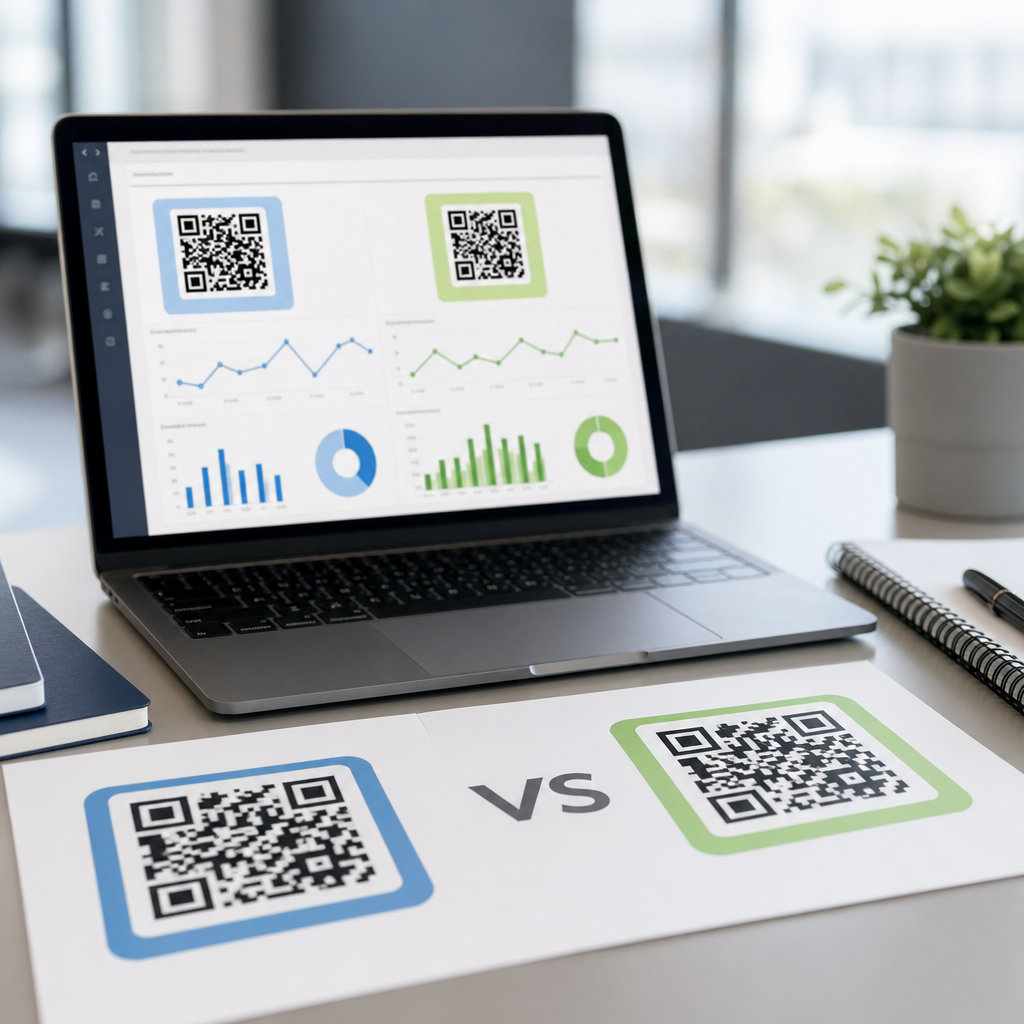
A/B testing QR code landing pages is one of the fastest ways to turn anonymous scans into measurable conversions, because the moment after a scan is where user intent is highest and friction is most visible. In practical terms, A/B testing means sending comparable groups of visitors to two or more page variations, measuring what changes behavior, and then rolling out the better version with confidence. For QR campaigns, the landing page is the destination reached after someone scans a code on packaging, posters, direct mail, menus, retail displays, event signage, or product inserts. That destination can be a product page, app download screen, lead form, coupon page, video, survey, or dynamic microsite. What matters is relevance, speed, and clarity.
I have worked on QR campaigns for retail promotions, restaurant ordering flows, B2B trade shows, and consumer packaged goods launches, and the same pattern appears repeatedly: teams spend weeks refining the code placement and creative, then underinvest in the landing experience that determines whether the scan produces revenue. A high scan rate with a weak post-scan experience is not success. It is wasted intent. Testing helps close that gap by isolating changes such as headline wording, call-to-action labels, form length, mobile layout, page load speed, trust cues, or incentive framing.
This matters because QR traffic is overwhelmingly mobile, context-driven, and impatient. People scan while standing in a store aisle, riding transit, waiting in line, or sitting at a conference booth. They are often on cellular connections and using one hand. Unlike many desktop visits, QR sessions begin with a physical-world prompt and an expectation of immediate payoff. If the page feels mismatched, slow, cluttered, or difficult to use, bounce rates rise sharply. If it feels tailored to the reason for scanning, conversions improve. That is why A/B testing QR codes is not a niche tactic; it is a core discipline within QR code analytics, tracking, and optimization.
To do it well, you need clear hypotheses, reliable tracking, enough traffic for a fair comparison, and an understanding of what counts as success. Sometimes the goal is purchases. Sometimes it is coupon saves, menu views, appointment bookings, account registrations, PDF downloads, or qualified leads. The best tests connect the scan source, landing page experience, and business outcome so you can answer simple but critical questions: Which variant produced more completed actions? Did one version improve conversion rate but lower average order value? Did a shorter form increase submissions but reduce lead quality? Those are the decisions that improve campaign economics.
How A/B Testing Works for QR Code Landing Pages
The basic setup is straightforward. You create at least two landing page variants, control and challenger, and split QR traffic between them using a testing platform or server-side routing. With dynamic QR codes, this is easier because the destination URL can be changed or routed without reprinting the code. Static QR codes can still be tested if they point to a redirect URL you control, but teams that expect ongoing optimization should generally use dynamic codes from the start.
In most campaigns, the first step is instrumentation. At minimum, track scans, sessions, unique visitors, bounce rate, conversion rate, and the primary completion event. For ecommerce, include add-to-cart, checkout start, purchase rate, and revenue per visitor. For lead generation, include form starts, completions, qualified lead rate, and downstream pipeline value. Google Analytics 4, Adobe Analytics, Mixpanel, and Amplitude can all work, but you also need the QR platform to capture scan-level data such as timestamp, device type, approximate location, and the specific code asset used. UTM parameters remain useful for source and medium tagging, especially when multiple print placements feed the same test.
Randomization is crucial. If poster scans in one city all go to variant A and direct-mail scans in another city all go to variant B, the result is not a valid page test because audience and context differ. True A/B testing requires comparable traffic allocation. Where segmentation is important, run separate tests by channel, placement, or audience rather than mixing unlike sources. I have seen restaurant chains mistakenly compare lunch-hour table-tent scans against evening takeout insert scans and draw false conclusions about page design when the real variable was user intent.
Statistical discipline matters too. Do not stop a test because one version is ahead after a day. QR campaigns often have uneven traffic by weekday, geography, and promotion cycle. Let the test run long enough to include a representative sample and predefine the minimum detectable effect you care about. Many teams use 95 percent confidence as a working standard, but decision quality improves when you also look at practical significance. A variant that lifts conversion by 1 percent may be meaningful at scale for a national retailer and irrelevant for a short event campaign.
What to Test First on a QR Landing Page
The highest-impact tests usually focus on message match, friction reduction, and mobile usability. Message match means the landing page should instantly confirm why the user scanned. If a shelf tag promises “See ingredients and save 15%,” the page headline should reflect ingredients and the discount above the fold. A generic homepage forces the visitor to hunt for relevance and usually underperforms a focused page. In one packaged goods campaign I managed, replacing a brand homepage with a dedicated recipe-and-coupon page increased coupon downloads by more than 30 percent because the experience matched the packaging prompt.
Headlines and subheads are often the best starting point because they shape comprehension within seconds. Test direct benefit statements against curiosity-driven copy. For a B2B trade show QR code, “Book a 15-minute demo” may outperform “See what our platform can do” because it states the action and time commitment clearly. For a restaurant menu QR code, “View today’s lunch specials” may beat “Explore our menu” because it is more specific and timely. The rule is simple: clarity usually beats cleverness on small mobile screens.
Calls to action deserve equal attention. Button text changes can materially affect results when intent is high. “Get Coupon” often outperforms “Submit.” “Start Free Trial” can beat “Learn More” when visitors are close to action. Placement matters too. On mobile, a sticky CTA can work well for longer pages, but it can also obscure content if implemented poorly. Test button color only after bigger variables have been addressed. Cosmetic changes rarely compensate for weak value propositions or confusing layouts.
Forms are another common source of avoidable friction. QR users are not in a desktop mindset, so every field should justify its presence. Test shorter forms against progressive profiling. If sales truly needs company size or job role, consider collecting email first and enriching later with a CRM workflow. Autofill, numeric keypad triggers, clear error states, and privacy reassurance all improve completion rates. For app download pages, store badges above the fold, device-aware routing, and minimal copy typically outperform long explanatory text.
| Test Element | Variant A | Variant B | Primary Metric |
|---|---|---|---|
| Headline | Generic brand message | Offer-specific promise | Conversion rate |
| CTA | Learn More | Get My Discount | Click-through rate |
| Form Length | Six fields | Three fields | Form completion rate |
| Layout | Long scroll page | Condensed above-the-fold summary | Bounce rate |
| Trust Cue | No proof element | Rating, review, or security badge | Completed action rate |
Building a Measurement Framework That Produces Reliable Answers
A/B testing QR codes fails when teams cannot connect scans to outcomes. Start with a measurement plan that defines the scan source, landing page variant, primary conversion, secondary conversions, and business guardrails. Guardrails are metrics you do not want to harm while pursuing the main lift. If a shorter form increases submissions but cuts qualified leads by 25 percent, it is not the winning version. If a coupon page raises redemptions but lowers margin beyond an acceptable threshold, the test result needs a wider business lens.
Use event naming conventions that are consistent across campaigns. I recommend a taxonomy that includes campaign name, placement, asset, audience, and variant. For example, a retail endcap QR might use parameters that distinguish region, store format, and creative version. This makes it easier to compare results across campaigns and build internal benchmarks. Named benchmarks are valuable because QR performance varies by context. A 10 percent conversion rate from product packaging may be excellent, while the same rate from a warm customer email insert may be weak.
Page speed should be treated as a variable and a prerequisite. Mobile QR visitors are unusually sensitive to delay because the scan creates an expectation of immediacy. Compress images, defer noncritical scripts, reduce redirects, and test on real devices over cellular networks. Core Web Vitals are useful directional measures, but direct business metrics matter more. I have seen a one-second improvement in load time increase completed menu views substantially in hospitality environments where users scanned during ordering decisions. Slow pages turn physical interest into digital abandonment.
Attribution also needs care. Some QR conversions happen immediately, while others lead to return visits through search, email, or direct traffic. Use first-touch and data-driven views where possible, and compare them against last-click reporting to avoid undervaluing QR-assisted journeys. CRM integration is especially important for higher-consideration purchases. If a QR code at a trade show initiates a demo request that closes 60 days later, the landing page test should ultimately be judged on pipeline contribution, not just initial form submissions.
Real-World Use Cases and Common Pitfalls
Retail is one of the strongest environments for QR landing page testing because the physical context is so specific. A code on packaging can lead to recipes, reviews, sustainability details, warranty registration, or loyalty enrollment. The winning page usually mirrors the shopper’s immediate need. For a premium food brand, ingredient transparency may outperform discount-led messaging. For commodity categories, a limited-time offer may win. The lesson is that the best variant depends on scan intent, not generic best practices.
Restaurants and hospitality have different constraints. Guests often scan under time pressure, so the page must load instantly and present the next step without clutter. Testing a PDF menu against a mobile-native menu page often reveals dramatic differences in bounce rate and item exploration. PDF files remain common, but they are usually slower, harder to navigate, and less measurable. A responsive menu with category anchors, allergy tags, and one-tap ordering links creates a better experience and cleaner analytics.
Events and trade shows benefit from rapid iteration. Booth traffic can spike for short windows, making it tempting to declare winners too early. Resist that urge unless the effect is overwhelming and the sample is adequate. Test practical changes first: shorter scheduling forms, calendar integration, social proof from recognizable customers, or a “Book for this week” CTA instead of a vague contact prompt. In my experience, event QR traffic converts best when the page acknowledges the setting explicitly, such as “Seen us at Booth 421? Book your demo.”
The most common pitfalls are avoidable. Teams test too many variables at once, send traffic to a homepage, ignore device-specific behavior, or fail to account for repeat scans. Another frequent problem is printing static codes that lock in a destination before the campaign has learned anything. Dynamic routing preserves flexibility and makes holdout testing possible later. Also watch for scanner app quirks, captive Wi-Fi issues, and inconsistent deep linking behavior across iOS and Android. Technical details matter because a test is only as trustworthy as its execution.
How to Scale Winning Tests Across a QR Program
Once you have a proven winner, the next step is operationalizing what you learned across the broader QR code analytics, tracking, and optimization program. Build a testing backlog organized by impact, effort, and confidence. Document each experiment with hypothesis, setup, audience, duration, results, and implementation notes. Over time, this creates an institutional knowledge base that prevents repeated mistakes and speeds up new launches.
Patterns usually emerge. You may learn that offer-specific headlines consistently beat brand-led copy for in-store scans, while educational content performs better on product packaging after purchase. You may find that shorter forms help acquisition but hurt lead quality unless paired with qualification logic. Those patterns should inform templates, design systems, and campaign governance. A strong hub page on A/B testing QR codes should also connect teams to adjacent practices such as QR code attribution models, dynamic QR routing, scan segmentation, and post-scan funnel analysis.
Standardization does not mean uniformity. Keep testing because audience behavior changes with seasonality, channel mix, incentives, and creative context. A page that wins during a holiday promotion may lose during a nonpromotional period. A menu experience that works in a quiet café may underperform in a stadium concourse. The discipline is iterative: measure, learn, refine, and retest. That cycle is what turns QR from a novelty into a dependable performance channel.
A/B testing QR code landing pages works because it improves the moment when offline intent becomes online action. The core process is simple: use dynamic QR codes, route comparable traffic to controlled variants, track the right events, and evaluate results with statistical and business discipline. Start by testing the elements most likely to change behavior on mobile, especially message match, call-to-action clarity, form friction, trust signals, and page speed. Avoid false wins caused by bad randomization, tiny samples, or narrow reporting that ignores lead quality or revenue impact.
The main benefit is efficiency. Instead of guessing which page will convert, you learn from real users in real contexts and improve outcomes scan by scan. For brands investing in packaging, print, signage, direct mail, or event marketing, that learning compounds quickly. Better landing pages produce more sales, stronger leads, cleaner attribution, and clearer decisions about what to scale.
If you manage QR campaigns, treat this article as your hub and build from it. Audit your current post-scan pages, identify the biggest friction point, launch one disciplined test, and document the result. Then connect that learning to the rest of your QR measurement stack so every future scan has a better chance of becoming a valuable customer action.
Frequently Asked Questions
What is A/B testing for QR code landing pages, and why does it matter so much?
A/B testing for QR code landing pages is the process of sending similar groups of scanners to different versions of the same destination page to see which version produces better results. In a QR campaign, this matters because the user has already taken a high-intent action by scanning the code. That moment immediately after the scan is often the best chance to convert interest into a measurable action, whether that action is a purchase, form submission, app download, coupon redemption, or sign-up. If the landing page creates confusion, loads slowly, asks for too much information, or fails to match the user’s expectation, that intent can disappear in seconds.
What makes QR landing page testing especially valuable is that friction is easier to expose and measure than in many other channels. A person scanning a code from packaging, a poster, a menu, a direct mail piece, or an in-store display is usually responding to a specific message in a specific context. That means even small page changes can have a noticeable effect on conversion behavior. Testing helps identify whether users respond better to a shorter form, a stronger headline, a more prominent call to action, clearer benefits, trust signals, or a simplified mobile layout. Instead of guessing what works, marketers can make evidence-based improvements and scale winning versions with confidence.
What elements of a QR code landing page should I test first?
The best place to start is with the elements that most directly affect clarity, trust, and ease of action on mobile devices. Since most QR scans happen on smartphones, the first priorities are usually headline messaging, call-to-action wording, page layout, form length, image choice, and page speed. Your headline should immediately confirm that the user landed in the right place and reinforce the promise made wherever the QR code appeared. If the code on a product package offers a discount, tutorial, or exclusive content, the page should reflect that value right away. Testing alternate headlines is often one of the fastest ways to improve engagement.
The call to action is another high-impact area. You can test button text such as “Get My Offer,” “Start Now,” “See the Demo,” or “Claim Your Discount” to find which language creates stronger motivation. Form fields also deserve attention. Every additional field introduces friction, so comparing a shorter form against a longer one can reveal whether convenience produces more total conversions than collecting extra data. Beyond that, test visual hierarchy, proof elements like reviews or certifications, hero images, and whether key information appears above the fold. Start with the biggest potential bottlenecks rather than changing too many minor details at once. The goal is to learn what influences user behavior most, not just what looks different.
How do I measure success when running an A/B test on a QR code landing page?
Success should be measured against the primary goal of the campaign, not just surface-level engagement metrics. For some campaigns, the main conversion may be a completed purchase. For others, it may be a lead form submission, an appointment booking, a video view, an email signup, or a coupon redemption. Before launching a test, define one primary conversion metric and a few supporting metrics. This keeps analysis focused and reduces the risk of overinterpreting data that does not directly contribute to business outcomes.
In addition to the main conversion rate, useful supporting metrics include bounce rate, time on page, scroll depth, click-through rate on the main button, form completion rate, and drop-off at key steps. If the page is part of a larger funnel, you should also track downstream performance, such as qualified leads, revenue per visitor, or repeat engagement. This is important because a version that generates more clicks may not necessarily produce better final results. For QR campaigns specifically, it can also help to compare performance by scan source, location, device type, and placement context. A code scanned from retail packaging may behave differently from one scanned on an event sign. The strongest A/B testing programs do not stop at identifying a winner on the page; they connect page performance to meaningful business impact.
How long should an A/B test run, and how much traffic do I need from QR scans?
An A/B test should run long enough to gather a reliable amount of data, but not so long that changing conditions distort the results. The exact duration depends on traffic volume, conversion rate, and how large a difference exists between the page variations. In general, you want enough visitors and conversions in each version to tell whether one page is truly outperforming the other rather than appearing better due to random variation. If your QR campaign receives only a small number of scans per day, the test may need to run for several weeks. If scan volume is high, a shorter testing window may be enough.
It is also important to avoid ending a test too early because early results often fluctuate. Let the test cover a representative time period that includes normal differences in user behavior, such as weekdays versus weekends, store traffic changes, event timing, or campaign bursts from print distribution. If your QR codes appear in multiple environments, consider whether those environments introduce different audience segments. In some cases, it makes sense to segment tests or analyze results by source to avoid mixing very different visitor intents. A practical rule is to prioritize decision quality over speed. Even if QR campaigns can generate quick feedback, a trustworthy winner should be supported by enough conversion data to justify rolling out changes broadly.
What are the most common mistakes to avoid when A/B testing QR code landing pages?
One of the most common mistakes is testing too many variables at once without a clear hypothesis. If the headline, image, button text, layout, and offer all change at the same time, it becomes difficult to understand what actually caused the performance difference. Another frequent issue is failing to match the landing page to the message or context of the QR code placement. A person scanning a code on a restaurant table expects a different experience than someone scanning from product packaging or a trade show banner. If the page does not feel immediately relevant, conversion suffers before the test even has a fair chance to produce useful insights.
Other avoidable mistakes include ignoring mobile usability, overlooking page speed, using inconsistent tracking, and focusing only on click metrics instead of real conversions. Because QR users arrive on mobile by default, even small loading delays, awkward layouts, tiny buttons, or hard-to-complete forms can undermine results. It is also a mistake to declare winners based on incomplete data or vanity metrics alone. A version that increases time on page is not necessarily better if it lowers purchases or lead quality. Finally, many teams stop after one successful test. The strongest results usually come from continuous iteration: test one meaningful change, learn from the outcome, implement the winner, and then test the next most important improvement. Over time, that disciplined process can turn QR landing pages into much more efficient conversion assets.