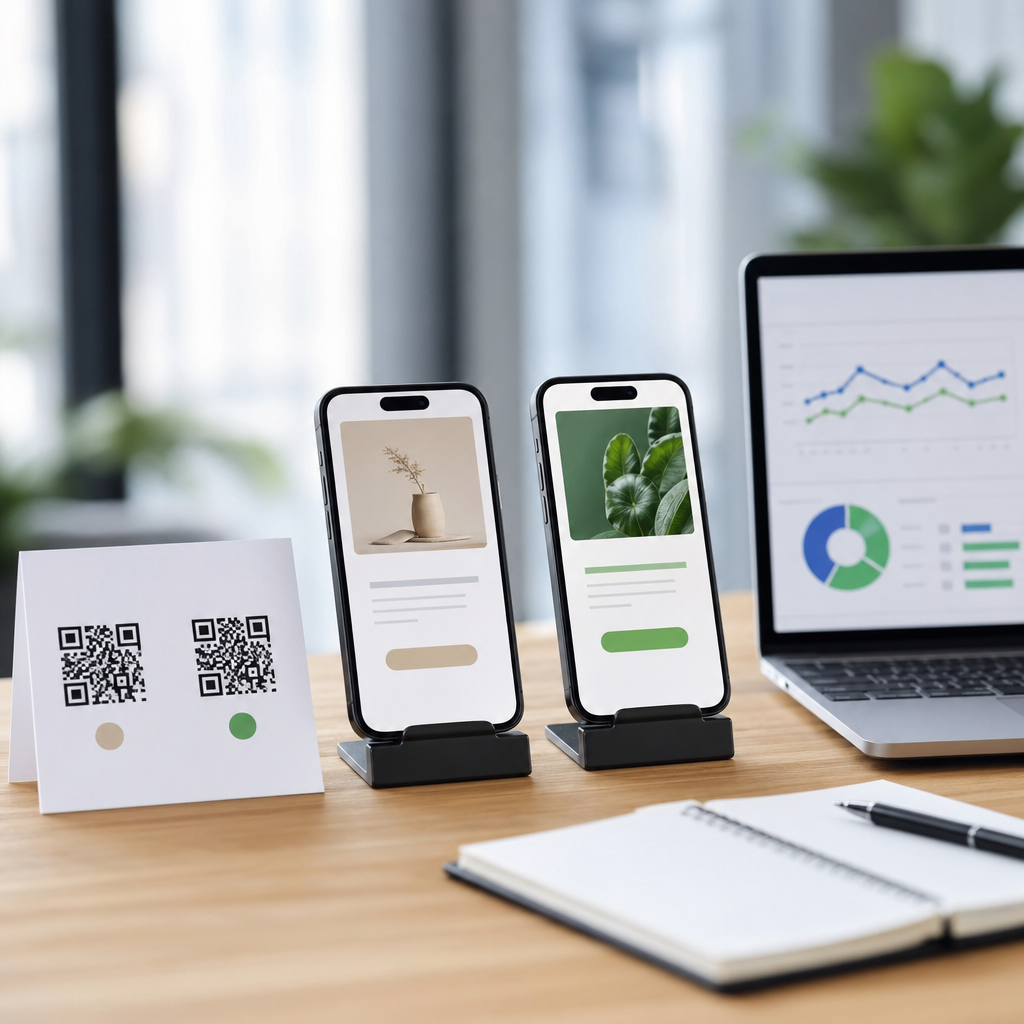
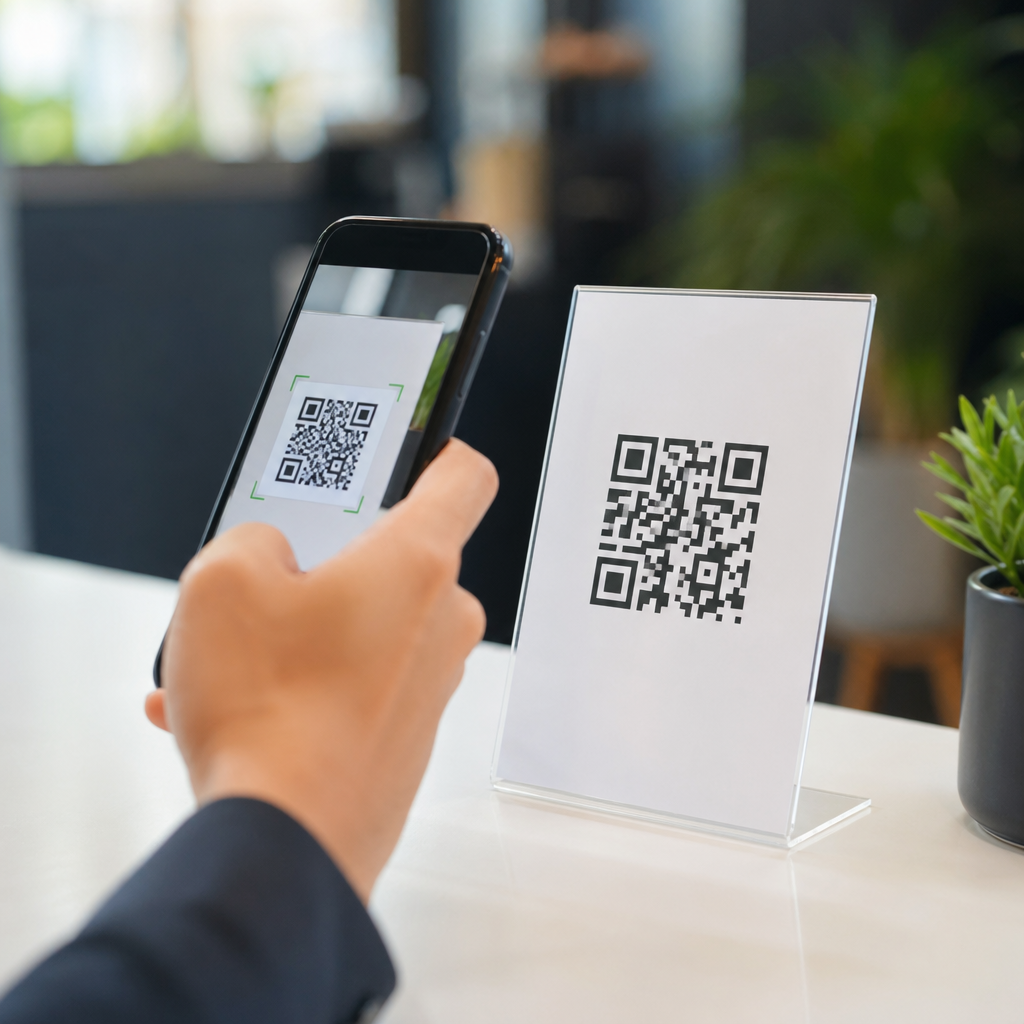
QR code conversion rates improve when every step between scan and action is deliberately designed, measured, and refined. In practice, that means treating a QR code not as a static image, but as the front door to a conversion funnel that includes placement, incentive, landing page experience, tracking, and post-scan follow-up. Conversion rate optimization for QR codes is the process of increasing the percentage of scanners who complete a desired action, such as making a purchase, filling out a form, downloading an app, redeeming an offer, or booking an appointment.
This matters because scans alone can be misleading. I have seen campaigns celebrate high scan volume while revenue stayed flat, simply because the destination page loaded slowly, the offer was weak, or the call to action was unclear. A restaurant table tent can generate hundreds of scans, for example, yet still underperform if the menu page forces users to pinch and zoom before they can order. Likewise, a retail shelf tag may attract curious shoppers, but curiosity does not become conversion without relevance, speed, and trust.
Strong QR code conversion rate optimization starts with clear definitions. A scan rate measures how often people scan relative to exposure. A conversion rate measures how often scanners complete the target action. Assisted conversions capture users who scan first, leave, and return later through another channel. Micro-conversions include smaller steps such as viewing a product page, starting checkout, or clicking to call. Understanding these terms prevents teams from optimizing for vanity metrics instead of business outcomes.
As a hub within QR code analytics, tracking, and optimization, this topic connects creative decisions with measurable performance. It matters across packaging, out-of-home advertising, direct mail, in-store displays, events, hospitality, and B2B sales materials. The same code can succeed or fail based on context: audience intent, environmental friction, the promise made before the scan, and the consistency of the post-scan journey. The brands that win with QR codes are the ones that engineer that journey end to end, then improve it continuously with evidence.
Start with the right conversion goal and measurement framework
The first step is deciding what counts as success. Too many QR campaigns point to a generic homepage, which makes optimization almost impossible because the user has to figure out the next step alone. A better approach is to assign a single primary conversion to each QR code placement. On product packaging, that may be subscription enrollment or product registration. On a poster, it may be ticket purchase. On a table topper, it may be order completion. One code can support secondary actions, but the primary action should be obvious within seconds.
Measurement must connect the physical scan to a digital session and then to a completed outcome. In most implementations, that means using dynamic QR codes, campaign-tagged URLs, event tracking in Google Analytics 4, server-side logging where possible, and conversion events tied to forms, transactions, or calls. I recommend naming conventions that encode channel, location, creative, offer, and date, such as retail-store-window-spring-sale-2026. When analytics are structured that way, teams can isolate what changed and why.
Direct attribution is useful, but assisted attribution matters too. A user might scan a code on product packaging, read reviews, then return later via branded search and purchase on desktop. If you ignore the original scan, you undervalue the QR touchpoint. CRM integrations, first-party cookies, promo codes, and dedicated landing pages help close that gap. The core rule is simple: if a QR code has no measurable next step, it cannot be optimized with confidence.
Reduce friction before the scan happens
Conversion rate optimization begins before anyone opens a camera app. A person has to notice the code, understand what it does, and believe the outcome is worth the effort. That is why placement and surrounding copy often outperform visual styling as optimization levers. In field testing, I have repeatedly seen plain black-and-white codes beat branded designs because the message next to the code was stronger and easier to process from a distance.
Good pre-scan design answers three questions immediately: what will I get, why should I care, and how long will it take. “Scan to view menu” is functional, but “Scan to order in under 30 seconds” is stronger because it combines action, value, and time expectation. On a product box, “Scan for setup guide” is decent; “Scan for a 2-minute setup video” is better. Specificity raises intent because it reduces uncertainty.
Environmental conditions also shape performance. Codes placed too high, too low, behind reflective glass, or in dim lighting produce lower scan quality and weaker conversion. Quiet zone spacing, contrast ratio, print resolution, and error correction level all matter, but context matters more. A commuter scanning on a train platform needs a fast mobile page and a quick action. A shopper in a grocery aisle may need social proof and ingredient details. A trade show attendee may need a lead form with minimal fields. Match the experience to the physical moment, not just the brand standard.
Build landing pages that convert mobile visitors quickly
Most QR traffic is mobile traffic, so the landing page has to earn trust and momentum immediately. The first screen should confirm that the user arrived in the right place, restate the promise made next to the code, and present a clear primary action. If the poster says “Scan for 15% off today,” the landing page headline should repeat that offer exactly. Message match is one of the fastest ways to improve QR code conversion rates because it reassures the user that the scan produced the expected result.
Page speed is not optional. According to Google research, longer mobile load times increase abandonment sharply, and that pattern is especially severe for QR traffic because the user often scans in a transitional moment. Compress images, defer unnecessary scripts, use content delivery networks, and minimize redirects. Dynamic QR code platforms sometimes add redirects for tracking, so test the full path, not just the final page. A one-second delay can be tolerable; a four-second delay often kills intent.
Form design deserves equal attention. On mobile, every extra field reduces completion. For lead generation, ask only for what the next sales step truly needs. Name and email may be enough at top of funnel; job title, company size, and budget questions can wait. For ecommerce, enable digital wallets such as Apple Pay and Google Pay to reduce checkout friction. For bookings, prefill location or service type when possible. The best QR landing pages feel like a continuation of the scan, not the start of a complicated website visit.
Use stronger offers, incentives, and calls to action
Many QR codes underperform because the offer is bland. “Learn more” is rarely compelling in a physical environment where people are distracted. High-converting QR campaigns usually create a concrete exchange of value: discount, exclusive content, faster service, useful tool, early access, loyalty points, warranty activation, or personalized recommendations. The offer should align with user intent. A shopper comparing products may want reviews or a coupon. A diner wants speed. A conference attendee wants slides, booking links, or a contact shortcut.
Urgency and exclusivity can help, but they must be credible. “Scan today for same-day pickup” is believable and useful. “Limited time only” without a real deadline feels generic. I have had strong results using threshold-based incentives, such as “Scan for free shipping on orders over $50,” because the conversion value remains healthy while the user perceives a clear benefit. In B2B settings, practical value often beats discounts: “Scan for the implementation checklist” can outperform “Scan to contact sales” because it gives buyers something useful before demanding commitment.
Calls to action should be direct and outcome-focused. Use verbs tied to the user’s goal: order, save, book, claim, compare, register, watch, activate. Avoid internal language like “engage” or “explore our solutions.” The best CTA is specific about what happens next. “Scan to book a demo in 60 seconds” converts better than “Scan to learn about our platform” because it describes the action, the object, and the expected effort. Precision drives action.
Test the variables that actually move conversion rates
Optimization works when teams test a small number of high-impact variables rather than changing everything at once. With QR codes, the most important test categories are placement, surrounding copy, incentive, destination page, and conversion path. Visual code styling matters mainly if it affects scan reliability or brand trust. In other words, test fundamentals before cosmetics. A different headline next to the code can raise conversion more than a redesigned frame or color treatment.
Practical testing requires structured comparisons. Use separate dynamic URLs or campaign parameters for each variant, keep time windows comparable, and control for audience differences where possible. If one in-store display is near checkout and another is near the entrance, performance differences may reflect traffic intent more than creative quality. The right way to test is to compare like with like: same store zone, similar time period, same product category, one changed variable.
| Variable | What to test | Primary metric | Example |
|---|---|---|---|
| Placement | Eye-level vs counter-level | Scan-to-conversion rate | Window decal compared with cashier sign |
| Offer | Discount vs bonus content | Completed purchase or form fill | 10% off compared with setup guide |
| CTA copy | Generic vs specific promise | Landing page click-through | Scan to learn more compared with scan to claim today’s offer |
| Destination | Homepage vs dedicated page | Final conversion rate | Brand site compared with product-specific page |
| Form length | Five fields vs two fields | Form completion rate | Full lead form compared with email-only capture |
Interpret results with caution. Small sample sizes can mislead, especially in low-traffic physical placements. Seasonality, staff behavior, inventory levels, and even weather can affect outcomes. The goal is not to chase every fluctuation but to identify repeatable patterns. Over time, a disciplined test program creates a playbook for which offers, placements, and mobile experiences produce the highest conversion by context.
Segment performance by location, audience, and intent
A single average conversion rate hides useful differences. The same QR code campaign may produce very different results by store, region, device type, daypart, or traffic source. Segmenting performance helps you find where friction is concentrated and where strong intent already exists. In retail, I often see higher scan volume near entrances but better conversion near product shelves because shoppers there have more specific intent. In hospitality, poolside codes may generate menu scans, while room codes generate spa bookings and service requests.
Audience intent should shape both creative and destination. New prospects often need proof and explanation. Existing customers may only need a shortcut. That is why loyalty QR codes, reorder flows, and account-service links often convert exceptionally well. The user already trusts the brand and understands the value. By contrast, cold-audience outdoor placements usually need stronger incentives and simpler journeys because intent starts lower.
Segmentation also improves budget allocation. If direct mail QR codes convert at 8 percent and poster placements convert at 1.5 percent, the answer is not necessarily to abandon posters. It may mean poster traffic is better for awareness and remarketing, while mailers are better for immediate response. When teams separate scan intent from conversion intent, they make better decisions about media mix, creative messaging, and landing page design.
Strengthen trust, privacy, and post-scan continuity
Trust is a conversion multiplier for QR codes because the user cannot see the destination before scanning unless you show it clearly. Suspicion rises when branding is inconsistent, the URL looks unfamiliar, or the page asks for too much information too quickly. Use branded domains where possible, display the destination or brand name near the code, and ensure the landing page matches the visual identity of the physical asset. Security badges are less important than consistency and clarity.
Privacy practices matter too. If you collect personal data, explain why and how it will be used. For SMS capture, state message frequency and consent terms. For location-aware experiences, request permissions only when necessary and after value is established. Regulatory standards such as GDPR and CCPA are not just legal concerns; they affect user confidence and completion rates. A concise privacy explanation can preserve conversions that a vague form would lose.
Finally, think beyond the first conversion. Effective QR code optimization includes the follow-up path: confirmation pages, email sequences, coupon redemption, app onboarding, and CRM routing. A QR scan that starts a broken downstream process creates hidden leakage. The highest-performing programs treat the scan as one event in a full customer journey. Review the entire chain regularly, fix handoff failures, and connect offline placements to online retention efforts. If you want better QR code conversion rates, audit the whole funnel, launch focused tests, and keep improving what the data proves.
Frequently Asked Questions
What factors have the biggest impact on QR code conversion rates?
The biggest drivers of QR code conversion rates are usually the same elements that influence any high-performing conversion funnel: visibility, motivation, user experience, and measurement. First, placement matters more than many brands realize. A QR code that is too small, poorly lit, positioned at an awkward angle, or surrounded by distracting design elements will lose scans before the funnel even begins. The code should be easy to notice, easy to access, and presented in a context where scanning feels natural. For example, a code placed at eye level on packaging, signage, direct mail, or point-of-sale materials will generally outperform one hidden in a cluttered layout.
Second, the offer or incentive has a major effect on whether a scan becomes a conversion. People need a clear reason to take action. “Scan to learn more” is usually weaker than “Scan for 15% off,” “Scan to book now,” or “Scan to get the full comparison guide.” The call to action should set expectations clearly and communicate immediate value. Third, the landing page experience is critical. If the page loads slowly, looks awkward on mobile, asks for too much information, or fails to match the promise of the QR code, users will drop off quickly. Since most QR scans happen on smartphones, mobile optimization is essential, not optional.
Finally, strong tracking and optimization make long-term gains possible. You need to know not just how many people scan, but how many complete the intended action, where they came from, what device they used, and where they abandoned the process. When businesses treat QR codes as measurable conversion assets rather than static graphics, they can test placements, messaging, incentives, and post-scan experiences to steadily improve performance over time.
How can I make more people who scan a QR code actually complete the desired action?
To increase the percentage of scanners who convert, start by reducing friction at every stage after the scan. The transition from offline touchpoint to mobile experience should feel immediate and effortless. That means linking directly to a relevant landing page instead of a homepage, minimizing unnecessary navigation, and making the next step obvious. If the goal is to claim an offer, the user should land on the offer page. If the goal is to register, the form should be short and easy to complete on a phone. If the goal is to purchase, the product or checkout path should be front and center.
It also helps to align the QR code message with audience intent. Someone scanning a code on event signage may be ready for quick registration or schedule access, while someone scanning from product packaging may want setup help, reviews, or a reorder option. Matching the landing page content to the scanning context often improves conversion because users feel they arrived in the right place. Consistency between the printed message, the call to action, and the destination page builds trust and reduces hesitation.
Another important tactic is offering a compelling reason to act now. Urgency, exclusivity, or convenience can all improve conversion rates when used credibly. Limited-time discounts, bonus resources, instant access, loyalty rewards, and simplified booking experiences are all common examples. After that, follow-up matters. If the scan leads to a form fill, email signup, or text opt-in, the next message should arrive quickly and continue the journey with a clear benefit. The highest-performing QR campaigns are not just optimized for the scan; they are optimized for what happens immediately after the scan as well.
What should a high-converting QR code landing page include?
A high-converting QR code landing page should be mobile-first, fast-loading, and singularly focused on one primary action. Because users arrive from a scan, often while on the go, attention spans are short and patience is limited. The page should load quickly on cellular connections, display cleanly on small screens, and make the next step obvious without forcing users to pinch, zoom, or hunt for information. Strong landing pages typically feature a clear headline, a concise explanation of the value being offered, and a prominent call-to-action button or form near the top of the screen.
Message match is especially important. The landing page should immediately confirm that the user is in the right place by repeating or reinforcing what the QR code promised. If the code says “Scan for 20% off your first order,” the discount should be visible instantly. If it says “Scan to watch the demo,” the video should be available without extra searching. This continuity reduces confusion and reassures users that the scan was worthwhile. Trust signals can also improve performance, including customer reviews, recognizable brand elements, secure checkout indicators, and simple privacy language when personal information is requested.
Just as important is limiting distractions. A QR landing page should avoid excessive menu options, dense blocks of copy, or multiple competing offers. The user should not have to decide among five possible paths. One page, one goal, and one clear benefit often perform best. Depending on the campaign, helpful conversion elements may include autofill-friendly forms, mobile wallet support, click-to-call buttons, store locators, countdown timers, FAQs, or testimonial snippets. The right combination depends on the audience and offer, but the general rule is simple: remove anything that slows users down, and strengthen anything that increases clarity, trust, or urgency.
How do I track and measure QR code conversions effectively?
Effective QR code tracking starts with defining what counts as a conversion. For one campaign, that might be a purchase. For another, it could be a form submission, appointment booking, app download, coupon redemption, or email signup. Once the desired action is clear, use trackable QR codes that point to URLs with campaign parameters, unique identifiers, or dynamic redirect rules so you can attribute performance accurately. This allows you to distinguish scans by channel, location, creative variation, package version, event booth, print run, or any other variable you want to evaluate.
Beyond scan counts, the most useful metrics usually include landing page views, bounce rate, click-through rate, form completion rate, checkout completion rate, revenue per scan, and time to conversion. If your sales process is longer, you may also want to measure assisted conversions or downstream metrics such as repeat purchases and customer lifetime value. In many cases, scan volume alone can be misleading. A QR code may get a large number of scans but still underperform if the landing page or offer fails to move users forward. True optimization requires looking at the full funnel, not just the top.
Dynamic QR codes are often the best choice for measurement because they let you update destinations without reprinting the code and can provide more flexible analytics. Pair that with web analytics, CRM data, attribution tagging, and marketing automation where possible. If you are testing multiple versions, change one major variable at a time, such as the call to action, incentive, landing page layout, or placement. The goal is to identify which factors are actually improving conversion rate. When measurement is set up properly, QR codes become a reliable performance channel rather than a guessing game.
Can A/B testing really improve QR code conversion rates, and what should I test first?
Yes, A/B testing can significantly improve QR code conversion rates because small changes in messaging, placement, and post-scan experience often produce meaningful differences in user behavior. QR campaigns sit at the intersection of offline attention and mobile conversion, which means there are multiple opportunities for friction or persuasion. Testing helps you move beyond assumptions and identify what your audience actually responds to. Instead of asking whether a QR code “works,” testing helps answer a much more valuable question: which version works best, for whom, and under what conditions?
A practical place to start is the call to action next to the QR code itself. Wording such as “Scan to shop,” “Scan for a free sample,” “Scan to compare plans,” or “Scan to save 10% today” can create very different expectations and motivations. After that, test incentive strength, visual prominence, and placement. A code on product packaging may perform differently from one on shelf talkers, receipts, table tents, posters, or direct mail. You can also test landing page variables such as headline clarity, button text, form length, social proof, checkout flow, and page speed optimizations.
To get useful results, prioritize tests that are likely to affect behavior the most. Start with the biggest friction points: unclear value proposition, weak incentive, poor message match, slow page load, or overly complex conversion steps. Make sure you are measuring a real business outcome, not just scans. The best QR code optimization programs use testing as an ongoing discipline rather than a one-time tactic. Over time, repeated testing helps refine every stage of the funnel, from the first moment someone notices the code to the final conversion and follow-up engagement.