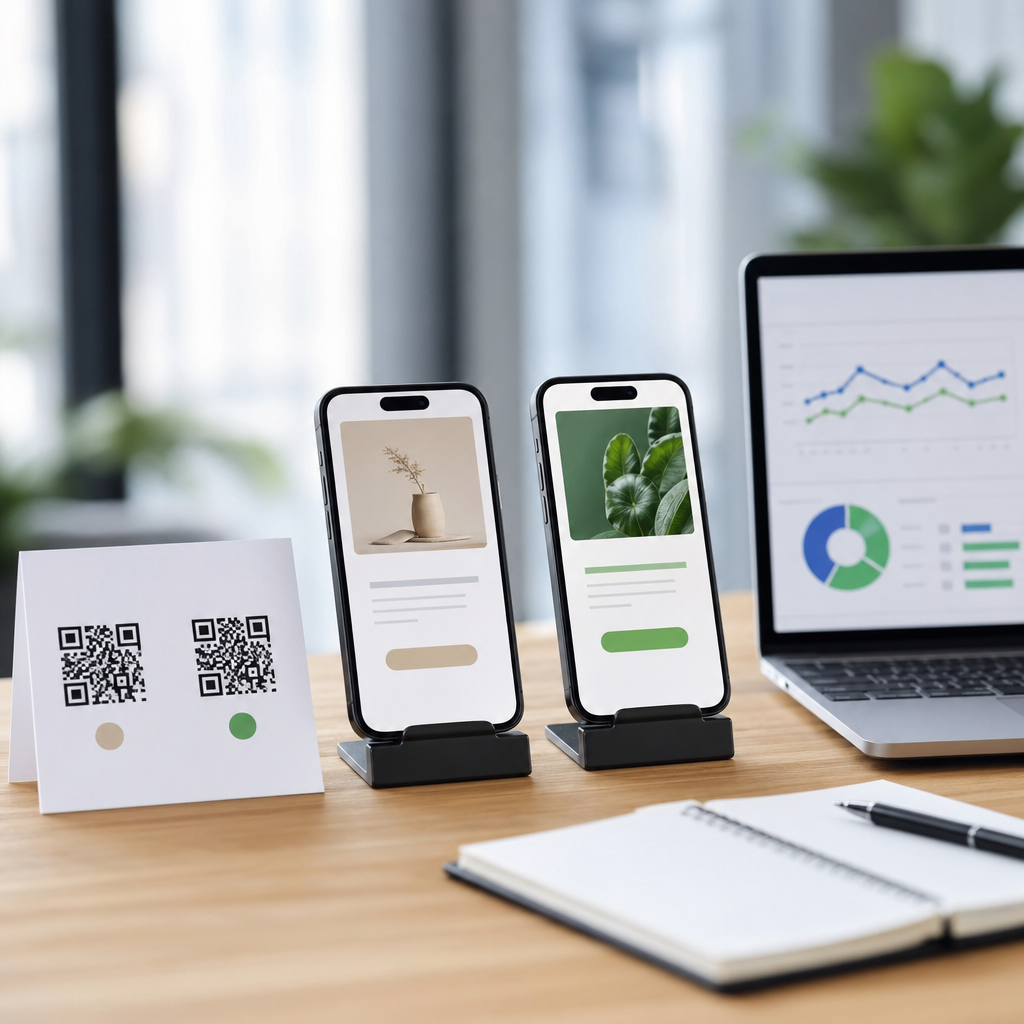

QR code conversion optimization is the practice of improving the percentage of scans that lead to a desired action, such as a purchase, signup, download, booking, or lead form completion. In practical terms, it sits at the intersection of QR code design, placement, landing page performance, analytics, and user intent. A QR code can generate attention, but conversion rate optimization determines whether that attention becomes measurable business value.
Many teams still judge QR campaigns by scan volume alone. That is a mistake I have seen repeatedly in retail, events, packaging, and out-of-home advertising. High scans with low completion rates usually signal friction after the scan: slow mobile pages, weak message match, poor offer structure, or confusing forms. Strong QR code conversion optimization fixes those leaks by treating the full journey, from visual trigger to final conversion, as one connected funnel.
Why does this matter now? Because QR codes are no longer a novelty channel. They are embedded in restaurant ordering, product packaging, direct mail, trade show booths, paid media, and in-store displays. Smartphones scan natively, consumers recognize the pattern instantly, and marketers can now connect offline behavior to digital outcomes with precision. When budgets are tight, being able to prove that a printed poster, shelf talker, or mailer generated revenue is a major advantage.
To optimize properly, define the key metrics first. A scan rate measures how many people scan relative to impressions or foot traffic. A click-through rate may apply if a redirect page is involved. Conversion rate measures completed actions divided by scans or qualified visits. Assisted conversion value captures cases where the QR interaction influences a later purchase. Time to convert, bounce rate, form completion rate, and revenue per scan help explain performance. These metrics belong in a single reporting view, not split across disconnected tools.
Map the QR conversion funnel before changing creative
The most effective optimization work starts with a funnel map. I typically break the journey into six stages: exposure, scan, page load, content engagement, action initiation, and completed conversion. Each stage has its own failure modes. Exposure can fail because the code is too small or placed where glare, distance, or movement reduce scannability. Scan can fail because the call to action is vague. Page load can fail because mobile performance is poor. Engagement can fail when the page does not match the promise made beside the code. Completion can fail when the form, checkout, or booking flow asks for too much too soon.
Funnel mapping also forces alignment between traffic source and user intent. Someone scanning a QR code on product packaging behaves differently from someone scanning at a conference booth. Packaging scans often happen in a post-purchase or consideration context, so the next step might be product education, warranty registration, refill ordering, or loyalty enrollment. Event scans are often higher intent for demos, pricing, or contact capture. Out-of-home scans are highly context dependent and usually require a stronger incentive because the user is in motion and distracted.
One practical method is to create a separate landing experience for each context rather than sending all scans to the homepage. This sounds obvious, yet many brands still direct every QR code to a generic website menu. A dedicated page improves message match, lowers cognitive load, and makes attribution cleaner. It also supports source-level analytics by tying each code or redirect parameter to a specific campaign, location, creative variation, or audience segment.
Improve scan probability with design, copy, and placement
Conversion optimization begins before the scan. If the code is not noticed or trusted, nothing else matters. The highest-performing QR placements I have tested use three ingredients together: a clear benefit statement, a visible scan instruction, and enough physical size for the expected distance. ISO and print production guidance varies by use case, but a common field rule is roughly ten to one viewing distance to code size. If people scan from fifty centimeters away, the code should be about five centimeters wide. At a bus shelter or trade show aisle, it must be much larger.
Copy around the code matters more than many designers expect. “Scan me” is weak because it explains the mechanic, not the reward. “Scan to get 15% off today,” “Scan for installation video,” or “Scan to book your demo in 30 seconds” tells the user exactly why to act. In stores, adding a short fallback URL reassures hesitant users and provides accessibility. On packaging, a phrase that reduces risk, such as “official product guide,” helps users trust the destination.
Placement affects both scan volume and conversion quality. A code at checkout may generate many scans but mostly from existing customers, which changes how success should be measured. A code near a premium product display might produce fewer scans but higher average order value. I have seen direct mail campaigns improve total conversions simply by moving the code from the back panel to the response area near the offer deadline. Small physical adjustments often outperform major design overhauls because they remove friction at the moment of intent.
Build mobile landing pages that finish the job
Once the scan happens, the landing page becomes the conversion engine. Mobile usability is nonnegotiable because QR traffic is overwhelmingly smartphone based. Pages should load quickly, maintain visual continuity with the offline creative, and present one primary action above the fold. Google’s Core Web Vitals are useful guardrails here. Largest Contentful Paint should be fast enough that users never feel stalled, and Cumulative Layout Shift should stay low so buttons do not jump as assets render.
Message match is the first priority. If the poster says “Scan for free sample,” the landing page headline should repeat that offer in plain language. If the package says “Scan for setup instructions,” the first visible content should be the setup guide, not a generic homepage hero. Every mismatch adds doubt. In conversion reviews, I often find brands forcing QR visitors into the same page used for paid search or email. That reuse saves time but usually depresses completion because the visitor arrived with a different expectation and urgency.
Forms deserve special scrutiny. On mobile, every extra field reduces completion. Ask only for what is needed at that stage. For lead generation, name, work email, and one qualifying field often outperform long forms that ask for company size, phone number, budget, industry, timeline, and job title all at once. For commerce, support guest checkout, autofill, digital wallets, and concise error handling. For service businesses, offer tap-to-call and calendar booking options rather than forcing a generic inquiry form.
| Optimization area | Common problem | High-impact fix | Expected effect |
|---|---|---|---|
| QR call to action | Generic instruction | State exact benefit and urgency | Higher scan intent |
| Landing page | Homepage destination | Dedicated mobile page per campaign | Better message match and lower bounce |
| Form design | Too many fields | Reduce to minimum viable inputs | Higher completion rate |
| Page speed | Heavy assets and scripts | Compress media and limit third-party tags | Fewer drop-offs after scan |
| Attribution | Scans not tied to outcomes | Use unique redirects and event tracking | Clear ROI measurement |
Track conversions with reliable QR analytics and attribution
Without accurate tracking, optimization turns into guesswork. Every QR code used in a conversion program should resolve through a controllable redirect. That redirect can append UTM parameters, fire server-side logging, and route traffic based on device, language, location, or campaign rules. Dynamic QR codes are usually the right choice because they preserve the printed asset while allowing destination changes and campaign-level analytics.
At minimum, track scans, unique visitors, landing page sessions, button clicks, form starts, form submissions, purchases, and revenue. In practice, I recommend using a combination of redirect analytics, web analytics, and CRM or commerce data. Google Analytics 4 can capture sessions and conversion events, while platforms like HubSpot, Salesforce, Shopify, or Adobe Commerce tie those events to lead and revenue outcomes. If you need call attribution, tools such as CallRail can connect QR-driven sessions to phone conversions.
Be careful with duplicate counting. A single user may scan more than once, switch from mobile browser to app, or return later through another channel. That is why last-click attribution alone often undervalues QR campaigns used in awareness and consideration stages. Where possible, compare first-touch, assisted, and position-based views. For physical locations, tie QR activity to store, display, or sales rep identifiers so performance differences become actionable rather than anecdotal.
Privacy and compliance matter as well. If you are collecting personal data after a scan, the landing page should disclose how information is used and obtain consent where required. Regional rules such as GDPR and CCPA are not side issues; they directly affect form design, analytics implementation, and remarketing eligibility. Trust is part of conversion optimization, especially when users are scanning from public places and deciding in seconds whether the interaction feels legitimate.
Run structured tests and optimize by context
The strongest QR code conversion programs are built through testing, not opinion. Start with a clear hypothesis tied to one metric. For example: changing the call to action from “Learn more” to “Scan for a free fitting guide” will increase scan-to-lead rate among in-store shoppers. Or: replacing a six-field demo form with a two-step lead flow will improve completed submissions without reducing qualified pipeline. A disciplined testing plan prevents teams from changing five variables at once and learning nothing.
Context should shape the test roadmap. For packaging, test educational value versus loyalty incentives. For direct mail, test offer framing, personalization, and deadline language. For events, test instant scheduling against brochure downloads. For restaurants, compare table-ordering flows with menu-first experiences. For real estate signage, test property-detail pages against tour booking pages. The right conversion path depends on what the user needs at that physical moment, not on what the marketing team wants to promote broadly.
Sample size and operational consistency matter. Offline campaigns often produce lower traffic than digital ads, so tests may need longer run times or location-based segmentation. Keep print quality constant, verify codes under real lighting conditions, and monitor page speed throughout the test. I have seen valid creative hypotheses drowned out by simple execution issues such as glossy lamination causing reflection, weak cellular coverage at an event hall, or a redirect chain adding enough latency to reduce conversions.
Optimization should continue after the initial conversion too. A QR code that captures an email but leads to poor downstream sales quality is not actually optimized. Evaluate lead-to-opportunity rate, repeat purchase rate, refund rate, and customer lifetime value by QR source. Sometimes the best-performing code by raw conversion rate attracts low-intent users, while a more targeted code produces fewer but more profitable outcomes. Revenue quality is the final arbiter.
Use this hub to guide a broader QR optimization program
As a sub-pillar within QR code analytics, tracking, and optimization, this topic works best when connected to adjacent practices. Conversion rate optimization depends on accurate QR tracking, campaign taxonomy, landing page analytics, and reporting discipline. It also links naturally to deeper subjects such as dynamic versus static QR code strategy, offline attribution methods, A/B testing frameworks, mobile page speed optimization, and post-scan user experience design. Those supporting topics turn this hub from a theory page into an operational playbook.
The core lesson is straightforward. Better QR performance does not come from the code alone. It comes from aligning physical context, user motivation, technical tracking, and friction-free mobile experiences. Start by mapping the funnel, improve scan intent with stronger copy and placement, send visitors to dedicated pages, reduce mobile friction, and measure every meaningful step through to revenue. Then test by use case and keep what lifts both conversion rate and conversion quality.
If you manage QR campaigns across packaging, print, retail, events, or out-of-home media, audit one active code today. Check the call to action, scanability, load speed, landing page match, form length, and attribution setup. Small fixes at each stage compound quickly. That is how QR code conversion optimization turns scans into measurable business results and gives your offline marketing a performance standard as rigorous as any digital channel.
Frequently Asked Questions
What is QR code conversion optimization, and how is it different from simply increasing scans?
QR code conversion optimization is the process of improving the percentage of people who scan a QR code and then complete a meaningful next step, such as making a purchase, filling out a form, booking a demo, downloading an app, joining a loyalty program, or subscribing to a service. That distinction matters because scans alone are only a top-of-funnel signal. A high scan count may indicate curiosity, visibility, or effective placement, but it does not automatically mean the campaign is generating revenue, leads, or measurable business outcomes.
In practice, QR code conversion optimization looks at the entire path from first exposure to final action. That includes whether the code is easy to notice, whether users trust it enough to scan, whether the destination page loads quickly on mobile, whether the message on the page matches what the code promised, and whether the call to action is simple and persuasive. If any part of that flow creates friction, scan volume can remain healthy while actual conversions stay low.
This is why mature teams do not stop at scan metrics. They evaluate scan-to-landing-page sessions, bounce rate, time on page, form completion rate, cart completion rate, assisted conversions, and downstream revenue. The goal is not just to attract attention but to turn intent into action. A campaign with fewer scans but a stronger conversion rate can easily outperform one with a larger audience and weaker follow-through.
What factors have the biggest impact on QR code conversion rates?
Several variables influence whether a scan turns into a conversion, and the most important ones usually span both offline and digital experiences. First is user intent. Someone scanning a QR code on product packaging in a store may be looking for specifications, reviews, a discount, or setup instructions. Someone scanning from an event badge may be open to networking or follow-up content. If the destination does not align with that intent, conversion rates will suffer no matter how attractive the code looks.
Second is code placement and context. A QR code should be easy to find, easy to scan, and presented in a setting where people have both the time and motivation to act. Lighting, viewing distance, print size, surrounding design, and accompanying copy all affect performance. Clear instructional text such as “Scan to claim 15% off” or “Scan to book a free consultation” usually outperforms a code displayed without explanation because it reduces uncertainty and sets a clear expectation.
Third is the landing page experience. Most QR scans happen on mobile devices, so the destination must load quickly, display properly on smaller screens, and minimize friction. If the page asks users to pinch, zoom, wait, or complete a long form, drop-off will increase. Strong QR conversion performance often comes from short forms, concise messaging, trust indicators, mobile-friendly design, and a single obvious call to action.
Finally, analytics and testing play a major role. Teams that use dynamic QR codes, UTM parameters, event tracking, and conversion reporting can see exactly where users drop off and improve accordingly. Small adjustments to CTA wording, offer structure, destination page layout, or audience-specific messaging can create substantial gains over time. Conversion optimization is rarely about one dramatic change; it is usually the result of many improvements across the user journey.
How can businesses improve the landing page experience after someone scans a QR code?
The landing page should feel like a direct continuation of the promise that motivated the scan. If the QR code says “Scan for 20% off,” the discount should be immediately visible on the page without forcing the user to search for it. If the code invites users to watch a demo, the video should be prominent and easy to play. Message match is one of the most effective ways to improve conversions because it reassures users that they are in the right place and reduces confusion.
Speed is another major priority. Mobile visitors are especially sensitive to delays, and even a few extra seconds can lower engagement. Compressing images, simplifying scripts, using fast hosting, and avoiding unnecessary pop-ups can help pages load faster. The destination should also be designed for thumb-friendly navigation, readable text, and minimal clutter. A QR code visitor is often in a transitional moment, standing in a store aisle, at an event booth, on public transit, or reviewing printed materials. That user does not want a complex browsing experience.
Reducing friction is equally important. Keep forms short, ask only for essential information, and make the next step obvious. If the goal is lead generation, consider progressive profiling rather than requesting too much upfront. If the goal is ecommerce, pre-apply discount codes or direct users to a specific product page instead of the homepage. If the goal is booking, land users on the scheduling interface rather than a generic services page. The easier it is to complete the intended action, the stronger the conversion rate tends to be.
Trust signals can also increase results. Including testimonials, recognizable payment icons, privacy reassurance, concise benefit statements, and brand-consistent design helps users feel confident enough to move forward. In many cases, the best-performing QR landing pages are not the most visually elaborate ones. They are the ones that are fast, focused, relevant, and built around a single conversion goal.
How should QR code campaigns be measured if scan count is not enough?
Scan count is a useful starting metric, but it should be treated as only one part of performance measurement. To understand whether a QR campaign is effective, businesses need to track the full funnel from exposure to conversion. That means looking at total scans, unique scans, landing page visits, engagement metrics, completed actions, and the value generated from those actions. A campaign that produces 1,000 scans and 100 purchases is far more meaningful than one that produces 5,000 scans and only a handful of qualified outcomes.
A strong measurement framework usually includes conversion rate, cost per conversion, revenue per scan, bounce rate, form completion rate, add-to-cart rate, booking rate, and return on ad spend or return on campaign investment where applicable. It is also important to segment performance by location, placement, creative variation, device type, and audience source. For example, the same QR code offer may perform very differently on packaging, in-store signage, direct mail, trade show displays, or restaurant tables.
Dynamic QR codes are especially valuable because they allow destination updates and more granular analytics without reprinting the code. Combined with UTM tagging, analytics platforms, CRM attribution, and event tracking, they help teams connect scans to downstream behavior. This makes it possible to identify which campaigns drive not just clicks but qualified leads, repeat purchases, and customer lifetime value.
Businesses should also define success based on the campaign objective. A retail promotion may prioritize purchases. A B2B trade show campaign may prioritize booked meetings or qualified leads. A product packaging QR code may aim to increase registrations, reviews, or cross-sell purchases. When measurement is tied to the actual business outcome, optimization becomes much more strategic and much less dependent on vanity metrics.
What are the best practices for testing and optimizing QR code campaigns over time?
The most effective approach is to treat QR code campaigns as an ongoing optimization program rather than a one-time asset deployment. Start by identifying the specific conversion goal and the biggest points of friction in the current journey. Then test one meaningful variable at a time so results can be interpreted clearly. Common testing areas include CTA language near the code, incentive structure, code placement, page layout, form length, button text, offer framing, and whether the destination is a homepage, product page, category page, or dedicated landing page.
Testing should also account for real-world context. A QR code on packaging may need a different message than one on a window display or event banner. Environmental variables such as distance, lighting, motion, and scan urgency can change behavior significantly. For that reason, businesses often get better results by building audience- and location-specific QR experiences rather than sending all traffic to the same destination.
Use dynamic QR codes whenever possible so links can be updated without changing printed materials. This gives teams flexibility to swap landing pages, rotate offers, pause underperforming campaigns, or personalize content by geography or campaign source. Pair that flexibility with robust analytics so each scan source can be evaluated independently. If one print insert drives stronger conversion quality than another, budget and creative decisions become much easier.
Finally, optimization should look beyond the initial conversion. Review whether QR-acquired users become repeat customers, complete onboarding, respond to follow-up messaging, or generate higher lifetime value. In many cases, the best campaign is not the one with the highest immediate scan volume or even the highest first-step conversion rate, but the one that brings in the most valuable users over time. That broader view helps businesses build QR strategies that create durable, measurable results rather than short-lived bursts of activity.