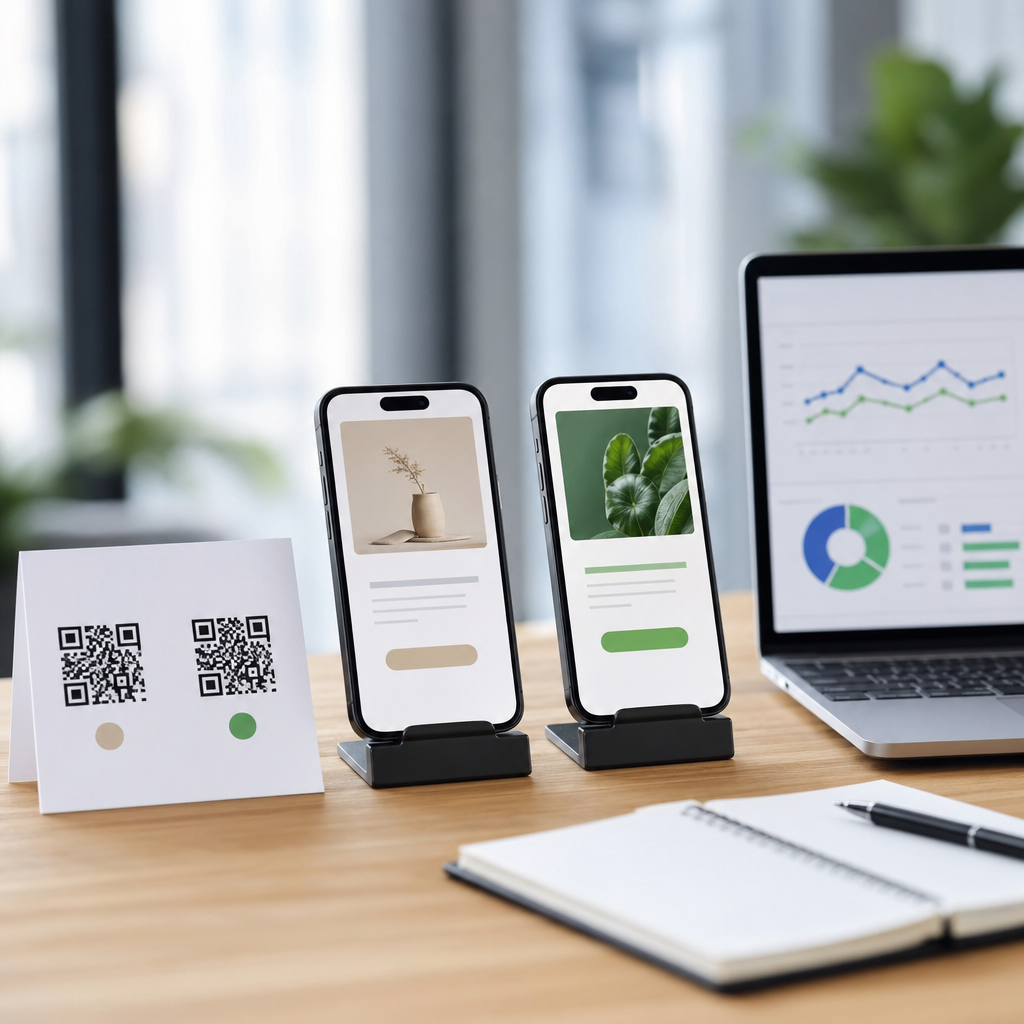

QR code campaigns are easy to launch and deceptively hard to measure. Many teams can count scans, but far fewer can explain where people scanned, what they did next, which placements drove intent, or why one code outperformed another. To analyze QR code user behavior well, you need more than a dashboard total. You need a structured view of scan behavior, heatmaps, device context, traffic quality, and post-scan outcomes. In practice, that means combining QR code analytics with landing-page tracking, geospatial reporting, campaign tagging, and disciplined testing. When I audit underperforming QR programs, the biggest gap is rarely creative quality alone; it is the absence of a measurement framework that connects scan events to real user actions.
In this context, QR code user behavior means the observable patterns behind a scan: when it happened, where it happened, what device was used, whether the user was new or returning, how long they engaged, and whether they completed a goal. Heatmaps and scan behavior analysis turn isolated scans into usable evidence. A heatmap is a visual aggregation of activity by location, time, or on-page interaction, helping marketers identify clusters, dead zones, and friction points. Scan behavior is the broader interpretation layer: frequency, timing, conversion path, repeat engagement, and drop-off. This matters because QR codes now bridge print, packaging, retail, out-of-home media, events, and direct mail with digital journeys. If you cannot analyze that bridge accurately, you cannot optimize placement, messaging, or spend.
For a sub-pillar topic inside QR code analytics, tracking, and optimization, heatmaps and scan behavior deserve hub-level treatment because they influence almost every tactical decision. A restaurant chain deciding where to place table tents, a retailer testing shelf talkers, and a B2B event team measuring booth signage all face the same question: what happened after someone noticed and scanned the code? Strong analysis answers that question directly. It shows whether scans cluster by store, by hour, by venue entrance, by campaign creative, or by product package. It also reveals whether high scan volume is genuinely valuable or just accidental curiosity. The rest of this guide explains how to analyze QR code user behavior in a way that supports reporting, diagnosis, and continuous improvement.
Define the metrics that describe QR code user behavior
The first step is choosing metrics that reflect behavior rather than vanity counts. Scan volume is useful, but only as a starting signal. I usually organize QR reporting into five layers: exposure assumptions, scan activity, user context, on-site engagement, and business outcomes. Exposure assumptions include circulation, footfall, impressions, or units distributed. Scan activity includes total scans, unique scans, repeat scans, scan-through rate where exposure estimates exist, and time-to-scan after distribution. User context covers location, device type, operating system, browser, network, and referral parameters. Engagement metrics include bounce rate, scroll depth, dwell time, event completion, and return visits. Business outcomes include lead submissions, coupon redemptions, purchases, bookings, app installs, or assisted conversions.
The distinction between total scans and unique scans is especially important. A poster in a commuter station might generate many repeat scans from the same small audience, while packaging distributed nationally may generate fewer total scans but a broader unique audience. Without separating those values, teams misread reach. The same caution applies to conversion rate. A code with a lower scan volume can outperform a high-volume code if it attracts stronger intent. For example, a QR code on prescription refill paperwork may produce fewer scans than one on waiting-room signage, yet deliver a much higher completion rate because the user arrives with a specific goal.
You should also define behavioral benchmarks before launching the campaign. In retail, I often expect stronger scan density near checkout and endcaps than in low-dwell aisles. At trade shows, scan peaks typically align with session breaks and opening hours. For direct mail, scans often cluster within forty-eight to seventy-two hours after delivery. These benchmarks make anomalies visible. If a code placed near a cash register underperforms while an aisle display overperforms, that discrepancy points to placement, lighting, message clarity, or staff influence. Good QR code analytics do not just answer how many; they answer compared with what expectation and under which conditions.
Build a reliable tracking setup before interpreting heatmaps
Heatmaps are only as trustworthy as the tracking architecture underneath them. Start with dynamic QR codes rather than static ones whenever measurement matters. Dynamic codes route users through a tracked redirect, allowing you to change destinations, append campaign parameters, and log scan metadata without reprinting the code. Use consistent UTM conventions for source, medium, campaign, content, and term where appropriate. Then align those parameters with analytics platforms such as Google Analytics 4, Adobe Analytics, Matomo, or a customer data platform. If the landing page contains forms, commerce actions, or app deep links, instrument those events separately so you can connect scans to outcomes instead of stopping at arrival.
Location data deserves special care. Many QR platforms report scan geography from IP address, which is directionally useful but not perfectly precise. Urban scans may map accurately to neighborhoods, while mobile carrier routing can misattribute smaller towns or venue-level activity. For venue analysis, supplement IP-based heatmaps with first-party context: unique codes by entrance, table, shelf, booth zone, or print placement. That simple design choice often produces cleaner behavioral insight than relying on geolocation alone. In one stadium campaign I reviewed, separate QR codes for concourse, seatback, and concession signage revealed that concession placement drove fewer scans overall but twice the redemption rate, a pattern that raw city-level heatmaps could never show.
Data hygiene matters just as much. Filter internal scans from employees, agencies, printers, QA testers, and field teams. Establish naming conventions before launch so placement and creative variants are instantly recognizable in reports. Verify redirects, page speed, and mobile rendering across iOS and Android. A broken redirect or slow landing page can distort behavior metrics and create false conclusions about the code itself. I have seen teams redesign packaging because scans “dropped,” when the real cause was a consent banner blocking the call to action on Safari. Sound setup protects analysis from those expensive mistakes.
Use heatmaps to identify where interest concentrates and where friction begins
Heatmaps help you answer a practical question: where does attention convert into action? In QR campaigns, heatmaps usually appear in three forms. Geospatial heatmaps show scan concentration by city, region, store, or venue. Temporal heatmaps show patterns by hour, day, or campaign phase. On-page heatmaps, from tools such as Hotjar, Microsoft Clarity, or Contentsquare, show what users do after scanning: where they tap, how far they scroll, and where they abandon the page. When analyzed together, these views reveal whether problems start at placement, timing, or landing-page experience.
Consider a quick-service restaurant promoting loyalty sign-ups with tray liners, window decals, and menu-board signage. A geospatial heatmap may show certain stores over-indexing on scans, suggesting stronger staff prompts or better line-of-sight placement. A temporal heatmap may reveal a lunch spike but weak dinner performance, indicating that evening customers are more hurried or that signage becomes less visible under different lighting. An on-page heatmap may show that scanned users stop before reaching the benefits section or repeatedly tap a non-clickable image, signaling a mobile usability issue. Each heatmap type answers a different part of the same behavioral question.
| Heatmap type | What it shows | Best use case | Typical optimization action |
|---|---|---|---|
| Geospatial | Where scans cluster by market, store, venue, or placement | Retail rollouts, events, out-of-home, direct mail by region | Reallocate budget, duplicate high-performing placements, localize offers |
| Temporal | When scans happen by hour, day, week, or campaign stage | Time-sensitive promotions, staffing analysis, event scheduling | Adjust launch windows, add prompts during peak periods, pause weak slots |
| On-page | How visitors interact after scanning | Lead forms, menus, product pages, downloads, app install flows | Simplify page layout, move CTA higher, reduce form fields, fix tap targets |
The value of heatmaps is diagnostic clarity. If a code scans well in one venue entrance and poorly in another, the issue may be visibility, traffic direction, or dwell time. If scans are healthy but conversions are weak, the issue usually sits on the landing page. If both scans and conversions are low, the offer may be unclear or the audience misaligned. Heatmaps do not replace statistical analysis, but they surface patterns quickly enough to guide better questions and faster tests.
Interpret scan behavior by context, intent, and user quality
Not every scan means the same thing. A user scanning a product package at home is behaving differently from a passerby scanning a billboard in motion. Context changes intent, and intent changes the metrics that matter. For high-dwell environments such as restaurant tables, waiting rooms, trade show booths, or packaging, you can expect deeper content consumption and higher completion rates. For low-dwell placements such as transit ads or storefront windows, the first priority is frictionless access: fast load speed, concise copy, and a clear next step. Comparing these contexts without adjustment leads to bad decisions.
User quality is the next layer. Analyze behavior by new versus returning users, device class, operating system, and acquisition source. A repeat scanner may indicate loyalty, research behavior, or unresolved friction depending on the journey. If Android users convert well and iPhone users drop before form submission, investigate autofill compatibility, input masks, Apple Pay availability, or cookie consent behavior. If scans from one neighborhood produce many visits but few purchases, the problem may be message fit, not reach. In one consumer packaged goods test, recipe-focused packaging codes drove longer sessions and more return visits than discount-focused codes, even though the discount variant generated more initial scans. The behavioral signal suggested that utility content was building stronger brand engagement over time.
Sequence analysis is useful here. Look at the path from scan to first interaction, to content consumption, to conversion or exit. In GA4, funnel explorations can show where scanned traffic drops off. In product analytics tools such as Mixpanel or Amplitude, you can compare cohorts by code placement or campaign creative. When you see repeated exits at the same step, that is behavior, not coincidence. It means the path is asking too much, loading too slowly, or failing to match the promise implied by the physical code placement.
Run optimization tests that turn behavioral insight into better performance
The purpose of analyzing QR code user behavior is action. Once heatmaps and scan patterns identify likely bottlenecks, test one variable at a time. Placement tests should isolate distance, eye level, lighting, surrounding clutter, and dwell opportunity. Creative tests should isolate headline, incentive, iconography, and instruction clarity, including whether you explicitly say “Scan to view menu,” “Scan for 10% off,” or “Scan to see assembly video.” Experience tests should focus on the landing page: page speed, above-the-fold CTA, form length, mobile layout, and payment or redemption flow.
Use controlled comparisons wherever possible. In-store, assign matched locations different signage variants. In print, version direct mail by offer or QR destination. At events, separate codes by booth zone or session room. Measure significance carefully when volume is low; small QR campaigns can produce noisy data. I generally look for directional consistency across several related metrics rather than one isolated lift. If a new placement increases scans, unique users, dwell time, and redemptions together, the improvement is credible. If scans rise but bounce rate spikes and redemptions stay flat, the test may be attracting curiosity rather than qualified intent.
Document every test in a simple learning log: hypothesis, change, date range, audience, expected outcome, observed result, and next action. This discipline turns QR code optimization from ad hoc guessing into an iterative program. Over time, the organization learns that shelf-edge codes work best with utility content, event signage performs better near pauses than entrances, and packaging scans increase when the value exchange is immediate and specific. Those lessons compound across campaigns and make future heatmap analysis more meaningful because you are comparing performance against known patterns, not assumptions.
Common mistakes in QR code behavior analysis and how to avoid them
The most common mistake is treating scans as conversions. A scan is an entry point, not a business result. The second mistake is collapsing all placements into one code, which destroys the ability to attribute performance. The third is ignoring the post-scan experience. Many teams invest heavily in print production and almost no effort in mobile landing-page design, even though that page decides whether scan intent becomes value. Another frequent issue is over-reading location data. IP-based geolocation can support regional analysis, but it should not be treated as exact proof of seat, shelf, or street-corner performance.
Privacy and compliance also matter. If you connect QR data to personal identifiers, follow applicable requirements under GDPR, CCPA, and your own consent policies. Be transparent about data collection, especially when scans lead to forms, SMS opt-ins, or app installs. Finally, avoid optimization by anecdote. Sales teams, store managers, and event staff often have useful observations, but those observations should be tested against scan behavior, heatmaps, and conversion data before they shape rollout decisions.
Analyze QR code user behavior by connecting scans to context, intent, and outcomes. Start with a clean tracking setup using dynamic codes, consistent campaign parameters, filtered internal traffic, and properly instrumented landing pages. Then read heatmaps in layers: where scans happen, when they happen, and what users do after arrival. That combination reveals whether your biggest opportunity lies in placement, timing, creative, or experience design. It also helps you separate broad curiosity from high-quality engagement, which is the difference between a code that gets attention and a code that drives results.
For teams building a stronger QR code analytics, tracking, and optimization program, this hub topic is the foundation. Heatmaps and scan behavior analysis show where to investigate next, what to test, and how to prioritize improvements that actually change outcomes. Use the insights to refine placements, simplify journeys, and align each code with a clear user need. Then keep iterating. The best QR programs are not built by printing more codes; they are built by learning from user behavior and acting on what the data shows.
Frequently Asked Questions
1. What metrics matter most when analyzing QR code user behavior?
The most useful QR code metrics go far beyond total scans. A raw scan count tells you volume, but it does not explain intent, engagement, or business impact. To understand user behavior, start with scan-level metrics such as unique scans, repeat scans, scan time, day-of-week trends, and approximate location. These show when and where interaction happens and can reveal whether a code is being discovered in the context you expected. For example, a restaurant table tent may produce strong evening scan activity, while product packaging may drive scans after purchase at home.
Next, look at device and technical context. Device type, operating system, browser, and network environment can help you spot user experience friction. If one QR campaign performs well on iPhone but poorly on older Android devices, that may point to landing-page compatibility or page-speed issues rather than weak creative. You should also compare new versus returning users, because repeat scans may indicate strong ongoing utility, confusion that causes people to scan multiple times, or internal team testing that needs to be filtered out.
Just as important are post-scan outcomes. Once someone scans, what happens next matters more than the scan itself. Track landing-page views, bounce rate, scroll depth, clicks, form completions, purchases, downloads, reservations, or any other defined conversion event. This is where QR code analysis becomes meaningful. A code with fewer scans but a much higher conversion rate may be more valuable than a code with high volume and weak downstream engagement. In practice, the best approach is to connect QR code analytics to web analytics, event tracking, and conversion reporting so you can evaluate scan quality, not just scan quantity.
2. How can I tell where people scanned my QR code and which placements performed best?
To understand where people scanned, you need both campaign structure and location logic. The cleanest method is to generate separate dynamic QR codes for each placement, even if all codes lead to the same destination. For example, if the same promotion appears on store windows, direct mail, product packaging, print ads, and in-event signage, assign each placement its own code or unique tracking parameters. That gives you a reliable way to compare performance by source instead of guessing based on timing or anecdotal feedback.
Approximate geolocation data can add another layer of insight. While QR scans do not usually provide exact street-level accuracy in every case, city-, region-, or country-level data can still be highly valuable. It can confirm whether scans are coming from the intended market, show regional demand patterns, and reveal unexpected hotspots. When combined with time-based analysis, geodata can also uncover behavior patterns such as commuter scans in transit hubs, lunchtime scans in retail districts, or weekend spikes tied to live events.
Heatmaps and placement comparison reports become especially useful when campaigns run across many physical environments. A heatmap can help visualize concentration of scan activity by geography, while a placement-level dashboard can rank code performance by scan rate, engagement rate, and conversion rate. The key is not to judge placements only by total scans. A poster in a busy area may produce lots of scans but few conversions, while a product insert may drive fewer scans with much stronger purchase intent. The most accurate way to identify top-performing placements is to evaluate each one using the full chain: visibility, scan volume, landing-page engagement, and completed outcomes.
3. Why do some QR codes get plenty of scans but low conversions?
This is one of the most common issues in QR code campaigns, and it usually means the code succeeded in attracting attention but failed to carry users smoothly into the next step. In many cases, the problem is message match. People scan because the code looks interesting, but the landing page does not deliver what the surrounding call to action promised. If the sign says “Get 20% Off Today” and the page opens to a generic homepage, users are likely to leave. Strong QR performance depends on continuity between the physical prompt, the scan experience, and the destination.
Technical and user experience problems are also major conversion killers. A landing page that loads slowly, is not mobile optimized, asks users to pinch and zoom, or displays forms that are hard to complete on a phone will lose a large share of visitors immediately. Since QR scans overwhelmingly happen on mobile devices, your post-scan experience should be built with mobile-first expectations. Even a small delay in load time or one extra friction point in checkout can dramatically reduce conversion rate.
Another possibility is low-intent traffic. Not every scan reflects readiness to act. Some users scan out of curiosity, comparison-shopping behavior, or casual interest, especially in public or high-traffic locations. That is why analyzing traffic quality matters. Look at bounce rate, dwell time, click depth, and assisted conversions to separate curiosity from intent. If one code generates many fast exits while another drives longer sessions and more completions, the difference may come from placement context, audience mindset, or the strength of the call to action. The solution is to optimize both targeting and experience: place codes where intent is naturally higher, clarify the value before the scan, and design the destination page to make the next action immediate and easy.
4. What is the best way to combine QR code analytics with landing-page tracking?
The best approach is to treat a QR code not as a standalone asset, but as the first touchpoint in a measurable user journey. Start by assigning every QR code a distinct identifier through dynamic code management, campaign naming conventions, or UTM parameters. That allows your analytics platform to recognize which campaign, placement, creative version, or physical location generated the visit. Without this structure, scan data often stays isolated and cannot be tied cleanly to on-site behavior or conversion events.
Once the user reaches the landing page, event tracking should take over. Measure sessions, engagement time, scroll depth, button clicks, video plays, add-to-cart actions, form starts, form submissions, purchases, and any other meaningful conversion steps. This lets you connect scan behavior to actual outcomes rather than stopping at the visit. If possible, build funnel reports that show how many users scanned, landed, engaged, and converted. That makes it much easier to identify where drop-off occurs. For example, if scans are high and landing-page views are strong but forms are abandoned, the issue is likely page friction rather than campaign awareness.
For deeper insight, integrate QR data with attribution and CRM systems where appropriate. That can help you compare first-touch versus last-touch influence, measure lead quality, and evaluate downstream revenue. You may find that one QR code drives fewer immediate conversions but produces better-qualified leads over time. The most effective measurement setup combines QR platform data, web analytics, event tracking, and conversion systems into a single reporting framework. That structured view gives you a much clearer understanding of user behavior from the moment of scan through the final business result.
5. How can I use QR code behavior data to improve future campaigns?
Behavior data becomes valuable when it leads to smarter iteration. Start by identifying patterns in scan timing, geography, devices, and post-scan engagement. If scans peak at certain hours, you may want to adjust ad placements, staffing, or promotional timing. If one city or venue consistently outperforms others, that may indicate stronger audience-product fit. If Android users convert at a lower rate than iPhone users, test the landing-page experience on a broader range of devices. The point is to move from reporting to diagnosis.
You should also compare creative and placement variables systematically. Test different calls to action, code sizes, surrounding copy, visual contrast, incentive language, and destinations. A QR code that says “Learn More” may attract broad but low-intent traffic, while “Claim Your Free Sample” may produce fewer scans with much stronger conversion intent. Similarly, codes placed near checkout, on packaging, or inside follow-up materials often behave differently because the user mindset changes with context. Good analysis helps you see not only which code won, but why it won.
Finally, use conversion and engagement data to refine the full user journey. If scan volume is strong but scroll depth is weak, improve the landing-page opening section. If users engage but do not submit, shorten the form or strengthen trust signals. If one placement drives repeat scans, determine whether that reflects loyalty, research behavior, or confusion. The best teams create a regular optimization loop: launch with structured tracking, review scan and outcome data, test targeted improvements, and measure again. Over time, this turns QR code campaigns from simple access tools into high-performing, behavior-informed marketing channels.