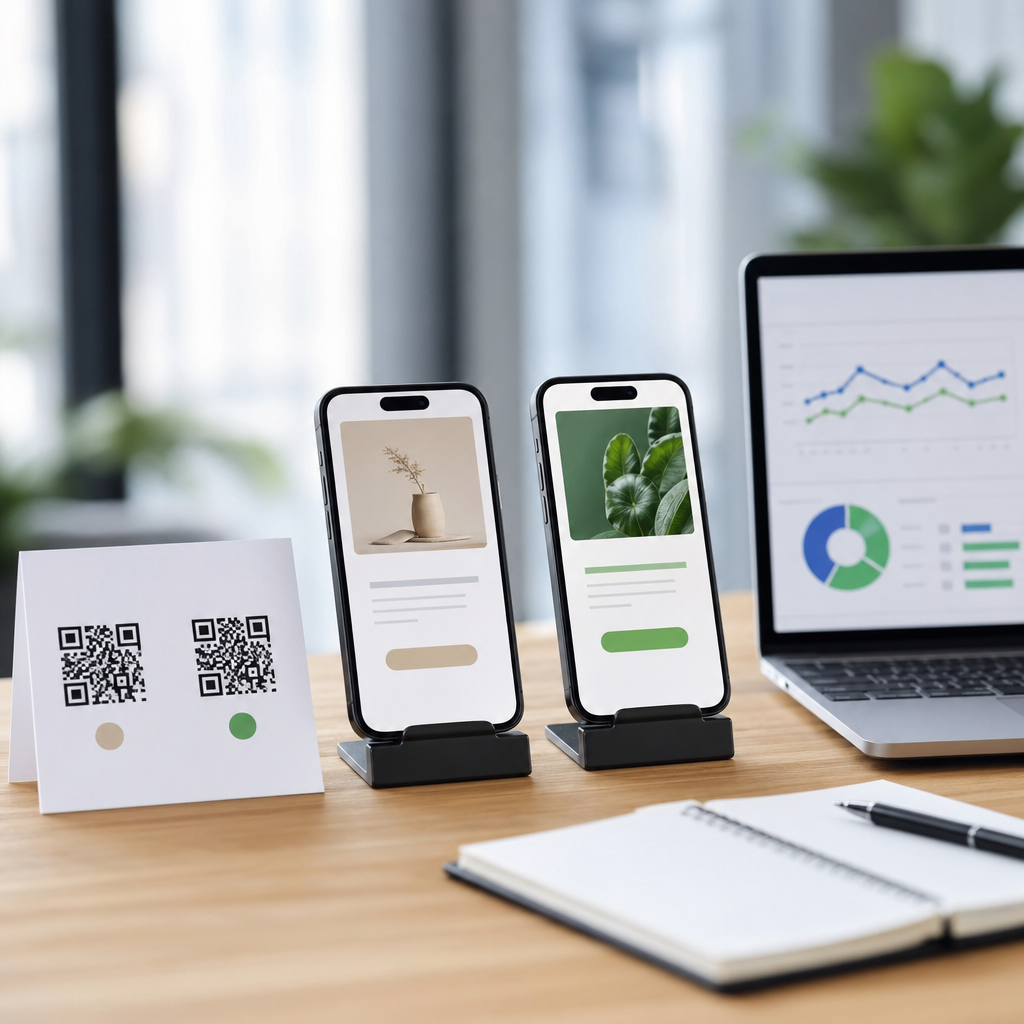
QR code campaigns do far more than count scans. When they are configured with analytics, location intelligence, and event tracking, they reveal how people move, what messages earn attention, and where friction reduces engagement. In practical terms, QR code data can tell you about your audience’s intent, timing, device habits, and geographic concentration. For marketers building print, packaging, retail, event, or out-of-home campaigns, this matters because the difference between a static code and a measurable code is the difference between guessing and learning.
Heatmaps and scan behavior sit at the center of that learning. A heatmap is a visual layer that shows where scan activity clusters by geography, venue, store zone, or campaign placement. Scan behavior is the broader pattern behind those scans: when they happened, which device was used, what source drove them, whether visitors bounced, and what they did next. I have used these reports to diagnose weak point-of-sale signage, compare foot traffic around event booths, and identify neighborhoods where a packaging promotion unexpectedly overperformed. The data never tells the whole story on its own, but it gives a reliable starting point for understanding audience behavior in the real world.
This hub article explains how to read QR code heatmaps, what scan behavior metrics actually mean, and how to connect those signals to audience insights you can act on. It also frames the questions searchers usually ask: What can a scan map reveal about customer interest? How accurate is location data? Which metrics matter most? What should you optimize first? Because this is the main resource within the wider QR code analytics, tracking, and optimization topic, it also clarifies where heatmap analysis fits alongside attribution, conversion tracking, and campaign testing. If you want to know not just how many people scanned, but who engaged, where they engaged, and why some placements outperform others, this is the foundation.
What QR code heatmaps actually show
A QR code heatmap shows concentrations of scan activity across a defined area. Depending on the platform, the map may display city-level clusters, exact venue zones, retail regions, or campaign distributions by market. Most QR analytics tools derive location from IP data, device signals, GPS permission, or first-party session context. That means the map usually reflects approximate user location at the time of scan, not necessarily a verified home address or identity. Used correctly, that is still extremely valuable. You can see whether airport signage drives more scans than downtown posters, whether an in-store endcap outperforms shelf talkers, or whether a regional direct mail drop created lift in the intended ZIP codes.
The most useful interpretation is comparative rather than absolute. For example, if scans cluster heavily around commuter stations during weekday mornings, that pattern says more than the raw count alone. It suggests your audience is interacting in transit and probably prefers fast-loading, mobile-first landing pages. If another cluster appears near suburban retail centers on weekends, the audience context changes. The same code can reach very different segments depending on where and when it is encountered. Heatmaps translate those clusters into operational decisions: reallocate media spend, move signage, localize offers, or create segmented follow-up campaigns.
Not every map is equally precise. City-level maps are enough for regional media planning, while store-level or booth-level heatmaps require tighter implementation, such as unique dynamic QR codes per placement. The more granular the code structure, the better the audience insight. In one retail rollout I managed, national scan totals looked healthy, but location heatmaps showed that only stores with codes placed at eye level near product comparison signage were generating repeat scans. The audience was not simply “interested in the product.” They were responding to a specific shopping moment where information reduced uncertainty.
Core scan behavior metrics that reveal audience intent
Scan count is the starting metric, not the destination. To understand audience intent, you need a cluster of behavioral signals. Timestamp data shows when engagement happens by hour and day. Device and operating system data indicate whether users are scanning from newer smartphones, which often correlates with smoother mobile experiences and broader digital adoption. Referrer context, campaign parameters, and destination events show whether a scan became a page view, form completion, coupon save, app install, or purchase. Session depth and bounce rate indicate whether the landing page fulfilled the expectation created by the physical code placement.
The strongest audience insight comes from reading these metrics together. A high scan rate with low on-page engagement often means curiosity without relevance or a mismatch between promise and destination. A moderate scan rate with strong conversion can indicate narrower but higher-intent audiences. Repeated scans from the same area may signal operational confusion, such as a code linking to an unclear menu, or healthy consideration, such as shoppers returning to compare features. Time-to-conversion matters too. Event attendees may scan immediately and convert later, while restaurant visitors often scan and act in seconds.
| Metric | What it indicates | How to use it |
|---|---|---|
| Scan volume by location | Where audience attention is concentrated | Shift placement and media budget toward high-response areas |
| Hour and day patterns | When people are most receptive | Match offers and staffing to peak scan periods |
| Device type and OS | Mobile capability and user context | Optimize landing pages for dominant devices |
| Bounce rate after scan | Expectation mismatch or weak landing experience | Rewrite copy, improve speed, and align the CTA |
| Repeat scans | Consideration, confusion, or multi-user exposure | Test clearer messaging and retarget engaged users |
| Conversion rate | Quality of traffic, not just quantity | Prioritize placements with the best downstream outcomes |
When teams ask which metric matters most, my answer is simple: the metric closest to your business objective matters most, but only in context. For awareness, reach and geographic spread matter. For lead generation, completion rate and qualified submissions matter. For retail activation, redemption or store visit lift matters. The audience story emerges when heatmaps, scan timing, and conversion behavior point in the same direction.
How heatmaps improve campaign placement and creative decisions
Heatmaps are especially effective for diagnosing placement quality. If a poster in a busy corridor gets impressions but almost no scans, the issue might be code size, glare, distance, or a weak call to action. If a table tent in a restaurant gets steady scans during lunch but almost none at dinner, the audience context may differ: lunch visitors want speed and coupons, while dinner guests may already be committed and less likely to browse. Heatmaps help you move from assumption to evidence.
They also sharpen creative testing. A QR code attached to “Scan for menu” behaves differently from one attached to “Scan for today’s free add-on.” The first serves utility; the second adds incentive. When two otherwise similar placements produce different heatmap intensity and downstream conversion, the message is usually the variable to test first. This is why experienced teams assign unique dynamic codes to each creative version, format, and placement. Without that structure, heatmaps blur performance and hide audience differences.
Outdoor campaigns benefit significantly from geographic scan analysis. Billboards, transit shelters, and window displays are exposed to broad traffic, but only a small subset of people can safely and realistically scan. If a map shows strong activity around pedestrian-heavy zones but weak activity near high-speed roads, the lesson is not that the brand failed. The lesson is that scanability depends on context. Audience attention and physical environment are inseparable in QR performance. The best optimization often involves shortening the destination path, increasing code contrast, and pairing the code with a clear value exchange that justifies the effort.
What audience segments you can infer from QR scan patterns
QR code analytics rarely identify a person by name unless the user submits information, signs in, or enters a first-party environment. However, scan behavior can still reveal meaningful audience segments. Frequent scans during commuting hours suggest time-constrained mobile users. High scan rates at trade shows often indicate research-oriented visitors comparing vendors. Strong engagement from premium device users can imply an audience comfortable with digital transactions. Recurring scans from college districts may point to younger, price-sensitive consumers, especially when offer redemptions skew toward discounts rather than content downloads.
Location and timing often outperform demographic guesses. A packaging QR code scanned at home in the evening can signal post-purchase engagement, support needs, or recipe exploration. The same code scanned in-store on a Saturday afternoon suggests pre-purchase evaluation. Audience intent changes with setting. That is why segmentation should start with behavior and context before broad demographic assumptions. In my work, the most valuable segmentation model combines placement, time, device, and post-scan action. It is more actionable than age or gender estimates because it tells you what the audience was trying to accomplish.
Behavioral segmentation also supports personalization. If repeat scanners from one region consistently access warranty information, you can test localized support pages or proactive service messaging. If event attendees scan sponsor signage but mostly watch videos instead of submitting forms, the audience may be in discovery mode and need softer follow-up. These are practical audience insights drawn from observable behavior, not speculative profiling.
Data quality, privacy, and the limits of interpretation
QR code data is useful, but it has limits that responsible teams should acknowledge. IP-based geolocation can be approximate, especially on mobile networks or VPN connections. Shared devices, forwarded links, and social resharing can introduce noise after the initial scan. A scan does not guarantee attention, understanding, or purchase intent. It only confirms that a user initiated interaction. This is why serious analysis pairs QR data with web analytics, CRM events, point-of-sale outcomes, and, where possible, store traffic or media exposure data.
Privacy compliance matters as well. If your destination page sets cookies, captures personal data, or enables remarketing, the experience must align with applicable consent and disclosure requirements. Regulations differ by jurisdiction, but the principle is consistent: collect only what you need, state the purpose clearly, and secure the data. Heatmaps are powerful precisely because they can summarize behavior without exposing identity. Aggregate patterns are often enough to improve campaigns while respecting user privacy.
Interpretation discipline is essential. If one neighborhood shows heavy scans, do not assume it contains your “best customers” without checking conversion quality and market size. If a code gets repeat scans, do not assume high interest before ruling out technical issues. In analytics reviews, I look for corroboration. A valid audience insight usually appears in more than one signal: scan clusters, session engagement, and a meaningful downstream action.
How to build a stronger heatmap and scan behavior program
Start with dynamic QR codes and a clean naming convention. Every placement, format, and audience hypothesis should have its own trackable code. Use UTM parameters or equivalent campaign tags so QR sessions align with your analytics platform, whether that is Google Analytics 4, Adobe Analytics, Matomo, or another stack. Define events that matter after the scan: scroll depth, video starts, form submits, coupon saves, purchases, or store locator clicks. Without post-scan events, you only know that scanning happened, not whether the interaction produced value.
Next, map your analysis cadence to campaign speed. For event activations, review heatmaps daily or even hourly. For packaging or in-store signage, weekly reviews may be enough. Build a simple operating rhythm: identify hotspots, compare them to placement photos and traffic assumptions, test one variable at a time, and document results. Teams that improve fastest usually keep their tests operationally simple. They change the headline, destination, incentive, or placement height—not everything at once.
As this hub for heatmaps and scan behavior, the key takeaway is straightforward. QR code data tells you about your audience by revealing where interaction happens, when it happens, what devices people use, and what they do after scanning. Heatmaps convert those signals into visible patterns, helping you spot concentration, context, and missed opportunities. Scan behavior metrics add the why: intent, friction, and conversion quality. Together, they turn QR codes from a convenience tool into a measurable audience intelligence channel.
The main benefit is better decisions grounded in observed behavior. Instead of relying on broad assumptions about who your audience is, you can evaluate real-world evidence from stores, packaging, events, mailers, and outdoor placements. That leads to smarter placement, more relevant creative, improved mobile journeys, and stronger campaign efficiency. It also creates a solid base for the rest of your QR code analytics and optimization work, including attribution, testing, and conversion measurement.
If you manage QR campaigns, treat heatmaps and scan behavior as a recurring practice, not a one-time report. Structure your codes carefully, review patterns consistently, and connect scan data to meaningful outcomes. Then use those findings to refine your next launch. The audience is already telling you what works. Your job is to capture the signal, interpret it correctly, and act on it.
Frequently Asked Questions
What kinds of audience insights can QR code data reveal beyond simple scan counts?
QR code data can reveal far more than whether a code was scanned. When a campaign uses dynamic QR codes, analytics integrations, and event tracking, the data begins to show patterns in audience behavior and intent. You can learn when people are most likely to engage, which locations generate the strongest response, what devices they use, and which landing page actions happen after the scan. That means you are not just measuring interest at the point of contact; you are measuring what people do once curiosity turns into action.
For example, scan timing can indicate whether your audience responds during work hours, commuting periods, weekends, or during specific event windows. Device data can show whether users are primarily on iPhone or Android, which matters for page design, form usability, and app deep-link strategies. Geographic data can highlight where interest is concentrated, whether that is by city, venue, store region, or campaign placement. If one retail location drives significantly more scans than another, the difference may reflect audience fit, stronger in-store messaging, or better placement visibility.
More advanced campaign setups can also connect scans to downstream actions such as page views, video plays, coupon claims, purchases, sign-ups, or map clicks. This helps marketers distinguish between passive scanners and high-intent users. In other words, QR code data can help answer not only who engaged, but how seriously they engaged, what motivated them, and where they dropped off. That is what makes QR analytics useful for understanding an audience rather than just counting interactions.
How does QR code data help marketers understand audience intent?
Audience intent becomes clearer when QR code campaigns are tied to the content behind the scan and the behavior that follows. A scan alone suggests interest, but the destination and the next actions reveal what kind of interest it is. If someone scans a code on product packaging and immediately views ingredients, pricing, or reviews, that signals evaluation behavior. If they scan a code at an event and complete a lead form, that points to stronger commercial intent. If they scan a poster, visit the landing page, and leave in seconds, that may indicate weak message alignment or unmet expectations.
The context of the QR code placement matters here. A code on a storefront window often captures different intent than a code on direct mail, a conference badge, a restaurant table tent, or a product box. Each environment creates its own expectations. By comparing scan rates and post-scan actions across placements, marketers can see which audience segments are browsing, which are researching, and which are ready to convert. This can influence everything from offer design to page content and call-to-action wording.
Intent can also be inferred from repeat interactions and depth of engagement. Multiple scans from the same campaign segment, longer session durations, product page exploration, or coupon saves all suggest stronger interest than a quick bounce. When event tracking is configured correctly, marketers can map the path from scan to action and identify where user motivation increases or weakens. That makes QR code data especially valuable for campaigns where the goal is not just awareness, but measurable movement toward purchase, registration, or another high-value conversion.
Can QR code analytics show where and when audience engagement is strongest?
Yes, and this is one of the most practical advantages of using QR codes with analytics. Time and location data can expose patterns that are difficult to detect through other offline channels. Marketers can identify peak scan hours, high-performing days, and top-performing physical placements. That information helps explain not just whether a campaign worked, but when and where it worked best.
If a code on transit signage performs best during morning and evening commute periods, that tells you something about audience routine and attention windows. If an in-store display sees scans mostly on weekends, that may reflect store traffic patterns or a more relaxed shopper mindset. If one city or neighborhood consistently outperforms another, that can indicate local market demand, stronger audience relevance, better environmental visibility, or more effective placement positioning. These are insights that help optimize future campaigns with much greater precision.
Location intelligence becomes especially useful in retail, events, packaging distribution, and out-of-home advertising. A brand can compare stores, venues, or regions to see where messaging resonates most. It can also detect friction. For instance, a placement may generate many scans but few conversions, suggesting the issue is not the physical asset but the landing experience. Another location may have fewer scans but higher completion rates, indicating a more qualified audience. Looking at timing and geography together gives marketers a much fuller picture of audience engagement than aggregate scan totals ever could.
What role do device and technical data play in understanding a QR code audience?
Device and technical data are important because they show how people actually experience your campaign after they scan. Knowing whether your audience is using iOS or Android, mobile web or app environments, different screen sizes, or specific browsers can directly affect campaign performance. If a landing page loads poorly on certain devices or a form is harder to complete on smaller screens, the problem may show up as audience drop-off when it is really a technical usability issue.
This type of data helps marketers separate message problems from experience problems. For example, if scan volume is healthy but conversion rates are weak on one device category, the audience may still be interested, but the post-scan journey may not be optimized. Slow page speed, awkward autofill behavior, broken redirects, or video incompatibility can all reduce engagement. Without device-level visibility, it is easy to misinterpret those failures as low audience interest rather than friction in execution.
Technical insights also support better segmentation and campaign planning. If a large share of scans comes from mobile users in low-attention environments, the destination should be short, fast, and easy to navigate. If many scanners are likely to use app-based journeys, deep linking or wallet integrations may improve results. In this way, device data does more than support troubleshooting. It helps marketers understand the habits, preferences, and usage conditions of their audience, which leads to smarter creative, stronger landing pages, and more accurate performance analysis.
How can businesses use QR code audience data to improve future campaigns?
The most effective use of QR code audience data is iterative improvement. Once marketers understand who is scanning, when they engage, where performance is strongest, and what actions they take next, they can make more informed decisions about campaign design. That could mean changing the placement of the code, rewriting the call to action, tailoring landing page content to audience intent, localizing offers by region, or simplifying the conversion path for mobile users.
For example, if analytics show that packaging scans lead to high product-information engagement but low purchase completion, the brand may need a better bridge from education to transaction. If event attendees scan at high volume but abandon long forms, reducing fields or offering a faster follow-up option may improve results. If one retail poster generates low scans despite strong foot traffic, the issue may be visibility, code size, incentive clarity, or placement height. QR code data helps pinpoint which variables should change first instead of relying on guesswork.
Over time, these insights become even more valuable when compared across campaigns. Marketers can identify recurring audience patterns, such as which environments produce the highest-intent scans, what times lead to the best conversion rates, and what messaging formats consistently earn attention. This turns QR codes from simple access tools into feedback mechanisms for offline and omnichannel strategy. Businesses that use the data well can improve targeting, reduce friction, allocate budget more effectively, and build campaigns that are increasingly aligned with how their audience behaves in the real world.