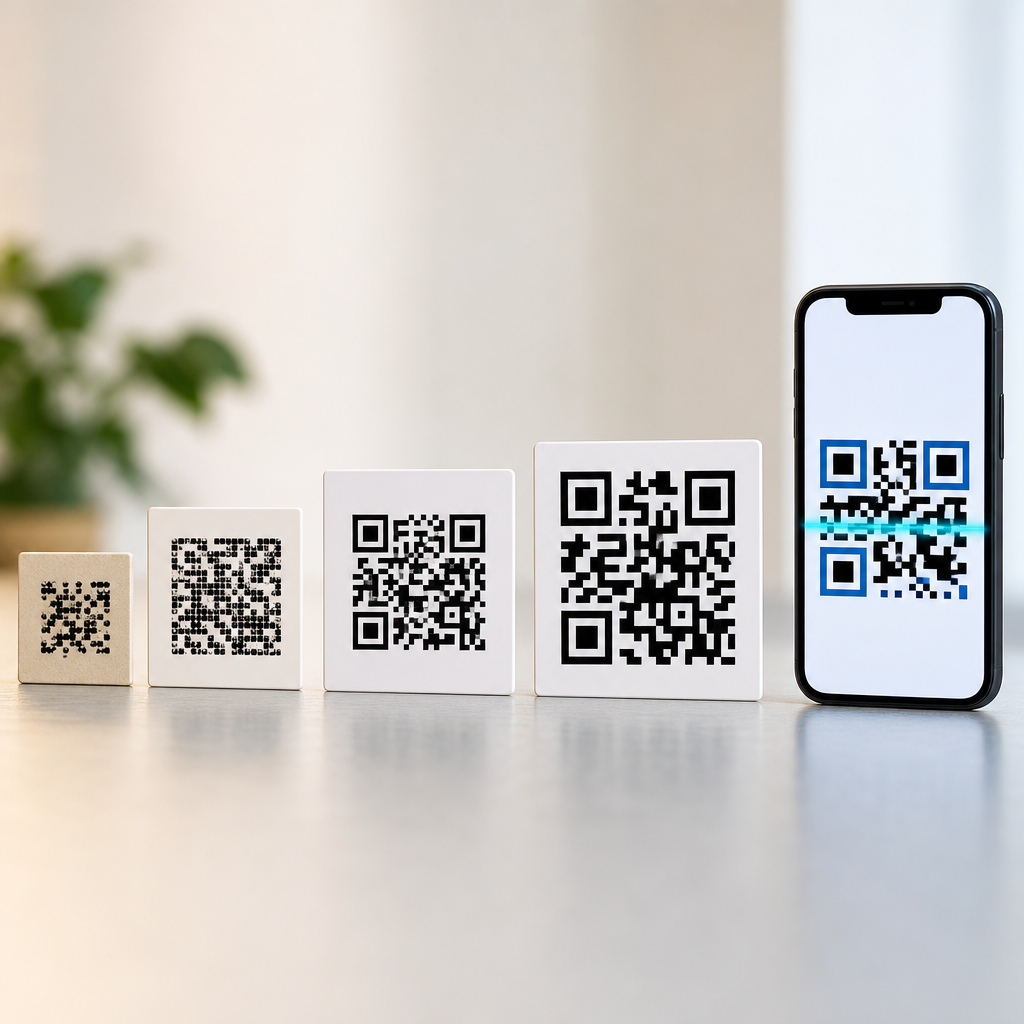

QR codes look simple on the surface, but the black-and-white square pattern that opens a website, shares contact details, or launches a payment screen is governed by precise technical rules. Those rules are the QR code standards: documented specifications that define how a code is structured, encoded, printed, scanned, and interpreted so that one symbol can work across phones, scanners, kiosks, and industrial systems. If you are building, buying, printing, or auditing QR codes, understanding the standards is not optional. It is the difference between a code that scans instantly in the real world and one that fails under poor lighting, on curved packaging, or after minor damage.
The term “QR code standards” usually refers first to ISO/IEC 18004, the international specification that defines QR Code symbology. In practice, the topic is broader. It includes the model versions, error correction levels, masking rules, data encoding modes, symbol sizes, quiet zone requirements, and print quality guidance that determine whether a code is interoperable. It also touches adjacent standards used in retail, logistics, healthcare, manufacturing, and payments, where QR codes appear alongside GS1 identifiers, traceability data, or sector-specific formats. I have worked with teams that assumed generating a code image was enough; in production, they discovered that symbol contrast, module size, and content syntax mattered just as much as the graphic itself.
This matters because QR codes are now infrastructure, not novelty. They power mobile payments, restaurant menus, product authentication, patient identification workflows, event ticketing, maintenance records, and direct-to-consumer packaging. A standards-based approach reduces failed scans, improves accessibility across devices, protects downstream integrations, and supports long-term readability. It also gives organizations a common language for procurement and quality control. When a printer, software vendor, packaging supplier, and operations manager all refer to the same standard, decisions become measurable. Instead of debating whether a code “looks big enough,” you can specify version, error correction level, X-dimension, minimum contrast, and testing method. That is how reliable QR deployments are built.
What ISO/IEC 18004 Actually Defines
ISO/IEC 18004 is the core international standard for QR Code. It defines the symbol architecture so any compliant encoder and decoder can work from the same blueprint. The standard covers the arrangement of finder patterns, alignment patterns, timing patterns, format information, version information, data codewords, and error correction codewords. It also defines how data is converted into bits, how those bits are placed into the symbol matrix, and how masking is applied to improve scan performance. Without this standard, QR codes from different software tools would not be reliably interoperable.
In plain terms, the standard answers the most important technical questions. How many squares can a code contain? How is a URL represented differently from numbers only? How much damage can a symbol tolerate and still scan? How does a scanner know the orientation of a code when the image is skewed or rotated? Those answers are embedded in the QR design itself. The three large finder patterns in the corners help a scanner locate the symbol quickly. Timing patterns establish the grid. Alignment patterns correct distortion, especially on larger versions or uneven surfaces.
The standard also distinguishes between versions. QR Code Model 2 is the form most people use today, with 40 possible versions ranging from 21 by 21 modules to 177 by 177 modules. As version number increases, capacity rises, but so does density, which can hurt real-world scanning if print size does not scale accordingly. Capacity also depends on data type and error correction level. Numeric content is more efficient than alphanumeric, which is more efficient than byte mode for many common payloads. That is why two codes containing the same number of visible characters may require different symbol sizes.
Core Technical Elements Behind a Scannable QR Code
To understand QR code technology and standards, start with modules, versions, and quiet zones. A module is the smallest black or white square in the symbol. The module size in print, often called X-dimension, strongly affects scannability. If modules are too small for the intended scan distance or camera quality, failure rates rise fast. The quiet zone is the blank margin around the code, typically four modules wide. It allows scanners to separate the symbol from surrounding graphics. In packaging reviews, missing quiet zones are one of the most common causes of avoidable scan issues.
Error correction is another critical element. QR codes use Reed-Solomon error correction, allowing a scanner to reconstruct data even if part of the symbol is damaged or obscured. The four standard levels are L, M, Q, and H, offering approximately 7 percent, 15 percent, 25 percent, and 30 percent restoration capacity respectively. Higher error correction improves resilience but reduces data capacity and can increase symbol complexity. In my experience, teams often default to H for safety, but that is not always wise. For small labels or long URLs, a lower level may produce a less dense code that scans better overall.
Masking is less visible but equally important. The encoder evaluates predefined mask patterns and chooses one that minimizes problematic visual arrangements such as large blocks of the same color or repeating patterns that can confuse decoders. Data modes matter too. Numeric mode is efficient for digits, alphanumeric handles a defined character set, byte mode supports broader text and URLs, and Kanji mode optimizes certain character encodings. Choosing the wrong mode can inflate symbol size unnecessarily. Good generators handle this automatically, but standards literacy helps when troubleshooting or comparing software outputs.
| Element | What the standard defines | Why it matters in practice |
|---|---|---|
| Version | Matrix size from 21×21 to 177×177 modules | Higher versions hold more data but require larger print sizes |
| Error correction | L, M, Q, H recovery levels | Improves damage tolerance but reduces capacity |
| Quiet zone | Blank border around the symbol | Helps scanners isolate the code from nearby graphics |
| Data mode | Numeric, alphanumeric, byte, Kanji, others | Affects efficiency, capacity, and final symbol density |
| Mask pattern | Rule-based pattern selection | Prevents visual structures that reduce decode reliability |
Beyond ISO: Related Standards and Industry Frameworks
ISO/IEC 18004 defines the symbology, but many real deployments rely on additional frameworks that govern what the code means, not just how it looks. A QR code can hold free-form text, yet enterprise systems usually need structured data. That is where organizations such as GS1 become important. GS1 standards define identifiers and syntax for trade items, batches, serial numbers, expiration dates, and other business data used in retail, healthcare, and supply chains. A QR symbol may be technically valid under ISO/IEC 18004 while still being unusable in a retail workflow if the payload does not follow the expected GS1 structure.
Retail provides a clear example. As brands move toward 2D codes on packaging, the scan event may need to serve both point-of-sale systems and consumer experiences. That requires alignment between the QR symbol standard and data standards that encode GTINs and other application identifiers. Healthcare is another example. Hospitals and pharmaceutical manufacturers often operate under strict labeling and traceability requirements. The QR image itself must scan, but the encoded content must also match regulated data formats and internal validation rules.
Payments introduce yet another layer. Several national and regional payment ecosystems use QR-based specifications that sit on top of the base symbol standard. EMVCo QR payment specifications are a well-known example. The QR code still relies on the underlying symbology rules, but payment payload syntax, merchant identifiers, amount formatting, and security logic follow separate specifications. The practical lesson is simple: QR code technology and standards are not one document. ISO defines the symbol. Industry frameworks define the payload, workflow, and compliance expectations around it.
Print Quality, Testing, and Why Good Codes Still Fail
A standards-compliant payload does not guarantee a standards-compliant result in the field. Print quality has enormous influence on scan reliability. I have seen perfectly encoded QR codes fail because flexographic printing caused dot gain, because matte laminate reduced contrast, or because artwork placed text too close to the quiet zone. Common print defects include blurred module edges, voids, inconsistent ink coverage, low contrast, and geometric distortion. On curved bottles and small blister packs, even slight warping can make a dense code difficult to decode.
This is why verification matters. Barcode verification tools from companies such as Axicon, REA, and Cognex can assess symbol quality using established grading methods. While much verification practice is discussed more broadly under 2D barcode quality standards, the principle is straightforward: test the code before mass production and under realistic conditions. That includes expected scan distance, lighting, substrate, camera type, and whether the code may be scratched, wrinkled, or partially hidden during use. A code that scans on a designer’s phone in bright office light is not a meaningful approval standard.
Color choices also matter. The safest approach remains dark modules on a light background with strong contrast, usually black on white. Inverted codes, metallic surfaces, glossy finishes, transparent packaging, and patterned backgrounds can all reduce readability. Logos inserted into the center of a code can work if symbol size and error correction are designed properly, but decorative customization is often overused. The standard allows for robust decoding, not unlimited branding freedom. Good practice is to simplify the design first, then validate with actual devices and formal verification if the code supports critical operations.
How to Choose the Right QR Standard Setup for Your Use Case
The right setup starts with the use case, not the generator. Ask four questions: what data must be encoded, where will the code be scanned, what surface will carry it, and what happens if the scan fails. A restaurant menu QR code viewed at arm’s length on a poster has very different requirements from a medical device label or a parts-tracking tag on a factory floor. For consumer marketing, a short URL with moderate error correction and a generous print size is often enough. For industrial labeling, durable substrates, controlled symbol density, and formal quality checks are more important than visual styling.
Keep payloads short whenever possible. Long dynamic URLs with tracking parameters can force a larger version and tighter modules. Using a short redirect domain often improves performance immediately. Match error correction to real risk. If the code may be partially covered, abraded, or printed on uneven material, Q or H can be justified. If print area is limited and damage risk is low, M may scan better because the symbol is simpler. Respect minimum size and quiet zone requirements, and remember that scan distance scales with module size, not just overall square dimensions.
Choose tools that expose meaningful settings and produce vector output for print. Many casual QR generators hide version control, mask selection, or encoding detail. For production work, test outputs from reputable platforms and inspect them before release. If your organization uses multiple articles within a QR Code Basics and Education hub, this is the page that should connect readers to deeper guidance on error correction, static versus dynamic QR codes, print size, GS1 QR implementation, and verification workflows. Standards knowledge is the foundation that makes all those topics coherent.
Common Misunderstandings About QR Code Standards
One common misunderstanding is that any square code with three corner boxes is “standard.” That is false. Visual similarity does not guarantee compliance. Another misconception is that higher error correction always means better performance. In reality, denser symbols can become harder to scan when printed small or viewed by lower-quality cameras. A third mistake is treating content and symbol as the same problem. You can have a perfectly valid QR symbol carrying poorly structured data, or excellent data in a poorly printed symbol. Both fail, just for different reasons.
People also assume modern smartphones can scan anything. Phone cameras are impressive, but they do not erase the laws of optics, contrast, geometry, and data density. Low light, motion blur, reflective packaging, and tiny modules still cause trouble. Finally, many teams think standards slow down creativity. The opposite is usually true. When the technical baseline is fixed, designers can customize within safe boundaries and operations teams can scale deployment confidently.
QR code standards exist to make one simple promise real: a code created in one place can be read accurately in another. ISO/IEC 18004 provides the core rules for symbol structure, encoding, masking, error correction, and interpretation. Around that foundation sit practical requirements for print quality, verification, payload syntax, and industry-specific frameworks such as GS1 and payment specifications. Together, these standards turn QR codes from graphics into dependable data carriers.
The key takeaway is that successful QR implementation is never just about generating an image. You need the right symbol version, appropriate error correction, sufficient quiet zone, sensible data length, strong contrast, and testing under real conditions. When organizations follow those principles, scan rates improve, user friction drops, and integrations become more reliable across packaging, signage, products, and operational labels. When they ignore them, failures usually appear after printing, distribution, or launch, when correction is expensive.
If you are building out a QR Code Basics and Education resource center, use this hub as the starting point for every deeper topic in QR Code Technology and Standards. Review your current codes, document your specifications, and test them with the devices and environments your audience actually uses. Standards are not abstract paperwork. They are the reason QR codes work consistently at scale.
Frequently Asked Questions
What are QR code standards, and why do they matter?
QR code standards are the formal technical rules that define how a QR code is built and how it should behave when it is created, printed, displayed, scanned, and decoded. They cover core elements such as symbol size, finder patterns, alignment patterns, timing patterns, data encoding modes, error correction levels, masking, quiet zones, and how the final data stream is interpreted by scanners and software. In practical terms, these standards make it possible for a QR code generated by one company to be read by many different devices, apps, and industrial scanners without custom configuration.
They matter because interoperability is the entire point of a machine-readable symbol. Without a shared standard, a QR code printed on packaging might scan correctly on one phone but fail on another, or a code used in manufacturing might be unreadable by warehouse equipment from a different vendor. Standards reduce that risk by giving everyone the same technical blueprint. They also support quality control, compliance, and procurement decisions. If you are buying a QR solution, validating print performance, or integrating codes into products, labels, tickets, menus, or payment flows, understanding the standard helps you judge whether the symbol is being produced correctly and whether it is likely to work reliably in the real world.
Which ISO standard applies to QR codes?
The primary ISO reference for the QR Code symbology is ISO/IEC 18004. This is the international specification that defines the structure and technical behavior of QR Codes, including the original model and the widely used modern implementation. It describes how data is encoded, how the symbol is organized, what patterns must appear in the matrix, and how scanners should interpret the information. When people refer to QR code standards in an engineering, procurement, or compliance context, ISO/IEC 18004 is usually the key document they mean.
That said, QR code use in the field often touches more than one standard. For example, print quality and verification may involve barcode quality standards and test methodologies, while industry-specific applications such as payments, healthcare, logistics, or direct part marking may introduce additional requirements layered on top of the core QR specification. So ISO/IEC 18004 explains what a QR code is and how it should be encoded, but a complete implementation may also need guidance on symbol quality, label durability, contrast, scanning environment, and application-specific data formats. In other words, the ISO standard is foundational, but not always the only document that matters.
What does the QR code standard actually define inside the symbol?
The standard defines much more than a grid of black and white squares. It specifies the fixed functional patterns that allow a scanner to detect and orient the code, including the three large finder patterns in the corners, alignment patterns used to correct distortion, timing patterns that help identify the grid spacing, and reserved format and version information areas. It also defines how the remaining modules are used to store data and error correction codewords, how data is split into blocks, and how masking is applied to improve scan reliability by avoiding problematic visual patterns.
Just as importantly, the standard explains how content is encoded. Different modes exist for numeric, alphanumeric, byte, and certain structured character sets, and the standard determines how that content is converted into bits. It also specifies symbol versions, which control the matrix size, and error correction levels, which affect resilience when a code is damaged, dirty, curved, or partially obscured. This is why two QR codes containing similar text can look very different: the final symbol depends on the chosen version, encoding mode, amount of data, and error correction settings. The standard ensures that, despite those differences, compliant readers can decode the symbol consistently.
Does following the ISO standard guarantee that every QR code will scan perfectly?
No. Compliance with the standard is essential, but it is not a guarantee of perfect real-world performance. The standard defines the correct structure and encoding of the symbol, but successful scanning also depends on how the code is produced and used. Factors such as print contrast, module size, surface material, lighting, glare, curvature, damage, motion blur, camera quality, scanning distance, and whether a proper quiet zone is preserved can all affect readability. A QR code can be technically valid according to the specification and still perform poorly if it is printed too small, distorted, low-contrast, or placed on a reflective or textured surface.
That is why experienced teams treat standards compliance as the starting point, not the finish line. Good implementation includes print testing, device testing, environmental testing, and where needed, formal symbol verification. For example, a code intended for consumer smartphone scans on product packaging may need different sizing and contrast choices than a code used on a factory part under harsh lighting. Dynamic content, branded designs, and logos added to the center of a QR code can also reduce margin for error if they are not carefully engineered. In short, the ISO standard provides the rules for a valid QR code, but usability still depends on design discipline and application-specific testing.
How can businesses use QR code standards when building, buying, printing, or auditing QR codes?
Businesses can use QR code standards as a practical checklist for decision-making and quality assurance. If you are building a generator or integrating QR creation into software, the standard helps ensure your encoding logic, error correction handling, masking, and symbol generation are correct. If you are buying a platform or printing service, the standard gives you a framework for asking better questions: Is the code generated according to ISO/IEC 18004? What error correction levels are supported? Are quiet zones preserved? Can the supplier document symbol quality and testing procedures? These questions help separate robust implementations from tools that merely produce something that looks like a QR code.
For printers, packaging teams, and auditors, standards provide an objective basis for review. You can inspect whether the symbol has sufficient size, contrast, and placement, whether the content format matches the intended use case, and whether the code performs reliably across the scanners your audience will actually use. In regulated or large-scale environments, standards also support consistency across vendors and production sites. Instead of relying on subjective visual approval, teams can anchor requirements in recognized technical specifications. That reduces failures, simplifies troubleshooting, and improves confidence that one symbol will work across phones, scanners, kiosks, POS systems, and industrial workflows.