ISO/IEC 18004 is the international standard that defines how QR Code symbols are structured, encoded, printed, and read. For anyone working in product packaging, industrial marking, retail operations, mobile experiences, or document workflows, that standard matters because it turns a simple square graphic into a globally interoperable data carrier. When I have audited QR Code deployments, the difference between a code that merely looks correct and one that performs reliably under real scanning conditions almost always comes back to whether the implementation follows the standard closely.
At a basic level, ISO and IEC are the two international bodies that publish technical standards used across industries. ISO/IEC 18004 is their joint specification for QR Code symbology. A symbology standard does not tell a brand what campaign URL to use or what landing page should open. Instead, it standardizes the symbol itself: module layout, finder patterns, alignment patterns, encoding modes, character sets, error correction behavior, masking, symbol versions, and the rules scanners use to interpret the mark. That is why a QR Code printed in Japan, serialized in Germany, or scanned in Brazil can still work the same way.
The topic matters now more than ever because QR Codes moved far beyond marketing. They are used in payments, transport tickets, traceability labels, medical devices, restaurant ordering, factory automation, and digital product passports. As adoption widened, so did the need for consistency. Without a formal standard, each vendor could create slightly different symbols and readers would fail unpredictably. ISO/IEC 18004 prevents that fragmentation by defining the technical baseline that software developers, printer manufacturers, camera app teams, and verification specialists can all align to.
This article is the hub for QR Code technology and standards, so it answers the central question directly: ISO/IEC 18004 standardizes the QR Code symbol specification and decoding rules, but not every business rule layered on top of it. Understanding that boundary is essential. Many teams assume the standard governs URL shorteners, analytics, branding practices, or payment message semantics. It does not. It governs the data carrier and the mechanics of reliable machine reading. Once you understand what is inside the standard and what sits outside it, you can make better decisions about generation, print quality, compliance, and long-term interoperability.
What ISO/IEC 18004 Covers in Practical Terms
In practical use, ISO/IEC 18004 standardizes the anatomy of a QR Code. It defines the matrix of dark and light modules, the three finder patterns in the corners, the timing patterns that help a reader establish the grid, the alignment patterns used in larger versions, the quiet zone around the symbol, and the format and version information fields. These are not decorative choices. They are the essential structures that let an imaging scanner or smartphone camera locate the symbol, correct perspective distortion, identify its size, and decode the data accurately.
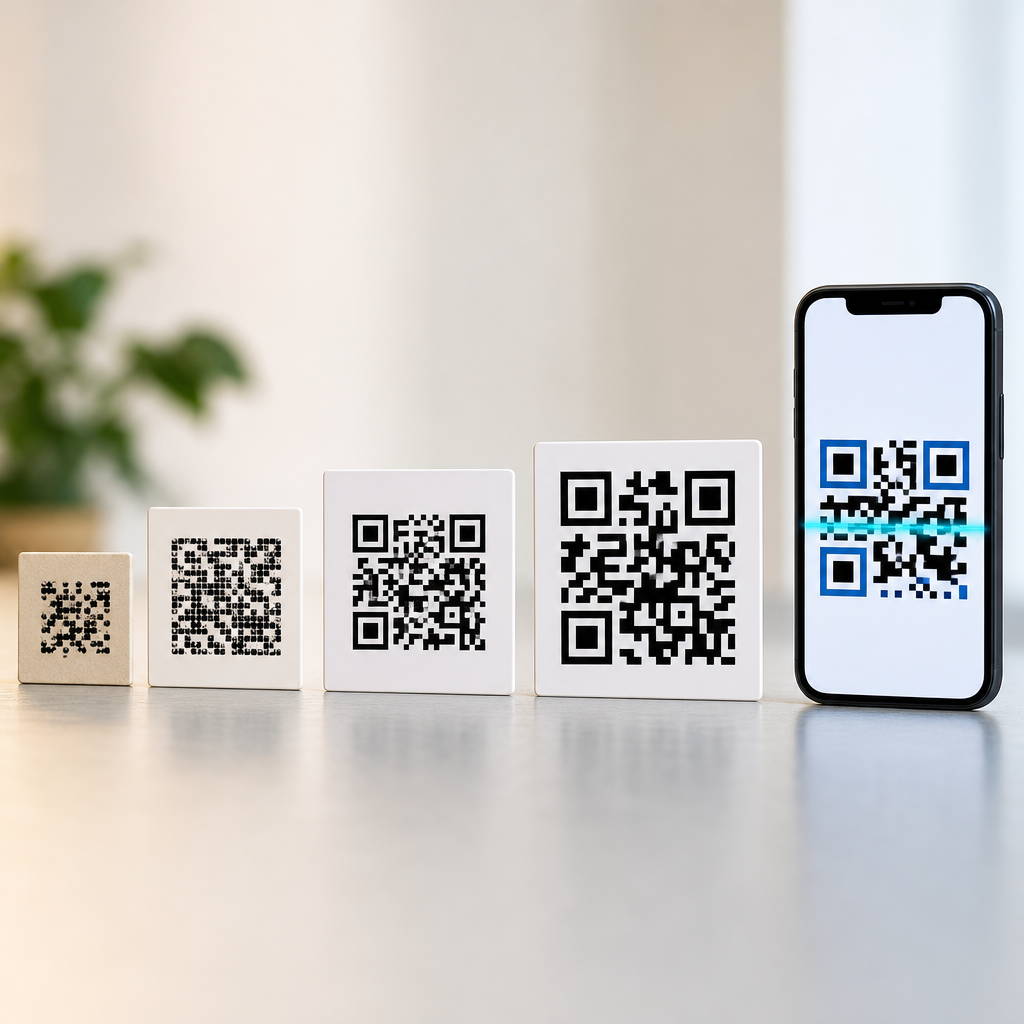
The standard also defines the available symbol sizes, called versions. Version 1 is a 21 by 21 module matrix, and each higher version adds four modules per side up to Version 40 at 177 by 177 modules. That size progression determines data capacity. Small symbols work well for short identifiers, while large symbols can carry substantially more content. In implementation reviews, I often remind teams that capacity is never just about maximum characters on paper. It depends on encoding mode, error correction level, print process, and expected scanning distance.
Another major area is data encoding. ISO/IEC 18004 specifies numeric, alphanumeric, byte, and Kanji modes, along with rules for switching between modes to use space efficiently. Numeric mode packs digits more efficiently than byte mode, while byte mode supports general binary data and common text encodings. The standard further defines how data is converted into codewords, how those codewords are arranged in the symbol, and how structured metadata is inserted so readers can reconstruct the original content consistently.
Error correction is equally central. QR Codes use Reed-Solomon error correction, a well-established method that allows the symbol to be decoded even when part of it is damaged, obscured, or poorly printed. The standard defines four levels commonly labeled L, M, Q, and H. Higher levels increase resilience but reduce net data capacity because more space is allocated to redundancy. In the field, this tradeoff is one of the first decisions that affects performance. A warehouse label exposed to abrasion may justify higher correction, while a clean on-screen code can often use a lower level efficiently.
What the Standard Does Not Standardize
Just as important as what ISO/IEC 18004 includes is what it does not include. The standard does not define the meaning of the payload in most business contexts. If a QR Code contains a URL, the standard does not govern the website destination, redirect behavior, analytics parameters, or campaign logic. If it contains payment data, the standard does not by itself define the payment application rules. Those meanings are usually handled by separate industry specifications, country payment schemes, app conventions, or internal enterprise systems.
It also does not prescribe branding treatments beyond the technical need to preserve decodability. Marketers often ask whether a center logo, custom colors, or artistic modifications are “allowed by the standard.” The real answer is nuanced. ISO/IEC 18004 defines the symbol mechanics readers depend on, but it does not certify every style variation used in design software. Once you alter contrast, quiet zone, module shapes, or finder pattern appearance, you are moving into implementation risk. A code may still scan, but reliability can drop sharply across devices, angles, and lighting conditions.
The standard does not replace print quality verification either. A QR Code can be encoded correctly according to ISO/IEC 18004 and still fail in production because of dot gain, low contrast, substrate texture, curved placement, glare, or insufficient size. Print quality assessment is typically addressed through separate barcode verification methodologies and quality standards, especially where regulated supply chains or high-volume scanning are involved. This distinction matters because many failed deployments are blamed on the symbology when the real issue is poor mark quality.
Finally, the standard does not tell organizations when to choose QR Code over Data Matrix, PDF417, or GS1 DataMatrix. That is a systems design decision based on capacity, marking method, scanner environment, available space, and industry requirements. ISO/IEC 18004 gives you the QR Code rulebook, not the broader architecture strategy. For a hub on QR Code technology and standards, that boundary is foundational because it keeps discussions about encoding, compliance, and business applications properly separated.
Core Technical Elements Every Team Should Understand
If your team creates or deploys QR Codes, several technical elements from ISO/IEC 18004 deserve close attention. The first is quiet zone. The quiet zone is the clear margin around the symbol that lets the reader distinguish the code from nearby text, borders, or graphics. In practice, insufficient quiet zone is one of the most common causes of intermittent scanning failure, especially on packaging where designers push codes too close to legal copy, dielines, or visual frames.
The second is masking. The standard defines mask patterns used to prevent problematic visual arrangements such as large areas of the same color or patterns that can confuse readers. During symbol generation, the encoder evaluates masks and selects one based on penalty rules. This is invisible to most users, but it is a critical part of making a QR Code robust. When I compare output from high-quality libraries with output from poorly maintained generators, masking quality often explains the difference in real-world scan rates.
The third is version selection and data fit. Teams often paste long URLs into a generator without considering the symbol size that results. As version increases, the module count rises, but if the printed area stays the same, each module becomes smaller. Tiny modules are harder to print and scan, especially on corrugated board, thermal labels, or direct part marks. A better approach is usually to shorten the payload, reduce unnecessary parameters, or use a redirect under your control so the symbol stays within a scan-friendly size.
| Element | What ISO/IEC 18004 Standardizes | Why It Matters in Real Use |
|---|---|---|
| Quiet zone | Clear margin around the symbol | Helps scanners isolate the code from surrounding graphics |
| Encoding modes | Numeric, alphanumeric, byte, and Kanji rules | Determines efficiency and total payload capacity |
| Error correction | Reed-Solomon with defined levels | Improves readability when the code is damaged or dirty |
| Versions | Symbol sizes from 21×21 to 177×177 modules | Affects capacity, print size, and scan reliability |
| Masking | Pattern selection rules to avoid decoding issues | Reduces visually ambiguous module layouts |
The fourth is character encoding and application compatibility. Although the symbol standard defines how data is encoded into modules, the receiving application still has to interpret the payload correctly. That is why plain text, URLs, and standardized message formats tend to be more interoperable than proprietary binary payloads. In hub content about QR Code technology and standards, this is a recurring lesson: compliance with the symbol standard is necessary, but interoperability also depends on disciplined payload design.
How QR Code Reading Works Across Devices and Environments
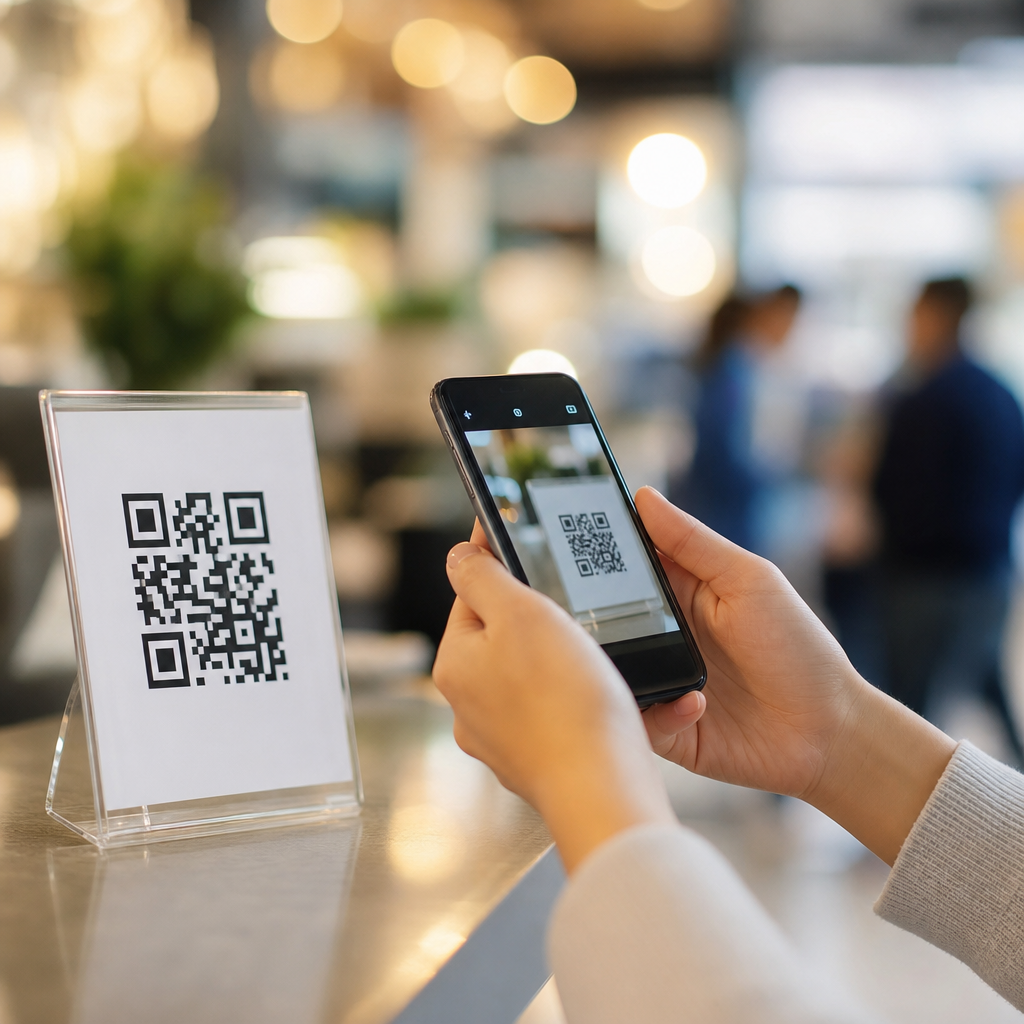
ISO/IEC 18004 matters because it gives decoder developers a common target. A scanner or camera system first detects the finder patterns, estimates orientation, maps the module grid, reads format information, applies error correction, and reconstructs the original message. Whether this happens inside a supermarket presentation scanner, a rugged handheld terminal, or a smartphone camera pipeline, the decoding logic depends on the structures defined in the standard. That consistency is the reason QR Codes remain readable across such varied hardware.
Real-world reading conditions, however, are never perfectly controlled. Smartphone cameras introduce rolling shutter behavior, autofocus delays, motion blur, and computational image processing. Industrial imagers face reflective films, damaged labels, and variable standoff distances. On curved bottles, module geometry can warp. On glossy posters behind glass, reflections can wipe out contrast. The standard cannot eliminate these environmental issues, but it gives engineers a stable symbol architecture that can be decoded despite many of them when the mark is produced responsibly.
A simple example is restaurant table ordering. The code may be generated correctly, but if it is printed too small, laminated with glare, and placed under warm low lighting, scan performance drops. By contrast, transport ticketing systems typically control contrast, size, and placement much more tightly, which is why they scan quickly at gates. In manufacturing, I have seen excellent results when teams pair standards-compliant encoding with verifier testing, matte substrates, and minimum module sizes matched to the printer resolution.
For this reason, reading performance should be treated as a system outcome, not merely a generator output. The standard defines the symbol rules; the device firmware, optics, illumination, app behavior, and print process determine whether users experience seamless scanning. Organizations that understand this distinction design better tests. They validate on multiple phone models, under indoor and outdoor light, at realistic distances, and after abrasion or handling. That operational discipline is where standards knowledge translates into dependable results.
Where ISO/IEC 18004 Fits Among Other QR and Barcode Standards
QR Code technology does not exist in isolation. ISO/IEC 18004 is the core symbology specification, but broader deployment often involves adjacent standards and frameworks. For instance, barcode quality evaluation is covered through other standards used with verifier equipment, while sector-specific data structures may come from GS1, payment networks, transport authorities, or healthcare regulators. This layered model is normal in automatic identification: one standard defines the carrier, while others define message semantics, quality grading, or process requirements.
That distinction becomes especially important in supply chain use. A brand may print a QR Code that is structurally valid under ISO/IEC 18004, yet if the encoded content is meant to support retail product identification, the data syntax might need to follow GS1 rules for application identifiers or web resolver patterns. Similarly, a national payment QR scheme may rely on the QR carrier but impose mandatory field order, merchant identifiers, checksum conventions, and customer app behaviors beyond the symbol specification itself.
Comparisons with Data Matrix are common because both are two-dimensional matrix codes. Data Matrix, standardized separately, often performs well in very small marking areas and direct part marking scenarios. QR Code tends to dominate consumer-facing interactions due to widespread smartphone support and visual familiarity. PDF417, another separate symbology, is stacked rather than matrix-based and is often used where larger payloads such as boarding passes or identity documents are needed. Choosing among them requires use-case analysis, not loyalty to a single symbol type.
As the hub page for QR Code technology and standards, this article should anchor that mental model clearly: ISO/IEC 18004 is the foundation for QR Code structure and decoding, but compliant deployment often intersects with print verification, industry payload rules, mobile UX, and data governance. Teams that treat the standard as one layer in a larger implementation stack avoid expensive mistakes and produce codes that remain readable, interoperable, and maintainable over time.
Implementation Best Practices for Reliable, Standards-Aligned QR Codes
The most effective way to use ISO/IEC 18004 is to treat it as the minimum technical baseline and then build disciplined implementation practices around it. Start by minimizing payload length. Shorter data usually means a lower symbol version, larger modules at a given print area, faster decoding, and better resilience. In many projects, replacing a long parameterized URL with a managed short domain improves both scan reliability and operational flexibility.
Next, protect contrast and quiet zone aggressively. Dark modules on a light background still outperform fashionable low-contrast palettes in almost every environment. If branding requires color, test actual luminance contrast, not just visual appeal on a design monitor. Keep decorative frames, logos, and callouts outside the quiet zone. If you embed a logo, compensate cautiously with suitable error correction and broad device testing, understanding that aesthetic gains may reduce margin for damage or poor lighting.
Generator choice matters as well. Use well-maintained libraries or enterprise platforms that implement the standard correctly and expose control over error correction, encoding mode, and output resolution. Then validate printed samples with scanning tests and, where operations depend on high read rates, verification tools. Common sense process controls also matter: specify minimum print dimensions, align module size with printer capability, avoid placing codes over seams or folds, and maintain ownership of the destination domain so links do not decay after campaigns end.
In summary, ISO/IEC 18004 standardizes the QR Code symbol so that data can be encoded and decoded consistently across software, devices, and countries. It defines structure, sizing, encoding modes, masking, error correction, and reading rules, while leaving business semantics, branding choices, and many quality-control issues to other specifications and implementation practices. That is the key takeaway for anyone learning QR Code basics or managing QR Code technology and standards at scale.
If you remember one principle, make it this: a QR Code is not just an image; it is a standardized machine-readable symbol whose reliability depends on both compliant encoding and disciplined real-world execution. Teams that understand the standard’s scope can choose better payloads, design more scannable layouts, test more intelligently, and integrate QR Codes into packaging, payments, documents, and industrial workflows with far fewer failures.
Use this hub as your starting point for deeper work on QR Code technology and standards, then audit your own codes against the practical issues covered here: payload length, version size, error correction, quiet zone, contrast, and scan environment. That simple review will improve performance quickly and give your QR deployments a stronger technical foundation.
Frequently Asked Questions
What does ISO/IEC 18004 actually standardize in a QR Code?
ISO/IEC 18004 standardizes the full technical framework that makes a QR Code work consistently across different printers, scanners, software platforms, and use cases. It defines the symbol structure itself, including the arrangement of modules, finder patterns, alignment patterns, timing patterns, quiet zones, version sizes, masking, format information, and error correction behavior. In practical terms, this means the standard tells developers and equipment manufacturers exactly how a QR Code must be built so that a symbol created in one environment can be read reliably in another.
It also standardizes how data is encoded into the symbol. That includes supported character modes, data conversion rules, codeword generation, error correction coding, and symbol placement rules. This is why QR Codes can carry numeric data, alphanumeric content, byte-based data, and other structured information in a predictable way. Without that shared specification, one generator might produce symbols that another reader could not interpret correctly.
Just as important, ISO/IEC 18004 supports interoperability in the real world. It does not merely describe what a QR Code looks like visually; it establishes the engineering rules that allow the symbol to survive printing variations, scanning angle changes, and partial damage while still being decoded. For packaging teams, industrial users, retailers, and document workflow managers, that is the difference between a symbol that appears valid and one that performs reliably at scale.
Does ISO/IEC 18004 regulate how a QR Code should be printed and marked?
Yes, but with an important distinction. ISO/IEC 18004 defines print-related and symbol-quality-relevant characteristics that affect whether the code can be read, but it is not simply a graphic design guide. The standard establishes requirements tied to symbol formation and readability, such as module arrangement, contrast-dependent interpretability, quiet zone needs, and the physical integrity of the encoded pattern. In other words, it provides the technical basis for producing a QR Code that scanners can decode consistently after it has been printed, etched, labeled, or otherwise applied.
In practice, this matters because a QR Code can fail even when it looks fine to the human eye. A code may be too small for the scanning environment, have insufficient contrast against the background, suffer from ink spread that closes module gaps, or be placed too close to other graphics so the quiet zone is compromised. ISO/IEC 18004 helps prevent these issues by standardizing the symbol design and data rules that underpin reliable reading, especially when combined with quality verification practices used in production environments.
For product packaging, direct part marking, and logistics labels, the printing or marking method has a direct effect on scanner performance. Thermal transfer, inkjet, laser marking, flexographic printing, and digital presses all introduce different risks. The value of the standard is that it gives everyone involved a common technical reference. Designers know the symbol cannot be treated like ordinary artwork, printers understand the structural tolerances that matter, and operations teams can align print quality with scan reliability instead of relying on visual approval alone.
Why is ISO/IEC 18004 so important for interoperability across industries and devices?
ISO/IEC 18004 is important because interoperability is the entire reason QR Codes became globally useful rather than remaining a niche proprietary marking method. The standard ensures that a symbol produced by one software library, printed by one vendor, and scanned by another device can still be decoded in a consistent way. That common technical language is what allows QR Codes to move seamlessly across retail, healthcare, manufacturing, ticketing, logistics, marketing, and document management workflows.
Without an international standard, every implementation could drift. Different developers might interpret data encoding differently, use incompatible masking behavior, apply inconsistent error correction logic, or mishandle symbol layout details. Even small inconsistencies at the encoding level would create failures in the field. ISO/IEC 18004 prevents that by defining the accepted structure and behavior of the symbol so that readers and generators can be built against the same rules.
For mobile experiences and consumer-facing applications, this interoperability is especially visible. A customer expects a QR Code on packaging, a poster, a receipt, or a PDF to scan instantly with a phone. In industrial and operational settings, the expectation is even stricter because scan failures can interrupt workflows, create traceability gaps, and increase labor costs. The standard reduces those risks by making QR Codes a dependable data carrier rather than just a recognizable visual pattern. That consistency is what enables large organizations to deploy QR Codes confidently across markets, hardware ecosystems, and supply chain partners.
Does ISO/IEC 18004 guarantee that every QR Code will scan reliably in the real world?
No. ISO/IEC 18004 provides the rules for creating a compliant QR Code, but compliance alone does not guarantee successful scanning in every real-world condition. A symbol can follow the standard and still perform poorly if the implementation ignores environment, substrate, size, contrast, placement, or expected scan distance. Real-world reliability depends on more than the encoding model; it depends on how the code is physically produced and how people or machines are expected to read it.
For example, a standards-compliant code printed too small on textured packaging may be difficult for a smartphone camera to resolve. A correctly encoded symbol placed on a reflective metal surface may create glare that interferes with decoding. A code with sufficient data capacity on paper may become marginal once a logo is inserted badly, the quiet zone is crowded by design elements, or the symbol is distorted by curved packaging. These are not failures of the standard itself. They are implementation and application failures that occur when technical compliance is mistaken for operational readiness.
That is why experienced teams combine ISO/IEC 18004 compliance with disciplined testing and quality verification. They evaluate scan performance under realistic lighting, distance, motion, and device conditions. They validate print quality in production, not just on proofs. They select symbol size based on use case instead of defaulting to the smallest possible footprint. In short, the standard gives you the correct blueprint, but reliable performance comes from applying that blueprint intelligently in the field.
How should businesses use ISO/IEC 18004 when deploying QR Codes on packaging, labels, and documents?
Businesses should treat ISO/IEC 18004 as the foundational technical standard for symbol creation and interoperability, then build deployment decisions on top of it. The first step is to ensure that the QR Code generation process uses standards-conformant software or systems that correctly handle encoding modes, error correction, masking, and symbol structure. This establishes a solid baseline so the generated symbol is valid before it ever reaches production artwork, labels, or digital documents.
The next step is application-specific design and testing. Teams should choose an appropriate symbol version and physical size based on the amount of data, the intended scan device, expected scan distance, and the substrate being used. They should preserve quiet zones, maintain strong contrast, avoid unnecessary graphic interference, and verify that the code remains readable after normal production variation. On documents, that may mean checking print and photocopy degradation. On retail packaging, it may mean testing under curved surfaces and store lighting. On industrial labels, it may mean accounting for abrasion, chemicals, or low-resolution marking methods.
Most importantly, businesses should use the standard as a shared reference across departments and suppliers. Packaging designers, prepress teams, printers, software vendors, scanner integrators, and operations leaders should all be working from the same technical expectations. That alignment reduces costly assumptions, such as believing that a code is acceptable because it looks clean on screen or because one test phone happened to scan it once. When ISO/IEC 18004 is used properly, it becomes the backbone of a disciplined QR Code program: compliant in structure, practical in production, and reliable in the hands of real users.