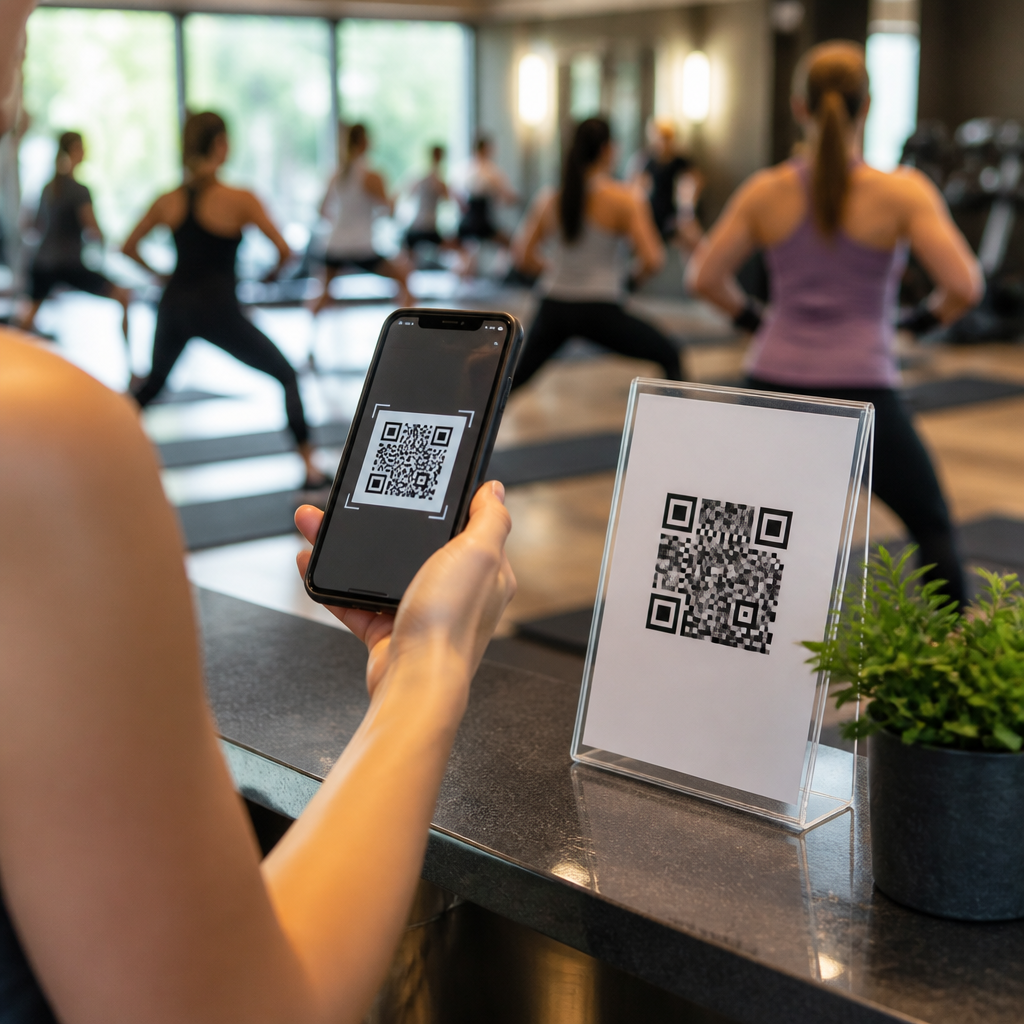
QR codes for fitness class bookings give gyms, studios, and independent instructors a fast way to turn interest into confirmed attendance. A QR code is a scannable image that opens a digital destination, such as a booking page, waiver, membership offer, or class timetable, when someone uses a smartphone camera. In fitness settings, that simple action removes friction at the moment motivation is highest: after a member sees a poster, finishes a class, visits the front desk, or clicks a social post. I have implemented these campaigns for boutique studios and multi-location clubs, and the pattern is consistent. The easier it is to reserve a spot, the more likely people are to book before intent fades.
For fitness operators, class bookings are not just administrative. They shape utilization, staffing, equipment planning, retention, and revenue. A packed spin class may justify adding sessions, while weak attendance in a midday circuit class may reveal a schedule problem rather than a demand problem. QR codes help surface those signals because they connect offline touchpoints to trackable digital actions. A flyer in the locker room can send members directly to Pilates registration. A sandwich board outside the gym can route walk-ins to a free trial booking form. A code on a trainer’s business card can open a personal training calendar with available intro sessions.
This matters because the fitness customer journey is fragmented across physical space and digital behavior. Prospects discover classes on windows, referral cards, Instagram Stories, local event booths, and email newsletters. Existing members see opportunities while checking in, cooling down, or waiting for class to start. If each of those moments requires typing a long URL, downloading an app, or asking staff for help, conversion drops. QR codes compress that path into one scan and one landing page. When paired with scheduling software such as Mindbody, Mariana Tek, Glofox, WellnessLiving, Zen Planner, or Acuity Scheduling, they can move a user from awareness to confirmed booking in under a minute.
As a sub-pillar topic within QR codes in marketing, fitness class bookings deserve focused treatment because they combine local marketing, recurring revenue, operational capacity, and customer experience. The best implementations are not generic. They are mapped to class type, audience, timing, and business goal. A HIIT studio trying to fill off-peak inventory needs a different QR strategy than a yoga studio managing waitlists or a health club promoting family classes. This hub explains where QR codes fit, how to deploy them across gym and studio touchpoints, what to measure, and how to avoid the common mistakes that waste scans and frustrate members.
How QR codes improve fitness class bookings
QR codes improve fitness class bookings by reducing steps between interest and action. In practical terms, they replace “remember this and sign up later” with “scan and reserve now.” That reduction in friction matters more in fitness than many operators expect. Booking behavior is highly impulse-driven. Someone leaving a successful bootcamp class is primed to book the next one. A parent watching a kids’ martial arts session may decide on the spot to enroll a sibling. A commuter passing a studio window may consider a lunchtime reformer class only if booking takes seconds.
There are four direct benefits. First, QR codes increase convenience. Modern smartphone cameras scan natively, so most users do not need a separate app. Second, they improve attribution. With dynamic QR codes and UTM parameters, a studio can tell whether bookings came from lobby signage, locker room mirrors, event flyers, or social graphics. Third, they support flexibility. One code can be updated to point to a seasonal schedule, a special landing page, or a specific instructor’s class without reprinting every asset. Fourth, they improve staff efficiency by reducing repetitive front-desk tasks such as answering “Where do I sign up?” or manually entering contact details for trial visitors.
When teams ask whether QR codes can really change booking rates, my answer is yes, but only when the destination matches the scan context. A code on a treadmill should not open a generic homepage. It should open a mobile-friendly page for upcoming conditioning classes, ideally prefiltered by location. A code on a yoga mat storage rack should not force users to log in, navigate four menu layers, and search a calendar. It should open the next available yoga sessions with a clear book button, pricing information, and cancellation policy. Relevance, not novelty, is what drives results.
Best use cases in gyms, studios, and fitness businesses
The strongest use cases are tied to high-intent moments. In-studio signage is one of the most reliable. Place QR codes at reception, changing rooms, water stations, equipment zones, and outside the class door. Each placement can promote a different action: reserve tomorrow’s class, join the waitlist, buy a class pack, or try a specialty workshop. Group fitness clubs often use post-class slides on wall displays that say, “Loved this session? Scan to book next week.” That works because the audience has already experienced the product.
Print marketing remains effective in local fitness. Flyers at apartment buildings, healthy cafes, physical therapy clinics, college campuses, and corporate offices can all carry QR codes to a free first class or intro assessment. For community outreach, event booths and charity races are excellent channels. A code on a banner can lead to an express signup page for a seven-day pass. Independent instructors also benefit. Codes on business cards, trainer folders, and branded towels can lead directly to private session calendars or small-group booking pages.
Digital-to-physical crossover is another valuable use case. Put QR codes in email newsletters, on Instagram highlight covers, in YouTube video end screens, and on digital screens inside the facility. Even though users can click links in digital channels, QR codes help when viewers switch devices or see content on shared displays. For example, a gym can run a lobby monitor announcing a new mobility class with a scannable code that opens the booking page on the member’s own phone.
| Placement | Best booking goal | Recommended destination |
|---|---|---|
| Front desk sign | Immediate class signup | Today and tomorrow schedule by location |
| Locker room poster | Upsell specialty classes | Landing page for yoga, Pilates, or recovery sessions |
| Street window decal | Capture walk-by traffic | Free trial booking form with map and times |
| Instructor handout | Repeat attendance | Specific instructor calendar or recurring series page |
| Event banner | Lead generation | Intro offer page tied to campaign tracking |
These examples work because they respect user intent. Someone at the front desk wants speed. Someone at a race expo may need more explanation, social proof, and pricing. Someone already in class may respond well to a recurring series page that lets them reserve multiple sessions at once. The hub principle for this subtopic is simple: every scan point should answer the next obvious question and remove the next obvious obstacle.
Creating a booking flow that converts
A high-performing booking flow starts with the landing page, not the QR code itself. The page must load quickly, display correctly on mobile, and present one primary action above the fold. For fitness class bookings, that primary action is usually “Book now,” “Claim free class,” or “See schedule.” Essential details should appear immediately: class type, duration, location, next available times, instructor, price, and whether equipment is provided. If special conditions apply, such as grip socks for reformer Pilates or gloves for boxing, include them before checkout to reduce drop-off and front-desk friction.
Keep forms short. For trial classes, ask only for information needed to complete the booking and follow up responsibly, typically first name, email, phone, and preferred class. Long forms depress conversions, especially when someone is standing in a hallway or on a sidewalk. If your scheduling platform supports autofill, Apple Pay, Google Pay, or saved member credentials, enable them. Every unnecessary field is a chance for abandonment.
Use dynamic QR codes rather than static ones for most campaigns. Dynamic codes let you change the destination later, track scans, and segment performance by source. Add UTM tags so analytics platforms can identify which poster, instructor, or campaign produced each visit and booking. On multi-location rollouts, create separate codes by branch instead of one national code. That preserves reporting quality and lets each club point to a localized timetable.
Trust signals matter. Include recognizable brand elements, current class photos, a short testimonial, and a plain-language cancellation policy. If users must create an account before they can view available times, expect lower conversion. Whenever possible, let people see inventory first. Waitlists should be easy to join and transparent about how notifications work. In my experience, the most effective flows behave like a concierge, not a maze: they show the next step clearly, anticipate common questions, and make booking feel low-risk.
Tracking performance and proving marketing value
Fitness marketers often struggle to prove which offline assets drive bookings. QR codes solve part of that problem when tracking is configured correctly. The basic metric set includes scans, unique scans, landing-page sessions, booking starts, completed bookings, cost per booking, and attendance rate after booking. For paid trial offers, add revenue per scan and return on ad spend. For member retention campaigns, look at repeat bookings within thirty or sixty days.
Do not stop at scan counts. A poster with many scans but few bookings may have strong creative and weak landing-page usability. A code with fewer scans but higher booking completion may be placed in a more qualified environment, such as inside the studio after class. Compare placements by conversion rate, not only volume. Also review device data, time of day, and class category. If evening scans from the street mostly convert to Saturday classes, that can influence scheduling and promotional timing.
Most scheduling tools offer native reporting, but the strongest setup combines platform data with analytics and CRM records. Track first touch, last touch, and assisted conversions where possible. If someone scans a code at a community event, joins the email list, and books three days later from a reminder email, that offline source still deserves credit. Many clubs miss this because they only report same-session bookings.
Operational outcomes should be measured too. Monitor no-show rates, class utilization, waitlist fill speed, and staff time saved at reception. If QR codes increase trial bookings but also increase no-shows, require confirmation reminders by SMS or email. If a code consistently fills low-attendance classes, that may be more valuable than simply driving gross bookings to already popular times. Good reporting ties marketing actions to operational improvement and revenue quality, not vanity metrics.
Common mistakes and implementation best practices
The most common mistake is linking a QR code to a generic homepage. In fitness, specificity wins. Send users to the exact class family, offer, location, or instructor they expect. Another frequent error is poor print execution. Codes that are too small, placed on reflective surfaces, or buried in visual clutter underperform. Use sufficient contrast, quiet space around the code, and a clear call to action such as “Scan to book your first class” or “Scan to reserve a bike.” Test from realistic distances before printing in volume.
Studios also underestimate mobile usability. Tiny calendars, forced app downloads, expired promotions, and slow pages kill momentum. Before launching, test the full flow on iPhone and Android, on strong Wi-Fi and cellular, and with both new and returning users. Staff should know exactly where each code leads so they can assist members confidently and flag issues early.
Compliance and privacy deserve attention. If you collect health-related information, waivers, or marketing consent, align forms with applicable regulations and disclose how data will be used. Avoid overpromising outcomes in promotional language. “Book your class” is clear; “Transform your body in seven days” invites trust issues and policy risks. Finally, maintain governance. Name your campaigns consistently, archive outdated codes, and review destinations weekly. A QR program is not a one-time design task. It is a living booking infrastructure that should be optimized like any other revenue channel.
QR codes for fitness class bookings work because they match how people actually decide to exercise: in short windows of motivation, across physical and digital touchpoints, with little patience for friction. When the scan leads to the right class, at the right location, with the right level of detail, bookings rise and staff workload falls. The best programs are intentional. They map every code to a clear audience, offer, and measurable business outcome.
For gyms and studios, this subtopic sits at the center of broader fitness marketing. It supports trial acquisition, repeat attendance, capacity management, upsells, and local attribution. It also creates a strong foundation for related pages in this hub, including QR codes for membership signups, personal training inquiries, event promotions, waivers, referrals, and retention campaigns. If you build the booking journey carefully, these adjacent use cases become easier to launch and easier to measure.
Start with three placements: your front desk, your street-facing window, and your post-class signage. Link each code to a mobile-optimized booking page, track conversions by source, and review results after two weeks. Small changes in access can produce meaningful gains in attendance and revenue. Make scanning the fastest path to booking, and your marketing will support operations instead of competing with them.
Frequently Asked Questions
How do QR codes improve fitness class bookings?
QR codes improve fitness class bookings by removing unnecessary steps between interest and action. Instead of asking someone to remember a website, search for a schedule, or download an app before they can reserve a spot, a QR code takes them directly to the exact booking page, class timetable, waiver, intro offer, or membership option you want them to see. That speed matters in fitness because decisions are often made in the moment. A potential attendee may notice a poster in your lobby, finish a class and want to come back, see a flyer at a local cafe, or tap a social post while feeling motivated. A quick scan lets them act immediately before that motivation fades.
For gyms, boutique studios, and independent instructors, QR codes also reduce friction across the entire booking journey. They can be placed on front-desk signage, studio mirrors, locker room posters, retail counters, windows, instructor business cards, event banners, or printed schedules. Each code can connect people to a specific action, such as booking a yoga class, joining a waitlist for spin, claiming a first-class discount, completing a health form, or purchasing a class pack. This creates a smoother customer experience and can increase conversions because people are not forced to navigate multiple pages or ask staff for help with basic booking tasks.
Operationally, QR codes can support better attendance by making access to information easier and more immediate. Members can scan to view live schedules, reserve recurring classes, read cancellation policies, or confirm what they need to bring. This helps reduce no-shows and confusion while saving staff time at the desk or on the phone. When used well, QR codes are not just a convenience tool. They become a direct bridge between marketing, member engagement, and confirmed class bookings.
Where should fitness businesses place QR codes to get the most bookings?
The best placement for QR codes is anywhere people naturally pause, notice your brand, and may be ready to commit to a class. Inside a gym or studio, high-value locations include the front desk, check-in area, mirrors near exits, locker rooms, water stations, bulletin boards, and retail counters. These are ideal because members are already engaged with your business and may be open to booking their next session while they are thinking about fitness. A sign that says “Scan to book your next class” or “Reserve your spot for tomorrow’s HIIT session” can turn passive interest into immediate action.
External placements can be equally effective, especially for attracting new customers. Window signage works well for foot traffic because passersby can scan even when the business is closed. Flyers at apartment complexes, health food stores, coffee shops, wellness clinics, schools, offices, and community boards can drive local interest. QR codes on event materials, pop-up fitness activations, race sponsorship booths, or instructor handouts can also lead directly to booking pages or introductory offers. The more relevant the location is to the audience and the call to action, the better the results tend to be.
Digital channels should not be overlooked either. QR codes can be included in email campaigns, social graphics, direct mail, onboarding materials, and referral cards. While a clickable link may be simpler in some digital environments, QR codes can still be useful when content is viewed on a different device, displayed in a studio, or shared in print-friendly campaigns. The most effective approach is to match each QR code to a clear purpose and audience segment. For example, one code can lead first-time visitors to a beginner package, while another takes active members to a live booking calendar. Good placement combined with a strong landing experience is what drives the highest booking volume.
What should a QR code link to for fitness class bookings?
A QR code should link to the most direct and relevant destination for the person scanning it. In many cases, that means a specific class booking page rather than a general homepage. If someone sees a promotion for Pilates at 6 p.m. on Tuesday, the ideal scan result is a page where they can immediately reserve that class or view closely related options. Every extra click creates more friction and increases the chance that the user abandons the process. The destination should feel like a continuation of the message that prompted the scan.
Depending on the goal of the campaign, a QR code can also link to a class schedule, instructor bio page, introductory trial offer, waiver form, waitlist signup, membership sales page, or package purchase screen. For example, a new-member campaign might direct people to a landing page featuring a free first class and a simple booking flow. A code displayed after class might lead current members to book the same session next week. An outdoor ad may work best when it points to a mobile-friendly timetable with location details and pricing. The destination should always match user intent and business objective.
It is also important to make sure the linked page is optimized for mobile devices, loads quickly, and keeps the number of required fields to a minimum. Fitness consumers often scan while standing, walking out the door, or multitasking, so a slow or cluttered page can cost bookings fast. Include clear class descriptions, date and time options, instructor name, level information, and a prominent call to action. If payment or account creation is required, the process should be as streamlined as possible. The strongest QR code strategy combines a precise destination with a clean mobile booking experience that makes registering for a class feel effortless.
Are QR codes a good fit for both new leads and existing members?
Yes, QR codes work well for both new leads and existing members, but they should be used differently for each audience. For new leads, the main job of a QR code is to reduce hesitation and create a simple first step. Someone who has never visited your gym or studio may need an introductory offer, a beginner-friendly class list, location details, testimonials, or a quick explanation of what to expect. A QR code aimed at prospects should usually send them to a welcoming landing page that helps them feel confident and makes the first booking easy.
For existing members, QR codes are often most effective when they support convenience and repeat behavior. These users already know your brand, so they do not need as much persuasion. Instead, they benefit from fast access to practical actions like booking the next session, joining a waitlist, viewing schedule updates, renewing a package, checking trainer availability, or completing required forms. A code posted near the studio exit that says “Scan to reserve next week’s class” can be highly effective because it reaches members right after a positive experience, when intent is strongest.
The key is segmentation. Not every scanner should land on the same page. A business can create separate QR codes for beginners, drop-in visitors, active members, personal training clients, and specialty workshop attendees. This makes the experience more relevant and can improve conversion rates because each audience gets the information they need most. In practice, QR codes become more than a generic shortcut. They serve as tailored entry points into different parts of the customer journey, from first discovery to regular weekly attendance.
How can gyms and studios track whether QR codes are actually increasing class bookings?
Gyms and studios can track QR code performance by connecting each code to a distinct campaign, location, or booking goal and then measuring what happens after the scan. At a basic level, many QR code platforms provide scan analytics such as total scans, unique scans, time of day, device type, and approximate location. That data helps you see which posters, flyers, windows, or social promotions generate the most engagement. However, scan volume alone does not tell the full story. What matters most is whether scans lead to completed bookings, package purchases, or new member signups.
To measure true results, businesses should use trackable booking links, UTM parameters, dedicated landing pages, and analytics integrations with their scheduling or website platform. For example, you might create one QR code for the front desk, another for a neighborhood flyer, and another for an Instagram promotion. Each code would send users to a tailored page or tagged URL, allowing you to compare how many people scanned, how many started the booking process, and how many actually confirmed a class. This makes it possible to identify your highest-performing placements and offers.
It is also smart to evaluate performance alongside business outcomes such as reduced front-desk questions, faster class fill rates, increased repeat attendance, lower drop-off during registration, and stronger conversion from trial classes to paid memberships. Over time, these insights can inform better decisions about signage, promotions, class scheduling, and customer flow. If a QR code on a post-workout sign consistently drives next-week bookings, that is valuable operational intelligence. If a flyer code gets many scans but few conversions, the landing page or offer may need improvement. The best tracking approach treats QR codes as measurable booking channels, not just static images, so you can continuously refine what is working and grow attendance more predictably.