Gym retention is the clearest predictor of long-term revenue, and QR codes have become one of the simplest tools for improving it at scale. In fitness, retention means keeping members active, satisfied, and enrolled month after month rather than losing them after the first burst of motivation. A QR code is a scannable image that opens a digital action instantly, such as a workout video, class booking page, feedback form, training plan, or renewal offer. When used well, QR codes reduce friction at the moments that determine whether a member feels supported or ignored. I have seen this in club operations repeatedly: members rarely quit because scanning a code is exciting; they stay because it removes small frustrations that quietly damage habit formation.
That distinction matters because the gym business runs on recurring behavior. Industry reports from IHRSA and large club operators consistently show that many new members stop visiting regularly within the first few months. Once visit frequency drops, cancellation risk rises sharply. Most retention problems are operational before they are motivational: confusing onboarding, forgotten programs, crowded front desks, hard-to-book classes, poor communication, and limited visibility into what each member needs next. QR codes address those problems by connecting physical spaces to timely digital guidance exactly where decisions happen. On a treadmill, near a squat rack, at reception, in the locker room, on a juice bar menu, or inside a post-join email, the code becomes a low-cost bridge between intent and action.
For gyms, health clubs, boutique studios, and personal training facilities, this topic sits at the intersection of member experience, marketing automation, and operational efficiency. A retention-focused QR strategy is not just about posting codes on walls. It requires mapping member journeys, segmenting audiences, tracking scans, and linking each code to a measurable outcome such as first-session completion, app adoption, class attendance, program adherence, referral activity, or successful renewal. This article serves as the central guide to industry-specific use cases for fitness and gyms, showing how QR codes improve gym retention rates across onboarding, training, engagement, service recovery, and loyalty while supporting wider QR codes in marketing efforts.
Why retention improves when access becomes frictionless
Members stay when the next helpful step is obvious. In practice, that means reducing cognitive load and removing extra clicks. A new member standing in front of unfamiliar machines does not want to search a website, download a PDF, or ask for help in a crowded room. A QR code placed on equipment or in a welcome pack can open a thirty-second form tutorial, a beginner workout, or a trainer booking page immediately. That micro-convenience is not trivial. Habit research and club analytics both support the same principle: the easier it is to complete the next session successfully, the more likely the routine will stick.
I have worked with gyms where the biggest retention lift came from very basic changes. One club added QR codes to its induction route so members could scan at each station for setup instructions, safety cues, and progression options. Another connected codes in locker areas to a simple “plan today’s workout” page with beginner, fat-loss, strength, and mobility pathways. In both cases, front-desk questions fell, first-month training compliance improved, and trainers spent more time coaching rather than repeating directions. QR codes work because they solve a timing problem: they deliver the right information in the exact place and moment a member needs it.
Using QR codes to strengthen onboarding and the first 90 days
The first 90 days are the danger zone for churn. Members join with strong intent but weak routines, and many never develop confidence with the gym floor, class timetable, or mobile app. QR codes can organize onboarding into a guided sequence. A welcome email can include a code for account setup and app download. Reception signage can link to a digital checklist covering PAR-Q completion, facility tour, locker instructions, Wi-Fi access, and first class booking. Equipment-area codes can unlock beginner circuits, while a code on the membership card sleeve can connect members to support channels and FAQs.
Effective onboarding QR flows answer practical questions fast: Where do I start? How do I use this machine? Which class suits beginners? What should I do if I miss a week? Because these are recurring concerns, the content behind each code should be concise, mobile-first, and role-specific. New lifters need form and confidence. Older adults may need lower-impact pathways and reassurance. Busy professionals often need short workouts and easy rescheduling. Studios can also add post-visit QR check-ins asking members to rate their first session and request a coach callback if confidence is low. Early intervention prevents silent dropout.
Equipment education, programming, and confidence building
One overlooked cause of cancellation is embarrassment. Members who feel unsure on the gym floor often reduce visits before they quit completely. QR codes help by turning every zone into a self-serve coaching environment. On selectorized machines, a code can open a short demonstration with seat height guidance, range-of-motion cues, common mistakes, and contraindications. In free-weight areas, a code can link to progressive plans for novice, intermediate, and advanced users. On cardio equipment, codes can offer interval templates, heart-rate-zone explanations, and links to virtual challenges.
Confidence grows when information is specific and contextual. Instead of generic PDFs, the best gyms use QR destinations tailored to the exact machine or training goal. For example, a code beside kettlebells might lead to a mobility warm-up, two beginner movements, and one ten-minute conditioning circuit. A code near cable stations can offer upper-body, lower-body, or rehab-friendly options depending on what the member selects. This matters because adherence rises when members do not have to invent the workout themselves. People who know exactly what to do are far more likely to return within forty-eight hours than those who wander, hesitate, and leave feeling unproductive.
QR codes in classes, coaching, and community engagement
Classes are retention engines because they create appointment-based behavior and social accountability. QR codes make classes easier to discover, book, attend, and repeat. A poster in reception can link directly to the live timetable. A code outside the studio door can provide class descriptions, intensity levels, equipment needed, and coach bios. After class, another code can open stretch routines, recovery advice, and a one-tap rebooking flow. Each of these touchpoints shortens the path from a positive experience to the next commitment.
Coaches can also use QR codes to deepen the relationship beyond the session itself. Personal trainers often hand over paper programs that quickly disappear. Replacing them with scannable links to video libraries, progress trackers, nutrition guidance, and messaging forms increases follow-through. Boutique studios can place codes on mirrors or benches to invite members into challenges, WhatsApp communities, or referral campaigns. The social layer is essential. Members who feel recognized by coaches and connected to peers have more reasons to stay, even when motivation dips. QR codes do not create community on their own, but they lower the barriers to joining it.
Where gyms should place QR codes and what they should measure
Placement and measurement determine whether QR codes improve retention or become ignored decoration. Codes must appear where intent already exists and where the next action is unambiguous. Good placements include front desk counters, tour routes, welcome packs, machine decals, group fitness doors, locker mirrors, smoothie bars, printed programs, membership renewal notices, and post-workout screens in the app. Every code should have one job. A code that asks members to choose among eight unrelated actions usually underperforms a code that says “Book your next class,” “Watch this machine demo,” or “Freeze membership for travel.”
Tracking is equally important. Dynamic QR platforms such as Bitly, Beaconstac, QR Code Generator Pro, or Uniqode let operators update destinations without reprinting and monitor scan volume by location, time, and campaign. Those scan metrics should be paired with gym software data from systems such as Mindbody, Glofox, ABC Fitness, Virtuagym, or Zen Planner. The goal is not vanity scans but behavior change. Operators should compare scans against first-month visit frequency, class rebook rate, PT attachment rate, app activation, challenge participation, support tickets, and ninety-day retention. If a code gets many scans but few completions, the landing page or offer likely needs work.
| Use case | Best placement | Primary retention metric | Common mistake |
|---|---|---|---|
| Beginner workout guide | Welcome pack, induction area | First 30-day visit frequency | Too much text on the landing page |
| Machine tutorial video | Specific equipment decals | Gym floor confidence, repeat visits | Generic video not matched to machine |
| Class timetable and booking | Reception, studio entrance | Class attendance and rebooking rate | Linking to a homepage instead of live booking |
| Trainer follow-up plan | Printed program card, PT summary email | Program adherence, PT renewal | No progress tracking or contact option |
| Feedback and recovery workflow | Exit area, locker room | Service recovery speed, cancellation prevention | Asking for long surveys after every visit |
Feedback loops, renewals, and win-back campaigns
Retention does not depend only on great sessions. It also depends on how quickly a gym notices dissatisfaction and responds before cancellation. QR codes create lightweight feedback loops that members will actually use. A code near the exit can open a two-question pulse survey. A code in the locker room can let members report broken equipment, cleanliness issues, or overcrowding in seconds. A code in follow-up emails can ask lapsed attendees why visits have dropped and route them to a relevant solution, such as a trainer consultation, schedule adjustment, or lower-commitment plan.
Renewals and win-back campaigns also benefit from QR simplicity. Instead of sending members to a general website, a renewal notice can include a personalized code linking directly to plan options, loyalty rewards, or a consultation slot. For frozen or inactive members, postcards, SMS, and email can carry codes tied to reactivation offers like a seven-day restart plan, body composition review, or complimentary technique session. The key is matching the message to the reason for disengagement. Price-sensitive members may respond to flexible billing; anxious beginners may need guided support; former class regulars may come back for challenge-based programming and community.
Implementation standards, privacy, and common mistakes
Good execution requires standards. QR codes should open fast, land on mobile-optimized pages, and use clear calls to action. Pages should load in under three seconds on cellular data, because many gym spaces have weak Wi-Fi. Signage should explain the benefit of scanning, not just display a code. Staff should know what each code does and mention it during tours and coaching interactions. Creative consistency also matters. Branded frames, plain language, and location-specific labels increase trust and scan rates.
There are limits and tradeoffs. Not every member wants to scan codes constantly, and older demographics may need staff guidance at first. Privacy must be respected, especially if scans connect to health data, attendance records, or personalized recommendations. Gyms should use transparent consent practices and secure platforms that align with regulations and internal data policies. The biggest mistake is treating QR codes as a gimmick instead of part of a retention system. If the destination is poor, the process is clumsy, or no one follows up on the resulting data, the code adds little value. When integrated into onboarding, coaching, communication, and renewal workflows, however, QR codes improve gym retention rates in measurable, practical ways.
QR codes improve gym retention rates because they remove friction from the moments that shape member behavior. They help new members start confidently, guide existing members toward consistent training, make classes easier to repeat, and create faster feedback and recovery loops when something goes wrong. In a fitness environment, retention is built through many small wins: one less confusing machine, one faster booking action, one timely coach follow-up, one easier renewal path. QR codes support those wins across the full member journey.
For gym operators, the main benefit is not novelty. It is operational clarity. Each code can connect a physical touchpoint to a measurable digital action, giving teams a practical way to improve onboarding, increase engagement, and reduce avoidable churn. The best programs are focused, trackable, and member-centered. They use dynamic destinations, concise mobile content, and clear calls to action tied to real retention metrics.
If you manage a gym, studio, or health club, start with three high-impact placements: onboarding, equipment education, and class rebooking. Track scan-to-action performance for ninety days, compare it against visit frequency and cancellations, and expand what proves effective. That approach turns QR codes from simple marketing assets into a reliable retention system for fitness businesses.
Frequently Asked Questions
How do QR codes actually help improve gym retention rates?
QR codes improve gym retention by removing small points of friction that often lead to member drop-off over time. In most gyms, members do not cancel only because of one major issue. More often, they gradually disengage because booking classes feels inconvenient, equipment instructions are unclear, workout plans are hard to access, or support is not available at the exact moment they need it. A QR code solves this by giving members an instant path to the next action with a simple scan. Instead of asking someone to search a website, download materials, wait at the front desk, or remember a login, the gym can place a QR code wherever help is needed and connect that member immediately to a class schedule, technique video, onboarding checklist, personal training offer, nutrition guide, or feedback form.
This matters for retention because consistency is driven by convenience and momentum. When members can get answers quickly, feel more confident using the facility, and easily take action during moments of motivation, they are more likely to return. QR codes also support stronger engagement after the initial sign-up period, which is when many gyms lose members. A new member who scans a code to access a beginner workout, reserve their next session, or join a challenge is being guided into repeat behavior. That repeat behavior is the foundation of retention. In practical terms, QR codes help gyms keep members active, supported, and connected to the value of their membership, which directly improves the chances they stay enrolled month after month.
Where should gyms place QR codes to get the best retention results?
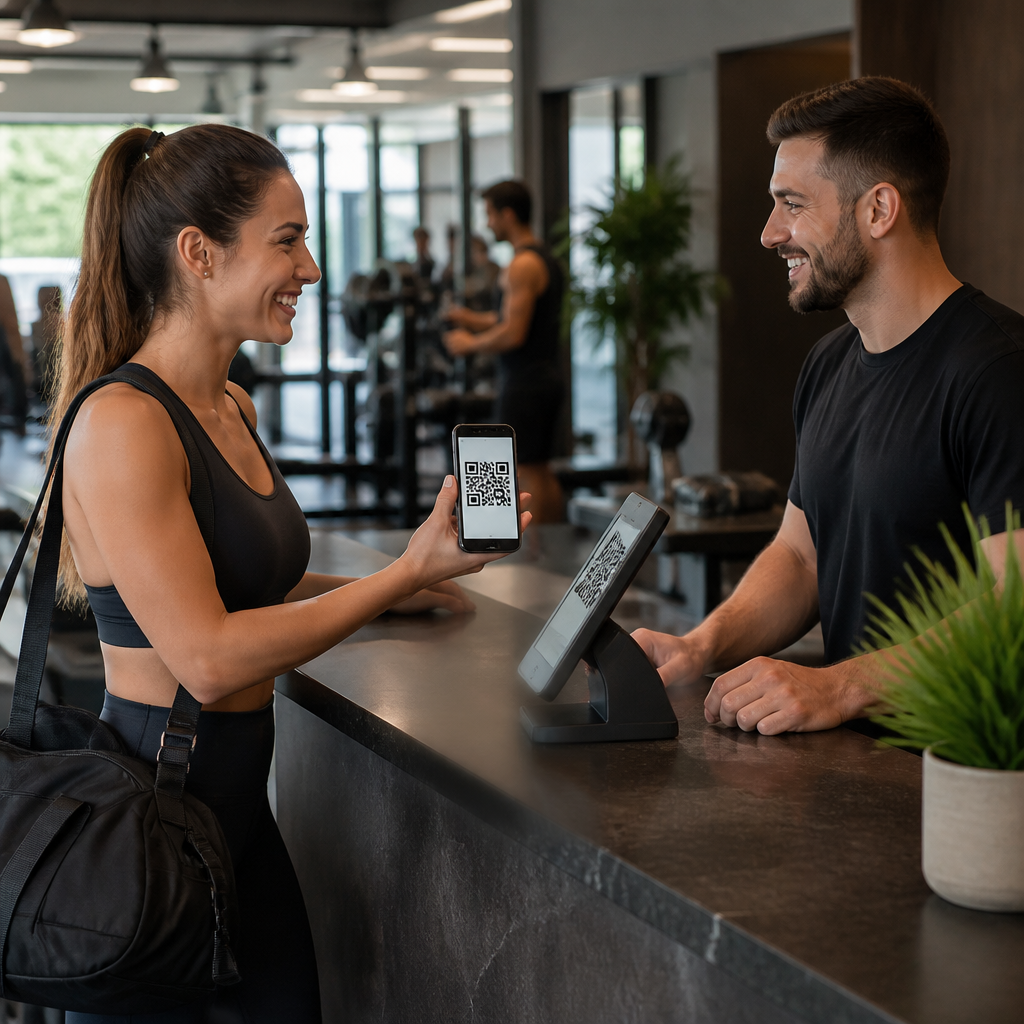
The most effective QR code placement is anywhere members naturally pause, make decisions, or need guidance. High-impact locations include the front desk, check-in area, locker rooms, cardio zones, weight areas, studio entrances, recovery spaces, and member welcome materials. At the front desk, a QR code can link to a getting-started page, app download, or class calendar. Near equipment, it can open short instructional videos, machine setup tips, or sample workouts for different fitness levels. Outside a group fitness studio, it can lead directly to class registration or a waitlist, making it easier for members to commit to another visit before they leave the building.
Placement should also match specific retention goals. If the goal is better onboarding, add QR codes to welcome signs, orientation packets, and follow-up emails so new members can access training plans, facility tours, and staff introductions without delay. If the goal is to increase member accountability, place codes in workout zones that link to progress tracking tools, challenge sign-ups, or coaching support. If the goal is to reduce silent dissatisfaction, use QR codes in locker rooms or exit areas that open quick feedback forms. The best retention results come when QR codes are not treated as generic decorations but as strategic touchpoints designed around the member journey. Each scan should make the next step easier, clearer, and more immediate.
What types of QR code content are most effective for keeping gym members engaged?
The best QR code content is practical, immediate, and closely tied to member success. For retention, effective content usually falls into a few categories: onboarding support, workout guidance, scheduling convenience, accountability tools, community participation, and renewal prompts. Onboarding content is especially important because early experiences strongly shape long-term behavior. A QR code that opens a beginner roadmap, first-30-days checklist, or short “how to get started” video can reduce uncertainty and help new members build confidence quickly. Members who know what to do are much more likely to keep showing up.
Workout guidance is another strong retention driver. QR codes placed on machines or in training zones can link to exercise demonstrations, form tutorials, suggested routines, or modifications for different ability levels. This helps members feel capable and safe, which increases comfort and repeat visits. Scheduling-related content is also valuable because it turns interest into action. Codes that link directly to class booking, PT consultations, or small-group training remove barriers that might otherwise delay commitment. Beyond that, gyms can use QR codes for accountability features such as habit trackers, goal-setting forms, transformation challenges, and member check-ins. Community-focused content, including event sign-ups, referral programs, or member spotlight pages, can deepen emotional connection to the gym. Finally, renewal and re-engagement content can be highly effective when timed well, such as a QR code linking to a loyalty reward, upgrade offer, or “book your next session” page. The strongest content is content that helps members succeed faster and feel supported throughout their journey.
Can QR codes help reduce cancellations and member churn after the first few months?
Yes, and this is one of their biggest advantages. The first few months of a gym membership are often the most fragile because motivation is high at the start but routines are not yet established. During this period, members are deciding whether the gym fits into their lifestyle and whether the experience feels worth continuing. QR codes help reduce churn by making it easier for members to stay engaged during this critical window. A new member who scans a code to access a weekly plan, schedule a fitness assessment, watch a quick tutorial, or join a beginner challenge is receiving timely support without having to ask for it. That lowers frustration and increases the chance they keep returning until attendance becomes habit.
QR codes also help gyms identify and address disengagement before it turns into cancellation. For example, a gym can use QR codes to encourage check-ins for goal reviews, quick satisfaction surveys, or requests for trainer support. If members report confusion, lack of progress, or low motivation, staff can intervene earlier. In addition, QR codes can be used in re-engagement campaigns aimed at members whose attendance has dropped. A targeted email, SMS, or in-gym sign can send them to a low-barrier action such as a free coaching session, a fresh workout plan, or a special challenge designed to restart momentum. While a QR code alone does not solve retention, it is an extremely efficient delivery mechanism for the right retention strategies. It keeps support accessible, responsive, and easy to use, which helps prevent the slow disengagement that often leads to churn.
How can a gym measure whether QR codes are improving retention?
To measure the impact of QR codes on retention, gyms should connect each code to a specific behavior and then track what happens after the scan. The first layer of data is straightforward: scan volume, time of day, location, repeat scans, and destination actions such as class bookings, video views, plan downloads, or form completions. This shows whether members are actually using the codes and which touchpoints generate the most engagement. However, retention measurement should go further than scan counts. The more important question is whether members who use QR-linked experiences attend more often, stay enrolled longer, book more services, or report higher satisfaction than those who do not.
A strong approach is to compare member cohorts. For example, gyms can track whether new members who scan onboarding QR codes in their first 30 days have better 90-day retention than members who never use them. They can also compare attendance rates before and after installing QR codes near equipment or outside studios. If a QR code links to class registration, the gym can measure whether scans increase booking frequency and repeat visits. If a code links to a feedback form, the gym can monitor whether service issues are resolved faster and whether satisfaction scores improve over time. It is also useful to tie QR campaigns to larger retention metrics such as cancellation rate, average membership length, personal training conversion, and monthly visit frequency. When QR codes are assigned to clear goals and tracked consistently, gyms can see not just whether members scanned them, but whether those scans translated into stronger engagement and longer membership lifecycles.