QR codes have become one of the most practical conversion tools available to eCommerce brands because they connect physical touchpoints to digital actions in a single scan. For online retailers, a QR code is a machine-readable square barcode that opens a webpage, launches an app, reveals product information, applies a discount, starts a checkout flow, or tracks campaign performance. That sounds simple, but the commercial impact is significant: fewer typing steps, lower friction, clearer attribution, and more opportunities to move a shopper from interest to purchase.
In my work with retail and direct-to-consumer teams, the strongest QR code programs do not treat codes as decoration on packaging or posters. They treat them as conversion infrastructure. A code on an insert can drive product registration, a code on a shelf talker can open reviews, and a code in a window display can recover after-hours demand that would otherwise disappear. Used correctly, QR codes support every stage of the customer journey, from discovery and comparison to checkout, retention, and repeat purchase.
This matters because eCommerce growth is increasingly shaped by blended shopping behavior. Customers see products in stores, on social platforms, in catalogs, at events, and in delivery boxes before buying online. Each context creates friction: searching for the right product page, remembering a promo code, finding the correct size chart, or locating a reorder link. QR codes reduce that friction by creating a direct path to the most relevant destination. They also generate measurable data when paired with tagged URLs, dynamic routing, analytics dashboards, and testing frameworks.
For brands building a broader QR Codes in Marketing strategy, retail and eCommerce use cases deserve special attention because they combine intent, convenience, and attribution. A shopper who scans a code on packaging, point-of-sale signage, or a direct mail piece is signaling active interest. If the landing experience is aligned to that moment, conversion rates usually rise. If it is generic, slow, or mismatched, the scan is wasted. The difference comes down to implementation discipline, not the code itself.
Why QR codes work so well for retail and eCommerce conversion
QR codes increase conversions because they remove avoidable steps between curiosity and action. Instead of asking a customer to search a brand name, type a long URL, or hunt through a navigation menu, the brand presents a direct route to a high-intent landing page. In performance terms, that reduces drop-off. In user experience terms, it respects the shopper’s context. Someone standing in an aisle needs different information than someone opening a package at home or browsing a catalog on a couch.
The best retail and eCommerce QR code campaigns are context-specific. A code beside a premium skincare product might open ingredient sourcing details, dermatologist testing claims, and before-and-after photos. A code on a furniture hangtag might launch an augmented room view, assembly guide, and financing options. A code on a reorder insert for pet supplements might skip education entirely and open a prefilled cart with subscription pricing. In each case, the brand wins by matching the destination to the intent behind the scan.
There is also a measurement advantage. Dynamic QR codes can be edited after printing, assigned to different campaigns, and connected to analytics tools such as Google Analytics 4, Shopify reports, Adobe Analytics, HubSpot, and CRM workflows. When UTM parameters, event tracking, and cohort analysis are configured correctly, teams can compare scans, sessions, add-to-cart rates, conversion rates, average order value, and repeat purchase behavior by placement. That makes QR codes useful not only for acquisition, but also for merchandising and lifecycle optimization.
Top eCommerce QR code use cases across the customer journey
The most effective eCommerce brands deploy QR codes across multiple touchpoints rather than relying on a single campaign. They use them before purchase to shorten discovery, during purchase to ease decision-making, and after purchase to generate retention. This is why the topic works well as a hub within Industry-Specific Use Cases – Retail & eCommerce: the applications are connected, and performance improves when teams build a coordinated system instead of isolated experiments.
| Touchpoint | Primary goal | Best landing destination | Main conversion metric |
|---|---|---|---|
| Store window or in-aisle signage | Capture active product interest | Product page or collection page | Click-through to add to cart |
| Packaging and box inserts | Drive repeat purchase | Reorder page or subscription offer | Repeat order rate |
| Catalogs and direct mail | Move offline attention online | Personalized landing page | Session-to-purchase rate |
| Receipts and post-purchase cards | Increase loyalty and reviews | Review form or loyalty signup | Review completion or enrollment |
| Events and pop-ups | Collect leads fast | Lead capture form or SMS opt-in | Qualified lead rate |
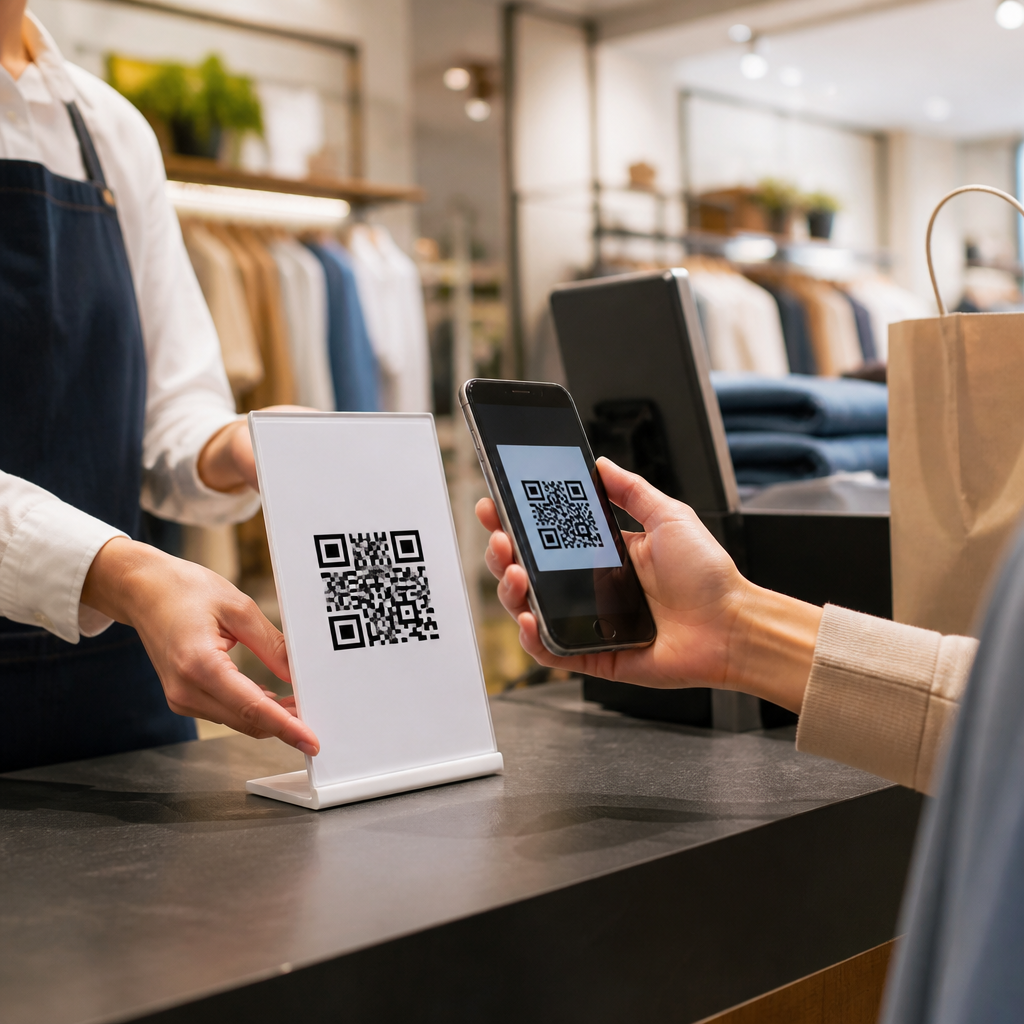
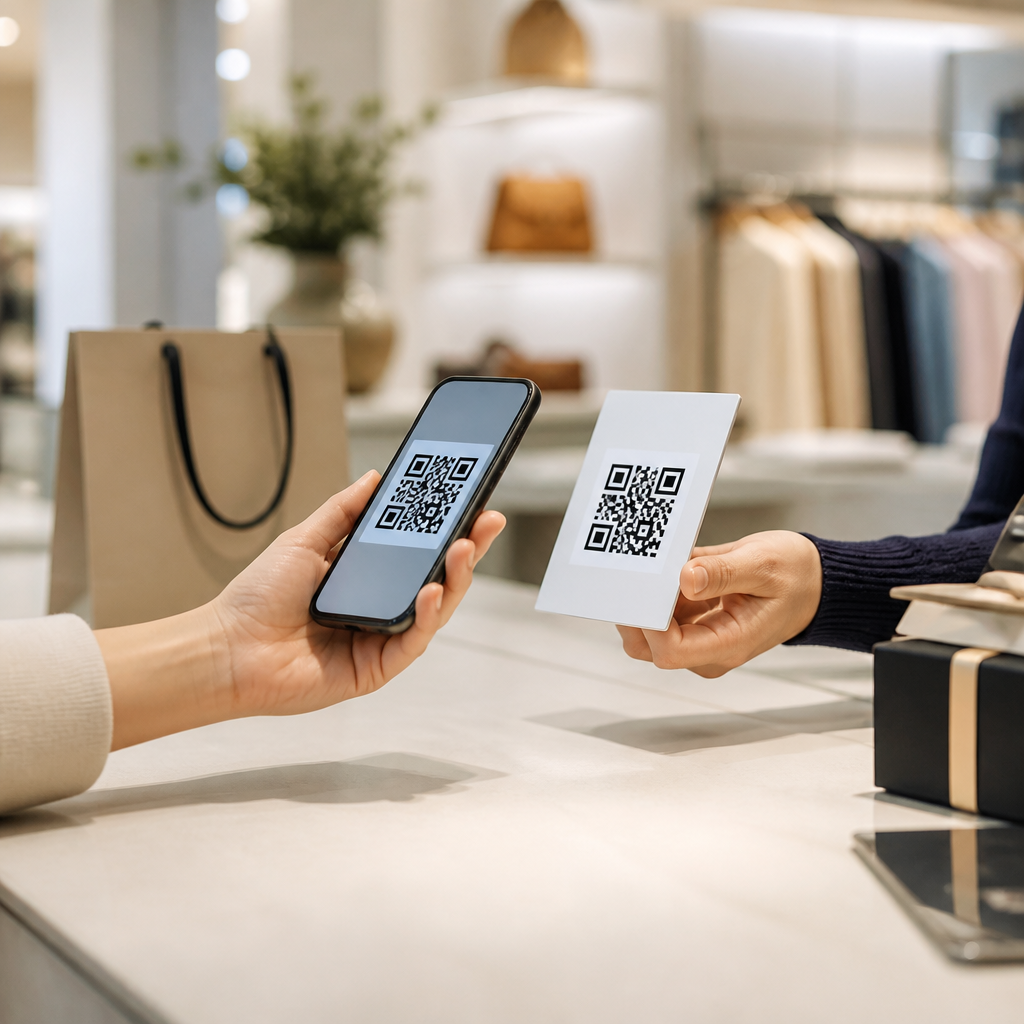
In physical retail, QR codes commonly appear on shelf displays, product tags, fitting room signage, endcaps, and cashier counters. Brands use them to answer the questions that block purchase: Is this available in my size? Are there more colors online? How do customers rate it? Can I get home delivery? Nike, Sephora, and IKEA have all trained shoppers to expect digital extensions of the in-store experience, and smaller brands can apply the same principle without enterprise budgets.
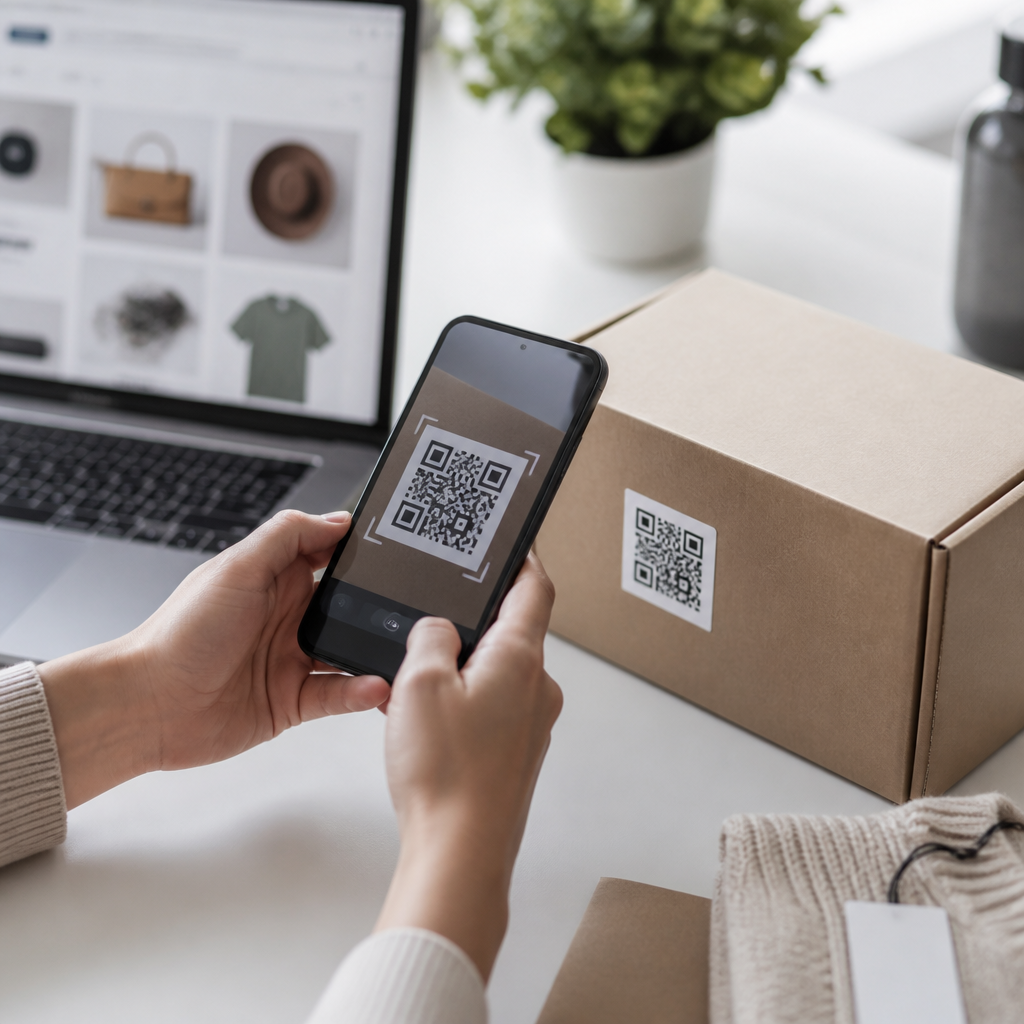
For pure-play eCommerce companies, packaging is often the highest-leverage placement because it reaches existing buyers at a moment of attention. I have seen replenishment brands place QR codes on the inside flap of a shipping box that lead to “buy again” pages with one-click checkout. Beauty brands often link to tutorials, routine builders, shade-matching tools, and referral offers. Consumer electronics brands use packaging QR codes for setup videos, warranty registration, support articles, and accessory bundles, which increases both customer satisfaction and post-purchase revenue.
Direct mail and print collateral remain underrated. A well-targeted postcard with a QR code to a personalized product page can outperform generic paid social traffic because the recipient has already been segmented by purchase history, geography, or category interest. Retailers also use QR codes in lookbooks and catalogs to connect inspiration to checkout. Instead of asking shoppers to search for an item name, the code opens a curated product set, often with inventory visibility and a limited-time offer attached.
How leading brands use QR codes in packaging, stores, and campaigns
Packaging is where many eCommerce brands first discover the real value of QR codes. The package is already paid media: it has guaranteed delivery, strong visibility, and direct relevance to the customer. A smart insert can turn a completed order into the start of the next conversion cycle. Subscription brands often send a QR code that links to account management, refill reminders, or a loyalty dashboard. Apparel brands link to care instructions and styling recommendations, then surface matching items. Food and beverage brands connect to recipes, sourcing stories, or SMS reorder flows.
Store-linked eCommerce is another high-impact model. A shopper scanning a QR code in front of an out-of-stock item can order the product online immediately instead of leaving empty-handed. This endless-aisle use case is especially valuable for footwear, furniture, home improvement, and fashion retailers, where stores cannot carry every variant. When the QR code opens a mobile-friendly product page preloaded with the exact SKU, size, and color, the handoff feels seamless. When it opens the homepage, conversion usually collapses.
Campaign use cases are broader than product access alone. Brands place QR codes in influencer mailers, event booths, magazine ads, transit posters, and television spots to make response measurable. A cosmetics company might send creators custom QR codes tied to specific landing pages, allowing the team to compare conversion by creator without relying only on affiliate links. A home goods retailer can add a QR code to seasonal signage that opens a room bundle with coordinated items, improving average order value by merchandising the full look rather than a single product.
These examples work because they reflect an operating principle I rely on in audits: every QR code must answer one immediate shopper question. If the question is “Can I buy this now?” the destination should be a purchase path. If the question is “Will this work for me?” the destination should contain proof, specifications, fit guidance, or reviews. If the question is “What should I do next?” the destination should provide a simple next step with minimal distractions.
Landing pages, attribution, and testing: the mechanics behind higher conversion
A QR code campaign succeeds or fails on the landing experience. Mobile page speed is nonnegotiable because most scans happen on smartphones. Pages should load quickly, preserve campaign context, display the promised product or offer above the fold, and reduce form fields wherever possible. For commerce destinations, strong pages usually include concise value messaging, price clarity, trust signals, clear stock status, payment options such as Shop Pay or Apple Pay, and an obvious call to action. If a code promotes “20% off your first order,” the discount should be visible and applied without extra effort.
Attribution matters just as much as design. Use dynamic QR codes linked to tagged URLs so each placement can be measured separately. A code on packaging should not share the same destination parameters as a code in a storefront window, because the intent and audience differ. In GA4, track scans as sessions, then connect them to deeper events such as view_item, add_to_cart, begin_checkout, purchase, generate_lead, and sign_up. In Shopify or another commerce platform, compare revenue per session, assisted conversions, and repeat purchase by source. This turns QR code marketing from a novelty into a performance channel.
Testing is where mature brands pull ahead. Run experiments on call-to-action language, destination type, incentive, page layout, and placement height. Test “Scan to shop” against “Scan for your size” or “Scan to reorder in 10 seconds.” Compare a product detail page with a bundle page. Measure whether adding social proof above the fold improves conversion. In-store, even the sign design matters: codes with a short explanatory label and a visible benefit almost always outperform unlabeled codes because customers understand why they should scan.
Best practices, limitations, and what retail teams should prioritize next
Several best practices are consistent across high-performing programs. First, use dynamic codes so destinations can be updated without reprinting assets. Second, keep the code large enough to scan comfortably, with sufficient contrast and quiet space around it. Third, place a plain-language prompt beside every code; people scan more when the benefit is explicit. Fourth, send traffic to mobile-optimized pages designed for the exact campaign. Fifth, review analytics regularly and retire placements that attract scans but no downstream action.
There are also limitations. QR codes do not fix weak offers, poor product-market fit, or slow websites. Privacy rules still apply when collecting data through landing pages, SMS, or loyalty signups. Some shoppers remain cautious about scanning unknown codes, which is why branded design, recognizable domains, and trustworthy context matter. Teams should also avoid overusing QR codes in places where a simpler URL or NFC tap would be more natural. The goal is not to place a code everywhere; it is to remove friction where a scan is genuinely the fastest path.
For retail and eCommerce teams planning the next phase of their QR strategy, priorities should be practical. Start with high-intent touchpoints: packaging, receipts, in-store product signage, and direct mail. Map each placement to a single conversion objective, such as first purchase, reorder, review generation, loyalty signup, or endless-aisle recovery. Build dedicated landing pages, set up campaign-level tracking, and test offers deliberately. Once a few placements prove their economics, scale across categories and connect the data back to merchandising, retention, and customer service workflows.
QR codes give eCommerce brands a rare combination of convenience, measurability, and flexibility. They work because they meet shoppers in the moment and remove the small points of friction that often stop a purchase from happening. In retail settings, they bridge shelf to screen. In packaging, they turn delivery into a retention channel. In catalogs, mailers, and campaigns, they make offline media directly accountable to online revenue. That is why QR codes now belong in serious conversion planning, not as an afterthought, but as a reliable part of the commerce stack.
The key takeaway is straightforward: the code itself is not the strategy. The strategy is the destination, the context, the data model, and the follow-up experience. Brands that win with QR codes define the shopper’s question, answer it immediately, and measure the business result. If you are building out your QR Codes in Marketing program for Retail & eCommerce, begin with one high-intent use case, create a landing page built for that moment, and track what happens from scan to sale. Then expand based on evidence, not assumptions.
Start with the touchpoints you already control, improve the path between scan and conversion, and make QR codes earn their place in your marketing mix.
Frequently Asked Questions
How do QR codes help eCommerce brands increase conversions?
QR codes increase conversions by removing unnecessary steps between customer interest and customer action. Instead of asking someone to type a long URL, search for a product, or remember a promo code, a brand can place a QR code on packaging, inserts, retail displays, direct mail, event materials, or even outdoor ads and send shoppers directly to a specific landing page, product page, app experience, or checkout flow. That speed matters because every extra step creates friction, and friction lowers conversion rates.
For eCommerce brands, the real advantage is that QR codes connect offline attention to online intent in a measurable way. A shopper might discover a product in a physical environment but complete the purchase digitally. A single scan can reveal product details, unlock a limited-time offer, prefill a cart, trigger a loyalty sign-up, or guide a customer to a post-purchase upsell page. In each case, the QR code acts as a shortcut to the next best action.
They also support stronger attribution. Brands can track which campaign, package insert, store display, or print asset generated the scan and what happened afterward. That visibility helps marketers refine creative, placement, audience targeting, and offer strategy. In practical terms, QR codes improve conversion performance because they simplify access, shorten the path to purchase, and make it easier to identify which touchpoints are actually driving revenue.
Where should eCommerce brands place QR codes for the best conversion results?
The best placement depends on the customer journey, but high-performing QR code placements usually appear where purchase intent, curiosity, or engagement already exists. Product packaging is one of the strongest examples because the customer is already holding the product and is more likely to scan for instructions, tutorials, refill options, warranty registration, loyalty rewards, or complementary products. That makes packaging ideal not only for repeat purchases but also for cross-sells and post-purchase conversion opportunities.
Package inserts are another valuable placement because they reach people who have already converted once. A well-designed insert can drive a second purchase, subscription sign-up, referral action, or review request. Beyond the shipment itself, brands often see results from QR codes on point-of-sale displays, event booths, catalogs, postcards, flyers, window signage, and printed ads. In those environments, the key is relevance: the code should lead to a destination that matches the customer’s immediate context and intent.
Placement strategy should also consider user convenience. A QR code needs to be easy to spot, easy to scan, and clearly tied to a benefit. If a customer has to guess what will happen after scanning, performance usually suffers. The strongest implementations pair the code with a direct call to action such as “Scan to get 15% off,” “Scan to see product reviews,” or “Scan to reorder in seconds.” When the value is obvious and the destination is tightly aligned with the moment, conversion rates tend to improve significantly.
What types of QR code destinations convert best for online retailers?
The highest-converting destinations are usually the ones that are most specific to the user’s intent. Generic homepage links rarely perform as well as targeted pages built for a single action. For example, if the goal is immediate sales, sending users directly to a product detail page, a preloaded cart, or a mobile-optimized checkout page is often more effective than sending them to a broad category page. If the goal is lead capture, a dedicated offer page or sign-up form tends to outperform a general landing page.
Discount-driven destinations can work especially well when paired with urgency or exclusivity. A QR code can automatically apply a promo code, unlock a first-purchase offer, or reveal a limited-time bundle. That reduces user effort and increases the likelihood that the shopper completes the transaction. Product education destinations also convert strongly, particularly for higher-consideration purchases. A scan that opens ingredient details, how-to videos, comparison charts, sizing support, or customer reviews can answer objections that might otherwise delay the sale.
For retention and lifetime value, post-purchase destinations are just as important. Brands often use QR codes to drive subscription enrollment, replenishment reminders, loyalty program activation, referral campaigns, or personalized recommendations. The best destination is not simply the page with the most information; it is the page that helps the customer take the next logical step with the least effort. When the destination is focused, mobile-friendly, and tied to a clear conversion goal, QR codes become far more effective.
How can eCommerce brands track the performance of QR code campaigns?
Tracking starts with using unique QR codes for specific campaigns, placements, products, or audience segments. Rather than reusing one code everywhere, brands should generate separate codes for packaging, direct mail, in-store signage, influencer inserts, event handouts, or product-specific materials. This makes it possible to compare scan volume, engagement, and conversion outcomes by source. Dynamic QR codes are especially useful because they allow marketers to update the destination without reprinting the code and often include built-in analytics.
To measure full-funnel performance, brands should connect QR code traffic to their broader analytics stack. This usually includes UTM parameters, web analytics platforms, eCommerce reporting, customer relationship management tools, and conversion tracking inside ad or email systems where relevant. With proper tagging, a brand can see not only how many people scanned but also what those users did next: viewed products, added items to cart, redeemed a discount, subscribed, or completed a purchase. That turns QR codes from a novelty into a measurable acquisition and retention channel.
The most useful metrics depend on the objective. If the campaign is awareness-focused, scan rate and landing page engagement may matter most. If the goal is sales, marketers should look closely at add-to-cart rate, checkout completion rate, average order value, and revenue per scan. For retention efforts, repeat purchase rate or subscription conversion may be more important. Strong brands also test variables such as CTA wording, design, placement, incentive, and destination page. Consistent tracking and testing are what allow QR code campaigns to improve over time rather than staying as one-off experiments.
What are the most common mistakes eCommerce brands make with QR codes?
One of the biggest mistakes is sending users to a weak or irrelevant destination. If a customer scans a code expecting a discount, product details, or a fast reorder experience and lands on a generic homepage, the brand has created confusion instead of convenience. The destination should match the promise made near the code and should be designed for mobile users first. Slow pages, cluttered layouts, difficult navigation, and long forms can erase the conversion benefit that the QR code was supposed to create.
Another common issue is poor code presentation. Some brands make QR codes too small, place them on curved or reflective surfaces, use low-contrast colors, or surround them with distracting design elements. Others forget to include a clear call to action, which leaves users unsure why they should scan in the first place. A QR code should never be treated as self-explanatory. People are far more likely to engage when they understand the immediate value, such as access to exclusive pricing, product tutorials, faster checkout, or loyalty rewards.
Brands also make strategic mistakes by failing to track results or by overcomplicating the experience after the scan. If there is no campaign-level measurement, it becomes difficult to know whether the code is contributing to revenue. If the post-scan flow asks for too much information too quickly, conversion rates often drop. The most effective QR code campaigns are simple, intentional, and closely tied to one business objective. When brands focus on relevance, usability, and measurement, QR codes become a dependable conversion tool rather than a gimmick.