Halloween is one of the few retail moments where entertainment, urgency, and social sharing all peak at the same time, which makes it ideal for QR code campaign ideas for Halloween promotions. A QR code is a scannable matrix barcode that sends a customer to a digital destination such as a landing page, coupon, video, game, menu, ticket form, or product collection. In seasonal marketing, that simple bridge between physical and digital matters because attention is short, store environments are crowded, and shoppers want immediate payoff. When I have planned holiday campaigns, the strongest results came from codes tied to a clear action in the moment: scan for a costume discount, scan to unlock a haunted trail map, or scan to enter a giveaway before midnight. Halloween amplifies this behavior because people are already primed for discovery, surprise, and limited-time offers. For brands, that means a well-designed QR experience can turn packaging, signage, direct mail, event booths, window displays, candy bowls, and even staff badges into measurable conversion points. This hub article covers the full range of seasonal campaign ideas, the campaign mechanics behind them, and the practical rules that keep performance high. If you need Halloween QR campaigns that drive store traffic, online sales, engagement, lead capture, or event participation, the ideas below give you a complete framework.
Why Halloween Works So Well for QR Code Marketing
Halloween promotions perform because the season naturally supports curiosity, urgency, and themed interaction. Customers expect playful experiences in October, so a scan feels less like friction and more like part of the event. Retailers use this to push flash offers, restaurants use it for limited menus, entertainment venues use it for timed ticket sales, and community organizations use it for scavenger hunts and donation drives. The common factor is intent: consumers are actively looking for what to do, what to buy, and where to go.
QR codes also solve a practical problem. Seasonal campaigns often span storefronts, printed flyers, packaging stickers, parade signage, event posters, and social content. A dynamic code lets marketers update the destination without reprinting assets, which is critical when dates, inventory, weather plans, or incentives change. In my experience, dynamic routing is what separates a fun idea from an operationally resilient campaign. You can switch a code from an RSVP page to a waitlist page, from a product bundle to a sold-out notice with alternatives, or from one landing page variant to another for testing.
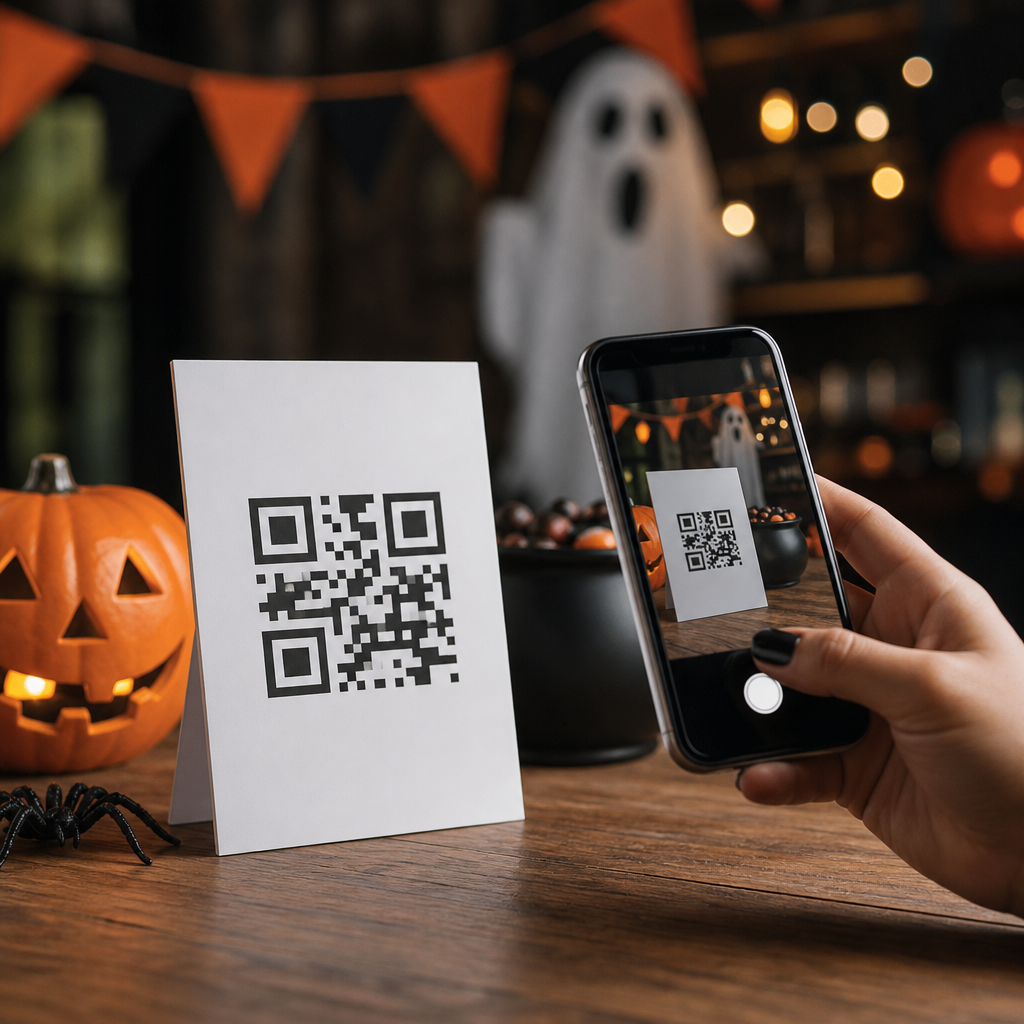
Another reason Halloween is effective is visual compatibility. Orange, black, purple, slime green, pumpkins, ghosts, and gothic typography make QR placements stand out when designed correctly. Branded frames with short calls to action such as “Scan for tonight’s secret special” consistently outperform unlabeled codes because customers understand the reward before they lift their phones. Mobile camera adoption is no longer the barrier it once was; current iPhone and Android devices read codes natively, so the key variable is offer clarity, not scanning ability.
Retail, Ecommerce, and In-Store Halloween Campaign Ideas
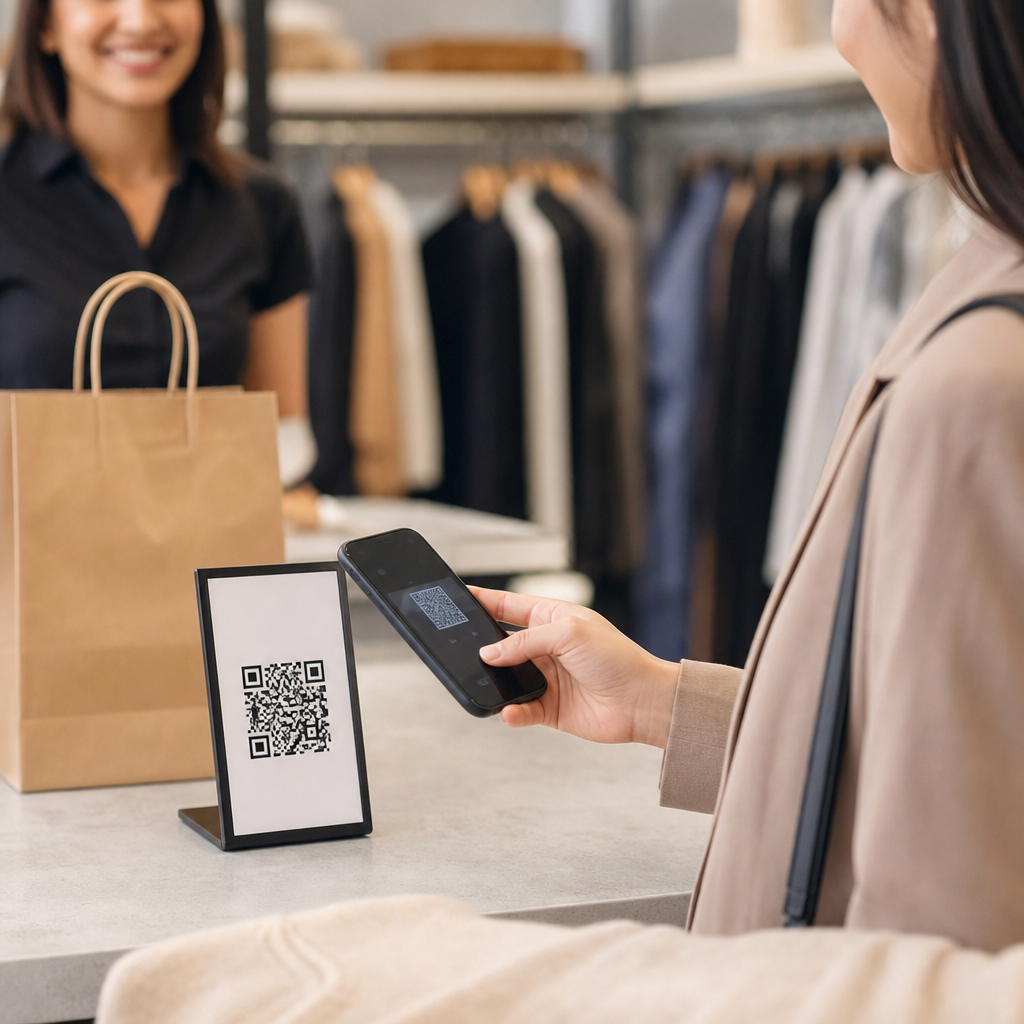
Retailers can build Halloween QR promotions around product discovery, basket growth, and limited-time conversion. The simplest model is a shelf, endcap, or window code that unlocks a themed offer. A costume shop might place codes beside vampire, witch, and zombie displays, each leading to a curated collection page with accessories, makeup kits, and upsell bundles. A beauty retailer can place codes on makeup stands that open step-by-step tutorial videos for skull, glam witch, or stitched doll looks, then attach one-click add-to-cart links for the exact products used.
For grocery and specialty food stores, recipe-led campaigns are especially effective. Put a code on pumpkin displays that opens “Three Halloween party recipes in under 20 minutes,” then feature ingredients with aisle numbers and digital coupons. A candy brand can turn multipack packaging into a post-purchase engagement point by linking to printable party labels, classroom handout tags, or allergy information. That increases product utility after purchase and gives the brand another owned-media touchpoint.
Ecommerce brands can use direct mail inserts, order inserts, and package stickers to drive repeat sales. One tactic I have seen work well is the “mystery cauldron” approach: every shipped package includes a Halloween code that reveals one of several rotating rewards, such as free shipping, a buy-one-get-one offer, early access to a drop, or entry into a costume contest. Because the landing page rotates, the same printed asset stays relevant across the month.
To structure offer choices, use campaign logic that matches customer context.
| Placement | Best Halloween Offer | Main Goal | Key Metric |
|---|---|---|---|
| Store window | After-hours flash coupon | Drive next-day foot traffic | Coupon redemption rate |
| Shelf tag | Bundle builder or tutorial | Increase average order value | Units per transaction |
| Packaging sticker | Contest or loyalty unlock | Repeat purchase and retention | Repeat scan and sign-up rate |
| Direct mail postcard | Countdown landing page | Online conversion | Landing page conversion rate |
These campaigns work best when the landing page reflects the same visual theme as the physical asset. If the sign promises a haunted surprise, the destination should not be a generic homepage. It should be a focused Halloween page with one action, one offer, and one deadline. Consistency reduces bounce and improves attribution.
Events, Venues, and Community Activations
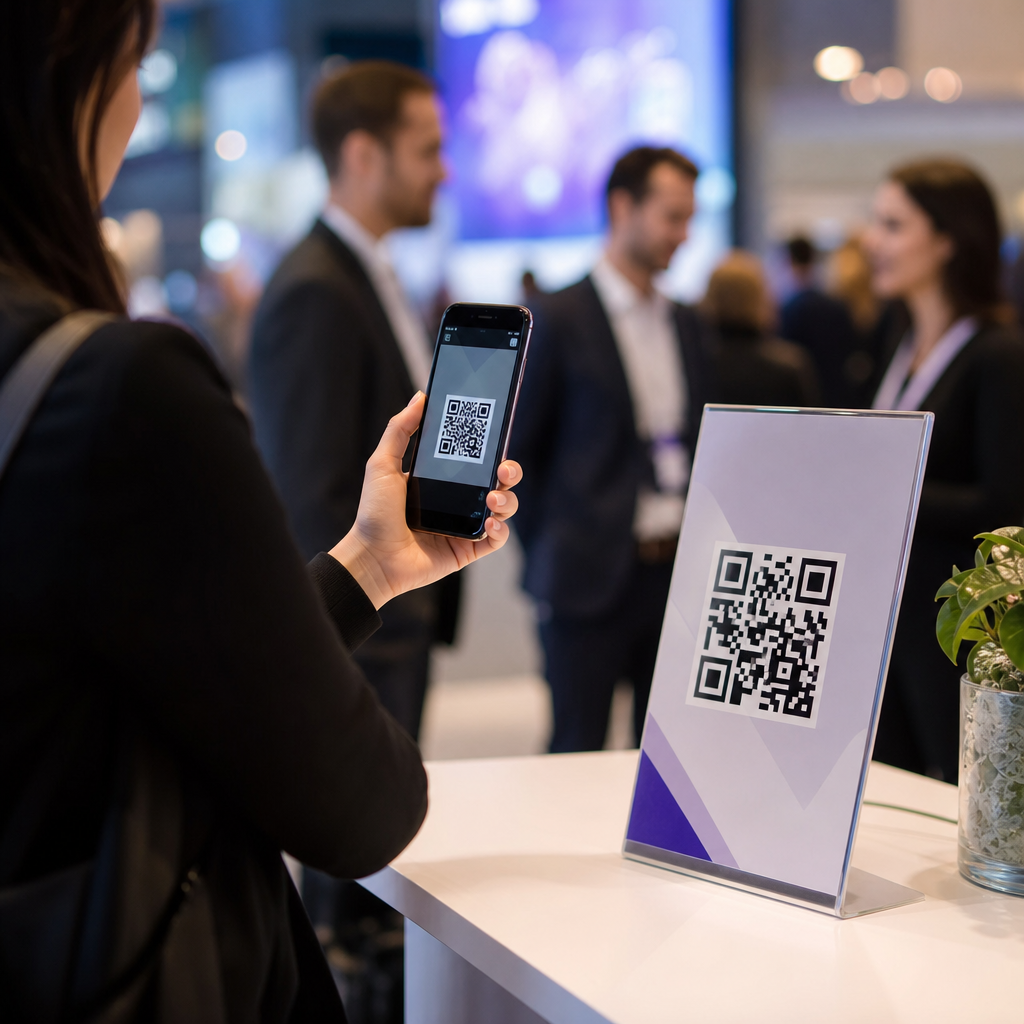
Halloween is event-heavy, and QR codes are exceptionally useful for managing attendance, information flow, and sponsor engagement. Haunted houses, pumpkin patches, nightlife venues, museums, zoos, malls, and downtown associations can all use scannable assets to simplify the customer journey. At the awareness stage, posters and sidewalk signs can link directly to ticketing pages with date-specific inventory. At the event itself, codes can handle maps, safety information, timed entry instructions, food ordering, and post-event reviews.
A practical example is a downtown trick-or-treat trail. Participating businesses display a master trail code in the window. When scanned, it opens a mobile map showing stops, allergy-friendly locations, restroom access, event hours, and sponsor offers. Each store can also display a secondary code tied to a micro-offer such as “Scan to claim 15% off today’s purchase” or “Scan to vote for best decorated storefront.” This keeps the experience useful for families while creating measurable value for merchants.
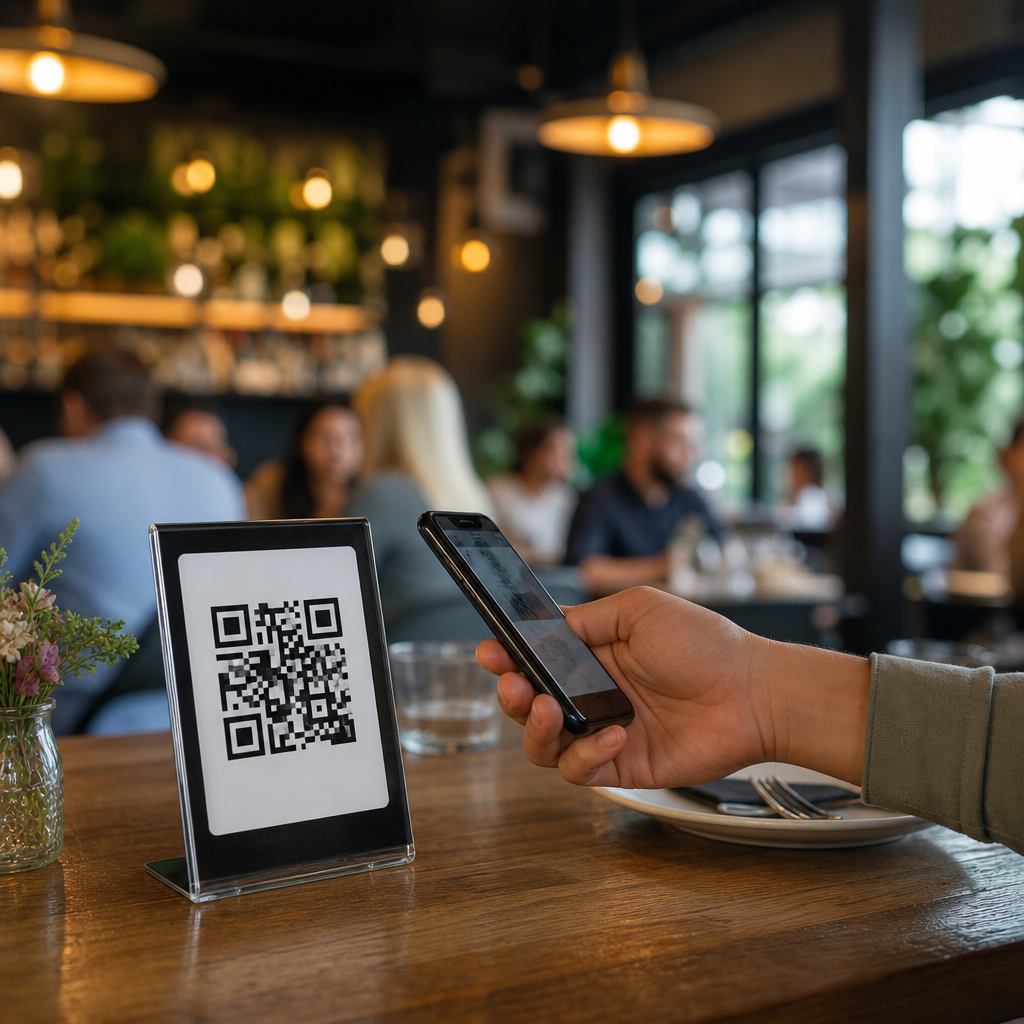
For entertainment brands, gamification increases dwell time. A haunted attraction can place clue codes through the queue line so guests unlock backstory videos, hidden character files, and upgrade offers while waiting. A brewery hosting a costume night can use table tents that open voting forms for best costume, then retarget voters later with upcoming event announcements. Restaurants can place codes on menus that reveal secret cocktails available only after 8 p.m., creating a time-gated incentive without changing the printed menu.
Nonprofits and schools can use Halloween campaigns for fundraising. A pumpkin decorating contest can assign a QR code to each entry; visitors scan to donate and vote. This creates transparent participation data while avoiding paper ballots. The same model works for pet costume contests, school trunk-or-treat events, and charity 5Ks. The core principle is simple: each scan should remove a step, not add one.
Creative Seasonal Formats That Earn Attention
The best Halloween QR code campaign ideas feel native to the season rather than bolted onto it. One reliable format is the scavenger hunt. Place codes across a store, venue, campus, or neighborhood, and have each code reveal a clue, collectible badge, or keyword. Completion unlocks a reward. This works well because Halloween already carries treasure-hunt energy. For families, the experience can be light and playful; for adult audiences, it can be more immersive and story-driven.
Another strong format is the “secret message” mechanic. A candle brand can hide ghost-story audio behind labels. A bookstore can attach codes to horror displays that open staff picks and reading-order guides. A salon can use mirror clings that reveal a 48-hour booking special for Halloween makeup appointments. B2B companies can even use seasonal creativity at trade events by turning booth signage into “scan if you dare” product demos, though the reward still needs to be professionally relevant.
User-generated content is especially effective in Halloween because costumes, décor, and themed food are inherently shareable. A code on packaging or signage can send users to a submission page for costume photos, carved pumpkin entries, or party setups. The landing page should explain the prize, deadline, judging criteria, and usage rights in plain language. I recommend keeping uploads simple by allowing a mobile form or linking to a social post flow with a required hashtag. Complicated submission journeys kill participation.
Interactive reveal campaigns also perform well. For example, a home décor retailer can run “13 days of haunted deals,” using one master QR code on all physical materials. Each day the destination updates to a new deal, styling tip, or bundle. Because the code stays constant while the content changes, repeat scanning becomes part of the habit. This same structure works for cafés with daily drink specials, toy stores with countdown gifts, and fitness studios with themed class drops.
Technical Setup, Tracking, and Measurement
Execution matters more than novelty. A Halloween QR campaign should start with a dynamic code platform that supports editability, analytics, and bulk management. Teams commonly use Bitly, QR Code Generator, Beaconstac, Flowcode, Uniqode, or enterprise campaign systems tied to a CRM. The destination URL should include UTM parameters so scans can be separated by source, medium, campaign, content, and even placement. Without disciplined naming, October data becomes impossible to interpret because every sign starts looking the same in analytics.
Landing pages must load fast on mobile networks, especially at outdoor events and busy retail sites. Compress images, avoid heavy scripts, and keep forms short. If the offer is location-specific, use store selectors only when necessary. In most cases, geotargeting or a location-aware landing page is better than forcing users through multiple taps. I have repeatedly seen conversion rates improve when the page shows the nearest store, event time, or relevant inventory immediately.
Measurement should align to campaign type. For discount campaigns, track scan-through rate, landing page conversion rate, coupon redemption, and average order value. For events, track scans by venue zone, ticket purchases, queue engagement, and review completion. For contests, measure unique participants, entry completion, user-generated content volume, and consented email capture. Compare performance by placement, design, and call-to-action wording. A code labeled “Scan for a spooky surprise” may drive more curiosity, while “Scan for 20% off costumes today” often drives higher intent and better redemption quality. Both have a place, but the choice should be deliberate.
Testing is essential. Print small pilots before full rollout to verify scan distance, contrast ratio, and destination behavior. Industry best practice is high contrast, adequate quiet zone, and a code size that matches expected scanning distance; for posters viewed from several feet away, larger is safer. Also test under low light because many Halloween environments are intentionally dark. Decorative customization should never compromise error correction and readability.
Common Mistakes and How to Avoid Them
The biggest mistake is sending seasonal traffic to a generic homepage. Customers scanned because they wanted the exact Halloween offer advertised, not a navigation menu. The second mistake is hiding the value proposition. A bare QR code is not a strategy; it needs a visible reason to scan, such as savings, access, entertainment, or convenience. Third, many brands ignore staff readiness. If a sign advertises a secret in-store discount, cashiers and floor associates must know how the offer works.
Another frequent problem is weak compliance and privacy handling. If a code leads to a contest, donation form, or email sign-up, include clear terms, age rules where relevant, and consent language. This matters even more for family-oriented Halloween events involving children. Accessibility also deserves attention. Use readable text around the code, provide a short fallback URL when practical, and avoid color combinations that reduce visibility for low-vision users.
Finally, do not overcomplicate the journey. Every extra field, pop-up, or redirect lowers completion. The strongest Halloween campaigns deliver the reward quickly, then ask for the next step. Scan, see the offer, act. That sequence consistently beats elaborate flows built around too many internal approvals or disconnected systems.
Building a Seasonal Hub Strategy Beyond One Campaign
Because this page serves as a hub for seasonal campaign ideas, the smartest approach is to treat Halloween as one module in a repeatable yearly system. The core assets are reusable: a campaign brief template, naming convention, dynamic QR governance, landing page pattern library, and measurement dashboard. Once those are established, brands can adapt the same framework for fall festivals, Black Friday, winter holidays, Valentine’s Day, spring events, and summer activations without starting from scratch.
Create campaign clusters by audience and objective. One cluster can focus on retail promotions, another on restaurant and hospitality offers, another on community events, and another on user-generated contests and loyalty. Link these related articles and case studies through consistent naming and cross-references so readers can move from broad seasonal planning into detailed execution guides. That hub structure strengthens discoverability while helping teams compare tactics across industries. The result is better planning, cleaner reporting, and faster deployment when the next seasonal window opens.
QR code campaign ideas for Halloween promotions work best when the scan solves a real customer need in a seasonal moment: finding an offer, unlocking an experience, entering an event, or joining a game. The winning formula is straightforward: place the code where intent is high, promise a specific reward, send users to a focused mobile page, and track every outcome. Brands that do this well turn ordinary Halloween materials into conversion points that are measurable, flexible, and easy to scale. Use this hub as your starting point, then map the ideas here to your audience, channels, and operational constraints. Choose one high-intent placement, launch a dynamic code, test the landing page, and build from there.
Frequently Asked Questions
What are the best QR code campaign ideas for Halloween promotions?
The best QR code campaign ideas for Halloween promotions are the ones that combine quick participation, seasonal fun, and a clear incentive to act right away. Halloween is especially effective for QR marketing because shoppers are already in a discovery mindset. They expect surprises, limited-time offers, themed experiences, and shareable moments. A QR code can connect in-store signage, product packaging, window displays, costumes, candy promotions, event posters, table tents, and direct mail pieces to digital experiences that extend the campaign beyond the physical space.
Strong ideas include scan-to-reveal discount codes, haunted digital treasure hunts, mystery prize entries, costume contest submissions, Halloween-themed spin-to-win pages, limited-time product drops, event registration pages, interactive maps for trick-or-treat events, themed menus for restaurants and bars, and short-form branded videos. Retailers can also use QR codes to unlock “secret” bundles, giveaway entry forms, seasonal loyalty bonuses, or scare-themed storytelling experiences that build engagement before a purchase. For food, beverage, and hospitality brands, QR codes can link to limited-edition menus, reservation pages, spooky cocktail recipes, or party package bookings.
The most effective campaigns usually keep the path simple: scan, understand the offer immediately, and complete one action. If the page after the scan is slow, confusing, or disconnected from the Halloween theme, performance drops quickly. A strong campaign also matches the context of where the code appears. For example, a storefront QR code might promote a flash discount for walk-in traffic, while packaging QR codes might push repeat purchases, social sharing, or contest participation. The key is not just using a QR code because it is easy to create, but using it to deliver a seasonal digital experience that feels playful, urgent, and worth sharing.
How can businesses use QR codes to increase Halloween sales and foot traffic?
Businesses can use QR codes to increase Halloween sales and foot traffic by turning physical customer touchpoints into immediate conversion opportunities. Halloween naturally creates urgency because most promotions are time-sensitive and tied to a narrow buying window. When a customer sees a Halloween display, party sign, candy feature, costume rack, or themed menu, a QR code gives them a fast way to act before attention disappears. That action could be claiming a coupon, browsing a seasonal collection, booking an event, joining a giveaway, or redeeming an in-store-only offer.
One proven approach is to use QR codes for location-based incentives. A sign in the window can offer a same-day discount if scanned before a certain hour. An endcap display can unlock a bundled Halloween offer available only in-store. A poster in a mall or downtown area can direct people to a landing page with a map, event details, or a limited redemption code designed to bring them into the nearest location. Restaurants and cafes can use table or counter QR codes to promote themed add-ons, desserts, drinks, or party trays. Beauty, apparel, and specialty retail brands can use them to showcase Halloween lookbooks, costume accessories, and last-minute picks.
QR codes are also useful for capturing demand that does not convert immediately. If a shopper is not ready to buy on the spot, the scan can still move them into a remarketing journey through email signup, SMS opt-in, loyalty enrollment, or saved cart experiences. That matters during Halloween because customers often browse multiple times before committing to costumes, décor, food orders, or event tickets. Businesses that connect QR scans to well-designed landing pages, mobile-friendly checkout, clear redemption steps, and measurable campaign tracking are in the best position to turn seasonal interest into both immediate revenue and future customer retention.
What should a Halloween QR code landing page include to improve conversions?
A Halloween QR code landing page should be built for speed, clarity, and thematic consistency. The customer should instantly understand that they landed in the right place and what benefit they receive from scanning. Because many Halloween scans happen in busy environments like stores, events, sidewalks, restaurant counters, or parties, the landing page must load quickly on mobile devices and present a clear headline, strong visual hierarchy, and one primary call to action. If a customer has to search for the offer, close pop-ups, or scroll too far, conversion rates usually suffer.
High-converting landing pages typically include a Halloween-themed headline, concise offer description, compelling image or seasonal design element, expiration details, and a direct call to action such as “Claim Your Discount,” “Enter the Costume Contest,” “Unlock the Mystery Prize,” or “Shop Limited Halloween Picks.” If the campaign involves a coupon, the page should make redemption easy with a visible code, one-tap copy function, barcode, or wallet-saving option. If the goal is lead generation, the form should be short and clearly explain what the customer receives in return. If the destination is a product page, it should highlight seasonal bestsellers, bundle options, stock urgency, and checkout simplicity.
It is also important to remove friction and build trust. Include branding, location details if relevant, terms if a contest is involved, and messaging that matches the physical asset where the QR code appeared. For example, if a sign promises a spooky surprise, the landing page should deliver that exact experience. Adding countdown timers, social proof, limited-quantity indicators, and Halloween visuals can support urgency, but only if they do not slow down the page. A well-optimized landing page is what turns a novelty scan into a measurable business result, so it should be treated as a core part of the campaign rather than an afterthought.
How do you track the performance of a QR code Halloween campaign?
Tracking the performance of a QR code Halloween campaign starts with defining the primary goal before the campaign launches. Some brands want direct sales, others want foot traffic, event attendance, email signups, app downloads, user-generated content, or social sharing. Once the objective is clear, the QR code should point to a destination that supports measurement through analytics tools, campaign parameters, conversion events, redemption systems, and location or placement tagging. Without that setup, scans may look encouraging on the surface but reveal very little about actual business impact.
The core metrics usually include total scans, unique scans, scan time by day or hour, conversion rate, revenue generated, coupon redemptions, form completions, click-through behavior, bounce rate, and device type. Businesses should also compare performance by placement. A QR code on product packaging may perform very differently from one on a front window, receipt, table tent, shelf sign, costume tag, flyer, or event banner. Dynamic QR codes are especially useful because they allow marketers to update destinations without replacing printed materials and often provide better tracking visibility. Distinct landing pages or tagged URLs for each placement can reveal which physical assets produce the strongest engagement.
For a Halloween promotion, timing analysis is particularly valuable. Because seasonal behavior changes quickly as the holiday approaches, businesses should watch when scan volume spikes and whether urgency messaging improves results in the final days. It is also smart to track downstream outcomes, not just initial scans. For example, did mystery discount scanners spend more than standard coupon users? Did contest participants join the email list? Did event registrants return for another purchase? The best campaign analysis connects QR engagement to real customer actions, making it easier to improve creative, placement, and offer strategy for future seasonal promotions.
What mistakes should businesses avoid when using QR codes for Halloween marketing?
One of the biggest mistakes businesses make is treating the QR code itself as the campaign instead of treating it as the entry point to a larger experience. A code with no clear reason to scan rarely performs well, especially in a busy Halloween environment where people are surrounded by costumes, displays, parties, promotions, and distractions. Customers need immediate motivation, such as a discount, exclusive access, game, giveaway, or useful seasonal information. The call to action around the QR code should be specific and compelling. “Scan for a spooky surprise” is better than simply placing a code with no explanation.
Another common issue is sending users to a weak destination. A generic homepage, desktop-only page, slow-loading site, or cluttered form can waste the opportunity created by the scan. Halloween campaigns need mobile-first landing pages that feel seasonal, match the promise of the promotion, and make the next step obvious. Businesses also hurt results when QR codes are placed where they are hard to scan, printed too small, designed with poor contrast, or buried in visually noisy creative. Testing matters. Brands should scan the code from realistic distances, under store lighting, and on multiple devices before launch.
Companies should also avoid poor timing, vague redemption terms, and lack of follow-through. If a code promotes a limited Halloween item that is already sold out, or an event registration form with incomplete details, trust drops fast. Failing to track scans and conversions is another major mistake because it prevents the business from learning which offers and placements worked. Finally, many brands miss the social sharing opportunity that Halloween naturally offers. A campaign that includes a fun, photo-worthy, or game-like experience can extend reach far beyond the original scan. The best Halloween QR code promotions feel intentional, fast, rewarding, and easy to share, while the worst ones feel like disconnected digital dead ends.