QR codes have moved from simple packaging utilities to measurable growth tools, and healthcare marketing is one of the clearest places to see that shift. In a healthcare setting, a QR code is a scannable two-dimensional barcode that sends a patient, caregiver, or clinician to a digital destination such as an appointment form, symptom guide, patient education page, map, video, or payment portal. A brand case study examines how an organization used that tool in a real campaign, what operational choices shaped the outcome, and which metrics proved success. For hospitals, clinics, insurers, telehealth providers, and health brands, that matters because healthcare decisions are high stakes, highly regulated, and often time sensitive.
I have worked on QR campaigns where a single code on discharge paperwork lifted video education completion rates because patients no longer had to type a long URL while managing medications at home. That practical convenience is the core marketing value. Healthcare marketing is not only about promotion; it is also about reducing friction between awareness and action. When a patient sees a code on a waiting room poster and immediately books a vaccination, joins a prenatal class, or downloads post-operative instructions, the brand delivers service while creating a measurable conversion path.
This hub page focuses on brand case studies because examples teach faster than theory. Healthcare teams want to know which QR code campaign ideas actually worked, which channels produced scans, how dynamic codes outperformed static ones, and where privacy, accessibility, and analytics can fail. They also need a framework for judging whether a success story is repeatable. A pediatric network, a pharmacy chain, and a regional hospital can all use QR codes, but their goals, compliance obligations, and audiences differ. The most useful case studies show context, execution, constraints, and results in plain language.
Across healthcare marketing, QR codes matter for three reasons. First, smartphone behavior is universal enough to bridge offline and online touchpoints at low cost. Second, they shorten the path from intent to action, which is critical when patients are busy, anxious, or confused. Third, they generate scan data that can be tied to channel performance, page engagement, and downstream conversions. As the brand case study category grows, marketers need a durable lens for evaluating examples instead of copying isolated tactics.
What Makes a Strong Healthcare QR Code Brand Case Study
A strong healthcare QR code brand case study answers five questions directly: who was the audience, what problem blocked action, where was the code placed, what happened after the scan, and which metrics changed. Weak examples stop at novelty. Strong ones document workflow. If a code on an urgent care poster led to same-day bookings, the case study should specify whether the landing page used location detection, whether the code was dynamic, how mobile page speed was handled, and whether staff were trained to mention the code verbally. In my experience, results often come from these operational details more than from the design of the code itself.
Healthcare adds layers that general retail case studies often miss. Consent language, readability, translation, ADA-aligned digital access practices, and HIPAA-adjacent risk management all affect campaign performance. A code that sends a patient to a public education page is different from a code that opens a portal login. The former can be broadly promoted; the latter needs more careful authentication planning. Good case studies explain that distinction and show how trust was maintained. They also identify whether scans came from patients, family members, clinicians, or community partners, because each audience behaves differently.
Another marker of quality is attribution discipline. Scans alone do not prove business value. A useful case study connects the code to appointment completions, class registrations, call deflection, medication adherence content views, or patient satisfaction movement. Tools such as Google Analytics 4, Adobe Analytics, Bitly, QR Code Generator, and CRM integrations can track these paths. The best studies define primary and secondary metrics before launch. For example, a cancer center campaign might track scans as the leading indicator and consultation requests as the lagging indicator, while also monitoring bounce rate and average engagement time to judge landing-page quality.
Where QR Codes Work Best in Healthcare Marketing
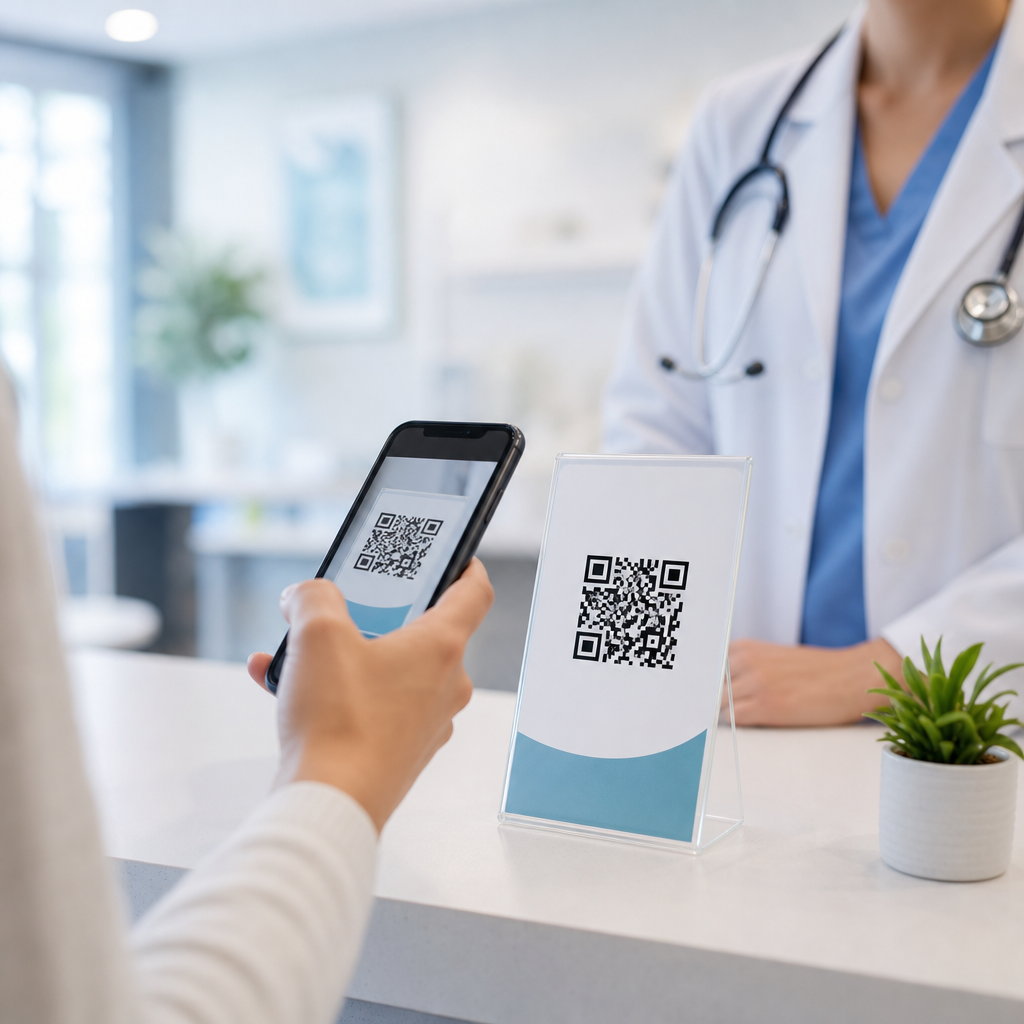
Healthcare marketing succeeds with QR codes when placement matches patient intent. The most productive channels usually fall into four groups: in-facility media, print outreach, product or service packaging, and community touchpoints. In-facility media includes waiting room signs, exam room posters, bedside materials, wayfinding displays, elevator clings, and discharge paperwork. These placements work because the patient is already in a health mindset. A dermatology clinic can place a code near the checkout desk linking to aftercare instructions and a follow-up booking page. A health system can add a code to maternity floor welcome packets linking to lactation resources and newborn class enrollment.
Print outreach remains powerful in healthcare because many patient interactions still involve mail. Statements, explanation-of-benefits inserts, vaccine reminders, referral packets, and community event flyers can all carry QR codes. One regional provider I observed improved flu shot scheduling by adding a dynamic QR code to mailed reminders that opened a mobile appointment selector prefiltered by ZIP code. That removed several clicks and reduced the need for call center assistance.
Packaging and service-adjacent materials are another strong fit. Pharmacies can print codes on bag stuffers linking to immunization information, refill enrollment, or medication counseling videos. Medical device brands use codes on packaging inserts to route users to setup instructions, troubleshooting guides, or clinician directories. Community placements extend reach further: school sports physical campaigns, health fair banners, employer wellness packets, transit ads near hospitals, and partnership materials in churches or grocery stores. In every case, the best results come when the code promises one clear action and the landing page fulfills that promise immediately.
| Placement | Best Use | Typical Goal | Key Risk |
|---|---|---|---|
| Waiting room poster | Appointment booking or service education | Increase conversions from existing visitors | Overloaded landing page |
| Discharge paperwork | Aftercare videos and medication guidance | Improve adherence and reduce callbacks | Patient confusion if instructions are inconsistent |
| Mailed reminder | Vaccination or screening scheduling | Drive high-intent mobile bookings | Broken attribution from reused print assets |
| Pharmacy bag insert | Refill signup or counseling content | Boost repeat engagement | Privacy concerns in shared households |
| Community event signage | Lead capture for service lines | Expand local awareness | Low follow-through without staff prompts |
Brand Case Study Patterns That Repeat Across Healthcare
When you review healthcare QR code case studies side by side, several patterns repeat. The first is service-line activation. Hospitals use QR codes to move people from awareness into bookings for orthopedics, imaging, cardiology screenings, women’s health, and urgent care. A common example is an orthopedic campaign combining billboard, clinic signage, and physical therapy handouts, all pointing to one mobile landing page with physician bios, accepted insurance information, and online self-scheduling. The code acts as the bridge from broad brand awareness to a specific visit.
The second pattern is patient education at moments of stress. Healthcare marketers often underestimate how little patients retain during in-person explanations. QR codes on discharge sheets, prescription inserts, infusion center materials, and pre-op packets let brands deliver concise, repeatable education. I have seen post-procedure campaigns perform well when a code linked to a short clinician video, not just text, because patients trusted a familiar face. The marketing benefit was indirect but real: fewer avoidable calls, better satisfaction, and stronger perception of the organization as helpful and modern.
The third pattern is access expansion. Telehealth brands, insurers, and provider networks use QR codes to simplify onboarding, app downloads, and eligibility checks. During seasonal surges, urgent care groups have used storefront signage and parking lot displays with QR codes leading to queue status and online check-in. This reduces front-desk strain and creates a smoother first impression. Another recurring pattern is reputation support. After a visit, a code can route patients to satisfaction surveys, review requests, or patient story submissions, though this must be handled carefully to avoid bias and maintain compliance with platform policies.
Finally, the strongest case studies show channel coordination. A QR code rarely wins because it exists; it wins because copy, design, page speed, and staff scripting align. If front-desk staff say, “Scan here to see the class schedule and register in under a minute,” scan rates rise. If the sign merely shows a code with no value statement, many patients ignore it. The lesson across brand case studies is consistent: utility drives scans, and clarity drives outcomes.
How Leading Healthcare Brands Measure Results
Measurement in healthcare QR code marketing should be designed around intent, not vanity metrics. Scan volume matters, but it is only the top of the funnel. The next layer includes unique scans, repeat scans, device type, time of day, location, and landing-page engagement. Then come operational outcomes: booked appointments, form completions, brochure downloads, app installs, event registrations, calls avoided, or portal sign-ins. Mature teams add revenue and retention metrics where appropriate, such as completed screenings, new patient acquisition cost, downstream procedure value, or refill enrollment rates.
Dynamic QR codes are usually essential because they allow destination changes without reprinting materials and support campaign-level analytics. UTM parameters help distinguish scans from posters, mailers, clinic handouts, and community events. In GA4, events can be configured for appointment clicks, scroll depth, video completion, and form submission. CRM and marketing automation systems such as Salesforce Health Cloud, HubSpot, or Marketo can tie those events to leads and patient journeys, while call tracking platforms can measure whether a scan led to a phone inquiry rather than an online booking.
Healthcare brands also need guardrails around data interpretation. A low scan rate on a mailed campaign may still be profitable if the audience is high value and conversion rate is excellent. Conversely, a large number of scans from a hospital lobby may look impressive but produce little action if the landing page is generic. Benchmarking should account for context: audience age, urgency of need, placement visibility, weather for outdoor media, and whether the code competed with other calls to action. The best case studies state these limits clearly, which makes their conclusions more trustworthy and more useful for future campaign planning.
Compliance, Accessibility, and Trust Considerations
Healthcare marketers cannot evaluate QR code campaigns on conversion alone. Trust is part of performance. If a code leads to a page that looks suspicious, loads slowly, or asks for too much information too soon, patients abandon it. Brand case studies in this space should explain how trust cues were handled: recognizable branding, plain-language copy, secure URLs, concise disclosures, and minimal friction on mobile forms. If protected health information could be involved, the destination should route users into secure authenticated systems rather than exposing sensitive data on an open web page.
Accessibility is equally important. A QR code must be accompanied by readable text, a short backup URL, and a clear statement of what happens next. Not every patient can or wants to scan. Materials should use sufficient contrast, large enough code size, and enough quiet zone around the code for reliable scanning. Landing pages should work with screen readers, support zoom, and avoid tiny tap targets. Translation is not optional in many markets. A bilingual urgent care campaign will underperform if the poster is in Spanish but the mobile booking page opens only in English.
There are also practical risks. Codes printed too small, placed on curved surfaces, or covered by glare often fail. Reusing one code across multiple campaigns can destroy attribution. Sending all traffic to a homepage wastes intent. In healthcare especially, avoid linking directly to app store pages if the real task is booking care; many users will drop off after download. The most credible case studies discuss these tradeoffs openly and explain what the team changed after launch.
How to Use This Hub to Build Better Campaigns
This brand case study hub should help healthcare marketers compare examples by objective, audience, channel, and outcome. As you explore related articles in the broader QR Code Campaign Ideas and Case Studies topic, use a simple filter: identify the patient moment, define the single action you want after the scan, confirm the landing-page experience, and choose metrics that reflect real care access or business impact. Whether you are promoting screenings, education, app adoption, or follow-up care, the most successful QR campaigns are specific, fast, and easy to trust.
The central benefit of studying brand case studies is speed. Instead of guessing where QR codes belong in healthcare marketing, you can learn from proven patterns: waiting room conversion paths, discharge education flows, mailed reminder scheduling, pharmacy engagement, and community event lead capture. The examples that deserve attention are the ones that connect operational execution to measurable outcomes and acknowledge compliance and accessibility realities. Use this hub as a planning tool, not just an inspiration gallery. Review the case studies, map the lessons to your patient journey, and launch one focused QR code test with clean tracking and a mobile-first destination this quarter.
Frequently Asked Questions
What does a brand case study about QR codes in healthcare marketing usually show?
A strong brand case study in this space shows how a healthcare organization used QR codes as part of a real, measurable marketing and patient engagement strategy rather than as a simple convenience feature. It typically explains the campaign goal first, such as increasing appointment bookings, improving patient education access, reducing front-desk friction, boosting attendance at a service line event, or guiding patients to a billing or wayfinding resource. From there, it outlines where the QR codes appeared, including direct mail, brochures, waiting room signage, prescription inserts, outdoor ads, clinic posters, discharge materials, or digital screens inside facilities.
The most useful case studies also connect the QR code to the full patient journey. For example, a hospital may place a code on orthopedic service brochures that leads to a landing page with provider bios, insurance information, and a scheduling form. A pediatric clinic may use a code in vaccination reminders that sends parents to a trusted FAQ page and online check-in tools. A health system may deploy codes in urgent care ads that open a map, live wait times, and a “reserve my spot” workflow. In each case, the QR code is not the strategy by itself; it is the bridge between physical touchpoints and digital action.
Operationally, a case study should also show what changed behind the scenes. That might include creating mobile-friendly landing pages, assigning campaign-specific tracking URLs, training staff to explain the code to patients, updating signage placement, or coordinating compliance review for every linked destination. The strongest examples include outcomes such as scan volume, completion rates, appointment conversion, reduced call center load, improved event registration, or increased engagement with patient education materials. In short, a healthcare QR code case study demonstrates how a brand used a simple scan to solve a practical access problem while generating measurable marketing performance.
Why are QR codes especially effective in healthcare marketing compared with other industries?
Healthcare marketing benefits from QR codes because the patient experience often begins in an offline environment and involves urgency, complexity, or limited attention. People encounter healthcare information in exam rooms, lobbies, pharmacy counters, discharge packets, community events, and mailed notices. In those moments, they may not want to type a long web address, search for the right department, or navigate a large health system website. A QR code removes those steps and gets them directly to the next action, which is especially valuable when the person scanning is dealing with pain, stress, caregiving responsibilities, or time-sensitive decisions.
Another reason QR codes work well in healthcare is that they support a wide range of practical use cases. A single scan can connect patients to appointment scheduling, telehealth preparation instructions, campus maps, specialty service line content, patient education videos, medication guidance, screening registration, satisfaction surveys, or payment portals. That flexibility makes QR codes useful across both acquisition and retention efforts. They help marketing teams promote services, but they also improve service delivery, which strengthens brand trust and patient satisfaction over time.
Healthcare organizations also gain an advantage because QR codes are measurable. Traditional print marketing in healthcare has often been harder to attribute than digital media. By assigning unique QR codes to specific campaigns, locations, audiences, or materials, teams can see which assets drive scans, what happens after the scan, and where users drop off. This makes it easier to compare outreach channels and optimize patient communications. When used thoughtfully, QR codes are not just a modern design element. They become a low-friction access point that aligns with how healthcare decisions are actually made: across physical spaces, multiple stakeholders, and high-information moments.
What challenges do healthcare brands face when using QR codes in real campaigns?
One of the biggest challenges is balancing convenience with trust. In healthcare, patients are often cautious about where a scan will take them, especially if personal information may be involved. If the destination page looks unfamiliar, is not clearly branded, or asks for too much too quickly, users may abandon the process. That is why healthcare brands need strong visual consistency, clear calls to action, and landing pages that immediately confirm the destination is legitimate and relevant. Even small details, such as using recognizable brand colors, provider names, and plain-language descriptions, can improve confidence.
Another challenge is technical and operational readiness. A QR code on a poster is only as effective as the mobile experience behind it. Many organizations discover that their existing appointment forms, patient education pages, or payment workflows were designed for desktop use and perform poorly on smartphones. Slow load times, too many form fields, login barriers, and confusing navigation can weaken results. There is also the issue of environment. Codes placed too low on a wall, in poor lighting, on curved surfaces, or in visually cluttered designs may simply not get scanned. Real-world execution matters just as much as campaign concept.
Healthcare brands must also navigate privacy, compliance, and internal approval processes. Marketing, legal, compliance, IT, digital, and clinical stakeholders may all need to review where the code leads and what data is collected. Teams need to think carefully about whether a QR code links to general educational content or to a portal that involves protected health information. They also need a plan for maintenance. Broken links, outdated forms, expired campaign pages, or old physician profiles can damage patient trust quickly. The best campaigns succeed because they treat QR codes as part of a managed patient communication system, not as a one-time creative add-on.
How do healthcare organizations measure the success of a QR code marketing campaign?
Success measurement starts with matching metrics to the campaign objective. If the goal is patient acquisition, the organization may track scans, landing page visits, appointment requests, booked visits, and cost per conversion. If the goal is patient education, the focus may shift to scans by location, time on page, video completion rates, guide downloads, or follow-up actions such as signing up for a class or calling a department. For operational campaigns, teams may look at reduced front-desk questions, faster check-in completion, lower call volume, or increased use of self-service tools. The key is to define what counts as meaningful action before the campaign launches.
Most healthcare brands use dynamic QR codes tied to analytics platforms so they can update destinations without reprinting materials and monitor performance in near real time. This allows marketers to compare placements and messages. For example, a code on a mammography postcard may outperform a waiting room flyer because it reaches patients in a more action-oriented moment. A code next to a physician testimonial may drive more service line conversions than one placed beside a generic benefits list. Geographic performance, device type, repeat scans, and completion funnels can all reveal where friction exists and where messaging is strongest.
Advanced measurement often includes downstream business outcomes as well. Instead of stopping at scan counts, mature teams connect scans to scheduled appointments, attended visits, procedure volume, class registrations, or payment completions. They may also compare QR code traffic against other channels such as paid search, email, or social campaigns. In a case study, the most persuasive results are rarely “people scanned the code.” They are outcomes like “cardiology screenings increased by 18% after adding QR-enabled direct mail,” or “self-service bill payment adoption rose significantly after codes were added to paper statements.” That is what turns a QR campaign from a novelty into a documented growth tool.
What best practices make a healthcare QR code campaign more successful and patient-friendly?
The most important best practice is to make the destination genuinely useful. Patients should gain immediate value from scanning, whether that means booking an appointment, getting preparation instructions, watching a short educational video, finding a clinic entrance, or accessing a payment page. The call to action should be explicit and specific. “Scan to schedule your annual skin exam” is far more effective than “Scan here for more information.” In healthcare, clarity reduces anxiety and improves follow-through. The destination page should also be mobile-optimized, fast, branded, and focused on one primary next step.
Placement and design matter just as much. QR codes should be large enough to scan easily, positioned where users can comfortably access them, and surrounded by enough white space to remain readable. They should appear in context with supporting copy that explains what happens after the scan. Including a short backup URL can help users who prefer not to scan. For different audiences, messaging may need to change. A caregiver-focused code may emphasize coordination and instructions, while a wellness campaign aimed at younger adults may focus on speed and convenience. Testing multiple versions by department, audience segment, or location often produces better results than using one generic code everywhere.
Finally, successful healthcare campaigns are maintained over time. Teams should audit links regularly, review analytics, refresh outdated landing pages, and adjust calls to action based on actual behavior. It is also smart to coordinate with frontline staff so they can point patients to the code and answer basic questions about what it does. In the best healthcare brand case studies, QR codes succeed because they are part of a broader access strategy: remove friction, provide trusted information quickly, respect patient privacy, and measure what happens next. When those principles are in place, a small square on a printed surface can create a meaningful improvement in both marketing performance and patient experience.