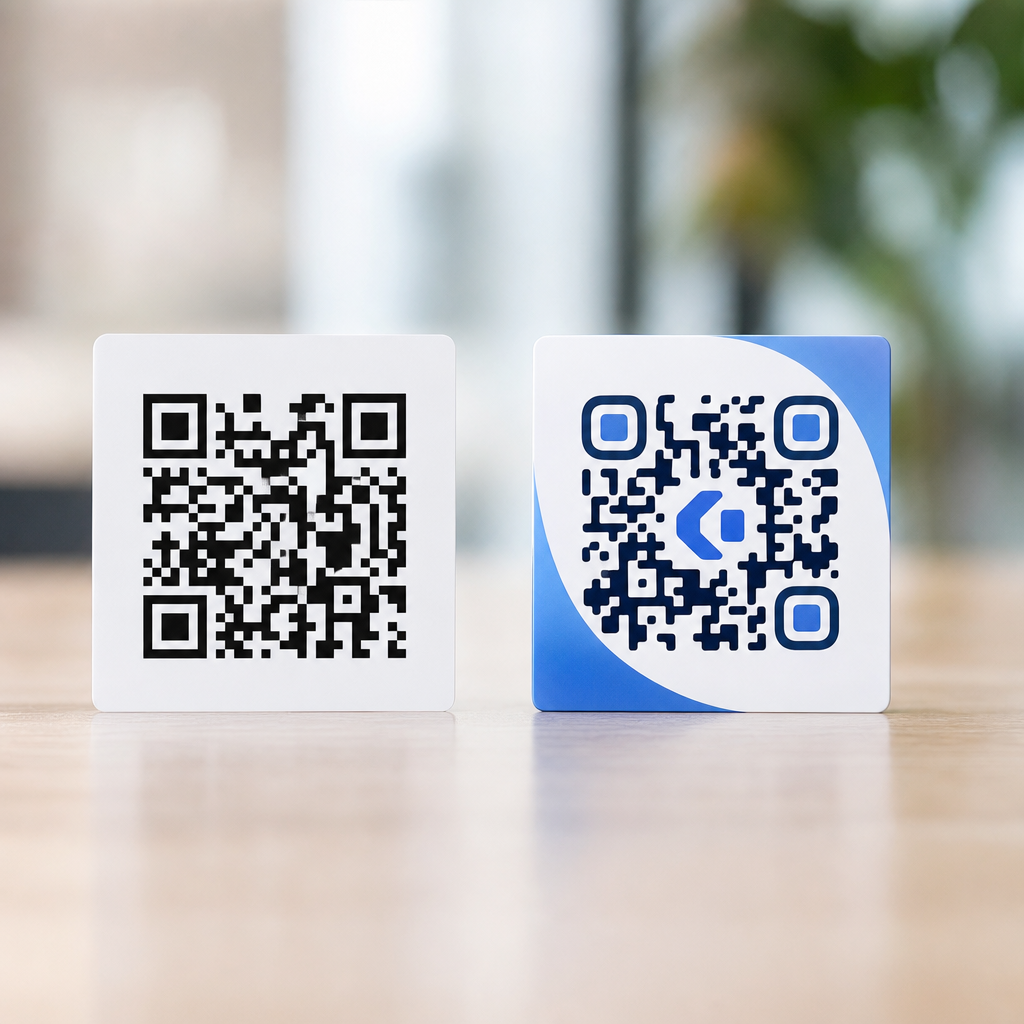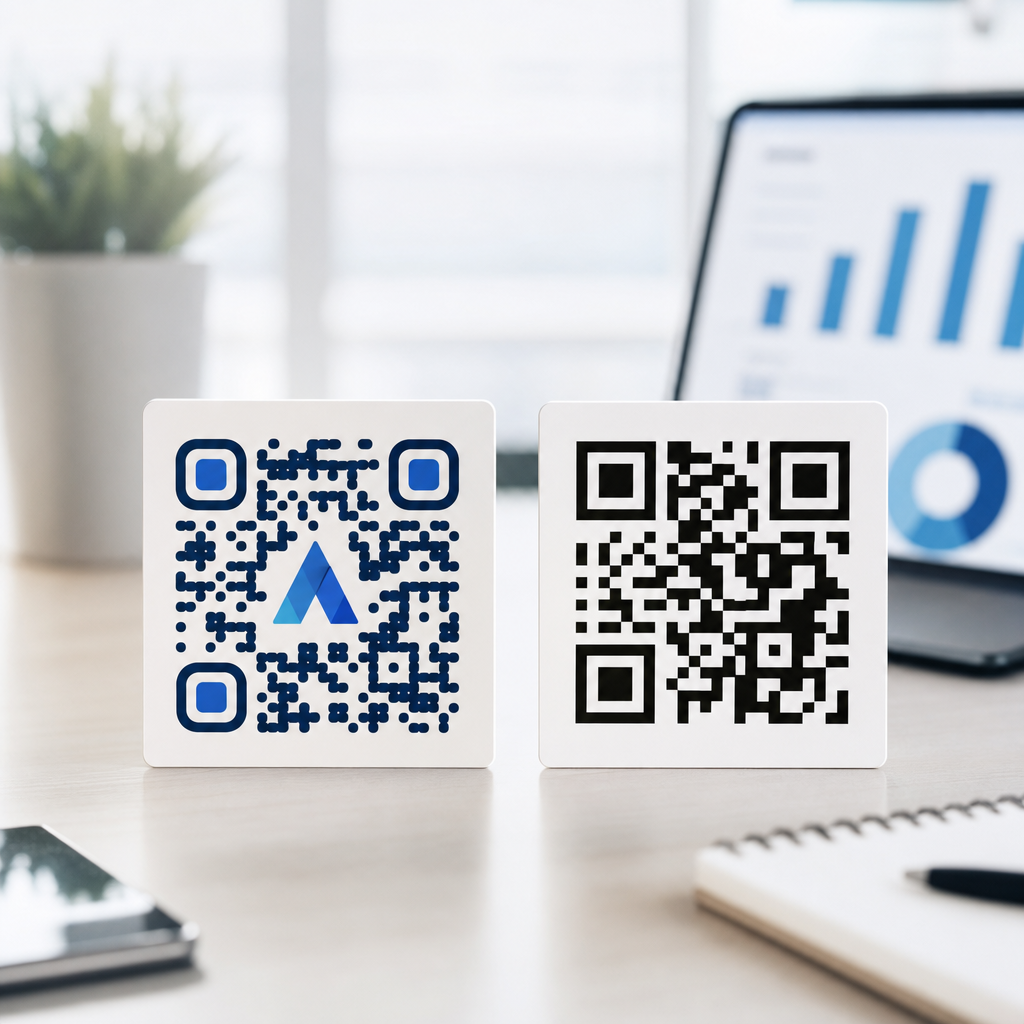
Logo QR codes and standard QR codes solve the same core problem—turning a camera scan into a fast digital action—but they do not perform the same way in branding, scan reliability, user trust, or campaign results. In practice, the difference matters because a QR code is not just a technical object; it is a conversion point. A standard QR code usually appears as a plain black-and-white matrix with no visual customization. A logo QR code places a brand mark in the center or integrates branded design elements while preserving readability through error correction, contrast control, quiet zone protection, and tested sizing. I have used both formats across packaging, retail signage, direct mail, trade show graphics, restaurant menus, and product onboarding flows, and the pattern is consistent: the best choice depends on context, distance, lighting, print quality, and brand recognition goals. This article compares logo QR codes vs standard QR codes from a performance perspective, explains how logo integration in QR codes works, and shows when branded design improves outcomes and when simplicity wins. If your broader goal is stronger QR code design and branding, this is the hub page for understanding the tradeoffs behind every logo placement, color decision, and scan environment.
Before comparing results, it helps to define performance clearly. Performance is not only whether a code scans. It includes first-scan success rate, scan time, user confidence before scanning, visual fit with branded materials, flexibility across print and digital surfaces, and the ability to support analytics when paired with dynamic destinations. A code that scans perfectly in a studio but looks suspicious on premium packaging can underperform in the market. Likewise, a beautiful code with aggressive logo integration can fail if the central image blocks too many data modules or if low contrast reduces camera detection. The right evaluation balances machine readability and human response. That is why logo integration in QR codes should be treated as a design system decision, not a decorative afterthought.
What changes when a logo is added to a QR code
A QR code stores data in a square matrix of modules, plus finder patterns, alignment patterns, timing patterns, and a mandatory quiet zone. Standard QR codes leave these elements visually untouched. Logo QR codes modify the appearance by reserving central space for a brand mark, adjusting colors, rounding modules, or adding frames and calls to action. The technical reason this is possible is Reed-Solomon error correction, which allows some damage or masking without breaking readability. The four error correction levels—L, M, Q, and H—recover roughly 7 percent, 15 percent, 25 percent, and 30 percent of symbol damage respectively. In real projects, logo QR codes typically use level Q or H because the logo occupies recoverable space. That design choice increases resilience but also raises symbol density when the encoded payload is long, which can make the code harder to scan at small sizes. This is the first major tradeoff in logo integration in QR codes: branding consumes tolerance that might otherwise protect against poor printing, glare, folds, or camera motion.
The second change is psychological. A standard QR code is familiar but generic. A logo QR code signals ownership and intent. On packaging, in particular, users are more likely to trust a code when the brand identity is obvious and the surrounding message explains the destination, such as “Scan to register your warranty” or “Scan for ingredients and sourcing.” In my campaign reviews, codes with recognizable marks often receive more scans when the audience is encountering the code for the first time. However, that lift only appears when the code still looks clean and legible. Overdesigned codes can trigger the opposite reaction: people hesitate because the symbol no longer looks like a QR code they expect their phone to read.
Scan reliability and first-scan success in real conditions
If the question is which format scans more reliably under uncontrolled conditions, standard QR codes usually hold the edge. Their high contrast, untouched module structure, and lower visual complexity make them more forgiving on low-end printers, curved surfaces, reflective labels, and small placements. A plain code can survive more real-world abuse because all redundancy is reserved for accidental damage rather than intentional logo coverage. This matters on corrugated boxes, shrink sleeves, receipts, and outdoor posters where distortion and wear are common.
That said, a properly engineered logo QR code can perform nearly as well. The gap depends less on the presence of a logo and more on execution. In testing, the biggest failure points are inadequate quiet zone, oversized logos, insufficient contrast, and encoding too much data directly into the symbol. A short dynamic URL reduces density and gives the code larger, clearer modules. Maintaining a quiet zone of at least four modules on all sides is nonnegotiable. Dark foreground on a light background remains the safest contrast pattern. When those principles are respected, branded codes can deliver strong first-scan success on modern smartphone cameras from Apple, Samsung, and Google devices.
| Factor | Standard QR Code | Logo QR Code | Best Practice |
|---|---|---|---|
| First-scan reliability | Usually highest | High if engineered well | Use dynamic URLs and test across devices |
| Brand recognition | Low | High | Keep logo centered and modest in size |
| Tolerance to poor printing | Higher | Lower if logo is too large | Use error correction Q or H and preserve quiet zone |
| Performance on small labels | Better | Can degrade quickly | Increase print size or simplify branding |
| User trust on branded materials | Moderate | Often stronger | Add a clear CTA and destination context |
A practical rule I use is simple. If the code will appear under three quarters of an inch, on textured packaging, or in harsh lighting, standard design is safer. If the code will appear at one inch or larger, on controlled print surfaces, and the brand has a recognizable mark, logo integration can add value without meaningful reliability loss. Performance comparison is not binary; it is environmental.
Branding impact, trust signals, and scan motivation
Where logo QR codes often outperform standard QR codes is in attention and trust. People do not scan because a matrix exists; they scan because they understand the value behind it and feel confident about the source. A standard code on a flyer can look anonymous. A branded code next to a concise benefit statement can act like a micro-landing page before the scan happens. This is especially useful in retail, hospitality, healthcare, and events, where the user decides within seconds whether the action is worth it.
Consider a cosmetics brand placing a QR code on secondary packaging. A plain code may work functionally, but a logo-integrated version aligns with the premium visual language of the box and reassures buyers that the destination is official product education rather than a random link. In hospitality, a restaurant menu code that includes the venue mark reduces ambiguity, especially in tourist-heavy locations where guests are cautious about scanning stickers on tables. In B2B events, booth signage with a logo QR code often earns more scans because attendees can instantly connect the code to the exhibitor they are already evaluating.
Still, brand lift should not be exaggerated. A logo does not compensate for weak messaging, tiny placement, or poor landing page relevance. The highest-performing branded QR campaigns combine three signals: visual identity, a clear call to action, and a promised outcome. “Scan to view installation video,” “Scan for batch traceability,” and “Scan to claim your sample” all outperform unlabeled codes because they answer the user’s first question before the camera opens.
Design constraints that determine whether logo integration works
Logo integration in QR codes succeeds when design respects the underlying symbol architecture. The most common mistake is treating the center area as empty space. It is not empty; it contains data modules that must be recoverable through error correction. As a conservative standard, keep the logo area around 15 percent to 20 percent of the total code area unless extensive testing proves more is safe. Use a solid backing shape behind the logo so edges remain clean. Avoid intricate marks with fine strokes that disappear when reduced for print.
Color is another constraint. Dark modules on a light background consistently outperform the reverse. Some modern scanning apps can read inverted or low-contrast codes, but relying on that compatibility is risky. Brand palettes often include midtones, gradients, metallic inks, or transparent overlays that look good in mockups and fail under real camera exposure. If the design must use brand colors, validate luminance contrast, not just aesthetic harmony. A navy-on-cream code can work; pale gold-on-white usually does not.
Shape customization requires similar discipline. Rounded modules and softened corners are often safe, but altering finder patterns too heavily can break detection. Frames that say “Scan Me” can improve usability, especially for older audiences or mixed-technology environments, but they should not invade the quiet zone. On digital screens, animated overlays and background video behind a QR code reduce reliability more than many teams expect. The symbol needs visual stability.
Measurement, analytics, and conversion outcomes
The most useful performance comparison looks beyond scan counts to completed outcomes. For that reason, dynamic QR codes are the preferred setup for both standard and logo formats. They allow destination updates, UTM tagging, device and time reporting, and campaign segmentation without reprinting the symbol. In platforms such as Bitly, QR Code Generator, Uniqode, and Flowcode, you can track scans by source and compare branded vs plain creative side by side.
In A/B tests I have run on print assets, logo QR codes often produce a higher scan rate when the audience is cold and the brand is established. Standard QR codes often produce slightly better technical read rates at very small sizes or with low-quality print vendors. The winner on business impact depends on the funnel stage. For awareness materials, the branding lift can outweigh a minor reliability difference. For operational workflows such as warehouse labeling, device pairing, equipment maintenance, or inventory control, standard codes usually win because speed and certainty matter more than visual alignment.
Also measure post-scan behavior. If branded presentation increases scans but sends users to a slow, unoptimized landing page, the campaign still underperforms. Good QR design includes destination design. Mobile page speed, message match, form length, and analytics hygiene determine whether the scan becomes revenue, registration, or support deflection.
When to choose standard QR codes and when to choose logo QR codes
Use standard QR codes when operational reliability is the top priority, when the code must be very small, when the surface is challenging, or when the audience already understands the source without extra branding. Examples include internal asset tracking, manufacturing work instructions, utility labels, pharmaceutical secondary workflows, and dense instruction manuals. In these cases, the plain format reduces variables and maximizes readability.
Choose logo QR codes when brand perception influences scanning behavior and when you can control print quality, size, and testing. Strong use cases include product packaging, direct mail, in-store displays, business cards, restaurant table tents, event signage, and post-purchase onboarding inserts. Here, the code represents the brand in a customer-facing moment, and visual integration supports trust and recall.
The hub principle for QR code design and branding is this: start with the use case, not the artwork. Define scan distance, material, lighting, minimum print size, destination type, and CTA first. Then decide how much logo integration the environment can support. Teams that reverse this process often end up with attractive codes that fail under pressure.
Logo QR codes are not inherently better than standard QR codes, and standard QR codes are not inherently outdated. They are different tools optimized for different priorities. Standard codes usually deliver the strongest raw scan reliability, especially in small, harsh, or operational environments. Logo QR codes often deliver better brand recognition, trust, and scan motivation when they are designed within the limits of error correction, contrast, quiet zones, and practical print size. That is the real performance comparison: technical tolerance versus branded persuasion.
For anyone building a broader QR code design and branding strategy, logo integration in QR codes should be approached as a tested system. Use dynamic URLs to reduce density, keep the logo modest, preserve the quiet zone, maintain strong contrast, and test on multiple phones in the actual environment where the code will live. Measure not just scans, but completed actions after the scan. If you apply those principles, you can choose between logo QR codes and standard QR codes based on evidence rather than aesthetics alone. Review your current QR touchpoints, identify where trust or reliability is underperforming, and redesign the next code with the end user’s context in mind.
Frequently Asked Questions
1. What is the main difference between a logo QR code and a standard QR code?
The main difference is that a standard QR code is purely functional, while a logo QR code combines function with brand presentation. A standard QR code typically uses the familiar black-and-white square pattern with no visual customization. Its job is straightforward: deliver reliable scans with minimal design considerations. A logo QR code, by contrast, includes a brand mark in the center or uses customized colors, shapes, and styling to make the code feel like a recognizable part of a company’s identity.
That distinction matters because QR codes often sit at critical conversion points in the customer journey. They appear on packaging, menus, signs, direct mail, product labels, storefronts, and event materials. In those settings, users do not scan in a vacuum. They are making a quick trust decision. A plain code can work well when speed and simplicity are the only goals, but a branded code can signal legitimacy, improve recall, and make the destination feel more intentional. In practical terms, both code types can take users to the same landing page, but the way people perceive and respond to them can be very different.
Performance also differs beyond appearance. Standard QR codes generally offer the highest margin of scan reliability because they preserve the original structure without added visual elements. Logo QR codes can still perform extremely well, but only when designed carefully. The inclusion of a logo or custom styling affects contrast, error correction needs, quiet zone spacing, and overall readability. So the core comparison is not simply “plain versus attractive.” It is really a tradeoff between maximum technical simplicity and a more branded, conversion-oriented user experience.
2. Do logo QR codes scan as reliably as standard QR codes?
They can, but not automatically. A standard QR code usually has a built-in reliability advantage because it follows the most scanner-friendly format: high contrast, clean module structure, and no central graphic blocking data. That makes it extremely forgiving across different phones, lighting conditions, print sizes, and scanning distances. If your only objective is pure scan consistency under a wide range of conditions, a standard QR code is often the safest baseline.
Logo QR codes can absolutely scan reliably, but their performance depends on disciplined design choices. The biggest factor is error correction. QR codes are designed with redundancy so they can still work even if part of the code is obscured or damaged. When a logo is placed in the center, it covers some of the data area, so the code usually needs a higher error correction level to remain readable. Beyond that, designers must preserve strong contrast between foreground and background, avoid overcrowding the code with decorative elements, maintain a sufficient quiet zone around the edges, and keep the logo appropriately sized.
Problems usually arise when branding is pushed too far. Common mistakes include using low-contrast brand colors, shrinking the code to fit tight layouts, adding complex backgrounds, rounding modules excessively, or inserting a logo that takes up too much central space. Any of these can reduce scanner recognition, especially in less-than-ideal real-world environments such as glossy packaging, dim restaurants, outdoor signage, or moving foot traffic. That is why testing matters so much. A logo QR code should be checked across multiple devices, scan angles, distances, and lighting conditions before launch.
In short, standard QR codes tend to be more inherently robust, but logo QR codes can perform at a very high level when engineered properly. The comparison is less about whether branded codes work and more about whether they have been designed responsibly. A well-built logo QR code often delivers the branding upside without creating meaningful scanning friction.
3. Are logo QR codes better for branding and user trust?
In many cases, yes. A logo QR code often performs better in branding because it visually connects the scan action to a known business, campaign, or product. That matters because users are increasingly selective about what they scan. A generic black-and-white code may be technically clear, but it does not always answer the user’s unspoken question: “Where is this taking me?” When a code includes a recognizable logo or branded design language, it can reduce uncertainty and create a stronger sense of legitimacy.
User trust is especially important in public or high-friction environments. On a poster, product box, table tent, flyer, or retail display, people make decisions quickly. A branded code can reassure them that the destination is official rather than suspicious, outdated, or irrelevant. It also helps the code feel less like an anonymous technical graphic and more like a purposeful call to action. That psychological shift can improve scan willingness, particularly when the surrounding message is tied to promotions, registration, payments, downloads, or product information.
Branding benefits also extend beyond the moment of scan. A logo QR code contributes to visual consistency across a campaign. It can reinforce memory, increase recognition in repeat exposures, and make printed materials feel more polished and intentional. This is valuable for businesses using QR codes as part of omnichannel marketing, where packaging, digital ads, in-store signage, and direct mail all need to support the same identity. The QR code becomes part of the brand system rather than a visual interruption inside it.
That said, trust is not created by a logo alone. If branding undermines readability, the user experience suffers and trust can erode just as quickly. The best-performing logo QR codes balance recognition with instant scanability. When they do, they often outperform standard codes in perceived credibility and user engagement because they make the action feel safer, clearer, and more aligned with the brand behind it.
4. Which type of QR code performs better for marketing campaigns and conversions?
The answer depends on what kind of performance you are measuring. If performance means raw technical scan reliability under the broadest range of conditions, standard QR codes often have a slight edge. They are simpler, cleaner, and less vulnerable to design errors. But if performance means campaign effectiveness, user engagement, brand lift, and conversion quality, logo QR codes frequently offer stronger upside. That is because a QR code in marketing is not just a machine-readable asset. It is a call to action competing for attention and trust.
In real campaigns, people do not scan every visible QR code. They notice, evaluate, and decide. A logo QR code can attract more attention by standing out from generic visual clutter. It can communicate ownership immediately and make the scan destination feel more relevant. Those advantages can improve scan-through rates, especially in environments where users have only a few seconds to engage. In direct mail, packaging, events, retail displays, and hospitality settings, that can translate into more meaningful interactions and better downstream conversions.
There is also the issue of traffic quality. A branded code may not only increase the number of scans but also improve the intent behind them. Users who recognize and trust the brand are more likely to follow through on the landing page, whether that means signing up, purchasing, downloading, booking, or requesting information. In that sense, the campaign result is shaped not just by the scan itself but by what kind of user the code encourages to act.
However, the advantage disappears if the code is poorly designed. A stylish code that fails under real-world conditions will hurt campaign performance no matter how attractive it looks. The best marketing outcomes come from combining visual branding with sound QR code production practices: strong contrast, correct sizing, mobile-friendly destinations, dynamic tracking when appropriate, and clear calls to action near the code. So while standard QR codes can be excellent for operational simplicity, logo QR codes often perform better when conversion psychology and brand impact are part of the goal.
5. When should you choose a standard QR code instead of a logo QR code?
You should choose a standard QR code when reliability, speed of deployment, and environmental tolerance matter more than visual branding. This is often the case in highly practical or operational use cases where the code simply needs to work with as little friction as possible. Examples include warehouse labeling, inventory systems, internal process documentation, equipment tagging, utility instructions, logistics workflows, ticketing checkpoints, and situations where scanning may happen quickly, from a distance, or in difficult lighting conditions.
Standard QR codes are also a smart choice when print size is limited or the production environment is unpredictable. If a code must appear very small on labels, receipts, or compact packaging, removing branding elements preserves readability. The same is true when the code may be printed on low-quality materials, exposed to wear, or reproduced by third parties. In those cases, the simpler structure of a standard code provides a stronger safety margin.
Budget, turnaround time, and testing resources can also influence the decision. A standard QR code is easier to generate and deploy without extensive design review. For teams that need to move quickly or roll out codes at scale across many assets, standardization reduces risk. It is also useful for temporary campaigns, internal communications, or technical contexts where users already trust the source and branding adds little incremental value.
That does not mean standard QR codes are inferior. In many scenarios, they are the most efficient and effective choice. The better way to think about the decision is this: use a standard QR code when technical certainty is the top priority, and use a logo QR code when brand recognition, trust signaling, and campaign performance justify the extra design care. The strongest strategy is not to treat one type as universally better, but to match the code style to the purpose, audience, and environment