QR code technology has moved from a niche industrial tool to a universal bridge between physical objects and digital information, and its history explains why it became so durable, adaptable, and globally recognized. A QR code, short for Quick Response code, is a two-dimensional matrix barcode that stores data in both horizontal and vertical directions, allowing it to hold far more information than a traditional one-dimensional barcode. When people ask about the history of QR codes, they are really asking how a symbol designed for factory floors evolved into a standard used in payments, packaging, tickets, menus, logistics, healthcare, and authentication. I have worked with QR implementations in marketing, retail operations, and mobile onboarding, and the pattern is consistent: understanding the milestones behind the technology helps organizations use it more intelligently today.
The importance of those milestones is practical, not just historical. Each major stage in QR code development solved a clear problem: faster scanning than linear barcodes, reliable reading from multiple angles, resistance to damage through error correction, easier consumer access through smartphone cameras, and stronger trust through secure workflows and standards-based deployment. Those changes did not happen all at once. They emerged through engineering decisions, standardization, mobile platform support, and shifts in user behavior. The result is a technology that looks simple on the surface yet reflects decades of refinement in data encoding, computer vision, and cross-industry adoption.
For a hub article under QR Code Basics & Education, the key is to define the foundation clearly. The modern QR code includes finder patterns in three corners, alignment patterns for distortion control, timing patterns for grid interpretation, format and version information, data modules, and Reed-Solomon error correction. These features let scanners decode symbols quickly even when the code is rotated, partially obscured, printed on curved packaging, or viewed in poor lighting. That combination of speed and resilience is why QR codes outlasted many alternative tagging systems. To understand where the technology is going, including dynamic codes, secure authentication, and connected packaging, it helps to start with the milestones that shaped its history.
Origins: Why Denso Wave Created the QR Code in 1994
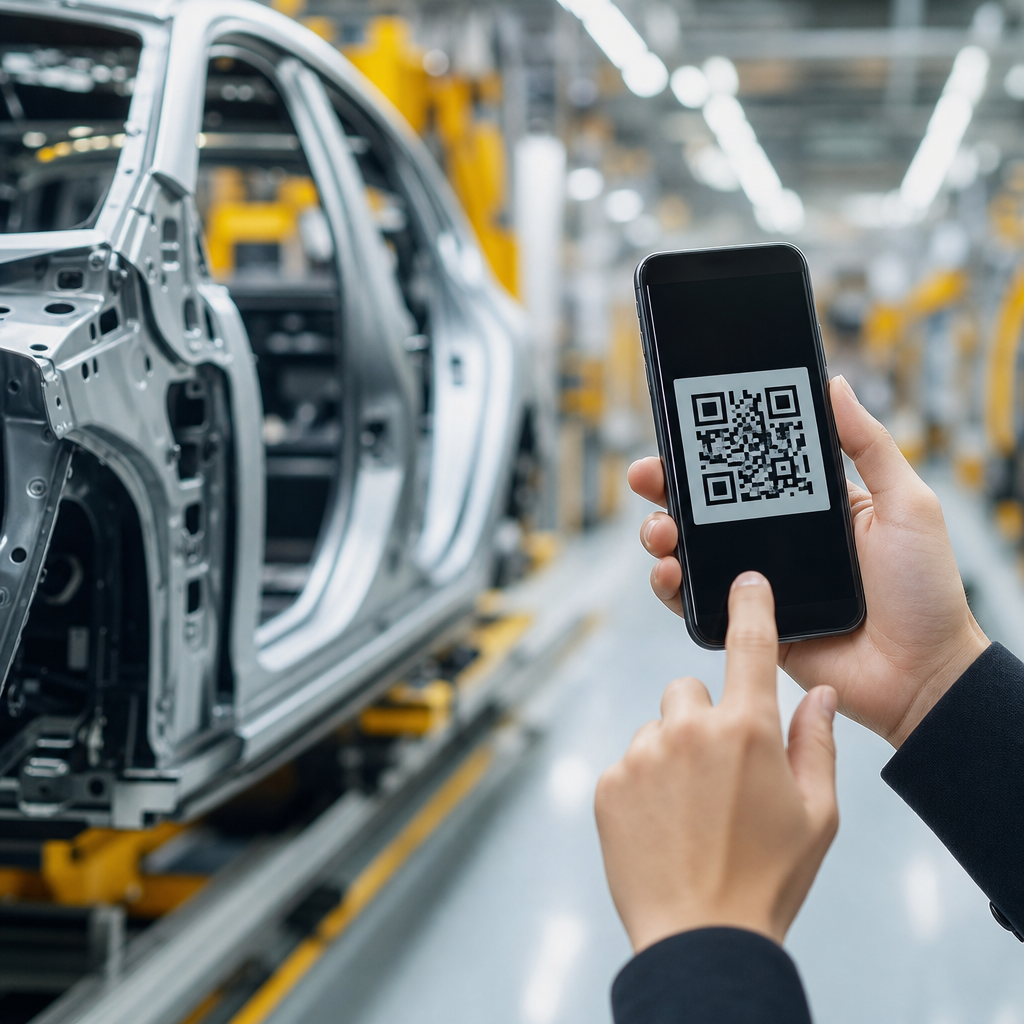
The first major milestone came in 1994, when Denso Wave, a subsidiary of the Toyota Group in Japan, developed the QR code to improve component tracking in automotive manufacturing. Traditional barcodes were becoming a bottleneck because they stored limited data and required more controlled scanning. Production lines needed a code that could be read at high speed and from different orientations while carrying more information about parts, batches, and destinations. Denso Wave engineer Masahiro Hara led the development effort, and the design priorities were explicit: high-speed readability, robust error tolerance, and sufficient data density for industrial use.
What made the new symbol different was not just its square shape. It was the ability to encode numeric, alphanumeric, byte, and kanji data efficiently inside a matrix structure. The finder patterns in three corners gave scanners an immediate reference for orientation, which dramatically reduced the time needed to locate and decode the symbol. In plain terms, factory workers did not need to line up the scanner carefully. The code could be read quickly, even when items moved fast or were positioned inconsistently. That industrial advantage is embedded in the name Quick Response.
Denso Wave also made a strategically important choice that shaped the next three decades: it did not aggressively enforce patent rights for broad public use of the technology. That decision lowered barriers to adoption and allowed QR codes to spread beyond automotive manufacturing into logistics, retail, and eventually consumer applications. In my experience, open availability matters more than many companies realize. A technically superior code often fails if licensing friction slows implementation. QR codes avoided that trap early, giving them a stronger path to standardization and ecosystem growth.
Standardization and Early Industrial Adoption
The second milestone was formal standardization, which converted an effective proprietary invention into a dependable cross-industry format. During the late 1990s and early 2000s, QR code specifications were formalized through Japanese Industrial Standards and then internationally through ISO/IEC 18004. Standards matter because they define symbol versions, module placement, mask patterns, encoding modes, and error correction levels in a way that independent software and hardware vendors can support consistently. Without that common framework, one scanner might read a code that another rejects, which would have limited QR codes to narrow supply-chain environments.
Once standards stabilized, industrial adoption expanded. Automotive plants used QR codes to track assemblies and subassemblies. Warehouses used them to identify pallets and bins. Electronics manufacturers used them on compact components where a linear barcode would not fit. Healthcare and laboratory settings began applying 2D symbols to samples and instruments because they could store more traceability data in less space. A useful comparison is that a standard UPC barcode mainly points to a product identifier, while a QR code can directly carry serial numbers, lot information, URLs, and structured text. That flexibility made it practical across operations with different data needs.
Industrial use also confirmed the value of error correction. Reed-Solomon coding allows QR symbols to be recovered even when part of the printed pattern is damaged, dirty, or missing. Depending on the selected error correction level, roughly 7 percent, 15 percent, 25 percent, or 30 percent of the symbol can be restored. In the field, this means labels can survive scratches, packaging wear, and moderate print defects. I have seen distribution teams keep scan rates high on corrugated packaging precisely because QR codes remain readable in conditions that degrade ordinary labels.
Mobile Internet Growth Turned QR Codes Into a Consumer Tool
The third milestone was the convergence of camera phones, mobile internet access, and consumer marketing in the 2000s. In Japan, QR codes gained traction earlier than in many Western markets because mobile carriers, handset makers, and advertisers built a stronger early ecosystem around scanning. Brands placed QR codes on posters, magazines, and packaging to connect offline media with mobile websites. The value proposition was simple and still relevant: remove typing friction. Instead of entering a long URL on a small keypad, a user could scan and go directly to the desired page.
However, early global adoption was uneven. Outside Japan, many phones lacked good cameras, reliable autofocus, or preinstalled scanning software. That created a classic usability gap. People had to know what a QR code was, download a reader app, grant permissions, and then try to scan a sometimes poorly printed symbol linked to a non-mobile-friendly site. The code itself was not the only issue; the full user journey often failed. This is one reason QR codes periodically appeared overhyped during the late 2000s and early 2010s. The infrastructure around them was not mature enough.
Even so, this period mattered because it established the consumer use cases that later succeeded at scale. Marketers learned that a QR code works only when the destination is immediate, relevant, and optimized for the device in hand. Retailers began using codes for product details and offers. Event organizers used them for ticketing. Transit systems explored them for mobile boarding and access control. Those experiments generated operational knowledge that became valuable when smartphone platforms later removed the scanning barrier. The lesson from this milestone is that technology adoption depends as much on surrounding experience design as on the symbol itself.
Smartphone Camera Integration Created the Modern QR Era
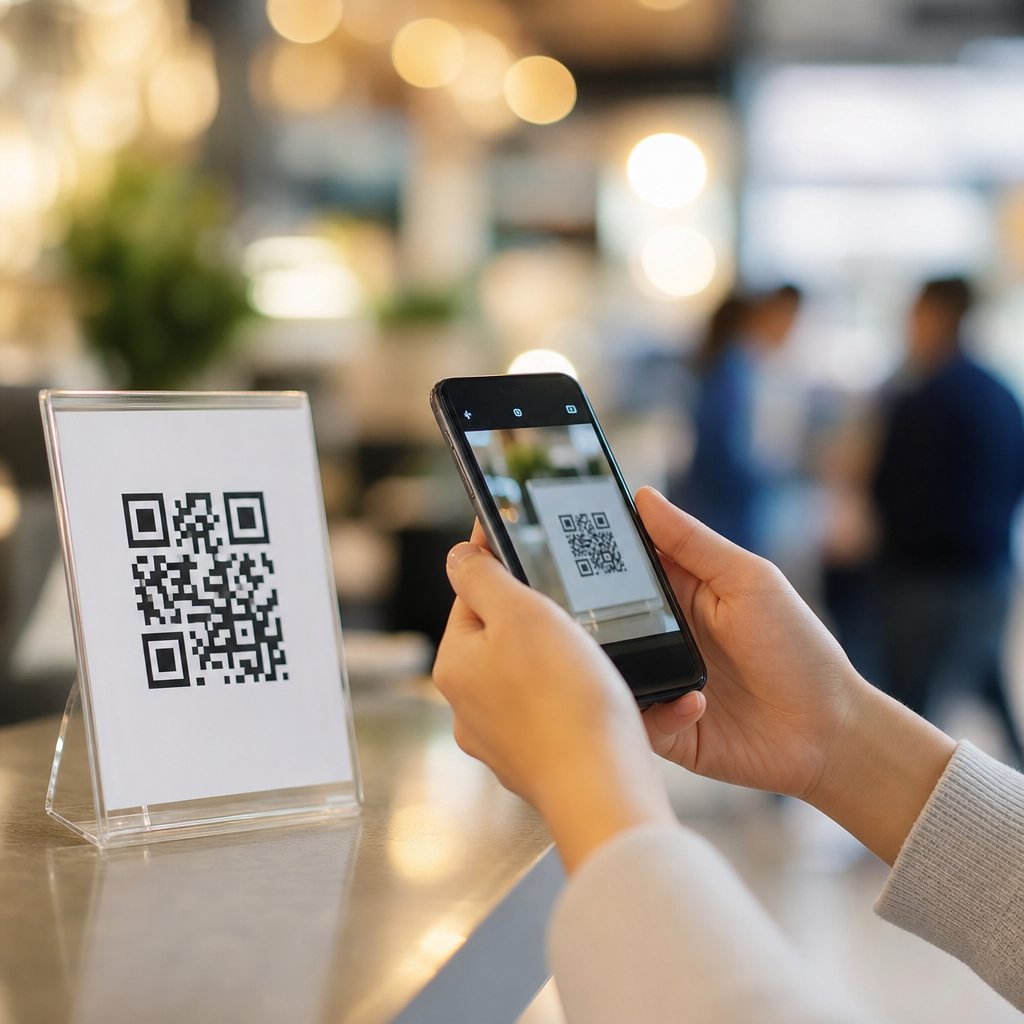
The fourth and perhaps most decisive milestone was native QR scanning through smartphone cameras. When major mobile platforms integrated QR recognition directly into the camera experience, the user no longer needed a separate app. That single change eliminated friction at massive scale. Apple added broad QR detection into the Camera app with iOS 11 in 2017, while Android ecosystems increasingly built scanning into native camera software and services such as Google Lens. Once scanning became ambient behavior rather than a special task, QR codes moved from occasional novelty to mainstream utility.
This shift transformed deployment standards. Businesses could finally assume that most customers already had a scanner in their pocket and knew how to use it. In my own rollout work, this changed planning entirely. Before native support, every campaign had to educate users about scanning. After native support, the work focused on placement, landing page speed, analytics tagging, and print quality. That is a much healthier implementation model because it treats the QR code as a dependable access mechanism rather than a speculative engagement trick.
The impact spread quickly across sectors. Restaurants used QR codes for menus and ordering. Retail stores used them for product education and loyalty enrollment. Museums used them for exhibit interpretation in multiple languages. Employers used them for applicant flows on posters and storefront windows. Public agencies used them to direct residents to forms and service information. The milestone was not merely technical integration; it was normalization. The average consumer no longer had to be taught what to do when seeing a square matrix code.
| Milestone | Approximate Period | Primary Impact | Representative Use Case |
|---|---|---|---|
| Invention at Denso Wave | 1994 | High-speed, high-capacity industrial tracking | Automotive parts management |
| International standardization | Late 1990s to 2000s | Cross-vendor compatibility and wider industry adoption | Logistics and manufacturing labels |
| Early mobile marketing adoption | 2000s | Offline-to-online consumer linking | Posters, magazines, packaging |
| Native smartphone scanning | 2017 onward | Mainstream usability without extra apps | Menus, tickets, product pages |
| Pandemic-driven acceleration | 2020 onward | Contactless interaction at scale | Payments, check-ins, digital forms |
Pandemic Acceleration and the Rise of Contactless QR Workflows
The fifth milestone arrived during the COVID-19 pandemic, when QR codes became critical infrastructure for contactless interaction. Restaurants replaced shared physical menus with scan-to-view menus. Offices, clinics, and event venues used codes for health forms, check-in flows, and visitor registration. Payment providers expanded scan-to-pay options. Governments and health authorities used QR systems for information access, vaccination records in some jurisdictions, and location check-in programs. Adoption accelerated not because the underlying symbol changed, but because public behavior and operational requirements changed suddenly.
This period also corrected a long-standing misconception that QR codes were mainly marketing tools. During the pandemic, they proved they could support serious operational workflows with measurable efficiency benefits. A restaurant could update a digital menu instantly without reprinting. A venue could direct all entrants to one standardized web form. A merchant could reduce contact points at checkout. These are concrete process improvements, not promotional experiments. I saw organizations that had ignored QR codes for years implement them within days because they solved immediate business continuity problems.
There were weaknesses too. Some businesses launched poor experiences, such as PDF menus that loaded slowly on mobile networks or check-in pages that collected unnecessary data. Security concerns also grew because users became accustomed to scanning unfamiliar codes. This created room for phishing, malicious redirects, and fraudulent stickers placed over legitimate signage. The milestone therefore includes an important operational lesson: as QR usage scales, governance matters. Clear labeling, branded destinations, HTTPS pages, and routine inspection of physical placements are essential safeguards.
From Static Symbols to Dynamic, Secure, and Measurable QR Systems
The latest milestone is the shift from simple static QR codes to dynamic, managed, and secure QR ecosystems. A static QR code directly encodes final data such as a URL, phone number, or plain text. It is simple and durable, but difficult to change once printed. A dynamic QR code typically encodes a short redirect URL that points to a managed service, allowing the destination to be updated without replacing the printed symbol. This model supports analytics, campaign routing, A/B testing, expiration rules, geolocation logic, and device-based personalization. For businesses, that makes QR codes part of a measurable digital system rather than a fixed label.
Security and trust have also become central. Payment networks and authentication systems use signed payloads, tokenization, one-time session logic, or app-bound verification to reduce fraud. The EMVCo framework for QR payments helped standardize merchant-presented and consumer-presented payment models in many markets. In packaging and anti-counterfeit programs, QR codes increasingly connect to serialization platforms, digital product passports, and traceability systems. In regulated environments, the symbol itself is only one layer; the real value comes from the governed data architecture behind it.
Looking ahead, the history of QR codes shows a pattern of adaptation rather than reinvention. The visual form remains familiar, but the surrounding systems keep expanding: better cameras, smarter computer vision, richer analytics, stronger standards, and tighter integration with mobile wallets, retail platforms, and supply-chain software. That is why QR codes continue to survive waves of new technology. They are inexpensive to print, fast to deploy, easy to recognize, and flexible enough to support both basic links and sophisticated workflows.
The key milestones in QR code technology reveal a clear story. QR codes began as an industrial response to the limitations of linear barcodes, matured through formal standards, expanded into consumer mobile use, broke into the mainstream through native smartphone scanning, accelerated dramatically during the pandemic, and now operate as part of secure, data-rich digital systems. Every stage added a capability that made the technology more useful: more data, faster reading, better resilience, lower friction, broader trust, and stronger measurability.
For anyone studying the history of QR codes under the broader QR Code Basics & Education topic, the main takeaway is that today’s everyday scan is backed by decades of engineering and operational learning. That history matters because it explains best practice. Successful QR deployment depends on clear purpose, reliable print quality, mobile-optimized destinations, governance, and security awareness. If you are building a deeper understanding of QR technology, use this hub as your starting point, then explore related articles on QR code types, how QR codes work, static versus dynamic codes, and QR code security to apply the history in practical ways.
Frequently Asked Questions
What was the original purpose of the QR code, and why was it created?
The QR code was originally developed to solve a practical industrial problem: traditional one-dimensional barcodes could not store enough information and were too slow to scan efficiently in fast-moving manufacturing environments. In the 1990s, engineers at Denso Wave, a subsidiary of the Toyota Group in Japan, created the QR code to improve the tracking of automotive parts during production. The goal was to build a code that could be read quickly from multiple angles while holding significantly more data than standard barcodes.
This was a major milestone because it defined the core strengths that still make QR codes useful today. By storing information both horizontally and vertically, the new two-dimensional format dramatically expanded data capacity. Just as important, it allowed for rapid scanning, which is where the term “Quick Response” comes from. The technology was not initially intended for consumer marketing, payments, or smartphone use. It was a precision tool for manufacturing efficiency. However, because the design was so flexible and reliable, it eventually moved far beyond factories and became a universal method for linking physical items to digital content.
What made QR codes more advanced than traditional barcodes?
The biggest advancement was data capacity. A traditional barcode stores information in a single direction, usually as a horizontal sequence of lines and spaces. That limits how much information it can contain and what kinds of applications it can support. QR codes, by contrast, are matrix barcodes that store data in two directions, allowing them to carry much larger amounts of information in a relatively small printed area. This made them far more versatile from the beginning.
Another important milestone was scan performance. QR codes were designed to be read quickly and accurately, even when scanned from different angles. Their distinctive square finder patterns in the corners help scanners identify orientation almost instantly. In addition, QR codes include error correction, which means they can often still be read even if part of the symbol is damaged, dirty, or partially obscured. That durability gave QR technology an advantage in industrial settings first, and later in retail, logistics, advertising, ticketing, and public information systems. In simple terms, QR codes were not just a better barcode; they represented a broader shift toward compact, resilient, information-rich machine-readable communication.
How did QR codes evolve from an industrial tool into a global consumer technology?
The transition happened gradually, and it is one of the most important milestones in QR code history. After proving successful in manufacturing and logistics, QR codes began appearing in broader commercial uses because businesses recognized how efficiently they could connect physical products, printed materials, and packaging to digital information. Their open usability played a big role in that expansion. Because the technology was not locked into a narrow proprietary system, developers and companies could adopt it across industries with relatively low barriers.
The real acceleration came with the rise of smartphones. Once mobile phones gained cameras and software capable of reading QR codes, the technology became much more accessible to the public. Suddenly, a code printed on a poster, menu, product label, or event ticket could instantly launch a website, display contact information, open a map, or trigger a payment process. What had once been a specialized industrial tracking tool became a convenient bridge between offline and online experiences. Later milestones, including mobile payment systems and widespread public familiarity during contactless service adoption, reinforced QR codes as a globally recognized standard rather than a niche technical format.
Why are QR codes considered so durable and adaptable over time?
QR codes have lasted because they were engineered with practical resilience in mind. One of their defining strengths is error correction, which allows the code to remain readable even if a portion is damaged or missing. That feature made them dependable in real-world environments where labels might be scratched, folded, smudged, or exposed to wear. This durability helped QR codes survive and succeed in settings where reliability mattered more than novelty.
They are also highly adaptable because the underlying format can support many kinds of data and many kinds of user interactions. A QR code can point to a website, store plain text, launch an app, share contact details, enable authentication, support inventory tracking, or facilitate digital payments. This flexibility means the same core technology can serve manufacturing, transportation, healthcare, education, hospitality, and marketing without needing to be reinvented. Another reason for their long-term success is familiarity: the visual form of the QR code has become globally recognizable. That combination of technical resilience, broad compatibility, and user recognition explains why QR codes have remained relevant across decades of technological change.
What are the most important milestones in the history of QR code technology?
Several milestones stand out. The first is the invention of the QR code by Denso Wave in 1994, which established the basic structure that distinguished it from older barcode systems. This was followed by its early adoption in automotive manufacturing and logistics, where speed, capacity, and reliability proved the technology’s value. Another key milestone was the decision to make the technology broadly available, which encouraged wider industry adoption and prevented it from remaining confined to a single use case.
A later and transformative milestone was integration with mobile technology. As smartphones became common and cameras improved, QR codes moved into consumer life in a meaningful way. They began to power product information access, mobile ticketing, loyalty systems, payments, and interactive advertising. In more recent years, contactless interactions significantly expanded everyday use, making QR codes a standard part of menus, check-ins, authentication, and digital transactions around the world. Taken together, these milestones show a clear progression: QR codes began as a targeted industrial innovation, matured into a versatile data-sharing tool, and ultimately became a durable global standard for connecting physical spaces and objects with digital information.