
Small businesses are winning with QR codes because the technology closes the gap between offline attention and online action in a way that is fast, measurable, and inexpensive. A QR code, or quick response code, is a two-dimensional barcode that smartphone cameras can scan to open a website, payment page, menu, review form, coupon, app screen, or contact card. For a local retailer, café, salon, contractor, clinic, or service business, that simple scan can turn a poster, package, receipt, table tent, storefront sign, or business card into a direct response channel. I have seen campaigns succeed not because the code itself was clever, but because the destination was useful, the offer was clear, and the placement matched customer intent. That is why small business QR code wins matter: they make limited budgets work harder, connect physical locations to digital conversion paths, and create data that owners can actually use to improve results.
What makes this topic especially important is the shift in customer behavior. People now expect immediate access to information without typing long URLs or searching through menus. They want to scan and book, scan and pay, scan and review, or scan and save. In practice, the best-performing campaigns reduce friction at moments when interest is highest. A customer standing outside a bakery wants today’s menu and opening hours. A diner at a table wants to reorder quickly or join a loyalty program. A homeowner meeting a plumber wants proof of reviews, pricing options, and a fast quote request. When a QR code meets that need with one scan, response rates improve. This hub article explains where small businesses are seeing the strongest wins, what campaign patterns work best, how to measure outcomes, and what common mistakes reduce performance so future case-study pages under this topic can go deeper by industry and tactic.
Why QR codes work so well for small businesses
QR codes work for small businesses because they remove steps from the customer journey. In marketing audits, the biggest conversion losses usually come from friction: typing errors, delayed follow-up, poor mobile navigation, or offers that are difficult to redeem. A code shortens the path. Instead of asking someone to remember a domain, search for a brand, and navigate to a page, the business presents one scannable action tied to one clear outcome. This is especially useful in local marketing, where attention is brief and context matters. Foot traffic, package inserts, receipts, invoices, event signage, and printed mailers all become interactive media.
Another reason small businesses win with QR codes is cost efficiency. A neighborhood business can launch a campaign without buying expensive hardware or media software. Dynamic QR code platforms such as Bitly, QR Code Generator Pro, Uniqode, or Beaconstac allow owners to change the destination after printing and to track scans by device, location, time, and campaign source. That flexibility matters when menus change, offers expire, or a landing page needs revision. In my experience, the strongest operators use QR codes as infrastructure rather than as one-off gimmicks. They connect each code to a specific objective: reservations, leads, repeat visits, payments, reviews, or loyalty enrollment. Once that discipline is in place, small improvements in signage, copy, and landing-page speed compound quickly.
Where the biggest small business QR code wins are happening
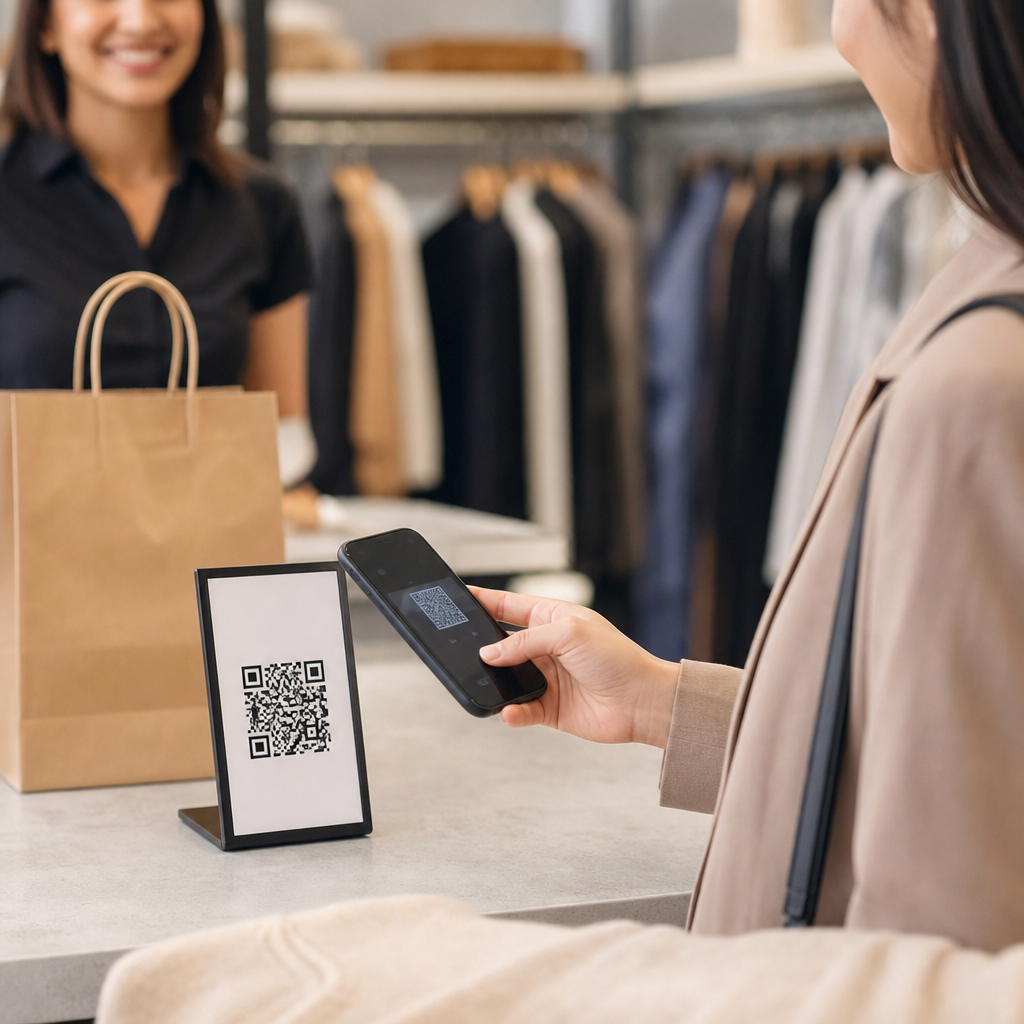
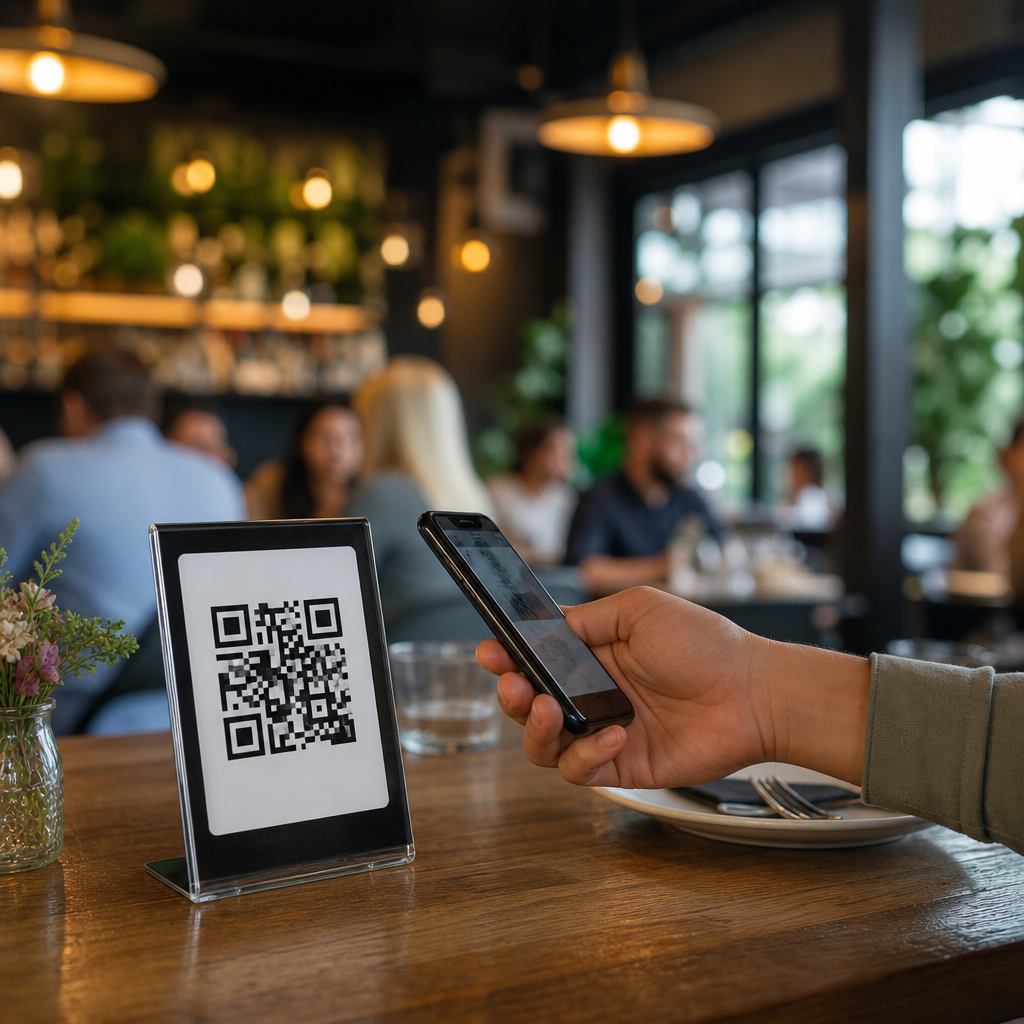
Restaurants and cafés are obvious winners, but they are not the only ones. Food businesses use QR codes for digital menus, waitlists, online ordering, loyalty sign-ups, and review requests printed on receipts. The win is not just convenience; it is operational efficiency. Staff spend less time answering repetitive menu questions, and promotions can be updated instantly. Retail stores use codes on shelf talkers, window displays, and packaging to deliver product education, style guides, warranty registration, and reorder links. Service businesses, including HVAC companies, electricians, cleaners, and landscapers, place codes on trucks, invoices, leave-behinds, and yard signs to collect quote requests and reviews while the job is fresh in the customer’s mind.
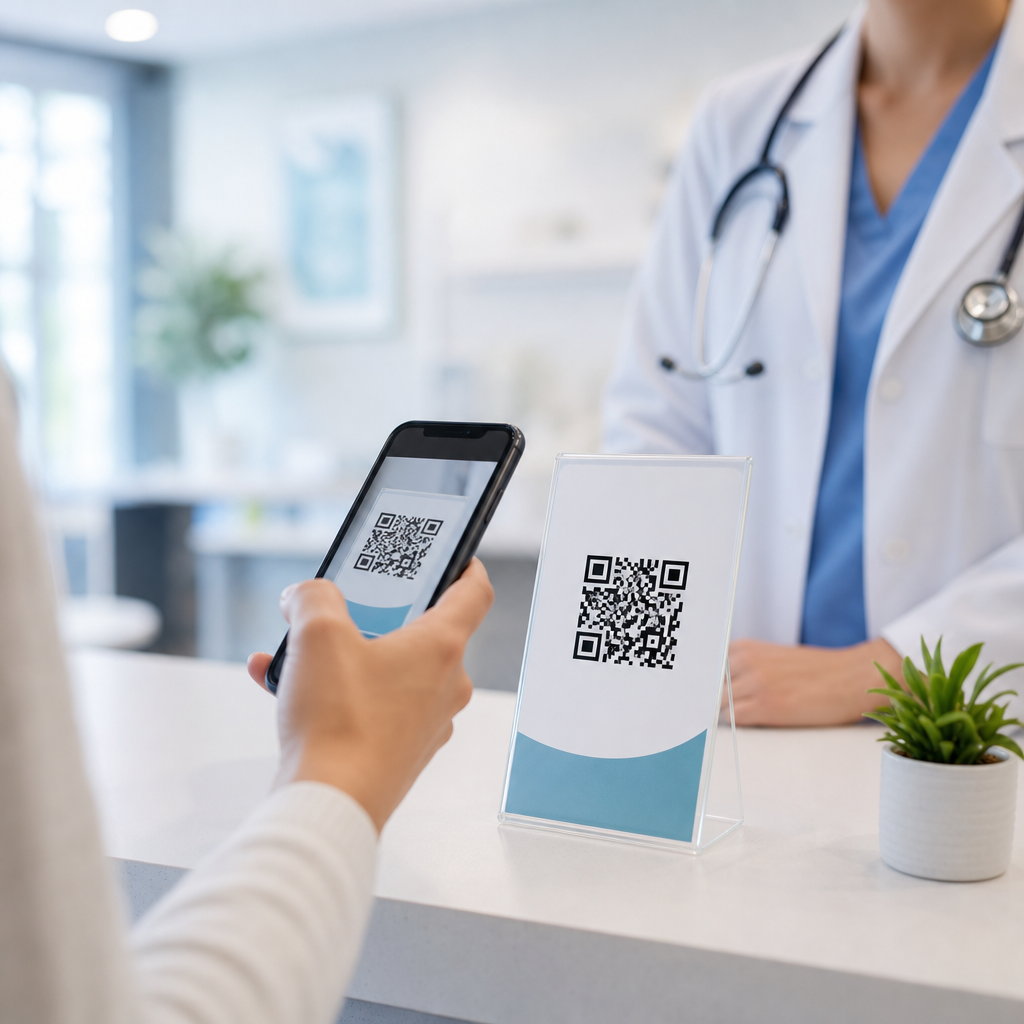
Health, beauty, and professional services also benefit. Salons use QR codes for booking, prepaid packages, and aftercare instructions. Dental and medical offices use them for intake forms, payment links, and patient education, although regulated businesses must pay close attention to privacy and avoid exposing sensitive information in public scan flows. Fitness studios place codes on mirrors, front desks, and event flyers to drive trial passes and class schedules. Real estate agents use codes on signs and property brochures to surface virtual tours and lead forms. At community events and local markets, artisans and home-based businesses use QR codes to collect payments, grow email lists, and turn one-time buyers into repeat customers. Across these categories, the pattern is the same: the code succeeds when it answers the next question a customer already has.
Winning campaign types and what they achieve
Not every QR code campaign performs equally well. The strongest small business QR code wins usually fall into a few repeatable categories. Review generation campaigns work because they capture customer sentiment at the peak of satisfaction. Loyalty campaigns work because they trade a quick reward for repeat behavior. Payment and ordering campaigns work because they save time. Educational campaigns work because they reduce uncertainty before purchase. Lead generation campaigns work because they transform static print into measurable demand capture. When owners choose the wrong objective, performance falls. For example, placing a generic homepage QR code on every asset often produces weak results because the scan destination is too broad.
| Campaign type | Best placement | Main goal | Why it wins |
|---|---|---|---|
| Review request | Receipts, counters, invoice emails, packaging | More high-quality reviews | Captures feedback at the moment of satisfaction |
| Loyalty signup | Tables, checkout, product inserts | Repeat visits | Reduces enrollment friction to one scan |
| Order or pay | Menus, table tents, service invoices | Faster transactions | Speeds checkout and shortens lines |
| Lead capture | Flyers, vehicle wraps, yard signs, direct mail | Quote requests | Makes offline advertising measurable |
| Product education | Shelves, packaging, showroom displays | Higher conversion confidence | Answers questions without staff intervention |
These campaign types can be combined, but each code should still have one primary purpose. A bakery might use one code on window signage for “See today’s menu,” another at checkout for “Join rewards and get a free coffee,” and another on packaging for “Leave a review.” That clarity improves scan intent and landing-page relevance. It also improves measurement because scan counts, conversion rates, and revenue can be tied to a defined action rather than mixed together in one broad traffic source.
Real-world examples of small business QR code wins
One of the clearest wins I have seen came from a multi-location coffee shop that moved from a static menu URL on signage to location-specific dynamic QR codes. Each store used a code tied to its own menu, ordering page, and loyalty prompt. Because the business tagged scans by location and placement, it learned that window decals generated early-morning menu scans, while table tents produced afternoon loyalty enrollments. That insight led to different calls to action by daypart. The result was not just more scans; it was more useful scans that aligned with customer intent.
A home services company provides another strong example. Its technicians left behind printed cards after every completed job, each containing a QR code that opened a simple mobile page with three options: leave a review, refer a neighbor, or request another service. The company offered no gimmicky incentives, which helped preserve review quality and platform compliance. Because customers scanned while trust was high, review volume increased steadily, and the referral option generated incremental leads in the same neighborhoods where trucks were already visible. The value came from timing and simplicity, not from the code alone.
Retail examples are equally practical. A boutique using QR codes on shelf signage linked each code to fit notes, care instructions, and alternate sizes available online. Staff reported fewer abandoned purchases because shoppers got quick answers without waiting for assistance. At seasonal pop-up events, makers and specialty food vendors often place a payment QR code next to a branded signup code for future offers. The payment code converts the immediate sale; the signup code extends the relationship after the event ends. That combination helps small businesses avoid the common problem of strong weekend sales followed by no retention.
How to build a QR code campaign that actually converts
The most effective campaigns start with a single question: what should the customer do immediately after scanning? Once that action is clear, every element should support it. The call to action must be explicit. “Scan for 10% off your next visit” will outperform “Scan me” because it states the benefit. The landing page must load quickly, be mobile-first, and continue the promise made on the sign or package. If the code says “Book a haircut in 30 seconds,” the page should open directly to the booking flow, not a general homepage. This alignment is basic conversion practice, yet it is where many campaigns fail.
Design and placement also matter more than many owners expect. Codes should have adequate quiet space, strong contrast, and enough size for the expected scanning distance. A common field rule is to increase code size as viewing distance grows; tiny codes on posters or shop windows often underperform simply because they are hard to scan. Test in realistic conditions, including glare, curved packaging, dim interiors, and older phone cameras. Use dynamic codes whenever possible so the destination can be changed without reprinting. Add UTM parameters for analytics platforms such as Google Analytics 4, and create unique codes by placement so you can distinguish scans from receipts, packaging, in-store signage, and direct mail. That level of attribution is what turns a QR code from a novelty into a repeatable growth tool.
Measuring results, avoiding mistakes, and scaling what works
Small business QR code wins are easiest to sustain when owners track more than scan volume. A high number of scans means little if the landing page fails to convert. The metrics that matter are scans, unique scans, click-throughs, form completions, bookings, orders, review submissions, and revenue attributed to the campaign. Compare placements, calls to action, and destinations. A counter sign may generate fewer scans than a receipt insert but produce a higher booking rate because the visitor is more motivated. Without that context, optimization decisions become guesswork.
Several mistakes show up repeatedly. The first is sending every scan to the homepage. The second is using the same code everywhere, which hides what is working. The third is offering no reason to scan. The fourth is neglecting mobile experience, especially page speed and form length. The fifth is printing static codes for information that changes often. There are also trust and compliance issues. Public QR codes should not route users through suspicious redirects, and businesses should avoid collecting unnecessary personal data. For payments, use established providers and secure checkout pages. For healthcare or regulated industries, ensure any linked forms meet relevant privacy and security requirements. Standards from GS1 are also shaping how QR codes will carry richer product information in retail, which means businesses that learn disciplined implementation now will be better prepared for broader consumer expectations later.
The takeaway is straightforward: QR codes help small businesses win when they reduce friction, match real customer intent, and connect every physical touchpoint to a measurable digital action. They are not magic squares that fix weak offers or poor service. They are practical bridges between attention and conversion. The businesses seeing the best outcomes use them with precision. They create one clear promise, send scanners to one relevant destination, measure what happens next, and keep improving based on real behavior. That is why this subtopic deserves a hub page. Small business QR code wins span reviews, loyalty, payments, menus, lead generation, and post-purchase education, and each branch can support deeper case studies by industry and campaign type.
If you want better results from print, packaging, signage, receipts, or in-person service interactions, start with one high-intent use case and build from there. Choose a dynamic QR code, write a direct call to action, create a fast mobile landing page, and track conversions by placement. Then compare results and expand the winners. Done well, QR codes give small businesses something rare: a low-cost marketing tool that is easy to deploy, easy to measure, and capable of improving both customer experience and revenue at the same time. Use this page as your hub, identify the campaign model that fits your business, and launch a test that customers can complete in a single scan today.
Frequently Asked Questions
How are small businesses using QR codes to turn offline attention into real customer action?
Small businesses are using QR codes as a simple bridge between the physical world and the digital actions that drive sales, bookings, and loyalty. Instead of asking customers to remember a website, type in a long URL, search for a business name, or download an app later, a QR code creates an instant next step. A customer can scan a code on a storefront sign, product package, flyer, receipt, table tent, invoice, vehicle wrap, or service card and immediately land on a menu, appointment page, payment screen, coupon, review request, contact form, or online store. That speed matters because it reduces friction at the exact moment a person is interested.
For example, a café can place QR codes on tables that open the menu, loyalty program, and mobile ordering page. A salon can use them on mirrors or checkout counters to direct clients to rebooking pages. A contractor can add a QR code to yard signs or leave-behind materials that opens a quote request form. A clinic can use one for patient forms, check-in instructions, or follow-up care information. In each case, the code helps move someone from passive attention to measurable action in seconds. That is a major reason QR codes work so well for smaller businesses with limited marketing budgets: they make existing foot traffic, printed materials, and customer interactions far more productive without adding much cost or complexity.
Why are QR codes especially effective for local and budget-conscious businesses?
QR codes are especially effective for local businesses because they are inexpensive to create, easy to deploy, and versatile enough to support many different goals. A small business does not need a large advertising team or custom app to benefit. In many cases, a single code can be printed on signs, menus, packaging, postcards, receipts, and business cards, then linked to a landing page that supports promotions, bookings, payments, or customer support. That makes QR codes one of the few tools that can improve both marketing and operations at the same time.
They are also effective because they make local intent easier to capture. When someone is standing in front of a shop, sitting at a restaurant table, receiving a product, or reviewing an invoice, they are already close to making a decision. A QR code gives that person a direct path to act while interest is highest. Instead of hoping they search for the business later, the business can present a clear call to action such as “Scan to book,” “Scan for today’s offer,” “Scan to pay,” or “Scan to leave a review.” That immediacy often leads to higher conversion rates than traditional print ads alone.
Another advantage is measurability. Unlike many offline marketing efforts, QR code campaigns can be tracked. A business can see how many scans came from a flyer, poster, event booth, direct mail piece, table sign, or product label. That helps owners understand what is working and make smarter decisions about where to invest. For small businesses that need practical, low-risk tools, QR codes offer a rare combination of affordability, convenience, and clear performance data.
What can a small business link a QR code to, and which destinations work best?
A QR code can link to almost any digital destination that supports a useful next step for the customer. Common options include a website homepage, product page, online ordering system, reservation or booking calendar, digital menu, review form, payment page, coupon or discount offer, event registration page, app download screen, customer feedback survey, contact card, map directions, Wi-Fi access details, or social profile. The best destination depends on the setting and the customer’s intent at the moment they scan.
For a restaurant or café, a digital menu, order-ahead page, loyalty sign-up, or review request often performs best. For a retailer, a code might lead to a product demonstration, care instructions, a reorder page, or an online catalog for items not available in-store. For service businesses such as plumbers, electricians, landscapers, and cleaners, quote request forms, service menus, financing options, and scheduling pages are often strong choices. For salons, spas, fitness studios, and clinics, rebooking, intake forms, class schedules, and membership offers can be highly effective. The key is matching the destination to the context in which the code appears.
The most successful QR code destinations are fast, mobile-friendly, and focused on one primary action. If a person scans a code on a receipt to leave a review, they should not have to navigate through multiple pages to find the review form. If they scan a code on packaging for setup instructions, they should land directly on those instructions. Small businesses get better results when they avoid generic destinations and instead create clear, context-specific landing pages that answer the customer’s immediate need.
How can a business measure whether its QR code strategy is actually working?
A business can measure QR code performance by tracking both scan activity and what happens after the scan. At the simplest level, businesses can use dynamic QR codes or trackable links to see how many people scanned, when they scanned, and sometimes where the scan happened. That basic data already provides more visibility than many traditional print materials. A business can compare scans from window signage, product packaging, direct mail, event handouts, countertop displays, and receipts to identify which placements attract the most engagement.
However, scan count alone does not tell the full story. The most useful measurement comes from tying the code to a conversion goal. That might be an online order, an appointment booking, a payment completed, a form submission, a coupon redemption, a review posted, or a loyalty sign-up. By watching how many users complete the intended action after scanning, a business can calculate which QR code campaigns are generating real value. If a flyer gets many scans but few bookings, the issue may be the landing page, offer, or call to action rather than the code itself.
Small businesses can improve results further by testing different wording, placements, offers, and page designs. A sign that says “Scan for 10% off today” may outperform one that simply says “Scan here.” A QR code at checkout might generate more reviews than one printed on the bottom of a receipt. Over time, these insights help businesses refine their customer journey and increase return on investment. In practical terms, QR codes give small businesses a way to make offline marketing more accountable and more adaptable.
What are the best practices for creating QR codes that customers will actually scan?
The best-performing QR codes are easy to notice, easy to trust, and tied to an obvious customer benefit. First, placement matters. A code should appear where customers naturally pause or make decisions, such as entrance doors, tables, checkout counters, packaging, invoices, brochures, or service materials. It also needs to be large enough to scan comfortably and printed with strong contrast so smartphone cameras can read it quickly. If the code is too small, distorted, poorly lit, or surrounded by visual clutter, scan rates will suffer.
Second, every QR code should include a clear call to action. Customers are much more likely to scan when they know what they will get. Phrases like “Scan to book now,” “Scan for the menu,” “Scan to pay,” “Scan for setup instructions,” or “Scan to claim your discount” remove uncertainty and set expectations. Businesses should also make sure the linked page loads quickly and works well on mobile devices. A slow or confusing landing page can waste the opportunity created by the scan.
Third, trust and relevance are important. People are more likely to scan when the code appears in a credible setting and leads to something directly related to their current experience. A QR code on a product should deliver useful product information. A code on a receipt should make it easy to join a loyalty program or leave feedback. A code in a waiting room should help with forms, check-in, or educational information. When the destination feels logical and helpful, adoption rises.
Finally, businesses should use QR codes strategically rather than everywhere at once. It is better to have a few purposeful codes tied to specific customer actions than many generic codes with no clear outcome. By combining smart placement, a strong incentive, mobile-friendly design, and simple tracking, small businesses can turn QR codes into a dependable tool for sales, convenience, and customer engagement.