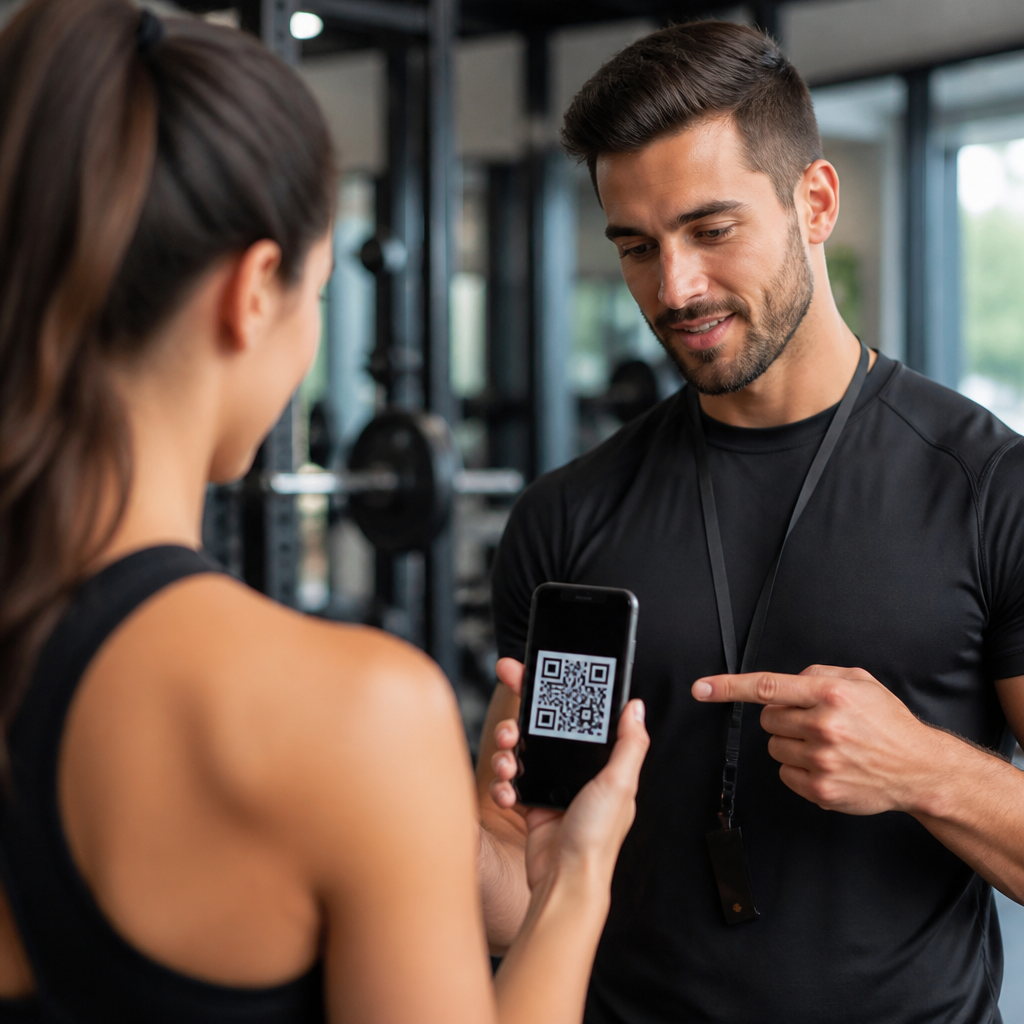
QR codes for personal training marketing give coaches, gym owners, and fitness brands a fast way to connect offline attention with digital action. In simple terms, a QR code is a scannable image that sends someone to a webpage, video, form, app, coupon, or contact card. In personal training, that means a poster can open a free mobility guide, a business card can launch a consultation booking page, and a mirror decal can lead members to a trainer profile in seconds. I have used QR campaigns in fitness settings where the difference between a static flyer and a scannable offer was the difference between curiosity and an actual lead. When the scan path is clear, response rates improve because people do not need to type a long URL, search Instagram, or ask front desk staff for details.
This matters because personal training is a trust-based service sold in high-distraction environments. Members are moving between sets, checking class times, and making split-second decisions about whether a trainer feels credible and approachable. Marketing in that setting has to be immediate, useful, and measurable. QR codes help solve all three problems. They deliver instant information, they can present social proof such as testimonials or before-and-after case studies, and they create trackable touchpoints through analytics in platforms like Bitly, Beaconstac, QR Code Generator Pro, and Uniqode. For gyms and independent trainers, that measurement is valuable because marketing budgets are usually tight and every lead source needs to prove itself. Used correctly, QR codes become a practical acquisition and retention tool across lead generation, onboarding, upsells, referrals, and community building.
As a hub topic within QR codes in marketing, personal training sits inside the broader fitness and gyms category but has its own buying journey. A prospect may first notice a trainer on the gym floor, then scan a code on signage, then read client results, then book a fitness assessment, then receive follow-up plans through more QR touchpoints. That journey crosses physical spaces and digital channels constantly. The best campaigns recognize this and build codes around intent, not novelty. A code should answer one direct question: who is this trainer, what problem do they solve, and what should I do next? When that answer is obvious, a simple square graphic becomes a consistent growth channel for trainers who need local visibility, stronger conversion, and better attribution.
Why QR codes work so well in personal training marketing
Personal training is sold through proximity, credibility, and timing. QR codes support all three. Proximity matters because the decision often starts inside the gym, at a health fair, in an apartment fitness center, or at a community race booth. Credibility matters because prospects want to know qualifications, specialties, and client outcomes before committing to sessions that may cost hundreds of dollars per month. Timing matters because intent is fleeting. Someone who feels motivated after a workout is far more likely to act immediately than later at home. A QR code captures that moment with minimal friction.
In practice, the strongest use cases start with a clear audience segment. A trainer focused on fat loss for busy parents should not send every scanner to a generic homepage. They should send them to a landing page with a message that matches the exact pain point, such as “Lose your first 10 pounds without daily two-hour workouts.” A strength coach working with athletes should link to performance assessments, sprint mechanics videos, or a return-to-play screening form. Specificity increases relevance, and relevance increases conversion. Dynamic QR codes are especially useful here because the destination can be changed without reprinting posters, cards, locker clings, or rack tags.
Another reason QR codes perform well is that they support both self-serve and high-touch sales processes. Some leads want to book instantly through Calendly, Vagaro, Mindbody, or Acuity Scheduling. Others need education first. A code can route scanners to a trainer introduction video, a downloadable beginner plan, or a short quiz that recommends the right program. This allows one printed asset to serve different levels of readiness. Trainers who build this path carefully can reduce repetitive front-desk questions while giving prospects enough confidence to book a consultation.
High-value placement opportunities in gyms and fitness environments
Placement determines whether a QR code is ignored or scanned repeatedly. In gyms, the best placements are tied to moments when members naturally ask for help. Free-weight areas are ideal for form-check resources, trainer introductions, or strength assessment offers. Cardio zones can promote fat-loss consultations, heart-rate zone guides, or beginner programs. Group exercise studios are effective for class-to-coaching conversion, especially when members want more accountability after enjoying a class format. Locker rooms, smoothie bars, recovery lounges, and check-in desks also create strong opportunities because members pause there long enough to scan and read.
Outside the gym, personal trainers can extend QR campaigns into apartment complexes, corporate wellness events, physical therapy clinics, youth sports facilities, coffee shop bulletin boards, and local running stores. I have seen trainers produce better leads from a well-placed QR poster at a sports medicine partner location than from a week of broad social ads, simply because the audience was already prequalified. The environment signaled need. Someone leaving a physical therapy appointment may be actively looking for safe post-rehab strength coaching, while a generic ad impression reaches many people with no current intent.
The practical rule is simple: place the code where the next step feels natural. Near a squat rack, “Scan for a free movement screen” makes sense. On a water bottle sticker, “Scan for my weekly workout tips” fits. On a business card, “Scan to book your first session” is direct. The code should never ask people to do too much mental work. Add a short call to action, a benefit, and ideally a visual cue such as a phone icon or a sample screen of the destination page. In testing, these small context signals often lift scan-through because people instantly understand what will happen next.
Core use cases for lead generation, conversion, and retention
Most personal training QR campaigns fall into three business functions: lead generation, conversion, and retention. For lead generation, codes can collect email addresses in exchange for a nutrition guide, a seven-day mobility plan, or a gym orientation checklist. For conversion, they can send prospects to trainer bios, price explainer pages, testimonial galleries, or direct booking calendars. For retention, they can distribute exercise libraries, progress check-in forms, habit trackers, and referral offers that keep current clients engaged between sessions.
A common mistake is using one code for every goal. Better results come from separate campaigns with distinct landing pages and analytics. A code on a front-desk poster should not send people to the same place as a code printed on a post-session handout. The first may need introductory proof and a low-commitment offer. The second can assume trust and promote a package upgrade, accountability app enrollment, or a monthly reassessment. Segmenting by stage lets trainers identify which assets drive booked consultations, package purchases, and repeat sessions.
| Use case | Best QR destination | Primary goal | Example metric |
|---|---|---|---|
| Gym floor signage | Trainer specialty landing page | Lead capture | Scans to form submissions |
| Business cards | Direct booking page | Consultation conversion | Bookings per 100 cards |
| Welcome packets | Onboarding video and app setup | Client activation | Setup completion rate |
| Exercise posters | Form demonstration videos | Authority and retention | Repeat scans per client |
| Referral handouts | Friend offer page | Referral growth | Referrals per active client |
For independent trainers, referral use cases are especially effective. A client who just hit a milestone is emotionally ready to share. Give them a simple printed card with a QR code offering a friend a complimentary assessment or discounted starter package. Because the recommendation comes with social proof from someone they know, these leads usually convert at a higher rate than cold traffic. In facilities where trainers are allowed to market internally, referral cards can become one of the cheapest and cleanest sources of qualified demand.
Campaign design: landing pages, offers, and tracking that convert
The QR code itself does not drive revenue; the destination experience does. A high-converting personal training landing page needs five elements above the fold: a clear headline, a specific outcome, a relevant image or short video, proof, and one primary call to action. For example, a page for new mothers could say, “Rebuild strength safely after pregnancy with one-on-one coaching,” show the trainer in session with a client, include credentials such as NASM CPT or CSCS where applicable, feature a concise testimonial, and offer a “Book a free 15-minute consult” button. Generic phrases like “Transform your life” underperform because they do not answer the visitor’s immediate concern.
Offers should match commitment level. Cold leads usually respond better to low-friction entry points: a free assessment, movement screen, intro call, or downloadable guide. Warm leads may be ready for a paid trial package, such as three sessions plus a goal-setting consultation. Existing members often respond to experience-based upsells like “Scan to join my six-week strength clinic.” In every case, the promise should be concrete. “Improve your deadlift setup in one session” is stronger than “Optimize performance.”
Tracking should be built before printing anything. Use UTM parameters in destination URLs so Google Analytics can separate scans by location, campaign, and asset. Dynamic QR platforms can report scans by date, device, and geography, while booking tools can show completed appointments. If a gym has multiple trainers, each should use unique codes to avoid attribution confusion. In one rollout I managed, simply separating codes by zone revealed that cardio-area signage produced more lead volume, but free-weight-area signage produced better consultation-to-sale rates. That insight changed placement strategy and improved return without increasing spend.
Content ideas by trainer specialty and client segment
Not every trainer sells the same outcome, so QR content should reflect specialization. Weight-loss coaches can link to calorie awareness guides, grocery list templates, habit scorecards, and client journey case studies. Strength coaches can offer technique breakdown videos, testing standards, and periodization explainers. Corrective exercise specialists can connect scanners to posture screens, desk-worker mobility routines, and pain-aware exercise modifications. Sports performance trainers can feature combine prep plans, vertical jump assessments, and return-to-sport checklists. Older-adult fitness coaches may emphasize balance screening, bone-density-safe resistance training, and fall-prevention education.
Fitness businesses serving multiple segments should create content clusters, not one broad resource page. A gym might have separate QR pathways for beginners, women’s strength, senior fitness, youth athletes, and post-rehab coaching. Each path can include a targeted landing page, a lead magnet, a booking option, and a follow-up email sequence. This structure helps both users and search visibility because each topic is tightly focused. It also makes internal linking easier across the wider fitness and gyms content library, such as pages on gym member retention, class promotion, trainer bios, or local fitness event marketing.
Video deserves special attention because personal training is inherently visual. A short coach introduction, exercise demo, or client success explanation often outperforms text-heavy pages for first-time scanners. Keep videos under ninety seconds for top-of-funnel traffic. Explain who you help, what result you specialize in, and what to do next. Add captions because many scans happen in public spaces where audio is off. Hosted properly on a fast page, this format can boost trust quickly without requiring a prospect to read long copy on their phone.
Common mistakes, compliance issues, and operational best practices
The most common mistake in QR codes for personal training marketing is sending traffic to a homepage. Homepages are built for broad audiences, but scans are highly contextual. Another frequent error is poor print execution: tiny codes, low contrast, glossy surfaces with glare, or placement too far from eye level. Codes should usually be tested from the expected scanning distance, printed with adequate quiet space, and paired with a visible instruction such as “Scan to book your assessment.” If staff members cannot explain the offer in one sentence, the campaign is probably too vague.
There are also compliance and trust considerations. If you collect health-related information through forms, use secure tools and avoid asking for unnecessary sensitive details before a legitimate intake process. Be accurate with claims. Trainers should not imply medical diagnosis, guaranteed fat-loss amounts, or unrealistic timelines. If before-and-after photos are used, get written permission and present results responsibly. Brand consistency matters too. The code destination should match the visual identity and message of the printed asset so users do not feel misdirected or suspicious.
Operationally, review campaigns monthly. Check broken links, booking availability, and outdated offers. Retire underperforming placements and expand winners. Ask every new lead where they scanned the code, because attribution data is stronger when analytics and real conversations agree. Train front-desk staff so they know what each major code promotes. The best results come when QR codes are treated as part of a repeatable marketing system rather than a one-off gimmick. In fitness settings, that system can quietly support awareness, education, conversion, and loyalty every day.
QR codes for personal training marketing work because they meet prospects where intent already exists and remove friction from the next step. They turn posters, cards, mirror decals, welcome packets, and referral materials into measurable conversion points. For trainers and gyms, the value is not the code itself but the strategy behind it: targeted placement, clear offers, specialized content, and disciplined tracking. When each scan leads to a page that matches the user’s goal, the experience feels helpful rather than promotional.
As the hub for fitness and gym use cases, this topic shows how flexible QR marketing can be across independent trainers, studio teams, health clubs, sports facilities, and wellness partnerships. The same core method applies everywhere: align the message with the moment, design for mobile action, and track what happens after the scan. Trainers who do this consistently build stronger local visibility, better lead attribution, and smoother client journeys from first interest to long-term retention.
If you are building a personal training marketing system, start with one campaign. Choose one audience, one placement, one offer, and one landing page. Test it, measure scans and bookings, then expand to referrals, onboarding, and retention. A well-planned QR code can become one of the simplest ways to turn in-person attention into qualified fitness clients.
Frequently Asked Questions
How can QR codes help personal trainers and gyms get more leads and clients?
QR codes help personal trainers and gyms turn real-world attention into measurable digital action. Instead of hoping someone remembers your website, social handle, or phone number after seeing a flyer, poster, business card, or gym sign, a QR code removes friction and lets them act immediately. A potential client can scan a code and land on a consultation booking page, a free workout guide, a transformation gallery, a trainer bio, or a short form to claim a trial session. That speed matters because marketing works best when interest and action happen at the same moment.
For personal training businesses, this creates more opportunities to capture intent from people who are already curious. A code on a front desk sign can promote a free fitness assessment. A code on locker room mirrors can lead to trainer profiles and package options. A code on event signage can collect email addresses in exchange for a nutrition checklist or mobility resource. These are practical, high-conversion uses because they connect directly to what a prospect wants next: more information, proof, or a simple way to get started.
QR codes also support better tracking than many traditional offline marketing tools. If you use dynamic QR codes or campaign-specific landing pages, you can see which placements generate scans, bookings, and leads. That means you can compare performance across postcards, gym banners, community partnerships, local events, window decals, and business cards. Over time, this helps trainers and fitness brands focus their marketing budget on the placements and offers that actually produce consultations and memberships rather than relying on guesswork.
Where should personal trainers place QR codes for the best marketing results?
The best QR code placements are the ones that match a person’s intent in the moment and make the next step feel natural. In a gym, high-visibility areas like mirrors, front desks, check-in counters, bulletin boards, water stations, studio entrances, and locker rooms are often strong placements because members are already in a fitness mindset. A mirror decal that says “Scan for a free form-check guide” or “Meet our trainers” can perform well because it speaks to an immediate need. Front desk displays can also work especially well for free consultations, introductory packages, or class trial offers.
Outside the gym, personal trainers can use QR codes on business cards, brochures, vehicle decals, local event booths, community center posters, apartment complex flyers, health fair signage, and co-branded materials with chiropractors, physical therapists, supplement stores, or wellness clinics. These placements are effective because they extend your reach beyond your own facility and put your offer in front of people who may be interested in fitness but not yet connected to your brand. For example, a flyer in a coffee shop or apartment lobby could send prospects to a landing page for a beginner training program or a body composition consultation.
The most important rule is to match the destination to the environment. Someone scanning from a business card may want to book or save your contact details. Someone scanning in a gym may want to see your credentials, specialties, pricing, or available time slots. Someone scanning at a public event may respond better to a low-commitment offer like a free guide, a giveaway entry, or a short quiz. Good placement is not just about visibility; it is about making sure the QR code offers the right next step for that audience in that specific context.
What should a QR code link to in a personal training marketing campaign?
A QR code should link to the most relevant next action for the person scanning it. In many personal training campaigns, the strongest destinations are consultation booking pages, lead capture forms, introductory offer pages, trainer profile pages, free downloadable resources, short videos, client success stories, and digital contact cards. The goal is not simply to send someone “somewhere online.” The goal is to create a smooth path from curiosity to conversion. If your campaign is meant to generate leads, the destination should make it easy to submit contact information or schedule a call. If the goal is education or trust-building, a free guide or testimonial page may be the better fit.
For example, a QR code on a business card could open directly to a booking page with available time slots. A code on a poster advertising weight-loss coaching could lead to a landing page with a simple headline, key benefits, before-and-after results, and a form to claim a free consultation. A code on gym equipment or a training area sign could link to exercise demos, warm-up routines, or movement tips that establish the trainer’s expertise. A code for current members might point to an app download page, challenge sign-up form, referral offer, or package upgrade page.
It is usually better to avoid sending scanners to a generic homepage unless that homepage is highly focused and mobile-optimized. Most QR scans happen on phones, often in a quick-decision environment. The destination should load fast, look clean on mobile, and present one clear action. If a user has to search your site for booking links or pricing, you lose momentum. Strong QR destinations are simple, relevant, and designed specifically for the campaign that drove the scan.
How do you measure the success of QR code marketing for personal training?
The success of a QR code campaign should be measured beyond scans alone. Scans are useful because they show initial interest, but the most valuable metrics are the business outcomes that follow. For personal trainers and gyms, that usually means consultation bookings, lead form submissions, trial session claims, package purchases, email sign-ups, app installs, or referral entries. A campaign that gets fewer scans but more booked consultations may be far more valuable than one with high scan volume and no conversions.
To track performance properly, use unique QR codes for different placements, offers, and audiences. For instance, create separate codes for your front desk display, mirror decals, community event booth, business cards, and referral cards. That way, you can identify exactly where qualified leads are coming from. If possible, use dynamic QR codes or URL parameters connected to analytics tools so you can monitor scan counts, location-based activity, time-of-day trends, and on-page behavior such as button clicks or form completions. This gives you a much clearer picture of how offline placements contribute to your digital funnel.
It is also important to compare campaign performance against your objective. If your goal is awareness, scans and page views may matter most. If your goal is lead generation, form completions and booked calls should be your primary metrics. If your goal is client retention or upsells, look at actions like package upgrades, app engagement, or challenge participation. Over time, these data points let you improve your offers, placements, landing pages, and calls to action. In personal training marketing, the best QR campaigns are not just creative; they are tested, tracked, and refined based on actual client behavior.
What are the biggest mistakes to avoid when using QR codes in personal training marketing?
One of the most common mistakes is linking the QR code to a weak or irrelevant destination. If someone scans a code expecting a free training guide and lands on a generic homepage, trust drops and conversions suffer. Every QR code should have a clear purpose and a destination that matches the promise made next to the code. Another major mistake is skipping a call to action. A QR code by itself is just a graphic. People are much more likely to scan when they know exactly what they will get, such as “Scan to book a free consultation,” “Scan for a 7-day meal prep guide,” or “Scan to meet our trainers.”
Another issue is poor physical execution. Codes that are too small, placed too high, printed with low contrast, distorted by design elements, or positioned where lighting is bad can reduce scan rates. Personal trainers and gym owners should always test codes on multiple phones before printing in bulk or installing signage. The landing page experience matters just as much. If the page loads slowly, is not mobile-friendly, or asks for too much information upfront, you may lose people who were genuinely interested. In fitness marketing, convenience strongly affects response rates.
Finally, many businesses fail to track results or update campaigns over time. Static campaigns with no measurement often become invisible expenses. If you do not know which code placements produce consultations, package sales, or email sign-ups, you cannot improve performance. It is also a mistake to use the same code and same offer everywhere. Different contexts call for different messages and next steps. The most effective personal training QR campaigns are intentional, easy to scan, paired with a strong offer, and continuously optimized using real-world data.