
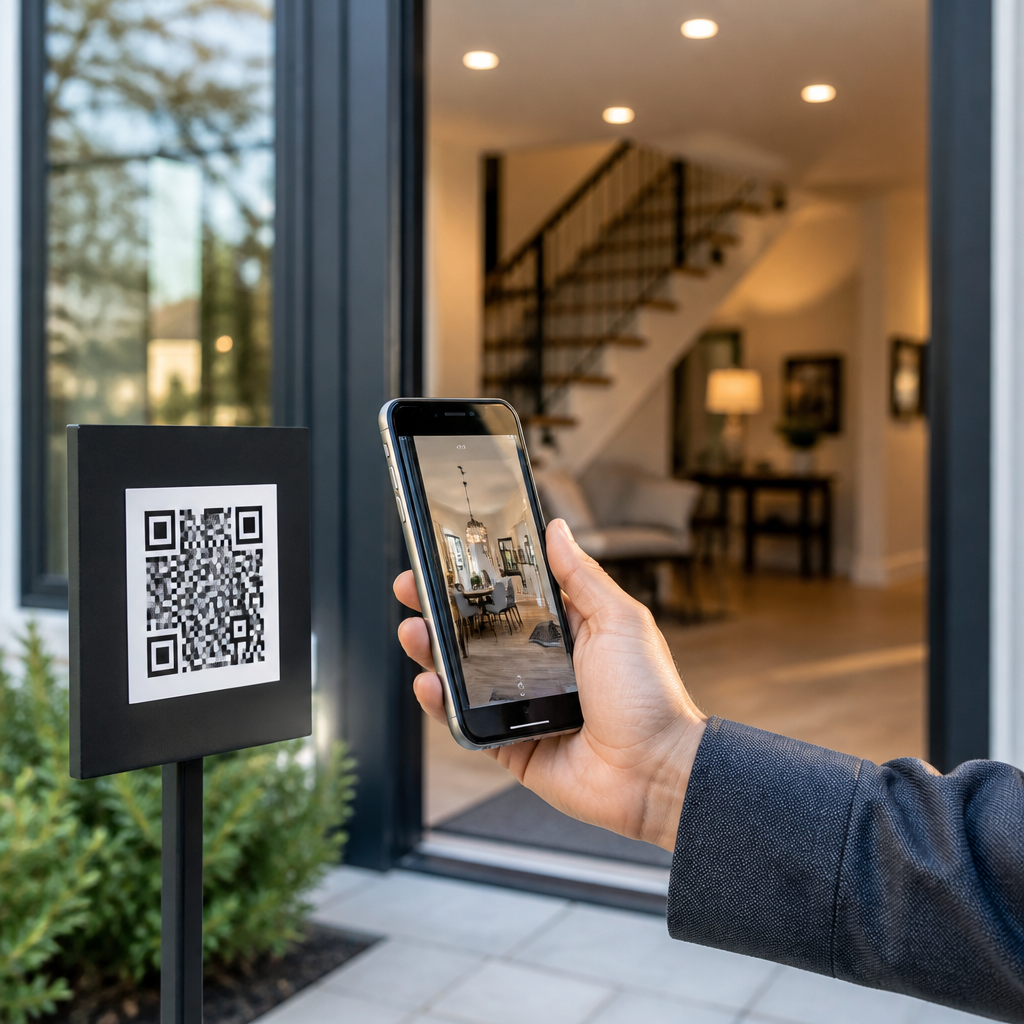
QR codes have become a practical sales tool in real estate because they shorten the distance between a buyer’s curiosity and a property inquiry. A quick scan can open a listing page, launch a virtual tour, display financing details, or save an agent’s contact card without asking the prospect to type a long URL or remember a phone number. When agents ask how QR codes help sell homes faster, the direct answer is simple: they reduce friction at every step of the buyer journey and make property marketing easier to measure, update, and improve.
In real estate marketing, a QR code is a scannable image that sends a smartphone user to digital content. Static codes point to fixed information, while dynamic codes redirect through a managed link that can be edited later and tracked for scans, location, device type, and time. That distinction matters in property marketing. Listings change, open house schedules move, and homes can shift from active to pending within hours. Dynamic QR codes let agents update the destination without reprinting yard signs, brochures, rider panels, postcards, window displays, or direct mail pieces.
I have used QR codes in listing campaigns, open house systems, and brokerage recruiting materials, and the pattern is consistent: homes move faster when buyers get complete, mobile-friendly information the moment interest appears. Real estate is full of impulse moments. A commuter notices a for-sale sign, a neighbor shares a postcard, or a relocation buyer sees a flyer in a coffee shop. If that prospect can scan immediately and view price, photos, disclosures, neighborhood highlights, and showing options, the chance of action rises. If the prospect must type a web address later, many never return.
This matters because home buying behavior is now decisively mobile. The National Association of Realtors has repeatedly reported that buyers use phones throughout the search process, and listing portals have trained consumers to expect immediate access to photos, maps, tax history, and scheduling tools. QR codes fit that behavior naturally. They connect offline attention to online action, giving agents a bridge between physical marketing and digital conversion. For a real estate business building a wider QR Codes in Marketing strategy, this industry-specific use case stands out because every sign, flyer, brochure, brochure box, mailer, and event creates a scan opportunity that can be tracked and optimized.
Why QR codes accelerate buyer response
QR codes help sell homes faster by compressing the time between discovery and decision. In practice, that speed comes from three advantages. First, scanning is easier than searching. A prospect standing outside a listing can open details in seconds instead of guessing the property address in a portal. Second, mobile landing pages can answer the first questions immediately: price, square footage, bedroom count, school district, HOA fees, and property taxes. Third, a well-built page can capture the lead on the spot with a showing form, mortgage calculator, or one-tap call button.
Agents often underestimate how much momentum is lost when information is delayed. Buyers rarely move through listings in a neat sequence. They compare homes while driving neighborhoods, during lunch breaks, or after seeing a social post. A QR code turns that fragmented attention into a measurable session. If the landing page loads quickly and presents the right information hierarchy, the user is far more likely to book a tour, request disclosures, or share the home with a spouse. In competitive markets, that speed can be the difference between an early offer and a missed opportunity.
The strongest results come when the code is placed where intent is highest. Yard signs capture drive-by traffic. Open house signage serves visitors already in evaluation mode. Printed feature sheets help serious buyers revisit details later. Direct mail can revive interest among neighbors who may know a future buyer. Window decals in brokerage offices support after-hours inquiries. The code itself does not create demand, but it removes barriers when demand already exists, which is why it improves response time and supports faster sales cycles.
Best real estate use cases from sign to closing
The most effective real estate QR code campaigns match the code destination to the buyer’s context. On a yard sign, the destination should be a streamlined property page with hero photos, price, map, and a showing button above the fold. On a brochure, the code can open a richer asset such as a 3D Matterport tour, drone video, floor plan, or downloadable disclosures packet. At an open house, scanning can register attendance, collect consent for follow-up, and route the visitor into a CRM like Follow Up Boss, kvCORE, BoomTown, or HubSpot.
Luxury listings often benefit from multimedia destinations because buyers expect polish and context. A QR code on a glossy lookbook can open cinematic video, architect notes, smart home specifications, and a neighborhood guide covering restaurants, golf clubs, marinas, or private schools. For entry-level homes, practical content may convert better: payment estimates, down payment assistance resources, commuting times, and renovation possibilities. In both cases, the code should answer the buyer’s next question, not simply duplicate a generic homepage.
QR codes also support sellers and agents after the listing appointment. Pre-listing packets can include a code leading to case studies, staging checklists, pricing methodology, and a seller dashboard preview. During escrow, a code in the transaction folder can organize inspection timelines, utility transfer guidance, and closing steps. Brokerages use them in recruiting by linking print collateral to culture videos, commission plans, and onboarding materials. As a hub for real estate marketing use cases, this topic connects naturally to related content on QR codes for open houses, property flyers, virtual tours, direct mail, and lead nurturing.
| Placement | Best destination | Main benefit |
|---|---|---|
| Yard sign | Mobile property page with price and showing form | Captures drive-by interest immediately |
| Open house sign-in | Registration form synced to CRM | Collects leads accurately and instantly |
| Printed flyer | Virtual tour, floor plan, disclosures | Adds depth without cluttering print |
| Direct mail postcard | Neighborhood landing page or home valuation offer | Turns offline outreach into trackable traffic |
| Window display | Listing gallery and agent contact card | Generates after-hours inquiries |
What buyers should see after the scan
A QR code is only as effective as the destination behind it. The landing page should load quickly, display correctly on a phone, and deliver the property facts that buyers care about first. In my campaigns, the best-performing structure starts with a lead image, price, address, status, and two primary calls to action: schedule a showing and ask a question. Below that, I place key facts, photo gallery, map, property highlights, recent updates, and financing information. If disclosures are available, I gate them lightly or provide them directly depending on the brokerage’s compliance process.
Video and immersive media can increase time on page, but they should not delay the basics. Buyers want answers before they want production. A 3D tour from Matterport, Zillow Showcase, or iGUIDE works well when paired with floor plans and room dimensions, especially for relocation prospects and international buyers who cannot tour in person. School information, walkability, flood zone status, and tax estimates should be sourced carefully and labeled clearly, because inaccurate neighborhood claims damage trust and create liability.
Every scan page should also support contact preference. Some users want to call, some prefer text, and others will submit a form only if the response feels low pressure. Adding Apple Wallet or Google contact save options can help, as can a downloadable vCard. For multilingual markets, duplicate landing pages in Spanish or other common local languages increase usability. Accessibility matters too. High contrast, readable text, descriptive buttons, and transcripts for video content make the experience better for more users and strengthen overall conversion.
Tracking performance and proving marketing ROI
One reason QR codes deserve a central place in real estate marketing is that they make offline media measurable. Dynamic code platforms such as Bitly, QR Code Generator Pro, Flowcode, Beaconstac, and Uniqode can report total scans, unique scans, approximate location, operating system, and scan time. When combined with UTM parameters in Google Analytics 4 and conversion events in a CRM, an agent can see which sign locations, postcard drops, listing brochures, or office displays actually generate inquiries and appointments.
That measurement changes decision-making. If one condo listing receives heavy scans from a lobby sign but few showing requests, the issue may be pricing, weak photography, or a landing page that hides the tour button. If a postcard campaign to a farm area drives many scans to a home valuation page, that signal can justify repeating the mailing. In team environments, scan data can reveal differences in agent execution, neighborhood response patterns, and the impact of staging, signage design, or call-to-action wording.
To track accurately, create distinct dynamic codes for each channel rather than reusing one code everywhere. A yard sign should have its own code, the brochure another, and the postcard a third. Name campaigns consistently, connect forms to the CRM, and define conversions such as showing requests, open house registrations, disclosure downloads, and mortgage prequalification clicks. Real estate marketing budgets are often judged by closed transactions, but leading indicators matter. QR data gives agents earlier evidence about whether a listing launch is attracting qualified attention or needs adjustment.
Implementation standards, design rules, and common mistakes
Successful QR code deployment in real estate depends on execution details that are easy to overlook. The code must have enough contrast, adequate quiet space, and a size appropriate to viewing distance. A small code on a fast road sign is nearly useless; a larger code on a brochure box or window rider performs better. Use a direct instruction such as “Scan for price, photos, and showing times” rather than displaying the code without context. People scan more when the benefit is explicit.
Destination control is just as important as print quality. Never send scans to a generic homepage when a property-specific page is available. Avoid PDFs as the primary destination unless the audience truly needs documents, because many mobile users dislike pinching through long files. Test on iPhone and Android, on cellular connections, and in bright outdoor conditions. Confirm that forms submit correctly, maps open in the user’s preferred app, and status changes from active to pending are updated immediately through a dynamic redirect.
There are compliance considerations as well. Fair housing rules, brokerage disclosure requirements, MLS syndication rules, and local advertising regulations still apply. If the page includes mortgage examples, annual percentage rate disclosures may be required depending on the format and lender relationship. If a code is used for open house sign-in, explain how contact information will be used and store it according to privacy policy and applicable law. QR codes are powerful, but they amplify whatever process sits behind them. Good systems create trust; sloppy systems create friction.
Building a repeatable real estate QR code strategy
The fastest results come from treating QR codes as an operating system, not a novelty. Standardize templates for listing pages, sign riders, brochures, open house forms, and seller packets. Create a launch checklist that covers code generation, destination testing, CRM routing, analytics naming, and print proofing. Train agents to review scan reports weekly and refine offers based on evidence. Over time, a brokerage can identify benchmarks for scan-to-lead rate, lead-to-showing rate, and showing-to-offer rate by property type and price band.
Think beyond single listings. Neighborhood guides, relocation resources, investor packets, builder communities, and home valuation funnels all benefit from scannable access. New construction teams use QR codes at model homes to distribute spec sheets, lot maps, and upgrade options. Commercial agents place them on offering memoranda and site signage to provide demographic reports, cap rate summaries, and drone footage. Property managers use them for leasing tours, maintenance instructions, and amenity guides. The underlying principle is consistent across these real estate use cases: remove friction, provide relevant context, and capture intent while it is fresh.
QR codes help sell homes faster because they connect real-world attention to immediate, useful action. They are effective on signs, flyers, postcards, open house materials, office windows, and seller presentations because they meet buyers where interest begins. The biggest gains come from dynamic codes, mobile-optimized landing pages, clear calls to action, and disciplined tracking through analytics and CRM systems. When agents align the code destination with the user’s likely question, scans become inquiries, tours, and offers more quickly.
For real estate professionals building a broader QR marketing program, this use-case hub should guide every related tactic: listing signage, virtual tours, open house registration, direct mail, recruiting, and post-contract communication. The method is straightforward. Give each asset a specific purpose, create a destination that answers the next question, and measure the result. Start with one active listing, one sign rider, one mobile property page, and one reporting dashboard. Then expand the system across your portfolio and turn every offline impression into a trackable opportunity.
Frequently Asked Questions
How do QR codes help sell homes faster in real estate?
QR codes help sell homes faster by removing small but important points of friction that often slow down buyer action. In real estate, timing matters. A buyer may see a yard sign, postcard, window flyer, open house handout, or social media graphic and feel interested in that exact moment. If they have to type in a long web address, search for the listing later, or manually save an agent’s contact information, there is a greater chance that interest fades or they move on to another property. A QR code makes the next step immediate. With one scan, the prospect can open the full listing, view current photos, watch a video walkthrough, take a virtual tour, review neighborhood details, or contact the agent directly.
This speed matters because it keeps momentum alive. Instead of creating a delay between curiosity and inquiry, QR codes connect buyers to useful information instantly. That means more listing views, more qualified inquiries, and more opportunities to schedule showings while buyer intent is still high. In practical terms, QR codes turn offline marketing into an immediate digital action. They make signs, brochures, direct mail pieces, and property displays work harder by transforming them from passive advertisements into active lead-generation tools. That is the core reason they can help homes sell faster: they reduce effort, increase engagement, and encourage faster decision-making.
Where should real estate agents use QR codes to get the best results?
The best results usually come from placing QR codes anywhere buyers naturally pause and want more information. For most agents, the most effective starting point is the yard sign. A buyer driving through a neighborhood may not be ready to call immediately, but they are often willing to scan a code to see photos, pricing, and property details. Open house materials are another strong use case. QR codes on sign-in sheets, feature cards, and takeaway flyers can lead visitors to disclosures, financing options, floor plans, and post-visit follow-up pages.
Print marketing is also a strong fit. QR codes work well on postcards, brochures, mailers, business cards, and property feature sheets because they bridge print and digital without asking the prospect to do extra work. In office windows or on property information boxes, they can provide 24/7 access to a listing even when an agent is unavailable. Digital placements can also be useful, especially in email campaigns, social media graphics, and digital ads designed for mobile users. The key is not simply adding a QR code everywhere, but placing it where it supports buyer intent. If someone is likely to want instant details, a virtual tour, or an easy way to contact the agent, that is a strong location for a QR code. The best-performing codes are tied to a clear call to action such as “Scan for Price,” “Scan for Virtual Tour,” or “Scan to Schedule a Showing.”
What should a real estate QR code link to for maximum buyer engagement?
A real estate QR code should link to the resource that best matches the buyer’s immediate question. In many cases, that is a mobile-friendly listing page with high-quality photos, price, square footage, property features, and an easy inquiry form. However, not every scan has the same purpose. A buyer standing outside a property may want a virtual tour, while someone reviewing a postcard may want financing information or comparable homes in the area. For that reason, the most effective QR code strategy starts by identifying the likely intent behind the scan.
Strong destinations include a single-property website, a 3D walkthrough, a short video tour, a booking page for private showings, or a digital contact card that saves the agent’s information directly to the buyer’s phone. Some agents also use QR codes to link to mortgage calculators, down payment guidance, school and neighborhood information, or a page that offers updates on similar listings. What matters most is relevance and simplicity. The landing page should load quickly, look clean on mobile devices, and make the next action obvious. If a buyer scans a code and lands on a cluttered homepage with too many choices, the benefit of the QR code is reduced. The best QR code destinations are focused, helpful, and designed to move the buyer one step closer to inquiry or appointment.
Do QR codes actually improve real estate marketing performance and lead generation?
Yes, when used strategically, QR codes can improve real estate marketing performance because they make response easier to track and easier for buyers to act on. Traditional print advertising has often been harder to measure. An agent might know that postcards were mailed or signs were installed, but not exactly how many people took action because of them. QR codes solve part of that problem by creating a measurable bridge between physical marketing and digital engagement. Agents can monitor scans, compare which placements perform best, and identify which campaigns lead to listing views, form submissions, tour requests, or calls.
From a lead-generation perspective, QR codes help capture interest earlier in the decision process. Instead of waiting for buyers to search later, agents can engage them at the point of attention. That often increases the likelihood of interaction, especially on mobile. QR codes also support more targeted follow-up because they can direct users to landing pages with lead forms, saved search offers, or property alerts. Their value is not in the code alone, but in the system behind it. A clear offer, a strong landing page, fast-loading mobile content, and a simple conversion path are what turn scans into real leads. When those pieces are in place, QR codes become a practical marketing tool that improves attribution, boosts convenience, and supports faster movement through the sales funnel.
What are the best practices for using QR codes effectively in home sales?
The most important best practice is to make the experience useful, fast, and trustworthy. A QR code should never be added just for novelty. It should lead to something valuable that helps the buyer make progress, such as listing details, a virtual walkthrough, pricing information, disclosures, financing tools, or direct contact options. The destination must be mobile-optimized because most scans happen on smartphones. If the page loads slowly, looks confusing, or requires too many clicks, many users will leave before converting.
Design and placement also matter. The code should be large enough to scan easily, printed clearly, and positioned where there is enough light and enough time for a person to use it comfortably. Every QR code should include a short call to action so buyers know what they will get by scanning. “Scan for Photos” is more effective than a code with no explanation. It is also wise to use dynamic QR codes when possible, since they allow agents to update the destination link without reprinting materials and often include analytics. Branding helps as well. When the surrounding sign, flyer, or page looks professional and clearly connected to the agent or brokerage, buyers are more likely to trust the scan.
Finally, agents should think beyond the first click. An effective QR code strategy supports the entire buyer journey. After the scan, the page should offer a logical next step such as scheduling a showing, requesting more details, viewing similar homes, or saving contact information. In other words, the code should not only attract attention but also guide action. When real estate professionals use QR codes with clear purpose, strong mobile experiences, and measurable follow-up, they become a reliable tool for increasing engagement and helping properties move faster.