QR codes for real estate brochures and flyers turn static print into measurable, updateable marketing assets that help agents, brokers, developers, and property managers connect offline attention with online action. In practical terms, a QR code is a scannable matrix barcode that opens a digital destination such as a property page, virtual tour, lead form, map, document folder, calendar link, or video. A brochure or flyer is often the first physical touchpoint in a listing campaign, but printed material has always had one major limitation: once distributed, it cannot explain more, adapt to new pricing, or capture intent on its own. Adding a QR code solves that gap by giving every printed piece a live path to richer information.
In real estate marketing, that matters because buyers and renters rarely make decisions from one impression. They compare neighborhoods, financing options, school zones, floor plans, commute times, and renovation potential. Sellers also judge an agent’s competence by the quality and convenience of the marketing package. I have seen open house flyers that generated little response until the team replaced a generic website link with a well-placed QR code leading directly to a mobile listing page with photos, availability, and a showing request form. Scan rates improved because the next step was obvious, fast, and relevant to the property in hand.
The strongest campaigns use QR codes not as decoration, but as conversion infrastructure. A code can route a prospect to a single-property website, launch turn-by-turn directions in Google Maps, download a brochure PDF, reveal mortgage calculators, or add an open house event to a phone calendar. Dynamic QR codes are especially useful because the destination can be changed without reprinting the flyer, which protects budget and keeps signage current. For real estate teams managing multiple listings, that flexibility reduces waste and supports compliance when prices, terms, occupancy dates, or disclosures change.
This article serves as a hub for industry-specific use cases in real estate, covering how to use QR codes on brochures and flyers, what destinations perform best, how to design for scanability, how to track results, and where limitations apply. If you want print marketing that does more than look polished, this is the framework: each code should match buyer intent, shorten the path to information, and produce measurable signals such as scans, appointments, document downloads, and qualified leads.
Why QR codes work on real estate print materials
QR codes work on real estate brochures and flyers because they remove friction at the exact moment interest appears. A prospect standing outside a listing, walking a trade show, touring a model home, or collecting handouts at an open house is already context-rich and intent-rich. Asking that person to manually type a long URL later usually fails. Asking them to scan a code now often succeeds. Mobile phone camera adoption makes this behavior natural, and the speed advantage is significant: one scan can open photos, pricing, neighborhood details, and contact options in seconds.
Brochures and flyers also have space constraints. Agents must prioritize a few headline features, a hero photo, and essential contact details. A QR code extends that limited canvas without cluttering it. In one multifamily lease-up campaign I worked on, the printed flyer highlighted unit types and starting rents, while the code opened a live availability page that updated daily. Prospects received the immediacy of print plus the depth of a current inventory feed. That combination reduced calls asking whether a unit was still available and improved lead quality because renters arrived with clearer expectations.
Trust is another reason these codes perform. A polished flyer that links directly to branded property information feels more credible than a generic redirect or social profile alone. When the landing experience is fast, mobile-friendly, and clearly related to the listing, users perceive professionalism. That trust signal matters in higher-consideration purchases like residential sales, commercial leasing, and new development reservations, where the marketer must demonstrate accuracy, responsiveness, and transparency before a meeting ever happens.
Best QR code destinations for listings, open houses, and developments
The best QR code destination depends on the purpose of the brochure or flyer. For a single listing flyer, the highest-performing destination is usually a dedicated mobile landing page with current photos, price, specs, map, property description, and a prominent schedule-a-showing form. For luxury listings, a cinematic video tour or Matterport walkthrough can be effective, provided the page loads quickly and offers a clear inquiry option. For new developments, the destination often works best as a project hub with floor plans, amenity lists, construction updates, deposit information, and model unit appointments.
Open house marketing benefits from action-oriented destinations. A QR code can open registration, directions, or a digital sign-in form. It can also deliver a property fact sheet after the event, which helps follow-up. For investor-focused properties, the best destination may be a secure document room containing offering memoranda, cap rate assumptions, rent rolls, or pro forma summaries. In commercial real estate, QR codes on flyers frequently route to a brochure PDF and a broker contact form, but dedicated landing pages generally outperform static files because they load more cleanly on mobile devices and support analytics events.
| Use case | Best destination | Primary goal |
|---|---|---|
| Residential listing flyer | Single-property mobile page | Showing requests |
| Open house handout | Directions or digital sign-in page | Attendance and follow-up |
| New development brochure | Project hub with floor plans | Appointment bookings |
| Commercial property flyer | Landing page with brochure and inquiry form | Qualified broker leads |
| Rental marketing sheet | Live availability page | Lease inquiries |
A practical rule is simple: send scanners to the next best step, not to a homepage. Homepages force users to search again, which increases abandonment. The destination should mirror the printed promise. If the flyer emphasizes “See the virtual tour,” the code should open the virtual tour first. If it says “Check availability,” it should open current units, not a company overview.
Design, placement, and scanability standards that protect performance
A QR code only works if people notice it and phones can read it instantly. In production, that means following clear design standards. Use high contrast, usually black on white. Maintain a quiet zone around the code so surrounding graphics do not interfere with recognition. Avoid shrinking the code excessively; for most brochures and flyers, at least 0.8 by 0.8 inches is a practical minimum, while larger formats such as window posters benefit from larger sizes based on expected scan distance. Test printed proofs under real lighting before distribution.
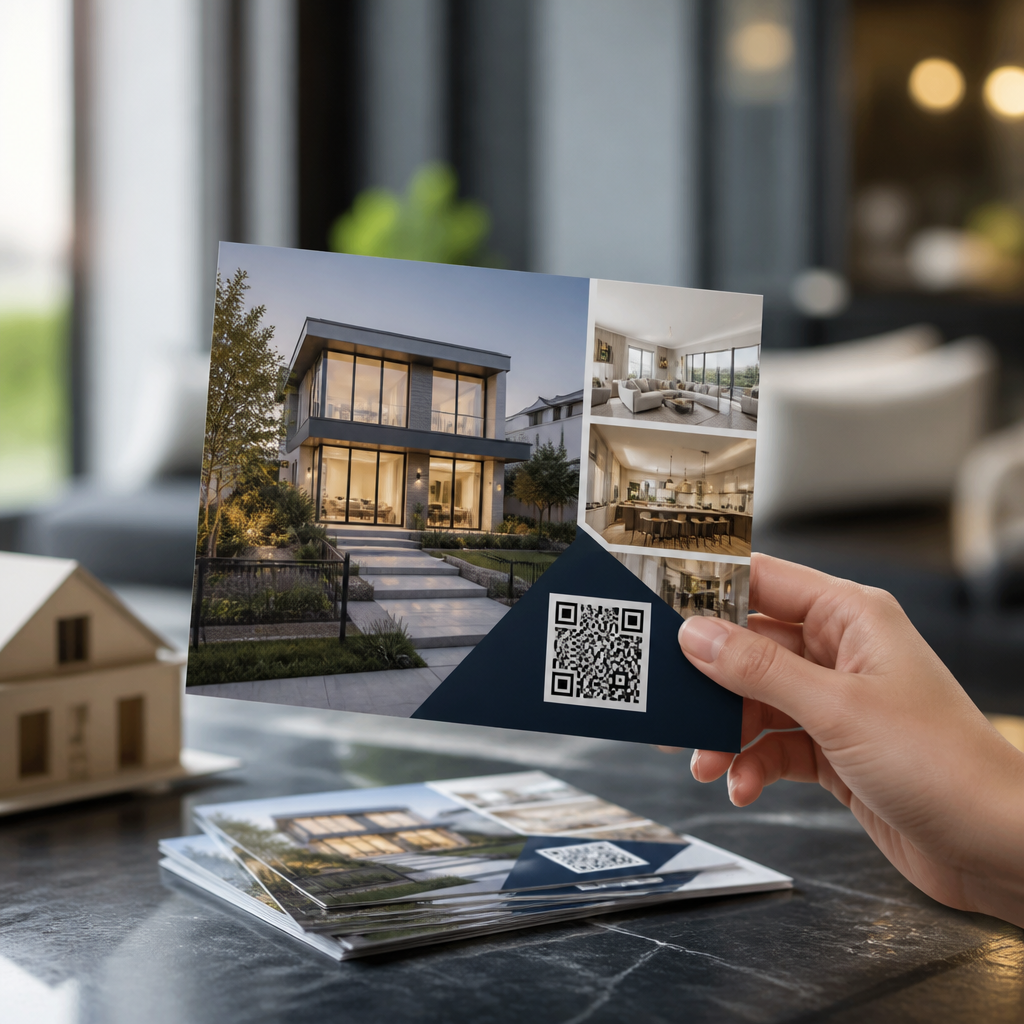
Placement affects response. On flyers, the most effective positions are commonly near the property photo cluster, beside a strong call to action, or in the lower third where the eye naturally lands after scanning headline details. On bifold or trifold brochures, repeating the code once on the back panel and once near the detailed property section can help, but each repetition should point to the same destination unless you have a deliberate segmentation plan. Too many codes confuse users, especially in residential marketing where decisions are emotional and speed matters.
The call to action is as important as the code itself. “Scan for price history and tour times” performs better than “Scan me” because it tells users what they gain. Add redundancy with a short branded URL below the code for accessibility and backup. Also ensure the destination is mobile-optimized, compressed for speed, and secured with HTTPS. A slow landing page can waste otherwise strong print distribution. In my campaigns, scan rates drop noticeably when the first page takes more than a few seconds to become interactive on cellular data.
Tracking scans, lead quality, and campaign ROI
One of the biggest advantages of QR codes in real estate brochures and flyers is measurability. With dynamic codes, UTM parameters, and analytics events, teams can attribute scans to specific properties, neighborhoods, print runs, broker open events, or publication placements. Google Analytics 4 can track sessions, engaged visits, form starts, and conversions from QR traffic. CRM platforms such as HubSpot, Follow Up Boss, Salesforce, or kvCORE can capture source data when forms are configured properly. This makes brochures accountable in the same way digital ads are accountable.
Meaningful measurement goes beyond raw scan counts. A high scan total from a busy condo lobby may look impressive, but if those visitors bounce, the campaign is not successful. Better indicators include showing requests, saved searches, brochure downloads, appointment bookings, call clicks, and signed registrations at open houses. For rental campaigns, track completed guest cards and application starts. For commercial campaigns, measure offering memorandum downloads, NDA submissions, and broker inquiries. The key is aligning each QR destination with one primary conversion and one secondary engagement metric.
Operationally, create naming conventions before launch. For example, include market, asset type, channel, and version in every code record: “Austin_MF_LeaseUp_FlyerA_May.” That discipline becomes invaluable when many listings are active simultaneously. I also recommend testing two calls to action across separate print batches when volume allows. A simple change from “Scan for details” to “Scan for photos, floor plan, and showing times” can materially improve engagement because specificity reduces uncertainty and gives users a reason to act immediately.
Real estate use cases by audience: buyers, renters, sellers, investors, and agents
Different audiences scan for different reasons, so the same brochure strategy should not be copied across every property type. Homebuyers typically want visual confidence and logistical clarity. They scan to see more photos, verify price, understand layout, review tax or HOA information, and book a showing. Renters prioritize speed. They want current availability, qualification criteria, pet rules, lease term options, and an application path. Investors often want numbers first: net operating income, occupancy trends, tenant mix, zoning context, and downside risk.
Sellers represent another important audience. Listing presentation packets can include QR codes that open case studies, sample marketing plans, recent sale maps, video testimonials, or live dashboards showing campaign activity. This is a powerful way to demonstrate sophistication without overloading the printed packet. Developers can use codes in showroom brochures to route buyers to finish packages, reservation updates, mortgage partner information, and construction milestone videos. Property managers can place them on leasing flyers or community handouts to connect residents and prospects to amenity booking, maintenance FAQs, or renewal offers.
Agents and internal teams benefit too. A brokerage can use QR-coded one-sheets at recruiting events that lead to culture videos, commission structures, or office tour booking forms. At conferences, commercial brokers often rely on flyer handouts where each property code routes to a live deal page. The broader principle is that QR codes are not only for consumer-facing listing promotion. They also support recruiting, partner communications, vendor coordination, and portfolio marketing when the destination is purposeful and the data is tracked consistently.
Common mistakes, compliance issues, and implementation best practices
The most common mistake is linking every flyer to the same generic website. That wastes user intent and undermines attribution. Another frequent error is printing static codes that cannot be updated after a price change, status change, or landing page migration. Dynamic QR codes are usually the better operational choice because they preserve the printed asset while allowing destination edits. Teams should also avoid overdesigned codes with low contrast, embedded logos that impair readability, or placements across folds, glossy glare zones, and heavily textured paper.
Real estate also carries compliance considerations. Marketing claims on the landing page should remain consistent with the printed piece and with applicable fair housing requirements, brokerage disclosure rules, and local advertising standards. If a QR code opens forms collecting personal data, privacy notices and consent language should be appropriate for the jurisdiction and CRM process. In commercial transactions, secure documents may require gated access, especially when financials or tenant information are sensitive. Accuracy is not optional; stale pricing or omitted disclosures damage trust quickly.
Implementation works best when standardized. Build templates for listing pages, calls to action, tracking parameters, and CRM routing. Maintain a preflight checklist covering code size, contrast, destination testing, mobile speed, analytics verification, and proof scans from both iPhone and Android devices. Train agents to explain the value verbally during open houses and meetings: “Scan this for the virtual tour and disclosures.” That small prompt increases usage because it removes hesitation. Start with high-intent assets such as property flyers and open house brochures, then expand to signage, direct mail, leave-behinds, and developer collateral.
QR codes for real estate brochures and flyers are most effective when they bridge a specific offline moment to a specific online action. The technology is simple, but the strategy requires discipline: choose the right destination, design for instant scanning, align each code to audience intent, and track outcomes that reflect actual business value. When done well, a printed flyer stops being a static summary and becomes an entry point to tours, disclosures, appointments, applications, and conversations that move deals forward.
For a real estate marketing hub, the central lesson is clear. Residential, rental, commercial, and development campaigns all benefit from QR-enabled print, but each use case demands its own landing experience, compliance review, and measurement plan. Teams that treat QR codes as operational tools rather than visual add-ons get better lead quality, more accurate attribution, and longer-lasting value from every print run. Review your current brochures and flyers, identify where prospects still face friction, and update the next version with one clear, trackable QR-driven next step.
Frequently Asked Questions
How do QR codes improve real estate brochures and flyers?
QR codes turn a printed brochure or flyer from a one-way piece of marketing into an interactive gateway that can drive measurable action. Instead of asking a prospective buyer, renter, investor, or seller to manually type in a long web address, search for a listing online, or call later and risk forgetting, a QR code lets them move from physical print to digital content in seconds. That friction reduction matters in real estate, where interest is often immediate and time-sensitive. If someone sees a flyer in a lobby, at an open house, on a community board, or inside a sales center, the code creates a direct path to the next step while attention is still high.
In practical use, a QR code can send people to a property detail page, a virtual tour, a video walkthrough, a map and directions page, an application form, a booking calendar, a mortgage calculator, or a downloadable brochure. This flexibility makes brochures and flyers much more useful across different property types and campaign goals. Residential listings may benefit from tours and photo galleries, while commercial properties may use QR codes to share floor plans, zoning documents, rent rolls, or leasing contact forms. Developers can direct traffic to model unit tours or amenity pages, and property managers can link to availability lists or tenant inquiry forms.
Another major advantage is measurability. Traditional print has often been difficult to track, but QR codes create a bridge between offline exposure and online engagement. Agents and marketers can see how many scans a brochure generated, when scans happened, where interest was strongest, and which listings or placements performed best. That insight helps teams optimize distribution, creative layout, calls to action, and destination content. Just as importantly, dynamic QR codes can often be updated without reprinting the brochure, so if a listing URL changes, a campaign asset needs to be refreshed, or a property moves from active listing to sold, the printed material can continue working with a new digital destination.
What should a real estate QR code link to on a brochure or flyer?
The best destination depends on the user’s intent and where they are in the decision process. In most cases, the QR code should lead to the most useful next action rather than simply a generic homepage. For an active listing, that usually means a mobile-friendly property page with current photos, pricing, key features, location information, and a clear inquiry option. If the primary goal is to generate immediate emotional engagement, a virtual tour or video walkthrough may work even better. For open house marketing, a calendar link, RSVP page, or check-in form can be the strongest destination because it supports direct conversion.
It is often smart to think in terms of matching the print piece to the audience and setting. A flyer posted near the property may work best with a listing page, map, and contact button because the person scanning is likely already aware of the location. A luxury brochure handed out at a showing may justify a richer landing page with cinematic video, floor plans, neighborhood highlights, and financing or appointment options. Investor-focused material may benefit from links to offering memoranda, cap rate summaries, occupancy data, or downloadable documents. Rental flyers can point directly to unit availability, application forms, or self-scheduling tools for tours.
Whatever destination you choose, it should load quickly, look polished on mobile devices, and continue the promise made by the print piece. If the flyer promotes “Scan to take a 3D tour,” the scan should open the 3D tour immediately, not force visitors through several unnecessary clicks. The page should also include a clear secondary action such as call, text, email, book a showing, or request more information. In many campaigns, the strongest setup is a dedicated landing page designed specifically for brochure or flyer traffic, because it allows better tracking, message alignment, and conversion optimization than sending users to a broad site page.
Can QR codes on real estate print materials be tracked and updated after printing?
Yes, and that is one of their most valuable advantages in real estate marketing. When a brochure or flyer uses a dynamic QR code, the printed code itself stays the same while the destination behind it can be changed at any time. That means agents, brokers, developers, and property managers do not have to discard useful inventory just because a listing URL changes, a campaign page is redesigned, or a property status shifts. A code that originally linked to an active listing can later point to an open house registration page, a “price reduced” landing page, a backup property, or even a “just sold” page that captures leads for similar listings.
Tracking is equally important. Dynamic QR platforms typically provide scan analytics such as total scans, unique scans, time and date activity, device type, and in some cases approximate location data. That information helps marketers understand whether a particular brochure design, distribution area, open house packet, window flyer, or direct mail insert is producing engagement. It also helps compare campaign performance across offices, neighborhoods, listing types, and agent teams. For example, if one flyer placement generates many scans but few inquiries, the issue may be the landing page or offer. If a certain brochure generates strong engagement at specific times, that may reveal when audience intent is highest.
To get the most from tracking, teams should connect QR campaigns to broader analytics and lead workflows. Landing pages can include form submissions, click-to-call tracking, appointment scheduling, CRM integration, and lead tagging so that scans become attributable business outcomes rather than vanity metrics. It is also wise to create separate QR codes for different channels instead of using one code everywhere. A flyer in the property window, a direct mail piece, and a handout at a networking event may all promote the same listing, but unique codes make performance analysis much more meaningful and allow campaign adjustments based on real-world results.
What are the best practices for designing a real estate flyer or brochure with a QR code?
Effective QR code design is about visibility, trust, and ease of use. First, the code must be large enough to scan comfortably from the expected distance. A code on a handout can be smaller than one placed in a window or on a sign-up sheet, but in every case it should have enough clear space around it and strong contrast against the background. Black on white remains the most reliable option, though branded styling can work if scannability is preserved. Overly decorative treatments, low contrast colors, busy image backgrounds, or tiny placement often reduce scan success and frustrate potential leads.
Second, every code should be paired with a strong call to action. Many people still need a reason to scan, so the flyer should explicitly tell them what they will get. Phrases like “Scan for price and photos,” “Scan to view the 3D tour,” “Scan to book a private showing,” or “Scan for floor plans and availability” perform better than placing a code with no explanation. The value should be specific and immediate. In real estate, users respond well when the promise aligns with practical next steps, such as seeing more images, checking current availability, exploring the neighborhood, or contacting the agent directly.
Third, consider the overall user journey after the scan. The brochure may be beautifully designed, but if the landing page is cluttered, outdated, slow, or not mobile-friendly, the opportunity is lost. The destination should reflect the same branding and property details presented in print while adding depth that print cannot provide. It should also be current, especially for pricing, status, photos, and availability. Finally, test the code in real-world conditions before printing at scale. Scan it with different phones, under different lighting, and from the intended viewing distance. That simple quality-control step can prevent costly reprints and ensure the brochure functions as a dependable marketing tool instead of just a visual asset.
Are QR codes useful for all types of real estate, or just residential listings?
QR codes are useful across nearly every real estate segment because the core need is the same: connect offline interest to digital information and a next step. In residential sales, they are commonly used for listing pages, open house details, virtual tours, mortgage resources, and seller lead generation. In rentals, they streamline access to unit availability, application forms, qualification requirements, and self-scheduled tours. For multifamily properties, QR codes on brochures can direct prospects to floor plan galleries, amenity tours, pricing updates, or leasing specials, making printed collateral much more actionable.
Commercial real estate can benefit even more because the information buyers, tenants, and investors need is often too extensive for print alone. A brochure for office, retail, industrial, or mixed-use space can use QR codes to deliver site plans, offering memoranda, demographic reports, zoning information, build-out options, traffic counts, tenant mixes, and contact forms for leasing teams. Developers can place QR codes on pre-construction materials to share renderings, availability releases, waitlists, and investor presentations. Property managers can use them in leasing packs, lobby materials, and local advertising to direct prospects to vacancy information, maintenance contacts, or resident resources.
The key is not whether QR codes fit a property category, but whether the destination and message are aligned with the audience. A first-time homebuyer scanning a neighborhood flyer needs different information than a retail tenant reviewing a leasing brochure or an investor evaluating a development offering. When used thoughtfully, QR codes make print more efficient, more measurable, and more adaptable across all these use cases