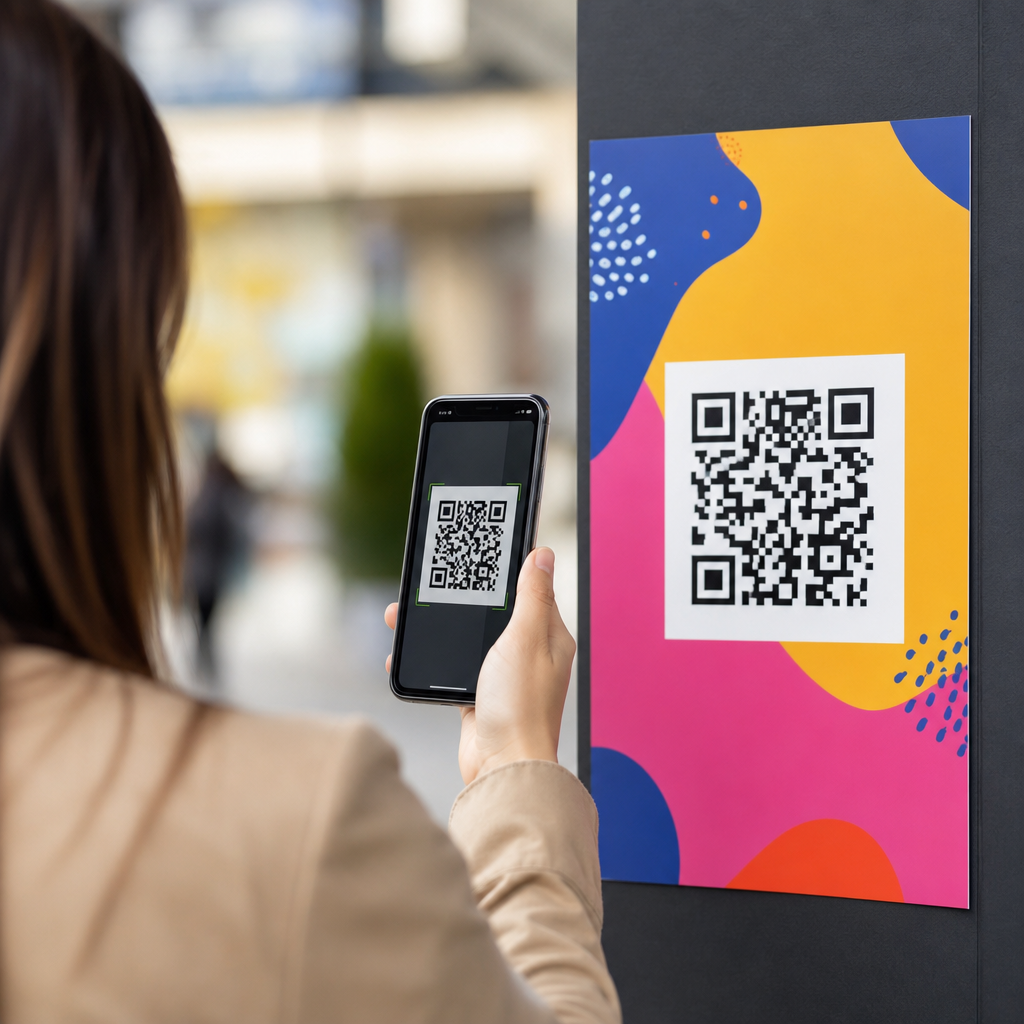
Examples of innovative QR code campaigns show how a simple square pattern can become a measurable bridge between physical attention and digital action. In marketing, a QR code campaign is any planned use of a quick response code to move a person from packaging, signage, print, product, event space, or screen into a specific online experience. Creative QR code campaigns go further: they treat the code as part of the brand story, not just a utility link. That distinction matters because consumers scan when the value is obvious, the destination is trustworthy, and the experience feels relevant to the moment.
I have worked on QR deployments for retail displays, restaurant menus, direct mail, and event activations, and the pattern is consistent. Codes perform best when teams stop asking, “Where can we place a QR code?” and start asking, “What friction can this code remove right now?” A great campaign can unlock product education, loyalty sign-ups, ticketless entry, augmented reality, app downloads, payments, reviews, video storytelling, and first-party data collection. A weak campaign sends people to a homepage and wastes their attention.
Why does this topic matter now? Smartphone cameras read codes natively, consumer behavior changed during the pandemic, and brands increasingly need trackable offline-to-online journeys. QR technology also supports dynamic destinations, meaning the printed code can stay the same while marketers update the landing page, test offers, or localize content. For a sub-pillar within QR Code Design & Branding, creative campaign examples are especially useful because design choices affect trust, scan rate, and brand recall. The best examples combine strong visual integration, a clear call to action, fast mobile landing pages, and analytics tied to business goals.
This hub page explains what makes innovative QR code campaigns effective, where they work best, and which patterns repeatedly deliver results. It also gives you a framework for evaluating ideas before production. If you are building branded packaging, retail signage, outdoor advertising, menus, business cards, product inserts, or experiential activations, the examples below will help you connect code design with campaign performance.
What makes a QR code campaign innovative
An innovative QR code campaign solves a real user problem while creating a branded experience that feels intentional. Innovation is not about decorating the code until it becomes unscannable. It is about matching context, incentive, destination, and measurement. In practice, the strongest campaigns answer four questions immediately: why should I scan, what happens next, can I trust this, and is it worth my time?
From experience, innovation usually appears in one of five places. First, the placement is smart, such as putting a code exactly where a consumer needs more information. Second, the destination is tailored, for example a product-specific page rather than a generic site. Third, the reward is clear, such as an exclusive tutorial, discount, or loyalty perk. Fourth, the design supports the brand without sacrificing contrast, quiet zone spacing, and error correction. Fifth, the campaign is measurable through UTM parameters, dynamic QR platforms, and conversion events in analytics tools such as GA4, Adobe Analytics, Bitly, or QR Code Generator PRO.
Brands often assume novelty alone will drive scans. It rarely does. The campaigns that outperform are grounded in user intent. A commuter scanning a transit poster wants speed. A shopper scanning packaging wants confidence before purchase. An event attendee scanning a badge wants immediate utility. When the destination aligns with that intent, scan-through and conversion rates rise.
Packaging campaigns that turn products into media
Product packaging is one of the most effective places for creative QR code campaigns because it captures attention at the point of decision, use, or repurchase. Innovative brands treat packaging as owned media. A beauty company can place a code beside a serum and lead shoppers to a 30-second application video, ingredient glossary, and shade matcher. A food brand can link to recipes, sourcing stories, and nutrition details. A consumer electronics brand can send buyers to setup guides, warranty registration, and troubleshooting flows, reducing support costs while improving onboarding.
A practical example is a specialty coffee roaster that uses dynamic codes on bags to deliver farm profiles, roast notes, brew ratios, and restock reminders. The campaign works because the content changes by SKU while the visual system stays consistent. Another strong pattern is serialized packaging. Each code can identify a batch, unlock authenticity checks, or route customers to market-specific promotions. Luxury brands use this approach to combat counterfeits, while regulated industries use it to surface compliance information.
Design matters heavily on packaging. The code should sit near the claim it supports, include a direct prompt like “Scan for brewing guide,” and maintain enough size and contrast for real-world lighting. I have seen beautifully branded codes fail because the quiet zone was squeezed by legal copy or the print finish created glare. If the code lives on curved packaging, test scans from multiple angles and distances before mass production.
Retail and out-of-home examples that convert attention fast
Retail displays, window signage, shelf talkers, and billboards create a different challenge: they give people only a few seconds to decide. The best creative QR code campaigns in these settings reduce decision friction. A sporting goods retailer, for example, can put a code on an endcap for running shoes that opens a fit guide, inventory checker, and local store map. A home improvement chain can link a shelf sign to installation videos and project calculators. These experiences convert because they answer the exact question a shopper has at the fixture.
Out-of-home examples work when the message is short and the action is immediate. During entertainment launches, studios have used poster codes to reveal trailers, unlock countdowns, or route users to ticket purchase. Restaurants have used storefront codes after hours so passersby can view menus and place pickup orders. Real estate agents place codes on yard signs to open listing photos, virtual tours, and mortgage calculators. In each case, the offline asset captures intent and the mobile destination closes the gap.
Billboards require stricter discipline. Drivers cannot safely scan, so roadside placements are often poor candidates unless they target pedestrians in transit hubs or urban foot traffic. In contrast, airport displays, subway platforms, and shopping mall directories can perform well because the audience is stationary enough to engage. Good creative does not ignore context; it respects it.
Event, experiential, and live engagement campaigns
Events are ideal for innovative QR code campaigns because the audience is already active and time-sensitive. Codes can manage registration, schedules, lead capture, contests, speaker downloads, and post-session feedback without forcing app installs. At trade shows, exhibitors often place distinct dynamic codes on booth walls, demo stations, and staff badges so they can attribute scans to product interest and foot-traffic zones. That level of granularity helps sales teams follow up intelligently instead of sending generic emails.
Experiential campaigns become memorable when scanning triggers participation. A beverage brand can place a large code within a festival installation that opens an AR lens, then rewards users with a merch entry after sharing a photo. A museum can use room-specific codes to offer multilingual audio, curator commentary, or accessibility support. A nonprofit can add codes to gala tables that let guests pledge instantly during a live appeal, shortening the path from emotion to donation.
I have seen the strongest event campaigns use QR codes as connective tissue rather than decoration. The code is not the attraction; the experience is. Signage makes the benefit explicit, Wi-Fi or cellular access is considered in advance, and fallback URLs exist for users whose cameras struggle under dim lighting. Those operational details separate polished campaigns from chaotic ones.
Direct mail, print, and editorial campaigns that revive offline channels
Direct mail and print are often underestimated, yet they produce some of the clearest QR success stories because response can be tightly segmented. A financial services firm can send different mailers to first-time buyers, refinancers, and investors, each with a unique code tied to a personalized landing page. A catalog retailer can place product-level codes beside hero items so readers jump straight to purchase or save products to a wishlist. Magazines and brochures can extend editorial content with interviews, demos, calculators, or location-based booking tools.
The key advantage here is attribution. Marketers can assign unique dynamic codes by audience segment, geography, publication, or even individual recipient. That makes QR print campaigns more measurable than traditional vanity URLs. It also enables rapid iteration. If one offer underperforms, the destination can be updated without reprinting the code when the campaign uses a dynamic platform.
| Campaign type | Best QR use | Primary metric | Common mistake |
|---|---|---|---|
| Packaging | How-to content, authenticity, loyalty | Repeat purchase rate | Sending all scans to the homepage |
| Retail signage | Product comparison, stock lookup | Assisted conversion rate | Weak call to action |
| Events | Registration, lead capture, AR | Qualified leads per scan | Poor connectivity planning |
| Direct mail | Personalized offers, booking | Response rate | Non-mobile landing pages |
For branded print, restraint usually beats excess. Use a concise incentive, enough surrounding whitespace, and a destination that matches the printed promise exactly. If the postcard says “Scan for your custom estimate,” the landing page should open to that estimate flow, not a generic service page.
Social, loyalty, and user-generated content campaigns
Some of the most creative QR code campaigns blend physical touchpoints with community participation. Restaurants place table tents or packaging inserts that invite diners to join loyalty programs, leave reviews, or unlock secret menu items. Apparel brands include codes on tags that open styling videos and encourage customers to post looks with a campaign hashtag. Consumer packaged goods brands run scan-to-win promotions that feed social sharing and email capture at the same time.
This category succeeds when the exchange is balanced. People will share data or create content if the payoff is immediate and credible. That could be points, early access, personalized recommendations, or status within a fan community. Beverage and sports brands have used codes on cans, tickets, and merchandise to unlock member-only content, fantasy game integrations, or local event alerts. Because the code sits on a physical asset, it also creates a durable re-entry point after the initial campaign launch.
Be careful with review requests and social prompts. Incentivizing positive reviews can violate platform policies, and overcomplicated UGC mechanics depress participation. The best flow is simple: scan, understand the reward, complete one meaningful action, then optionally share. Every extra field lowers completion rate.
Design, trust, and analytics principles behind high-performing campaigns
Across all examples of innovative QR code campaigns, a few execution rules remain constant. First, preserve scan reliability. Follow ISO/IEC 18004 principles, maintain sufficient contrast, keep a clear quiet zone, and test across iPhone and Android devices. Second, use dynamic codes whenever the campaign may evolve. Third, match landing pages to intent with fast load times, concise copy, and one primary action. Fourth, label the code with a plain-language call to action so users know what they will get.
Trust is equally important. Branded short domains, HTTPS pages, familiar visual identity, and transparent data practices increase confidence. If a code collects email, say why. If a scan triggers a payment or download, make that explicit before the user commits. I recommend setting analytics at three levels: scan data from the QR platform, session and conversion data in GA4, and business outcome data in the CRM or commerce platform. That stack reveals not just scan volume but qualified actions and revenue impact.
Creative QR code campaigns become repeatable when teams document these lessons. Build a naming convention, create landing page templates, maintain print specifications, and review post-campaign data by placement, audience, and offer. That discipline turns isolated wins into a scalable program.
Innovative QR code campaigns work because they connect a moment of real-world attention to a useful digital outcome with almost no friction. The strongest examples do not rely on novelty alone. They combine context-aware placement, clear incentives, branded but scannable design, mobile-first destinations, and analytics that tie scans to business results. Whether the code appears on packaging, a shelf sign, a trade show booth, a postcard, or a product tag, the principle is the same: give people the next step they actually want.
As a hub within QR Code Design & Branding, this guide should help you evaluate creative QR code campaigns by both aesthetics and performance. A beautiful code that does not scan is a failure, and a technically valid code that leads nowhere useful is just as ineffective. Start with user intent, choose the right touchpoint, write a direct call to action, and map the landing experience before you think about visual styling. Then test relentlessly in the environments where the code will live.
If you are planning your next campaign, audit one existing physical touchpoint and ask what information, reassurance, or reward a scan could deliver there. Build a focused pilot, measure scan-to-conversion behavior, and improve from the data. That is how creative QR code campaigns move from gimmick to growth channel.
Frequently Asked Questions
What makes a QR code campaign innovative rather than just functional?
An innovative QR code campaign does more than send someone to a generic webpage. It uses the QR code as an intentional part of the customer journey, connecting a physical touchpoint like packaging, a poster, a product label, an event display, or even a storefront window to a digital experience that feels relevant, timely, and brand-specific. In other words, the code is not treated as an afterthought. It is designed into the campaign so that scanning feels like a natural next step rather than a random technical feature.
What usually separates functional from innovative is context, creativity, and value. A functional campaign might place a code on a flyer that leads to a homepage. An innovative campaign might place that same code inside a story-driven print ad, on limited-edition packaging, or within an interactive display that unlocks personalized content, product demos, exclusive offers, augmented reality experiences, loyalty rewards, behind-the-scenes video, event registration, or user-generated participation. The experience after the scan is tailored to the intent of the audience and to the moment in which they are scanning.
Innovation also shows up in measurability. Strong QR campaigns are built with clear goals such as increasing purchases, driving app downloads, collecting leads, boosting event engagement, encouraging social sharing, or extending time spent with the brand. Because scans can be tracked by location, time, device type, and conversion behavior, marketers can learn which offline placements are creating real digital action. The most innovative examples combine creative execution with practical business outcomes, proving that the QR code can serve both storytelling and performance marketing at the same time.
Where are the best places to use QR codes in a creative marketing campaign?
The best placement depends on audience behavior, but some of the most effective and innovative QR code campaigns start with physical environments where attention is already present. Product packaging is one of the strongest examples because it reaches people at a high-intent moment. A code on a box, bottle, label, or insert can guide customers to tutorials, recipes, setup instructions, authentication pages, sustainability information, loyalty programs, or post-purchase offers. This turns packaging from a static surface into an ongoing digital touchpoint.
Retail signage, direct mail, print ads, out-of-home media, event booths, menus, catalogs, and point-of-sale displays are also strong options when the digital destination clearly matches the context. For example, a QR code on event signage can open schedules, speaker bios, maps, and live updates. A code on a window display can let passersby browse featured products after hours. A code in direct mail can launch a personalized landing page tied to the specific offer in that piece. Creative campaigns often succeed because they place the code exactly where curiosity, convenience, and timing intersect.
Screen-based uses can work as well, especially in presentations, TV spots, livestreams, and digital signage, but the key is visibility and ease of scanning. The code must be large enough, displayed long enough, and paired with a clear call to action. In every location, the guiding principle is simple: place the QR code where the next digital action feels useful. If the code solves a problem, deepens the experience, or offers a meaningful reward, people are much more likely to scan.
What are some real-world style examples of innovative QR code campaigns?
One common example is interactive product packaging. A food brand might place a QR code on a package that opens recipe ideas based on the exact product purchased, along with shoppable ingredients and short cooking videos. A beauty brand might link to skin-type quizzes, product tutorials, and replenishment reminders. A fashion brand might use codes on tags to verify authenticity, explain sourcing, or show styling videos. In each case, the code extends the product experience rather than simply listing information.
Another strong example is event engagement. Conferences, pop-up shops, festivals, and trade show booths often use QR codes creatively to reduce friction and increase participation. Attendees can scan to check in, enter giveaways, unlock scavenger hunts, access exclusive content, book demos, or save contact details instantly. When the QR code is woven into the physical environment, such as clues on signage or interactive displays, it turns passive attendance into active exploration and gives organizers measurable data on participation.
A third example is storytelling in outdoor or print media. A travel brand might place QR codes on transit posters that launch destination previews based on the city where the poster appears. A nonprofit might use a code in a magazine ad to open a short impact story with donation options prefilled. A beverage company could tie limited-edition can designs to music playlists, creator collaborations, or fan voting experiences. These examples work because the QR code is tied to a distinct idea, audience, and action. The most memorable campaigns create a clear exchange: the consumer gives attention and a scan, and the brand gives something genuinely useful, entertaining, or exclusive in return.
How can brands measure the success of a QR code campaign?
Measurement starts with defining the campaign objective before the code is ever published. A brand should know whether the goal is traffic, sales, lead generation, app installs, coupon redemption, content engagement, event participation, customer retention, or some other conversion. Once the objective is clear, the QR code should point to a dedicated destination such as a campaign landing page, tracked product page, registration form, or mobile experience with analytics in place. Without that structure, brands may see scan volume but miss the real business impact.
Core metrics typically include total scans, unique scans, scan location, time of day, device type, bounce rate, time on page, click-through behavior, form completions, purchases, coupon redemptions, and return visits. Marketers can also compare performance across placements to see whether packaging, in-store signage, direct mail, outdoor ads, or event materials are driving stronger outcomes. Dynamic QR codes are especially useful because they allow marketers to update destinations and track performance without reprinting the code itself.
More advanced evaluation looks at the full customer journey. Did the scan lead directly to revenue? Did it support assisted conversions later? Did certain creative messages increase scan rates more than others? Did one geographic location outperform another? The best QR campaigns are tested and optimized over time. Brands refine call-to-action language, placement, landing page speed, design, and offer structure based on data. This makes QR codes especially valuable in omnichannel marketing, where they can connect offline exposure to online behavior in a highly measurable way.
What are the most important best practices for creating a successful QR code campaign?
The first best practice is to give people a compelling reason to scan. “Scan here” alone is rarely enough. Strong campaigns tell users exactly what they will get, such as “Scan to unlock a 15% offer,” “Scan to watch the tutorial,” “Scan to enter the giveaway,” or “Scan to see the full collection.” The value exchange should be immediate and obvious. If the benefit is vague or too small, scan rates usually drop.
The second is to make the experience frictionless. The QR code should be easy to spot, large enough to scan quickly, and placed in good lighting or clear visual space. The landing destination should load fast, work well on mobile devices, and match the promise made next to the code. If someone scans from a product package and lands on a desktop-style homepage that is hard to navigate, the campaign loses momentum instantly. Consistency between the physical message and digital experience is essential.
Third, brands should think strategically about design, trust, and testing. The code can be customized to fit brand visuals, but not so heavily stylized that scan reliability suffers. It should appear in a context that feels legitimate, especially when asking users to submit information or make purchases. Marketers should test the code across multiple phones, camera apps, distances, and surfaces before launch. Finally, using dynamic QR codes, dedicated campaign URLs, and analytics tools gives the brand flexibility to improve performance after rollout. The most effective campaigns combine creativity with usability, making the QR code feel effortless, trustworthy, and worth the scan.