QR codes have become one of the most practical tools in modern fitness marketing, and the strongest gym brands now treat them as measurable infrastructure rather than novelty graphics. In this brand case study hub on QR codes in fitness and gyms, the goal is to show how clubs, studios, franchises, trainers, and wellness brands use scannable codes to improve member acquisition, onboarding, retention, class attendance, equipment education, and in-facility commerce. A QR code, at its core, is a two-dimensional barcode that opens a digital destination such as a landing page, app download, class schedule, waiver, video tutorial, or payment link when scanned with a smartphone camera. In gyms, that simple action closes a critical gap between physical space and digital action.
This matters because fitness businesses operate in a high-friction environment. Prospects see posters, mirrors, treadmills, front-desk signs, locker room notices, and social media promotions, yet every extra step between interest and action reduces conversion. I have worked on gym campaigns where a member intended to book a consultation, join a challenge, or watch an exercise demo, but dropped off when asked to type a URL, search an app store, or wait in line at reception. QR codes remove that friction. They also create cleaner attribution than many offline tactics because dynamic codes can be updated, tagged, and tracked by location, campaign, and time. For a sub-pillar hub focused on brand case studies, that combination of convenience and measurable performance is what makes the category worth studying in depth.
The most useful way to evaluate QR code fitness campaigns is by business objective, not by the code itself. A code on a window decal is not a strategy; the strategy is whether that decal drives trial passes, app installs, referrals, or local search visibility. Strong case studies therefore look at placement, destination, offer, user intent, and post-scan experience together. They ask direct questions. What problem was the brand solving? Why was QR the right mechanism? What happened after the scan? What changed in conversion, staff workload, or member behavior? This hub answers those questions and frames the patterns that appear across successful fitness and gym implementations.
How fitness brands use QR codes across the member journey
The best fitness QR code campaigns map to the full member lifecycle. At the top of the funnel, brands place codes on storefront windows, direct mail, event booths, neighborhood flyers, and out-of-home ads to drive free trials or class bookings. Mid-funnel, clubs use them on sales sheets, consultation forms, and comparison posters to connect visitors to pricing, tour booking, trainer bios, testimonials, and financing options. After enrollment, the focus shifts to onboarding. New members scan a welcome code to download the gym app, sign policies, complete health questionnaires, book induction sessions, and access facility maps. Later, QR codes support retention through habit-building content such as workout plans, nutrition guides, recovery tips, reward programs, and challenge leaderboards.
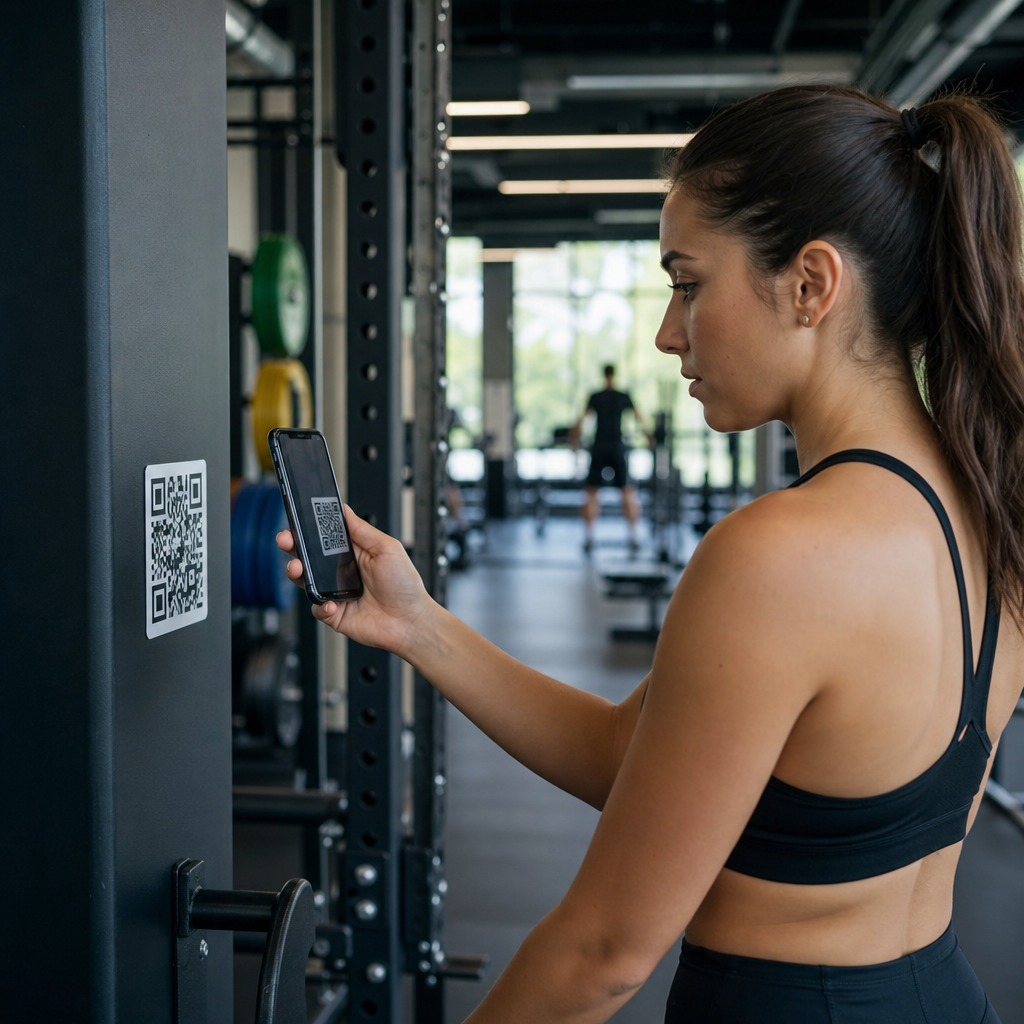
In practice, the highest-performing implementations are usually boring in the best sense: they solve repetitive tasks. A code beside each machine can open a short exercise demo. A code in the locker room can explain towel service, sauna rules, or family area hours. A code at reception can route members to a digital freeze request instead of forcing staff to print forms. Boutique studios use codes on mirrors to promote the next block of classes while emotional motivation is highest. Large chains use codes in clubs to standardize messaging across locations without reprinting entire collateral packages, because dynamic QR destinations can be swapped centrally. That operational flexibility is one reason franchise systems increasingly prefer QR-led campaigns over static print-only promotions.
For this brand case study hub, that lifecycle lens matters because individual articles under the topic often focus on a narrower use case. One case study may examine QR codes for gym lead generation. Another may cover member onboarding, retail upsells, personal training conversion, or equipment education. The hub page should organize those examples so readers can navigate by objective. If your brand challenge is acquisition, you should compare campaigns built around free day passes, referral scans, or local partnerships. If your challenge is retention, the more relevant case studies involve class adherence, challenge participation, and self-service support. Grouping fitness QR code case studies by business outcome makes the subtopic far more actionable than collecting isolated examples.
What separates a strong gym QR campaign from a weak one
Strong campaigns start with a single intent and a destination built for mobile completion. Weak campaigns send every scan to the homepage. That is the most common failure I see in gym marketing. A member scans a poster promising a body composition assessment and lands on a generic site menu with ten competing options. Conversion collapses. Effective brands instead create purpose-built landing pages with one clear action, fast load speed, concise copy, and trust markers such as trainer credentials, class availability, or club photos. They also add campaign parameters in analytics platforms so scans can be tied to source, medium, club location, and creative variant.
Placement also determines performance. A code works when the surrounding context gives the user an immediate reason to scan. On a treadmill console, the likely intent is training guidance, entertainment, or app syncing. At the front desk, the intent may be Wi-Fi access, guest registration, or account help. In a shop display, the intent is product information or checkout. Copy must reflect that context. “Scan for this machine tutorial” is stronger than “Learn more.” “Claim a 3-day gym pass” outperforms “Visit our website” because the value is explicit. Fitness brands that get results usually treat the code, call to action, and destination as one conversion unit, not separate design elements.
Trust and usability matter especially in health-related settings. Members will scan more readily when the destination domain is recognizable, the signage looks official, and the action feels safe. Reputable platforms such as QR Code Generator, Bitly, Beaconstac, and Uniqode help brands manage dynamic destinations and scan analytics, but tools alone do not guarantee trust. The destination page should use HTTPS, clear branding, and accessible design. If a scan triggers a form, keep required fields minimal. If it opens video, captions should be available because gyms are noisy. If it handles waivers or payments, compliance and privacy notices should be visible. These details look small, yet they are often the difference between adoption and abandonment.
Brand case study patterns from gyms, studios, and fitness franchises
Across gyms and fitness studios, the most repeatable case study pattern is using QR codes to compress time-to-action. A prospect sees an offer, scans, and completes a next step before motivation fades. Low-cost gyms often use this for day passes and app-first joining. Premium clubs use it for tour scheduling and consultation booking. Boutique studios apply it to waitlists, class packs, and instructor-specific promotions. Personal training brands use codes on body composition printouts, welcome folders, and after-session recaps to move clients into recurring packages. Different segments, same mechanism: remove friction between intent and response.
A second pattern is education at the point of use. Equipment areas are full of silent confusion, especially for beginners. Brands that attach QR codes to machines, racks, or circuit stations can deliver short form guidance without requiring constant trainer intervention. The code may open a 30-second video showing setup, common form mistakes, muscle groups worked, and beginner alternatives. When implemented well, this reduces intimidation and improves confidence. In clubs where staffing is lean, it also prevents the front desk from becoming the default help desk for every exercise question. Several major operators have adopted some version of this model because it scales knowledge across locations.
A third pattern is retention through program participation. Fitness businesses know adherence drives lifetime value. That is why challenge campaigns, habit trackers, and reward systems frequently use QR codes. Members scan after attending classes, completing circuits, checking in with a coach, or joining nutrition programs. The scan logs progress or unlocks the next step. This is not gimmickry when it is tied to a clear system. It creates a lightweight bridge between physical effort and digital reinforcement. Brands using apps such as Mindbody, ABC Ignite, Virtuagym, Trainerize, or custom member portals often connect QR-based actions to existing accounts so participation data feeds the broader retention strategy.
| Fitness use case | Typical QR destination | Primary metric | Common mistake |
|---|---|---|---|
| Free pass promotion | Mobile landing page with claim form | Lead conversion rate | Sending scans to homepage |
| Equipment tutorial | Short exercise demo video | Video completion rate | Using long, uncaptioned videos |
| Class booking | Preselected schedule or app deep link | Bookings per scan | Forcing account creation too early |
| Retail upsell | Product page or payment link | Revenue per scan | No stock or pricing clarity |
| Onboarding | Checklist hub for new members | Checklist completion rate | Too many steps on one page |
Where QR codes deliver measurable ROI in gym operations
In fitness, return on investment usually appears in four places: lead capture, labor savings, retention, and ancillary revenue. Lead capture improves because offline impressions become attributable. A poster in a nearby apartment building can carry a location-specific dynamic code, allowing the marketing team to measure scans, form starts, and membership conversions separately from window signage or social campaigns. Labor savings appear when repetitive service tasks move to self-service flows. Digital waivers, freeze requests, guest passes, and FAQ hubs reduce manual processing. Retention benefits emerge when members find it easier to start, learn, and stay engaged. Ancillary revenue grows when supplements, apparel, smoothies, or personal training packages are one scan away at the moment of highest intent.
I have seen gym teams underestimate how much operational value sits in self-service QR experiences. A front desk team interrupted every few minutes for Wi-Fi access, policy questions, towel information, or app download help loses selling time. A well-designed signage system can reclaim that time without making the member experience feel impersonal. The key is routing simple tasks to digital pathways while preserving human support for higher-value conversations. In practice, that means the QR destination should solve the problem completely. If a freeze request still requires printing, or a guest pass still needs manual re-entry, the process is only half optimized.
Measurement discipline is essential. At minimum, each gym QR campaign should define scans, unique scans, destination views, completion rate, and downstream conversions such as booked tours, redeemed passes, purchases, or retained members. More advanced programs break results down by club, asset, and audience segment. Google Analytics 4, CRM systems, call tracking, and marketing automation platforms can connect these touchpoints. The data will often reveal simple truths: morning treadmill users scan differently from evening group class participants; locker room signage may outperform lobby signage for app downloads; exterior window offers may drive more scans but lower qualification than in-club referral cards. Those insights are what turn case studies into repeatable strategy.
Implementation lessons for brands building a fitness QR code hub
As the hub page for brand case studies, this article should help readers compare approaches and choose the right next article. The most useful structure is to organize supporting content around common fitness objectives: acquisition, onboarding, retention, retail, training, and franchise scale. Each supporting case study should document the campaign asset, the offer, the destination experience, the analytics setup, and the business result. Readers do not just want inspiration. They want a model they can adapt. A gym marketing manager should be able to move from this hub to a specific article on QR codes for class bookings or trainer upsells and understand exactly what to test next.
Implementation should also account for real constraints. Not every gym has a mature app, in-house development team, or enterprise CRM. That is fine. Smaller brands can still run effective campaigns with mobile landing pages, embedded forms, Calendly, Stripe payment links, and branded URL shorteners. The requirement is not technical complexity; it is alignment between the member’s context and the page they reach. For multi-location brands, governance matters more. Standardize naming conventions, use dynamic codes, maintain a destination inventory, and set review cycles so codes do not break when promotions expire or software changes. Broken QR experiences are especially damaging in clubs because members are standing there ready to act.
One final lesson from experience: creative teams sometimes treat QR codes as a design afterthought, shrinking them to fit aesthetics. In gyms, function has to win. Codes need contrast, quiet space, appropriate size, and testing under real lighting conditions. Mirrors, glare, sweat, distance, and motion all affect scannability. Place codes where a member can safely stop and scan. Never put an instructional code only on moving equipment where using a phone would be awkward or unsafe. These practical details rarely appear in surface-level marketing writeups, but they define whether a fitness QR campaign works in the real world.
Conclusion
QR codes in fitness and gyms work best when they solve a specific business problem at the exact moment a member or prospect is ready to act. That is the central lesson across brand case studies in this subtopic. The winning campaigns do not rely on the technology alone. They pair the right placement with a clear call to action, a mobile-first destination, sound analytics, and a measurable objective such as trial generation, onboarding completion, equipment education, class booking, or retail conversion. When brands follow that formula, QR codes become a practical growth and operations tool rather than a cosmetic add-on.
As a hub for brand case studies, this page should guide readers toward the examples most relevant to their goals. If you need more leads, study offers and landing pages. If you need stronger retention, study onboarding flows, challenge participation, and in-club education. If you manage multiple locations, focus on governance, dynamic code management, and reporting discipline. The advantage of QR codes is simple: they connect physical fitness environments to trackable digital action with very little friction. Use this hub to identify the case study pattern that matches your business, then apply it deliberately in your next campaign.
Frequently Asked Questions
How are QR codes actually used in fitness and gym brands beyond basic promotions?
In leading fitness and gym brands, QR codes are no longer limited to simple flyer campaigns or one-time discounts. They are used across the full member journey as a practical bridge between physical spaces and digital experiences. For acquisition, gyms place QR codes on storefront windows, print ads, event signage, referral cards, and local partnership materials so prospects can instantly view membership options, claim trial passes, book a tour, or join a lead capture funnel. Inside the facility, clubs use them for onboarding workflows such as waiver completion, app downloads, schedule access, trainer introductions, and welcome sequences for new members.
Operationally, QR codes are also valuable for class attendance, equipment education, and in-gym commerce. A code on a spin bike, cable machine, or squat rack can open a short demo video, safety instructions, or a trainer-designed workout variation. A code in a studio room can take members directly to class registration, waitlist forms, or post-session recovery tips. In retail and wellness areas, QR codes can connect members to merchandise, supplements, personal training packages, recovery services, or nutrition consultations. The most advanced brands tie all of these scans to measurable campaign goals, which turns the QR code from a graphic element into infrastructure that supports revenue, retention, and member experience at scale.
Why do strong gym brands treat QR codes as measurable infrastructure instead of novelty marketing tools?
The difference comes down to intent and accountability. A novelty use of a QR code might simply send someone to a homepage with no clear tracking, no campaign structure, and no meaningful next step. By contrast, high-performing gym brands assign every QR code a purpose, a destination, and a measurement framework. That means each code is linked to a specific objective such as lead generation, class bookings, trainer consultations, app adoption, retail conversion, or member education. When that structure is in place, brands can see which placements are driving scans, which scans are turning into actions, and which actions are contributing to business outcomes.
This matters in fitness because so much of the customer experience happens in physical environments. Posters, lockers, reception desks, mirrors, machines, group fitness rooms, and community events all create scan opportunities that can now be tracked. Instead of guessing whether in-club signage works, operators can compare performance by location, audience segment, offer type, or campaign message. They can update the destination behind a dynamic QR code without reprinting materials, which is especially useful for changing schedules, rotating promotions, seasonal challenges, or franchise-wide campaigns. In short, measurable QR infrastructure helps fitness brands reduce friction, improve attribution, and make better operational decisions based on real member behavior rather than assumptions.
What are the biggest benefits of using QR codes for member onboarding and retention in gyms?
Member onboarding is one of the highest-impact places to use QR codes because it shapes the first impression after sign-up. New members often need quick access to waivers, club rules, schedules, mobile apps, trainer bios, introductory offers, and orientation resources. A well-placed QR code can consolidate those next steps into a smooth, guided experience that reduces confusion and increases engagement from day one. Instead of handing someone multiple printed sheets or asking them to search manually for the right link, the gym can provide immediate access to exactly what they need in the moment. That convenience can improve early activation, which is often a leading indicator of long-term retention.
For retention, QR codes help maintain ongoing interaction with the member beyond the front desk. They can link to progress tracking tools, habit challenges, rebooking pages, nutrition content, recovery resources, feedback forms, loyalty rewards, and upgrade offers. They also support re-engagement by making it easier for members to take action during small decision moments throughout the week. For example, a code near the exit might promote a recovery session, a code in the locker room could encourage booking next week’s classes, and a code in a PT area might invite a movement screening or coaching consultation. When used consistently, QR codes create low-friction touchpoints that keep members connected to the club’s ecosystem, which can strengthen habits, improve perceived value, and reduce churn.
How can fitness brands use QR codes for equipment education and better in-facility experiences?
Equipment education is one of the most practical and underrated uses of QR codes in fitness environments. Many members, especially beginners, feel uncertain about how to use unfamiliar machines, set proper adjustments, or perform movements safely. A QR code placed directly on equipment can open a short instructional video, a step-by-step setup guide, a list of muscles targeted, common mistakes to avoid, and suggested workout variations for different ability levels. This makes the gym floor more approachable and can reduce intimidation for newer members who may otherwise avoid entire training zones.
Beyond education, QR codes improve the in-facility experience by making the environment more interactive and self-service friendly. In a group fitness room, a code can provide class descriptions, trainer profiles, music playlists, or post-class stretching routines. In recovery areas, it can link to booking pages for massage, sauna, cryotherapy, or mobility sessions. In locker rooms or lounge spaces, it can connect members to community challenges, referral offers, or branded wellness content. This approach helps brands extend coaching and support without requiring constant staff intervention at every touchpoint. It also creates a more modern and responsive facility experience, where members can access relevant information instantly based on where they are and what they are trying to do.
What should gyms and wellness brands measure to know whether their QR code strategy is working?
Success should be measured well beyond total scan count. Scans are useful, but they are only the starting point. Fitness brands should track where scans happen, when they happen, which campaign or placement generated them, and what users did next. The key is to connect QR activity to downstream outcomes such as lead submissions, tour bookings, membership purchases, app installs, class registrations, retail sales, consultation requests, or personal training conversions. A code on a storefront poster and a code on a treadmill may both generate traffic, but they serve different purposes and should be evaluated against different goals.
It is also important to compare performance across audience types and physical placements. For example, a franchise may find that reception desk codes are effective for onboarding, while locker room codes perform better for upsells and retention campaigns. Clubs should also monitor bounce rate, conversion rate, repeat engagement, and completion of the intended action on the landing experience. If people scan but do not convert, the issue may be the destination page, not the QR code itself. Dynamic QR systems are especially useful because they allow brands to update content and test different calls to action without replacing printed materials. Ultimately, the best QR code strategy in fitness is one that ties physical interactions to measurable business results and is refined continuously based on scan behavior, member needs, and operational goals.