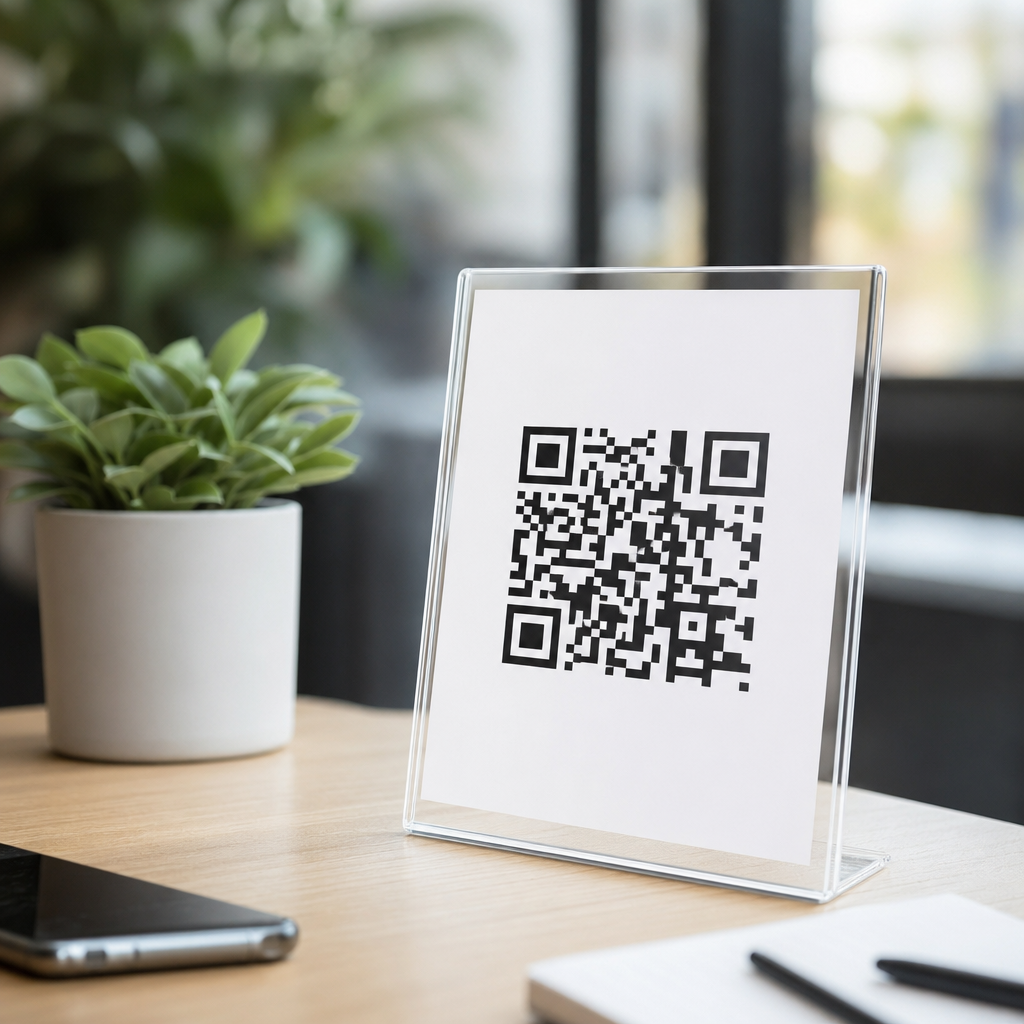
QR code calls-to-action determine whether a scan becomes a measurable conversion or a missed opportunity, which is why they sit at the center of conversion rate optimization for print, packaging, retail displays, direct mail, events, and omnichannel campaigns. A QR code is simply a machine-readable link, but the call-to-action around it is the human prompt that explains what happens next, why it is worth the effort, and how quickly the user will receive value. In practice, that prompt includes the surrounding headline, button-style language, visual hierarchy, incentive, placement, landing page promise, and tracking setup. When these elements align, scan volume rises, bounce rates drop, and downstream actions such as signups, purchases, bookings, app installs, and coupon redemptions increase in a way that can be attributed with confidence.
I have worked on QR campaigns for restaurant tables, product packaging, field sales leave-behinds, conference booths, and retail shelf talkers, and the pattern is consistent: most underperforming codes fail because the CTA is vague. “Scan me” is not a strategy. People want a specific outcome, such as “Scan to see ingredients,” “Scan for a 15% coupon,” or “Scan to book a demo in 30 seconds.” Strong QR code calls-to-action reduce uncertainty and set expectations before the camera opens. That matters because mobile attention is scarce and scanning is a micro-commitment. According to mobile usability guidance long reflected in conversion testing, every extra second of hesitation reduces action rates. The CTA must answer three questions immediately: what do I get, how long will it take, and can I trust this?
As the hub page for conversion rate optimization within QR code analytics, tracking, and optimization, this article explains the best practices that improve scan-through rate and post-scan conversion rate together. Those are separate metrics. Scan-through rate reflects how many viewers scan after seeing the code. Post-scan conversion rate measures how many scanners complete the desired action after landing. Optimizing one without the other creates false wins; a high-scan offer that sends users to a slow, mismatched page can waste budget. The best practice is to treat the QR code CTA, destination experience, and measurement model as one conversion system. When marketers understand audience intent, use direct benefit-led language, maintain message match, test variables methodically, and read analytics with context, QR codes become one of the most trackable bridges between offline attention and digital action.
Write CTAs that state the benefit, the action, and the outcome
The highest-converting QR code CTAs are explicit. They tell users exactly what happens after the scan and why it is useful. In campaign audits, I typically rewrite generic prompts into a three-part structure: action verb, immediate value, and friction reducer. For example, “Scan to claim your free sample,” “Scan to compare plans in under a minute,” or “Scan to watch the two-minute setup guide.” This structure works because it eliminates ambiguity. Users do not need to infer the purpose of the code, and that clarity consistently lifts scan intent.
Benefit-led language outperforms decorative language in most environments. On packaging, “Scan for recipes and allergy info” is stronger than “Discover more.” In B2B events, “Scan to book a live product demo” beats “Learn about our platform.” In direct mail, “Scan to see your personalized quote” generally converts better than “Get started.” Specificity signals relevance. It also improves message match with the destination page, which reduces abandonment. If the CTA promises a coupon, the landing page should show the coupon immediately, not a generic homepage.
Urgency and incentives can help, but they must be genuine. A time-bound phrase like “Scan by Friday for early access” works when inventory, registration windows, or event timing actually create scarcity. Artificial countdown language erodes trust. The same principle applies to incentives. Discounts, bonus content, giveaways, loyalty points, and instant downloads can boost scans, especially in physical spaces where motivation is low. However, an incentive should support the broader goal. If the objective is qualified leads, a low-value educational asset may outperform a broad discount because it filters for intent.
Match the CTA to context, audience intent, and physical environment
A QR code on a bus shelter, a medicine package, and a trade show banner should not use the same CTA because the viewing context changes attention span, urgency, and what “conversion” means. Environmental factors matter more than many teams expect. Distance from the code affects how much supporting copy a user can read. Lighting affects scannability. Dwell time affects how much persuasion you can add. In fast-pass environments like out-of-home media, the CTA must be short, legible, and instantly valuable. In high-dwell environments like restaurant tables or waiting rooms, you can support the code with richer detail, proof points, and secondary benefits.
Audience intent should drive the offer. Existing customers often respond to utility CTAs such as “Scan for setup instructions,” “Scan to reorder,” or “Scan to register warranty.” New prospects need trust and value signals first, such as “Scan to see customer results,” “Scan for pricing,” or “Scan to try the product.” In healthcare, finance, and regulated categories, plain-language trust cues matter even more. A compliant CTA might read “Scan to review official usage instructions” rather than making promotional claims. Clear language reduces both confusion and legal risk.
Localization also improves performance. I have seen multilingual packaging gain substantial scan lift simply by presenting the CTA in the primary local language and using region-specific payment, shipping, or support promises on the destination page. Device behavior differs by market too. In some regions, users expect messaging app deep links; in others, mobile web forms or wallet passes perform better. Conversion optimization is not just copywriting. It is matching the CTA to how real people in a specific environment complete tasks.
Design for visibility, trust, and low-friction scanning
Even the best CTA fails if users cannot scan the code comfortably. Visual hierarchy is a conversion factor. The CTA should be the first thing users notice, the QR code the second, and any supporting details the third. In practical layouts, that means high contrast, sufficient whitespace around the code, and text that can be read from the expected viewing distance. ISO/IEC 18004 defines QR code standards, but on-campaign performance depends on execution choices such as error correction level, quiet zone, print quality, and placement.
Trust cues near the code often improve scan rate. These can include a recognizable brand name, a short descriptive URL, secure payment icons where relevant, privacy language for lead generation, or a concise note such as “No app required.” I regularly add “Opens in your browser” when working with less technical audiences because it removes a hidden objection. If the post-scan action involves a form, set expectations up front: “Scan to get the guide and answer three quick questions.” Honest friction disclosure lifts completion because users know the effort required.
Placement should respect how people hold their phones. On shelf displays, codes placed too low are awkward to scan. On tabletop tents, codes printed near folds often warp and fail. On product packaging, curved surfaces reduce reliability. Test production samples, not just digital mocks. I also recommend dynamic QR codes from established platforms so marketers can update destinations without reprinting and can segment analytics by source, location, or creative variant. Common tools include Bitly, QR Code Generator PRO, Uniqode, and enterprise campaign platforms that support UTM tagging and event integrations.
Optimize the destination page for message match and completion
A QR code CTA succeeds only when the landing experience fulfills the promise quickly. In optimization reviews, post-scan drop-off usually comes from four problems: slow load time, weak message match, too many choices, or excessive form friction. The landing page headline should repeat the offer in near-identical language. If the printed CTA says “Scan for 15% off today,” the first screen should show that exact offer and a clear path to redeem it. Sending scanners to a homepage is one of the most common and expensive mistakes in QR conversion work.
Mobile-first design is mandatory because QR scans overwhelmingly happen on phones. Keep the first screen focused on one primary action. Reduce navigation clutter. Use thumb-friendly buttons, compressed images, and autofill-compatible forms. If the conversion depends on a code, coupon, or ticket, reveal it early rather than forcing users through unnecessary steps. For video destinations, autoplay should be used cautiously, especially in public environments where sound is disruptive. For app download CTAs, use deferred deep linking when possible so users reach relevant content after installation instead of a dead end.
The relationship between CTA promise and landing page proof is critical. If the CTA offers social proof, the page should lead with testimonials, ratings, or case examples. If it offers utility, the page should foreground instructions, pricing, inventory, or compatibility details. This is where many teams lose conversions by over-branding the page instead of solving the visitor’s immediate task. A QR scan is a high-intent moment. Respect it with a direct path.
| CTA type | Best landing experience | Primary metric |
|---|---|---|
| Discount or coupon | Offer visible above the fold with redeem button or code | Redemption rate |
| Product education | Short explainer page with specs, FAQs, and video | Engaged sessions |
| Lead generation | Focused form with clear value exchange and privacy note | Form completion rate |
| Event follow-up | Calendar booking or asset download with prefilled fields | Meetings booked |
| Support or setup | Step-by-step instructions and searchable help content | Task completion rate |
Measure the full funnel and test variables that actually move conversion
Effective QR code conversion optimization requires analytics that connect exposure, scans, sessions, and completed actions. Start with campaign naming conventions and UTM parameters that distinguish channel, placement, creative, audience, and date range. Then connect QR destinations to analytics platforms such as Google Analytics 4, Adobe Analytics, or a CRM with event tracking. The key is to separate scan rate from landing page conversion rate. If scans are high but completions are low, the offer is attractive but the destination is failing. If scans are low and completions are high, the CTA or placement needs work.
Testing should focus on variables with causal impact. The most useful experiments compare CTA phrasing, incentive type, surrounding imagery, landing page headline, form length, and placement height or angle in the physical environment. In stores, I have seen simple copy changes outperform design overhauls. “Scan for price and sizes” beat “Explore options” because it addressed the shopper’s immediate question. At events, changing the CTA from “Learn more” to “Scan for the live demo schedule” improved both scans and qualified booth conversations because it aligned with attendee intent.
Use statistically disciplined testing where traffic allows, but do not force false precision on low-volume placements. For smaller campaigns, directional learning plus qualitative observation is often enough. Watch real users try to scan. Note where they hesitate. Ask what they expected after reading the CTA. Those insights regularly explain analytics anomalies. Also account for external factors such as staff prompts, weather, packaging batch changes, and time-of-day patterns. Offline-to-online conversion is measurable, but only if the measurement model respects real-world complexity.
Build a repeatable optimization program across channels
The best QR code programs do not treat each campaign as a one-off design task. They build a repeatable operating model that standardizes tracking, creative review, testing cadence, and reporting. I recommend a simple governance framework: define the conversion goal, document audience intent, approve CTA copy against a benefit checklist, validate scannability in production conditions, launch with tagged URLs, and review performance weekly against benchmarks. This process creates comparable data across direct mail, packaging, point-of-sale signage, handouts, and event materials.
Internal linking between related resources also strengthens performance over time because teams learn faster when guidance is centralized. A hub on QR code conversion rate optimization should connect naturally to deeper resources on QR code analytics, landing page testing, UTM strategy, dynamic code management, and attribution modeling. That structure helps marketers move from isolated tactics to a system. It also prevents recurring mistakes such as sending all scans to one generic destination or evaluating campaigns only on raw scan counts.
Above all, treat the QR code CTA as a promise. Make it specific, relevant, visible, and easy to fulfill. Match the wording to user intent and physical context. Remove friction from both the scan and the landing page. Track the full funnel, test the variables that matter, and use the findings across channels. When teams follow these best practices, QR codes stop being decorative squares and become reliable conversion pathways that connect offline attention to measurable business outcomes. Review your current QR placements, rewrite the weakest CTA first, and test one clearer promise this week.
Frequently Asked Questions
What makes a QR code call-to-action effective?
An effective QR code call-to-action clearly answers three questions before someone scans: what will happen, why it is valuable, and how long it will take. The QR code itself is only the access point. The CTA is what removes uncertainty and gives people a reason to engage. Strong examples use direct, benefit-led language such as “Scan to get 20% off,” “Scan to watch the 30-second demo,” or “Scan to check live pricing.” This works because it sets an expectation and frames the scan as a low-friction step toward a specific outcome.
Clarity is usually more important than cleverness. If the message is vague, overly branded, or too abstract, people may not trust the experience enough to scan. Good QR CTAs also align with user context. Someone standing in a store aisle needs a fast, practical reason to scan, while someone reading direct mail may be more willing to explore a longer offer or product story. The most effective CTAs also support conversion rate optimization by connecting the scan to a measurable goal, whether that is a purchase, form submission, coupon redemption, app install, event registration, or content view.
Design and placement matter just as much as wording. The CTA should be visually tied to the code, easy to read at a glance, and supported by concise microcopy that reinforces trust, such as “No app required,” “Takes 10 seconds,” or “Opens product details.” When the user instantly understands the value exchange, scan rates and downstream conversions typically improve.
How should I write QR code CTA copy for different channels like packaging, retail, print, and events?
The best QR code CTA copy reflects the environment in which the user sees it. On packaging, people are usually close to the product and looking for information that supports a purchase decision or post-purchase use. Effective CTAs in that setting often focus on ingredients, how-to instructions, setup guides, warranty activation, loyalty rewards, or replenishment options. In retail displays, the goal is often to reduce hesitation and add confidence, so a CTA like “Scan to compare models,” “Scan for customer reviews,” or “Scan for today’s in-store offer” can be more persuasive than generic wording.
For print materials and direct mail, the CTA should bridge offline attention into a digital action with a clear incentive. That might mean offering a limited-time discount, booking page, downloadable guide, or personalized landing experience. In these channels, users may have more time to consider the message, so it helps to include a short supporting line that explains the benefit in more detail. For example, “Scan to claim your free consultation” can be strengthened with a second line like “Choose your time in under a minute.”
At events, speed and immediacy are critical. People are moving, distracted, and often scanning on the go. CTAs should be short, visible from a distance, and tied to an immediate payoff such as agenda access, booth giveaway entry, speaker slides, lead capture, or demo booking. Across all channels, the key is contextual relevance. The closer the CTA matches the user’s moment, need, and expected level of effort, the more likely it is to turn a scan into a meaningful conversion.
What information should a QR code call-to-action include to improve scan and conversion rates?
A high-performing QR code CTA should communicate the action, the reward, and the expected experience. At minimum, users need to know what they are scanning for. That means replacing vague prompts like “Scan here” with specific descriptions such as “Scan to download the menu,” “Scan to unlock assembly instructions,” or “Scan to join the rewards program.” Specificity lowers friction because users do not have to guess what comes next.
Beyond the action itself, the best CTAs emphasize the benefit. People scan when they perceive value, not just functionality. That value could be savings, convenience, exclusive access, useful information, entertainment, or speed. This is why outcome-focused phrasing tends to outperform generic commands. A message like “Scan to save your seat” is stronger than “Scan to register” because it frames the action in terms of what the user gains.
It also helps to set expectations around effort and device behavior. Supporting details such as “Opens instantly in your browser,” “No login required,” or “Takes less than 30 seconds” can reduce hesitation. In many campaigns, trust signals are especially important, particularly when users are being asked to share information or make a purchase. If relevant, include cues about security, privacy, or legitimacy. Finally, the destination experience must match the promise made by the CTA. If the user scans for a discount, tutorial, menu, or sign-up form, the landing page should deliver exactly that without delay. The strongest QR code CTAs are part of a complete user journey, not just a piece of copy next to a code.
What are the most common mistakes to avoid with QR code calls-to-action?
One of the most common mistakes is using a QR code without a real call-to-action at all. A code placed on a sign, package, or flyer without explanation assumes users will do the work of figuring out why they should scan. In most cases, they will not. Another major issue is vague copy. Phrases like “Learn more” or “Scan here” are not always wrong, but they often underperform because they do not communicate enough value. Users want to know what they are getting and why it is worth their attention.
Poor alignment between the CTA and the landing page is another frequent problem. If the sign says “Scan for 15% off” but the QR code opens a homepage instead of a discount page, trust drops immediately and conversions suffer. The same happens when the mobile experience is slow, cluttered, or requires too many extra steps. A successful CTA does not end at the scan. It must lead into a friction-light destination that fulfills the promise quickly.
Other avoidable mistakes include placing the code where it is hard to notice or difficult to scan, using text that is too small, overloading the design with competing messages, or targeting the wrong intent for the context. A long-form lead generation offer may not work well in a busy retail environment, while a simple product-details prompt may be too weak for a direct mail campaign with more attention available. Finally, many marketers miss the measurement side. If you are not tracking scan source, destination performance, and conversion outcomes, it becomes much harder to improve CTA wording and placement over time.
How can I test and optimize QR code CTAs for better performance?
Optimizing QR code calls-to-action starts with treating them like any other conversion element: define a goal, create variations, measure results, and refine based on evidence. Begin by identifying the primary conversion you want from the scan. That could be a sale, form completion, coupon redemption, video view, app download, store locator visit, or appointment booking. Once the goal is clear, test CTA variables such as wording, value proposition, incentive strength, urgency, placement, text size, surrounding design, and supporting microcopy.
For example, you might compare “Scan to learn more” against “Scan to see today’s pricing,” or test “Scan for 10% off” against “Scan to unlock your exclusive offer.” These variations often reveal whether your audience responds more to information, savings, convenience, or exclusivity. You can also test functional reassurance, such as whether adding “No app required” improves scan rates in print or retail settings. If possible, use unique dynamic QR codes or campaign-specific URLs so you can isolate performance by location, creative version, and audience segment.
It is important to measure more than scans alone. A CTA can generate high scan volume but still perform poorly if the landing page does not convert. Look at the full funnel: scan rate, landing page engagement, bounce rate, form completion, purchase rate, and any other relevant conversion metrics. Pair this data with channel context. A CTA that works well on packaging may not work on event signage or direct mail. Over time, the best optimization programs build a feedback loop between message, placement, mobile experience, and business outcome. That is what turns QR codes from passive design elements into reliable, measurable conversion tools.