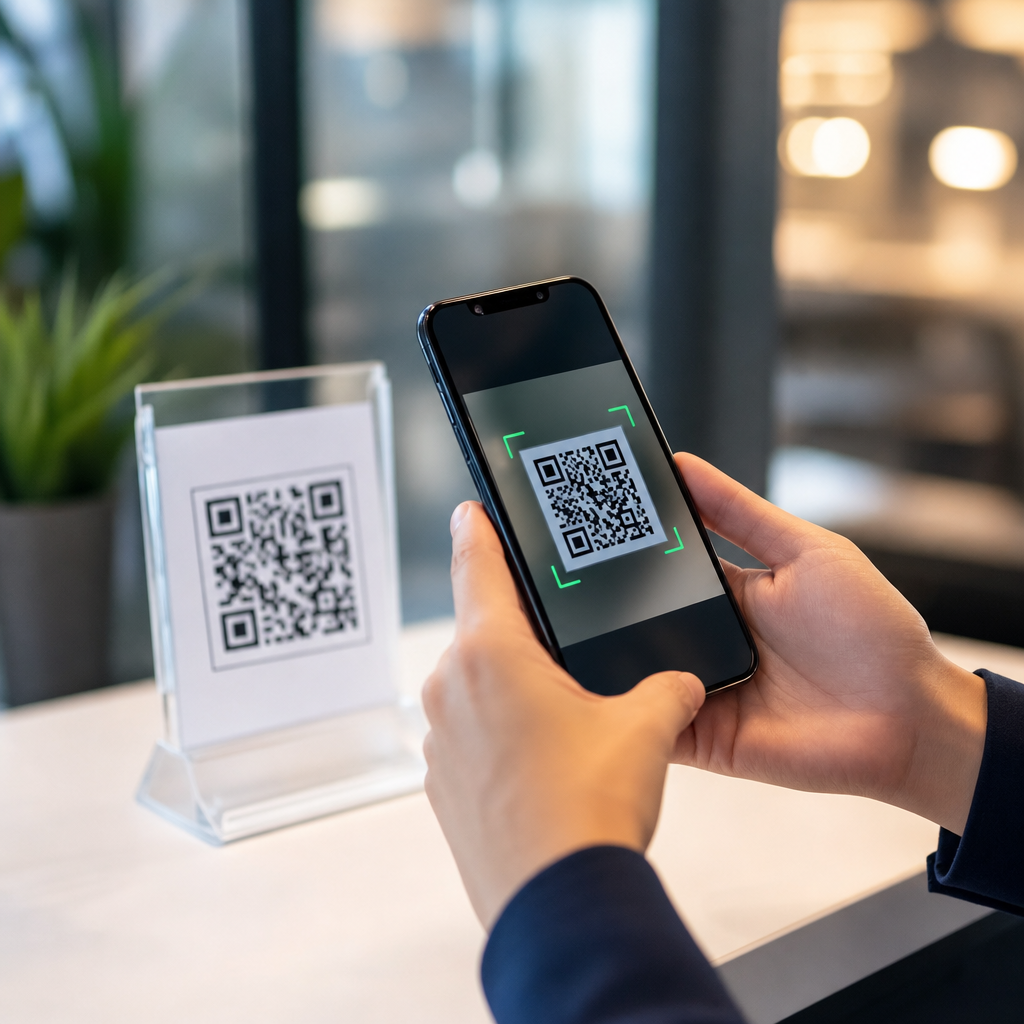
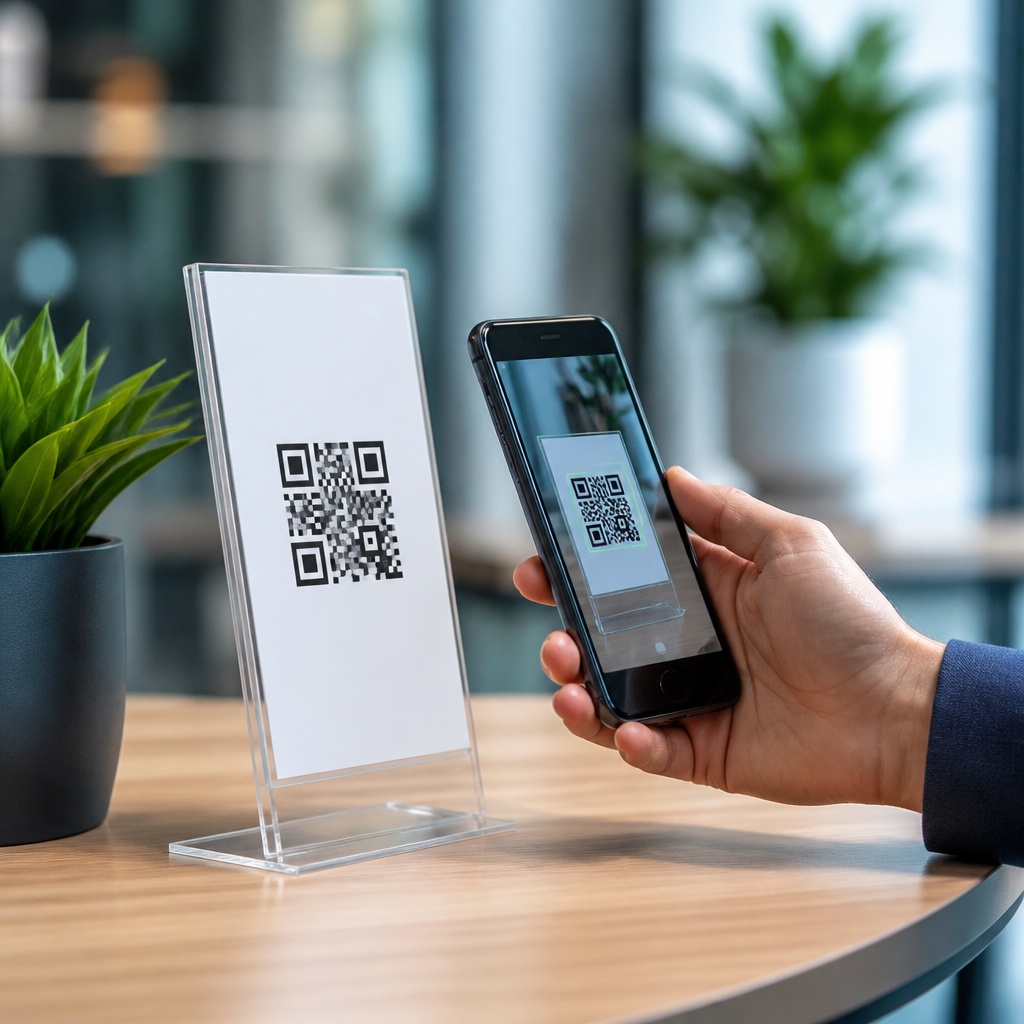
Transparency best practices for QR code marketing determine whether a quick scan feels helpful or suspicious. In campaigns I have reviewed for retailers, venues, and healthcare providers, the same pattern appears repeatedly: users scan when they understand what will happen next, why the code exists, and how their data will be handled. When those signals are missing, even well-designed campaigns underperform because people hesitate, abandon the landing page, or report the code as unsafe. Transparency is therefore not a soft branding principle. It is a measurable driver of scan-through rate, conversion quality, customer satisfaction, and regulatory resilience.
QR code marketing uses scannable two-dimensional barcodes to connect offline or digital touchpoints to online content, payments, downloads, forms, loyalty offers, and support experiences. User trust and transparency in this context mean clearly communicating the destination, purpose, ownership, data practices, and expected user action before and after the scan. That includes visible labeling near the code, concise consent language where needed, secure destination management, and honest post-scan design. A transparent QR campaign does not rely on curiosity alone. It gives enough context for a reasonable person to decide whether scanning is worth the risk and effort.
This matters because QR codes compress a lot of uncertainty into a small square. A printed code can hide a malicious link, a redirect chain, a forced app download, or a form that collects more information than expected. Users know this, even if they cannot articulate it formally. Security agencies, payment networks, and privacy regulators have all reinforced the importance of clear notice, lawful data handling, and protection against deceptive design. For marketers, that means the trust question starts before the scan. If a campaign is not transparent at the point of encounter, stronger creative and better incentives rarely compensate for the credibility gap.
As a hub page within QR code security, privacy, and compliance, this article explains the core practices that make campaigns trustworthy at scale. It covers what information to disclose, how to design user-facing context, which technical controls support honest messaging, and where legal and ethical boundaries usually appear. It also connects the user experience to operational disciplines such as link governance, redirect monitoring, analytics minimization, and vendor review. The goal is simple: help teams build QR code marketing that earns scans because people feel informed, respected, and safe.
What transparent QR code marketing looks like in practice
Transparent QR code marketing starts with a direct answer to the user’s first question: what happens if I scan this? In practice, the best-performing codes are paired with plain-language context such as “Scan to view today’s menu,” “Scan to register your warranty,” or “Scan to claim a 10% in-store offer.” That line should identify the benefit, the brand behind the experience, and any meaningful condition. If the scan opens a browser, starts a payment flow, launches a messaging app, or downloads a file, say so explicitly. Ambiguity reduces trust faster than almost any visual flaw.
Ownership must also be obvious. Users should be able to tell who placed the code and who will receive their information. On packaging, signage, direct mail, or event materials, include the company name, matching branding, and a recognizable domain in nearby copy whenever possible. If a third party powers fulfillment, loyalty management, surveys, or booking, disclose that at the destination page. In my audits, unlabeled short links and generic white-label landing pages are among the biggest causes of drop-off because they make legitimate campaigns resemble phishing attempts.
Transparent design continues after the scan. The landing page should immediately confirm the action promised before the scan, using a consistent headline and visual identity. If the code was labeled “Scan to download the care guide,” the first screen should present that guide, not a full-screen lead form with unrelated upsells. If data collection is necessary, request only what is needed for the stated purpose and explain why each field matters. This alignment between pre-scan promise and post-scan experience is the practical foundation of user trust.
Core disclosure elements every QR campaign should include
Every QR code marketing asset should disclose five essentials: destination purpose, brand identity, expected action, data implications, and support path. Destination purpose tells the user why the code exists. Brand identity confirms ownership. Expected action clarifies whether the result is a page view, form submission, payment, app action, or file download. Data implications explain whether analytics, location, contact details, or payment information will be collected. A support path gives users a fallback, such as a URL they can type or a help contact if the code fails.
These disclosures do not need to be long. They need to be specific. “Scan for details” is weak because it hides the outcome. “Scan to check appointment availability on clinicname.com” is stronger because it names the action and destination. The same principle applies to incentives. If the code leads to a contest, state the basic eligibility or a concise note that terms apply. If the experience uses geolocation, camera permissions, or messaging opt-in, signal that before the user commits. Surprises after the scan create distrust and may also create consent problems.
For teams managing many placements, standardization helps. Use a QR disclosure checklist in campaign briefs and production workflows so packaging, field marketing, retail, and social teams all follow the same rules. Legal and compliance review should focus on risk categories rather than rewriting every sign from scratch. That approach improves speed without sacrificing clarity. It also creates cleaner internal linking signals across your broader governance documentation, which helps organizations maintain consistent guidance for future QR code privacy and compliance projects.
Pre-scan messaging patterns that increase confidence
Pre-scan messaging should answer the user’s practical concerns in one glance. In stores, the most effective pattern is a short command plus benefit plus destination cue: “Scan to compare sizes on brand.com.” In restaurants: “Scan to view the menu in your browser, no app required.” In healthcare: “Scan to access post-visit instructions securely.” In transit or events: “Scan for the live schedule and service alerts.” Each example reduces uncertainty by naming the immediate result and removing a common fear such as forced app installation.
Context matters by channel. On product packaging, explain whether the code supports setup, authenticity verification, warranty registration, or replenishment. On posters and out-of-home media, where users have less time, keep the statement tighter and ensure the domain is legible. On direct mail, where there is room, add privacy context such as “opens a secure form” or “learn more before sharing your details.” I have seen response rates improve simply by replacing vague teaser copy with explicit utility language and a trustworthy domain reference.
Accessibility is part of transparency. Pair every QR code with an alternative path, such as a short URL, NFC option, or customer service number. Not all users can scan easily, and some enterprise phones disable QR interactions. Instructions should use high contrast and a scannable quiet zone around the code. If the destination is mobile optimized only, state that. Telling users what they need before they engage is not just considerate design; it is a trust signal that shows the brand has anticipated real-world friction.
Technical and governance controls that support honest claims
Transparency in QR code marketing depends on technical discipline. If a sign says the code opens a secure information page, the redirect chain must actually do that, reliably and without hidden detours. Use HTTPS on every destination, minimize redirects, and avoid expired or mismatched domains. Dynamic QR codes should be governed through documented ownership, approval workflows, and change logs so destinations cannot be altered casually after materials are printed. In several incident reviews I have handled, the business risk came less from the code image itself and more from poor redirect management.
Analytics should also match the promise made to users. Campaign measurement is legitimate, but collection must be proportionate. Basic metrics such as scan count, device type, timestamp, and campaign source are usually enough for optimization. If you want location precision, contact details, or behavioral profiling, define the purpose and present the necessary notices at the right moment. Avoid stuffing QR flows with multiple third-party tags that slow load time and expand data sharing beyond what users reasonably expect from a simple scan.
| Control area | Best practice | User trust benefit |
|---|---|---|
| Destination security | HTTPS, valid certificates, limited redirects | Reduces phishing and tampering concerns |
| Domain strategy | Use recognizable branded domains | Confirms ownership quickly |
| Change management | Approval logs for dynamic URL updates | Prevents silent misuse after printing |
| Analytics | Collect only necessary campaign data | Supports privacy expectations |
| Fallback access | Short URL or support option near the code | Improves accessibility and confidence |
Vendor selection matters here. QR code generators, mobile landing-page tools, customer data platforms, and contest software all affect transparency outcomes. Review whether vendors support custom domains, privacy notices, role-based access, audit logs, and data retention controls. Recognized frameworks such as ISO/IEC 27001 for security management and the principles behind GDPR and CCPA are useful reference points when evaluating process maturity. Marketers do not need to become security engineers, but they do need to verify that the systems behind the campaign can support the promises shown on the printed asset.
Privacy, consent, and honest data collection after the scan
Not every QR scan requires consent, but every data collection step requires a lawful, understandable basis. A code that opens a simple informational page may rely on standard website notices and essential analytics. A code that enrolls a user in SMS, captures health-related details, or initiates targeted remarketing needs clearer notice and, in many jurisdictions, affirmative consent. The critical principle is sequencing. Do not imply that a scan itself equals agreement to unrelated marketing uses. Present choices when they become relevant, using plain language and separate opt-ins where appropriate.
Data minimization is the strongest privacy habit in QR marketing. If a coupon can be delivered without collecting a phone number, do not request one. If a support flow only needs a product serial number, do not also ask for birth date, full address, and household size. Users instinctively notice over-collection, especially when it appears disconnected from the value offered. In practice, shorter forms not only reduce privacy risk but also convert better. Transparency and performance are often aligned when teams resist unnecessary fields and hidden trackers.
Be careful with sensitive contexts. In healthcare, education, employment, finance, and access control, the consequences of unclear data practices are much higher. If a code appears in a clinic waiting room or on a benefits notice, users need confidence that the destination is legitimate, secure, and limited to the stated purpose. The same applies to QR-based payments. Clearly identify the merchant, total, and payment processor before confirmation. Trust is earned when users can verify where they are, what information is being requested, and what will happen next.
Common transparency failures and how to prevent them
The most common failure is using curiosity as the main scan trigger. “Scan me” with no explanation may generate some engagement, but it also filters for risk-tolerant users and leaves everyone else behind. Another frequent problem is mismatch: the sign promises one thing, while the destination starts with a newsletter sign-up, autoplay video, or generic homepage. Broken codes, stale offers, and regionally inaccessible pages are equally damaging because they make the brand appear careless or deceptive even when there was no malicious intent.
A second category of failure involves hidden intermediaries. Users scan a code associated with a trusted retailer, but the browser opens a generic link shortener, then a third-party campaign domain, then a social login prompt. Every extra hop invites doubt. Prevention is straightforward: use a branded domain, reduce redirects, and keep third-party dependencies invisible unless disclosure is needed. If external fulfillment is essential, explain the relationship at the destination page rather than forcing users to infer it from an unfamiliar URL structure.
Finally, many organizations treat QR transparency as a creative issue rather than a governance issue. The result is inconsistency across business units, agencies, and local operators. Prevention requires policy. Define approved labeling patterns, domain rules, retention periods, testing procedures, and incident response steps for compromised or replaced codes. Conduct periodic field audits because physical media can be tampered with after distribution. Teams that operationalize these controls create campaigns that scale safely and strengthen long-term trust.
Transparency best practices for QR code marketing are ultimately about reducing uncertainty at every stage of the scan journey. Users should know who owns the code, what benefit it provides, where it leads, whether an app, download, payment, or form is involved, and how their information will be used. When those answers are visible before the scan and confirmed immediately after it, campaigns perform better because people feel informed rather than manipulated. Trust becomes part of the conversion path, not a separate reputation exercise.
The most reliable way to improve user trust and transparency is to combine clear copy with disciplined operations. Label codes with specific utility, use recognizable branded domains, align landing pages with the promise on the asset, minimize data collection, and maintain secure destination governance. Add fallback access for accessibility, review vendors carefully, and apply stronger notice and consent where sensitive data or marketing permissions are involved. These practices protect users while also reducing abandonment, customer complaints, and compliance exposure for the brand.
As the hub for this subtopic, this page provides the framework that all related guidance should build on: pre-scan disclosure, post-scan honesty, privacy-aware measurement, and governance that keeps promises true over time. If you manage QR code campaigns across packaging, retail, events, healthcare, or direct mail, audit your current assets against these principles and fix the highest-friction points first. Start with one question on every code: would a reasonable user understand and trust this scan? If the answer is yes, performance and resilience usually follow.
Frequently Asked Questions
Why is transparency so important in QR code marketing?
Transparency is critical in QR code marketing because scanning a code requires an immediate trust decision. Unlike a standard website link that users can often preview, a QR code hides the destination until after the scan. That means people are asking themselves a few quick questions before they engage: Where will this take me? Is it safe? Why am I being asked to scan? If those questions are not answered clearly in the surrounding message, many users hesitate or abandon the process altogether. In practical campaigns across retail, event, hospitality, and healthcare settings, transparency consistently improves scan rates because it reduces uncertainty and helps users feel in control.
It also affects what happens after the scan. A transparent campaign sets accurate expectations about the landing page, the value of the action, and any data collection involved. For example, if a poster says the code leads to a menu, but the scan opens a sign-up form first, users often feel misled. That disconnect damages brand trust and lowers conversion rates. By contrast, when marketers explain the purpose of the code, the expected outcome, and any privacy implications upfront, users are more likely to complete the interaction and view the brand as credible. In short, transparency is not just a compliance or ethics issue; it is a performance issue that directly influences engagement, conversions, and long-term trust.
What information should be placed next to a QR code to make users feel confident scanning it?
The most effective QR code campaigns give users a clear reason to scan and a clear idea of what will happen next. At minimum, the text beside the code should explain the destination or action, such as “Scan to view the event schedule,” “Scan to reorder your prescription,” or “Scan to redeem your 10% in-store offer.” This kind of plain-language instruction removes ambiguity and helps users decide quickly whether the scan is relevant to them. A short call to action is helpful, but it should always be specific. Generic phrases like “Scan here” are much weaker than messages that identify the benefit, purpose, and expected result.
It is also a best practice to include signals that reinforce legitimacy. That can include the brand name, logo, campaign context, customer support information, or a visible web domain on the sign or packaging. If the scan leads to a form, download, payment page, or location request, that should be disclosed before the user scans. In sensitive environments such as healthcare, education, or financial services, even more clarity is needed. Letting users know whether the page is informational, transactional, or data-collecting can dramatically reduce suspicion. The goal is to make the QR code feel like an informed choice rather than a blind click. The more specific, relevant, and honest the surrounding information is, the more confident users will feel.
How should businesses disclose data collection and privacy practices in a QR code campaign?
Businesses should disclose data collection in a way that is visible, simple, and directly connected to the scan experience. Users should not have to guess whether the code is tracking them, requesting personal information, or dropping them into a marketing funnel. If the landing page collects email addresses, phone numbers, appointment details, payment information, or location data, that should be communicated either near the code itself or immediately on the landing page before submission. The language should be straightforward, such as “Scan to access the guide; email required for download” or “Scan to check in; location services may be requested.” Clear notice builds trust and helps avoid the impression that the brand is hiding something.
From a best-practices standpoint, disclosure should also be paired with accessibility to fuller privacy information. That means linking to a privacy policy, explaining how submitted data will be used, and stating whether users are opting into future communications. Consent should be explicit where required, especially for healthcare, regulated industries, or campaigns involving SMS and email marketing. Avoid pre-checked consent boxes or vague wording about “improving your experience” if the actual purpose is lead capture or remarketing. Transparency works best when it is layered: a short summary near the code or at the first screen, followed by a more complete explanation in the privacy policy or form language. That approach respects the user’s time while still providing the information needed to make an informed decision.
What are the most common transparency mistakes that make QR code campaigns look suspicious?
One of the most common mistakes is offering no context at all. A standalone QR code with little or no explanation forces the user to take a leap of faith, which many people understandably refuse to do. Another frequent issue is mismatch between the promise and the destination. If signage says the user will get a coupon, map, menu, or instructions, but the code instead opens a homepage, pop-up, app download page, or lengthy form, trust drops immediately. Even if the campaign is legitimate, that kind of friction makes it feel deceptive. Overuse of urgency language, excessive redirects, or cluttered landing pages can create the same effect.
Other mistakes involve branding and security perception. Codes that appear on unofficial-looking materials, have no visible company identity, or use suspicious short links can raise red flags. In physical spaces, poorly placed stickers can make users wonder whether a fraudulent code has been pasted over the original. That is especially important in public venues, parking areas, restaurants, and healthcare facilities. Marketers also undermine transparency when they ask for more information than the offer reasonably requires. If a simple content download asks for a full contact profile, users often become skeptical. The broader lesson is that suspicion usually comes from hidden intent, weak context, or unnecessary complexity. Transparent campaigns reduce those signals by being direct, branded, relevant, and proportionate in what they ask users to do.
How can businesses test whether their QR code marketing is transparent enough?
A practical way to test transparency is to observe whether first-time users can answer three questions before they scan: what the code is for, where it will likely take them, and whether any personal information will be requested. If those answers are not obvious from the sign, package, display, or screen, the campaign likely needs revision. Usability testing is especially effective here. Ask a small group of people unfamiliar with the campaign to look at the QR code and describe what they think will happen. Their hesitation, confusion, or incorrect assumptions often reveal transparency gaps more clearly than internal reviews do.
Businesses should also measure post-scan behavior, not just scan volume. High scan rates with fast drop-off on the landing page often indicate that the campaign invited interest but failed to meet expectations. Review bounce rates, form abandonment, time on page, and feedback from customer support or frontline staff. If users frequently ask whether a code is safe, what it does, or why information is required, those are signs that the messaging is not clear enough. A/B testing can help refine the language around the code, the landing page introduction, and privacy disclosures. In many cases, small changes such as naming the destination, previewing the benefit, or clarifying data use lead to stronger engagement. The best test of transparency is simple: users should feel informed before the scan and reassured immediately after it.