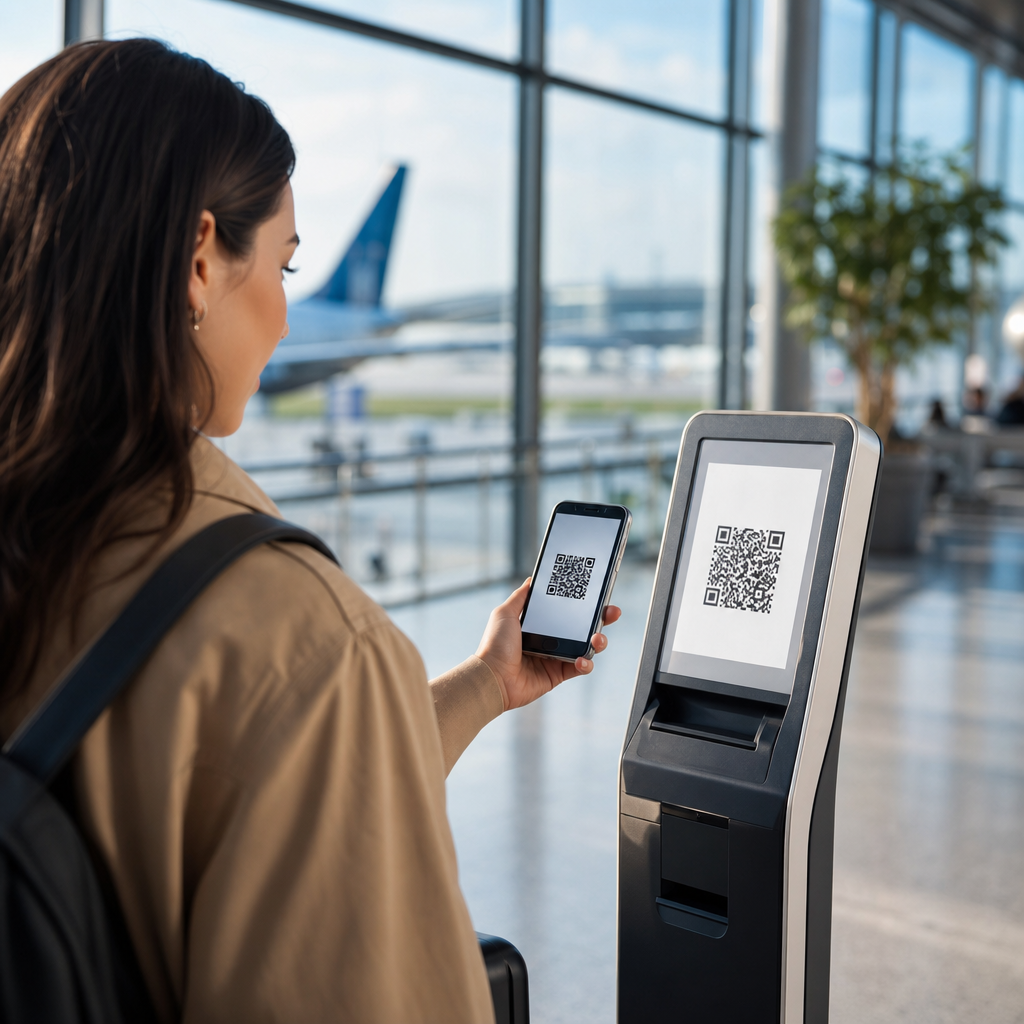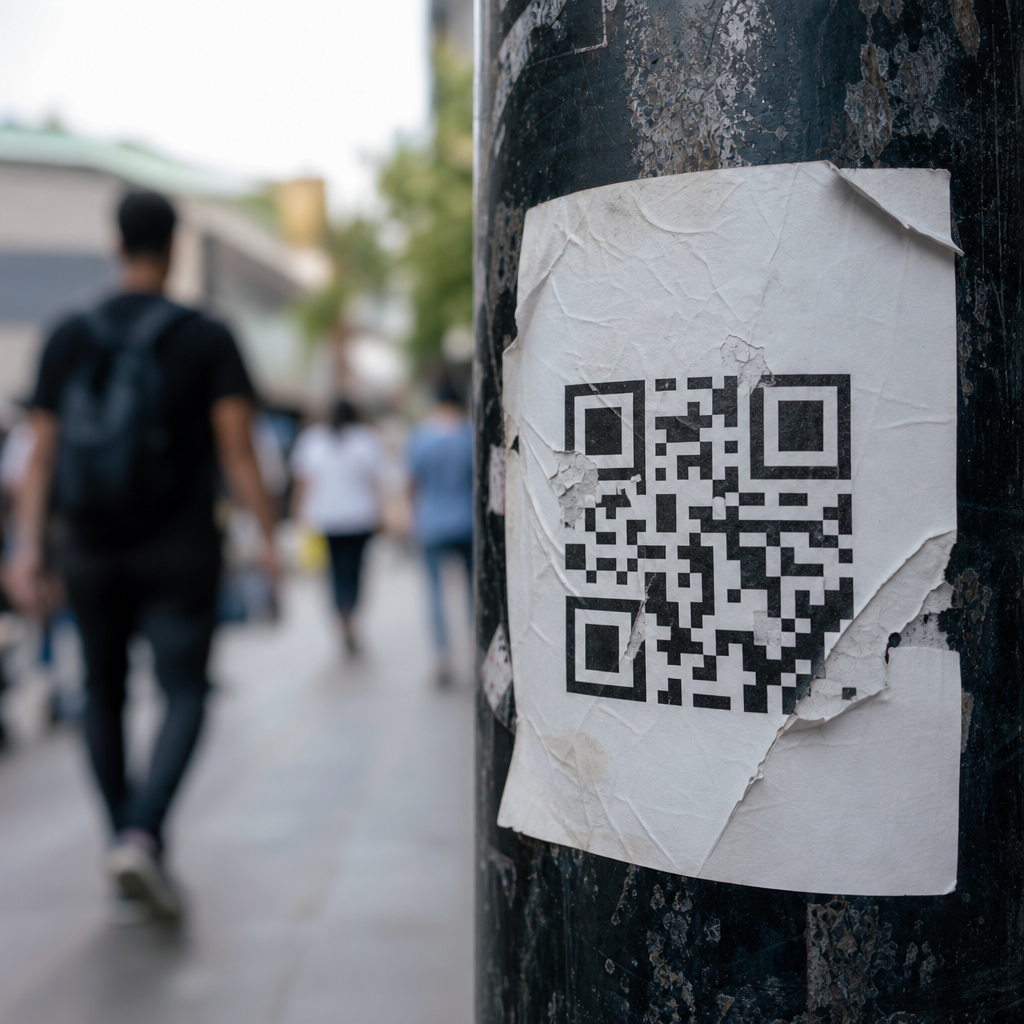
Why some QR code campaigns fail is rarely about the code itself. It is usually a breakdown in strategy, execution, measurement, or audience fit. A QR code campaign uses a scannable code to move someone from a physical or digital touchpoint to an online action, such as visiting a landing page, claiming an offer, watching a video, completing a payment, or joining a loyalty program. When those steps are frictionless and relevant, response rates can be strong. When they are not, scans stall, budgets are wasted, and teams wrongly conclude that QR codes do not work.
I have seen this firsthand across retail displays, product packaging, restaurant tables, direct mail, event signage, and out-of-home placements. In most failed campaigns, the visible symptom is low scan volume, but the root cause sits earlier in the chain. The offer may be unclear, the page may load slowly, the placement may be impossible to scan, or the team may have launched without baseline analytics. QR codes magnify both good and bad marketing fundamentals because they compress attention into a single moment. People decide in seconds whether a scan is worth the effort.
This matters because QR codes now sit at the intersection of offline and online customer journeys. Smartphone cameras have native scanning, mobile payments trained users to trust the behavior, and dynamic code platforms make it easy to update destinations without reprinting assets. Yet that convenience creates false confidence. Marketers can generate a code in minutes, but a successful campaign still requires audience research, conversion design, accessibility, privacy awareness, and operational testing. This hub article explains the most common QR code campaign failures and the lessons that consistently prevent them.
At a practical level, failure means one of four things: too few scans, too few conversions after scans, poor quality leads or buyers, or no reliable way to connect results to business outcomes. Those definitions matter because a campaign can appear successful on one metric while underperforming on the one that actually counts. A giveaway code on packaging might generate thousands of scans but almost no repeat purchases. A restaurant table tent might drive fewer scans but lift average order value through dessert add-ons. Good diagnosis begins with precise objectives.
Poor strategy is the most common reason QR code campaigns fail
Many teams begin with the asset instead of the goal. They ask where to place a QR code rather than why someone would scan it. That reversal creates weak campaigns because the user value proposition never gets sharpened. A code needs a concrete exchange: scan to see a menu, redeem 15 percent off, verify product authenticity, register a warranty, or unlock a tutorial. Vague prompts such as “learn more” underperform unless the audience already has high intent. On a crowded poster or package, ambiguity kills response.
Another strategic error is forcing QR codes into contexts where they add no convenience. If the same action could be completed more easily with a short URL, NFC tap, or native app flow, the code may be unnecessary. I have reviewed campaigns where a magazine ad used a QR code to drive users to a generic homepage, making them search again once they arrived. That is not a bridge; it is an extra step. The best QR code campaigns remove friction by landing people exactly where they expected to go, with continuity in message and offer.
Targeting also matters. A high-performing code for conference attendees may fail in mass transit because the audience, dwell time, and connectivity conditions differ. In one retail case, a premium skincare brand placed a code on shelf wobblers linking to a long educational video. Shoppers in store did not want a three-minute lesson beside a busy aisle. When the brand changed the destination to a quick ingredient comparison and shade finder, scans converted better. The lesson is simple: match the action to the environment, intent level, and time available.
Weak creative and unclear calls to action depress scan rates
A QR code is not a self-explanatory campaign. People need a reason to scan and a clear expectation of what happens next. Campaigns fail when the creative treats the code as decoration rather than instruction. The call to action should answer three questions in plain language: what do I get, how fast will it take, and why should I trust this? “Scan to claim your free sample in 20 seconds” is stronger than “Scan here.” Specificity increases perceived value and reduces hesitation.
Design decisions can also undermine performance. Codes placed over busy backgrounds, shrunk to save space, or printed with low contrast often become difficult to read. Industry guidance from major generator platforms and print vendors commonly recommends preserving a quiet zone around the code and using strong contrast between foreground and background. Stylized codes can work, but only after testing across devices and lighting conditions. I have seen branded codes with embedded logos that scanned fine on flagship phones and failed on older Android devices, cutting effective reach.
Placement is equally important. A code on a billboard may be technically visible but practically unusable if people are moving past at traffic speed. A code on product packaging may sit near a fold, glare line, or curved edge that distorts the image. A code on a restaurant window may face reflections during lunch hours. These are operational details, not creative footnotes. Successful teams print prototypes, test from realistic distances, and confirm scan speed under actual lighting, motion, and network conditions before full rollout.
Broken landing experiences ruin campaigns after the scan
Getting the scan is only half the job. A large share of QR code campaign failures happen after users do exactly what was asked. They scan, reach a page, and encounter delay, confusion, or mistrust. Mobile landing pages must load quickly, display correctly on common screen sizes, and present a single obvious next step. If the destination is not mobile optimized, response collapses. Google’s long-standing research on mobile behavior has shown that delays of even a few seconds increase abandonment, and QR traffic is especially impatient because it starts with impulse.
Mismatch between promise and destination is another common leak. If signage says “Scan for 10 percent off today” and the landing page opens on a generic category page without the discount pre-applied, users feel tricked. If packaging says “Watch setup instructions” but the page asks for registration before showing the video, the code has created friction instead of removing it. In campaigns I have audited, conversion rates usually improve when the page headline mirrors the offline CTA word for word and the form fields are cut to the minimum necessary.
Trust signals matter too. People are increasingly cautious about where scans lead, especially when the destination domain is unfamiliar or the page requests personal information. Use recognizable branded domains, secure connections, and concise privacy language. Explain why data is being collected and what users will receive in return. For regulated sectors such as healthcare, finance, or alcohol marketing, compliance review is not optional. A fast, relevant page with credible branding and minimal fields consistently outperforms a clever page that asks for too much too soon.
Measurement failures make teams repeat expensive mistakes
Many organizations cannot explain why a QR code campaign failed because they never built a measurement plan. A dynamic QR code platform can track scans, but scans alone do not reveal campaign quality. Teams need event tracking, tagged destinations, conversion goals, and a reporting structure that separates placements, creative variants, and audience segments. Without that setup, poor performance gets blamed on the channel instead of the broken element. The result is not learning. It is guesswork with a dashboard.
I recommend defining metrics in layers before launch: exposure assumptions, scan rate, landing page engagement, primary conversion rate, assisted conversion indicators, and downstream business value such as revenue, repeat purchase, or lead qualification. Tools like Google Analytics 4, Adobe Analytics, Bitly, and enterprise QR platforms can support this when naming conventions are consistent. Every code should map to a specific campaign, asset, placement, and date range. Static codes are useful for permanence, but dynamic codes are usually superior for testing and troubleshooting because destinations and parameters can be updated.
| Failure point | Typical symptom | What to measure | Useful fix |
|---|---|---|---|
| Low visibility or weak CTA | Very few scans | Estimated impressions versus scan rate | Improve placement, contrast, and value proposition |
| Scanning difficulty | Users try but do not complete | Device test logs and field observations | Increase size, preserve quiet zone, reduce styling |
| Bad landing page | High bounce after scan | Load time, engagement time, next-step clicks | Speed optimization and message match |
| Weak offer | Scans without conversion | Conversion rate by audience and incentive | Test stronger relevance, urgency, or utility |
| Poor attribution | No clear ROI | Tagged conversions and downstream outcomes | Use dynamic codes and standardized analytics |
Attribution has limits, and good teams acknowledge them. A person may scan in store but convert later on another device, or discuss the offer with someone else who visits directly. That does not make QR reporting useless; it means results should be read alongside broader campaign signals. Store traffic, coupon redemption, CRM matches, and post-purchase surveys can enrich interpretation. The goal is not perfect certainty. It is a decision-ready view that tells you whether placement, creative, destination, and audience fit are improving over time.
Operational oversights and real-world context often sink execution
Some failures are surprisingly basic. The code prints with the wrong URL, the destination expires, Wi-Fi is unavailable at the venue, or the page is blocked in the region where the ad runs. I have seen point-of-sale materials arrive in stores with one code variant while headquarters reports on another, making analysis impossible. Version control, proofing, and launch checklists prevent these errors. For physical campaigns, teams should verify final printed assets, not just digital proofs, because ink spread, materials, and finishes affect scannability.
Environmental context is another underestimated variable. QR codes behave differently on matte cardboard, glossy acrylic, LED screens, bus shelters, and fabric banners. Outdoor placements face weathering, reflections, and angle issues. Event venues create network congestion that slows post-scan experiences. International campaigns introduce localization, language, and payment differences. A code linked to Apple Pay instructions may work well in one market and confuse users in another where local wallet adoption is stronger. Strong execution means adapting to context rather than cloning assets across every channel.
Security concerns can also suppress usage. Consumers have become more aware of malicious redirects and phishing attempts delivered through QR codes, sometimes called quishing. That caution is rational. Brands need to counter it with clear visual identity, trusted domains, and transparent destination labeling where possible. Staff training matters in on-site activations; if employees cannot explain where a code leads and why it is safe, users hesitate. Trust is part of performance. The more sensitive the action, such as payment or document upload, the higher the credibility bar becomes.
What successful teams learn from failed QR code campaigns
The strongest lesson is that QR codes are connectors, not solutions. They work when every link in the chain is designed for the user. Successful teams start with a narrow objective, build a compelling reason to scan, test the physical experience, and optimize the mobile destination around one action. They also document failure patterns. If scans are low in transit but high in queue environments, that becomes a planning principle. If tutorial videos outperform discounts on packaging for complex products, that insight should shape future creative.
Second, strong teams run disciplined experiments. They compare incentive types, CTA language, placement height, code size, and landing page length. Even small changes matter. In one direct mail program I worked on, replacing “Scan for details” with “Scan to activate your member pricing” nearly doubled scan rate because the benefit was immediate and concrete. In another case, shortening a lead form from seven fields to three lifted completions enough to make the campaign profitable. These are not dramatic reinventions. They are methodical improvements based on observed behavior.
Finally, they treat this subtopic as an ongoing learning system, not a one-off postmortem. Failures in QR code campaigns usually teach reusable lessons about audience motivation, mobile usability, print execution, and attribution discipline. If you manage packaging, retail, restaurant, event, or out-of-home campaigns, use this hub to identify the failure mode before launching the next code. Review your objective, offer, placement, destination, and analytics setup. Then test the entire journey in the real world. That simple habit turns QR codes from risky gimmicks into measurable marketing infrastructure.
Frequently Asked Questions
Why do QR code campaigns fail even when the code itself works?
Most QR code campaign failures have very little to do with whether the code scans. A technically valid QR code can still underperform if the campaign strategy is weak, the offer is unclear, the placement is inconvenient, or the destination experience creates friction. In other words, the code is only the bridge. What matters is what motivates someone to cross it and what happens after they do.
A common problem is lack of relevance. If people do not immediately understand why they should scan, they usually will not. “Scan me” is not a compelling call to action by itself. High-performing campaigns typically explain the value upfront, such as getting a discount, unlocking exclusive content, checking product details, making a payment, or joining a rewards program. Without that clear incentive, the code becomes just another visual element people ignore.
Execution also matters. Poor placement, tiny print size, weak contrast, cluttered surroundings, bad lighting, or positioning where users cannot comfortably scan can all reduce response. Then there is the post-scan experience. If the landing page loads slowly, is not mobile-friendly, asks for too much information, or does not match the promise that triggered the scan, people drop off quickly. Many campaigns are judged by scan rates alone, but the real issue is usually a breakdown somewhere in the full user journey from attention to action.
What are the most common strategic mistakes in a QR code campaign?
The most common strategic mistake is launching a QR code without a defined goal. A QR code should support a specific outcome, not act as a generic digital shortcut. If the campaign objective is unclear, whether that is lead generation, product education, coupon redemption, app downloads, payments, event registration, or loyalty enrollment, it becomes difficult to design the right user experience or measure success accurately.
Another major mistake is mismatching the QR code experience to the audience and context. A code on retail packaging may need to deliver quick product information or a fast reorder page. A code in a restaurant may need to open a menu instantly. A code at an event may need to handle rush traffic and mobile check-in smoothly. If the destination is too complex for the moment in which people encounter it, response rates suffer. Good campaigns account for where the scan happens, how much time the user has, what device they are on, and what level of intent they likely have.
Many campaigns also fail because they are built as one-off tactics instead of integrated experiences. The QR code should align with the surrounding message, creative, offer, and channel. If a print ad promotes one message but the scan leads to an unrelated page, users lose trust. If the code appears in a public setting but requires a lengthy form, the friction is too high for the environment. Strong strategy means aligning audience intent, campaign objective, message, placement, and destination into one coherent path.
How does landing page or destination experience affect QR code campaign performance?
The destination experience is often where QR code campaigns succeed or fail. Scanning is only the first micro-conversion. After that, the user expects an immediate, seamless next step. If the page loads slowly, looks broken on mobile, forces extra clicks, or asks users to search for the promised offer, the momentum created by the scan disappears. Every additional second of load time and every unnecessary form field can reduce completion rates.
Relevance and continuity are especially important. The content people see after scanning should directly match the expectation set by the call to action. If the sign says “Scan for 20% off,” the user should land on a page where that offer is obvious and easy to redeem. If the code is meant to show a product demo, the video should be front and center, not buried below generic marketing copy. Consistency between the physical or digital touchpoint and the destination builds trust and encourages action.
Mobile usability is non-negotiable because most QR scans happen on smartphones. The page should be fast, responsive, easy to navigate with one hand, and optimized for short attention spans. That means clear headlines, minimal distractions, prominent buttons, and simple conversion steps. In many cases, the best destination is not a full website page at all, but a streamlined mobile landing page designed specifically for the campaign. When brands treat the post-scan experience as seriously as the code itself, performance usually improves.
Why is measurement so important in understanding why a QR code campaign failed?
Without proper measurement, it is almost impossible to know why a QR code campaign underperformed. Marketers often assume low results mean people were not interested, but the actual issue could be poor placement, weak messaging, low visibility, slow page speed, broken redirects, or a mismatch between the offer and the audience. Good measurement helps isolate where the funnel broke down.
At a minimum, campaigns should track scans, unique users, landing page visits, bounce rate, time on page, click-through behavior, conversions, and any final business outcome tied to the campaign. It is also helpful to compare performance across different locations, creative versions, offers, and times of day. Dynamic QR codes are especially useful because they allow destination updates and richer analytics without replacing the printed code. That flexibility can save a campaign that would otherwise continue underperforming due to avoidable errors.
Measurement should also include qualitative testing. Teams should physically test the code in the real environment, across different phone models, camera apps, lighting conditions, and network speeds. They should walk through the user journey exactly as a customer would. Analytics reveal what happened, but usability testing often reveals why. The most effective brands use both. Instead of treating a disappointing result as a vague failure, they analyze each step and use data to refine the campaign continuously.
How can businesses improve a failing QR code campaign?
The first step is to diagnose the exact point of friction. Is the problem that people are not noticing the code, not seeing a reason to scan, struggling to scan, abandoning after landing, or failing to complete the final action? Each issue requires a different fix. If scan volume is low, improve visibility, placement, contrast, size, and call-to-action language. If scans are happening but conversions are weak, focus on the landing page, message match, page speed, and form simplification.
It also helps to strengthen the value exchange. People scan when the benefit is immediate and clear. Businesses should make the incentive explicit, whether that is exclusive content, instant savings, easier checkout, product support, warranty registration, or faster access to information. The more directly the offer solves a real user need in that moment, the better the campaign tends to perform. Generic or low-value destinations often underdeliver because users do not feel rewarded for taking action.
Finally, improvement requires testing and iteration. Adjust one variable at a time, such as the CTA, offer, landing page layout, code location, or surrounding creative, and compare results. Use dynamic codes when possible so updates can be made without reprinting materials. Most importantly, design the campaign around user convenience. The best QR code campaigns feel natural, useful, and fast. When businesses remove friction, align the experience with user intent, and measure performance carefully, many “failing” campaigns can become highly effective ones.