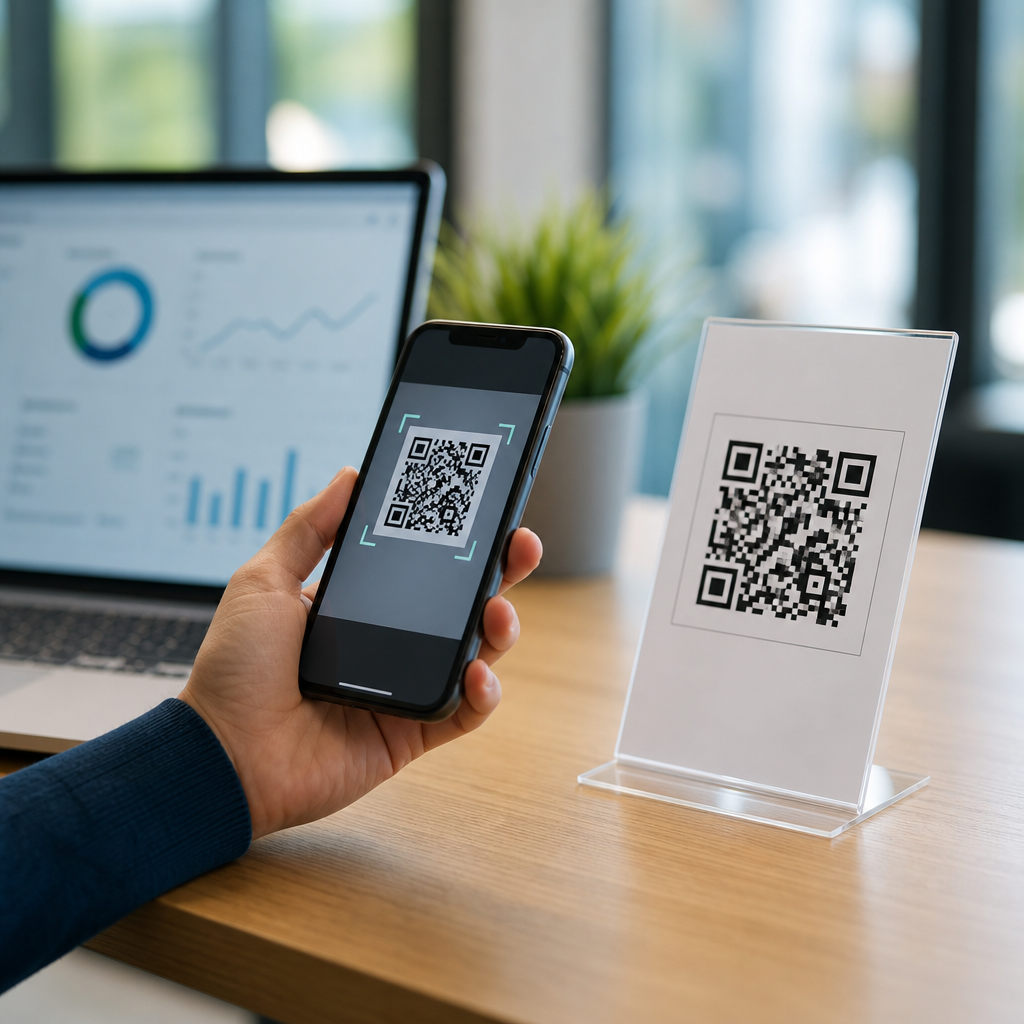
Dynamic QR codes are the right choice whenever you need flexibility after printing, meaningful scan data, or tighter control over where a code sends people over time. In QR code basics and education, the distinction between static vs dynamic QR codes matters because it affects cost, maintenance, analytics, campaign performance, and even security. I have implemented QR programs for retail packaging, restaurant menus, event signage, direct mail, and field service labels, and the same decision point appears every time: will the destination ever need to change, and do stakeholders need visibility into scans?
A static QR code stores the final destination or content directly in the code itself. Once generated, it cannot be edited without creating and reprinting a new code. A dynamic QR code typically stores a short redirect URL that points to a managed destination. Because the redirect can be updated in a dashboard, the printed code stays the same while the underlying landing page, file, form, or app link can change. That single architectural difference is what makes dynamic QR codes better for ongoing campaigns, multi-location operations, regulated content updates, and any use case where mistakes would be expensive to fix.
This topic matters because QR codes now sit at the intersection of physical and digital customer journeys. A code on packaging can influence product education, support, reviews, and reorders. A code on a poster can drive registrations within hours. A code on a table tent can replace printed menus, collect first-party data, and measure traffic by time of day. Choosing static when a project needs dynamic control creates avoidable friction. Choosing dynamic when a simple static code would do can add subscription cost and platform dependence. The best decision comes from understanding how each type works, what problems each solves, and when the tradeoffs justify the extra infrastructure.
Static vs dynamic QR codes: the practical difference
The simplest way to compare static vs dynamic QR codes is this: static codes are fixed, dynamic codes are managed. A static code is appropriate when the content will not change, such as plain text, a permanent Wi-Fi credential, or a stable URL that is unlikely to move. A dynamic code is appropriate when you may need to edit the destination, track scans, use different landing pages, expire access, password-protect content, or route users based on device, language, or campaign conditions.
In real deployments, the cost of change is the deciding factor. I have seen businesses print tens of thousands of product inserts with a static code pointing to a temporary page, only to learn later that the page URL structure changed during a website migration. Every insert became a dead end. With a dynamic QR code, the redirect target could have been updated in minutes. The printed assets would have remained usable, and the campaign would have preserved continuity. This is why dynamic QR codes are standard for packaging, outdoor media, and any channel where reprinting is slow or costly.
| Factor | Static QR Code | Dynamic QR Code |
|---|---|---|
| Editable after printing | No | Yes |
| Scan analytics | Usually none | Usually available |
| Best for | Permanent content | Campaigns and changing destinations |
| Risk if URL changes | Requires reprint | Update in dashboard |
| Ongoing cost | Typically one-time or free | Usually subscription-based |
| Advanced routing | No | Often supported |
When should you use a dynamic QR code?
You should use a dynamic QR code when the destination might change, when measuring engagement matters, or when the code is tied to a business process instead of a one-time action. Common examples include restaurant menus, real estate listings, event registration pages, app download campaigns, product manuals, warranty activation, support flows, digital business cards, and seasonal promotions. In each case, the printed placement remains fixed while the business need evolves.
Use a dynamic QR code for marketing campaigns first. If a flyer, billboard, mailer, or in-store display is intended to drive conversions, stakeholders will ask how many scans occurred, when they happened, what devices were used, and which placements outperformed others. Dynamic systems answer those questions by logging scan events and redirect behavior. Better platforms also append UTM parameters to destinations so you can reconcile QR traffic in analytics tools such as Google Analytics 4, Adobe Analytics, HubSpot, or Salesforce campaigns.
Use dynamic QR codes whenever content governance matters. Product guides, compliance documents, software setup instructions, and healthcare or financial disclosures change more often than teams expect. A static code hardwires yesterday’s information into tomorrow’s print run. A dynamic code lets you correct errors, update versioned files, or point users to a current knowledge base. In operations, this is not a convenience; it is risk reduction. For field labels, asset tags, and work instructions, maintaining a stable scannable marker while updating the destination is often the cleanest workflow.
Use dynamic QR codes when you need audience targeting or context-aware routing. A single code can direct iPhone users to the App Store, Android users to Google Play, and desktop users to a web explainer. It can send users in different countries to localized pages, or switch from a registration form to a waitlist once an event reaches capacity. These are not edge cases. They are routine requirements in modern campaigns, and they are difficult or impossible with static QR codes alone.
Business scenarios where dynamic beats static
Packaging is one of the clearest examples. Consumer packaged goods brands use QR codes for recipes, ingredient sourcing, loyalty enrollment, refill instructions, and post-purchase education. Packaging artwork may remain in market for months, sometimes longer. During that time, product pages change, promotions rotate, and support content is revised. A dynamic QR code protects the investment in packaging by preserving the printed code while allowing the destination to evolve. The same principle applies to instruction manuals and product inserts, where support links and firmware download pages often shift.
Restaurants and hospitality operations rely heavily on dynamic QR codes because menus, specials, and availability change constantly. During service, an out-of-stock item, pricing update, or holiday menu should not require new tabletop signs. With a dynamic code, the front-of-house manager can update the underlying menu URL immediately. Hotels use similar logic for guest directories, spa promotions, room service menus, and checkout surveys. Because hospitality teams care about peak-hour behavior, analytics from dynamic codes also reveal which locations and time windows produce the most engagement.
Events, venues, and education programs also benefit. A registration code on a poster may first lead to ticket sales, then to event details, then to post-event resources or a replay. I have used a single dynamic QR code on conference signage to support three phases of the same event without changing the print materials. Universities use them on campus tours, department brochures, and admissions displays because deadlines, forms, and informational pages change by term. Static codes can work for evergreen departmental homepages, but dynamic codes are safer for high-volume recruitment assets.
Service businesses should consider dynamic QR codes for maintenance records, installation guides, and support escalation paths. A plumbing contractor can place a code on a water heater that links to warranty steps, troubleshooting, and booking. If the booking platform changes, the printed sticker remains valid. Manufacturers do the same for serial-number-based support journeys, often pairing a dynamic destination with a landing page that captures model information before routing users onward. That improves customer experience while reducing support friction.
Analytics, testing, and optimization advantages
One of the strongest reasons to choose a dynamic QR code is measurement. At minimum, dynamic platforms track total scans, unique scans, time, date, approximate location, and device type. Some also support campaign tags, conversion events, retargeting pixels on hosted landing pages, and API exports. While scan counts are not the same as business outcomes, they provide vital top-of-funnel evidence that the placement is being noticed and used. For direct mail, in-store displays, and packaging, this is often the only practical way to compare creative performance across physical touchpoints.
Dynamic QR codes also support testing without reprinting. If version A of a landing page converts poorly, you can redirect the same code to version B, or rotate traffic by campaign group depending on platform capability. Marketers routinely test headlines, offers, form length, and mobile page speed after launch. Operations teams test different support destinations, such as self-service first versus contact options first. The printed code remains constant, which reduces waste and speeds iteration. This alone justifies dynamic infrastructure for organizations that optimize continuously.
There are limits to analytics, and responsible teams should understand them. QR platforms often infer location from IP addresses, which is approximate. Privacy settings, VPN usage, and mobile network behavior can reduce accuracy. Some enterprise environments prefetch URLs for security scanning, creating nonhuman hits unless filtered. The best practice is to treat QR scan analytics as directional unless validated against downstream analytics and conversions. Even with those caveats, dynamic data is far more useful than no data at all.
Cost, security, and operational tradeoffs
Dynamic QR codes are not automatically better in every situation. Most require an ongoing subscription because the redirect and analytics depend on the provider’s infrastructure. If the subscription lapses, codes may stop resolving or lose management features, depending on the platform’s policy. Vendor reliability therefore matters. Before deployment, confirm uptime expectations, export options, custom domain support, and what happens to active codes if billing changes. For large fleets of printed assets, that platform risk is a genuine operational consideration.
Security is another factor. Because dynamic codes can redirect, they should be managed with the same discipline as any campaign URL system. Use a reputable provider, enable access controls, and prefer a branded custom domain so users recognize the destination. Review redirect targets regularly. For regulated industries, maintain change logs and approval workflows. Static codes avoid some redirect risks, but they still can point to compromised pages if the destination site itself is not maintained. The underlying rule is simple: QR code safety depends on URL governance, not just code type.
Choose static QR codes when the content is truly permanent and analytics are unnecessary. Examples include a fixed email address, an unchanging vCard for a personal use case, or a Wi-Fi code in a private office. In those cases, static codes are inexpensive, durable, and independent of a third-party dashboard. But if there is any realistic chance of editing the destination later, the upfront savings can disappear fast. One reprint of packaging, signage, or brochures often costs more than a year of dynamic service.
How to choose the right QR code for your use case
Start with four questions. Will the destination ever change? Do you need scan analytics? Is the printed item expensive to replace? Does the experience need routing by device, language, location, or campaign phase? If the answer to any of those is yes, use a dynamic QR code. Then choose a platform that supports custom domains, bulk management, editable destinations, UTM controls, exportable analytics, and reasonable retention policies. For enterprise programs, add role-based access, audit history, and API access to the checklist.
Implementation details matter. Always test the code on multiple devices, under different lighting conditions, and at the actual print size. Maintain strong contrast, adequate quiet zone, and error correction appropriate for the environment. Use mobile-optimized landing pages because most QR scans happen on phones. If the code appears on packaging or in-store signage, create a short destination path and a clear call to action so users know why they should scan. A well-managed dynamic QR code is not just editable; it is part of a broader conversion path designed intentionally.
The core takeaway in any static vs dynamic QR codes discussion is that dynamic is the better default for business use, while static remains useful for simple, permanent content. Dynamic QR codes let you edit destinations after printing, collect scan insights, test performance, and adapt to real-world change without wasting materials. Static codes still have a place when permanence, simplicity, and zero platform dependence matter more than flexibility. If you are building a QR code strategy under the broader QR Code Basics & Education topic, start by mapping each code to its lifecycle, measurement needs, and reprint risk. Then choose the format that protects long-term value. Review your current printed codes, identify any that might need future updates, and convert those first to a dynamic system.
Frequently Asked Questions
What is a dynamic QR code, and how is it different from a static QR code?
A dynamic QR code points to a short redirect URL that can be updated after the code has already been printed or published. A static QR code, by contrast, stores the final destination directly in the code itself, which means the content cannot be changed without generating and reprinting a new code. That difference is the core reason dynamic QR codes are often the better choice for real-world programs. If you are placing codes on retail packaging, restaurant tables, event signage, direct mail, or service labels, there is a strong chance the destination will eventually need to change. With a dynamic code, you can update the landing page, swap a PDF, redirect users by campaign, correct a broken link, or retire an old promotion without replacing the printed material.
Dynamic QR codes also give you operational advantages that static codes usually cannot. Because scans pass through a managed redirect, you can collect scan data such as date, time, device type, and approximate location, depending on the platform and privacy setup. That insight helps you measure engagement and improve campaign performance over time. In practice, the static-versus-dynamic decision affects more than just convenience. It influences maintenance costs, how long printed assets remain useful, how accurately you can track results, and how much control you have if something changes after launch. Static codes still make sense for permanent, simple destinations that will never change, but dynamic codes are usually the smarter option when flexibility and measurement matter.
When should you use a dynamic QR code instead of a static one?
You should use a dynamic QR code whenever there is a reasonable chance that the destination, file, offer, instructions, or customer journey may need to change after the code is printed. That includes marketing campaigns with rotating promotions, restaurant menus that change seasonally, product packaging that may later point to updated documentation, event signage that may need revised schedules or venue information, and direct mail campaigns where you want to test different landing pages. Dynamic codes are also the better choice when multiple teams are involved and content may evolve after production. If design, operations, marketing, legal, or regional teams might request updates later, a dynamic code gives you room to adapt without wasting inventory or reprinting materials.
They are also the right fit when analytics and control are important. If you want to know how often a code was scanned, when engagement peaks, which placements are performing best, or whether one audience responds better than another, dynamic QR codes provide the infrastructure to measure that. In field service and operational settings, they are especially useful because procedures, manuals, compliance documents, and troubleshooting steps often change over time. Rather than placing a static code on a label that becomes outdated, you can keep the code in place and maintain the destination behind it. In short, use a dynamic QR code any time long-term flexibility, measurable performance, or post-print control will save time, reduce risk, or improve the user experience.
Are dynamic QR codes worth the extra cost?
In many cases, yes. While dynamic QR codes usually involve a subscription or platform fee, that cost is often small compared with the expense of reprinting packaging, signage, menus, mailers, product inserts, decals, or labels. One of the biggest financial benefits of dynamic QR codes is that they extend the usable life of printed assets. If a landing page changes, a product line expands, a file gets replaced, or a campaign needs to be updated, you can make the change centrally without discarding inventory. For businesses running QR programs at scale, that flexibility often pays for itself quickly in avoided print waste, reduced labor, and faster turnaround when updates are needed.
The value goes beyond avoiding reprints. Dynamic QR codes also help improve return on investment because they support measurement and optimization. If you can compare scan activity across locations, formats, time periods, or campaigns, you can make smarter decisions about placement, messaging, and follow-up content. That means better campaign performance over time, not just lower maintenance costs. They can also reduce operational risk by giving you the ability to fix broken or outdated destinations immediately. For organizations using QR codes in customer-facing or compliance-sensitive situations, that control is extremely valuable. Static codes may appear cheaper upfront, but when you factor in maintenance, analytics, agility, and long-term usability, dynamic QR codes are often the more economical choice overall.
What kind of analytics and control do dynamic QR codes provide?
Dynamic QR codes typically provide scan reporting and destination management features that static codes do not. Depending on the platform, you may be able to see total scans, unique scans, timestamps, device types, operating systems, and approximate geographic data. Some platforms also support campaign tagging, A/B testing, scan comparisons across placements, and dashboard views that help you evaluate performance across multiple codes. This is especially useful for marketing, events, retail packaging, and direct mail, where understanding user behavior can directly improve results. If one version of a mailer performs better than another or one in-store sign gets far more scans than the rest, dynamic QR analytics can surface that quickly.
Control is just as important as reporting. With a dynamic QR code, you can change the final destination without changing the printed code itself. You can route users to a new page, pause a campaign, redirect by date or market, and in some systems even apply rules based on device, language, or location. That level of control is valuable not only for campaign optimization but also for maintenance and governance. If a page is removed, a file is updated, or a vendor URL changes, you can respond immediately. In more mature QR programs, this centralized management becomes a major operational advantage because it allows teams to maintain consistency, reduce downtime, and keep customer experiences current long after materials are deployed.
Are dynamic QR codes more secure and easier to manage over time?
They can be, especially when used through a reputable QR management platform with clear ownership, access controls, and monitoring. A dynamic QR code gives you the ability to update or disable a destination if a problem is discovered, which is a major advantage over static codes. If a linked page becomes outdated, breaks, or needs to be replaced for security or compliance reasons, you can correct it immediately without waiting for a reprint cycle. That makes dynamic codes easier to govern across long-lived materials such as packaging, manuals, service stickers, and public signage. Centralized management also helps organizations keep an inventory of active codes, standardize naming conventions, and ensure that codes still point where they should months or years later.
That said, security depends on the platform and process, not just the code type. Because dynamic QR codes rely on redirects, it is important to use a trusted provider, maintain account security, and document who has permission to change destinations. Good governance includes domain consistency, periodic scan testing, link review procedures, and ownership planning so codes do not break when staff or vendors change. From a lifecycle perspective, dynamic codes are much easier to manage because they support updates, retirement, and performance monitoring in one place. For organizations that expect change over time, that combination of flexibility and oversight makes dynamic QR codes the safer and more sustainable option.