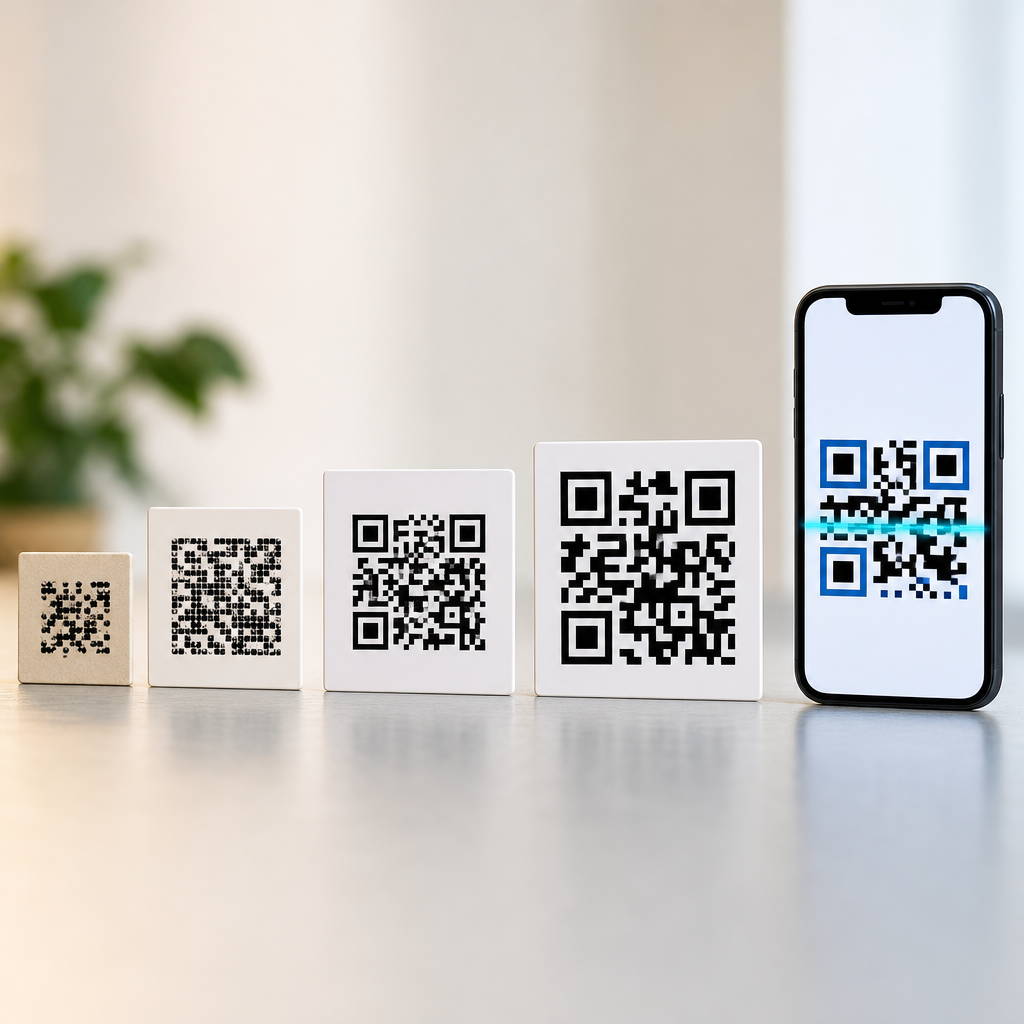

Dynamic QR codes are powerful because they separate the printed code from the destination link, but that flexibility depends on an active service subscription. When a subscription ends, the most important question is simple: what happens to the scans? In most cases, the QR code itself still exists visually, yet the redirect managed by the provider stops working, becomes limited, or sends users to an error page. That outcome can disrupt marketing campaigns, product packaging, menus, event signage, and any printed asset that cannot be easily replaced. Understanding the difference between static and dynamic QR codes is therefore not a technical detail; it is a core business decision.
A static QR code stores the final destination directly in the pattern. Once created, it usually works indefinitely as long as the destination itself remains live, but it cannot be edited and typically offers little or no scan analytics. A dynamic QR code stores a short redirect URL that points to a management platform. The provider can then change the final destination, track scans, add parameters, route by device or location, and pause or activate campaigns without changing the printed symbol. I have worked on QR deployments for packaging, in-store displays, restaurant menus, and direct mail, and the same mistake appears repeatedly: teams choose dynamic codes for convenience, then fail to plan for the ongoing subscription that makes that convenience possible.
This matters because QR codes often outlive the campaign that created them. A code printed on a flyer may disappear in days, but a code on a poster, manual, brochure, window decal, business card, or product carton can remain in circulation for months or years. If the subscription lapses during that time, customers may scan a broken path. That can mean lost sales, support complaints, wasted print costs, and damaged trust. For organizations building a reliable QR strategy, the right question is not only which code type is better today, but which one remains dependable after billing changes, software migrations, or vendor shutdowns.
What happens when a dynamic QR code subscription ends
When a dynamic QR code subscription ends, the provider’s platform usually changes the status of the redirect that sits behind the code. The printed square still scans because the camera can read the pattern, but the encoded short URL depends on the provider’s infrastructure. If that infrastructure no longer serves your account normally, scanners may see a deactivated landing page, a provider-branded error notice, a suspension message, or no useful destination at all. Some platforms keep codes active but remove editing and analytics. Others hard-disable the redirect immediately after a grace period. The exact outcome depends on the vendor’s terms.
In practice, I have seen four common scenarios. First, the code stops resolving and visitors hit a dead page. Second, the code still resolves, but the provider adds a warning that the account has expired, which undermines trust and conversion. Third, the destination remains active, yet analytics, password protection, file hosting, or campaign rules disappear. Fourth, a platform allows read-only operation on a lower plan, but advanced features such as geolocation routing or editable destinations are locked. This is why procurement and marketing teams should review service policies before printing large runs.
The technical reason is straightforward. Dynamic QR systems do not usually encode your final website, PDF, menu, or app link directly. They encode a managed redirect, often on the provider’s own domain or a custom short domain connected to the provider. That redirect is the switchboard. If the service is suspended, your switchboard is affected. By contrast, if a static QR code points directly to https://yourdomain.com/menu, no subscription platform needs to approve each scan. The code will keep working as long as your domain, hosting, and page remain available.
Static vs dynamic QR codes: the core differences
Static and dynamic QR codes serve different operational needs. A static QR code is fixed at creation. The data may be a URL, text, Wi-Fi credential, vCard, email action, or phone number. Because the destination is embedded directly, static codes are simple, durable, and often free to generate. They are best for permanent information that is unlikely to change, such as a company homepage, a long-term support page, or contact details on packaging. Their main limitation is inflexibility: if the destination changes, the printed code must be replaced.
Dynamic QR codes are designed for change management. The symbol points to a short redirect controlled through a dashboard, so marketers can update the destination after printing. They can use one printed code to rotate seasonal offers, test landing pages, localize experiences, or repair broken links without reprinting. Dynamic systems also often provide analytics such as total scans, unique scans, time of day, device type, approximate location, and UTM tagging support. For campaigns where attribution matters, that visibility is valuable.
There are tradeoffs. Static codes are resilient because they have fewer dependencies, but they are limited. Dynamic codes are adaptable and measurable, but they introduce platform risk, recurring cost, governance needs, and migration complexity. Neither format is universally better. The right choice depends on how long the code will remain in the field, whether the destination may change, whether analytics justify recurring fees, and how expensive it would be to replace printed materials if something breaks.
When dynamic QR codes make sense
Dynamic QR codes are the right choice when flexibility has measurable value. If you are running a paid campaign across posters, packaging inserts, direct mail, social ads, and retail displays, being able to update one destination in real time saves money and prevents waste. For example, a retailer can print a single QR code on shelf talkers for a holiday promotion, then redirect the scans to a clearance page after the sale ends. A restaurant can update menu links without reprinting every table tent. An event organizer can switch from registration to live agenda to post-event survey using the same code.
Analytics are another strong reason. In practice, clients often believe they need scan tracking, but what they actually need is decision-grade reporting. Dynamic QR dashboards can reveal whether a code on packaging performs better than the same code on a mailer, whether scans cluster by region, and which hours produce the highest engagement. Paired with analytics platforms such as Google Analytics 4 through tagged destinations, these insights help teams allocate budget more intelligently.
Security and control can matter too. Some dynamic platforms support expiration dates, password-gated destinations, editable file links, or device-based routing. A training company, for instance, may use a dynamic code inside printed manuals to route users to the latest PDF version rather than the original file. If regulations or content updates require changes, the team can revise the destination instantly. In these cases, the subscription is not just a cost; it is the operating layer that keeps the code useful.
When static QR codes are the safer choice
Static QR codes are often the safer choice for long-lived, low-maintenance use cases. If the destination is stable and you do not need editing or analytics, static is usually the better default. I recommend static codes for evergreen pages such as warranty registration hubs, contact pages, installation instructions, and public policy documents hosted on a controlled domain. If a code will be printed on tens of thousands of product boxes, etched onto signage, or embedded in materials that may circulate for years, reducing dependencies is smart risk management.
Static codes are also useful when ownership needs to remain simple. A small business may not want another recurring software bill or another dashboard that can be lost during staff turnover. A nonprofit with volunteer-run operations may value durability over reporting. A manufacturer distributing products through multiple channels may prefer a direct URL that remains independent of any QR vendor’s business model. In each of these cases, static codes reduce the number of failure points.
The main discipline with static QR codes is destination management. The code itself cannot be changed, so the underlying URL must be chosen carefully. Instead of linking to a fragile campaign page, link to a stable page on your own domain that you can update internally. That approach creates some of the practical benefits of dynamic routing without relying on a third-party QR redirect service. It is not identical to a true dynamic code, but it is often enough for basic long-term needs.
Key risks to evaluate before printing at scale
The biggest mistake organizations make is treating QR code selection as a design task instead of an infrastructure decision. Before approving a large print run, evaluate subscription dependence, redirect ownership, analytics requirements, migration options, and archival life span. Ask how the code will behave if the account is downgraded, if the payment method fails, if the account owner leaves the company, or if the vendor is acquired. These are not edge cases. They happen routinely in long-running programs.
| Factor | Static QR Code | Dynamic QR Code |
|---|---|---|
| Editable destination | No | Yes, through provider dashboard |
| Works after subscription ends | Usually yes | Depends on provider policy |
| Scan analytics | Limited or none | Usually included |
| Best for long-term print | Yes | Only with strong account governance |
| Vendor dependence | Low | High |
Print permanence changes the calculation. A QR code on a temporary poster can be replaced cheaply. A QR code on product packaging, manuals, outdoor signage, trade show hardware, or vehicle wraps cannot. If replacement cost is high, durability should outweigh convenience. In those cases, either use a static code or ensure the dynamic provider supports custom domains, reliable export options, clear grace periods, and documented continuity policies.
How to reduce the risk of a broken QR strategy
The best protection is governance. First, inventory every QR code in use, where it appears, and who owns it. Second, classify each code by life span: temporary, seasonal, annual, or permanent. Third, align the code type to that life span. Fourth, avoid linking printed codes directly to fragile campaign URLs. Instead, use stable destination architecture on your own domain, such as a permanent landing page that can be updated behind the scenes. Fifth, document renewal dates and ensure billing ownership belongs to the organization, not an individual employee or agency contractor.
For dynamic deployments, use providers that support custom short domains. This gives you brand consistency and can improve trust because users see your domain rather than an unfamiliar redirect. More importantly, it provides a cleaner path if you ever migrate vendors, although migration still requires planning. Review whether the provider allows bulk export of QR records, analytics history, and destination mappings. Enterprise teams should also verify access controls, audit logs, and role-based permissions.
Testing is essential. Scan every QR code on both iPhone and Android devices, with multiple camera apps and common network conditions. Test after publication, after account changes, and before subscription renewals. I also advise keeping a replacement plan for critical assets. If a dynamic code supports a high-value flow like warranty activation or payment, create monitoring that alerts the team when the destination fails. The cost of prevention is lower than the cost of a silent outage.
How this hub connects the static vs dynamic QR code topic
As a hub within QR Code Basics and Education, this page anchors the full static vs dynamic QR code decision. The central lesson is clear: dynamic codes are not just editable QR codes; they are service-dependent redirects. Static codes are not just basic QR codes; they are durable, direct encodings with fewer moving parts. Once you understand that distinction, related questions become easier to answer, including pricing comparisons, analytics expectations, custom domain setup, migration planning, scan tracking methods, print best practices, and vendor evaluation criteria.
If you are building a content cluster around this subject, the natural supporting topics include how QR code redirects work, how to choose a QR code provider, when to use a custom short domain, how to track scans in analytics tools, how to test QR readability before printing, and how to recover from broken QR codes in the field. Those deeper articles help readers move from basic education to operational competence. This hub provides the decision framework that connects them.
The practical takeaway from years of implementation work is that the cheapest code is not always the lowest-cost option, and the most flexible code is not always the safest. Good QR strategy starts with the life cycle of the asset, the stability of the destination, and the consequences of failure. If you choose based on those three factors, the static versus dynamic decision becomes straightforward instead of confusing.
What happens when a dynamic QR code subscription ends depends on the provider, but the safe assumption is that your scans become vulnerable. The code may still look normal, yet the redirect, analytics, or destination control that make it dynamic can disappear the moment the subscription lapses. That is why businesses should never treat dynamic QR codes as permanent by default. Their value comes from ongoing service, and ongoing service requires ownership, budgeting, and monitoring.
Static vs dynamic QR codes is ultimately a question of durability versus flexibility. Static codes are best when the destination is stable, the asset will live for a long time, and vendor independence matters. Dynamic codes are best when destination changes, campaign management, and analytics create clear business value. Neither option is inherently superior in every case, but each has predictable strengths and weaknesses that should be matched to the real-world use case.
If you are planning QR codes for packaging, print, menus, signage, or campaigns, audit the life span of each asset before you generate anything. Use static codes for permanent destinations, use dynamic codes where change and measurement justify the subscription, and document who owns every redirect. Make that decision deliberately now, and your QR codes will keep working long after the design file is closed.
Frequently Asked Questions
What happens to a dynamic QR code when the subscription ends?
When a dynamic QR code subscription ends, the printed QR code usually does not disappear or change visually, but the behavior behind it often does. A dynamic QR code works by sending scanners to a short redirect URL controlled by the QR code provider, and that redirect only remains fully functional while the account or plan is active. Once the subscription expires, the provider may disable the redirect entirely, limit access, pause the code, or replace the destination with an error page, account notice, or inactive-link message.
In practical terms, that means people can still scan the code with their phones, but they may no longer reach the intended webpage, menu, product page, registration form, or promotion. For businesses, this can create an immediate problem because the code may still be printed on packaging, signs, flyers, posters, labels, or ads, giving the impression that it works normally even though the destination has stopped responding correctly. The exact outcome depends on the provider’s policies, but the common thread is that the flexibility of a dynamic QR code relies on an active subscription.
Will the QR code still scan after the subscription lapses?
Yes, in most cases the QR code will still scan because the image itself remains valid. A QR code is simply a machine-readable pattern that contains encoded data, and that printed pattern does not expire on its own. The issue is not usually the scan itself. The issue is what happens after the scan. With a dynamic QR code, the encoded data typically points to a managed short URL or redirect service, and if that service is no longer active under your subscription, the scan may lead nowhere useful.
This distinction is important. Many people assume a QR code either works or does not work, but with dynamic QR codes the code can still be perfectly readable while the destination fails. A user might scan the code successfully and then see a broken page, a subscription-renewal notice, a deactivated link, or no destination at all. That can be especially harmful in customer-facing situations such as restaurant menus, event check-in signage, retail displays, warranty registration cards, or marketing materials where users expect an immediate and reliable experience.
Can scans be redirected to an error page or stopped completely?
Absolutely. One of the most common outcomes after a dynamic QR code subscription ends is that scans are redirected to an error page or stopped at the provider level. Because the provider controls the redirect layer, they can determine what happens when an account is inactive. Some services shut off the destination entirely. Others route visitors to a generic landing page explaining that the code is no longer active. In some cases, users may see a 404 error, an account suspension message, or a branded page from the QR platform itself.
From an operational standpoint, this matters because even a temporary interruption can affect customer trust, conversion rates, and campaign performance. If a code appears on product packaging, printed brochures, table tents, event badges, or storefront displays, every failed scan represents a missed opportunity and potentially a confused or frustrated user. Businesses should never assume that an expired subscription will simply freeze editing access while leaving scans untouched. The safer assumption is that scan behavior may be disrupted unless the provider specifically states otherwise in its service terms.
How can a business avoid disruptions when a dynamic QR code plan expires?
The best way to avoid disruption is to treat dynamic QR code subscriptions as an active part of your digital infrastructure rather than a one-time design purchase. Start by reviewing the provider’s expiration, billing, and code-deactivation policies before using the codes in any long-term printed materials. Set renewal reminders well in advance, keep payment methods current, and assign ownership of the account to a monitored business email rather than a personal inbox that could be overlooked. If the QR code is tied to a major campaign or evergreen asset, it should be included in your routine operational checks.
It is also wise to test important QR codes regularly, especially those placed on packaging, permanent signage, product inserts, menus, or widely distributed marketing materials. If a code is mission-critical, maintain an inventory showing where each code appears, what it links to, and which account manages it. For long-lifespan uses, some businesses also evaluate whether a static QR code or a self-controlled redirect domain would reduce dependency on a third-party subscription. The goal is to prevent a situation where a code remains visible in the real world but no longer delivers the intended user experience.
What should you do before printing dynamic QR codes on packaging, menus, or signage?
Before printing dynamic QR codes on anything difficult or expensive to replace, confirm how long the code needs to remain active and whether your subscription plan realistically supports that timeline. This is especially important for product packaging, catalogs, event signage, instructional labels, real estate materials, restaurant menus, and any asset with a long shelf life. Ask whether the provider guarantees continued scanning only during an active subscription, what users see if the subscription ends, and whether there is any grace period after nonpayment or cancellation.
You should also think strategically about risk. If the code is printed on temporary campaign materials, a subscription dependency may be easy to manage. If it is printed on packaging that could circulate for months or years, the cost of an expired subscription can be much larger than the renewal fee because it affects customer access, brand credibility, and operational continuity. Test the code before final production, document the destination, and create a plan for ongoing maintenance. In short, dynamic QR codes offer valuable flexibility, but that flexibility only remains useful when the supporting service stays active.