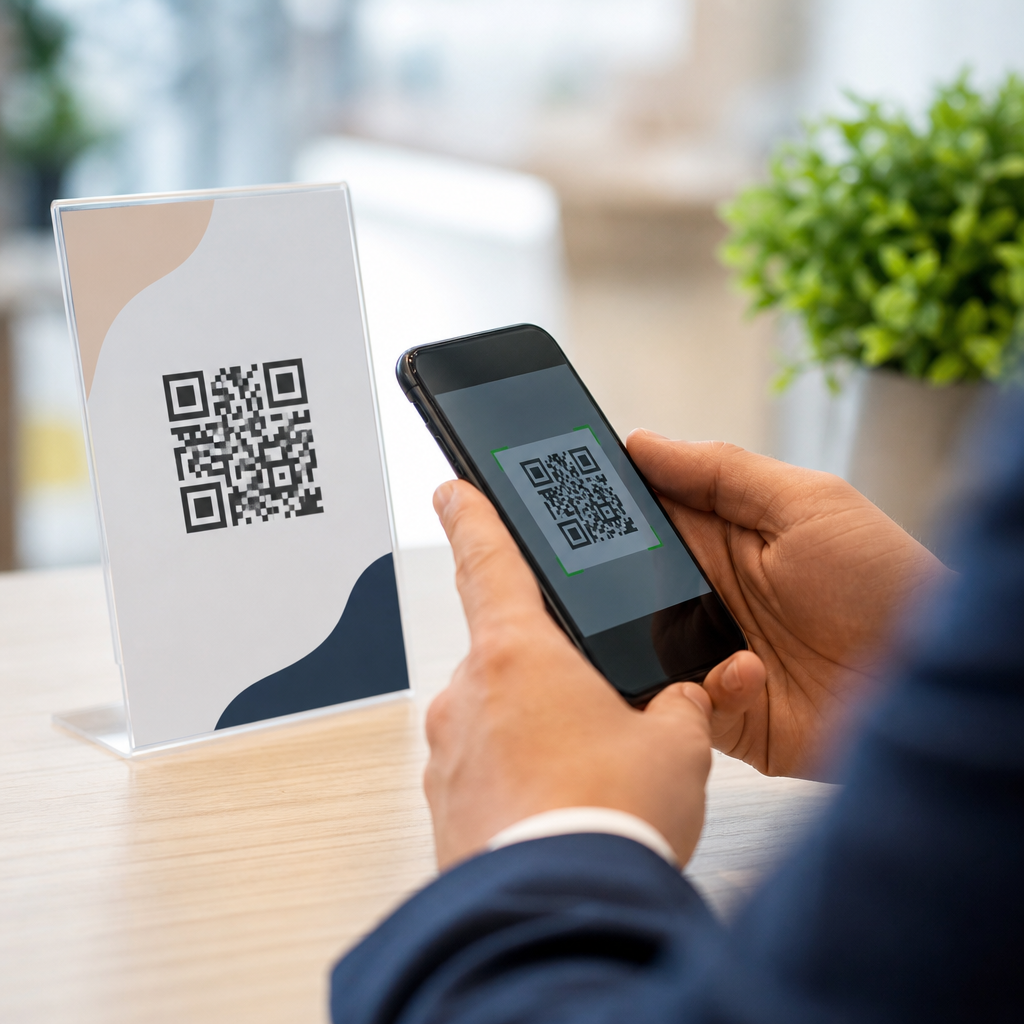
Value-based pricing for QR code marketing turns a commodity service into a measurable growth investment. Instead of charging only for design time, print setup, or software access, you price QR code services according to the business outcome they help create: leads captured, purchases influenced, support costs reduced, appointments booked, or customer data collected. In practice, that means the same dynamic QR code campaign can be worth far more to a dental chain filling high-margin treatment slots than to a local hobby shop promoting a weekend sale. I have priced QR code programs both ways, and the gap is stark. Hourly pricing protects the vendor from underestimating labor, but value-based pricing protects margin when campaign impact is high and execution is repeatable.
For companies exploring QR code monetization and business opportunities, pricing is not a back-office detail. It shapes positioning, sales conversations, service scope, retention, and profitability. QR codes now sit across packaging, menus, direct mail, retail displays, event signage, field service stickers, and product authentication labels. Because they connect offline attention to digital action, they often influence revenue that standard web agencies fail to measure. That makes pricing tricky and important. If you underprice, clients assume QR codes are interchangeable and you train the market to buy on cost. If you overpromise value without attribution discipline, renewals collapse. The right model links fees to observable commercial impact while keeping delivery simple enough to sell repeatedly.
In this hub for pricing QR code services, the goal is to give you a practical framework you can apply across campaign setup, analytics, optimization, platform access, and ongoing management. You will see how to define value in plain business terms, when to use retainers versus project fees, how to package static and dynamic QR code offers, what metrics matter by industry, and where value-based pricing can fail. You will also see how to anchor proposals with benchmarks, use attribution carefully, and structure scope so clients understand exactly what they are buying. Done well, value-based pricing for QR code marketing does more than increase average deal size. It helps clients make better decisions because the conversation shifts from “How much does a QR code cost?” to “What outcome do we need this campaign to produce?”
What value-based pricing means in QR code marketing
Value-based pricing means setting fees according to the economic value a client expects from the QR code campaign, not just the internal cost to deliver it. In QR code marketing, that value usually comes from one of five sources: more revenue, lower customer acquisition cost, better first-party data capture, reduced service friction, or stronger conversion from physical touchpoints. A restaurant may value faster menu access and upsells. A manufacturer may value easier warranty registration. A real estate brokerage may value tour bookings from signage. The same technical asset, a scannable code that routes to a mobile experience, supports very different economics. Your pricing should reflect that difference.
The key distinction is between outputs and outcomes. Outputs are the things you produce: code generation, landing page setup, UTM tagging, analytics dashboards, design variants, redirect rules, and print specifications. Outcomes are what the client gets: coupon redemptions, booked demos, registered products, newsletter signups, app installs, or verified engagement by location. Clients do not ignore outputs, but they pay premiums for outcomes when you can show the causal path. That is why dynamic QR codes usually support stronger pricing than static codes. Dynamic routing lets you change destinations, segment traffic, A/B test pages, and track scans over time, which makes performance optimization and therefore value capture much easier.
There is a practical reason this model works especially well for QR code services. The technical cost of creating a QR code is low, and clients know that. Many can generate one free with a basic tool. What they cannot easily do is architect a campaign that earns attention in the physical world, routes users to a mobile-first experience, integrates with CRM or analytics, and improves conversion after launch. When I price these engagements, I rarely spend time defending the existence of the QR code itself. I quantify what happens after the scan. That framing separates commodity code generation from strategic QR code marketing.
How to identify the value drivers clients will actually pay for
Most pricing mistakes happen because sellers estimate value from their own process rather than from client economics. Start with the client’s revenue model and operational bottlenecks. Ask direct questions: What is one booked consultation worth? What is the average order value from in-store promotions? What percentage of product buyers register warranties today? What does a missed service call cost? What is the close rate on trade show leads? These answers reveal whether the campaign should be priced around conversion lift, lead volume, retention, compliance, or efficiency.
Industry context matters. In hospitality, QR code value is often speed and average ticket growth through menu engineering, loyalty enrollment, or review generation. In healthcare, it may be appointment completion, patient intake efficiency, or multilingual instructions that lower staff burden. In industrial settings, QR codes on equipment can reduce downtime by linking operators to manuals, maintenance logs, and parts ordering. In consumer packaged goods, the value may come from traceability, promotions, and first-party customer data after the sale. If you sell all these categories using one generic package, you leave money on the table and weaken your credibility.
Value drivers also differ by funnel stage. Top-of-funnel campaigns emphasize reach and scan rate from posters, mailers, packaging, or out-of-home media. Mid-funnel programs focus on information completion, product education, or store locator use. Bottom-funnel campaigns care about transaction completion, booking, coupon redemption, and cart recovery. Post-purchase QR code programs often monetize through onboarding, review capture, cross-sell, subscriptions, or support deflection. Pricing QR code services becomes much easier when you match the commercial objective to the point in the customer journey where the code is used.
Building pricing models for QR code services
You do not need one universal pricing structure. You need a small set of models that fit common buying situations. In practice, four models cover most QR code marketing work.
| Pricing model | Best use case | What is included | Main risk |
|---|---|---|---|
| Project fee | One-time launch, event, packaging test | Strategy, code setup, landing page, tracking, reporting | Limited upside if campaign overperforms |
| Monthly retainer | Ongoing optimization across locations or campaigns | Platform access, redirects, A/B tests, analytics reviews, support | Scope creep if changes are not defined |
| Performance-based | Offers with strong attribution and short feedback loops | Lower base fee plus payment per lead, booking, or sale influenced | Disputes over attribution or sales quality |
| Hybrid value model | Best for most mature service providers | Setup fee, recurring management, and value-linked bonus | Requires clear measurement plan and client trust |
Project fees work well when scope is finite: a conference activation, a seasonal direct mail campaign, or a product launch. Retainers are stronger when dynamic QR codes stay active across months and need reporting, redirect management, testing, and stakeholder coordination. Performance pricing sounds attractive, but it only works when the path from scan to business result is visible and agreed in advance. Hybrid models are usually the most resilient because they cover delivery cost while preserving upside tied to results.
When packaging your offer, separate the technical foundation from the commercial layer. The technical foundation includes code creation, error correction level selection, destination setup, mobile landing page quality checks, pixel or event tracking, and print-readiness standards. The commercial layer includes message testing, conversion optimization, location analysis, CRM integration, dashboard interpretation, and strategic recommendations. Clients often assume the first layer is the whole service. Your proposal should show that the second layer is where most of the value is created.
How to calculate prices using outcome estimates
A practical value-based price starts with a conservative forecast. Estimate scan volume, landing page conversion, downstream close rate, and customer value. For example, suppose a regional gym places QR codes on direct mail, storefront posters, and referral cards. You estimate 8,000 scans over three months, a 12 percent trial signup rate, a 35 percent conversion from trial to paid membership, and a first-year member value of $600. That yields 336 paid memberships and $201,600 in first-year revenue. Even if you discount heavily for uncertainty and assume only 25 percent of that value is truly incremental, the campaign still influences more than $50,000 in revenue. A fee of $7,500 to $15,000 plus optimization retainer is easy to justify in that context.
This is not guesswork if you build the estimate from client numbers and known benchmarks. Use existing traffic, footfall, response rates from prior mailers, average order value, booking rates, or CRM close rates. If the client lacks historical data, start with a pilot. I often recommend a limited rollout across one location, one SKU line, or one event cycle. A pilot lowers buyer risk, provides scan and conversion baselines, and creates the evidence needed for a larger value-based agreement. It also lets you test creative variables such as call-to-action wording, placement height, contrast, and incentive structure.
Do not price against total theoretical revenue unless your influence is direct and measurable. Price against attributable value. If a QR code on product packaging drives recipe views and email signups, but purchases happened before the scan, your value may lie in retention and future upsell rather than initial sales. If a service sticker on installed equipment reduces support calls by 18 percent because users self-serve through manuals and videos, the value is operational efficiency. The more precisely you define the economic mechanism, the easier it becomes to present a confident and credible price.
Packaging static, dynamic, and managed QR code offers
Static QR code services are the lowest tier because destination URLs cannot be edited after printing and analytics are limited unless tracking is embedded upstream. Static codes suit simple uses such as linking to a homepage, digital business card, or permanent document. They are easy to sell but hard to differentiate. If you offer static codes, bundle them with design guidance, print testing, and placement recommendations rather than positioning them as a standalone premium service.
Dynamic QR code services support stronger margins because they solve business problems that free generators do not. You can change destinations without reprinting, schedule redirects by date, route users by device or geography, measure unique scans, and test multiple landing experiences. That makes dynamic codes appropriate for menus, event signage, packaging campaigns, franchise networks, field marketing, and any use case where content changes over time. Named tools in this space include Bitly, QR Code Generator PRO, Beaconstac, Flowcode, Uniqode, and enterprise campaign platforms with API access. Tool choice affects your cost base, but clients pay for the business system you build around the tool, not the subscription alone.
Managed QR code marketing is the premium layer. Here you are not merely selling access to dynamic codes. You are selling campaign architecture: audience targeting, CTA development, mobile UX, analytics governance, redirect logic, reporting cadence, and optimization. For a multi-location retailer, that can include store-level dashboards, localized landing pages, and governance rules so franchisees do not break tracking. For a manufacturer, it may include serialization, anti-counterfeit verification flows, and integration with customer data platforms. This is where value-based pricing becomes most defensible because the service touches revenue operations rather than just asset creation.
Common pricing mistakes and how to avoid them
The first mistake is charging per code without regard to business context. A client may need one code that influences millions in product sales or one hundred codes that simply route to internal documents. Quantity alone is a poor proxy for value. The second mistake is burying analytics inside a generic setup fee. Measurement is not an add-on in QR code marketing; it is the foundation that allows strategic pricing. If tracking is weak, your ability to defend fees and renew contracts weakens with it.
The third mistake is ignoring implementation friction. A brilliant QR concept can fail because the landing page loads slowly, the call to action is vague, the code is placed below waist level, or the print contrast is poor under store lighting. ISO/IEC 18004 governs QR code symbology, but practical readability still depends on size, quiet zone, material finish, and camera conditions. I always include testing across iPhone and Android devices before launch. That quality control is part of the value story because campaign failure often comes from execution details clients cannot easily diagnose on their own.
The fourth mistake is promising revenue certainty when attribution is partial. QR codes are powerful, but they are rarely the only touchpoint. A buyer may see a shelf talker, read reviews later, and purchase in a different channel. Use UTM parameters, event tagging, CRM source fields, coupon codes, call tracking, or post-purchase surveys to improve attribution, but be honest about limits. Clients trust pricing more when you explain what can be measured directly, what is inferred, and what should be treated as directional. That honesty preserves long-term margin better than inflated claims.
How to position this hub in your wider QR code monetization strategy
As a hub topic, pricing QR code services should connect naturally to deeper articles on dynamic versus static codes, QR code analytics, direct mail QR campaigns, retail QR implementation, packaging QR programs, restaurant QR monetization, event QR lead capture, and recurring revenue models for managed services. In sales and content strategy alike, this page sits at the center because every tactical article eventually leads back to one question: how should this service be priced? When your guidance is consistent across those related topics, buyers perceive a coherent system rather than disconnected tactics.
The main benefit of value-based pricing for QR code marketing is strategic alignment. You stop selling a cheap graphic and start selling measurable business outcomes from physical-to-digital interactions. That shift improves margins, sharpens proposals, and attracts better-fit clients who care about performance rather than minimum cost. Use a simple process: identify the economic driver, select the right pricing model, forecast attributable value conservatively, define scope clearly, and report results with discipline. If you offer QR code services now, review your last three proposals and rewrite them around outcomes, not deliverables. That one change usually reveals where your pricing power has been hiding.
Frequently Asked Questions
What is value-based pricing for QR code marketing, and how is it different from charging for setup or software?
Value-based pricing for QR code marketing means pricing the service according to the business result it helps produce rather than only the labor, design time, print preparation, or software subscription involved. In a traditional pricing model, a provider might charge for creating the QR code, configuring a landing page, generating analytics, or enabling a dynamic code platform. That approach treats the work as a commodity. Value-based pricing shifts the conversation to what the campaign is actually worth to the client. If a QR code campaign helps capture qualified leads, increase in-store purchases, reduce customer support calls, book appointments, improve event attendance, or collect first-party data, the price reflects a portion of that measurable impact.
This difference is important because the same technical deliverable can produce radically different outcomes for different businesses. A dynamic QR code placed on a product package may have modest value for a low-margin retailer but significant value for a healthcare group, legal practice, or multi-location dental brand where each conversion can be worth hundreds or thousands of dollars. In other words, the QR code itself is not the product. The business outcome is the product. That is why value-based pricing typically includes strategic elements such as offer design, call-to-action testing, conversion optimization, analytics setup, attribution planning, and performance reporting, all aimed at increasing return on investment rather than simply delivering a scannable asset.
How do you calculate the value of a QR code marketing campaign before setting a price?
The most effective way to calculate value is to work backward from the client’s economics. Start by identifying the primary outcome the QR code campaign is supposed to influence. That might be new patient bookings, coupon redemptions, demo requests, repeat purchases, warranty registrations, menu orders, app downloads, support deflection, or lead capture. Then estimate what each successful action is worth. For example, if a dental chain earns substantial profit from a high-margin treatment slot, even a small number of additional bookings can create meaningful revenue. If a software company uses QR codes at trade shows to capture sales-qualified leads, the value can be estimated from close rates and average contract value. If a manufacturer uses QR codes to answer common questions and reduce support volume, the value can be tied to saved support costs and improved customer satisfaction.
Once the value per conversion is understood, estimate likely scan volume, scan-to-conversion rate, and campaign duration. You can also factor in uplift from testing different placements, incentives, landing pages, or post-scan experiences. A simple value model might look at scans, qualified actions, average value per action, and the percentage of those results attributable to the campaign. More advanced models include lifetime value, retention effects, first-party data acquisition, and savings from reduced operational friction. After that, pricing can be set as a fixed strategic fee, a monthly retainer, a performance-linked component, or a hybrid model. The key is that pricing should be anchored to credible business impact, not just production effort. That makes the proposal easier to justify and positions the service as a growth investment rather than a line-item expense.
What kinds of businesses benefit most from value-based pricing in QR code marketing?
Businesses benefit most from value-based pricing when a QR code campaign can be tied to a meaningful financial outcome. This is especially true for organizations with clear conversion events, strong margins, repeat customer value, or measurable cost savings. Healthcare providers, dental groups, legal services, home services, financial firms, automotive dealers, education providers, hospitality brands, and software companies often fit well because one completed action can have substantial value. A QR code that books a consultation, captures a lead, initiates financing, or moves someone into a sales funnel may create far more value than the cost of generating the code itself.
It is also effective for multi-location brands and businesses with offline-to-online customer journeys. Restaurants can use QR codes for loyalty signups and repeat visits. Retailers can connect in-store traffic to digital offers and customer data collection. Events and trade shows can use QR codes to capture leads and attribute booth engagement. Packaging campaigns can unlock tutorials, reviews, cross-sells, and reorder flows. Customer support teams can reduce call volume by routing users to self-service content. In all of these cases, the value is not in the code’s existence but in the conversion path it creates. The more measurable the outcome and the more valuable the outcome, the better suited the business is for a value-based pricing model.
How do you justify higher pricing to clients who think QR codes are simple or inexpensive?
The best way to justify higher pricing is to reframe the service around outcomes, not the apparent simplicity of the tool. Many clients know that generating a static QR code is technically easy, so if the discussion stays focused on the code alone, the service will feel interchangeable and low-cost. The provider has to explain that effective QR code marketing is not about making a square image. It is about creating and optimizing the entire conversion system around the scan. That includes strategy, placement decisions, message alignment, campaign goals, dynamic destination control, landing page performance, analytics, segmentation, testing, compliance considerations, and reporting. The QR code is just the access point.
It also helps to quantify the financial upside in practical terms. If a campaign adds even a small number of high-value appointments, increases average order value, or captures first-party customer data that can be used for future remarketing, the return can far exceed the campaign fee. Case-style reasoning is often persuasive: if one additional booked service per location per week is worth a certain amount, then the campaign may pay for itself quickly. Clients also respond well to risk reduction. Dynamic QR codes let marketers update destinations without reprinting materials, test offers, track engagement by channel, and identify underperforming placements. Those capabilities reduce waste and improve decision-making. When presented this way, higher pricing is no longer about charging more for a code. It is about charging appropriately for a measurable business system that creates revenue or efficiency gains.
What should be included in a value-based QR code marketing offer or proposal?
A strong value-based QR code marketing proposal should clearly connect deliverables to business outcomes. It should begin with the client’s goal, such as increasing appointment bookings, generating leads, driving purchases, lowering support costs, or improving customer data capture. From there, the offer should define the campaign strategy, the audience, the placement plan, the post-scan experience, the key performance indicators, and the method for tracking results. This is where the provider shows that the service is not merely technical execution but a structured system designed to produce a measurable return.
The proposal should also outline the core components included in the engagement. These may include dynamic QR code creation and management, landing page or destination optimization, copy and call-to-action development, analytics setup, UTM and attribution planning, dashboard reporting, A/B testing, CRM or automation integration, and periodic performance reviews. If relevant, include segmentation by location, product, audience, or campaign type. It is wise to define assumptions, success benchmarks, and what level of client cooperation is needed, especially when results depend on offer quality, media placement, staff training, or internal follow-up processes.
On pricing, the proposal should explain why the fee is tied to expected value. That might mean a flat strategic fee based on projected return, a monthly optimization retainer, or a hybrid arrangement with a performance component. The strongest proposals make the economics easy to understand by showing scenarios: conservative, expected, and upside outcomes. This helps clients compare the investment to potential gains rather than to the cost of basic design work. Finally, the offer should communicate that QR code marketing is an ongoing optimization channel, not a one-time asset. That reinforces the value of continuous measurement, testing, and improvement over the life of the campaign.