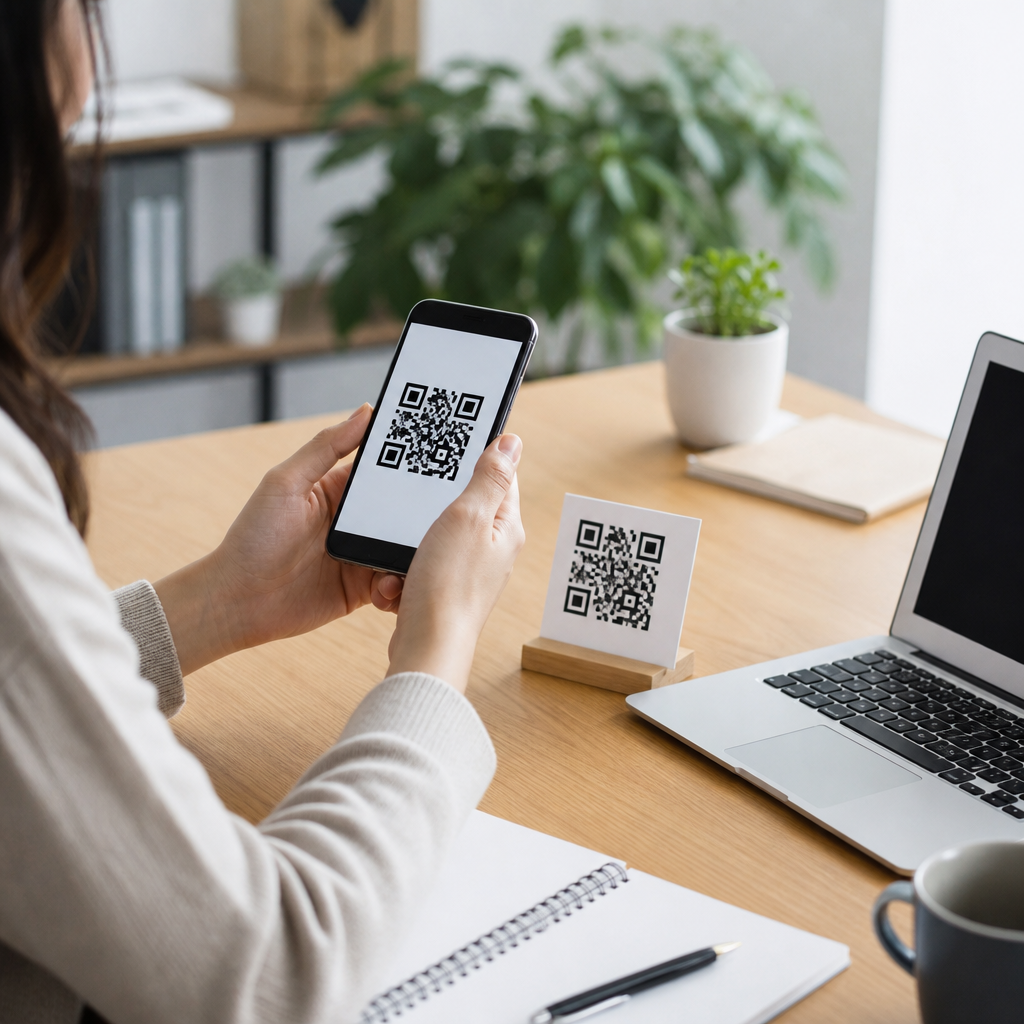
Freelance QR code marketing is a practical service business that helps companies connect offline attention to online action, and it offers a clear entry point for independent marketers who want recurring client work. A QR code is a scannable matrix barcode that sends a user to a digital destination such as a landing page, menu, payment link, app download, review form, coupon, or lead capture page. QR code marketing is the strategy of placing those codes in physical or digital touchpoints so scans produce measurable business results. I started offering this service after noticing a gap: many local businesses printed codes on flyers or tables without tracking, testing, or a clear call to action. They had the tool but not the strategy. That gap creates a real freelance opportunity because businesses need help with campaign planning, code generation, analytics, design, compliance, and optimization.
This niche matters because smartphone camera adoption is universal, print costs remain lower than many paid media channels, and business owners increasingly want proof that offline marketing works. QR codes bridge those needs. A restaurant can track menu scans by table tent, a real estate agent can route sign scans to property pages, and an event organizer can segment attendees by poster location. Unlike generic marketing consulting, freelance QR code marketing can be packaged into defined deliverables with obvious outcomes: more leads, more redemptions, more bookings, lower friction, and better attribution. It also supports broader services such as local SEO, email capture, reputation management, social promotion, and conversion rate optimization. For freelancers, that means easier upsells and longer retainers. For clients, it means one simple mechanism can support multiple goals across awareness, consideration, and purchase.
Getting started does not require a large agency setup, but it does require discipline. Successful freelancers in this space understand dynamic versus static QR codes, UTM parameters, mobile landing page performance, scan tracking, and basic privacy rules. They also know where QR code campaigns fail: weak offers, poor placement, slow pages, tiny code sizes, low contrast, and no reason to scan. This article is the hub for freelancer opportunities within QR code monetization and business opportunities. It explains the services you can sell, the industries that buy them, the tools you need, pricing models that work, and the operating standards that protect results. If you want to build a specialized freelance offer instead of competing as a generic marketer, QR code marketing is one of the cleanest places to begin.
What freelance QR code marketing services include
Freelance QR code marketing is not just making a code and sending a PNG file. Clients pay for outcomes, so your service must combine strategy, asset production, implementation, and reporting. In my projects, the core workflow starts with a business objective, not a design request. If a gym wants more trial memberships, the QR code should lead to a dedicated mobile page with a limited-time trial, a short form, and source tracking. If a salon wants more repeat visits, the code might connect to a loyalty signup with SMS consent and a bounce-back offer. The asset is simple; the system around it is what creates value.
The most common freelance deliverables include campaign strategy, QR code creation, landing page setup, UTM tagging, print placement recommendations, event or location segmentation, analytics dashboarding, and A/B testing. Dynamic QR codes are usually the better client option because the destination URL can change without reprinting materials, and scan data can be collected by time, device, and location. Static codes still have a place for permanent uses like Wi-Fi access or straightforward contact sharing, but they are less flexible for campaigns. A freelancer who can explain that difference clearly will close more projects because business owners immediately understand the risk of printing the wrong destination at scale.
Another strong service area is integration. A QR campaign becomes more valuable when scans feed into systems the client already uses, such as Google Analytics 4, HubSpot, Mailchimp, Klaviyo, Squarespace, Shopify, or a CRM like Zoho. Review generation is a simple example. A home service company can place technician leave-behind cards with a QR code that opens a review page, while the freelancer tracks scans against completed jobs. That campaign can be improved further by using separate codes by technician, city, or job type. This level of segmentation turns a commodity task into performance marketing, and performance marketing commands better fees than design labor.
Best freelancer opportunities by industry
Almost any business can use QR codes, but freelancers should start in industries where offline interactions are frequent and results are visible quickly. Restaurants are the obvious category, yet they are far from the only one. Real estate, events, retail, fitness, healthcare, education, tourism, home services, automotive, and nonprofit fundraising all produce use cases with clear return on investment. The fastest route to traction is picking one or two verticals and learning their customer journey in detail.
Restaurants need menu access, review generation, loyalty signups, catering inquiries, and seasonal promotions. Real estate professionals need yard sign scans, open house registration, virtual tour access, neighborhood guides, and seller lead capture. Event organizers need ticketing support, sponsor activations, session check-ins, digital brochures, and post-event feedback. Fitness studios need class schedules, waiver completion, introductory offers, referral campaigns, and retention incentives. These are not hypothetical. I have seen a small yoga studio use front-desk and locker-room QR placements to lift intro package conversions because each location led to a slightly different page matching visitor intent.
Local service businesses are especially strong for freelancers because owners care about measurable leads and usually make decisions quickly. A plumber can place codes on invoices, vans, and job completion cards. An HVAC company can use a furnace-maintenance sticker with a QR code that opens a service booking page before winter. A dentist can add a recall campaign code to printed reminders for online scheduling. When you speak to these use cases in plain language, clients see the operational benefit immediately. That is why specialization matters: vertical knowledge shortens sales cycles and improves campaign quality.
| Industry | Typical QR Use Case | Primary Metric | Freelance Upsell |
|---|---|---|---|
| Restaurants | Menu, reviews, loyalty signup | Scans to order or signup rate | Retention email or SMS automation |
| Real Estate | Yard signs, tours, lead forms | Property inquiry rate | Landing page optimization |
| Events | Check-in, sponsor offers, feedback | Engagement per attendee | Post-event reporting |
| Retail | Coupons, product info, reviews | Redemption or add-to-cart rate | Promo testing by store location |
| Home Services | Estimate request, reviews, rebooking | Lead volume and close rate | CRM integration |
Tools, setup, and technical standards
Your tool stack should be lean, reliable, and easy for clients to understand. For QR generation, reputable platforms include Bitly, QR Code Generator Pro, Beaconstac, Flowcode, and Uniqode. The exact platform matters less than the capabilities: dynamic codes, scan analytics, folder organization, custom domains, bulk generation, and export formats like SVG, PNG, and EPS. For landing pages, use tools that can publish fast mobile pages with clear analytics, such as Webflow, WordPress, Squarespace, Shopify, Carrd, or Unbounce. For tracking, standardize on Google Analytics 4 with UTM parameters, Google Tag Manager, and a reporting layer like Looker Studio.
Technical execution determines whether scans turn into results. Codes should have sufficient contrast, adequate quiet zone spacing, and physical sizing that matches scanning distance. A practical field rule is at least one inch of code size for every ten inches of scan distance, though environment and camera quality affect this. Avoid placing codes on curved surfaces when possible, and test glossy prints under real lighting. Always verify redirects on both iPhone and Android. Many campaigns fail because someone approved the design on desktop but never tested the page load speed on cellular data in a parking lot, lobby, or sidewalk.
Standards also matter for destination pages. Every QR landing page should load quickly, state the benefit immediately, and ask for one primary action. If the page has multiple choices, conversions usually drop. Include concise copy, thumb-friendly buttons, minimal form fields, and trust elements such as reviews, business hours, or secure payment signals. For regulated industries, pay attention to privacy notices, consent language, and data handling. Healthcare and finance clients, in particular, may need more careful wording and platform selection. A freelancer who treats QR codes as part of a conversion system, not a graphic asset, will outperform most low-cost providers.
How to package and price freelance QR code marketing
Pricing works best when it reflects business value and operational scope rather than the visible simplicity of the code itself. New freelancers often underprice because generating a code takes minutes. Clients are not paying for minutes; they are paying for campaign architecture, print-readiness, tracking accuracy, and optimization. A basic starter package can include one campaign strategy call, one dynamic QR code, one mobile landing page, UTM setup, print specifications, and a 30-day performance report. That is a legitimate offer, especially for local businesses testing the channel for the first time.
In practice, I recommend three tiers. A starter engagement suits solo operators and one-location businesses. A growth package adds multiple placements, segmented destination links, copywriting, analytics dashboarding, and one optimization cycle. A retainer package supports monthly campaign management, seasonal updates, team training, and cross-channel integration with email or SMS. Setup fees commonly cover initial build work, while monthly retainers cover hosting, tracking, reporting, code updates, and experiments. Some freelancers also charge per location, per campaign, or per event activation.
Results-based pricing can work, but only when attribution is clean and the client controls follow-up quality. For example, charging per booked demo after QR scans sounds attractive, but if the client ignores leads, your performance appears worse than it is. A safer model is hybrid pricing: fixed setup plus a smaller incentive tied to agreed metrics such as qualified form submissions or coupon redemptions. Whatever model you choose, define ownership of assets, number of revisions, platform costs, and reporting cadence in the proposal. Clear scope prevents profit leakage and builds trust early.
Finding clients and proving value quickly
The easiest clients to win are businesses already using printed materials badly. Walk through a local district and you will see posters without trackable links, table tents with dead-end homepages, and signs asking people to “scan here” without saying why. Those are prospects. Build a short audit template covering offer clarity, placement, destination relevance, load speed, and tracking. Send a concise outreach message with one useful observation and one practical improvement. This approach works better than a generic pitch because it shows direct experience and lowers the client’s cognitive load.
Your portfolio does not need ten brand-name logos to be persuasive. It needs one or two clear case studies. If you have no clients yet, create sample campaigns for a fictional restaurant, realtor, and event host. Show the code placement, landing page, and metrics framework. Then run a small real-world pilot with a local business at a modest fee in exchange for testimonial rights. Focus on outcomes like scan-through rate, coupon redemption, booking rate, or review lift. Business owners respond to short proof, not theory.
Value is proven fastest when you start with a narrow goal. Instead of “improve marketing,” sell “increase Google reviews from service calls,” “capture seller leads from yard signs,” or “turn event posters into email subscribers.” Narrow goals produce cleaner measurement and simpler creative decisions. They also create obvious expansion paths. Once the client sees scans converting, it becomes easier to add loyalty programs, follow-up automations, remarketing audiences, or multi-location reporting. That is how a small setup job turns into ongoing freelance income.
Common mistakes, legal considerations, and growth paths
The most common mistake in freelance QR code marketing is assuming curiosity alone will generate scans. People need a reason. “Scan for 10% off,” “Scan to book in 30 seconds,” or “Scan for the full property tour” will outperform a bare code almost every time. Another mistake is sending all traffic to a homepage. Homepages force visitors to hunt; QR campaigns should remove friction, not add it. I also see businesses print static codes before validating the destination experience, which locks in avoidable errors and wastes money.
There are also compliance and brand risks. If a QR code collects email addresses or phone numbers, consent language must match the follow-up channel, especially for SMS. If you process payments, use established providers and secure pages. If you manage client analytics, confirm who owns the accounts and data. Be careful with public QR placement because stickers can be tampered with; some venues now inspect codes routinely to prevent malicious redirects. Good freelancers document testing, maintain version control, and keep a deployment checklist for every print batch.
As your practice grows, QR code marketing can expand into broader retainers. Clients who trust you with scan campaigns often need landing page design, email flows, CRM cleanup, local search optimization, analytics implementation, and promotional calendar planning. You can stay specialized while increasing account value by positioning QR codes as the offline-to-online measurement layer across the business. That framing is accurate and useful, especially for multi-location brands that struggle to attribute local marketing performance.
Freelance QR code marketing is a strong entry point for independent marketers because it solves a specific business problem with visible, measurable actions. The best opportunities sit where offline contact is frequent, mobile action is easy, and owners care about attribution: restaurants, real estate, events, retail, fitness, and local services. To succeed, sell strategy rather than graphics, use dynamic codes when flexibility matters, connect every scan to a fast mobile destination, and report results in business terms. Clients do not need more codes; they need more bookings, reviews, orders, and leads.
If you are building your place in QR code monetization and business opportunities, treat this freelancer opportunities hub as your foundation. Start with one industry, one offer, and one measurable promise. Create a simple package, choose a reliable tool stack, test every campaign in real conditions, and turn early wins into case studies. That process is how freelancers move from one-off setup work to recurring revenue. Pick a niche, build a pilot campaign this week, and start selling a service businesses can understand immediately.
Frequently Asked Questions
What is freelance QR code marketing, and why is it a good service to offer?
Freelance QR code marketing is a client service where you plan, create, place, and optimize QR code campaigns that move people from an offline moment to an online action. In practical terms, that means helping a business turn foot traffic, packaging, print ads, signage, menus, mailers, event materials, or product displays into measurable actions such as website visits, bookings, payments, review requests, coupon redemptions, app downloads, email sign-ups, or lead form submissions.
It is a strong service offering because it solves a simple business problem: companies already pay for attention in the real world, but many do not have a smooth way to capture that attention and convert it. A well-placed QR code bridges that gap quickly. For a freelancer, this creates a clear value proposition that is easy for clients to understand. You are not selling an abstract marketing concept. You are helping them get more scans, more leads, more customer actions, and better tracking.
Another reason it is attractive is that it can lead to recurring work. A client may first hire you to generate a QR code and connect it to a landing page, but they often need more after launch. They may want updated offers, monthly reporting, new placements, A/B tests, seasonal campaigns, review generation systems, or conversion improvements. That makes QR code marketing more than a one-time setup. It can become an ongoing retainer service tied to analytics, campaign management, and performance improvement.
What do I need to get started as a freelance QR code marketer?
Getting started does not require a huge budget, but it does require a basic service stack and a clear workflow. At minimum, you need a reliable QR code generator, a way to build or edit landing pages, access to analytics, and a simple process for tracking results. Dynamic QR codes are especially useful because they let you change the destination URL without replacing the printed code, which is important for client flexibility and campaign updates. You should also understand scan tracking, UTM parameters, mobile-friendly page design, and basic conversion principles.
Beyond tools, you need a practical service package. A beginner-friendly offer might include strategy, QR code creation, destination page setup, call-to-action recommendations, print placement guidance, and reporting. For example, you could help a restaurant connect table tents to a specials page, a real estate agent link yard signs to a property tour, or a local service company use leave-behind flyers that drive quote requests. These are straightforward use cases that produce visible business outcomes.
It also helps to create a small portfolio, even if it starts with mock campaigns or sample projects. Build a few realistic examples for different industries, such as retail, hospitality, events, healthcare, or local services. Show the code placement, the destination page, and the intended conversion goal. When clients can see how the whole system works, it becomes much easier for them to say yes. If you want to stand out early, focus on business outcomes rather than the code itself. Most clients do not care about QR technology alone. They care about what the scan leads to and whether it produces revenue, leads, reviews, or customer engagement.
What kinds of businesses are the best fit for QR code marketing services?
The best clients are businesses that already have offline attention but need a better way to convert it into trackable online action. Restaurants are a natural fit because QR codes can direct customers to menus, promotions, loyalty sign-ups, feedback forms, and online ordering. Retail stores can use them on shelves, packaging, window displays, and receipts to drive product education, reviews, repeat purchases, and email capture. Real estate professionals can place them on signs, brochures, and open house materials to send buyers to listings, virtual tours, or contact forms.
Other strong fits include event organizers, fitness studios, salons, healthcare practices, trades and home services, nonprofits, schools, and professional service providers. A gym might use QR codes for class bookings and trial passes. A contractor might use them on vehicle wraps or door hangers to drive quote requests. A dental office might use them for new patient forms or review requests. A nonprofit could place them on direct mail to encourage donations. The common thread is simple: the business interacts with people in physical spaces and benefits from reducing friction between interest and action.
When choosing a niche, look for industries where a single scan can have obvious commercial value. If one booked appointment, one paid order, or one qualified lead is worth meaningful revenue, your service becomes much easier to justify. This is why local businesses are often a good starting point for freelancers. They are accessible, their marketing gaps are often visible, and you can usually explain the benefit of QR code campaigns in a very concrete way. The more directly your work connects to measurable outcomes, the stronger your positioning will be.
How do I price freelance QR code marketing services?
Pricing usually works best when you separate setup work from ongoing management. A one-time setup fee can include campaign planning, QR code creation, destination page setup, tracking configuration, testing, and launch recommendations. Then you can offer a monthly retainer for analytics reviews, landing page updates, code destination changes, campaign reporting, new placements, and optimization. This structure is useful because many clients initially think they only need a code, but real value comes from tracking performance and improving results over time.
You can also create tiered packages. For example, a basic package might include one campaign and one destination page. A standard package could include multiple codes, placement guidance, and monthly reporting. A premium package might include copywriting, landing page design, A/B testing, CRM integration, review funnel setup, and recurring strategy calls. Tiered pricing helps clients self-select based on their needs while giving you room to upsell additional value.
To price confidently, tie your work to outcomes and complexity rather than treating it like a commodity. A QR code alone is inexpensive. A conversion-focused campaign with strategy, tracking, and optimization is not. If your setup helps a client generate leads or sales from assets they already use, you are improving return on their existing marketing spend. That is where your value lives. Be clear about what is included, what will be measured, and what results the client should reasonably expect. Strong positioning and clear deliverables usually matter more than offering the lowest rate.
What makes a QR code campaign successful, and what mistakes should beginners avoid?
A successful QR code campaign starts with a clear goal. Before generating anything, you should know exactly what the user is supposed to do after scanning. That could be booking an appointment, viewing a menu, claiming an offer, leaving a review, making a payment, joining a list, or requesting a quote. The destination should match the context of the scan. If someone scans a code on a product package, they should land on something directly related to that product. If they scan at an event, the page should be optimized for immediate action and mobile use.
Strong campaigns also depend on good placement, a compelling call to action, and a smooth post-scan experience. People need a reason to scan. A code placed on a poster with no context often underperforms, while a code paired with a benefit such as “Get 10% off,” “Book in 30 seconds,” or “See the full menu” tends to convert better. The landing page should load quickly, be easy to use on a phone, and remove unnecessary friction. Tracking is equally important. Without analytics, you cannot tell which locations, offers, or formats are producing real results.
Beginners often make avoidable mistakes such as linking to a generic homepage, using static codes when dynamic ones would be more practical, ignoring mobile design, printing codes too small, placing them where scanning is awkward, or failing to test the code across different devices and lighting conditions. Another common mistake is treating the QR code as the campaign instead of seeing it as the entry point. The code is only the bridge. The real marketing work happens in the message, the offer, the destination experience, and the follow-up. Freelancers who understand that full journey are the ones most likely to produce results and keep clients long term.