
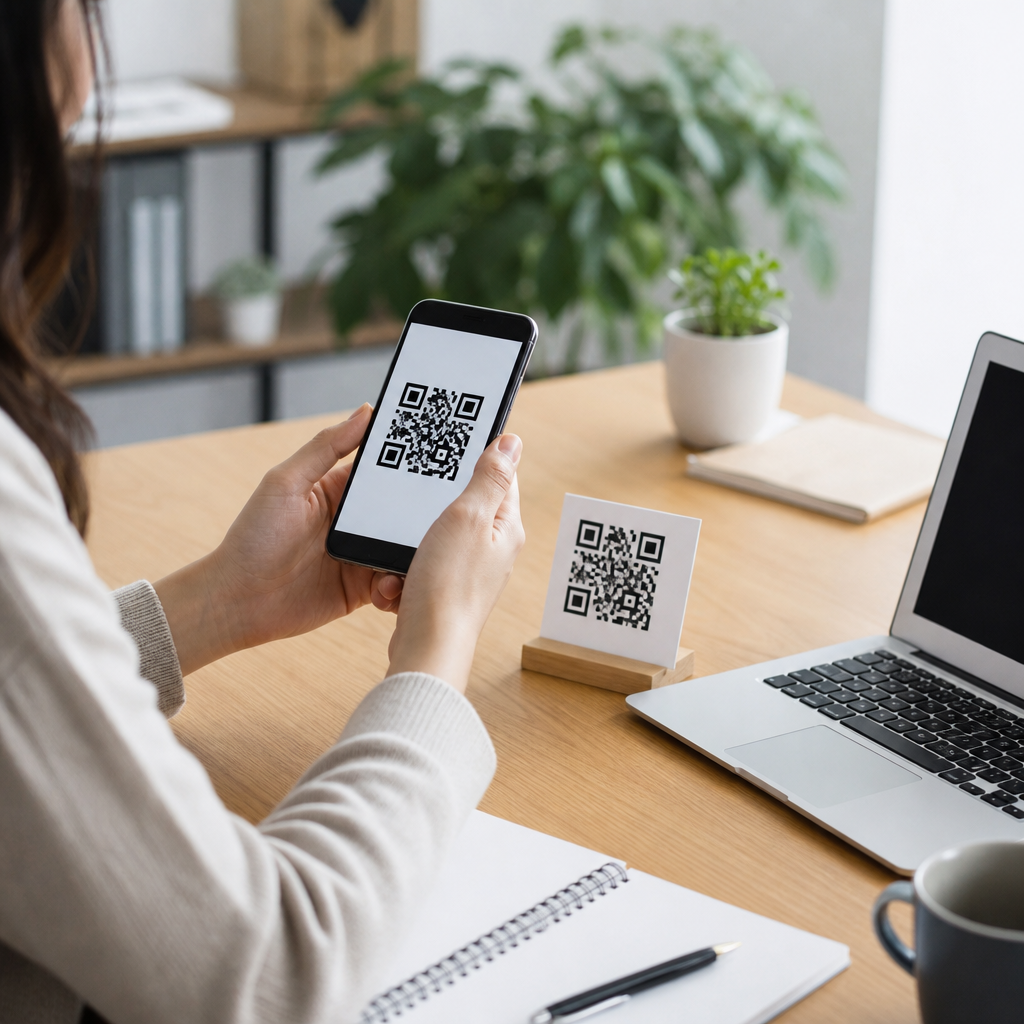
Building a freelance business around QR codes is a practical way to turn a simple technology into recurring client work, productized services, and specialized consulting. A QR code, short for Quick Response code, is a scannable matrix barcode that sends a user to a digital destination such as a website, payment page, PDF, menu, app store listing, review form, Wi-Fi login, or contact card. For freelancers, that range matters because clients do not buy QR codes themselves; they buy outcomes like more leads, faster payments, easier ordering, better event check-in, and measurable offline-to-online conversions. I have worked with restaurants, real estate agents, coaches, local retailers, and trade show exhibitors on QR deployments, and the most successful projects were never about generating a code in ten seconds. They were about choosing the right landing experience, tracking scans properly, designing for print conditions, and tying the campaign to revenue.
The opportunity exists because many small businesses know QR codes are useful but lack the time or expertise to implement them well. They often paste a free static code onto a flyer, send people to a slow homepage, and then conclude that QR codes do not work. In reality, performance depends on technical setup, message match, placement, destination quality, and analytics. Smartphone cameras now scan QR codes natively on iPhone and Android devices, so customer friction is lower than it was a decade ago. During the pandemic, adoption accelerated through contactless menus and payments, but the use case has expanded into packaging, direct mail, events, warranties, loyalty programs, recruiting, and customer support. That broad demand gives freelancers room to specialize by industry, deliver one-time builds, or create monthly retainers around updates and reporting.
This article explains how to build a QR code freelance business as a serious service line, not a side gimmick. You will learn what services to offer, which clients need them most, how to package deliverables, what tools to use, how to price projects, and how to create recurring revenue. Because this is a hub article for freelancer opportunities, it covers the full model from positioning to operations. If you understand marketing, design, web development, print production, events, hospitality, or local business systems, QR codes can become a profitable niche that benefits from your existing skills while opening a clear path to measurable client results.
Why businesses hire freelancers for QR code work
Businesses hire freelancers for QR code projects when the internal team sees the use case but lacks execution capacity. A restaurant owner may want table QR codes for menus, specials, reviews, and hiring. A real estate team may need sign riders that route by property, capture lead source, and alert an agent by text. A coach may want QR codes on presentation slides, workbooks, and business cards that feed leads into a CRM. In every case, the code is only one component of a customer journey. Freelancers win when they can define that journey clearly and remove friction at each step.
In practice, demand clusters around five business needs: lead generation, payments, information delivery, customer feedback, and operational efficiency. Lead generation includes posters, brochures, direct mail, packaging inserts, and storefront signage that drive people to a campaign page. Payments include scan-to-pay links using Stripe, Square, PayPal, Venmo, or regional payment systems. Information delivery includes menus, portfolios, setup instructions, product manuals, and event agendas. Feedback projects use post-purchase review forms, support surveys, and net promoter score workflows. Operational uses include inventory labels, asset tracking, visitor check-in, employee training, and digital business cards. Clients pay for help because each use case involves decisions about hosting, redirects, branding, and measurement that affect results.
The strongest freelancer positioning is outcome-based. Saying “I create QR codes” sounds low value because many free tools exist. Saying “I help local businesses turn print traffic into measurable leads with QR landing pages and scan tracking” sounds like a business service. The same shift works in hospitality, events, ecommerce, and property marketing. Your offer should combine strategy, setup, design, and reporting so the client sees a complete solution instead of a commodity.
High-value services you can offer
A sustainable freelance business around QR codes usually includes several service tiers. Entry-level work can be a quick-turn package: one branded QR code, one landing page, print-ready files, and basic scan analytics. Mid-tier work often includes dynamic QR codes, UTM parameters, call tracking, custom domains, A/B testing of landing pages, and placement recommendations for posters, packaging, mailers, or signage. Higher-value consulting can cover multi-location rollouts, event activations, CRM integration, review generation systems, and standard operating procedures for staff.
One of the easiest offers to sell is a QR code campaign audit. In an audit, you review the current code destination, mobile speed, copy, contrast, size, quiet zone, placement, analytics, and conversion path. I have found simple problems repeatedly: codes printed too small for scanning at distance, dark codes on dark backgrounds, links that open to a desktop homepage, PDF menus too heavy for cellular data, and missing tracking that makes return on investment impossible to prove. An audit lets you demonstrate expertise quickly and often leads to implementation work.
Another profitable service is QR landing page design. Many campaigns fail because the code works technically but the destination page is weak. A strong landing page loads fast, answers the user’s question immediately, uses one primary call to action, and captures source data. For example, a wedding photographer can place a QR code at a bridal expo booth that opens to a mobile page with portfolio highlights, package starting prices, testimonials, and a single inquiry button. That page outperforms a generic homepage because it matches the event context and reduces decision friction.
Freelancers with technical skills can extend into integrations. Dynamic QR codes can redirect to updated destinations without reprinting materials, which is essential for menus, packaging, and long-lived signage. Integrating scan events with Google Analytics 4, HubSpot, Mailchimp, Klaviyo, or Salesforce increases value because clients can connect scans to leads and revenue. If you can also build dashboards in Looker Studio, you turn one project into ongoing reporting retainers.
Best client niches and what they buy
Not every market is equally attractive. The best niches have frequent customer interactions, offline touchpoints, and clear monetization. Restaurants buy menu systems, table tents for specials, review requests, and loyalty signups. Realtors buy yard sign QR codes, open house registration pages, digital brochures, and neighborhood guides. Event organizers buy attendee check-in, sponsor activations, exhibitor lead capture, and agenda access. Retailers buy shelf talkers, product education pages, warranties, and post-purchase review flows. Service businesses such as salons, auto shops, dentists, and gyms buy booking links, aftercare instructions, referral offers, and payment pages.
I advise freelancers to choose one primary niche early because examples become easier to sell than abstract promises. If you focus on restaurants, you can develop a repeatable package: menu page setup, dynamic daily special QR, Google review prompt, Wi-Fi sign-in page, and monthly update support. If you focus on real estate, you can offer property-specific landing pages, lead routing by listing, brochure downloads, and scan notifications. Specialization improves sales conversations because you can explain common failure points, average scan behavior, and rollout steps without hesitation.
| Niche | Typical QR Use Cases | Best Pricing Model |
|---|---|---|
| Restaurants | Menus, specials, reviews, loyalty, hiring | Setup fee plus monthly updates |
| Real Estate | Yard signs, brochures, open houses, listing pages | Per listing package or brokerage retainer |
| Events | Check-in, schedules, sponsor offers, lead capture | Project fee with rush premium |
| Retail | Product info, reviews, warranties, promotions | Campaign package plus analytics retainer |
| Local Services | Booking, payments, referrals, aftercare instructions | Monthly managed service |
Choosing a niche also improves referrals. A restaurant consultant, print shop, signage company, wedding planner, or marketing agency is more likely to refer you when your offer is easy to describe. “She builds QR conversion systems for hospitality brands” is clearer than “she does digital things.” Clarity shortens the sales cycle and helps you command better rates.
Tools, workflow, and quality standards
Your tech stack should support reliability, branding, and measurement. For dynamic QR generation, tools such as Bitly, Beaconstac, Flowcode, QR Code Generator Pro, and Uniqode are commonly used because they offer editable destinations, scan analytics, team controls, and export formats. For landing pages, WordPress, Webflow, Squarespace, Shopify, Carrd, or custom-coded pages can work, provided mobile performance is strong. For analytics, use Google Analytics 4, Search Console where relevant, Looker Studio, and UTM conventions. For design output, Canva is adequate for simple assets, while Adobe Illustrator is better for print-ready vector files with precise sizing and bleed control.
Quality standards matter more than most beginners expect. Static QR codes hardcode the destination and cannot be edited later, so they are best for permanent links that are unlikely to change. Dynamic QR codes route through a managed short link, allowing edits, device rules, and tracking. Codes need sufficient contrast, an adequate quiet zone around the pattern, and realistic scan distance sizing. A common rule of thumb is one inch of code size for every ten inches of scanning distance, but field testing is still necessary because lighting, glare, curved surfaces, and material finish can affect results. Glossy menus, tinted windows, and low-resolution print are frequent trouble spots.
I recommend a workflow that starts with the business goal, not the code. Define the audience, action, environment, and success metric. Then build the destination page, create the QR asset, test on multiple devices, test under real lighting conditions, and only then approve printing. Every deliverable should include a redirect map, source naming convention, final file package in SVG, PNG, and PDF formats, and a short client guide that explains where the code should and should not be used. This process reduces rework and positions you as a professional operator.
Pricing, retainers, and recurring revenue
Pricing QR code freelance services by the code itself is a mistake. Clients should pay for campaign value, implementation complexity, and business impact. A simple package for a solo business might start with strategy, one destination page, one dynamic code, branded design, print specifications, and 30 days of analytics. A more advanced package can include multiple codes, page variants, CRM integration, call tracking, event tagging, and reporting. If a code drives recurring orders, booked consultations, or property leads, value-based pricing becomes easier to justify than hourly billing.
Recurring revenue usually comes from management, not setup. Monthly retainers can cover destination updates, code redirects, analytics reporting, campaign testing, seasonal changes, print coordination, and support for staff. Restaurants often need menu edits and rotating promotions. Realtors need new listing pages every month. Event organizers need temporary microsites and sponsor changes on fixed deadlines. Retail brands need packaging-linked campaigns refreshed after launches. Once you frame the work as an ongoing conversion system, retainers become natural.
In my experience, the easiest upsells are review generation, email capture, and local landing page optimization. A dentist who installs a post-visit review QR may also need a follow-up page that asks unhappy patients for private feedback before sending happy patients to Google. A gym using QR posters for trial signups may benefit from automated email nurturing. A retailer with in-store product education codes may want localized landing pages for each branch. These additions increase revenue per client without forcing you to constantly find new leads.
How to market your freelance QR code business
The fastest way to get traction is to show before-and-after examples tied to business outcomes. Build three to five sample campaigns for one niche, even if they are speculative. Create a restaurant menu demo, a realtor sign rider demo, and an event check-in demo. Record short screen walkthroughs showing the scan experience, the landing page, and the analytics view. Prospects understand demonstrations faster than service descriptions.
Outbound works well because many qualified prospects already use print but underuse scan journeys. Audit local mailers, posters, menus, packaging, and yard signs. If you see a weak implementation, send a concise Loom video explaining what to fix: mobile speed, headline clarity, CTA placement, or missing tracking. This approach works because the problem is visible and concrete. Partnerships also matter. Printers, signage companies, web designers, venue coordinators, photographers, and local marketing consultants routinely encounter businesses that need QR help but do not provide it themselves.
Your portfolio should emphasize measurable outcomes: increased menu views, reduced front-desk questions, more review submissions, faster event check-in, higher direct bookings, or better lead attribution from print. Include process notes, not just visuals. Explain the business goal, the implementation choice, and the result. That level of specificity builds trust and attracts better clients. If you want long-term authority in the QR code monetization space, publish niche-specific guides, case studies, and checklists that answer buyer questions before a sales call starts.
Common mistakes and how to avoid them
The biggest mistake is treating QR codes as the solution rather than the bridge. If the destination page is slow, irrelevant, or hard to act on, scans will not convert. Another common error is ignoring analytics. Without a naming structure, UTM parameters, and conversion tracking, you cannot separate scans from results. Businesses then assume the campaign failed or succeeded based on guesswork.
Design mistakes are frequent and costly. Overstyled codes can break scanning reliability. Tiny codes on posters force users to walk too close. Codes placed on moving vehicles, reflective surfaces, or dark tinted windows often underperform. Linking every code to a homepage wastes intent. For regulated industries, privacy and compliance matter too. If a healthcare clinic or financial advisor uses QR forms, data handling and consent language must be reviewed carefully. The safest habit is to document assumptions, test in the real environment, and keep the user path short.
Build your freelance business around repeatable client outcomes, not novelty. Choose a niche, package the service, install proper tracking, and sell managed improvements over time. QR codes remain one of the simplest ways to connect physical attention to digital action, but the money is in strategy, execution, and optimization. Start with one vertical, create two strong case studies, and offer one audit this week. That is enough to turn a familiar technology into a focused, profitable freelance business.
Frequently Asked Questions
1. What kinds of services can a freelancer realistically offer around QR codes?
A freelancer can build an entire service stack around QR codes by focusing on the business outcomes clients want rather than treating the code itself as the product. Most clients are not paying for a black-and-white square; they are paying for easier customer access, better marketing performance, smoother operations, and measurable conversions. That means your services can span strategy, design, implementation, analytics, testing, and ongoing optimization.
A strong starting point is QR code campaign setup for common business use cases. This includes restaurant menus, Google review requests, event registration, product packaging, retail promotions, digital business cards, appointment booking, Wi-Fi access, app downloads, lead generation landing pages, and payment links. From there, you can expand into branded QR code design, print placement consulting, dynamic QR code management, scan tracking dashboards, landing page creation, and conversion improvements.
You can also productize your work into clear packages. For example, you might offer a “Local Business QR Setup” package, an “Events and Signage QR Kit,” or a “Review Generation System” for service businesses. More advanced offers might include QR-driven funnels, multi-location rollout support, A/B testing for scan destinations, or monthly reporting retainers. If you have technical skills, you can go deeper with CRM integrations, UTM tracking, analytics setup, redirect logic, and custom scan experiences by device or location.
The most sustainable freelance businesses in this niche usually combine one-time setup work with recurring support. A client may hire you first to create codes and landing pages, then retain you to update destinations, monitor scan performance, refresh campaigns, and recommend improvements. That recurring layer is where QR code work becomes less like a one-off design task and more like a durable consulting business.
2. How do you position QR code services so clients see them as valuable and not just a cheap commodity?
The key is to sell outcomes, not generation tools. Anyone can use a free QR code maker, so if your pitch is simply “I create QR codes,” you will compete on price immediately. Instead, position your offer around what happens after the scan. Businesses care about generating more reviews, collecting more leads, increasing event attendance, speeding up payments, reducing friction in customer service, or improving in-store engagement. The QR code is only the delivery mechanism.
That positioning should show up in your messaging, proposals, and packages. Rather than saying, “I’ll make five QR codes for your business,” say something like, “I’ll build a scan-to-review system that helps more customers leave Google reviews,” or “I’ll create a QR-based promotional funnel that connects foot traffic to a measurable offer page.” This shifts the conversation away from the code itself and toward business impact.
You should also emphasize details that free tools do not solve well. These include destination strategy, branded design, print readability, cross-device testing, analytics, dynamic updates, campaign segmentation, and placement recommendations. Many QR code failures happen because the destination page is weak, the code is too small, the signage lacks a call to action, or nobody tracks results. When you explain that your service covers the full experience from scan to conversion, your offer becomes much more credible and differentiated.
Case studies and examples are especially powerful here. If you can show that a review QR sign increased response rates, or that a product insert QR code reduced customer support questions by linking to setup instructions, clients will understand the value quickly. Even if you are new, you can create sample campaigns for hypothetical businesses or run pilot projects for a few clients to build proof. The more you connect your work to measurable business outcomes, the easier it is to avoid commodity pricing.
3. What should be included in a QR code package or client deliverable?
A professional QR code package should include far more than the image file. At minimum, clients should receive a strategy recommendation, the QR code asset itself in appropriate formats, destination setup, testing confirmation, and usage guidance. If you are delivering only a PNG, you are leaving value on the table and making your service easy to replace.
A solid deliverable often starts with a brief use-case plan: what the code is for, who will scan it, where it will appear, and what action the user should take after scanning. Then you create the code in the right format, typically PNG for quick digital use and SVG or EPS for high-quality print scaling. If the project involves branded visuals, you may also provide versions optimized for menus, table tents, posters, packaging, flyers, storefront windows, business cards, or email signatures.
You should include destination preparation as part of the package whenever possible. That may mean creating a mobile-friendly landing page, connecting a payment link, setting up a review request page, organizing app store links, building a digital contact card, or configuring a dynamic redirect. This is critical because the destination has more influence on results than the code itself. A well-designed user journey is what turns scans into leads, bookings, sales, or reviews.
Testing and implementation notes are also essential. Confirm scan reliability on both iPhone and Android, test under realistic lighting conditions, verify that URLs load quickly, and ensure the design maintains enough contrast and quiet space for easy scanning. Many freelancers also provide a short usage guide covering minimum print size, placement recommendations, and suggested calls to action such as “Scan to book,” “Scan for the menu,” or “Scan to leave a review.”
If you offer a premium package, add analytics and post-launch support. That can include UTM parameters, scan tracking dashboards, monthly reports, destination edits, and optimization suggestions. When clients see that your deliverable includes strategy, assets, implementation, and performance visibility, the service feels complete and professionally managed rather than transactional.
4. How can a freelancer find clients for a QR code business?
The best client acquisition strategy is to target industries where QR codes solve obvious, recurring problems. Restaurants, cafes, retailers, real estate agents, event organizers, fitness studios, salons, contractors, medical practices, tourism businesses, and local service providers are all strong candidates. These businesses often need easier ways to share menus, collect reviews, accept payments, capture leads, distribute promotions, or connect offline traffic to online actions.
Start by building a small portfolio of practical examples. Create mockups for a restaurant menu QR code, a scan-to-review countertop sign, a real estate flyer that links to property details, or a trade show display that captures leads. Even if these are not paid projects yet, they help prospects visualize what you do. A simple one-page website with before-and-after examples, use cases, pricing ranges, and a clear contact form can go a long way.
Local outreach is especially effective in this niche because QR codes are often used in physical spaces. You can audit local businesses and identify opportunities such as missing menu access, poor review collection, outdated paper handouts, or untracked signage. Then send a concise pitch explaining the problem, the QR-based solution, and the result it could improve. Keep the message practical: more reviews, faster check-ins, easier ordering, fewer repetitive staff questions, or better promotion tracking.
Partnerships can also generate steady work. Printers, graphic designers, sign shops, marketing consultants, event planners, web designers, and branding agencies often have clients who need QR code systems but do not want to handle the strategy or analytics themselves. If you position yourself as the specialist who can support their projects, you can become a go-to subcontractor or referral partner.
Finally, use your own service in your marketing. Put QR codes on your business card, proposal deck, networking materials, and local leave-behinds. Let prospects experience how frictionless the tool can be when implemented well. If your QR code leads to a useful, polished page with a clear next step, you are demonstrating your expertise before the sales conversation even begins.
5. How do you price QR code freelance services in a way that supports recurring income?
Pricing works best when it reflects the value of the system you are building, not the time it takes to generate a code. If you charge only for code creation, your rates will stay low because clients know the basic technology is easy to access. Instead, price around the business function: campaign setup, landing page creation, branding, tracking, placement consulting, staff usage instructions, and ongoing optimization. That broader scope justifies stronger project fees and opens the door to retainers.
A practical model is to offer tiered packages. An entry-level package might include one use case, one destination, one branded QR code, and basic implementation guidance. A mid-tier package could add landing page setup, multiple code variations, print-ready assets, and analytics configuration. A premium option might include dynamic QR management, campaign reporting, A/B testing, location-based variations, monthly updates, and strategic consulting.
Recurring income usually comes from dynamic and managed services. For example, clients may need destination URLs updated, seasonal promotions swapped in, scan performance reviewed, or new signage created over time. A monthly support plan can cover hosting, updates, reporting, troubleshooting, and optimization. This is especially attractive to multi-location businesses, event-driven organizations, and companies running repeated promotions. Even a modest monthly fee becomes meaningful when several clients stay on retainer.
You can also create niche-specific