Using QR codes in email, social, and print together turns a scattered campaign into one measurable customer journey. In omnichannel marketing, every touchpoint should reinforce the next, and QR codes are one of the simplest tools for connecting offline attention with online action. A QR code is a scannable matrix barcode that opens a digital destination such as a landing page, coupon, app download, video, event form, or product page. When marketers use dynamic QR codes, they can edit the destination after printing, tag traffic with campaign parameters, and track scans by channel, time, and device. That flexibility makes QR codes especially useful across email, social media, direct mail, packaging, posters, in-store signage, and trade show materials.
I have used QR codes in integrated campaigns for retail promotions, B2B events, restaurant loyalty programs, and local service businesses, and the biggest lesson is consistent orchestration matters more than novelty. A code placed in one channel may generate scans, but a code coordinated across multiple channels compounds response because each exposure reduces friction and increases recall. Someone sees a product in print, receives a reminder by email, notices a social proof post later, and scans when intent is highest. This matters because modern buyers rarely convert after a single interaction. They compare, delay, switch devices, and revisit offers. QR codes help marketers preserve continuity across those moments while creating a clean bridge between physical media and digital analytics.
For this hub page, the key idea is omnichannel marketing with QR codes: using one campaign architecture across several channels while adapting message, design, and destination to user context. Email readers behave differently from social scrollers. Print readers need stronger visual cues because the scan moment depends on distance, lighting, and time pressure. Yet all three channels can support one strategic goal when the call to action, landing page logic, tracking taxonomy, and creative system are aligned. Done correctly, QR codes improve attribution, shorten response time, and raise conversion rates without forcing customers to type long URLs or search for the next step.
Marketers often ask three practical questions. Where should the code lead? How should performance be measured? And when should the same code be reused versus split into channel-specific versions? The short answer is this: the destination should match user intent, measurement should be planned before launch, and code structure should reflect attribution needs. A single code is acceptable when continuity is more important than source precision. Separate dynamic codes are better when you need channel-level reporting, A/B testing, geographic segmentation, or different post-click experiences. The sections below explain how to build that system in a way that is technically sound, easy for customers to use, and scalable across campaigns.
Build the campaign architecture before you generate any QR code
The most effective omnichannel QR code programs start with campaign architecture, not artwork. Define the business objective first: lead capture, purchase, store visit, app install, content consumption, review generation, or loyalty enrollment. Then map the user journey by channel. In practice, I begin with a simple framework: audience, trigger, offer, destination, conversion event, and measurement plan. If a retailer is launching a seasonal promotion, the print flyer may trigger awareness, the email may trigger urgency, and the social post may trigger proof through user-generated content. Each touchpoint can use a QR code, but each code should be tied to a deliberate step rather than inserted because it looks modern.
Landing page strategy is the next critical decision. Most campaigns perform better when QR codes lead to mobile-first pages built for the exact promise made in the channel. Avoid sending every scan to the homepage. If the print postcard offers 15 percent off, the code should open a page with the offer preloaded, not a navigation-heavy site where the user has to hunt for it. If the social creative promotes a webinar, the code should open a registration page with a short form, clear agenda, and calendar add option. Dynamic QR platforms such as Bitly, QR Code Generator Pro, Beaconstac, Flowcode, and Uniqode let teams edit destinations and attach UTM parameters, which is essential for maintaining tracking consistency across channels.
Measurement needs a naming convention before launch. Use standardized campaign parameters for source, medium, campaign, content, and term where relevant, and keep names human-readable. In Google Analytics 4, scans can be analyzed alongside other traffic, but only if parameters are clean and consistent. CRM integration matters too. If HubSpot, Salesforce, or Klaviyo is part of the stack, align forms and events so scans can be associated with downstream revenue, not just top-of-funnel visits. This is where omnichannel QR codes become strategically valuable: they reveal how physical media contributes to digital outcomes instead of leaving print and in-person engagement as attribution blind spots.
Using QR codes in email without creating friction
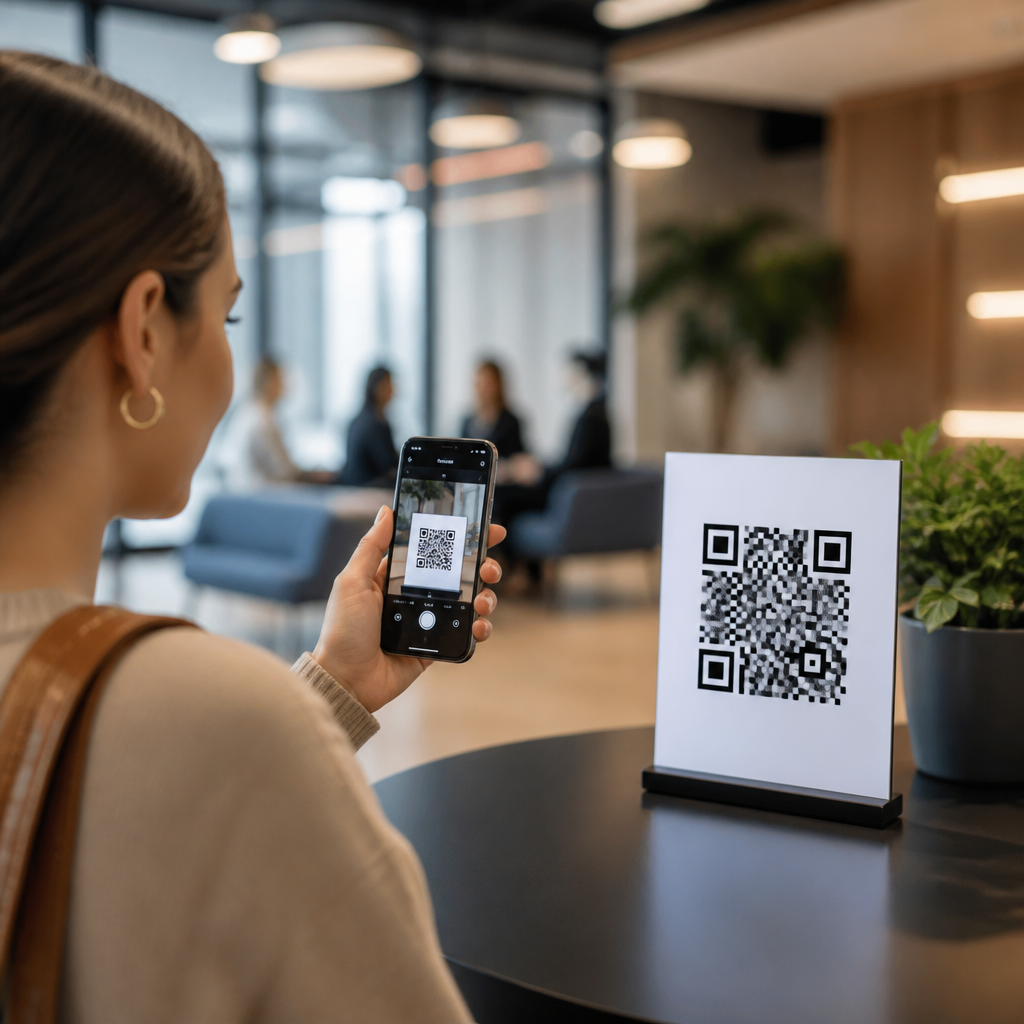
Email is already digital, so some marketers assume QR codes are unnecessary there. That is only partly true. A standard clickable button is still the primary action element in most email campaigns, especially on mobile, but QR codes add value when the next step happens on another device, in a physical location, or in a shared environment. For example, a B2B software company can include a QR code in an event reminder email so recipients viewing the message on a laptop can scan with a phone to save a badge, open venue directions, or join a text alert list. A restaurant can send a loyalty email with a QR code that customers scan at the counter to redeem an offer. A healthcare provider can include a code that opens a mobile check-in form or patient instructions.
The design rule in email is simple: never let the QR code compete with the main call to action unless it serves a distinct use case. I have seen better results when the code is positioned as an alternate path, labeled with direct copy such as “Scan to save this coupon to your phone” or “Viewing on desktop? Scan to register in seconds.” That instruction matters because people do not automatically know why they should scan a code inside an email. Accessibility matters as well. Include alt text, enough white space around the code, and fallback links in plain text. Some email clients block images by default, and some recipients print promotional emails, making a scannable code surprisingly useful in a later offline moment.
Testing is nonnegotiable. Email QR codes should be verified across dark mode, mobile rendering, desktop rendering, and popular clients such as Gmail, Apple Mail, and Outlook. Code size should generally be at least 120 by 120 pixels in email layouts, with strong contrast and no visual distortion. Avoid placing codes over patterned backgrounds or compressing them through export settings. If the destination page requires sign-in, complete that authentication flow on mobile before launch. The best campaigns treat email QR codes as bridges between devices and moments, not decorations.
Using QR codes in social media to move audiences from scroll to action
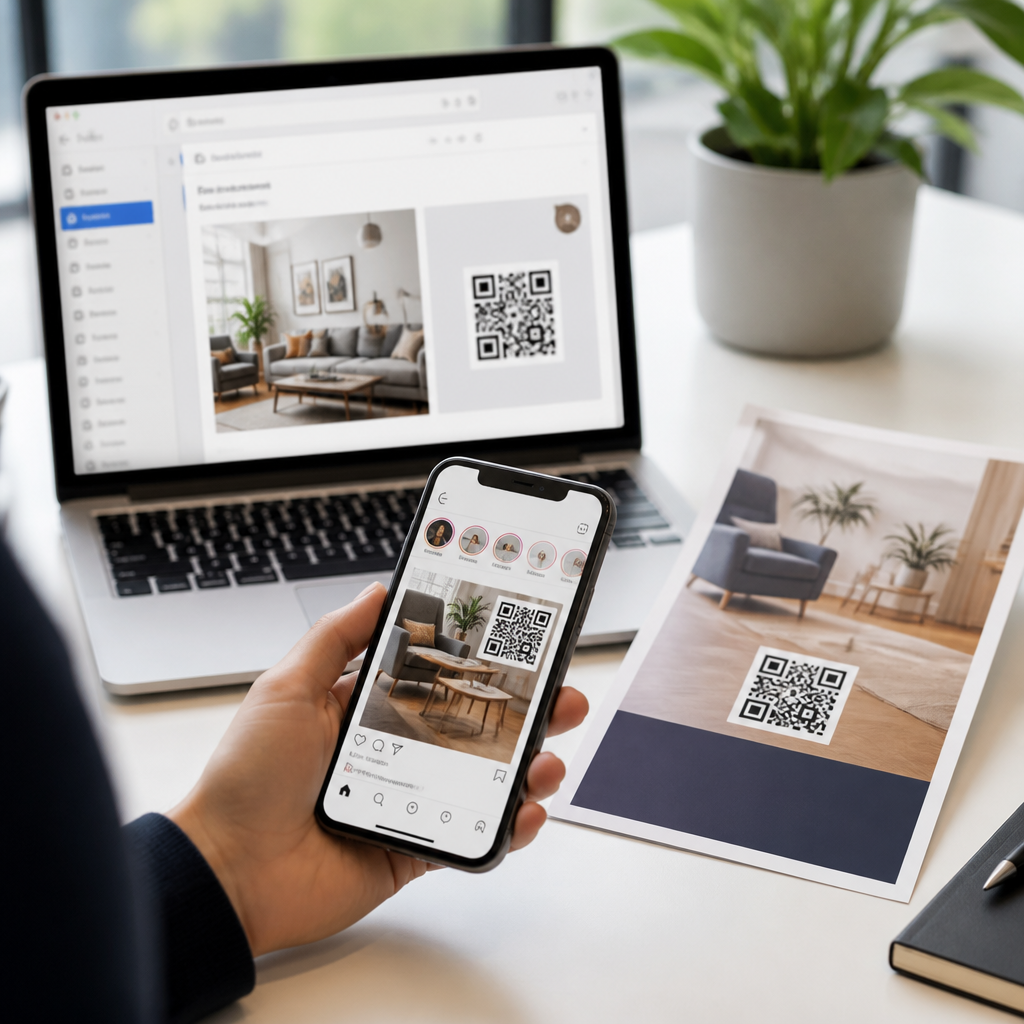
Social media is a fast-consumption environment, so QR codes must serve a very specific purpose. On video-first platforms, they are most useful when the audience is watching on one device and can act on another, or when content is displayed in a public setting such as livestream events, retail screens, presentations, or digital out-of-home placements. For standard organic posts viewed on phones, a direct link in bio, story sticker, product tag, or native lead form usually beats asking users to screenshot and scan. However, QR codes become effective in social campaigns when they are integrated with creators, event activations, packaging reveals, or cross-device experiences.
One of the strongest real-world patterns is using social content to amplify print or in-person scanning behavior. A cosmetics brand can post tutorials showing where to find the QR code on packaging and what exclusive content it unlocks. A museum can use Instagram Reels to preview an exhibit, then encourage visitors to scan codes on-site for audio guides. A conference organizer can share attendee testimonials on LinkedIn and pair them with QR-enabled booth signage that opens meeting scheduling pages. In these examples, social does not carry the entire conversion load. It builds familiarity and motivation, making the eventual scan more likely in print or physical environments.
Creative context is everything. If a QR code appears in a social video, keep it on screen long enough to scan, usually at least five seconds, and pair it with an unambiguous instruction. If used in profile graphics or pinned posts, explain the value of scanning in the caption. Branded short links should accompany the code for users on mobile. Analytics should capture both direct link clicks and QR scans so the team can compare behavior by format. This dual-path approach often reveals an important truth: the same audience prefers different response methods depending on timing, device, and urgency.
Using QR codes in print to connect offline reach with digital conversion
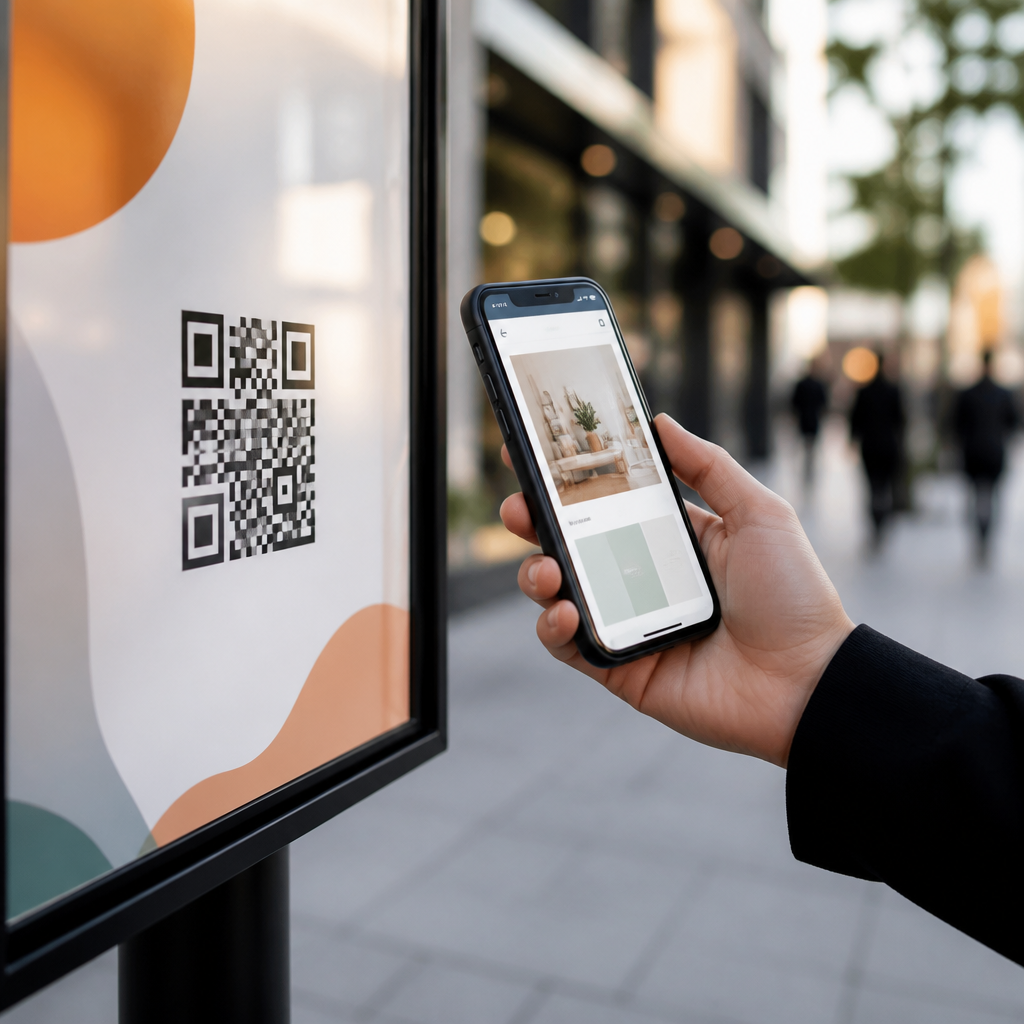
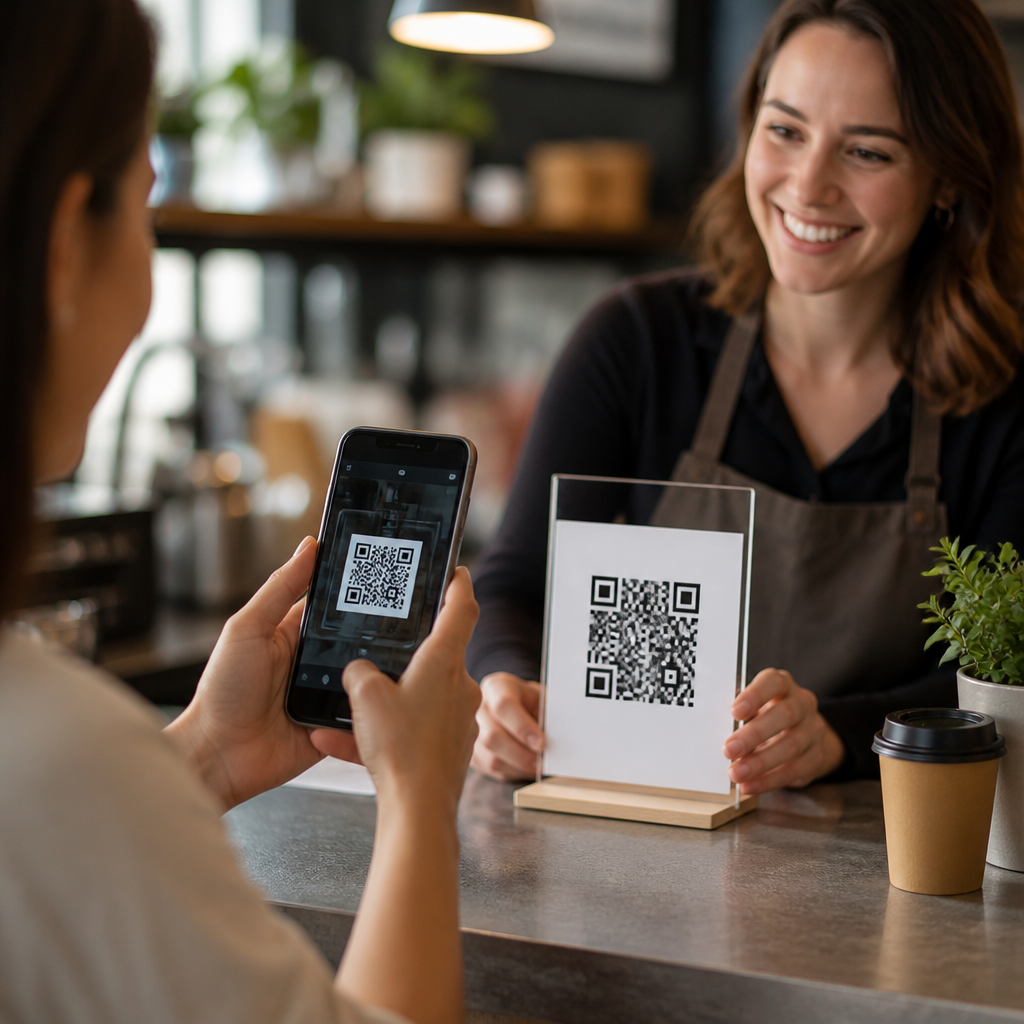
Print is where QR codes often deliver their clearest return because they remove the friction of typing URLs from static media. Direct mail, brochures, menus, catalogs, shelf talkers, window decals, magazine ads, business cards, and product packaging all benefit when the code is tied to a clear action. The core print principle is relevance at the moment of attention. A real estate flyer should open a mobile listing page with photos, map directions, and a booking form. A catalog should send each product code to the exact item page, not the cover collection. A nonprofit mailer should connect the code to a donation page with preset amounts and digital wallet payment options.
Print execution has technical requirements many marketers overlook. Size, placement, quiet zone, contrast, and testing distance affect scan rate. As a rule, the farther away the audience is, the larger the code must be. For handouts, around 0.8 inches square may work, while posters and transit placements need much more. High contrast black on white remains the safest option, though branded colors can work when contrast ratios are strong. Do not place codes across folds, glossy reflections, curved packaging seams, or low-light surfaces. The code should be accompanied by a plain-language incentive such as “Scan for sizing guide,” “Scan to claim your sample,” or “Scan to watch setup instructions.”
| Channel | Best QR Destination | Primary Goal | Key Measurement |
|---|---|---|---|
| Coupon wallet page, event check-in, mobile form | Cross-device action | Scans, assisted conversions | |
| Social | Creator landing page, event offer, product unlock | Engagement to intent | Scans versus link clicks |
| Offer page, product detail, donation form | Offline to online conversion | Scan rate, conversion rate |
Print also creates durable discovery. A postcard may stay on a kitchen counter for days. A poster may be scanned by different people across weeks. That persistence means the destination must stay current. Dynamic QR codes are valuable here because they let marketers update expired offers, route by location, or swap in fresh inventory pages without reprinting materials. When budgets are tight, that flexibility alone can justify the platform cost.
Make channels work together with shared messaging, segmented codes, and clear attribution
The real power of omnichannel marketing with QR codes appears when email, social, and print are designed as one system. Start with a single campaign message and a small set of conversion paths. Then adapt creative by context while preserving language, visual cues, and offer structure. For example, a home services company running a seasonal maintenance promotion might mail a postcard with “Scan to book before winter,” send a follow-up email with the same offer and a QR code for desktop readers, and post short educational videos on Facebook and Instagram showing the risks of delayed maintenance. The destination stays aligned, but the reason to engage changes by channel.
Segmentation improves results. Use separate dynamic QR codes when you need to know whether the response came from email, social, or print, or when geography, audience type, or partner source matters. A franchise brand can assign one code per store region and route each to local inventory or appointment pages. A university can use distinct codes for prospective students, alumni, and event attendees while keeping the creative theme consistent. In campaigns I have managed, this structure makes optimization straightforward. If print scans are high but conversions are low, the landing page may be mismatched. If email scans are low but click-through is strong, the QR code may be redundant for that audience.
Attribution should include more than raw scans. Analyze unique scans, repeat scans, landing page engagement, form completion, revenue, store visits where available, and assisted conversions. GA4, CRM reporting, and QR platform dashboards together usually provide the full picture. Heatmaps from tools such as Microsoft Clarity or Hotjar can expose friction on mobile landing pages. The strongest teams review these signals weekly during active campaigns and treat QR codes as performance assets that deserve iteration. Change destination copy, simplify forms, adjust incentives, or split test by placement. Small refinements routinely improve outcomes.
Common mistakes, governance, and the next step for this hub
The most common QR code mistakes are avoidable: sending traffic to generic pages, using static codes for time-sensitive campaigns, shrinking codes too much, failing to label the benefit, ignoring mobile page speed, and launching without a tracking plan. Governance matters as programs scale. Create brand standards for code color, logo use, minimum size, call-to-action language, destination QA, and expiration checks. Keep a campaign inventory so no one reuses a code without understanding where it already appears. For regulated industries, involve compliance early and document what content can change on dynamic destinations after approval.
This hub exists to help teams build a complete omnichannel QR code strategy, not just isolated tactics. From here, marketers should go deeper into channel-specific design, print production standards, analytics implementation, landing page optimization, packaging use cases, event workflows, and local business applications. The central takeaway is clear: using QR codes in email, social, and print together works when every scan has a purpose, every destination matches intent, and every channel contributes to one connected measurement plan. Audit your current campaigns, identify one offer that spans offline and online touchpoints, and launch a tightly tracked pilot that you can expand with confidence.
Frequently Asked Questions
How do QR codes connect email, social media, and print into one customer journey?
QR codes work as a bridge between channels that normally feel disconnected. In print, they turn a flyer, postcard, package insert, in-store sign, or event handout into an instant digital entry point. In email, they give subscribers an easy way to continue an experience on mobile without searching for a link later. On social media, they can direct audiences from posts, stories, bios, or paid campaigns into the same landing page, offer, or conversion path used elsewhere. When all three channels point into a shared campaign structure, marketers can guide people from awareness to engagement to action in a more intentional way.
For example, a brand might introduce a product in social content, reinforce the message in an email campaign, and place the same QR code on printed materials in stores or direct mail. Each touchpoint supports the next rather than operating in isolation. Instead of relying on guesswork about whether offline impressions led to online activity, QR codes create a measurable handoff. That makes it easier to understand how customers move between physical and digital environments and which combinations of channels create the strongest response.
The real advantage is consistency. A well-planned QR code campaign can send people to a unified destination with matching branding, messaging, and offers, no matter where they scan from. This creates a smoother experience for the customer and cleaner reporting for the marketing team. In omnichannel marketing, that alignment matters because people rarely interact with a brand in just one place before converting.
Why are dynamic QR codes especially useful in omnichannel campaigns?
Dynamic QR codes are especially valuable because they give marketers flexibility after a campaign is already live. Unlike static QR codes, which are permanently tied to one destination, dynamic QR codes can be updated to point somewhere new without changing the printed code itself. That means if you need to revise a landing page, swap an expired promotion, change an event registration link, or redirect traffic to a new product page, you can do it without reprinting materials or rebuilding every asset across channels.
This matters even more when a campaign appears in multiple places at once. A QR code might be embedded in an email, shown in a social graphic, printed on posters, included on packaging, and added to direct mail. If the destination changes, updating one dynamic code is far more efficient than replacing assets one by one. It also reduces the risk of sending people to outdated pages, which protects both conversion rates and brand trust.
Dynamic QR codes also improve measurement. Many platforms provide scan analytics such as total scans, time of scan, device type, and sometimes geographic data. That visibility helps marketers compare how QR codes perform across email, social, and print placements. Over time, those insights can be used to improve creative, timing, targeting, and landing page strategy. In short, dynamic QR codes offer the operational control and reporting depth that omnichannel campaigns need.
What should marketers link a QR code to when using it across email, social, and print?
The best destination depends on the goal of the campaign, but the most effective QR code destinations are usually simple, mobile-friendly, and tightly aligned with the context in which the code appears. Common options include landing pages, limited-time offers, product detail pages, app download pages, event registration forms, how-to videos, loyalty sign-up pages, and digital coupons. What matters most is that the destination continues the promise made in the surrounding message.
If someone scans a QR code from a printed postcard promoting a seasonal discount, they should land on a page that immediately reflects that offer. If the same campaign also appears in email and social, the landing experience should still feel consistent, even if you use channel-specific tracking or slight content variations. Strong continuity reassures users they are in the right place and reduces drop-off. A confusing redirect, generic homepage, or page that is not optimized for mobile can quickly undermine results.
Many marketers get the best performance by linking QR codes to dedicated campaign landing pages rather than broad website sections. Dedicated pages allow clearer calls to action, cleaner analytics, and easier testing. They also make it possible to personalize the experience based on audience segment or campaign source. In an omnichannel setup, a QR code should not just send people somewhere online; it should move them one step closer to the exact action the campaign is designed to generate.
How can you track and measure QR code performance across different marketing channels?
Tracking starts with planning. If you want to understand how QR codes perform across email, social, and print, each placement should be tied to a measurement framework before launch. That often means using dynamic QR codes with analytics, adding UTM parameters to destination URLs, building dedicated landing pages, and separating code versions by channel, audience, or creative asset. This allows you to compare not only total scans, but also downstream performance such as sign-ups, purchases, downloads, or form completions.
For example, a marketer might use one QR code version for a printed brochure, another for Instagram stories, and another for a promotional email. Even if all three send users to similar content, their tracking data can reveal major differences in engagement and conversion behavior. Print may produce fewer scans but stronger purchase intent. Social may generate higher volume but lower conversion quality. Email may perform best with existing customers. These distinctions are difficult to see without structured attribution.
It is also important to measure beyond the scan itself. A scan is only the beginning of the journey. The stronger KPI is what happens after the user arrives: time on page, bounce rate, coupon redemption, account creation, revenue, or event attendance. When QR code data is connected to web analytics and campaign reporting, marketers can identify which touchpoints actually influence outcomes. That is what transforms QR codes from a novelty into a practical performance tool within a larger omnichannel strategy.
What are the best practices for making QR codes effective in email, social, and print?
Effective QR codes begin with clarity. People need a reason to scan, so every QR code should be paired with a direct call to action that explains the benefit. Instead of simply placing a code on a design, tell users what they will get: “Scan to claim 15% off,” “Scan to watch the demo,” or “Scan to register for the event.” The value should be obvious at a glance. This is especially important in print, where space is limited and attention may be brief.
Design and usability matter just as much. The code should be large enough to scan comfortably, placed in a visible area, and surrounded by enough white space to improve readability. The destination page must be mobile optimized, load quickly, and match the message that prompted the scan. In email, test how the QR code displays across devices and clients. On social media, consider how the code will appear on smaller screens and whether the audience is likely to scan from another device or save the post for later. In print, think about viewing distance, lighting, and material quality.
Consistency is another major best practice. If you are using QR codes across multiple channels, keep the branding, offer, and destination aligned so the experience feels connected. At the same time, use separate tracking where needed so you can measure channel performance accurately. Finally, test everything before launch. Scan the code on different phones, check every redirect, validate analytics, and confirm that any time-sensitive offers or forms are working properly. A QR code campaign is most effective when it combines convenience for the user with precision for the marketer.