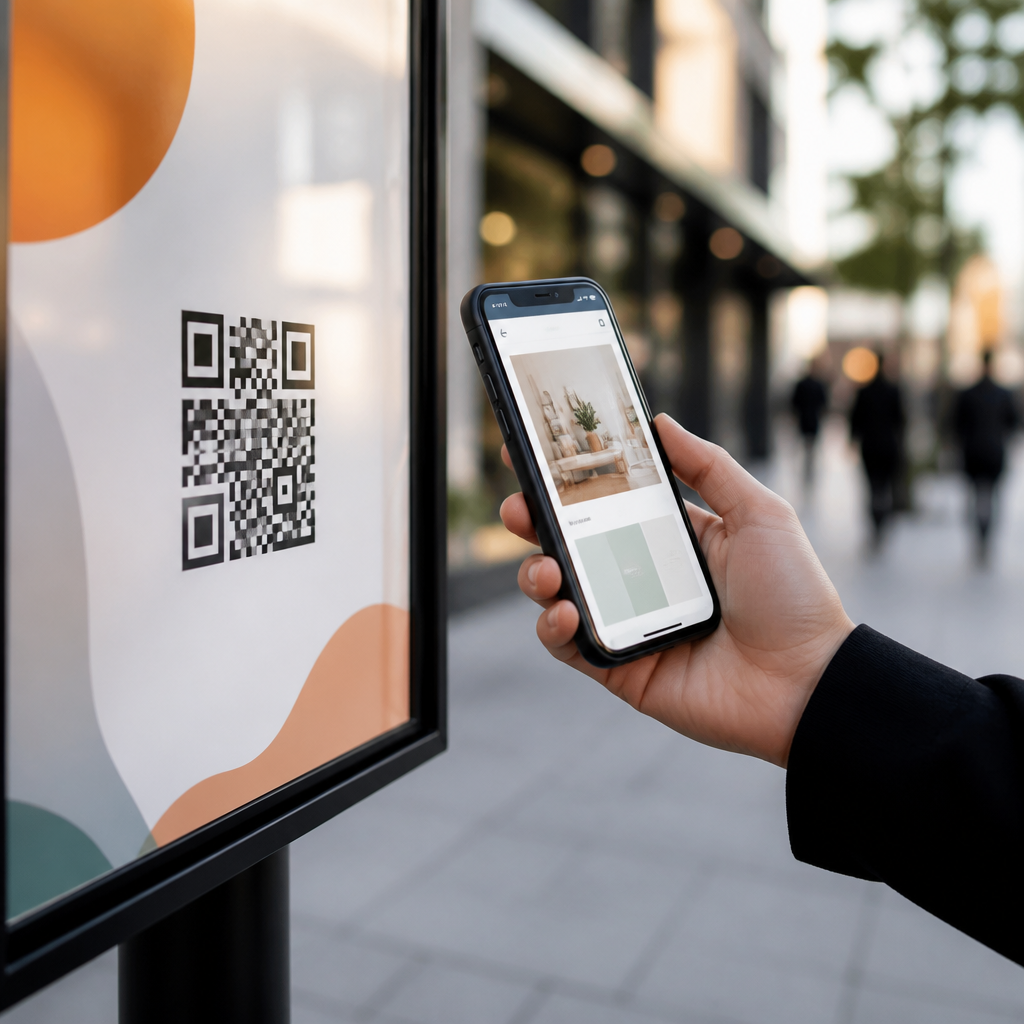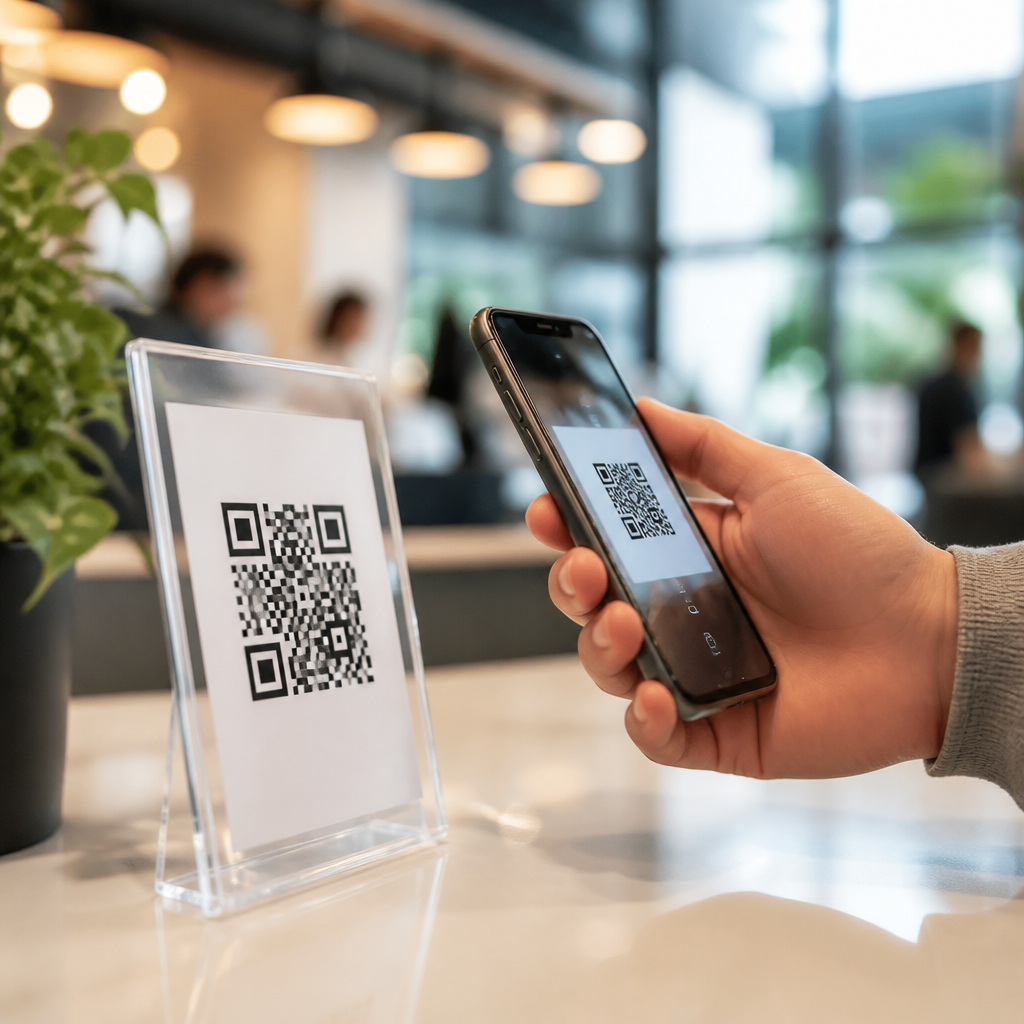
QR codes are no longer a gimmick tucked into a corner of a poster; they have become one of the most practical bridges between offline attention and online action. A QR code, short for Quick Response code, is a two-dimensional barcode that a smartphone camera can scan to open a webpage, download an app, save contact details, trigger a payment flow, or launch many other digital experiences. In marketing, that simple scan closes a gap that has always frustrated teams: a customer sees an ad in the physical world, feels interest in the moment, and can act immediately instead of remembering a URL later. That convenience is the core reason QR codes are making a comeback in marketing.
The comeback matters because consumer behavior changed faster than most campaign playbooks. Smartphone cameras now recognize QR codes natively on iPhone and Android devices, mobile wallets normalized touchless interactions, and the pandemic trained people to scan menus, check in at venues, and access services without touching shared surfaces. What used to require a special app now takes a second and feels routine. I have watched this shift directly in campaign reviews: five years ago, clients asked whether people knew how to scan a code; now they ask what landing page experience will convert best after the scan. That is a meaningful difference in adoption maturity.
For marketers, QR codes work because they reduce friction, create measurable offline attribution, and support many campaign goals without expensive infrastructure. They can move a shopper from packaging to product education, from direct mail to appointment booking, from in-store signage to loyalty enrollment, and from event booths to lead capture. Unlike a plain printed URL, a QR code removes typing effort and lowers abandonment. Unlike near-field communication or custom hardware, it is cheap to produce and easy to distribute across print, outdoor, retail, packaging, and presentations.
This article explains why QR codes work in marketing, where they perform best, and how to use them strategically. It also serves as a hub for the broader QR codes in marketing strategy topic by covering the foundational concepts every team should understand: customer behavior, use cases, measurement, creative execution, privacy considerations, and common mistakes. If you are deciding whether QR codes deserve a place in your media mix, the short answer is yes—when the destination is relevant, the value exchange is clear, and the scan experience is designed with the same care as the ad itself.
The behavioral reasons QR codes work
QR codes succeed because they align with how people already use their phones. Modern consumers move fluidly between physical and digital environments. They discover a product on a shelf, compare reviews on mobile, watch a creator mention it on social media, and buy later from a laptop or inside an app. A QR code fits naturally into that path because it lets a person act at the exact moment of interest. Timing matters in marketing, and QR codes are excellent at turning transient attention into immediate engagement.
There is also a psychological advantage. When a person scans a code, they are making an active choice rather than passively receiving an impression. That small act of intent often improves downstream performance. In my campaigns for retail displays and trade show booths, visitors who scanned typically spent more time on the landing page and converted at a higher rate than visitors from broad social traffic, because the scan reflected curiosity with context. The customer was not just browsing; they were responding to a specific physical prompt.
Ease of use is another factor. Native camera support removed the biggest historical barrier. Apple added QR recognition to the Camera app years ago, and Google integrated similar functionality across Android devices. Consumers no longer need instructions beyond “Scan to learn more” unless the audience is unusually broad or less mobile-savvy. This simplicity turns QR codes into a low-friction call to action, especially in environments where typing a link is inconvenient, such as transit ads, product packaging, conference signage, or restaurant tables.
Where QR codes deliver the strongest marketing value
QR codes are most effective where a physical asset creates attention but cannot complete the conversion alone. Packaging is a leading example. A box or label has limited space, yet buyers often want more information: ingredients, setup instructions, warranty registration, reviews, styling ideas, or refill options. A QR code extends the package into a richer digital shelf. Beauty brands use codes to show tutorials, food companies link to recipes and sourcing details, and electronics brands connect buyers to onboarding flows that reduce support calls.
Direct mail is another high-performing environment. Traditional mail can still drive response, but it often loses momentum if recipients must type a long URL. A personalized QR code can send each household to a dedicated landing page with prefilled information, location-specific offers, or appointment scheduling. Real estate agents use this tactic on postcards to route prospects to virtual tours. Healthcare providers use it to simplify patient registration. Universities use it in admissions mailings to move prospects into event sign-ups and program pages quickly.
Retail and out-of-home media also benefit. In-store displays, shelf talkers, window clings, and point-of-sale signage can use QR codes to bridge awareness and action. A shopper standing in front of a product can scan for reviews, compare colors, claim a coupon, or join a loyalty program before leaving the aisle. Outdoor ads can direct commuters to trailers, waitlists, or store locators. The important principle is context: the destination must match the physical moment. A code on a bus shelter should open a mobile-first page that loads fast and gives a clear next step within seconds.
| Channel | Best QR Code Use | Why It Works | Key Metric |
|---|---|---|---|
| Packaging | Instructions, registration, replenishment | Extends limited label space into a guided experience | Scan-to-purchase rate |
| Direct mail | Personalized landing pages, booking | Removes typing friction and supports segmentation | Response rate |
| Retail signage | Coupons, reviews, loyalty sign-up | Captures intent at the shelf | In-store conversion lift |
| Events | Lead capture, brochures, demos | Speeds follow-up and reduces paper handouts | Qualified leads per event |
| Outdoor ads | Store locator, app install, trailer | Connects broad reach to immediate action | Scan-through rate |
How QR codes improve measurement and attribution
One of the strongest arguments for QR codes in marketing is measurement. Offline channels have always been harder to attribute than paid search, email, or in-app campaigns. QR codes make physical media more accountable because each placement can use a unique destination URL with UTM parameters, campaign identifiers, or dynamic redirects. That means a brand can compare scans from store posters versus packaging inserts, or evaluate which event booth creative drove more follow-up requests.
Dynamic QR codes are particularly valuable. Instead of encoding the final destination directly, they point to a short redirect URL controlled by a platform such as Bitly, QR Code Generator Pro, Beaconstac, Flowcode, or a custom domain manager. That setup lets marketers update the destination after printing, track scan counts by time and geography, and run tests without replacing the code in the field. For long campaigns or distributed retail programs, that flexibility is operationally important. I generally recommend dynamic codes for any campaign where the asset will live longer than a few weeks.
Attribution does have limits, and good teams acknowledge them. A scan does not guarantee engagement, just as an email open does not guarantee reading. Some people will see a code and visit the site later through another channel. Others may scan on one device and convert on another. The best practice is to treat QR data as one signal within a broader measurement framework that includes analytics events, CRM records, coupon redemption, store traffic, and sales lift analysis. Used that way, QR codes significantly improve visibility into offline performance without pretending to solve attribution perfectly.
Creative execution determines whether people scan
QR codes are easy to generate, but effective QR code marketing depends on execution. The first rule is simple: give people a reason to scan. “Scan me” is not a value proposition. “Scan for 10% off,” “Scan to see how it works,” and “Scan to book in 30 seconds” are stronger because they explain the benefit immediately. When I audit underperforming campaigns, weak or vague calls to action are among the most common problems.
Placement and size matter too. A code should be large enough to scan quickly from the expected viewing distance, surrounded by sufficient white space, and printed with strong contrast. ISO/IEC 18004 defines the QR code standard, but practical readability still depends on the environment. A glossy poster with glare, a code wrapped around a curved bottle, or a design that over-customizes the pattern can reduce scanning reliability. Brand styling is useful, yet function must win. A highly decorative code that fails under real conditions is not creative; it is broken.
The landing page is where many campaigns succeed or fail. Because most scans happen on mobile, the destination should load fast, present one primary action, and preserve continuity with the physical asset. If a customer scans from cereal packaging to get a recipe, the page should show the recipe immediately, not a generic homepage. If a conference attendee scans a booth sign for a product sheet, requiring a seven-field lead form before access may kill momentum. Match the level of friction to the value offered and the stage of the buyer journey.
Real-world use cases across industries
Restaurants helped normalize QR behavior at scale through digital menus, ordering, and payment, but the wider marketing value goes beyond hospitality. Consumer packaged goods brands use QR codes to support loyalty and storytelling. A coffee roaster can link packaging to origin information, brew guides, and subscription replenishment. That turns a one-time purchase into an education and retention channel. Fashion brands use hangtag codes for fit guidance, care instructions, and styling inspiration, reducing returns while increasing confidence.
Business-to-business marketers also benefit. At trade shows, QR codes on booth graphics, badges, or demo stations can route visitors to product comparisons, ROI calculators, or meeting-booking pages. This improves lead capture quality because prospects self-select into relevant content. Manufacturers place codes on equipment to connect customers with maintenance manuals, parts ordering, and training videos. Property developers add QR codes to site boards and brochures so prospects can access floor plans, financing details, and virtual walkthroughs on the spot.
Public sector and nonprofit organizations use QR codes for practical engagement as well. Transit systems link riders to service updates. Museums connect exhibits to multilingual interpretation. Charities use codes on event signage and printed appeals to simplify donations. In each case, the code works because it answers an immediate question or removes an immediate obstacle. That is the central pattern across industries: QR codes perform best when they are attached to clear intent and a useful next step, not when they are added as decoration because the format feels trendy.
The limitations, risks, and best practices marketers should know
QR codes are not automatically effective, and there are real limitations. Poor mobile connectivity can hurt performance in stadiums, subways, or rural locations. Security concerns also matter because bad actors can place fraudulent stickers over legitimate codes or direct users to deceptive pages. Brands should use recognizable domains, HTTPS, and page designs that reassure users they are in the right place. For high-trust contexts such as payments or account access, explain what the code does before the scan and confirm where the user will land.
Accessibility deserves attention. Not every customer can or wants to scan a code, so important information should not exist only behind the code. Include a short URL or alternative path when the content is essential. Think about readability, contrast, and physical placement for users with visual or mobility limitations. Marketers should also respect privacy and avoid collecting more data than necessary. If the scan leads to a form, ask only for fields that support a legitimate follow-up. Convenience is the appeal; unnecessary friction undermines it.
Best practice is straightforward: use dynamic codes, define one goal per placement, keep the destination mobile-first, and test under real conditions before launch. Track scans, but also monitor downstream metrics such as bounce rate, conversion rate, average order value, and assisted revenue. Build codes into the campaign strategy early rather than adding them at the last minute. When QR codes are treated as a serious conversion path instead of a design accessory, they consistently earn their place in modern marketing programs.
QR codes are making a comeback in marketing because the market finally caught up with the technology. Smartphones made scanning effortless, consumers became comfortable using codes in everyday life, and marketers recognized that a printed square can solve a costly problem: how to turn physical attention into measurable digital action. When used well, QR codes reduce friction, strengthen attribution, extend the value of packaging and print, and create better customer experiences across retail, events, direct mail, and out-of-home media.
The most important lesson is that QR codes do not work by magic. They work when the context is right, the offer is clear, the code is easy to scan, and the landing page fulfills the promise immediately. Teams that focus on those fundamentals see stronger engagement than teams that treat the code as a novelty. The technology is simple, but the strategy behind it should be disciplined. Relevance, speed, trust, and measurement are what make QR code marketing effective.
If you are building a broader QR codes in marketing strategy, start with one high-intent use case: packaging, direct mail, retail signage, or event lead capture. Create a clear call to action, use a dynamic code, connect it to a focused mobile experience, and measure what happens after the scan. That approach will show you quickly why QR codes work in marketing—and where they can create the most value for your brand next.
Frequently Asked Questions
Why are QR codes becoming popular in marketing again?
QR codes are making a comeback because the technology around them finally matches the convenience they always promised. In the past, people often needed a separate app to scan a code, which created friction and limited adoption. Today, most smartphones can scan QR codes directly from the native camera, making the experience fast, familiar, and nearly effortless. That shift alone has changed how practical QR codes are in everyday marketing.
Just as important, marketers are under constant pressure to connect offline exposure with measurable online action. A person may notice a poster, product package, direct mail piece, event sign, or storefront display, but turning that moment of attention into a website visit or purchase has always been difficult. QR codes solve that problem by giving customers an instant path from physical media to a digital destination. Instead of asking someone to remember a URL or search later, a brand can prompt immediate action with a quick scan.
The rise of contactless behavior also helped normalize QR code use across restaurants, payments, ticketing, and customer service. As consumers became more comfortable scanning codes in daily life, that familiarity carried into marketing. Now brands use QR codes not as novelty items, but as practical tools for product education, lead generation, app downloads, loyalty sign-ups, coupon delivery, and campaign tracking. Their renewed popularity comes from utility, not hype.
How do QR codes help connect offline marketing with online results?
QR codes act as a direct bridge between physical attention and digital engagement. Traditional offline marketing channels such as billboards, flyers, brochures, packaging, in-store displays, print ads, and event materials are often strong at generating awareness but weaker at driving immediate measurable action. A QR code changes that by placing a clickable-style entry point into a physical environment. When someone scans it, they can be taken instantly to a landing page, product video, contact form, digital coupon, booking page, social profile, or checkout experience.
This matters because it removes unnecessary steps from the customer journey. Every extra step lowers conversion rates. If a customer has to type a long web address, search for a product later, or try to remember a promotion after leaving the location, many of those opportunities disappear. A QR code captures intent at the moment interest is highest. That immediacy makes offline campaigns more actionable and more accountable.
From a measurement standpoint, QR codes are especially valuable because they can be tied to campaign-specific URLs, tracking parameters, and analytics platforms. Marketers can see how many scans came from a particular poster, mailer, store shelf, or event booth. They can compare placements, test calls to action, evaluate time of day performance, and trace user behavior after the scan. That makes QR codes not only useful for convenience, but also highly effective for attribution and optimization.
What are the best ways for marketers to use QR codes in campaigns?
The best uses for QR codes are the ones that give people a clear, immediate benefit. Successful campaigns usually answer a simple question: why should someone scan this right now? Strong examples include linking to a limited-time offer, unlocking exclusive content, joining a loyalty program, downloading an app, viewing product instructions, registering for an event, leaving a review, accessing a menu, or making a payment. In each case, the value is obvious and the action is easy to complete on a mobile device.
Placement also matters. QR codes work well on packaging, retail displays, direct mail, business cards, trade show signage, transit ads, posters, table tents, and storefront windows. In these settings, they can reduce friction and extend the life of a physical touchpoint. A package can lead to how-to videos or replenishment orders. A mailer can direct recipients to a personalized landing page. An event banner can connect attendees to schedules, speaker bios, or lead capture forms. The code itself is simple, but the destination and context determine whether it performs.
Marketers should also pair QR codes with strong creative and a clear call to action. Instead of displaying a code with no explanation, tell people exactly what they will get: “Scan to claim 15% off,” “Scan to watch the demo,” or “Scan to book your consultation.” The landing page should be mobile-friendly, fast-loading, and aligned with the message that motivated the scan. When the offer, placement, and destination all work together, QR codes can become one of the most efficient tools in a campaign.
Are QR codes effective for tracking and measuring marketing performance?
Yes, QR codes can be extremely effective for tracking marketing performance when they are set up strategically. Each QR code can direct users to a unique URL, which allows marketers to distinguish traffic by campaign, location, audience segment, or creative variation. For example, a brand can use one code on product packaging, another in a magazine ad, and another at an in-store display, then compare scan volume and downstream conversions across all three. This turns what might otherwise be a broad awareness effort into a data-rich performance channel.
Measurement goes beyond simple scan counts. Once a user lands on the destination page, marketers can track actions such as purchases, sign-ups, time on site, form submissions, downloads, and repeat visits. With the right analytics setup, QR-driven traffic can be evaluated just like traffic from email, paid social, or search. That allows teams to understand not only whether people scanned, but whether the scan led to meaningful business outcomes.
To get the best results, marketers should use campaign parameters, dedicated landing pages, and analytics dashboards that tie scans to specific goals. Dynamic QR codes can be particularly useful because they allow the destination URL to be updated without reprinting the code, and they often provide additional reporting features. The key is to treat QR codes as part of a broader measurement framework. When used that way, they offer valuable visibility into how offline materials contribute to digital engagement and revenue.
What makes a QR code campaign successful instead of ignored?
A successful QR code campaign depends on relevance, clarity, trust, and user experience. First, the code must appear in a context where scanning makes sense. People are far more likely to engage when the code is tied to a real need or interest, such as getting more product information, accessing a discount, checking availability, or completing a quick action on the spot. If the code feels random or unnecessary, most people will pass it by.
Second, the call to action must be specific and compelling. A code with no instruction creates uncertainty, while a code with a clear benefit creates motivation. Phrases like “Scan to see pricing,” “Scan for a free sample,” or “Scan to enter the giveaway” perform better because they explain both the action and the reward. Design and placement also matter. The code should be easy to spot, large enough to scan comfortably, and positioned where people have time and space to use their phones.
Finally, the post-scan experience has to deliver on the promise. If the page loads slowly, is not optimized for mobile, or sends users somewhere generic and unhelpful, trust drops quickly. Brands should make sure the destination is secure, relevant, and simple to navigate. In many cases, the difference between a high-performing QR campaign and an ignored one is not the code itself, but how thoughtfully the overall journey is designed. When marketers respect the user’s time and provide immediate value, QR codes become a highly effective engagement tool.