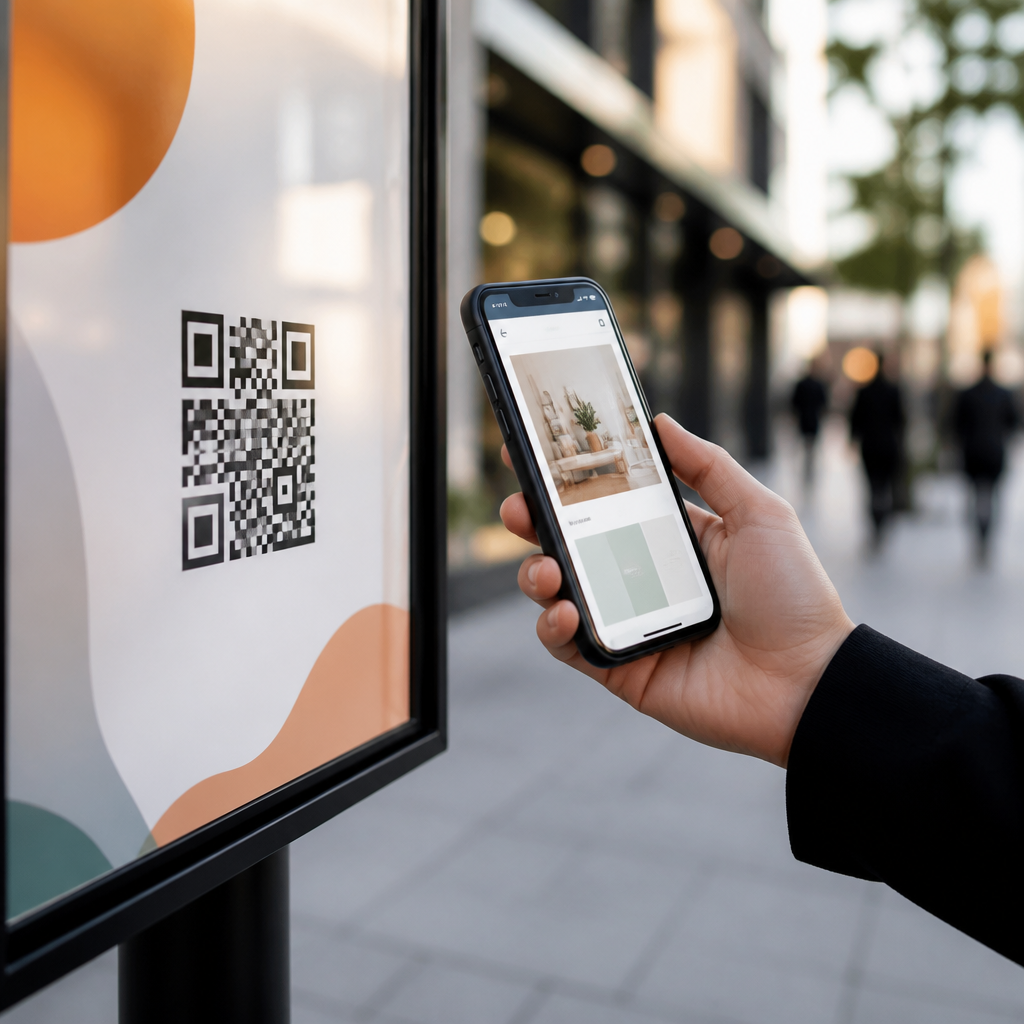
Tracking customer journeys with QR code data turns a simple scan into a measurable signal of intent, movement, and conversion. In marketing, a customer journey is the sequence of interactions a person has with a brand before, during, and after a purchase. QR code data is the record created when someone scans a code, lands on a destination, and takes action across devices, channels, or locations. When these signals are planned well, they help teams connect offline touchpoints such as packaging, direct mail, retail displays, event signage, and receipts with digital behavior in analytics platforms and CRM systems.
I have used QR programs in retail launches, trade show campaigns, and service businesses, and the biggest lesson is simple: the code itself is not the strategy. The strategy is the journey you design around the scan. A scan can reveal where interest started, what message pulled attention, which audience segment engaged, and whether the person moved toward purchase, support, or repeat use. That matters because many customer journeys still begin in physical spaces where traditional web analytics cannot see intent until much later.
Customer journey mapping with QR codes matters for three reasons. First, it closes attribution gaps between offline and online channels. Second, it improves experience by sending people to the right content at the right stage. Third, it creates operational feedback that teams can use to refine media placement, creative, inventory, staffing, and follow-up communications. The companies that get value from QR code tracking are not simply counting scans. They are measuring progression: awareness to consideration, consideration to conversion, conversion to loyalty. That progression is what this hub article explains, with practical methods you can apply across a broader QR codes in marketing strategy program.
What QR Code Data Actually Tells You About the Customer Journey
QR code data is most useful when you treat it as behavioral evidence rather than vanity activity. A standard dynamic QR platform can capture scan time, approximate location, device type, operating system, language, and the URL or campaign parameters associated with the destination. Once the visitor lands on a page instrumented with analytics, you can observe deeper events such as product views, form starts, coupon saves, account creation, add-to-cart actions, and purchases. Combined, those records show not only that a person scanned, but what happened next.
In practice, this means one code placement can answer multiple business questions. A code on shelf signage may show whether in-store browsers want product education before buying. A code on packaging may reveal post-purchase behaviors such as setup completion, warranty registration, refill ordering, or support content usage. A code in direct mail can indicate which geographic segments respond to a specific offer. A code on event badges can show attendee interest in demos, pricing, or case studies. The scan is the bridge. The journey comes from what you map after the bridge.
It is important to separate first-party observations from assumptions. A scan does not prove identity unless the user is authenticated or voluntarily submits information. Approximate location may reflect the network exit point, not an exact store aisle. Shared devices can blur attribution. Even with those limits, QR data is highly actionable when paired with campaign structure and consented downstream events. The key is disciplined tagging and clear destination design, not overclaiming precision.
How to Map Customer Journey Stages with QR Codes
The most effective journey maps start with customer intent at each stage. In awareness, the person is noticing a problem or a brand. In consideration, they are comparing options, researching proof, or looking for details. In conversion, they are trying to buy, book, redeem, or speak with sales. In loyalty, they need onboarding, care instructions, community, upgrades, or support. Each stage requires a different QR code destination and a different measurement plan.
For awareness, use QR codes on outdoor media, print ads, packaging inserts, or storefront displays that lead to concise landing pages, explainer videos, or localized product finders. Measure scan-through rate by placement, bounce rate, engaged sessions, and content completion. For consideration, place codes on product packaging, comparison sheets, menus, catalogs, and trade show signage that lead to spec pages, reviews, calculators, or case studies. Measure repeat visits, product detail depth, micro-conversions, and assisted conversions. For conversion, use codes on coupons, in-app prompts, direct mail offers, or point-of-sale materials that lead to checkout, appointment booking, or lead forms. Measure completed transactions, redemption rate, cost per acquisition, and time to convert. For loyalty, use codes on receipts, manuals, welcome kits, and service reminders that lead to setup guides, subscriptions, referral programs, or support hubs. Measure registration, repeat purchase, retention, and support deflection.
I recommend building the map backward from the desired outcome. If the goal is repeat purchase, define the post-purchase behaviors that predict it, such as account registration and replenishment reminder signup. Then create QR placements that encourage those actions exactly when the customer needs them. This approach avoids a common mistake: sending every scanner to a generic homepage and learning almost nothing about journey stage or intent.
Building a Clean Measurement Framework
Journey tracking only works when naming conventions and data flows are consistent. Every QR code should have a documented purpose, owner, destination, audience, stage, and success metric. Use dynamic QR codes so you can update destinations without reprinting materials and so each asset can carry a distinct identifier. Append UTM parameters or equivalent campaign tags that specify source, medium, campaign, content, and placement. In Google Analytics 4, create events that reflect meaningful actions rather than relying solely on page views. In a CRM such as HubSpot or Salesforce, pass lead source and campaign metadata when forms are submitted.
Location and asset granularity matter. If ten stores use one identical code, you lose insight into store-level performance. If one direct mail campaign uses the same code for every audience segment, you cannot compare message resonance. The right balance is usually one code per placement or per test cell, not one code for an entire national campaign. I have seen response rates improve simply because teams stopped aggregating everything into a single destination and started tagging by format, offer, and location.
| Journey stage | Typical QR placement | Best destination | Primary metrics |
|---|---|---|---|
| Awareness | Posters, packaging teasers, print ads | Explainer page or short video | Scans, engaged sessions, video completion |
| Consideration | Shelf talkers, menus, catalogs, event booths | Product specs, reviews, comparison tools | Product views, return visits, form starts |
| Conversion | Coupons, direct mail, POS displays | Checkout, booking page, lead form | Revenue, redemptions, submissions, CPA |
| Loyalty | Receipts, manuals, inserts, service labels | Onboarding, support, refill, referral pages | Registrations, repeat orders, retention |
Good governance also includes testing. Verify that codes resolve quickly, destination pages load fast on mobile networks, forms are short, consent language is clear, and analytics events fire correctly. A QR campaign can fail because the code is too small, the landing page is slow, or the coupon field breaks on Safari. Those are journey failures, not just technical bugs.
Using QR Code Data Across Offline and Online Touchpoints
The real power of QR code tracking appears when offline interactions connect to digital systems. In retail, a shelf display QR code can lead to a product page with a store-specific parameter, allowing you to compare scan activity with point-of-sale sales by location and time window. If scans rise but sales do not, the issue may be price, stock availability, or page clarity. In restaurants, table tent codes can route diners to seasonal menus, loyalty enrollment, or feedback forms, linking visit context with future purchase behavior. In field service, equipment labels can take technicians or customers to maintenance logs and tutorials, reducing support calls while creating a record of product use after installation.
Events are especially rich environments for journey mapping. Booth signage codes can separate top-of-funnel interest from bottom-of-funnel buying intent by directing attendees to different assets such as a product overview, a pricing sheet, or a meeting scheduler. Because scans are timestamped, you can compare traffic before and after a demo session, keynote mention, or live product launch. If your sales team follows up through a CRM workflow, you can analyze which booth assets produce pipeline, not just badge scans.
Direct mail remains another strong use case because QR codes make printed offers measurable. A home services company can print neighborhood-specific codes on postcards, each leading to a landing page with localized testimonials and a booking calendar. This setup reveals which neighborhoods respond best, which service messages perform, and how quickly recipients convert after scanning. Compared with using one vanity URL for the whole campaign, QR-specific tracking produces a much sharper picture of customer movement from mailbox to booked appointment.
Segmentation, Personalization, and Journey Optimization
Once the measurement foundation is stable, QR code data supports segmentation and personalization. Segment by placement, audience, geography, product line, device type, time of day, and behavioral outcome. For example, if commuters scan transit shelter ads heavily between 7 and 9 a.m., the landing page should prioritize fast-loading summaries and a save-for-later option rather than a long form. If packaging scans spike after delivery, the post-purchase page should emphasize setup, accessories, and support rather than acquisition messaging.
Personalization does not always require identifying the individual. Contextual personalization is often enough. A code on premium packaging can route users to premium care content. A code on a B2B trade show sign can open an industry-specific case study. A code on a multilingual brochure can detect browser language and present the right version first. The result is a shorter path to value, which is the essence of good customer journey design.
Optimization should follow a test-and-learn cadence. Test QR placement height, surrounding copy, incentive type, landing page format, and destination depth. In one retail program I worked on, adding a seven-word callout next to the code explaining the benefit of scanning increased scans more than changing the design of the code itself. In another campaign, replacing a homepage destination with a product comparison page lowered bounce rate and lifted lead form completion because the page matched consideration-stage intent. The lesson is consistent: scans increase when the promise is clear, and conversions increase when the destination fits the moment.
Privacy, Data Quality, and Common Mistakes
Responsible tracking is essential. QR code data can become sensitive when linked with identifiable records, especially in healthcare, finance, education, or employee programs. Follow your applicable legal framework, whether that is GDPR, CCPA, or sector-specific rules, and make consent flows understandable. Minimize data collection to what is needed for the stated purpose. Store campaign metadata securely, define retention rules, and ensure vendors meet security standards. Trust is not a soft issue here. If customers feel tricked by an opaque scan experience, completion rates and brand perception both suffer.
Data quality problems are just as damaging as privacy missteps. Common mistakes include reusing the same code across many assets, failing to tag URLs consistently, sending scans to non-mobile pages, omitting event tracking, and judging success by total scans alone. Another frequent error is ignoring the gap between scan and business outcome. A campaign with fewer scans may produce more revenue if it attracts higher-intent users. That is why journey metrics must include progression indicators, not just top-of-funnel volume.
Teams should also plan for channel interaction. Customers often scan, leave, return later through search, and convert on another device. Last-click reporting will undervalue the original QR touchpoint. Where possible, use modeled attribution, CRM timeline analysis, coupon redemption matching, or authenticated journeys to understand assisted influence. Precision will never be perfect, but disciplined design makes the journey visible enough to improve.
Tracking customer journeys with QR code data works best when every scan has a defined job. The hub principle is straightforward: align each QR placement to a journey stage, send people to a destination built for that stage, capture meaningful events, and connect those events to revenue, retention, or service outcomes. When you do that, QR codes stop being decorative shortcuts and become measurable routing points between physical experience and digital intent.
The practical benefits are immediate. Marketers gain better offline attribution. Sales teams get clearer signals of interest. Customer experience teams learn where friction appears. Operations teams see which stores, regions, assets, or messages are driving action. Leaders get a truer view of how customers move across channels before purchase and after it. Just as important, customers get faster access to the information or action they wanted when they scanned.
As the central resource for customer journey mapping with QR codes, this topic should guide your broader planning across packaging, retail, events, direct mail, and post-purchase programs. Start with one journey, instrument it carefully, and review the full path from scan to outcome. Then expand with stronger segmentation, better landing pages, and tighter CRM integration. If you want QR codes to contribute real strategic value, measure the journey, not the scan.
Frequently Asked Questions
What does it mean to track customer journeys with QR code data?
Tracking customer journeys with QR code data means using each scan as a measurable interaction that helps explain how a person moves from awareness to consideration, purchase, and post-purchase engagement. A QR code is not just a shortcut to a web page. When set up strategically, it becomes a bridge between offline experiences and digital behavior. For example, a customer might scan a code on product packaging, visit a landing page, sign up for an offer, return later on another device, and eventually make a purchase. Each of those steps can contribute to a broader picture of the journey.
What makes QR code data especially valuable is that it captures intent in real-world contexts. A scan from a direct mail piece means something different from a scan on an in-store display, event badge, receipt, or outdoor ad. By assigning unique QR codes to different touchpoints, marketers can identify which channels initiated engagement, which locations produced stronger outcomes, and which messages moved people deeper into the funnel. This helps teams stop guessing about offline attribution and start measuring it with more confidence.
In practical terms, customer journey tracking with QR codes often includes metrics such as scan volume, time of scan, device type, geographic location, referral context, landing-page engagement, and downstream actions like form submissions, purchases, app installs, or repeat visits. When this information is connected with analytics and CRM systems, businesses can better understand patterns in customer behavior and improve the experience at every stage.
What types of QR code data are most useful for understanding customer behavior?
The most useful QR code data is the kind that reveals both context and outcome. Context tells you where, when, and how engagement started. Outcome tells you what happened next. On the context side, valuable signals often include the specific QR code scanned, the campaign or asset it belongs to, the physical placement of the code, the date and time of the scan, approximate location, device type, operating system, and browser environment. These details help explain the conditions under which interest was created.
Outcome-oriented data is equally important because a scan by itself does not always indicate success. Marketers need to know whether the person bounced immediately, viewed multiple pages, watched a video, redeemed an offer, added a product to cart, made a purchase, booked an appointment, or enrolled in a loyalty program. The strongest customer journey analysis comes from connecting scan events to meaningful conversions and micro-conversions. This turns raw interaction data into business intelligence.
Another highly useful layer is segmentation data. If QR code interactions can be grouped by campaign, audience type, region, retail location, product line, or customer status, teams can compare performance across scenarios. For instance, a brand may learn that packaging scans drive repeat engagement from existing customers, while event signage scans are more effective for lead generation. With the right structure, QR code data becomes a source of insight not only into who scanned, but why they scanned and what they were likely trying to accomplish.
How can businesses connect offline touchpoints to online conversions using QR codes?
Businesses connect offline touchpoints to online conversions by giving each physical interaction its own trackable digital entry point. Instead of sending every audience to the same generic destination, they create unique QR codes for specific placements such as product packaging, shelf displays, posters, brochures, receipts, trade show booths, direct mail, or storefront windows. Each code can point to a dedicated landing page or use tracking parameters that identify the source of the visit. This makes it possible to tie a real-world interaction to specific digital outcomes.
The process becomes much more powerful when QR scans feed into web analytics platforms, marketing automation tools, and customer databases. Once someone lands on the destination page, their activity can be tracked in the same way as any other digital visitor, including page views, session depth, conversions, purchases, and repeat engagement. If the user fills out a form, logs in, redeems a code, or checks out, that event can be associated with the original QR touchpoint. Over time, this creates a clearer line between physical exposure and online action.
To improve accuracy, businesses should also use thoughtful campaign design. That includes consistent naming conventions, unique identifiers for each asset, mobile-friendly landing pages, and clear calls to action. If multiple offline placements all use the same QR code, attribution becomes blurred. If each touchpoint is uniquely tagged, the journey becomes easier to map. Done well, QR code tracking helps businesses understand which offline investments actually influence revenue, lead generation, retention, and customer satisfaction.
What are the best practices for setting up QR code tracking across the customer journey?
The best practices start with planning before the code is ever created. Teams should first define what stage of the customer journey they want to measure, what action they want the user to take, and what business question they are trying to answer. A QR code on packaging might be designed to support onboarding or retention, while a code on a print ad may be focused on awareness or acquisition. When the purpose is clear, the destination, messaging, and measurement setup can be aligned around that goal.
It is also important to use dynamic QR codes whenever possible. Dynamic codes allow businesses to update destination URLs, manage campaigns more flexibly, and collect better analytics without reprinting the code itself. Each code should be uniquely mapped to its location, asset, audience, or offer. Brands should maintain a structured naming system so reporting remains organized across campaigns and teams. Mobile optimization is essential as well, because most QR scans happen on smartphones. If the landing page is slow, cluttered, or difficult to navigate, the quality of the data and the customer experience will both suffer.
Another best practice is to design measurement beyond the initial scan. Track the full path from scan to engagement to conversion to retention. Set up event tracking for clicks, downloads, purchases, registrations, coupon redemptions, or support actions. Test placement, creative, CTA wording, and destination experiences to identify what improves performance. Finally, respect privacy requirements by being transparent about data collection and by handling user data responsibly. The most effective QR strategy is not just technically trackable. It is useful, intentional, user-friendly, and compliant.
What challenges should marketers watch for when using QR code data for journey analysis?
One of the biggest challenges is assuming that a scan tells the whole story. A scan is a strong signal of interest, but it is only one moment in a broader journey. Customers may scan and convert later through a different channel, or they may already be familiar with the brand before scanning. Without integrating QR data with other analytics sources, marketers can over-credit or under-credit the role of the code. Strong journey analysis requires looking at QR interactions as part of a connected system rather than as isolated events.
Another common issue is poor campaign structure. If codes are reused across multiple placements, if URLs are not tagged consistently, or if teams fail to distinguish between different physical assets, the resulting data becomes muddy. Marketers may know that scans happened, but not which touchpoints were responsible. Inaccurate attribution can lead to weak decisions about media spend, packaging design, in-store placement, or follow-up messaging. Clean implementation is what makes QR data useful at a strategic level.
Marketers should also watch for technical and user-experience barriers. A code that is hard to scan, placed in low-light areas, printed too small, or linked to a non-mobile-friendly page will reduce performance and distort results. Privacy and compliance considerations matter too, especially when scan data is connected to personally identifiable information or CRM records. The best approach is to combine disciplined tracking, thoughtful design, data governance, and realistic interpretation. When those pieces are in place, QR code data can become one of the most practical tools for understanding how customers move between offline and online brand experiences.