QR codes have moved from a novelty on posters and restaurant menus to a practical bridge between physical touchpoints and digital decisions, and that shift has changed how marketers map customer behavior. In simple terms, a QR code is a scannable matrix barcode that sends a person to a digital destination such as a landing page, product video, coupon, app download, review form, or payment screen. Customer journey mapping is the process of documenting every stage a buyer moves through, from awareness to consideration, purchase, retention, and advocacy, then identifying the messages, channels, friction points, and motivations that shape choices at each step. When these two ideas intersect, businesses gain a measurable way to influence customer decision-making in real time, at the exact moment attention is available.
I have worked with retail, hospitality, healthcare, and B2B campaigns where a small printed code changed what customers did next more effectively than expensive broad-reach media. The reason is straightforward: QR codes reduce the distance between interest and action. A shopper looking at packaging can scan for proof, a diner can scan for allergen information, a traveler can scan for mobile check-in, and an event attendee can scan to compare ticket tiers or book a demo. Each scan creates a decision point. If the destination is relevant, fast, and trustworthy, the customer moves forward. If it is slow, confusing, or mismatched to intent, the journey breaks. Understanding that cause-and-effect relationship is the core of customer journey mapping with QR codes.
This topic matters because modern buying behavior is fragmented across stores, phones, social platforms, email, search, and in-person experiences. According to Statista and industry reporting from mobile commerce platforms, smartphone adoption and camera-based QR scanning have normalized the behavior across age groups, especially after the pandemic accelerated touchless interactions. That means QR codes no longer serve only as access tools; they act as decision architecture. They help marketers answer key questions: What information does a customer need here? What is the lowest-friction next step? How do we connect offline exposure to online intent? The businesses that answer those questions well do not just get more scans. They get better-qualified traffic, stronger conversion paths, and clearer attribution across the customer journey.
How QR Codes Shape Decisions Across the Customer Journey
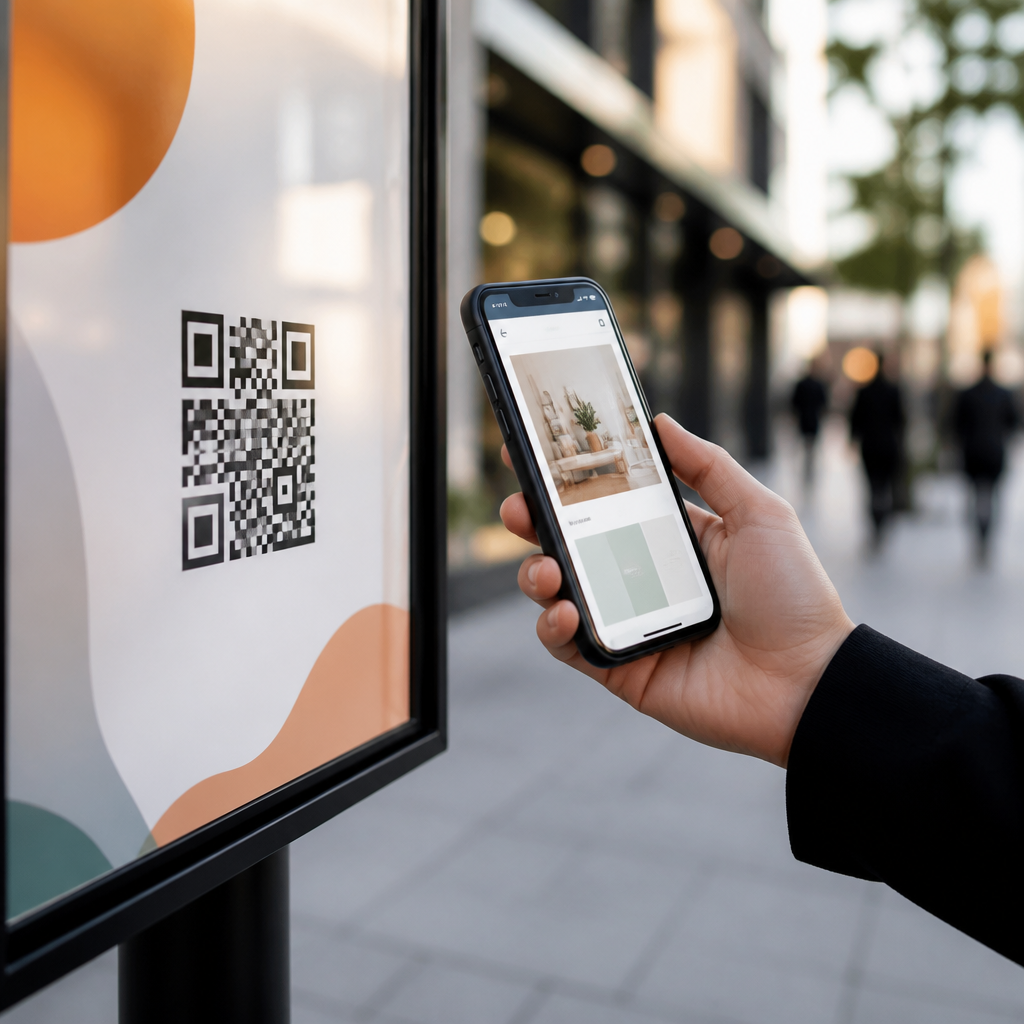
Customer decision-making is rarely a single moment. It is a sequence of micro-decisions: notice, trust, explore, compare, commit, and return. QR codes influence each of those steps by placing a clear action in context. In the awareness stage, a code on out-of-home advertising can move someone from passive exposure to active curiosity. A fitness studio poster in an office elevator might link to a class schedule with a first-visit offer. The scan turns a general impression into a measurable session. In the consideration stage, the same mechanism can answer objections. A cosmetics brand can place codes on shelf talkers linking to ingredient sourcing, dermatologist testing, or shade-match tools. That content helps customers compare options without needing staff assistance.
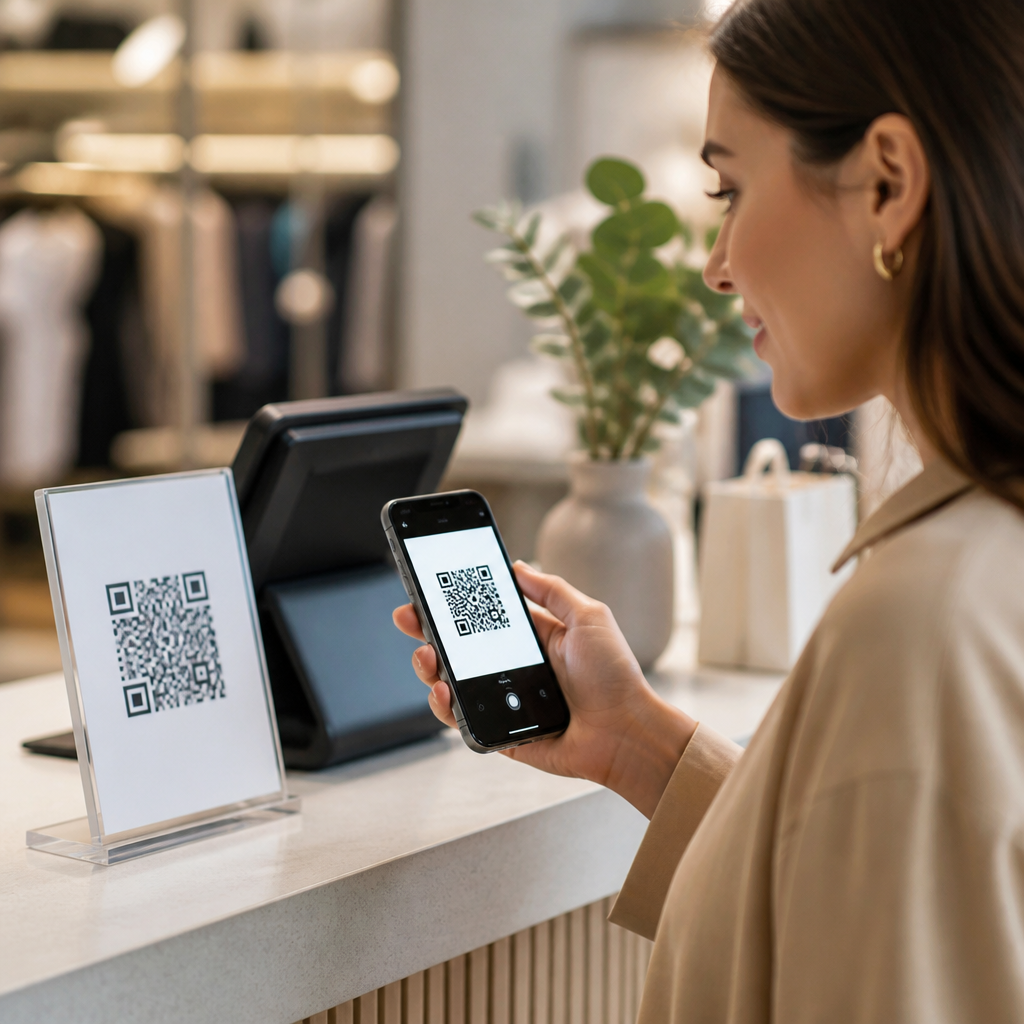
At purchase, QR codes can simplify checkout, unlock limited-time bundles, or route a shopper to inventory not available in-store. I have seen apparel retailers use fitting room signage with QR codes that open alternate sizes, style recommendations, and “buy now, ship home” options. That reduces abandonment caused by missing stock. After purchase, the role becomes even more strategic. A code on packaging can route buyers to setup guides, warranty registration, loyalty enrollment, or care instructions. This directly affects satisfaction and repeat purchase because customers receive help when they are most motivated to use the product correctly. In advocacy, codes can guide customers to referral programs, review requests, or user-generated content campaigns. The code is not just a link. It is a prompt timed to a specific decision state.
What makes QR codes effective here is contextual relevance. The same code design used everywhere will underperform because customer intent changes by location and stage. A person scanning a code on product packaging wants different information than a person scanning one at a trade show booth. Journey mapping forces teams to match destination, message, and call to action to actual needs. This is why high-performing campaigns often create multiple codes for one product line rather than one generic URL. Distinct codes reveal where decisions accelerate and where confusion appears.
Building a QR Code Customer Journey Map That Reflects Real Behavior
A useful customer journey map with QR codes starts with observed behavior, not assumptions. Begin by defining personas based on actual audience segments: first-time shoppers, repeat buyers, price-sensitive visitors, high-consideration researchers, channel partners, or service users. Then document the stages they pass through and the questions they ask at each one. For example, a home appliance buyer may move from “Which model fits my space?” to “Can I trust this brand?” to “Is there an installation guide?” Each question can be supported by a distinct QR touchpoint. In practice, that means mapping where the code appears, what the user expects after scanning, what content appears first, and what measurable action should happen next.
The most important operational step is aligning touchpoints to intent. Packaging, shelf displays, direct mail, receipts, event badges, storefront windows, brochures, invoices, and product manuals all create different scan motivations. A code on a direct mail piece typically needs a short path to a personalized offer or booking page because the user is responding to a campaign prompt. A code on a product manual should prioritize support content, troubleshooting, and registration. If both routes land on a generic homepage, the journey map has failed. Good mapping treats every scan location as a behavioral signal.
Use dynamic QR codes rather than static ones for most marketing applications. Dynamic codes let you change the destination without reprinting materials, append UTM parameters for analytics, and segment scan behavior by asset, geography, and time period. Platforms such as Bitly, QR Code Generator PRO, Beaconstac, and Flowcode provide scan dashboards, device data, and campaign management features. Combined with Google Analytics 4, CRM systems like HubSpot or Salesforce, and call tracking or point-of-sale data, you can see whether a scan led to a form fill, coupon redemption, purchase, support ticket reduction, or review submission. That visibility is what transforms QR codes from a tactical add-on into a strategic journey mapping tool.
Touchpoints, Intent, and Recommended QR Experiences
The table below shows how the same customer can encounter different QR code experiences across a journey and why each one influences a different decision. This structure is how I typically brief designers, paid media teams, retail operators, and sales stakeholders before launch.
| Journey Stage | Physical or Hybrid Touchpoint | Customer Intent | Best QR Destination | Primary KPI |
|---|---|---|---|---|
| Awareness | Poster, packaging teaser, event signage | Learn what the brand or product is | Short landing page with value proposition and proof | Scan-through rate, engaged sessions |
| Consideration | Shelf display, brochure, catalog, sales deck | Compare features and reduce risk | Comparison guide, video demo, FAQs, testimonials | Time on page, product detail views |
| Purchase | In-store display, fitting room, checkout counter | Complete purchase with less friction | Coupon, mobile cart, financing options, stock lookup | Conversion rate, average order value |
| Onboarding | Packaging insert, receipt, welcome email | Set up and use the product correctly | Setup guide, app download, registration form | Registrations, support deflection |
| Loyalty | Product label, membership card, service follow-up | Get ongoing value and rewards | Loyalty sign-up, replenishment offer, exclusive content | Repeat purchase rate, enrollments |
| Advocacy | Thank-you card, event handout, service completion note | Share feedback or refer others | Review request, referral page, social share prompt | Reviews, referrals, user-generated content |
When teams use a structure like this, decision-making becomes easier because every code has a defined job. It also prevents a common mistake: overloading one destination with too many actions. Customers usually scan for one immediate reason. Give them that first, then introduce secondary pathways after the primary need is satisfied.
Why QR Codes Change Behavior: Psychology, Friction, and Trust
QR codes influence decisions because they compress effort at a moment of interest. Behavioral science offers a clear explanation. When motivation is present, reducing even small amounts of friction can increase the likelihood of action. A code removes the need to type a long URL, search for a product name, or remember an offer. That convenience matters most in environments where attention is brief, such as retail aisles, transit stations, trade show floors, and packaging interactions at home. The simpler next step feels, the more likely customers are to take it.
Trust is the second major factor. People decide quickly whether a scan appears safe and worthwhile. Codes perform better when they are accompanied by clear copy explaining exactly what happens next, such as “Scan to compare plans,” “Scan for allergen details,” or “Scan to activate your warranty.” Branded landing pages, HTTPS security, mobile-optimized load times, and recognizable domains reduce hesitation. By contrast, unlabeled codes often underperform because the user cannot predict the outcome. In sectors like healthcare and financial services, trust cues are even more critical because customers are weighing privacy, compliance, and accuracy along with convenience.
Social proof and loss aversion also play a role. If a QR destination includes verified reviews, user counts, before-and-after examples, or time-sensitive offers, customers gain reasons to continue. For instance, a winery tasting room can use a bottle tag QR code that opens food pairing notes, ratings, and a members-only shipping offer that expires that evening. The customer is not merely browsing; they are making a guided decision with evidence and urgency. Effective journey maps design for those psychological triggers without becoming manipulative.
Measurement, Optimization, and Common Mistakes
You cannot understand how QR codes influence customer decision-making without measurement. Start with baseline metrics: scans by asset, unique users, device type, time of day, bounce rate, completion rate, assisted conversions, and downstream revenue. Then connect those metrics to journey-stage goals. Awareness assets should be judged by qualified traffic and engagement, not immediate sales. Post-purchase assets should be judged by support deflection, product activation, retention, or review volume. If every code is judged only on last-click purchase, teams will underinvest in touchpoints that genuinely influence decisions earlier or later in the journey.
Optimization should happen on both sides of the scan. On the physical side, test placement, size, color contrast, surrounding copy, and incentive clarity. A code placed below the fold on a crowded sign will get ignored regardless of offer quality. On the digital side, test page speed, message match, form length, and first-screen clarity. In one campaign I managed for a multi-location service brand, simply replacing a generic mobile page with a location-aware booking page increased appointment completions because users did not have to search again after scanning. The lesson was not that QR codes magically improved performance. It was that relevance after the scan determined whether motivation translated into action.
Common mistakes are predictable. Businesses often send all scans to the homepage, fail to track campaigns with UTM parameters, print static codes before validating destinations, neglect accessibility and mobile speed, or place codes where connectivity is weak. Another mistake is offering no reason to scan. “Scan me” is not a value proposition. Tell the customer what benefit they will receive now. Finally, do not ignore maintenance. Expired offers, broken pages, and outdated product information quickly erode trust and can damage future scan behavior across the brand.
Industry Examples and Strategic Applications
Different industries use QR code journey mapping in distinct ways because decision cycles differ. In retail, shelf-edge QR codes support comparison shopping, style inspiration, ingredient transparency, and endless-aisle purchasing. In restaurants, table tents and packaging inserts guide diners to nutritional details, loyalty programs, reorder flows, and feedback forms. In real estate, codes on signage can link directly to virtual tours, mortgage calculators, and agent scheduling pages, helping prospects move from curiosity to appointment in seconds. In B2B events, badge scans and booth QR codes can segment visitors by product interest, route them to case studies, and trigger tailored follow-up sequences in marketing automation platforms.
Healthcare offers a strong example of decision-sensitive design. A clinic can place QR codes in waiting rooms that link to intake forms, service explanations, prescription education, and post-visit care instructions. Each destination supports a different decision: complete paperwork, understand treatment, comply with medication guidance, or book follow-up care. In manufacturing and field service, codes attached to equipment can bring technicians to maintenance logs, parts diagrams, and safety procedures, reducing downtime and decision errors. Across these examples, the principle remains the same: the code is valuable only when it removes uncertainty at the exact point it appears.
For a sub-pillar hub on QR codes in marketing strategy, the practical takeaway is that customer journey mapping with QR codes should connect creative, operations, analytics, and lifecycle marketing. The best programs do not treat QR as a design embellishment. They treat it as an orchestrated pathway between touchpoint and intent. Map every stage, give every code a clear job, measure the result, and refine the experience continuously. When you do that, QR codes stop being passive links and start becoming active tools for shaping customer decisions. Review your current touchpoints, identify the moments where customers hesitate, and build QR experiences that answer the next question before they ask it.
Frequently Asked Questions
1. How do QR codes influence customer decision-making during the buying journey?
QR codes influence customer decision-making by reducing the friction between interest and action. When a person sees a product display, package, flyer, menu, sign, or in-store promotion, a QR code gives them an immediate path to more information without requiring them to search manually. That speed matters because many buying decisions are made in the moment, and even small obstacles can cause hesitation or abandonment. By connecting a physical touchpoint to a landing page, demo video, comparison chart, customer reviews, discount offer, or payment screen, a QR code helps move a customer from curiosity to confidence more efficiently.
They also shape decisions by improving context. A customer standing in front of a product often wants very specific information: price, features, ingredients, setup instructions, warranty details, social proof, or a limited-time offer. A well-placed QR code delivers that information at the exact moment it is most relevant. Instead of forcing a customer to wait, ask for help, or leave the experience to look things up elsewhere, the brand can guide the next step directly. That ability to support real-time decision-making is one reason QR codes have become so valuable in customer journey mapping and conversion strategy.
In addition, QR codes create a measurable connection between offline and online behavior. Marketers can track where the scan happened, what content was viewed, and whether the user took a follow-up action such as signing up, purchasing, downloading, or requesting more information. This reveals where customer intent is strongest and where extra support is needed. In practical terms, QR codes do not just influence decisions by offering information; they help brands learn which touchpoints actually drive those decisions and refine the journey accordingly.
2. Why are QR codes so effective at connecting physical marketing to digital customer actions?
QR codes are effective because they act as a simple bridge between the physical environment and a digital experience. Traditional physical marketing materials like packaging, posters, shelf tags, direct mail, event signage, and print ads can attract attention, but they often struggle to capture intent in a measurable way. A QR code changes that by turning a passive piece of media into an interactive entry point. With one scan, a customer can be taken directly to a targeted destination designed for the exact campaign, product, location, or audience segment.
This direct connection is powerful because it shortens the path to action. Instead of expecting the customer to remember a website address, search for a product later, or manually enter a promo code, the QR code takes them immediately where the brand wants them to go. That could be a product explainer, a booking form, a coupon redemption page, an app install prompt, a loyalty sign-up, or a checkout experience. The fewer steps involved, the more likely the customer is to continue engaging. In customer decision-making, convenience often has a major influence, and QR codes are built around convenience.
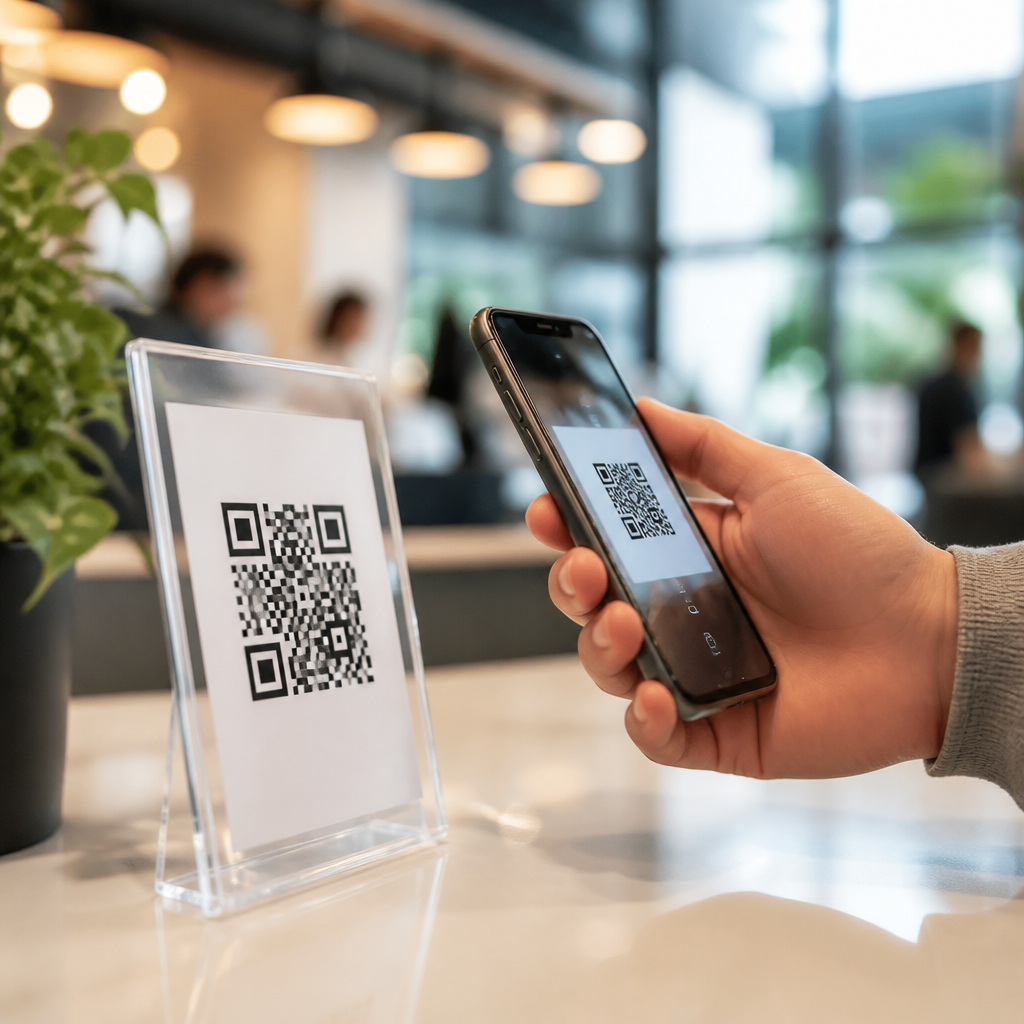
They are also effective because they allow brands to tailor digital experiences to physical context. A QR code on a retail shelf can lead to buying guides, while one on product packaging can direct customers to support content, recipes, refill subscriptions, or review requests. A code at an event can open registration details or post-event follow-up. This means marketers can align the message with where the customer is in the journey. Rather than treating all traffic the same, QR codes help brands create context-aware experiences that better support trust, clarity, and conversion.
3. What types of content should a QR code lead to if the goal is to improve conversions?
The best QR code destination depends on the customer’s stage in the journey, but the general rule is simple: the content should answer the question the customer is most likely asking at that moment. If the customer is in the awareness stage, educational content such as a short explainer video, product overview, or brand story may be most effective. If they are evaluating options, comparison charts, testimonials, case studies, product specs, FAQs, or reviews can provide reassurance. If they are close to purchasing, a coupon, checkout link, payment screen, booking form, or store locator may work better. Matching the destination to intent is what makes QR code campaigns convert well.
High-converting QR experiences are usually mobile-friendly, fast-loading, and highly focused. A customer who scans from a physical touchpoint is often looking for quick clarity, not a complicated navigation experience. That means the landing page should be optimized for smartphones, have a clear headline, minimal distractions, and one strong call to action. If the page feels generic or forces users to hunt for information, the momentum created by the scan can be lost. The QR code itself may succeed in getting attention, but the destination determines whether that attention turns into a decision.
It is also smart to use QR codes for content that increases trust and lowers perceived risk. Reviews, user-generated content, setup tutorials, ingredient sourcing details, before-and-after examples, return policy explanations, and transparent pricing all help customers feel more secure. For many buyers, the final decision depends less on excitement and more on confidence. A QR code that leads to proof, clarity, and reassurance can be much more persuasive than one that simply pushes a sales message. In that sense, the strongest QR code content does not just attract clicks; it helps customers feel ready to act.
4. How can businesses use QR codes to map and understand customer behavior more accurately?
Businesses can use QR codes as trackable markers throughout the customer journey, allowing them to see how people move from offline exposure to online engagement. Each QR code can be tied to a specific location, channel, campaign, product category, packaging variation, event asset, or stage in the funnel. For example, a company might place different codes on window signage, in-store displays, printed brochures, shipping inserts, and product packaging. By comparing scan data across those touchpoints, marketers can identify where interest begins, which moments trigger deeper engagement, and which assets produce the strongest follow-up actions.
This data becomes especially valuable when combined with landing page analytics, conversion tracking, and customer relationship systems. A scan alone tells part of the story, but when paired with metrics like bounce rate, time on page, purchases, form completions, coupon redemptions, app downloads, and repeat visits, it becomes much easier to understand intent and drop-off points. Businesses can then map not just where customers encounter the brand, but how those encounters influence the next decision. That leads to stronger customer journey maps, better attribution, and more informed decisions about where to invest marketing resources.
QR codes also help reveal behavioral differences across contexts. The same offer may perform differently on packaging than on a countertop display, or at a trade show versus a direct mail piece. Because the code can identify the source, businesses can test messaging, creative, incentives, and placement with more precision. Over time, this creates a clearer picture of how real customers behave in real environments. Instead of guessing how physical marketing affects digital outcomes, brands can measure it. That ability to connect touchpoint-level behavior to decision-making is one of the most practical reasons QR codes have become important in modern analytics and experience design.
5. What are the biggest mistakes to avoid when using QR codes to influence customer decisions?
One of the biggest mistakes is sending users to a weak or irrelevant destination. A QR code creates expectation: the customer assumes the scan will deliver something useful, timely, and easy to access. If the code leads to a generic homepage, outdated page, broken link, slow-loading experience, or content that does not match the surrounding message, trust drops immediately. Instead of helping the decision process, the QR code creates frustration. The destination should always feel like a natural continuation of the physical touchpoint and should make the next step obvious.
Another common mistake is failing to consider user intent and environment. Someone scanning a code in a store aisle, on a poster in transit, or from product packaging at home may have very different needs. If businesses use the same QR destination everywhere without thinking about context, they miss an opportunity to guide the decision more effectively. Poor placement, small code size, low contrast, weak calls to action, or lack of explanation about what the customer will get after scanning can also reduce performance. People are far more likely to scan when the benefit is clear, such as “See customer reviews,” “Watch how it works,” or “Get 15% off now.”
A third major mistake is ignoring measurement and optimization. Some companies add QR codes because they seem modern, but they do not track scans, test destinations, or evaluate downstream conversions. Without analytics, it is difficult to know whether the code is influencing decisions or simply being ignored. Strong QR code strategy involves testing different offers, placements, messages, and page formats to learn what actually moves customers forward. In other words, a QR code should not be treated as decoration. It is a decision tool, and like any marketing tool, it performs best when it is aligned with customer needs, built for mobile behavior, and continuously improved based on data.