QR codes have evolved from simple inventory labels into one of the most flexible tools in modern marketing, especially when brands use them across the full customer journey. In practical terms, customer journey mapping with QR codes means placing scannable touchpoints at the right moments to move people from awareness to consideration to conversion, while measuring what happens at each step. That approach matters because today’s buyers switch constantly between physical and digital environments. They see packaging on a store shelf, read reviews on a phone, compare prices on social media, and complete a purchase on a website or in an app. A QR code can connect those moments cleanly, but only when it is mapped to intent, context, and a specific next action.
A customer journey map is a structured view of how a person discovers, evaluates, and buys from a brand, then returns for support or repeat purchase. Marketers usually break the journey into stages, but for this hub article the focus is the three stages that drive campaign design: awareness, consideration, and conversion. Awareness is when someone first notices a product, service, or message. Consideration is when that person actively seeks more information and compares options. Conversion is when the user takes a measurable action such as purchasing, booking, subscribing, downloading, or requesting a demo. QR codes work well here because they reduce friction. A scan is faster than typing a long URL, searching for a brand name, or navigating a menu structure from scratch.
I have implemented QR code programs for retail displays, direct mail, events, restaurant ordering, product packaging, and B2B sales collateral, and the same lesson appears every time: the code itself is not the strategy. The strategy is the journey design behind it. A code placed on a flyer without a clear value exchange underperforms. A code tied to a relevant landing page, a campaign-specific offer, and a measurable funnel step can outperform more expensive channels because it captures intent in the moment it appears. Dynamic QR platforms such as Bitly, QR Code Generator, Beaconstac, and Flowcode make this measurable by allowing destination changes, scan analytics, device breakdowns, and campaign tagging through UTM parameters tied to analytics platforms.
This article serves as the hub for customer journey mapping with QR codes within a broader marketing strategy. It explains how to match QR code placements to audience intent, how to build stage-specific destinations, which metrics matter, and where teams often make mistakes. It also connects the topic to practical campaign planning. If a brand wants shelf talkers to educate first-time shoppers, brochures to support comparison, and checkout prompts to trigger purchase, each code needs different creative, landing-page content, and success criteria. Done well, QR codes become a bridge between offline exposure and digital action, helping teams attribute performance more accurately while improving customer experience at the same time.
Why customer journey mapping changes QR code performance
Customer journey mapping improves QR code performance because it aligns the scan prompt with the user’s immediate question. At awareness stage, the question is usually, “What is this?” or “Why should I care?” At consideration stage, it becomes, “Is this right for me?” At conversion stage, it is, “How do I buy now with the least friction?” When marketers ignore those differences, they send every scanner to the same generic homepage and lose momentum. When they respect them, scan-through rates, landing-page engagement, and conversion rates improve because the destination fits the motivation that triggered the scan.
Consider a consumer packaged goods brand launching a new electrolyte drink. A QR code on out-of-home advertising should not lead to an ecommerce cart immediately. A better awareness destination would be a mobile page explaining the product benefit, flavor lineup, retail availability, and a short brand video. The same brand can place a different QR code on in-store displays that opens comparison content, ingredient details, reviews, or athlete testimonials for shoppers evaluating alternatives. On the package itself, a third code can lead to a coupon, retailer locator, subscribe-and-save option, or loyalty signup to support conversion. Same product, different moments, different information needs.
Journey mapping also helps teams coordinate channels. QR codes often appear in places that do not belong to one department alone: trade marketing owns packaging, brand teams own creative, ecommerce owns the product page, analytics owns reporting, and retail partners may control in-store signage. A journey map provides a shared framework for who the customer is, what they need next, and how each touchpoint contributes. In practice, this reduces fragmented experiences like event signage leading to a desktop PDF, print ads linking to pages with no mobile optimization, or product labels opening content blocked by regional redirects. The map forces operational discipline.
Using QR codes at the awareness stage
Awareness-stage QR codes should educate quickly and create enough interest for a second interaction. The best destinations are lightweight, mobile-first, and focused on one message. That may include a brand story, product explainer, short-form video, store locator, campaign landing page, or social follow page. For awareness, success is not measured only by immediate sales. Better indicators include scan rate by impression source, unique visitors, time on page, video completion, email opt-ins, and retargetable audience growth.
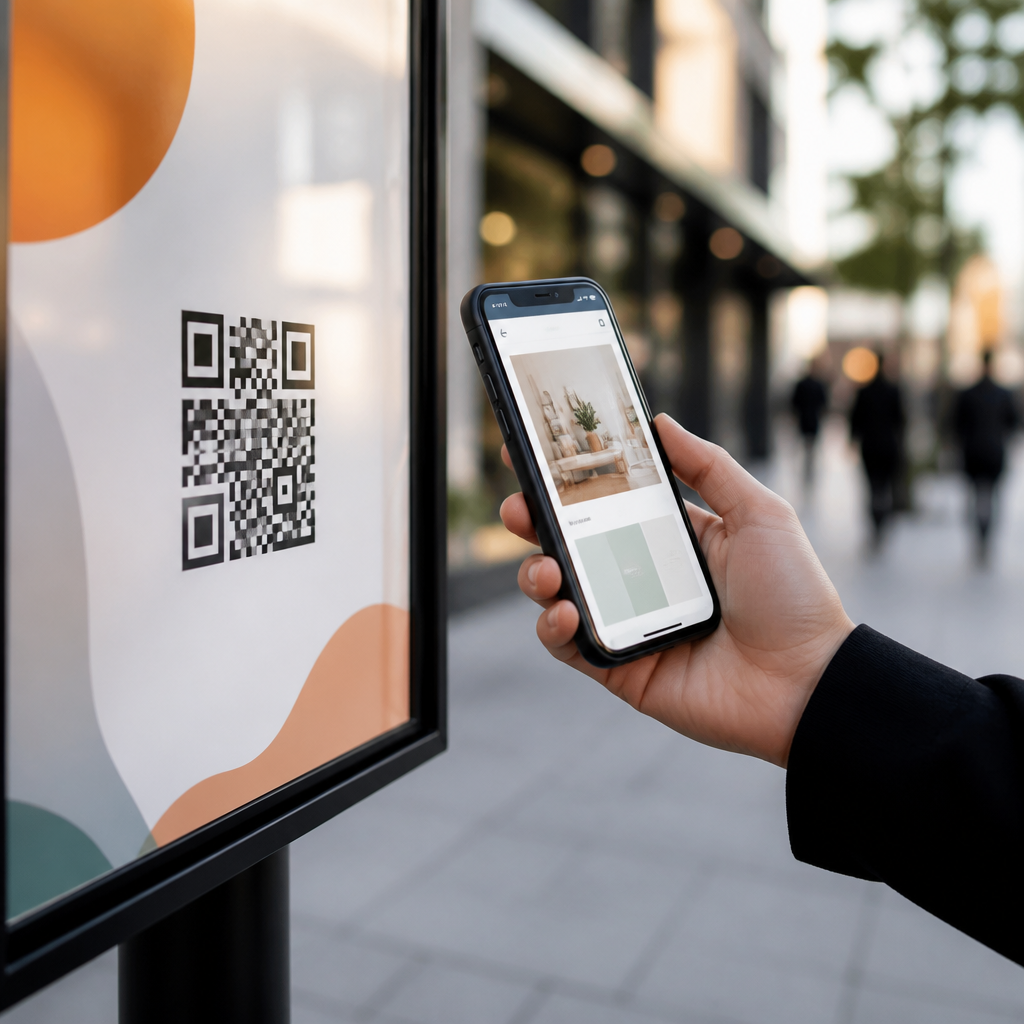
Placement matters as much as content. In my campaigns, awareness-stage scans performed best when the code appeared in environments where the audience had a few seconds and a reason to pause: transit posters, waiting rooms, conference booths, tabletop displays, product endcaps, and direct mail. A code on a fast-moving roadside billboard can work only if the audience can scan safely from a stationary position, such as parking lots or traffic queues; otherwise recall advertising is more realistic than scan behavior. Good execution includes a visible call to action such as “See how it works,” “Watch the 30-second demo,” or “Find a store near you.”
Awareness QR codes also benefit from campaign segmentation. If a restaurant chain runs city-specific posters, each city should use a unique dynamic code tied to a localized destination. If a university promotes applications across undergraduate, graduate, and continuing education audiences, each segment should receive a tailored code and page. This is where UTM governance matters. Standardized source, medium, campaign, and content naming conventions allow clear reporting in Google Analytics 4, Adobe Analytics, or another measurement stack. Without clean taxonomy, scans become traffic noise instead of actionable insight.
Using QR codes at the consideration stage
Consideration-stage QR codes serve users who are actively comparing choices. Here, the content should reduce uncertainty with proof, detail, and clarity. Effective destinations include product comparison tables, case studies, FAQs, interactive demos, spec sheets formatted for mobile, pricing explainers, customer testimonials, review aggregation, menu nutrition pages, or appointment scheduling for consultations. The key is to answer the next logical question completely so the user does not need to leave and search elsewhere.
This stage is especially powerful in retail and B2B environments. In a store, a QR code on shelf signage can open side-by-side comparisons between models, showing battery life, dimensions, warranty, and compatibility. That approach is common in consumer electronics because shoppers often want deeper information than packaging can hold. In B2B, a code on a trade-show display or printed leave-behind can open an industry-specific landing page with a short explainer, downloadable technical documentation, and a calendar booking option. The scan converts attention into a qualified evaluation session rather than a vague brand impression.
Trust signals matter more in consideration than in awareness. If the destination page contains unsupported claims, thin copy, or hidden pricing, the code creates skepticism instead of confidence. Strong pages cite recognized standards where relevant, such as GS1 for barcode and product identification contexts, WCAG principles for accessible mobile experiences, or platform certifications for payment and security workflows. They also surface specifics: verified reviews, performance data, warranty terms, ingredient sourcing, or implementation timelines. A home services company, for example, can use a yard-sign QR code to route visitors to before-and-after project galleries, licensing information, financing options, and neighborhood-specific testimonials.
| Journey stage | Primary customer question | Best QR code destination | Core metrics |
|---|---|---|---|
| Awareness | What is this and why should I care? | Explainer page, brand video, store locator | Scan rate, unique visits, engagement time |
| Consideration | Is this the right option for me? | Comparison page, FAQ, reviews, case study | Return visits, content depth, lead actions |
| Conversion | How do I act now with minimal friction? | Product page, booking form, coupon, checkout | Sales, form completion, coupon redemption |
Using QR codes at the conversion stage
Conversion-stage QR codes should remove steps between intent and action. The destination is usually a product detail page, prefilled cart, checkout flow, booking form, app deep link, coupon wallet pass, donation page, or click-to-call screen. The shorter the path, the better. If a user scans from packaging after deciding to reorder, sending them to a generic home page wastes intent. Deep linking to the exact SKU, subscription option, or retailer checkout improves results because it preserves momentum.
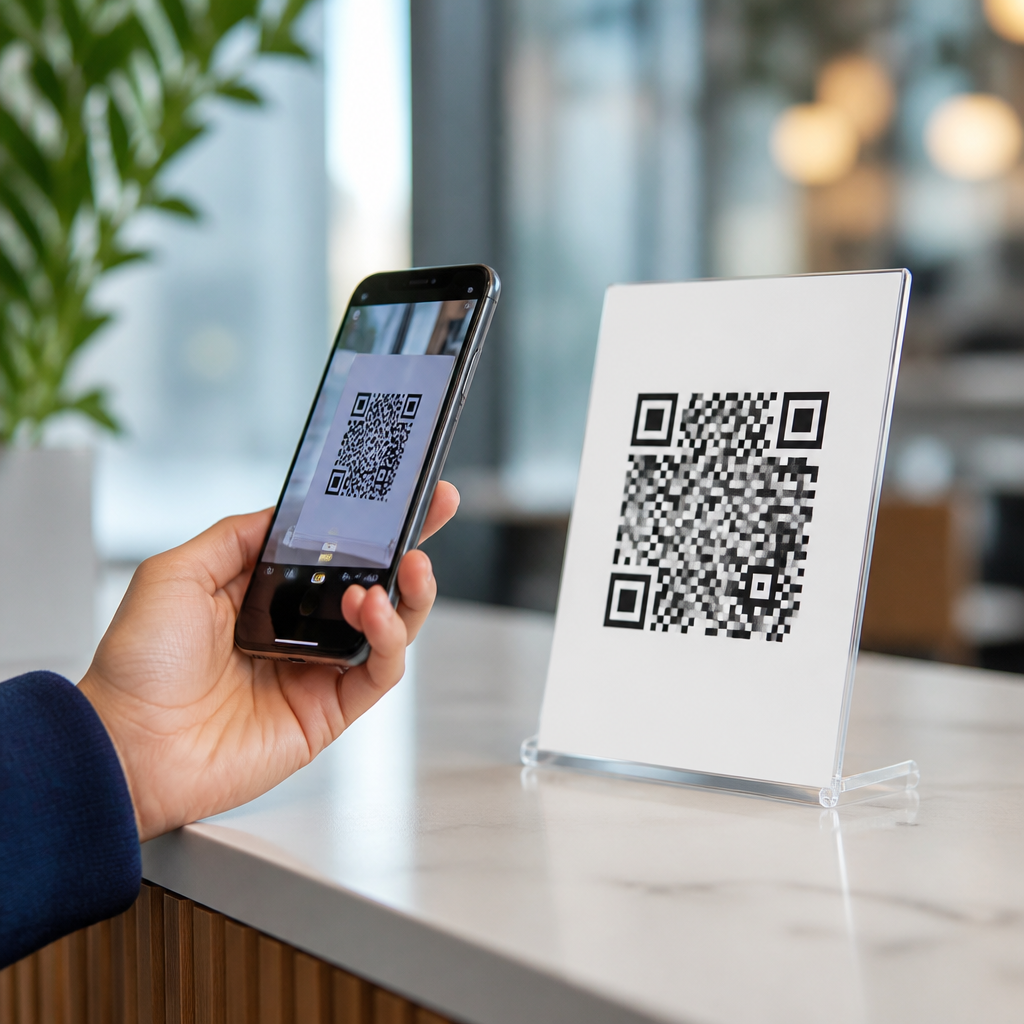
Physical environments create strong conversion opportunities because the scan happens close to decision time. Restaurant table tents that open the menu and ordering flow, event badges that enable instant lead capture, real estate signs that launch property details with tour booking, and direct mail pieces with personalized landing pages all work because they connect immediate interest to a simple action. In each of these cases, speed, mobile optimization, and trust are decisive. Form fields should be minimized, promo codes should auto-apply where possible, and page load times should stay low. Google’s Core Web Vitals are not just technical benchmarks here; they directly affect abandoned sessions.
Conversion strategy also requires attribution discipline. A QR code can influence revenue without being the final click, so teams should measure direct conversions and assisted conversions. In analytics, that means reviewing path reports, coupon redemptions, CRM source fields, and offline-to-online matchbacks where possible. Dynamic codes are essential because they allow testing and iteration without reprinting materials. If one packaging code drives low checkout completion, marketers can swap the destination to a retailer selector, one-click reorder page, or a simpler offer and compare outcomes quickly.
Measurement, governance, and optimization across the funnel
The most successful QR code programs treat measurement as part of campaign architecture, not an afterthought. Start with a destination strategy for each stage, then define the event model. At minimum, track scans, sessions, landing-page engagement, downstream clicks, conversions, and revenue or lead value. Where privacy rules and platform limits apply, use consent-aware analytics and first-party CRM capture. Geographic patterns, time-of-day trends, device types, and new-versus-returning visitor ratios often reveal placement quality and audience intent. For example, if conference booth scans spike during keynote breaks but booking rates stay low, the landing page may need a clearer post-event follow-up path.
Governance keeps the system usable at scale. Every QR code should have an owner, a documented destination, a campaign tag structure, an expiration review date, and a testing checklist. Before launch, teams should verify iOS and Android behavior, redirect speed, app deep links, accessibility of the destination, print contrast, minimum code size, and scan reliability under likely lighting conditions. ISO/IEC standards govern QR symbol quality, and while marketers do not need to become print engineers, they should work with production teams to avoid low-contrast colors, distorted logos, or placement on curved surfaces that hurt scan accuracy. The technical details affect campaign economics.
Optimization should follow a simple loop: hypothesize, test, measure, refine. Test calls to action, page layouts, offer framing, code placement height, surrounding copy, and destination type. In stores, I have seen a one-line CTA change scan volume dramatically because it clarified the payoff. “Scan for details” is weaker than “Scan to compare models in 30 seconds.” Similarly, consideration pages with anchored FAQ navigation often outperform long unstructured pages because they reduce cognitive load. Over time, the accumulated learning becomes a reusable playbook for future launches.
Common mistakes and how to build a durable hub strategy
The most common QR code mistake is using one destination for every journey stage. The second is offering no reason to scan. Others include poor mobile pages, no analytics tagging, static codes that cannot be updated, weak print execution, and codes that lead to content unavailable in the user’s region. Another frequent issue is sending users to app stores when a mobile web experience would complete the task faster. For many campaigns, forcing an app download introduces unnecessary friction unless the app itself is central to fulfillment, such as loyalty, ticketing, or authenticated account actions.
As a hub within the broader topic of QR codes in marketing strategy, this page should anchor related content around packaging QR codes, direct mail QR campaigns, event QR lead capture, retail signage optimization, QR code analytics, dynamic versus static QR codes, and mobile landing page design. Internal linking across those deeper articles helps users explore by use case while reinforcing the logic of journey-based planning. The durable principle is simple: map each code to a stage, match the destination to intent, and measure performance against a clear business outcome. When brands do that consistently, QR codes stop being decorative add-ons and become reliable connectors between physical touchpoints and digital results.
QR codes for awareness, consideration, and conversion work best when they are planned as journey tools rather than isolated tactics. Awareness codes introduce value, consideration codes answer objections, and conversion codes remove friction at the moment of intent. That structure gives teams a practical framework for deciding where to place codes, what content to open, and which metrics define success. It also improves collaboration across brand, retail, ecommerce, analytics, and sales teams because every touchpoint has a defined role in moving the customer forward.
The main benefit of customer journey mapping with QR codes is precision. Instead of asking one generic code to do everything, marketers create stage-specific experiences that fit how people actually buy. That means clearer messaging, stronger attribution, better mobile usability, and more efficient spend across print, packaging, events, and in-store media. It also creates a foundation for testing. Once scans are connected to intent and outcomes, teams can optimize placements, offers, and destinations with evidence rather than assumptions.
If you are building or auditing a QR code program, start by listing every current code and assigning it to awareness, consideration, or conversion. Then review whether the destination truly answers the user’s next question, whether the page is mobile-ready, and whether analytics can capture meaningful outcomes. That one exercise usually exposes the biggest gaps quickly. From there, expand into linked subtopics and turn each scan point into a measurable step in your marketing strategy.
Frequently Asked Questions
How can QR codes support every stage of the customer journey, from awareness to conversion?
QR codes are especially effective because they can connect physical and digital experiences at each point in the customer journey. At the awareness stage, brands can place QR codes on posters, packaging, event signage, direct mail, storefronts, and out-of-home advertising to introduce people to a product, service, or campaign. In that role, the code acts as a low-friction gateway to a landing page, brand video, social content, or educational resource that expands on the first impression. Instead of asking someone to remember a URL or search later, the QR code creates an immediate next step while interest is still high.
During the consideration stage, QR codes can help answer questions and reduce hesitation. A shopper standing in a store aisle might scan a code to compare product features, read reviews, watch a demo, explore case studies, or see how the offering fits their needs. This is where QR codes become more than a convenience; they become tools for guiding decision-making. The same principle applies in B2B marketing, trade shows, and service industries, where scans can lead to product specifications, pricing guides, consultation forms, or proof-of-performance content.
At the conversion stage, QR codes can move the customer directly into action. A code might open a checkout page, claim a limited-time offer, start a free trial, book an appointment, download an app, or trigger a lead form. Because the experience is instant and trackable, marketers can see which placements and messages lead to real business outcomes. When used strategically across all three stages, QR codes create a measurable path that helps brands attract attention, nurture interest, and make it easier for people to convert.
What types of QR code destinations work best for awareness, consideration, and conversion campaigns?
The best destination depends on what the customer needs at that moment. For awareness campaigns, the destination should be fast, simple, and engaging. That often means a mobile-optimized landing page with a clear brand message, a short video, an interactive campaign experience, or a social media destination that encourages ongoing engagement. At this stage, the goal is not usually to demand a major commitment. It is to make the first interaction easy and memorable while giving the user a reason to continue learning.
For consideration campaigns, the destination should focus on education and confidence-building. That can include product comparison pages, testimonials, FAQs, use-case content, buying guides, reviews, demo videos, or downloadable resources. In a retail setting, this might mean helping shoppers understand ingredients, sourcing, sizing, compatibility, or product benefits. In a services context, it may mean linking to case studies, consultation pages, before-and-after examples, or detailed service explanations. The destination should anticipate objections and provide clarity without overwhelming the user.
For conversion campaigns, the destination should reduce friction and support immediate action. Strong examples include checkout pages, coupon redemption pages, lead capture forms, booking calendars, payment pages, app download links, event registration forms, and trial sign-up pages. The key is alignment between the QR code’s context and the destination’s purpose. If someone scans from product packaging, they may be ready for reordering or loyalty enrollment. If they scan from an in-store display, they may respond best to a promotional offer or product bundle. Effective QR code marketing works when the destination matches user intent at that specific stage of the journey.
How do brands measure the performance of QR codes across awareness, consideration, and conversion?
Measurement is one of the biggest advantages of using QR codes in customer journey mapping. At a basic level, brands can track scan volume, scan time, device type, and location data, depending on the platform and privacy framework in use. These metrics are especially useful for awareness campaigns because they show which physical placements, creative formats, and messages are generating initial engagement. For example, a brand can compare scans from packaging, print ads, in-store signage, and event booths to see where audience interest is strongest.
At the consideration stage, marketers should look beyond scans and focus on engagement metrics tied to the destination experience. This can include time on page, video completions, bounce rate, clicks to deeper content, product page views, form starts, and return visits. These indicators reveal whether the QR code is merely being scanned or actually helping move the prospect closer to a decision. If many users scan but quickly leave, the issue may not be the code placement itself but rather weak message alignment, slow page performance, or content that does not answer the customer’s questions.
For conversion, the most important metrics are outcomes such as purchases, bookings, lead submissions, app installs, coupon redemptions, and revenue attributed to each QR code touchpoint. Dynamic QR codes, campaign-specific URLs, UTM parameters, and analytics integrations make this much easier to manage. With the right setup, brands can identify which offline assets produce the highest-quality traffic and which journey stages need optimization. This turns QR codes from simple access tools into measurable marketing assets that support testing, attribution, and better budget decisions.
What are the best practices for placing QR codes so people actually scan them?
Successful QR code placement starts with context and intent. People are most likely to scan when the code appears at a moment that makes sense and offers an obvious benefit. That means placing codes where curiosity naturally occurs, such as on product packaging, shelf talkers, event materials, menus, brochures, windows, receipts, mailers, and ads with a clear call to action. If the customer has to guess why they should scan, response rates usually suffer. A short line of supporting copy such as “See how it works,” “Compare options,” “Get 10% off,” or “Book your demo” can dramatically improve performance.
Design and usability also matter. The QR code should be easy to see, large enough to scan from the expected distance, and printed with strong contrast. It should not be placed where lighting is poor, where curvature distorts the code, or where the user would need to stop in an unsafe or inconvenient location to scan. The destination page must be mobile-friendly, fast-loading, and directly relevant to the promise made next to the code. If users scan and land on a generic homepage, the experience often feels disconnected and underperforms.
Brands should also tailor placement by journey stage. Awareness placements tend to work best in high-visibility environments where quick engagement is possible. Consideration placements are strongest near points of evaluation, such as product shelves, catalogs, trade show booths, or sales collateral. Conversion placements perform best close to decision points, including checkout counters, limited-time displays, packaging inserts, and post-purchase materials. Testing different calls to action, creative treatments, and destinations helps refine what works. The most effective QR code programs are intentional, not decorative; every scan opportunity should serve a clear marketing purpose.
Why are QR codes especially valuable in a world where customers move between physical and digital channels?
Modern buyers rarely follow a straight path to purchase. They discover products in the physical world, research them online, revisit them on mobile, compare alternatives in-store, and sometimes complete the purchase later through a different channel. QR codes are valuable because they bridge these transitions without adding friction. They let a printed surface, package, display, or real-world environment become an interactive entry point into digital content. That makes them uniquely suited for omnichannel marketing, where continuity across touchpoints is essential.
From a customer experience standpoint, QR codes make action easier in the exact moment interest occurs. A person who sees a product at an event can scan for details immediately. A shopper comparing items on a shelf can access reviews and specifications on the spot. A customer who has already purchased can scan packaging for setup help, reordering, support, or loyalty rewards. In each case, the QR code removes the gap between offline exposure and online response, which is critical because many opportunities are lost when people have to remember a brand and look it up later.
From a marketing strategy standpoint, QR codes also give brands a practical way to connect offline media with digital measurement. Billboards, print campaigns, product packaging, and in-store signage have traditionally been harder to attribute than digital ads. QR codes help close that visibility gap by turning physical interactions into trackable events. When integrated thoughtfully into awareness, consideration, and conversion efforts, they help marketers deliver more relevant experiences, collect better performance data, and create a smoother journey for customers who expect brands to meet them seamlessly across channels.