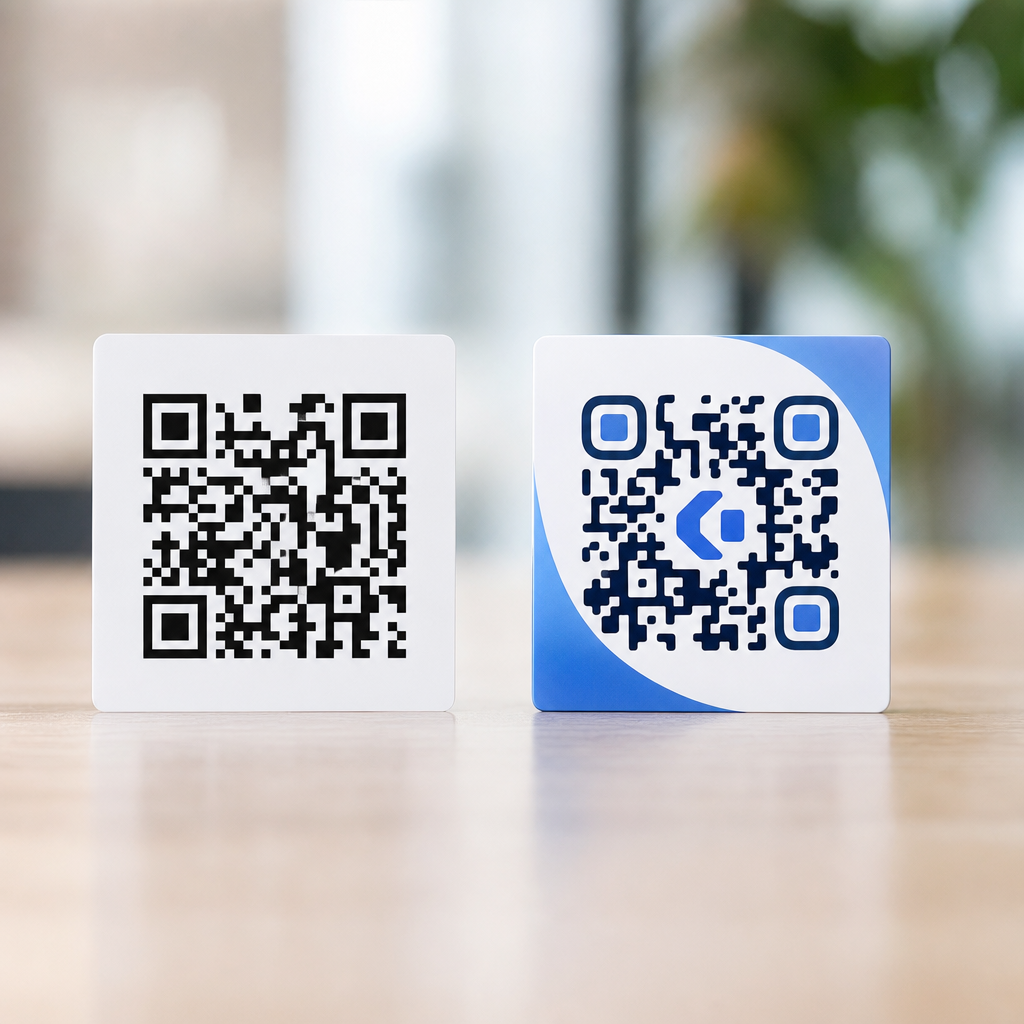
QR codes look simple, but the difference between a high-performing code and a failed scan usually comes down to design discipline. In my work reviewing printed packaging, retail signage, restaurant menus, event badges, and direct mail campaigns, I have seen the same pattern repeatedly: teams focus on making a QR code look branded before they make it reliably scannable. That tradeoff is costly because a QR code only creates value when it opens instantly, under real lighting, on average smartphone cameras, at imperfect angles, and from practical viewing distances.
Understanding the top QR code design mistakes to avoid starts with a clear definition of terms. A QR code is a two-dimensional matrix barcode that stores data in modules, the small square dots arranged in a grid. The three large squares in the corners are position markers that help a scanner orient the code. Quiet zone refers to the empty margin around the code, which scanners need to distinguish the symbol from surrounding graphics. Error correction is the built-in redundancy that allows a code to remain readable even if part of it is damaged or obscured. Static QR codes point directly to fixed data, while dynamic QR codes route through a short URL so the destination can be updated later and scan analytics can be tracked.
This topic matters because QR code design best practices affect conversion rates, customer trust, campaign measurement, and brand perception at the same time. A code that fails even occasionally can break a purchase journey, waste print spend, and make users hesitant to scan future codes. A code that works consistently can connect packaging to setup guides, menus to ordering flows, posters to ticket sales, and business cards to contact details without friction. As a hub for QR Code Design & Branding, this guide explains the common mistakes, why they happen, and how to avoid them so every supporting article in this subtopic has a practical foundation.
Prioritizing style over scan performance
The most common QR code design mistake is treating the symbol like a decorative graphic instead of a machine-readable interface. Marketing teams often round every module, replace square eyes with icons, add gradients, and cut out large portions for logos. Some customization is safe, but every visual change alters contrast, edge definition, and pattern recognition. The scanner does not care whether the code matches a campaign mood board; it cares whether finder patterns are distinct, modules are separated, and the overall shape remains predictable. If a design choice makes a code harder to decode on a midrange Android phone in low indoor light, it is a bad choice regardless of how polished it looks in a mockup.
A practical rule is to begin with a standard black-on-white code generated at the required destination URL, test it, and only then apply limited branding changes one variable at a time. Keep the three finder patterns visually obvious. Avoid artistic distortions that change module geometry too aggressively. If you add a logo, make it small and centered, and increase error correction deliberately rather than assuming the code will survive. I have found that design reviews improve when teams ask one direct question: would a first-time user standing three feet away scan this instantly without adjusting their phone twice? That benchmark is more useful than subjective feedback about whether the code feels on-brand.
Ignoring contrast, quiet zone, and size fundamentals
Most scan failures come from breaking three fundamentals: sufficient contrast, a proper quiet zone, and adequate physical size. Contrast should be strong enough that the dark modules are clearly darker than the background under mixed lighting. Dark code on a light background is the safest standard. Reversing the colors can work in some cases, but light modules on a dark field reduce reliability, especially when screens dim or glossy print reflects overhead light. Busy photographic backgrounds are another frequent problem because they reduce the scanner’s ability to isolate the grid. A clean background is not a design compromise; it is a technical requirement.
The quiet zone is equally important and often overlooked in layout. A QR code needs a clear border around all four sides, typically at least four modules wide, with no text, icons, borders, or patterns intruding. When designers place a code inside a sticker shape, over a textured package, or too close to a headline, the scanner can misread the edges. Physical size matters just as much. A common field rule is a minimum scan distance ratio of about 10:1, meaning a one-inch code is comfortable at roughly ten inches away, while larger distances require larger codes. On posters, shelf wobblers, transit ads, and trade show banners, undersized codes are a major source of failure because users naturally scan from where they are standing, not from where the designer imagined.
| Design factor | Common mistake | Best practice | Real-world example |
|---|---|---|---|
| Contrast | Using pastel modules on a light background | Use dark modules on a light, solid background | A cream box with charcoal code scans better than gold on beige |
| Quiet zone | Placing text or borders too close to the code | Leave at least four modules of empty space on all sides | A menu code inside a decorative frame often fails under dim lighting |
| Size | Printing a tiny code on a poster | Match code size to expected scanning distance | A bus shelter ad needs a much larger code than a product label |
| Background | Overlaying the code on photography | Use a plain, uncluttered background area | A fashion poster scans better with a white patch behind the code |
Using color, logos, and shapes without technical limits
Brand customization is valuable, but only when it respects the decoding mechanics of the symbol. The safest color strategy is simple: preserve high luminance contrast, not just aesthetic contrast. Two colors may look different to the eye yet appear too similar to a camera sensor after glare, motion blur, or low exposure. Metallic inks, neon hues, and transparent overlays are especially risky in print. On screens, animated backgrounds and dark mode treatments can interfere with readability. If your brand palette is light or muted, reserve those colors for the surrounding layout and keep the code itself dark enough to stand apart.
Logos require the same restraint. Many generators allow a logo in the center, but the acceptable size depends on data density and error correction level. Error correction levels L, M, Q, and H provide increasing redundancy, with H offering the greatest resilience but also increasing module complexity. That tradeoff matters: when you encode a long URL, add tracking parameters, and then place a large logo over the center, the code may become too dense for small-format printing. A better approach is to shorten the destination with a dynamic QR platform, keep the encoded payload lean, and then add a modest logo while maintaining generous size. Rounded modules and custom eye shapes can be effective, but they should be tested across iPhone and Android devices, older camera hardware, and both print and screen contexts before approval.
Choosing the wrong code type and overloading the payload
Another major mistake is selecting a static QR code when a dynamic QR code is the better operational choice, or stuffing too much data directly into the symbol. Static codes are useful for fixed information that will never change, such as a permanent Wi-Fi credential in a private setting or a simple text string. For marketing, packaging, menus, product documentation, real estate, events, and paid media, dynamic codes are usually superior because they allow destination edits, UTM tagging, scan analytics, A/B testing, and replacement of broken links without reprinting materials. When a campaign changes and the printed code cannot, teams discover too late that the lower upfront cost of static generation created a larger downstream cost.
Payload density affects usability more than many teams realize. Encoding a long URL with multiple parameters creates a more complex matrix with smaller modules, which raises the risk of scan failure at modest sizes. This is why reputable QR code platforms use short redirect domains behind the scenes. The code becomes cleaner, and the marketer still gets attribution data. The same principle applies to vCard, PDF, app store, and multi-link experiences. Keep the encoded data as concise as possible, and let the landing experience do the work. If the code must operate in offline or highly controlled environments, static data can make sense, but for most branded applications, dynamic codes provide the flexibility and measurement needed for effective campaign management.
Skipping real-world testing, context planning, and calls to action
A QR code is not finished when it scans once on the designer’s phone at full brightness. It is finished when it has passed real-world testing in the environment where users will encounter it. That means checking multiple devices, camera apps, lighting conditions, print finishes, and viewing angles. Gloss lamination can create glare. Curved bottles can distort the grid. Window decals can fail because reflections overpower contrast. Restaurant table tents may scan well at noon and poorly at dinner service. I always recommend printing prototypes at actual size and testing them from expected distances before final production. This simple step catches more failures than any discussion about aesthetics.
Context planning is just as important. Users need a reason to scan and confidence about what happens next. A code with no label forces people to guess whether it opens a menu, a video, a coupon, or a login page. A short call to action such as “Scan to view installation guide,” “Scan for ingredients and allergens,” or “Scan to claim 15% off” improves response because it sets expectation and value. Landing pages must also match the promise. Sending users to a generic homepage is a common conversion killer. The best QR experiences are specific, mobile optimized, fast loading, and directly tied to the moment of scan. Good design therefore includes not only the symbol itself but also placement, instruction, destination relevance, and post-scan performance.
Building a repeatable QR code design best practices workflow
The most reliable way to avoid QR code design mistakes is to standardize the workflow. Start by defining the use case, scan distance, surface, lighting environment, and success metric. Then choose dynamic or static based on whether the destination may change and whether analytics are needed. Generate the simplest possible code, protect contrast and quiet zone, size it for the environment, and apply branding conservatively. Test on current iPhone and Android devices, then test again after export, print proofing, and final placement. Document approved specifications so future campaigns do not repeat the same errors.
Teams that treat QR codes as a governed brand asset perform better than teams that recreate them ad hoc in every campaign. A simple internal checklist can cover minimum size by format, approved color combinations, logo limits, required call-to-action language, and landing page standards. Design systems should also include a fallback URL near the code for accessibility and resilience. If this article is your hub for QR Code Design Best Practices, use it as the baseline for every related topic in your content cluster, from branded QR code examples to packaging implementation and print production guidance. The main benefit is straightforward: when design choices support scan reliability first, branding works harder because more people actually reach the experience behind the code.
Audit your existing QR codes, fix the highest-risk issues, and create one tested standard your team can reuse everywhere.
Frequently Asked Questions
What is the most common QR code design mistake brands make?
The most common mistake is prioritizing visual branding over scan reliability. Many teams want the code to match their packaging, menu, poster, or mailer so closely that they start altering the fundamentals that make QR codes readable in the first place. They lighten the contrast, replace the square modules with decorative shapes, place the code on a busy background, or add a large logo without leaving enough error tolerance. On a desktop mockup, the result may look polished. In real-world use, it often fails the basic test: can an average person scan it quickly on an average smartphone under normal lighting conditions?
A high-performing QR code is not just a graphic element. It is a functional access point. If the code does not open instantly, the campaign loses momentum and trust. People rarely keep trying after a failed scan, especially in retail, hospitality, or event environments where attention is limited. The smartest approach is to treat branding as a secondary layer added only after the code has been proven readable at the intended size, distance, and print quality. In practice, that means keeping strong contrast, preserving the quiet zone, avoiding visual clutter, and testing the final version in realistic conditions before anything goes to print.
Why do some QR codes fail to scan even when they look clear and attractive?
Because visual appeal and machine readability are not the same thing. A QR code can look sharp to the human eye and still be difficult for a phone camera to interpret. Scanning depends on several technical factors working together: contrast between foreground and background, clean module edges, correct spacing around the code, sufficient size, and limited distortion. If any of those basics are compromised, the camera may struggle to detect the code structure, especially in low light, glare, motion, or at an angle.
This is why “pretty” QR codes often underperform. Designers may use dark green on black, metallic ink on reflective packaging, gradients that reduce edge definition, or textured backgrounds that interfere with the pattern. Even if the code is technically still present, the scanner may not lock onto it fast enough for a smooth user experience. Another hidden issue is production quality. A code that scans from a digital proof may become unreliable once printed on corrugated packaging, low-resolution labels, glossy table tents, or direct mail pieces with ink spread. The right standard is not whether the code scans once in ideal conditions, but whether it scans consistently across devices, angles, and environments.
How important are size, placement, and surrounding space in QR code design?
They are extremely important, and they are often underestimated. A QR code needs enough physical size to be captured clearly by a phone camera at the expected scanning distance. If the code is too small on a poster, shelf sign, badge, or product label, users must move closer or adjust repeatedly, which introduces friction. Even if the code eventually works, the experience feels unreliable. As a practical design rule, the farther away someone will scan, the larger the code should be. A code meant for hand-held packaging can be relatively small, while one intended for window signage, event displays, or out-of-home media must be scaled much larger.
Placement matters just as much as size. Codes placed on curved bottles, folded packaging edges, glossy surfaces, or visually crowded corners are harder to scan. A QR code should sit in a stable, flat, easy-to-find area where the user naturally looks and where the camera can capture it without distortion. Surrounding space is another critical factor. Every QR code needs a clear “quiet zone,” which is the empty margin around the code that helps scanners identify its boundaries. If text, icons, borders, or background patterns sit too close, scan performance drops. Good QR code placement is not about filling leftover space in a layout. It is about protecting functionality so the code remains obvious, isolated, and easy to capture.
Can adding a logo, colors, or custom styling make a QR code unusable?
Yes, it can, if customization is pushed too far or applied without testing. Custom QR codes can work very well, but only when the design respects the structure that scanners rely on. Problems begin when brands reduce contrast, alter the finder patterns too aggressively, round or reshape modules beyond recognition, or insert a logo that covers too much of the code. QR codes have some built-in error correction, which allows for a limited amount of visual modification, but that does not mean unlimited creative freedom. Every edit consumes margin for error.
Color choices are especially important. The safest configuration is a dark foreground on a light background. Reversing that relationship, using low-contrast brand colors, or applying gradients can make scanning inconsistent. Similarly, logos should be modest in size and placed in a way that does not interfere with key code regions. Decorative frames, shadows, and patterned fills can also weaken detection. If you want a branded QR code, the best practice is to start with a plain, highly scannable version, then introduce one customization at a time and test after each change. The goal is not to create the most artistic code possible. The goal is to create a code that still feels branded while scanning instantly in real-world conditions.
What is the best way to test a QR code before using it in print or signage?
The best testing process is realistic, not theoretical. Do not stop after scanning the code once from a high-resolution file on your own phone. Test the final version in the exact context where it will appear. If it will be printed on packaging, test a printed sample on the actual material. If it will appear on a restaurant menu, test it under indoor lighting, with glare, and from the angle diners will actually hold the menu. If it will be used on retail signage or event displays, test from the expected distance and with multiple people using different smartphone models. This is the only reliable way to catch issues related to scale, contrast, reflection, print quality, and placement.
It is also important to test speed, not just success. A code that scans after several seconds or requires careful positioning is already underperforming. Strong QR codes feel immediate. They should open quickly, without instructions, repeated attempts, or frustration. Test across iPhone and Android devices, in both bright and dim settings, and with average users who are not involved in the design process. In addition, confirm that the destination page loads well on mobile, because a successful scan still fails as a campaign experience if the landing page is slow, broken, or poorly formatted. The most effective teams treat QR code testing as part of quality assurance, not as a final checkbox. That discipline is what separates attractive QR campaigns from ones that actually convert.