QR codes have moved from novelty to infrastructure in podcast advertising, and that shift matters because podcasts are intimate, mobile, and notoriously hard to measure with traditional attribution alone. A QR code, in this context, is a scannable two-dimensional barcode that sends a listener to a landing page, app store, coupon, signup form, or other digital destination. In omnichannel marketing, it becomes a bridge between audio, video, social, email, events, retail packaging, and connected TV. I have used QR-driven campaign structures across branded podcasts, host-read sponsorships, YouTube simulcasts, and event activations, and the pattern is consistent: QR codes work when they remove friction and align with listener behavior, and they fail when marketers treat them like decoration.
Podcast advertising presents a unique operational challenge. People often listen while driving, walking, cooking, exercising, or multitasking. That means a listener may hear a call to action at one moment, see a visual version later on a phone screen or smart TV, and convert hours afterward through another channel entirely. This is why QR codes fit podcast campaigns best as part of omnichannel marketing with QR codes rather than as a standalone tactic. A host-read ad on Spotify video, a clipped segment on TikTok, an email recap newsletter, and an in-person booth display can all carry the same campaign logic while using channel-specific QR destinations.
The core question is not whether QR codes belong in podcast advertising. They do, but only in the right placements and with the right creative rules. The real questions are practical: when can a listener actually scan, what page should open, how will performance be tracked, and what role does the code play alongside vanity URLs, promo codes, retargeting, and first-party data collection. Getting those details right determines whether the code becomes a measurable response mechanism or dead screen clutter. For brands building a broader QR code marketing strategy, podcasting is one of the clearest examples of why channel coordination matters more than isolated tactics.
Where QR codes actually work in podcast advertising
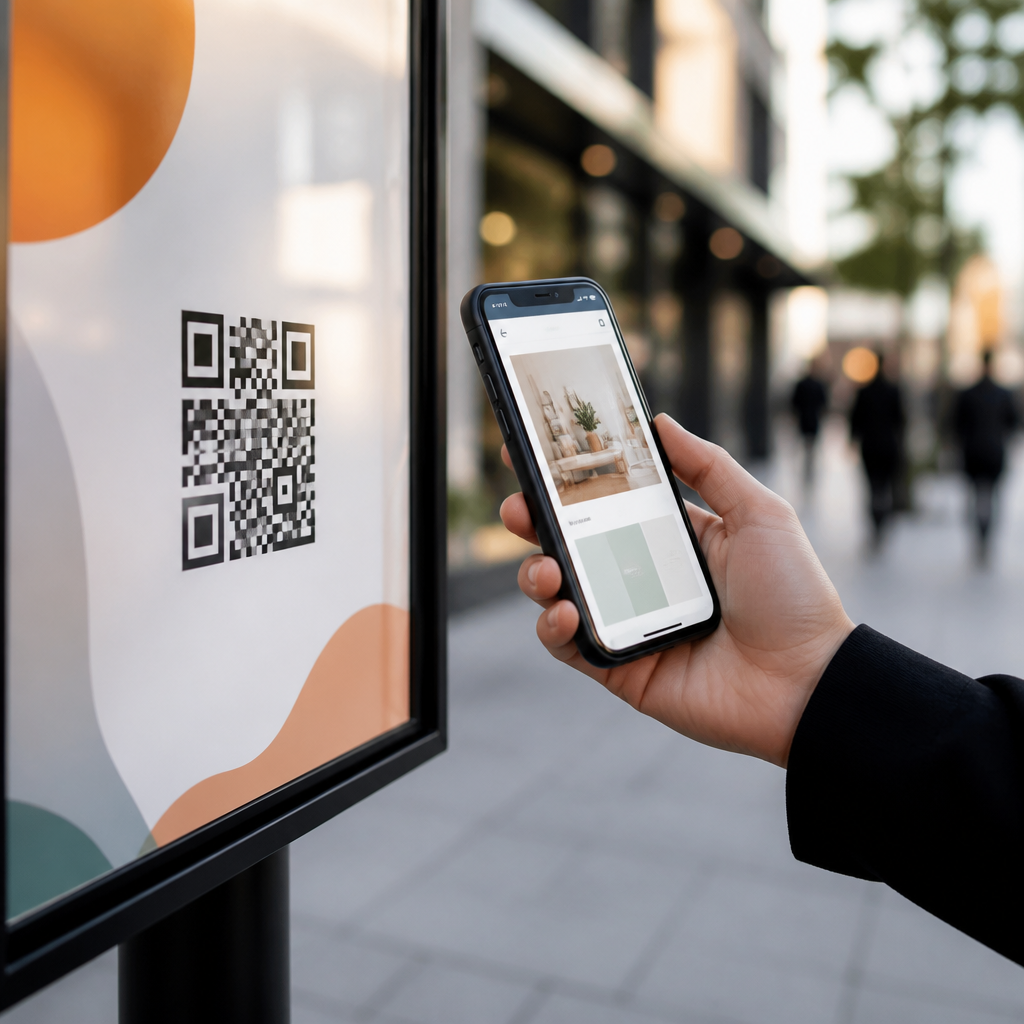
QR codes work best in podcast environments that include a visual layer or a deferred action moment. The strongest placements are video podcasts on YouTube, Spotify, and publisher-owned players; podcast clips shared on Instagram, TikTok, LinkedIn, and X; live podcast recordings and conference stages; sponsor booths; companion newsletters; episode pages; and out-of-home placements that promote a specific show episode or offer. In these settings, the listener is not being asked to memorize a long URL or stop what they are doing to type. The code shortens the path from interest to action.
One campaign pattern repeatedly performs well: pairing a host-read endorsement with an on-screen QR code during a video segment and sending traffic to a mobile-optimized landing page tailored to the exact episode, audience, or host. For example, a fintech sponsor can run a personal finance podcast ad that opens a page featuring the host’s image, a short explainer, compliance-safe offer language, and one tap to start an application. Because the destination matches what was just heard, conversion rates are usually stronger than sending all traffic to the homepage. The same principle applies to B2B podcasts, where the destination might be a benchmark report, webinar registration, or product comparison page.
QR codes also perform well when podcast content is extended into adjacent channels. A common omnichannel sequence is simple: the audience hears the ad in audio, later sees the clip in social, scans the code from the clip or caption image, then enters an email nurture flow. In measurement terms, the podcast did not create a single-click journey; it created assisted demand that another touch captured. Brands that understand this avoid under-crediting podcast media. They also use UTM parameters, unique QR destinations, and analytics in tools such as Google Analytics 4, HubSpot, Adobe Analytics, Branch, or AppsFlyer to separate scans, sessions, and downstream conversions.
Where QR codes do not work, or work poorly
QR codes are weak in purely audio moments where the listener cannot safely or conveniently scan. A host saying “scan the code now” during a commuting segment misunderstands context and can undermine trust. The same is true for tiny on-screen codes flashed for two seconds during a fast-cut social clip, or codes printed on merchandise without any reason to engage. In my experience, poor performance usually comes from forcing a visual-response mechanic into a channel moment that does not support visual attention.
Another failure point is sending every scan to a generic homepage. Homepages ask visitors to navigate, interpret the brand, and self-select a path. That extra cognitive load destroys the advantage a QR code is supposed to create. Low-performing campaigns often combine multiple mistakes at once: no landing page continuity, no incentive, no analytics taxonomy, and no fallback CTA for people who cannot scan. Brands then conclude that QR codes do not work for podcast advertising, when the real issue is poor implementation.
There are also technical and compliance limits. Some podcast audiences use desktop players where mobile scanning is awkward. Some categories, including healthcare, alcohol, financial services, and regulated supplements, require careful disclosures and age or eligibility checks. A code that sends traffic to an app install page may underperform if the app store listing is weak or if mobile web would convert better. And if the destination loads slowly, the campaign loses momentum immediately. QR performance is highly sensitive to page speed, message match, and mobile UX.
How to design omnichannel podcast campaigns with QR codes
The best omnichannel marketing with QR codes starts with a campaign architecture, not a graphic. Define the audience segment, the listening context, the visual surfaces available, the conversion event, and the measurement plan before generating the code. Every destination should answer one question quickly: what should this listener do next? For direct response, that may be claiming an offer. For brand consideration, it may be watching a demo or reading a case study. For retention, it may be joining a loyalty program or activating a referral code.
A practical framework is to map one core offer across several touchpoints while adapting execution by channel. The host mentions the offer in audio. The video version shows the QR code long enough to scan. The episode page repeats the CTA with the same creative language. A newsletter uses a matching image and button. Paid social retargeting reaches non-converters with proof points and testimonials. The QR code is not the campaign; it is the connective tissue that makes the journey measurable and consistent.
| Channel | Best QR use | Common mistake | Recommended destination |
|---|---|---|---|
| Video podcast | Persistent on-screen code during host-read ad | Code appears too briefly | Episode-specific landing page |
| Social clips | Code plus subtitle-driven CTA | Overcrowded design | Short mobile lead form |
| Email newsletter | Code for mobile handoff | Duplicating only the homepage link | Offer or content hub page |
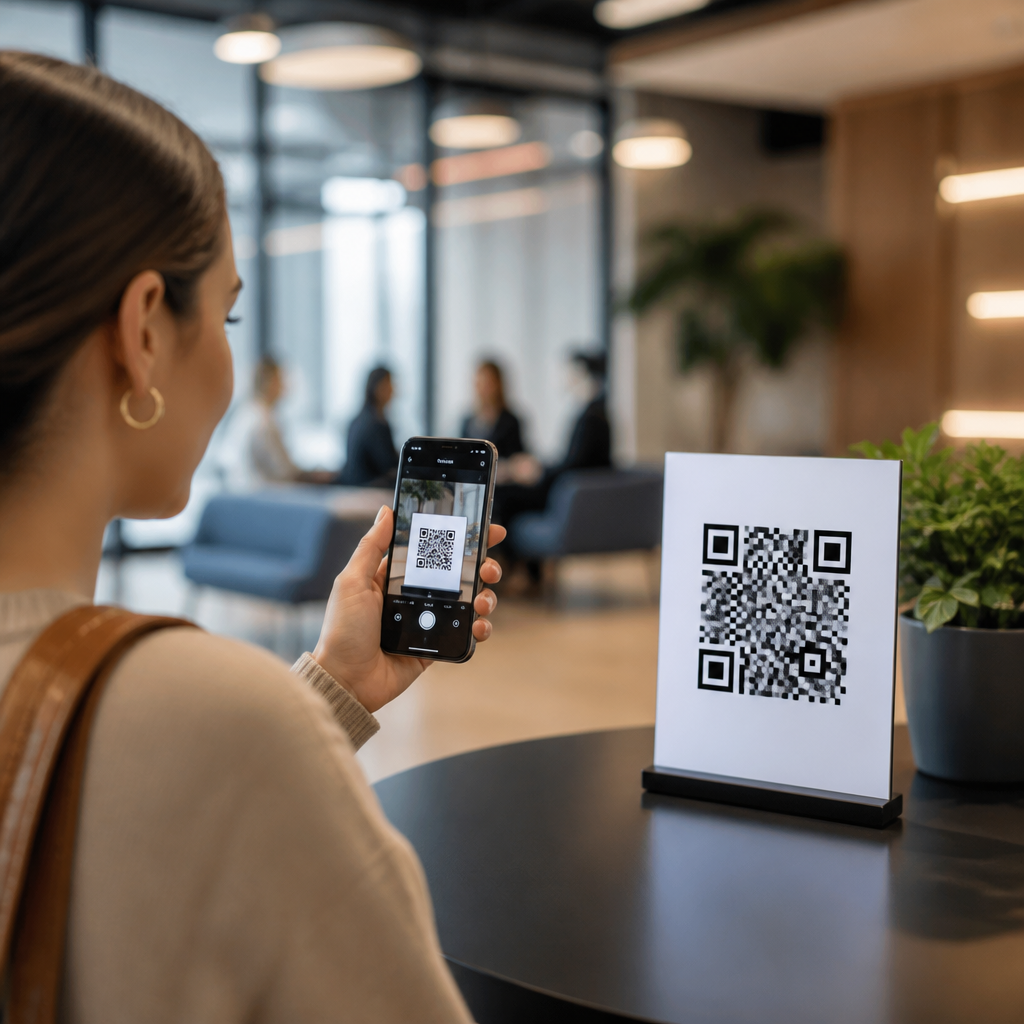
| Live events | Booth signage or stage slides | No staff follow-up process | Demo booking or giveaway entry |
| Retail or packaging | Connect product to podcast-exclusive content | No value exchange | Bonus episode or loyalty signup |
Creative execution matters more than many teams expect. Keep the code large enough to scan on a phone screen from a normal viewing distance. Maintain contrast, preserve the quiet zone, and test across iPhone and Android cameras. Use dynamic QR codes when possible so destinations can be updated without replacing the asset. Add a plain-language CTA beside the code, because people need a reason to scan. “Scan to compare plans,” “Scan for the checklist,” or “Scan to get the listener discount” outperforms vague prompts. If the code appears in a video podcast, hold it on screen for long enough that a viewer can unlock a phone, open the camera, and complete the scan.
Measurement, attribution, and optimization
Podcast marketers often ask whether QR code scans should be treated as the primary success metric. The answer is no. Scans are an engagement signal, not a business outcome. A complete measurement model tracks impressions or estimated reach, scan rate, landing page engagement, form completion, purchases or qualified leads, assisted conversions, and post-view or post-listen lift where available. If the campaign includes both promo codes and QR scans, compare how each pathway influences conversion quality, not just top-line volume.
Reliable attribution requires disciplined setup. Use a unique dynamic QR code for each show, host, episode format, and major creative variation. Standardize UTM naming conventions so data remains usable in reporting. Connect QR traffic to CRM records where possible, and pass source data into marketing automation for segmentation. If app installs are involved, use deferred deep linking so the user lands in the right in-app experience after installation. For ecommerce, match QR sessions to revenue in GA4 or your commerce platform and evaluate new-customer rate, average order value, and repeat purchase behavior.
Optimization usually reveals simple wins. Episode-specific pages beat generic pages. Clear incentives beat abstract brand messaging. Mid-roll placements often outperform pre-roll because audience attention is more settled, although this varies by show format. On-screen dwell time influences scan completion materially. And post-click friction is decisive: reducing a lead form from six fields to three can improve conversion rates more than changing the code design itself. Testing should focus on the full journey, not only the visual asset.
What best-in-class brands do differently
The strongest brands treat podcast QR codes as part of a broader customer journey. They build dedicated landing pages, align copy with the host’s spoken language, and create continuity across media. They also plan for listeners who do not scan immediately. A viewer might notice the code on a YouTube episode, search the brand later, click a paid search ad, and still be influenced by the original podcast exposure. Smart teams therefore combine QR data with branded search lift, direct traffic trends, audience surveys, and media mix modeling when budgets justify it.
They also respect context. A B2C meal kit brand may use QR codes aggressively on video podcasts, smart TV creative, and influencer clips because the offer is visual and the conversion path is short. A B2B cybersecurity company may get better results using QR codes to capture webinar signups or analyst report downloads from executive audiences watching conference recordings or LinkedIn clips. Different industries require different expectations. Success comes from matching the code to the buyer’s stage, the platform, and the decision complexity.
Finally, best-in-class execution includes governance. Teams maintain QR naming conventions, design standards, expiration rules, privacy disclosures, and redirect ownership. Broken redirects, expired offers, and unattributed scans are preventable operational failures. When managed well, QR codes make podcast advertising more actionable, more measurable, and more connected to the rest of the marketing system.
QR codes in podcast advertising work when they solve a real listener problem: turning interest created in audio into a low-friction action across screens and channels. They do not work when brands ignore context, rely on generic destinations, or judge success only by raw scans. The practical lesson is straightforward. Use QR codes where a visual touchpoint exists, design dedicated mobile experiences, connect every asset to a clear CTA, and measure beyond the scan.
For omnichannel marketing with QR codes, podcasting is a powerful hub because it naturally extends into video, social, email, live events, and even packaging. That makes it ideal for coordinated campaigns that build recognition in one place and capture response in another. When the offer, landing page, analytics, and follow-up sequence are aligned, QR codes become more than a convenience. They become a dependable attribution and conversion tool inside a larger marketing strategy.
If you are building or refining a QR code marketing strategy, audit your current podcast placements first. Identify where audiences can actually scan, create one landing page per campaign objective, instrument tracking correctly, and test the full path from exposure to conversion. Done well, QR codes make podcast advertising easier for listeners and more accountable for marketers.
Frequently Asked Questions
Why are QR codes becoming so important in podcast advertising?
QR codes matter in podcast advertising because they help solve one of the channel’s biggest challenges: turning listener attention into measurable action. Podcasts are highly engaging and deeply personal, but they are also often consumed while multitasking—driving, walking, cleaning, exercising, or commuting—so a listener may remember a brand but not take action right away. A QR code gives that audience a low-friction path to respond when the ad appears in a visual format such as a podcast clip on social media, YouTube version of the episode, newsletter placement, event signage, merch insert, or companion landing page. Instead of asking someone to remember a long URL or promo code, the brand creates a scan-and-go experience that shortens the gap between interest and conversion.
That shift is especially important because QR codes are no longer treated as a novelty. They now function as infrastructure across omnichannel campaigns. In podcast advertising, that means the same offer mentioned by a host can be extended into video snippets, episode pages, email campaigns, conference booths, in-store displays, and connected TV ads, all tied together with trackable scan behavior. In practical terms, QR codes help marketers connect awareness generated through audio with digital destinations where they can capture signups, purchases, app installs, coupon redemptions, or first-party data. Used correctly, they improve attribution, reduce drop-off, and make podcast campaigns easier to optimize across platforms.
What actually works when using QR codes in podcast ads?
What works is context, clarity, and continuity. A QR code performs best when it appears in a setting where the listener can realistically scan it and immediately understand why they should. That usually means using QR codes in visual extensions of podcast advertising rather than relying on audio alone. For example, if a podcast episode is distributed on YouTube, clipped for TikTok or Instagram, promoted in an email newsletter, displayed on event materials, or shown during a livestream, a QR code can create a seamless response path. The key is pairing it with a direct, specific call to action such as “Scan to get the free trial,” “Scan for the exclusive listener discount,” or “Scan to join the waitlist.”
Strong landing page alignment also matters. When someone scans, they should land on a page that matches the message they just heard or saw, with minimal friction and no confusion. If the host mentions a bonus, the landing page should immediately show that bonus. If the ad promotes an app, the scan should route intelligently to the proper app store or install page. If the campaign uses an offer code, the destination should prefill it whenever possible. Marketers also see better results when they use dynamic QR codes, because these allow updates to destinations without reprinting assets and provide reporting on scans by source, time, device, and campaign variation. In short, what works is not simply placing a QR code somewhere visible; it is designing the entire scan experience so the transition from podcast awareness to digital action feels obvious and rewarding.
What doesn’t work with QR codes in podcast advertising?
The most common mistake is treating a QR code as a generic add-on instead of a strategic response tool. If the code appears without a compelling reason to scan, many people will ignore it. A vague label like “Learn more” often underperforms compared with a benefit-driven prompt tied to a clear value exchange. Another major problem is placing QR codes in moments where scanning is inconvenient or impossible. Podcast listeners are frequently on the move, so expecting them to scan during a purely audio experience makes little sense unless the campaign also appears in a companion visual environment. A QR code should support the broader podcast ecosystem, not be forced into a context where user behavior does not support it.
Poor technical and creative execution also hurts performance. Tiny codes, low contrast, cluttered backgrounds, short display times in video, and awkward screen placement all reduce scanability. So does sending users to a homepage instead of a dedicated landing page built for the specific offer. When the post-scan experience is slow, confusing, or not mobile-optimized, brands lose the momentum the QR code was supposed to create. Another thing that does not work is overestimating what QR attribution can prove on its own. A scan is useful data, but it is not the full story of podcast impact. Many listeners will still convert later through branded search, direct traffic, or another device. The best marketers use QR codes as one measurement layer within a broader attribution framework, rather than assuming they capture every influence point.
How should marketers measure the success of QR codes in podcast campaigns?
Success should be measured beyond raw scan volume. Scans are a helpful starting point because they indicate immediate response, but they do not automatically mean the campaign is effective. Marketers should look at the full funnel: scan rate, landing page engagement, signup completion, purchase conversion, app installs, coupon redemption, cost per acquisition, and downstream customer value. If a code gets many scans but very few conversions, the issue may be weak intent, poor targeting, or friction after the scan. If scan volume is modest but conversion quality is high, the QR code may still be doing an excellent job of filtering for more serious prospects.
It is also smart to evaluate QR performance in relation to the broader podcast and omnichannel mix. Different hosts, episode formats, video clips, social placements, event materials, or CTV creative may drive very different scan behavior. Using distinct dynamic QR codes or parameterized destinations for each channel variation makes that analysis possible. Marketers should also compare QR-attributed outcomes with branded search lift, direct traffic trends, promo code use, and post-exposure conversion windows to understand assisted impact. In podcasting especially, the real value often shows up across multiple touchpoints rather than a single instant transaction. The most useful measurement approach combines QR analytics with qualitative signals such as audience-brand fit, host trust, message resonance, and repeated exposure across channels.
How can brands make QR codes feel natural in an omnichannel podcast advertising strategy?
The best approach is to treat the QR code as a bridge, not the campaign itself. In an omnichannel strategy, the podcast ad creates awareness and trust, while the QR code creates continuity when the audience encounters the brand again in a visual moment. That might mean a host-read ad in the audio episode is reinforced by a short video clip with a QR code on social media, a newsletter sponsorship featuring the same offer, retail packaging that references the show, or a conference display tied to the podcast partnership. When the messaging, offer, and visual design stay consistent, the audience experiences the campaign as one connected journey rather than scattered promotions.
To make that feel natural, brands should match the destination to listener intent and buying stage. A new listener may respond better to a lightweight action such as accessing a bonus resource, joining a list, or exploring a product demo, while warmer audiences may be ready for a purchase, trial, or app download. Personalization also helps: dedicated landing pages for specific shows, hosts, or audience segments can improve conversion by reflecting the language and value proposition listeners already heard. Finally, brands should respect the role of trust in podcast advertising. Because listeners often feel a close connection to hosts, the QR experience should extend that trust with a fast, relevant, privacy-conscious destination. When done well, the QR code does not interrupt the relationship built through the podcast—it gives the audience an easy next step when they are ready to act.