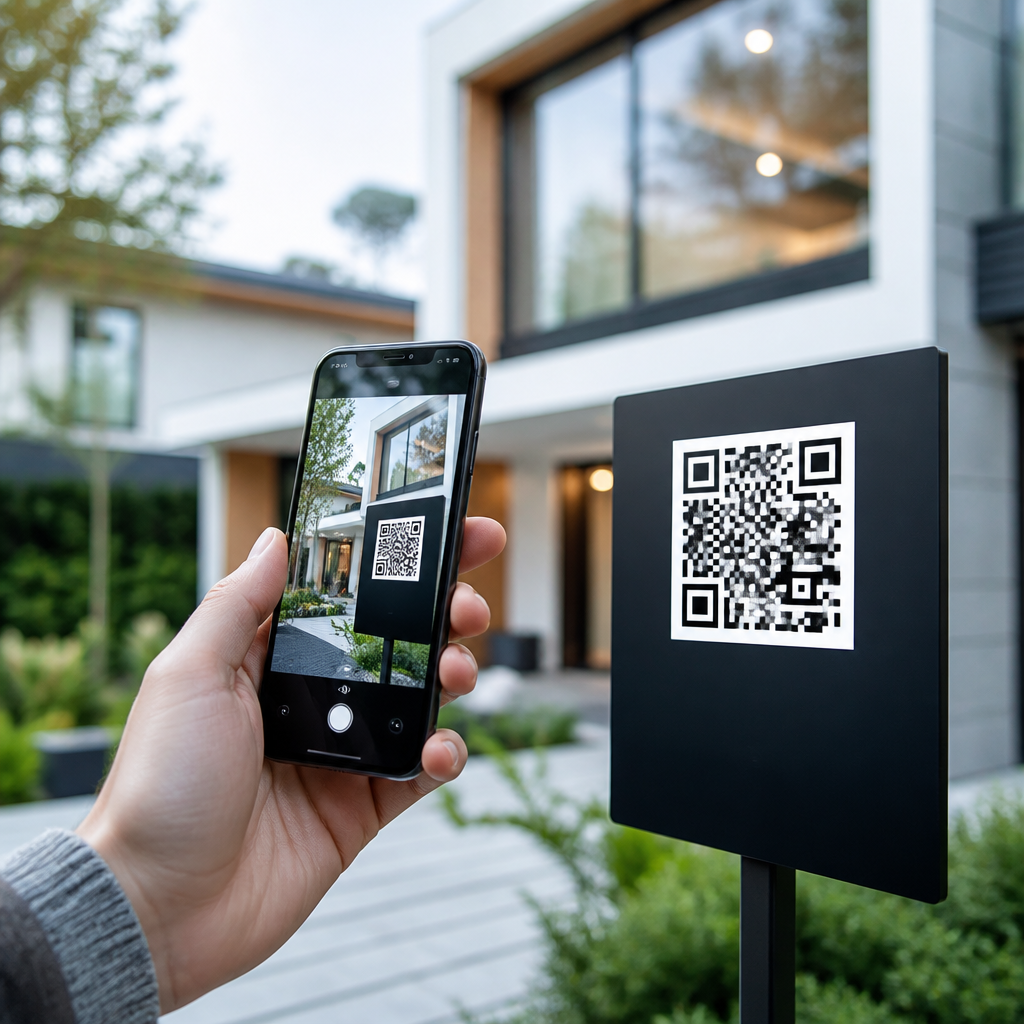
QR codes for property listings and virtual tours have become a practical bridge between offline real estate marketing and digital buyer engagement. In real estate, a QR code is a scannable matrix barcode that sends a prospect directly to a destination such as a listing page, 3D walk-through, agent contact form, disclosure package, neighborhood guide, or mortgage prequalification tool. For brokers, teams, and property marketers, the appeal is simple: a sign, flyer, brochure, postcard, window card, open house sheet, or social ad can instantly connect a buyer with richer information than print alone could ever carry.
This matters because the property search journey is fragmented and time sensitive. Buyers notice a sign while driving, renters scan a lobby poster after work, and investors compare units from another state. In my own campaign work with listing teams, the difference between “see details online later” and “scan now” has been substantial, especially when the destination loads fast and answers immediate questions. QR codes reduce friction at the exact moment interest peaks. They also create measurable behavior. Instead of guessing whether a postcard or sign rider drove activity, agents can track scans by location, campaign, and device, then refine budget toward the placements that actually move prospects forward.
As a hub topic within QR codes in marketing, real estate deserves special treatment because the use cases are unusually broad. A single listing can involve street signage, print collateral, email nurturing, showing instructions, document delivery, event check-in, and post-tour follow-up. Virtual tours add another layer by giving remote buyers, relocation clients, and busy local shoppers a way to evaluate layout and condition before scheduling a visit. When implemented well, QR codes support faster lead capture, better listing presentation, improved agent responsiveness, and cleaner attribution across channels. They are not a gimmick. They are a compact access point to the entire digital sales experience surrounding a home, condo, apartment, land parcel, or commercial asset.
Why QR codes work so well in real estate marketing
Real estate marketing is filled with high-intent moments that happen away from a desk. Yard signs attract neighbors who know potential buyers. Directional signs catch open house traffic. Brochures sit in model homes. Window displays pull walk-by interest after office hours. In each case, the prospect wants answers immediately: price, photos, bedrooms, HOA fees, availability, school district, parking, and whether a tour is possible today. QR codes work because they collapse the gap between curiosity and information. A smartphone camera replaces a remembered URL, a manual search, or a call that might go to voicemail.
They also fit how buyers now evaluate property. According to the National Association of Realtors, most homebuyers use mobile devices during the search process, and listing photos remain one of the most valued website features. Add 3D tours, floor plans, drone footage, and map-based neighborhood data, and the mobile listing page becomes the true storefront. A QR code on a sign rider or flyer simply opens that storefront instantly. For leasing teams, the pattern is similar: prospects scanning a code on a site map or window cling can view available floor plans, pricing, amenities, and self-tour options without waiting for office hours.
From an operations standpoint, QR codes improve attribution. Dynamic QR platforms such as Bitly, Beaconstac, Flowcode, QR Code Generator Pro, and Uniqode allow marketers to change destinations without reprinting materials, assign UTM parameters, and segment scans by source. If one luxury brochure produces far more virtual tour starts than another, that insight can shape creative, placement, and agent follow-up. Static codes still have a place for permanent assets, but dynamic codes are usually the better fit for active listings where price, status, or landing pages can change.
Core use cases for property listings
The most common use case is the for-sale sign. A code placed on a rider beneath the headline should send users to a mobile-first page with current price, hero photos, key facts, map, and a visible tour request button. It should not dump visitors on a generic homepage where they must search again. I have seen scan rates increase when the page includes concise above-the-fold details and when the sign copy sets a clear expectation, such as “Scan for price, photos, and tour times.” Good signage placement matters too: avoid mounting too low, using glossy surfaces that create glare, or shrinking the code until it fails at car-window distance.
Flyers and brochures are the next layer. Property feature sheets can use one code for the main listing, another for disclosures or floor plans, and a third for lender information, but restraint is important. Too many codes create decision fatigue. In practice, one primary code and one secondary code usually perform best. Multifamily and build-to-rent marketers often place codes on rack cards, leasing office posters, and site maps so prospects can compare floor plans while physically at the property. Commercial brokers use them on offering memoranda covers, site signs, and brochures to direct investors to data rooms, rent rolls, cap rate summaries, and aerial maps.
Open houses create another powerful use case. Instead of asking every visitor to handwrite contact information on a paper sheet, agents can use a QR code that opens a branded check-in form. This reduces transcription errors, timestamps arrivals, and triggers follow-up automations through a CRM such as Follow Up Boss, HubSpot, kvCORE, or BoomTown. The same event code can route guests to property disclosures, financing calculators, and a feedback form after the tour. For new developments, model units often include room-by-room codes that explain finishes, appliance packages, smart home systems, warranty information, and upgrade options.
How QR codes enhance virtual tours and remote buying
Virtual tours are one of the strongest reasons to use QR codes in real estate because they answer the buyer question, “Can I experience the property now?” A tour may be a Matterport walkthrough, Zillow 3D Home experience, video tour, interactive floor plan, or a simple guided reel. The format matters less than the outcome: the user should understand layout, flow, condition, and scale quickly enough to decide whether to book an in-person showing. When a QR code launches a virtual tour directly, interest remains warm and the property feels more accessible, especially for relocation buyers, military families, international investors, and time-constrained professionals.
Remote buying behavior has matured. During the pandemic years, many agents learned that high-quality virtual assets could shorten the decision cycle, but the lesson still holds. A buyer who scans a code from a postcard and immediately enters a detailed tour is far more informed than someone who sees only two exterior photos. Better-informed leads ask better questions, waste less showing time, and are more likely to align with the property before visiting. For tenant screenings and student housing, virtual access is equally valuable because prospects often commit from a distance and need confidence in unit layout and common areas.
Virtual tour QR strategies work best when the landing experience is structured. Start with a lightweight preview page containing a headline, one strong image, and buttons for “Start 3D Tour,” “See Floor Plan,” and “Schedule Showing.” This gives users options if bandwidth is limited. Include clear labels if tours are staged, virtually enhanced, or represent a similar model rather than the exact unit. Accuracy builds trust. For luxury and commercial properties, pair the tour with downloadable brochures, GIS maps, and neighborhood demographics so decision-makers can move from visual review to financial evaluation without friction.
| Placement | Best destination | Primary goal | Key metric |
|---|---|---|---|
| Yard sign rider | Mobile listing page | Capture high-intent local interest | Scans to tour requests |
| Brochure or flyer | Photo gallery or feature page | Deepen consideration | Time on page |
| Open house check-in | Lead form with CRM sync | Collect accurate attendee data | Form completion rate |
| Window display | Current availability page | Serve after-hours prospects | Scans outside office hours |
| Postcard mailer | Virtual tour landing page | Drive remote engagement | Tour starts |
| Commercial site sign | Data room or OM page | Support investor review | Document downloads |
Best practices for design, tracking, and compliance
A real estate QR code should be easy to scan, easy to understand, and connected to a page built for mobile intent. Design starts with contrast: dark code on a light background is still the safest standard. Maintain adequate quiet space around the code, and test at real viewing distances. A code on a yard sign is not the same as a code on a brochure held in hand. Adding a small logo can help branding, but excessive styling often damages reliability. Every code should have a plain-language call to action nearby. “Scan for 3D tour” will usually outperform a bare code with no instruction.
Tracking should be deliberate from the start. Use campaign naming conventions and UTM parameters that identify property, placement, and medium, such as sign, postcard, brochure, or open house. Connect scan data to Google Analytics 4 and your CRM so you can see whether scans become inquiries, appointments, and closed deals. In my experience, many teams stop at scan counts, which is too shallow. A sign can generate many scans but few qualified leads if the destination page is slow, confusing, or missing key facts. The useful metric is downstream conversion, not curiosity alone.
Compliance is especially important in housing marketing. Listing pages reached through QR codes must reflect fair housing standards and accurate representation. Avoid misleading claims, undisclosed fees, or inaccessible experiences. If a code leads to a form, disclose how contact information will be used and comply with applicable privacy requirements. For brokerages operating in multiple markets, verify local rules on sign content, brokerage identification, and disclosures. Accessibility also matters. Tour videos should include captions where practical, and forms should be readable on screen readers. The smoother and more transparent the experience, the more trust the code earns.
Building a real estate QR code hub strategy
As a sub-pillar hub, this topic should connect multiple deeper articles that break out by use case and asset type. Strong companion pages include QR codes for open houses, QR codes on yard signs, QR codes for apartment leasing, QR codes for commercial property marketing, QR codes for real estate brochures, and QR codes for virtual tour optimization. Another useful cluster covers technical execution: dynamic versus static codes, landing page best practices, scan tracking, and QR code design standards. This hub’s role is to establish the full landscape so readers can understand where each implementation fits in the sales funnel.
The hub should also reflect the different workflows inside real estate businesses. A solo agent needs quick deployment and affordability. A brokerage marketing director needs governance, brand standards, and portfolio-wide reporting. A multifamily operator needs codes tied to unit availability feeds and self-guided tour scheduling. A commercial team may care more about investor document access than traditional lead forms. Treating all of these as one generic use case weakens performance. The better approach is to map QR codes to property type, audience, and stage: awareness, consideration, tour booking, application, or offer.
Finally, remember that QR codes are not the strategy by themselves. They are the access mechanism to content and conversion paths that must already be strong. If listing pages are thin, tours are outdated, or follow-up is inconsistent, more scans will not fix the problem. But when the surrounding system is solid, QR codes become one of the simplest ways to connect real-world attention with digital action. Audit your existing signs, print pieces, leasing materials, and tour workflows, then add codes where they remove friction and produce measurable next steps for buyers, renters, and investors.
QR codes for property listings and virtual tours work because they meet prospects in the moment of interest and guide them directly to the next useful action. In real estate, that action may be viewing price and photos, starting a 3D walkthrough, checking availability, downloading disclosures, signing in at an open house, or booking a showing. The strongest implementations are mobile first, fast loading, clearly labeled, and tied to dynamic tracking so teams can improve results over time. They also respect the realities of the industry: changing listing status, local compliance rules, privacy expectations, and the need for accurate property information.
The main benefit is not novelty. It is reduced friction across the entire property marketing journey. A sign becomes a lead source. A brochure becomes an interactive sales tool. A virtual tour becomes available from any physical touchpoint. A leasing poster works after hours. A commercial site sign starts an investor review process before the broker even returns a call. When QR codes are paired with strong landing pages, credible media assets, and disciplined follow-up, they consistently improve engagement quality and make attribution clearer for agents, marketers, and owners.
If you manage real estate marketing, start with one high-value path: sign to listing page, flyer to virtual tour, or open house check-in to CRM. Test it, measure scans to conversions, and expand from there. Then build out the broader hub of use cases so every property touchpoint has a direct, trackable route to information and action.
Frequently Asked Questions
What are QR codes for property listings and virtual tours, and how do they work in real estate marketing?
QR codes for property listings and virtual tours are scannable codes that connect a printed real estate asset directly to a digital destination. When a buyer uses a smartphone camera to scan the code, it can instantly open a listing page, 3D home tour, video walkthrough, floor plan, disclosure package, open house registration form, mortgage calculator, or agent contact page. In practical terms, that means a yard sign, flyer, brochure, postcard, window display, or direct mail piece can become an immediate entry point into a richer online experience without requiring the prospect to type a long web address.
In real estate marketing, this matters because it shortens the path between initial interest and meaningful engagement. A buyer standing outside a home can scan a sign rider and view photos, pricing, availability, and tour options within seconds. A passerby in front of a brokerage office can scan a window card after hours and still access the full property details. At an open house, guests can use a QR code to pull up feature sheets, renovation history, and neighborhood information on their own devices. The technology is simple, but the value comes from reducing friction and capturing buyer attention in the moment they are most curious.
From the agent or broker perspective, QR codes also support better campaign organization and lead routing. Different codes can point to different landing pages for different listings, neighborhoods, or buyer stages. They can also be tied to analytics, allowing marketers to see how many scans a code receives, when those scans happen, what device types are used, and which channels drive the most interest. That makes QR codes not just a convenience feature, but a measurable tool for connecting offline visibility with digital performance.
What are the best places to use QR codes in real estate to promote listings and virtual tours?
The most effective places to use QR codes are wherever prospective buyers naturally encounter property marketing offline and may want more information immediately. The classic example is the yard sign. A QR code on a sign rider can send someone directly to the listing page or a virtual tour while they are standing in front of the property. This is especially useful for drive-by traffic, buyers visiting the neighborhood, or people who notice the home outside of normal office hours. A code placed on a brochure box insert or printed flyer can serve the same purpose.
Print materials are another strong use case. Property flyers, feature sheets, postcards, brochures, listing presentation packets, and direct mail campaigns all benefit from adding QR codes that lead to the most relevant next step. For example, a just-listed postcard might send users to a cinematic video walkthrough, while a luxury brochure might link to a dedicated property microsite with high-resolution galleries, floor plans, and private showing options. Window cards in brokerage offices are also effective because they help capture interest from foot traffic even when no agent is available in person.
QR codes can also be valuable at in-person events. At open houses, they can streamline visitor sign-in, provide access to disclosures, share renovation details, or invite attendees to book follow-up tours. At builder model homes or condo sales centers, they can direct prospects to interactive floor plans, unit availability, financing tools, or community amenity pages. Even networking materials such as business cards, presentation folders, and event signage can use QR codes to move people into a listing portal or home search page.
The key is matching the QR code destination to the context. If the code appears on a sign outside one property, it should lead to that property, not a generic homepage. If it appears in a neighborhood mailer, the landing page should highlight local listings and market insights. Relevance improves scan rates, and a focused destination improves conversion rates.
What should a real estate QR code link to for the best buyer experience and strongest lead generation?
The best destination depends on the buyer’s intent at the moment of the scan, but in most cases the link should take the user to a mobile-friendly page that delivers immediate value and a clear next step. For a property-specific code, the strongest destination is usually a dedicated listing page or microsite with professional photos, price, property details, availability status, location highlights, and a prominent call to action. If virtual touring is a major part of the strategy, the landing page should make the 3D tour or video walkthrough easy to launch without forcing the user to navigate multiple menus first.
For some campaigns, a QR code should lead beyond the basic listing page. Buyers often want supporting information such as floor plans, disclosures, school details, neighborhood guides, commute information, community amenities, or mortgage prequalification tools. If the home is in a competitive market, a landing page that also offers showing requests, instant updates, or saved search registration can turn casual interest into an identifiable lead. The more closely the destination aligns with what the buyer is likely seeking in that setting, the more effective the QR code becomes.
Lead generation works best when the experience is helpful rather than intrusive. A good QR landing page should not immediately block property information behind a form. Instead, it should present useful content first, then invite the user to take a logical next step such as scheduling a showing, asking a question, downloading the disclosure package, or getting alerts for similar homes. This approach builds trust and keeps the interaction buyer-friendly while still creating opportunities for conversion.
It is also smart to use dynamic QR codes when possible. Dynamic codes allow marketers to change the destination URL without reprinting the code, which is valuable if a property status changes, a landing page is updated, or the listing needs to redirect to a backup page. That flexibility helps preserve the life of printed materials and keeps the buyer experience current.
How do QR codes help real estate agents and brokers track marketing performance?
One of the biggest advantages of QR codes in real estate is that they make offline marketing more measurable. Traditional materials such as signs, flyers, brochures, and postcards often generate interest that is difficult to attribute accurately. By assigning a unique QR code to each asset or campaign, agents and brokers can see which materials are prompting engagement and what happens after the scan. This creates a clearer picture of how printed marketing contributes to listing traffic, inquiries, and tour requests.
Depending on the QR code platform and analytics setup, marketers may be able to track total scans, unique scans, time of day, approximate location, device type, and click-through behavior on the destination page. For example, a team might discover that yard sign QR codes produce the highest scan volume, while postcard QR codes generate fewer scans but more qualified showing requests. A brokerage could compare scan activity across neighborhoods, property types, or price points to understand where print campaigns are most effective.
QR code performance becomes even more useful when combined with campaign tracking tools such as UTM parameters, CRM integrations, call-to-action buttons, and lead forms. If a code routes to a landing page with tracking links, the team can measure not just scans but also downstream actions like form submissions, tour bookings, lender referrals, disclosure downloads, and repeat visits. That makes it easier to calculate return on investment and optimize future campaigns based on actual buyer behavior rather than assumptions.
For the best results, each QR code should have a specific purpose and a distinct destination. Avoid using the same code everywhere if the goal is performance analysis. Segmenting codes by medium, property, or audience gives cleaner data and more actionable insight. In a competitive market where every lead source matters, that level of visibility can be a major advantage.
What are the most important best practices for creating effective QR codes for property listings and virtual tours?
Effective real estate QR codes start with clarity, usability, and relevance. First, the destination must be mobile-optimized. Most scans happen on smartphones, often when a buyer is outside, on the move, or multitasking. If the landing page loads slowly, displays poorly on mobile, or buries key listing details, the opportunity can be lost quickly. The page should open fast, present the property clearly, and offer an obvious next action such as viewing the virtual tour, requesting a showing, or contacting the agent.
Second, placement and design matter. The code should be large enough to scan easily and printed with strong contrast. It should not be tucked into a cluttered corner or surrounded by too much visual noise. On signs and brochures, include a short instruction or benefit-driven prompt such as “Scan for 3D Tour,” “View Price and Photos,” or “See Floor Plan and Details.” That simple cue increases scan likelihood because it tells the prospect exactly what they will get. A QR code without context often underperforms because users are unsure whether it is worth the effort.
Third, use dynamic codes and test them thoroughly. Dynamic QR codes make it possible to update destinations after printing, which is helpful when listings change status, tours are replaced, or campaign URLs need to be revised. Before deploying any code, test it on multiple phone types, camera apps, and lighting conditions. A code that scans perfectly on a desktop printout may behave differently when mounted outdoors on a sign, viewed through a window, or printed on glossy marketing stock.
Fourth, think strategically about compliance, branding, and user trust. Make sure the destination page includes accurate listing information, clear agent identification, and any required disclosures or brokerage details. The experience should feel professional and