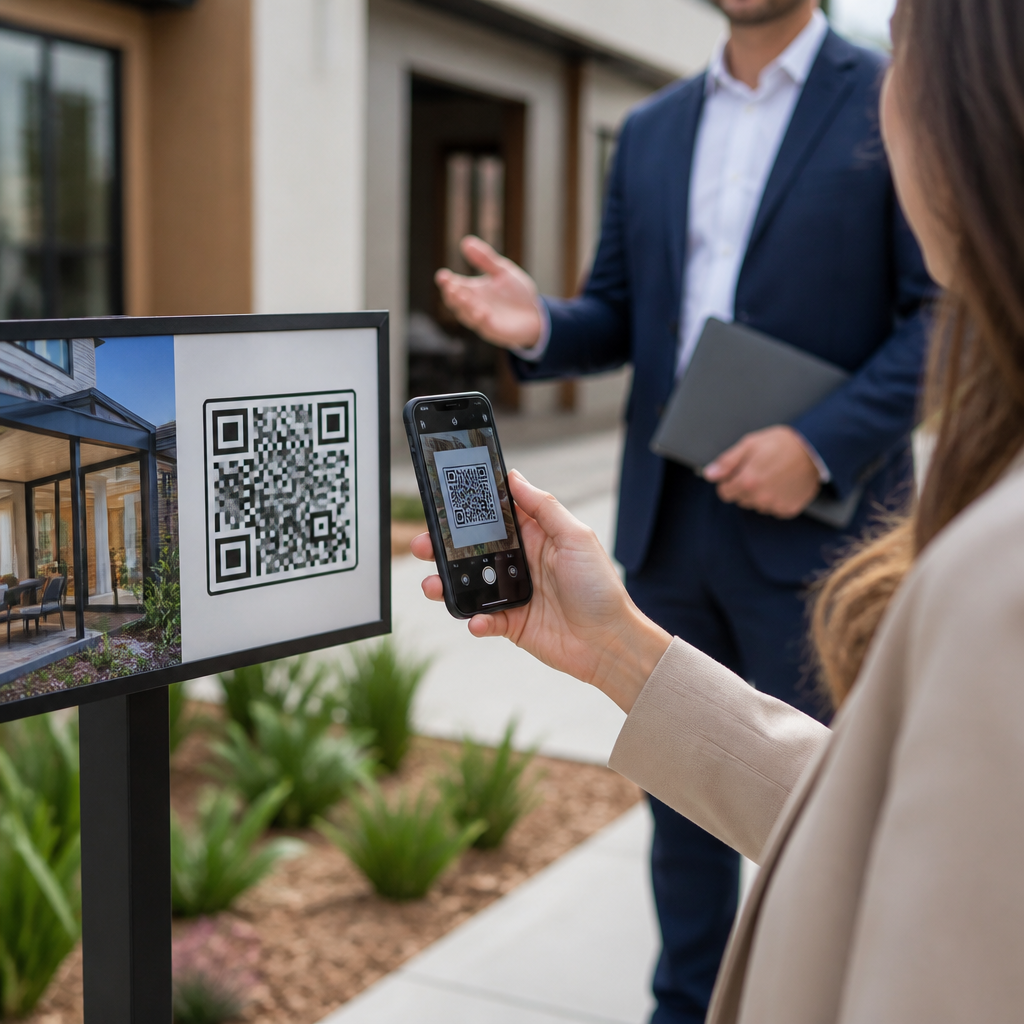
Real estate agents use QR codes to turn offline attention into measurable digital action, making them one of the simplest lead generation tools in modern property marketing. A QR code is a scannable two-dimensional barcode that opens a web page, form, map, video, contact card, or message prompt when a prospect points a smartphone camera at it. In real estate, that means a yard sign can send a passerby to a listing page, a brochure can launch a virtual tour, and an open house flyer can capture buyer details without manual data entry. I have used QR codes across residential listings, new developments, rental campaigns, and agent branding efforts, and the difference between generic print marketing and trackable print marketing is immediate. Instead of hoping a sign creates interest, agents can see scans by property, date, location, and device. That visibility matters because real estate lead generation is expensive, competitive, and highly local. Agents need tools that reduce friction, connect physical marketing to digital follow-up, and help them respond while interest is high. QR codes do all three when they are tied to strong landing pages, clear calls to action, and a defined follow-up workflow.
This matters even more now because buyers and sellers move between channels constantly. A prospect may notice a sign while driving, revisit the listing later on a phone, and schedule a showing from a laptop that evening. QR codes create continuity across those touchpoints. They also support the core real estate behaviors that produce revenue: booking showings, registering for open houses, downloading neighborhood guides, requesting valuations, and saving agent contact details. Used well, they shorten the path from curiosity to conversation. Used poorly, they send traffic to a homepage, offer no obvious next step, and waste the moment. This hub explains how real estate agents use QR codes to generate leads across signs, print materials, open houses, direct mail, social campaigns, and post-close referrals, along with the measurement practices that separate casual experiments from repeatable lead systems.
Why QR codes work in real estate marketing
QR codes work because they remove effort at the exact moment intent appears. Real estate is a high-consideration purchase, but many lead opportunities begin with a quick impulse: someone sees a property they like, notices a coming-soon sign, or attends a weekend open house. If the next step requires typing a long URL or remembering an address, a portion of that interest disappears. Scanning is faster. In campaigns I have managed, properties with a QR code tied to a mobile-optimized listing page consistently generated more immediate engagement than signs showing only a phone number and brokerage URL. The code acts as a bridge between the street and the CRM.
There is also a data advantage. Dynamic QR codes, unlike static codes, can redirect traffic without changing the printed image and can log useful performance information. Agents can track scans per listing, compare response from postcard versions, and test whether “Schedule a Tour” outperforms “See Price and Photos.” This is especially useful in real estate because inventory changes fast. A code on a sign rider can redirect from an active listing page to a backup page that promotes similar homes after the property goes under contract. That preserves campaign value instead of letting old print assets die.
Best real estate lead generation use cases
The strongest real estate QR code strategies are built around specific lead intents. On-yard signs, riders, and window displays, the best destination is usually a property-specific landing page with photos, price, key features, map, and a short form to book a showing. For open houses, the highest-performing setup is often a registration form linked to the code at the entrance, replacing paper sign-in sheets that are frequently incomplete or illegible. For brochures and property flyers, codes can open a virtual tour, floor plan download, or neighborhood guide. For farming postcards, they commonly lead to home valuation pages, recent sales reports, or a local market update.
Commercial real estate agents use QR codes differently but for the same reason: speed and tracking. A code on a site board can open a leasing brochure, zoning information, cap rate summary, or contact form for qualified investors. Rental agents use them on building signage and apartment flyers to route prospects to availability pages with unit-level inventory. New development marketers place QR codes in hoardings, sales galleries, and event materials so prospects can book appointments, view finishes, and compare floor plans. Across each scenario, the code performs best when the landing page matches the exact context of the scan rather than sending traffic to a general website.
Where to place QR codes for maximum scans
Placement affects scan rate as much as design. Real estate signs need enough size, contrast, and quiet space around the code to be scanned from a realistic distance. A code that works on a desk may fail on a curbside sign if it is too small or crowded by text. For yard signs, agents should pair the code with a plain-language instruction such as “Scan for price, photos, and showing times.” That line matters because not every passerby knows what the code delivers. On brochures, the ideal placement is near the strongest motivation point: next to hero imagery, bullet highlights, or a callout for floor plans and tour access.
Open houses offer several productive placements. One code at the entrance can capture registration, another near the kitchen can open a feature sheet, and a final code near the exit can invite feedback or financing prequalification. I prefer limiting the total number of codes in a single space because too many options reduce action. One code per micro-conversion keeps the experience clear. In direct mail, the code should sit above the fold with a value promise, not buried near legal copy. In office windows and community sponsor materials, larger codes with high contrast improve performance for sidewalk traffic and lower-light conditions.
How to connect QR codes to high-converting landing pages
A QR code does not generate leads by itself; the landing page does the conversion work. The page must load quickly on mobile, match the message on the print asset, and ask for only the information needed at that stage. If someone scans a sign to see a home, requiring ten form fields before showing any details will suppress conversions. A better pattern is progressive capture: show essentials first, then offer a stronger asset such as full disclosures, comparable sales, or private showing times in exchange for contact details. This preserves user trust while still creating a lead path.
Every page should answer immediate questions directly: What is the property? Where is it? What is the asking price? How many beds and baths? What are the standout features? What should the user do next? A lead form should sit near the top, but so should click-to-call, text, and calendar options because many prospects prefer communication methods other than email. Integrations also matter. Agents should connect forms to a CRM such as Follow Up Boss, kvCORE, HubSpot, or Salesforce so scan-generated leads trigger tags, automations, and response tasks instantly. Without that workflow, a QR code becomes a disconnected tactic instead of part of a lead engine.
Tracking performance and improving lead quality
Lead generation improves when agents measure beyond scan volume. A hundred scans with no appointments are less valuable than ten scans that produce two showings. The right metrics are scans, unique visitors, form completion rate, showing requests, call clicks, open house registrations, and downstream outcomes such as signed clients or closed transactions. UTM parameters should be added to destination URLs so traffic appears clearly in Google Analytics 4. Dynamic QR platforms can also report scan time, geography, and device type, which helps agents compare placements and creative versions.
| QR code placement | Primary goal | Best destination | Key metric |
|---|---|---|---|
| Yard sign | Immediate buyer inquiry | Listing page with showing form | Showing requests |
| Open house entry | Visitor registration | Mobile sign-in form | Completed registrations |
| Postcard | Seller lead capture | Home valuation page | Valuation submissions |
| Brochure or flyer | Deeper listing engagement | Virtual tour or brochure download | Time on page |
| Closing packet | Referral and review generation | Review page or referral form | Reviews and referrals |
Lead quality gets better when campaigns are segmented by intent. Buyers scanning luxury signage should not receive the same follow-up as renters scanning an apartment flyer. Codes should feed into different landing pages, forms, and CRM tags. In practice, this means labeling campaigns by source, property type, and funnel stage. It also means setting response expectations. For high-intent scans, such as “Book a Private Tour,” speed-to-lead should be measured in minutes. For lower-intent scans, such as “Download Market Report,” nurture sequences with timely market insights are usually more effective than immediate sales calls.
Common mistakes real estate agents should avoid
The most common mistake is sending every scan to the homepage. A homepage forces the visitor to navigate, search, and guess what to do next, which wastes interest. Another frequent error is using static QR codes for campaigns tied to changing inventory. Once a listing status changes, the destination becomes outdated and the print asset loses value. Dynamic codes solve this by allowing redirects to updated pages or replacement properties. Poor mobile experience is another failure point. Many real estate sites still load slowly, hide forms below oversized banners, or display property details in hard-to-read layouts. Since most scans happen on phones, mobile usability is not optional.
Agents also underestimate trust signals. A landing page should include the brokerage name, agent photo, contact details, and any required disclosures under local advertising rules. In regulated markets, compliance matters as much as conversion. Another mistake is failing to test the code in real conditions. A code that scans perfectly indoors may fail in glare, at an angle, or on low-quality print stock. Before deployment, agents should test with multiple phone models, scan distances, and lighting situations. Finally, many teams neglect follow-up. If scan-generated leads sit unanswered for hours, the campaign underperforms no matter how attractive the sign or flyer looks.
Advanced strategies for brokers, teams, and niche segments
Brokerages and high-volume teams can use QR codes beyond single-property marketing. One effective model is neighborhood-level lead capture. A code on community mailers or local event signage can open a page offering recent sales, school information, commute data, and new listing alerts for one ZIP code or subdivision. This attracts both buyers and homeowners considering a future sale. Listing presentations also benefit. Agents can place a code in a printed proposal that opens a seller dashboard sample, marketing timeline, or case study of a similar property. That makes the presentation interactive and measurable.
Niche segments benefit from tailored destinations. Luxury agents often link codes to cinematic video tours, gated content, or concierge showing requests rather than generic forms. Investor-focused agents can route scans to pro forma summaries, lease comps, 1031 exchange resources, or off-market registration pages. Senior living specialists may use codes on seminar materials that open downsizing checklists or probate guidance resources. For multilingual markets, dynamic routing can detect or offer language preferences so a Spanish-speaking or Mandarin-speaking prospect lands on the right version immediately. These refinements increase relevance, and relevance increases conversions.
Real estate agents use QR codes successfully when they treat them as part of a complete lead generation system, not a decorative add-on. The code should appear where intent naturally occurs, offer a clear benefit for scanning, direct people to a focused mobile page, and feed every response into a measurable follow-up process. When those pieces align, QR codes turn signs, flyers, brochures, postcards, open houses, and closing materials into always-on lead capture assets. They also help agents preserve attribution across offline and online marketing, which is essential when budgets are tight and every listing must justify spend.
The key takeaway is simple: convenience creates conversions. A buyer standing outside a listing, a seller reading a postcard, or a visitor touring an open house is most likely to engage when the next action takes seconds, not minutes. Start with one high-intent use case such as yard signs or open house registration, build a dedicated landing page, connect it to your CRM, and track the outcomes that matter most: appointments, conversations, and signed clients. From there, expand into brochures, direct mail, neighborhood campaigns, and post-close referral flows. If you want your print marketing to produce measurable real estate leads instead of passive exposure, implement QR codes deliberately and test them like any other performance channel.
Frequently Asked Questions
How do real estate agents use QR codes to generate more leads?
Real estate agents use QR codes to bridge the gap between physical marketing and digital lead capture. Instead of asking a prospect to remember a website address or manually search for a listing later, the agent can place a QR code on yard signs, brochures, postcards, business cards, open house materials, window displays, and direct mail pieces. When someone scans the code with a smartphone, they are immediately taken to a specific digital destination such as a property landing page, virtual tour, mortgage calculator, contact form, map, video walkthrough, or home valuation page.
This process generates leads because it reduces friction. A prospect who is curious about a property can act in the moment while interest is highest. Rather than losing that attention, the QR code turns offline interest into a measurable online action. Agents can capture names, email addresses, phone numbers, showing requests, and inquiries directly from the scan destination. In many cases, the code becomes the first touchpoint in the lead journey, allowing the agent to follow up quickly with relevant property details and personalized communication. That speed and convenience are what make QR codes such an effective lead generation tool in real estate marketing.
Where should QR codes be placed in real estate marketing for the best results?
The best placement depends on where prospects are most likely to notice a property and want more information immediately. Yard signs are one of the most effective placements because they reach people who are already in the neighborhood and actively interested in the home. A QR code on a sign can direct them to the listing page, photo gallery, pricing information, or a booking form for a private showing. Open house signage is another high-performing option because visitors are already engaged and willing to take the next step.
Printed brochures, flyers, postcards, property feature sheets, and just-listed mailers are also strong placements because they give prospects a fast way to continue the experience online. In addition, agents often place QR codes on business cards, email signatures, office windows, presentation folders, and social event materials to create multiple lead entry points. The key is to place the code where it naturally matches the prospect’s intent. Someone seeing a property ad should not be sent to a generic homepage. They should land on a page that directly reflects what they scanned, whether that is a single listing, a neighborhood guide, an open house registration page, or a seller lead form. Relevant placement and destination are what drive better scan rates and higher-quality leads.
What should a real estate QR code link to in order to convert scans into actual leads?
A QR code should link to a focused, mobile-friendly destination designed around a single next step. In real estate, that often means a dedicated property page with high-quality photos, pricing, key features, location details, and a clear contact option. It can also point to a virtual tour, video walkthrough, booking page for showings, open house registration form, downloadable buyer guide, or seller valuation landing page. The most effective destinations are simple, relevant, and built specifically for mobile users, since most scans happen on smartphones.
To convert scans into leads, the landing page should include a strong call to action. That might be “Schedule a Tour,” “Request Property Details,” “Get Price Updates,” “See More Homes Like This,” or “Find Out What Your Home Is Worth.” If the page asks for too much information too soon, conversions may drop, so many agents use short forms that collect only the essentials. Some also offer value in exchange for contact details, such as instant access to a full photo gallery, market report, list of similar homes, or neighborhood insights. The goal is not simply to get a scan. The goal is to guide that scan toward a meaningful action that starts a conversation and moves the prospect deeper into the sales funnel.
Can real estate agents track the performance of QR codes?
Yes, and that is one of the biggest advantages of using QR codes in property marketing. With trackable or dynamic QR codes, agents can monitor important performance data such as the number of scans, time of day, device type, and in some cases general location data. That information helps agents understand which signs, flyers, postcards, and campaigns are creating the most engagement. Instead of guessing whether a print piece worked, the agent can see measurable results and compare performance across listings, neighborhoods, or marketing channels.
Tracking becomes even more useful when QR codes are connected to dedicated landing pages, CRM systems, analytics tools, and lead forms. An agent can identify not only how many people scanned the code, but also how many completed a form, booked a showing, watched a tour, or requested more information. This makes it easier to calculate return on investment and refine future campaigns. For example, if a yard sign QR code gets many scans but few inquiries, the issue may be the landing page experience rather than the sign itself. If a postcard campaign drives high-quality seller leads, the agent can scale that strategy. In short, QR codes turn traditional real estate marketing into something far more measurable, testable, and performance-driven.
What are the best practices for creating effective QR codes for real estate listings?
The most important best practice is to make the scanning experience fast, clear, and useful. A QR code should be large enough to scan easily, printed with strong contrast, and placed where prospects can access it safely and comfortably. In real estate, that means thinking about real-world conditions such as sunlight, distance, weather, and vehicle traffic. A code on a yard sign should not be too small, too low, or crowded by other design elements. It should also be accompanied by a short instruction or benefit statement such as “Scan for Photos,” “Take a Virtual Tour,” or “See Price and Details” so people immediately understand why they should use it.
Just as important, the destination page must be mobile-optimized, fast-loading, and directly relevant to the property or offer being promoted. Avoid sending users to a generic homepage or a page that requires too many clicks to find the promised information. Many agents also use dynamic QR codes so they can update the destination URL later without reprinting materials. This is especially helpful if a listing changes status or the campaign focus shifts. Finally, test the QR code on multiple devices before publishing it, track results consistently, and align each code with a clear lead capture goal. When QR codes are thoughtfully designed and strategically connected to valuable content, they become more than a novelty. They become a reliable, scalable tool for generating real estate leads.