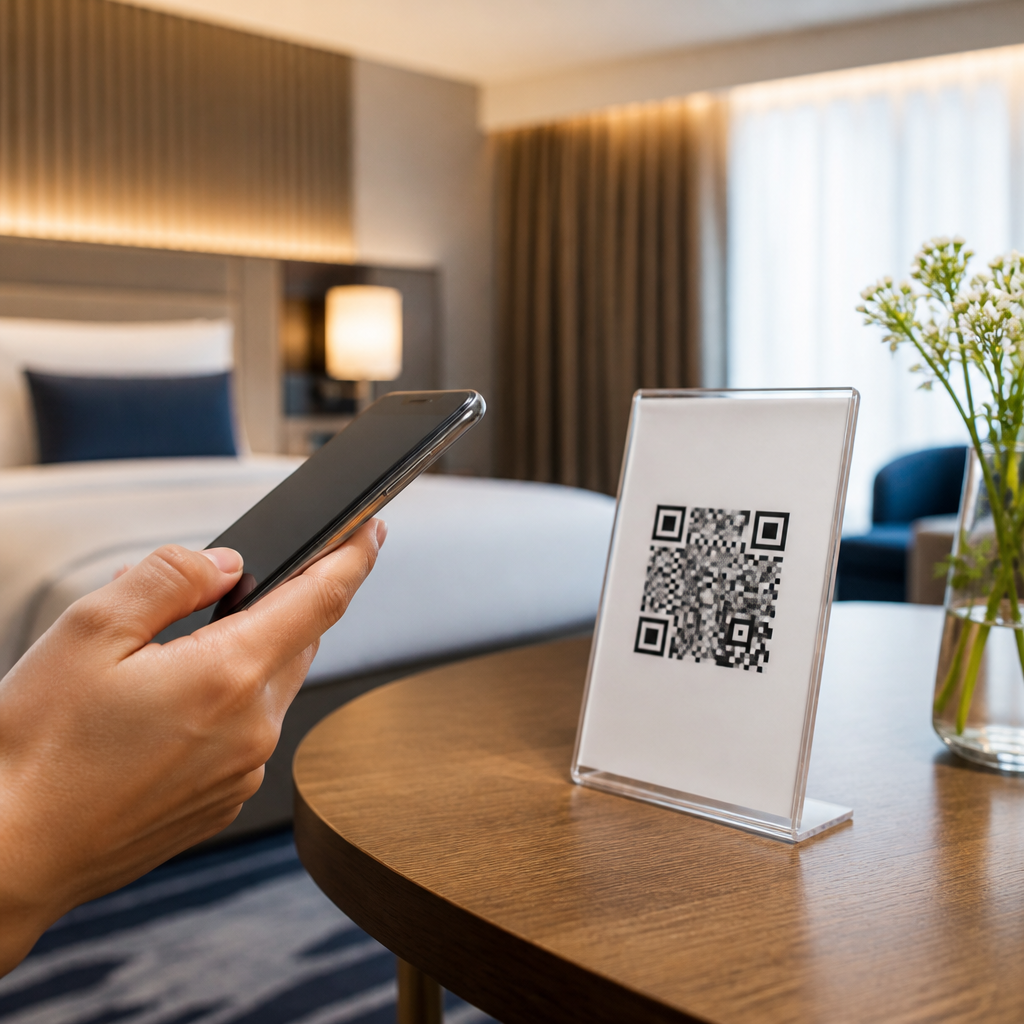
QR codes for hotel guest experiences have moved from a novelty on lobby signs to a practical operating layer that shapes how guests book services, access information, and judge a property’s professionalism. In hospitality, a QR code is a scannable matrix barcode that opens a digital destination such as a menu, spa booking page, feedback form, mobile check-in flow, or multilingual welcome guide. I have implemented these programs for properties ranging from independent boutique hotels to multi-site resort groups, and the pattern is consistent: when the code leads to a useful, fast-loading page, guests use it willingly. When it leads to a generic homepage or a PDF built for desktops, adoption collapses.
The topic matters because hotels operate in a high-friction environment. Guests arrive tired, often on mobile connections, sometimes in an unfamiliar language, and usually with immediate questions: What time is breakfast? Can I order room service? How do I book late checkout? Where is the pool towel desk? Every unnecessary phone call to reception, every printed insert that goes out of date, and every missed upsell opportunity creates cost or lost revenue. QR codes reduce that friction by connecting physical spaces to digital actions at the exact moment of need.
They also sit at the center of a broader hospitality shift toward contact-light service, self-service convenience, and measurable guest journeys. During the pandemic, many hotels adopted QR codes for safety reasons, especially for menus and directories. The stronger operators kept them because they discovered operational benefits: fewer reprints, more accurate information, cleaner analytics, and better service recovery. A dynamic code on a tent card can be updated in minutes, while printed collateral can take weeks and become obsolete as soon as opening hours change.
As a hub for industry-specific use cases in restaurants and hospitality, this article explains where QR codes work best across the hotel stay, how they support food and beverage operations, what technical and design standards matter, and which metrics prove whether the program is delivering value. Used thoughtfully, QR codes improve guest experiences not by replacing hospitality, but by removing avoidable friction so staff can focus on higher-value service moments.
Where QR Codes Fit Across the Hotel Guest Journey
The most effective hotel QR code strategy maps to the full guest journey: pre-arrival, arrival, in-stay, dining, amenities, problem resolution, and post-stay follow-up. Before arrival, a confirmation email or pre-stay SMS can include a code leading to digital check-in, airport transfer booking, or an upsell page for breakfast, spa appointments, and room enhancements. This is especially useful for resorts and conference hotels where add-on revenue is material. In one rollout I supported, a pre-arrival landing page linked from a QR code in confirmation materials increased paid early check-in requests because guests could see availability and pricing before they arrived at the desk.
At arrival, codes placed at the porte-cochère, front desk queue area, and key packet can reduce pressure on reception. Common uses include property maps, Wi-Fi instructions, loyalty enrollment, digital registration, and multilingual welcome information. For limited-service hotels, this can shorten lines during peak check-in windows. For luxury properties, the goal is different: let staff remain conversational while routine details move to a polished mobile interface. The code is not the experience; it supports the experience by giving guests a fast path to answers without making them wait for a printed booklet or a staff member to become available.
During the stay, the room itself offers the richest surface area. Bedside cards, desk plaques, minibar tags, bathroom mirrors, and television screens can all trigger actions. The best-performing room codes usually connect to five categories: room service ordering, housekeeping requests, engineering issues, local recommendations, and hotel directory content. Guests do scan when the benefit is immediate. A code that says “Need extra pillows?” will outperform one that says “Scan for guest information” because it promises a clear result. Specificity raises scan rates.
Post-stay, QR codes can support review generation, lost-and-found claims, invoice retrieval, and loyalty re-engagement. The strongest properties route guests to the right feedback channel at the right time. A quick satisfaction check via QR code on the morning of departure can surface issues before checkout, allowing service recovery before the public review stage. That sequencing matters because once frustration reaches an external review platform, the recovery options narrow significantly.
Hospitality and Restaurant Use Cases That Deliver Measurable Value
Within the broader hospitality category, food and beverage is where QR codes often show the clearest return. Restaurant menus are the obvious example, but the real value goes beyond replacing laminated menus. Hotels use QR codes for poolside ordering, in-room dining menus, minibar replenishment requests, happy-hour promotions, allergen information, wine pairings, and event catering pages. A guest at the rooftop bar can scan a code and see live menu availability, while a family by the pool can order without leaving their chairs. That is convenience for the guest and table-turn support for the operator.
For restaurant operations inside hotels, QR codes can also bridge guest segments. In-house guests, local diners, conference attendees, and wedding parties have different needs. Codes on signage can route each group to relevant content: breakfast hours for overnight guests, banquet menus for event leads, or reservation booking for local patrons. Because dynamic QR platforms allow destination changes without reprinting materials, a single printed asset can support seasonal campaigns, changing menus, and daypart-specific promotions. This is particularly useful for outlets with breakfast, lunch, and dinner identities that need different landing pages by time of day.
Beyond dining, spas, gyms, kids’ clubs, valet, concierge, and housekeeping all benefit from scannable touchpoints. A spa QR code in the elevator can link to treatment menus and real-time availability. A gym code can open equipment instructions and personal training bookings. A housekeeping code can offer options such as “service now,” “service later,” or “eco stay, no service needed,” which supports both guest choice and sustainability goals. In practice, these flows reduce call volume and create cleaner demand signals than voicemail or handwritten notes.
| Hotel area | Common QR code use | Primary guest benefit | Operational outcome |
|---|---|---|---|
| Guest room | Room service, directory, service requests | Fast answers and ordering | Fewer calls to reception |
| Restaurant and bar | Menus, ordering, allergen details, promotions | Quicker decisions and easier ordering | Higher average check, lower print cost |
| Lobby and front desk | Check-in, Wi-Fi, maps, loyalty sign-up | Shorter queues and better orientation | Reduced desk congestion |
| Spa and amenities | Bookings, treatment details, schedules | Immediate access to availability | More direct bookings |
| Events and meetings | Agendas, wayfinding, lead capture | Clear navigation and updated information | Better attendee flow and data capture |
Event and meeting spaces are another high-value use case. Conference guests routinely need agendas, room changes, exhibitor lists, and venue maps. Wedding groups need itinerary updates, shuttle schedules, and photo-sharing pages. Printed materials become inaccurate the moment a breakout room changes. A QR code on event signage can route attendees to live information, reducing confusion and minimizing staff interruptions. Sales teams also use QR codes in banquet packets and site tours to capture leads for future private dining, corporate, or wedding bookings.
Implementation Standards That Separate Effective Programs from Gimmicks
Good hotel QR code programs are built on usability standards, not on the assumption that any code will be scanned. Start with dynamic rather than static codes wherever possible. Dynamic codes let the hotel change the destination URL, track scans, test landing pages, and deactivate outdated campaigns without replacing print materials. Established platforms such as Bitly, QR Code Generator PRO, Beaconstac, and Uniqode provide management features, though some enterprise hotel groups prefer proprietary systems integrated with their CRM, property management system, or guest messaging platform.
Landing page design is the second critical factor. Guests scan on phones, often one-handed, often while moving, and sometimes with weak connectivity. The destination must load quickly, fit small screens, and present one primary action. Hospitality teams often undermine performance by linking directly to a PDF menu or to the hotel homepage. That creates friction. A mobile web page with clear buttons, localized language options, and lightweight images consistently performs better. If the action is ordering food, the first visible button should be “Order now,” not a paragraph about the chef’s philosophy.
Placement and context matter just as much as technology. Codes need adequate size, high contrast, quiet zone spacing, and enough lighting to be scanned reliably. In-room codes should be placed where the need occurs: a laundry code near the closet, a room service code by the bed or desk, and a housekeeping request code near the door. Add a concise call to action explaining the outcome, such as “Scan to book a spa treatment” or “Scan for breakfast hours.” Without that instruction, many guests will ignore the code because they do not know what value it offers.
Accessibility, privacy, and security cannot be afterthoughts. Hotels should provide plain-language alternatives for guests who do not want to scan, and staff should be ready to assist. For accessibility, landing pages should support screen readers, sufficient contrast, and readable text sizes. For privacy, any form collecting personal data should disclose purpose and comply with applicable standards such as GDPR or CCPA when relevant. For security, codes should resolve to branded domains whenever possible, since unfamiliar URLs can reduce trust. Properties should also inspect physical signage regularly to ensure malicious sticker overlays have not replaced legitimate codes.
Measurement, Governance, and the Future of Hotel QR Code Strategy
Hotels should evaluate QR codes with the same discipline used for any revenue or service channel. The core metrics are scan volume, unique users, conversion rate, abandonment rate, task completion time, and downstream outcomes such as room service orders, spa bookings, loyalty enrollments, and reduced front desk calls. For restaurants and bars, track average order value, menu item views, add-on attachment rate, and ordering time by outlet. For service flows, track response times and completion rates. A code that gets many scans but low completion usually signals a landing page problem, not a demand problem.
Governance is what keeps a hotel QR program from turning into clutter. Someone must own the code inventory, naming conventions, destination governance, visual standards, and performance reporting. In multi-property groups, this usually sits between brand marketing, digital commerce, and operations. I have seen properties accumulate dozens of disconnected codes for menus, surveys, and promotions, all using different tools and different design rules. Guests notice the inconsistency. A centralized framework prevents broken links, duplicate flows, and mixed branding while still allowing each property to tailor content to its market and service model.
The future is not more QR codes everywhere. It is better integration around the moments that matter. As mobile wallets, digital room keys, guest messaging, and AI-assisted concierge tools expand, QR codes will remain valuable because they solve a simple problem: they connect a physical environment to the right digital action instantly. The winning hotels will use them selectively, tie them to real guest intent, and measure whether they reduce friction or increase spend. Audit your current touchpoints, identify the questions guests ask most often, and deploy QR codes where the answer can be delivered faster, clearer, and more profitably.
For hospitality brands building a stronger QR codes in marketing strategy, hotel guest experience is one of the most practical and scalable subtopics to get right. It touches restaurants, bars, spas, meetings, housekeeping, and post-stay retention in ways guests immediately understand. The key lessons are straightforward: map codes to the guest journey, give each code a single clear purpose, send users to fast mobile pages, and track business outcomes rather than vanity scans. When those basics are in place, QR codes become a dependable service layer that supports both guest satisfaction and operational efficiency. Review your existing signs, menus, and in-room materials this week, then replace the weakest friction points with QR experiences that are genuinely useful.
Frequently Asked Questions
How are QR codes actually used to improve hotel guest experiences?
QR codes improve hotel guest experiences by removing friction at the exact moments when guests want quick answers or easy access to services. Instead of calling the front desk, waiting in line, or searching through printed materials, guests can scan a code and immediately reach a relevant digital destination. In practice, that might mean opening a room service menu, reserving a spa treatment, viewing pool hours, accessing a multilingual property guide, requesting housekeeping, checking into the hotel, or browsing recommendations for local attractions. The strongest hotel QR code programs are not built around novelty; they are built around convenience, speed, and clarity.
From an operations perspective, QR codes also help properties present a more modern and organized experience. A single scan can route guests to up-to-date information, which is especially valuable when hours, seasonal offerings, or policies change. Printed collateral becomes less likely to go out of date, and staff spend less time answering repetitive questions. For guests, that translates into a sense that the property is responsive and easy to navigate. For management, it creates a more scalable way to deliver information and services consistently across rooms, public spaces, and guest touchpoints. When implemented well, QR codes become part of the hotel’s service infrastructure rather than an add-on.
Where should hotels place QR codes for the best guest engagement?
The best placements are the ones that match guest intent in a specific location. In-room QR codes often perform well because guests use them at moments of immediate need, such as ordering food, checking Wi-Fi instructions, requesting extra towels, reviewing checkout details, or learning how to use in-room amenities. At the front desk or in the lobby, QR codes can support mobile check-in, concierge recommendations, loyalty enrollment, event schedules, transportation details, or property maps. In restaurants and bars, codes can link to menus, specials, allergy information, wine lists, and digital payment options. Near the pool, gym, or spa, they can lead to booking pages, operating hours, class schedules, or service details.
Placement should always be intentional and context-specific. A generic code with no explanation tends to underperform, while a clearly labeled code with a direct value proposition usually earns more scans. For example, “Scan to book a spa treatment,” “Scan for late checkout options,” or “Scan for the guest guide in your language” is far more effective than simply displaying a code with no instruction. Visibility, accessibility, and design matter as well. Codes should be placed at a comfortable scanning height, printed at a readable size, and supported by strong lighting and a reliable internet connection. Hotels that think carefully about where the guest is, what the guest wants at that moment, and what action the property wants to encourage typically see the best engagement.
What information or services should a hotel link to with QR codes?
Hotels should prioritize services and information that guests frequently need, want quickly, or prefer to access on their own. High-value examples include digital menus, room service ordering, spa and dining reservations, mobile check-in and checkout, concierge recommendations, housekeeping requests, maintenance reporting, event schedules, local area guides, transportation booking, parking instructions, feedback forms, and loyalty program information. A multilingual welcome guide is especially useful for international properties because it reduces confusion and makes the stay feel more personalized and inclusive. The underlying rule is simple: if guests repeatedly ask for it, wait for it, or search for it, it is a good candidate for a QR experience.
That said, not every hotel should link every code to the same kind of destination. The most effective QR programs reflect the property’s size, guest profile, and service model. A resort may focus heavily on activity bookings, dining, and wayfinding. A business hotel may emphasize check-in, invoices, meeting room details, airport transport, and express checkout. A boutique property may highlight curated local recommendations, premium upgrades, and personalized service requests. It is also important to send guests to mobile-friendly, fast-loading pages that are easy to use on a phone. If the landing page is cluttered, outdated, or slow, the QR code itself will not save the experience. The code is only the doorway; the digital destination has to be useful and polished.
Are QR codes still relevant in hospitality, or do guests see them as outdated?
QR codes are absolutely still relevant in hospitality, but their value now depends on execution rather than novelty. Guests no longer see a QR code as inherently impressive; they see it as either helpful or unnecessary. That is a healthy shift. It means hotels should use QR codes where they genuinely reduce effort, improve access, or streamline a task. When a guest can scan a code to pull up a live breakfast menu, request an airport transfer, book a massage, or get instant answers in their preferred language, the experience feels efficient and current. When a code simply replaces a simple printed sign with a clunky webpage, it can feel like extra work. Relevance comes from utility.
In many properties, QR codes now function as a practical operating layer that supports guest self-service without replacing hospitality. They help staff focus on higher-value interactions while giving guests more control over routine tasks. This balance matters because hospitality is not just about digitizing everything; it is about making service easier to access. A well-designed QR strategy complements the human side of the hotel rather than competing with it. Guests still appreciate personal service, but they also appreciate fast answers, on-demand booking, and clear information. That combination is why QR codes remain highly relevant for hotels that want to look professional, reduce friction, and meet modern guest expectations.
How can hotels measure whether their QR code strategy is successful?
Hotels should measure QR code performance using both engagement metrics and operational outcomes. At the most basic level, properties can track scans by location, device behavior, time of day, repeat use, and conversion actions such as completed bookings, form submissions, service requests, or digital menu orders. These numbers show whether guests are noticing the codes and taking meaningful next steps. For example, a code in guest rooms that sends traffic to room service but produces very few orders may indicate a menu design issue, a pricing issue, or a weak call to action. A spa QR code with strong scan volume and high booking completion, on the other hand, signals clear guest intent and an effective landing experience.
Success should also be evaluated through operational and guest satisfaction improvements. Hotels can compare front desk call volume, repetitive staff inquiries, printed material costs, service response times, upsell rates, and review sentiment before and after rollout. If guests are finding information faster, staff are spending less time answering routine questions, and ancillary revenue from dining, spa, or upgrades increases, the QR strategy is likely doing its job. It is also smart to review guest feedback directly. If guests mention ease, convenience, and clear communication in surveys or reviews, that is a strong qualitative indicator. The most successful programs are not “set and forget.” They are reviewed, tested, and refined over time so the codes, landing pages, and service pathways continue to match how guests actually behave on property.